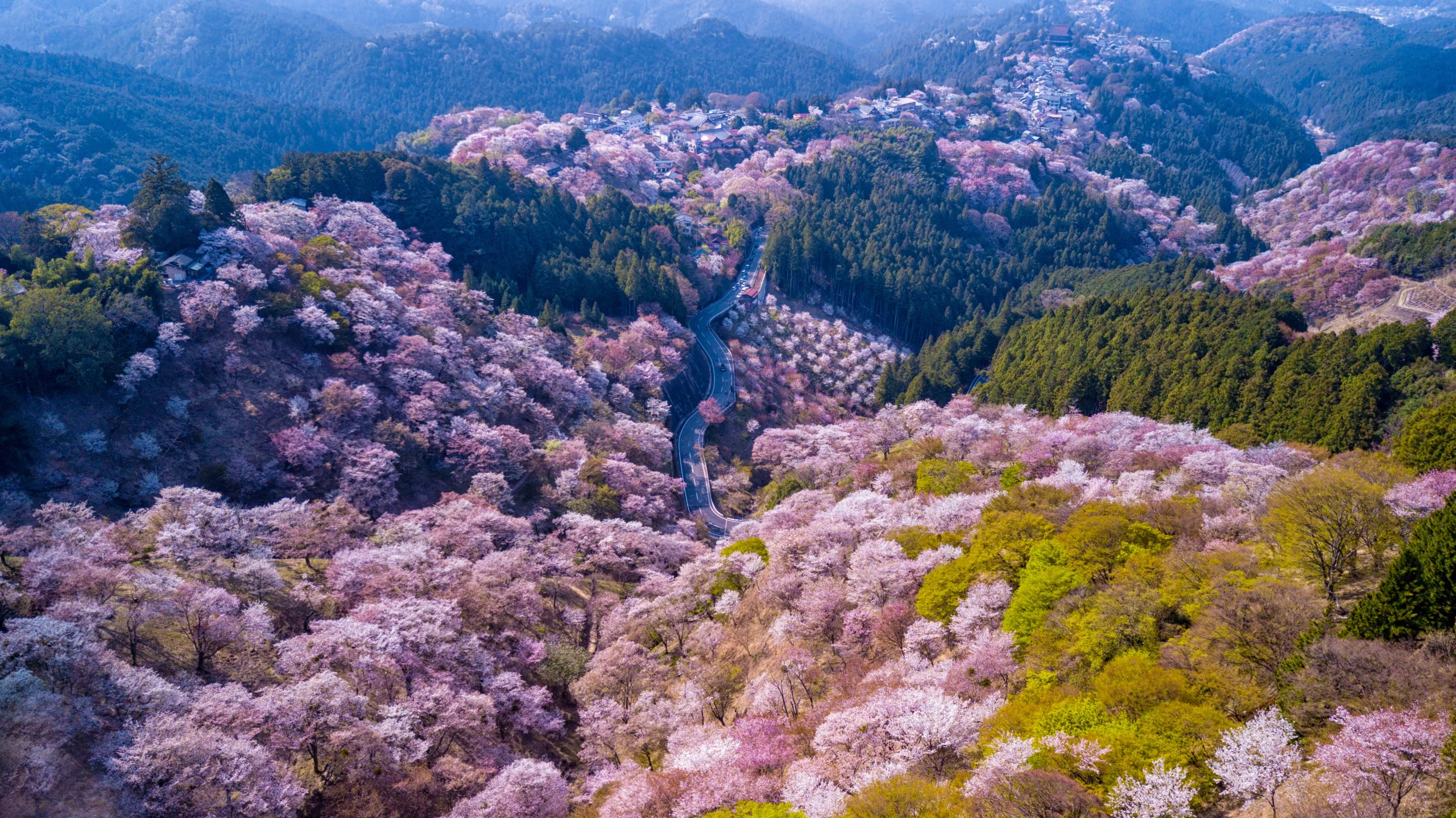
Edo Kiriko, a traditional Japanese glass-cutting craft, catches and refracts light like a gemstone, showcasing its intricate beauty. Its delicate brilliance continues to captivate whisky lovers, art collectors, and anyone who appreciates fine craftsmanship. In this article, we explore the history and charm of Edo Kiriko, introduce some recommended pieces for everyday use, and share tips on recognizing high-quality craftsmanship. By discovering this timeless art, you’ll experience the depth of Japanese culture and craftsmanship firsthand. Let the elegance of Edo Kiriko add a touch of refinement to your daily life.
If you are planning a trip to Japan and wondering about the exact Edo Kiriko glass price, searching for a premier Edo Kiriko glass workshop, or hoping to book an unforgettable Edo Kiriko glass cutting experience or Edo Kiriko glass class during your Tokyo itinerary, this comprehensive guide will provide absolute clarity on every detail you need.
What is Edo Kiriko
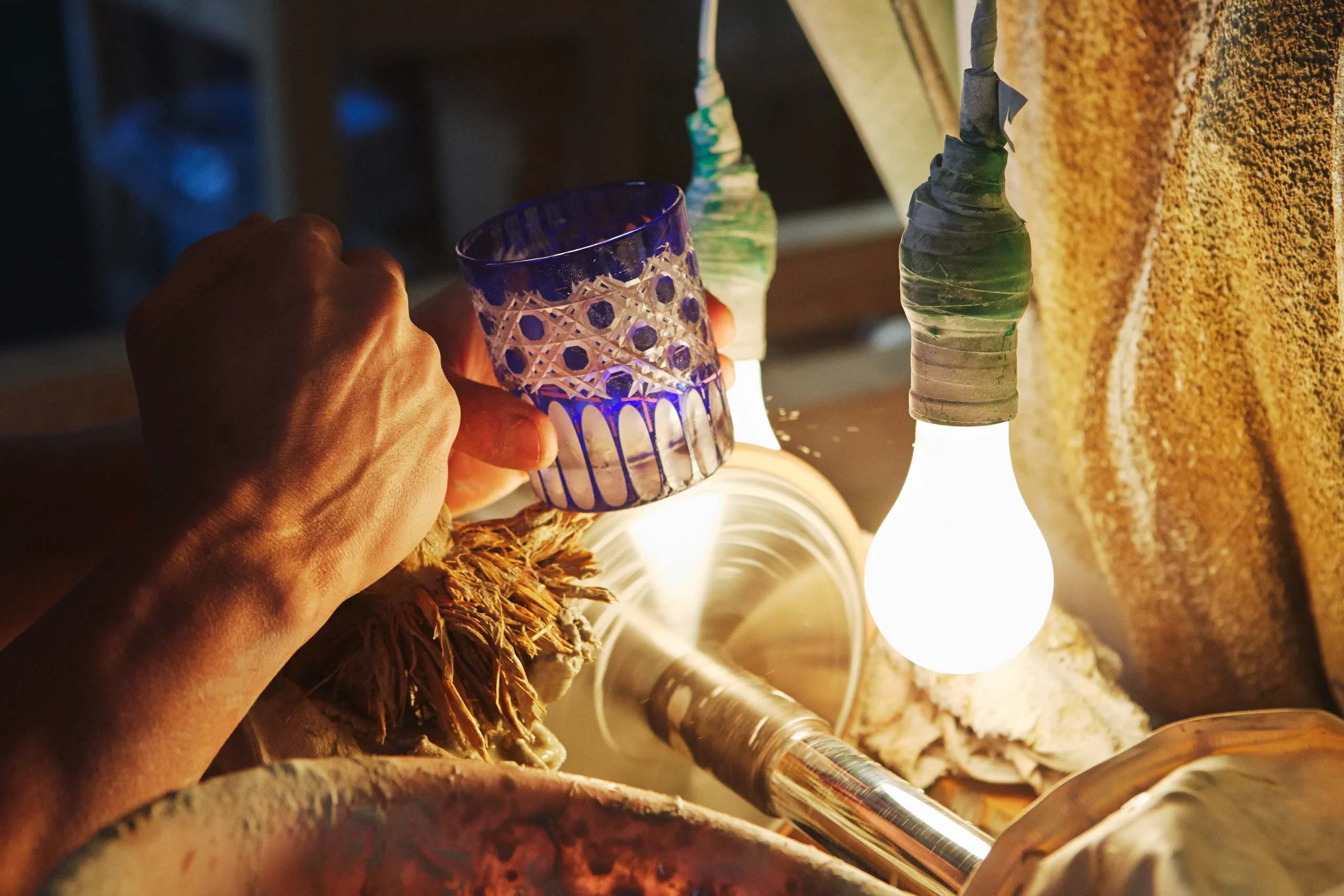
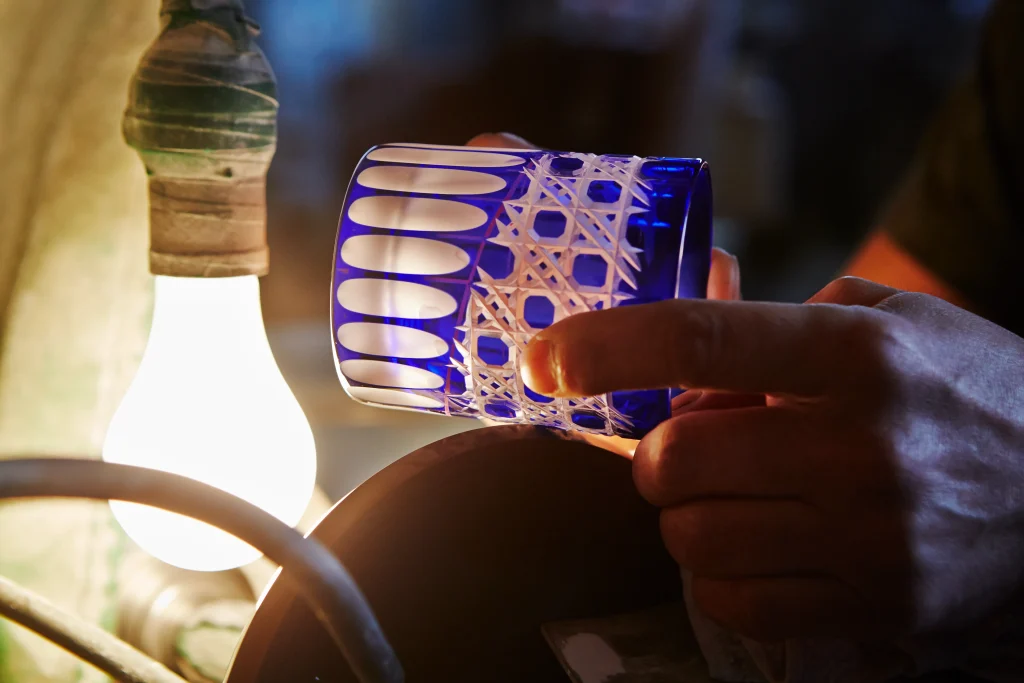
Edo Kiriko is a traditional Japanese glass craft that has been passed down since the Edo period. Skilled artisans meticulously carve intricate patterns into glass by hand, giving it a stunning brilliance through the refraction of light.
In 1985, Edo Kiriko was officially recognized as a traditional craft of Tokyo, securing its place as a globally celebrated art form. Its exquisite beauty and masterful craftsmanship continue to captivate people around the world.
The History of Edo Kiriko
Edo Kiriko traces its origins back to the late Edo period when Kagaya Kyūbei, a glass merchant in Edo Odemmacho, began engraving intricate patterns onto glass surfaces. Kagaya Kyūbei’s catalogs featured a variety of glassware, including tableware, everyday items, and goldfish bowls, showcasing the refined craftsmanship of the time. This traditional technique has been passed down through generations, evolving into what is now known as Edo Kiriko, one of Japan’s most distinguished traditional crafts.
The Meiji Era, British Influence, and Modern Standardization
During the early Meiji period (1868–1912), the modernization of Japan brought significant changes to traditional arts. The Japanese government invited British glass-cutting expert Emanuel Hoefft to the official industrial factory in Shinagawa to instruct local artisans. This pivotal cross-cultural exchange introduced advanced Western geometric cutting machines, multi-axis symmetry, and new polishing agents. Japanese craftsmen expertly merged these European techniques with their own delicate aesthetic sensibilities, establishing the crisp, brilliant, and mathematically balanced style of modern Edo Kiriko that is treasured globally today.
How Edo Kiriko is Made: The Artisan’s Secrets
To truly understand the Edo Kiriko glass price, one must examine the grueling, multi-step production process. Unlike mass-produced factory glassware, every authentic piece is created through distinct, highly skilled manual stages:
1. Color Layering (Iro-bise)
The base of most Edo Kiriko is made of clear glass coated with an extremely thin layer of colored glass (traditionally vibrant red or cobalt blue, though modern workshops expand into amber, green, and purple). Achieving an even, flawless color layer requires exceptional glass-blowing skill.
2. Warizuke (Layout and Marking)
The artisan uses a special brush and ink to draw precise guidelines and geometric grids directly onto the curved surface of the glass blank. A microscopic miscalculation in this marking stage ruins the entire symmetry of the finished pattern.
3. Arazuri (Rough Cutting)
Using a coarse diamond-coated wheel, the craftsman cuts deep, primary grooves along the marked lines. This requires immense physical strength, precise body posture, and total concentration, as a slip of the hand will crack or ruin the expensive glass blank.
4. Sanbanzuri (Fine Cutting)
A finer-grained diamond wheel is used to sharpen the intersecting angles, refine the depth, and carve intricate secondary textures such as Nanako (fish roe) or Kiku-tsunagi (chrysanthemum interlock).
5. Migaki and Ishikake (Polishing)
The rough-cut grooves are mechanically and manually polished using wooden wheels, felt, and polishing compounds (such as cerium oxide) until the cut surfaces achieve a mirror-like smoothness, creating that signature gemstone brilliance when light passes through.
The Difference between Satsuma Kiriko and Edo Kiriko
Japan’s traditional cut glass is best represented by two distinct styles: Edo Kiriko and Satsuma Kiriko.
Edo Kiriko is known for its precise geometric patterns etched into clear glass, creating a refined and sophisticated look. Its intricate cuts refract light beautifully, producing a sharp and dazzling brilliance. Satsuma Kiriko, on the other hand, is made with thicker glass and is known for its “bokashi” effect, a delicate color gradation that adds depth and richness. Though production once came to a halt, modern artisans have successfully revived the craft, bringing renewed appreciation for its exquisite beauty.
Understanding the differences between these two styles deepens appreciation for Japan’s glass-cutting tradition and helps in selecting a piece that best suits personal preferences.
The Beauty of Edo Kiriko: Three Reasons It Stands Out
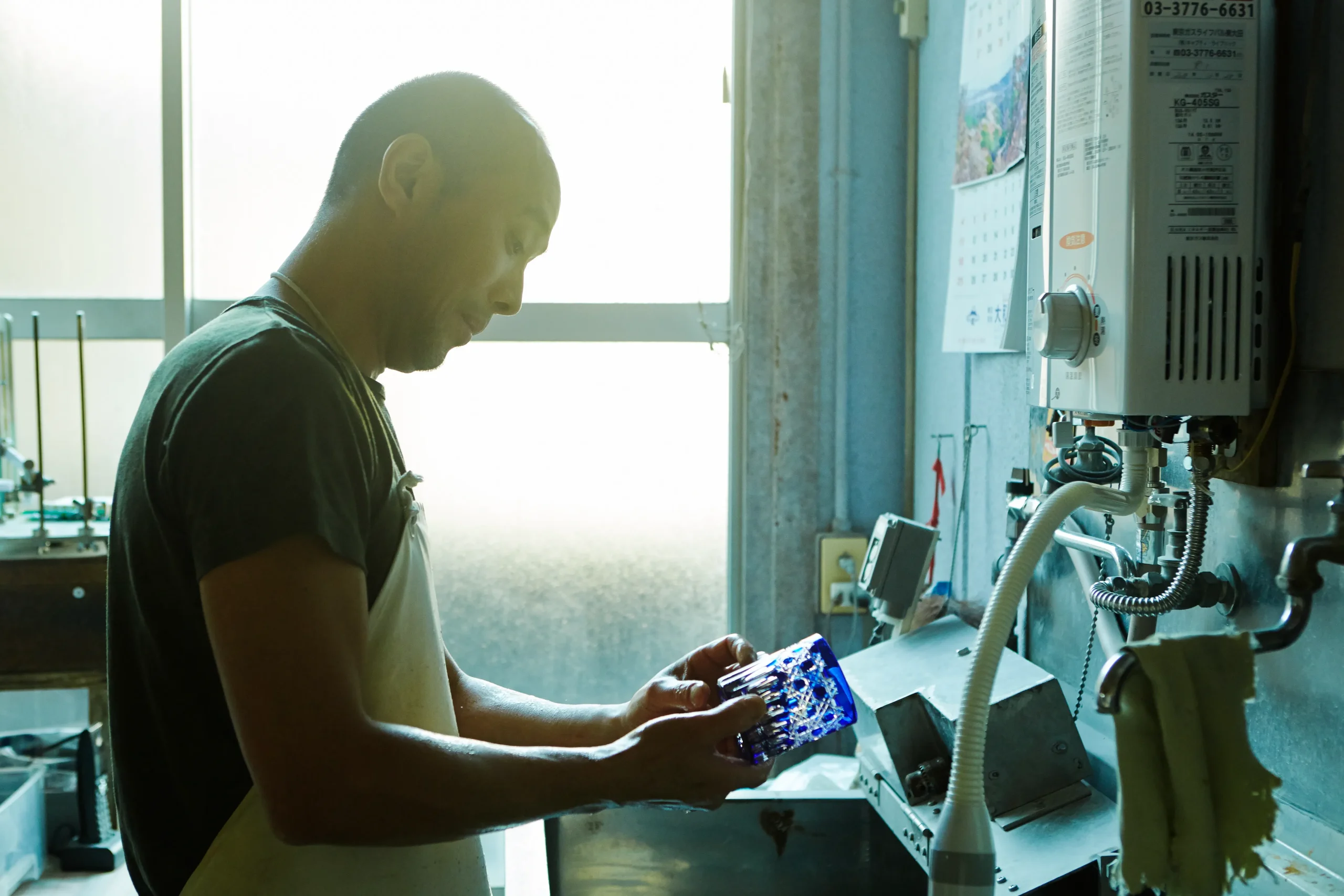
Edo Kiriko has a unique charm that sets it apart from other glass crafts. Here are 3 features that make it so fascinating. Understanding these qualities will help you appreciate its beauty and value even more.
190 Years of Tradition and Masterful Craftsmanship
The art of Edo Kiriko dates back to 1834, and since then, generations of artisans have continuously refined their skills. It is said that mastering the craft takes over 10 years of training, and this level of expertise is what gives Edo Kiriko its stunning cut-glass designs. One of the key elements that make Edo Kiriko exceptional is Japan’s mastery of light manipulation. Deeply engraved grooves refract light, creating a mesmerizing dance of fine lines and reflections. This carefully calculated design brings out the intricate patterns and luminous brilliance that define Edo Kiriko. The dedication and passion passed down through generations continue to preserve the timeless beauty of this extraordinary glass art.
Officially Certified Traditional Crafts
Edo Kiriko has been recognized for its long history and exceptional craftsmanship, earning official designations as both a Tokyo-designated Traditional Craft and a nationally recognized Traditional Craft by the Minister of Economy, Trade, and Industry. To be officially recognized as Edo Kiriko, a piece must meet all of the following strict criteria.
- Meticulous craftsmanship, performed entirely by hand
- Use of traditional techniques and materials passed down through generations
Edo Kiriko is also a registered trademark under the Edo Kiriko Cooperative Association. Each piece is carefully crafted by skilled artisans who preserve its rich heritage, ensuring that every item remains an authentic and valuable work of art.
Practicality for Everyday Life
Edo Kiriko is easy to incorporate into daily life. Available in various shapes and sizes—such as rock glasses, wine glasses, and tumblers—it is suitable for both everyday use and special occasions. Beyond tableware, Edo Kiriko vases and lighting fixtures add a touch of elegance to interiors, bringing a touch of Japanese craftsmanship and culture into any space.
Edo Kiriko in Daily Life
Edo Kiriko glassware effortlessly bridges centuries of traditional craftsmanship with contemporary lifestyles, offering exquisite elegance for everyday moments, intimate dining, and milestone celebrations alike.
Edo Kiriko Whiskey Glass
The Old Fashioned Glass, commonly used for whiskey, is one of the most popular Edo Kiriko items. Its richly decorated surface, adorned with intricate patterns, beautifully enhances the amber hue of whiskey, making every sip feel special. Prices range from ¥10,000 to ¥80,000, depending on the complexity of the design and the size. These glasses are cherished not just for personal use but also as thoughtful gifts for weddings, anniversaries, and other special occasions.
Edo Kiriko Sake Glass
Edo Kiriko sake glasses come in a variety of styles, from traditional guinomi (small sake cups) to modern sake glasses, each offering a unique design. Their delicate cuts and intricate patterns enhance the clarity and elegance of the sake, making each sip even more enjoyable. Prices range from ¥7,000 and ¥50,000, depending on the shape and level of craftsmanship. A perfect blend of Japanese tradition and artistry, these glasses are perfect for entertaining guests or simply elevating your drinking experience.
Edo Kiriko Wine Glass
Edo Kiriko wine glasses, with their contemporary designs, enhance both the color and aroma of the wine. Their intricate patterns are meticulously crafted to optimize light refraction, creating a stunning visual effect. Prices range from ¥10,000 to ¥130,000, with pair sets also available. These elegant glasses are a popular choice for special occasions, making them the perfect gift for anniversaries and celebrations.
Edo Kiriko Small Plate / Dish
Beyond drinkware, Edo Kiriko craftsmanship extends to stunning small glass plates and serving dishes. These delicate pieces are meticulously cut to feature mesmerizing geometric motifs across the rim or base, beautifully reflecting ambient light on the dining table. Prices range from ¥8,000 to ¥45,000. Perfect for serving appetizers, Japanese sweets, or sashimi accompaniments, they bring an instant touch of traditional luxury to any meal.
Edo Kiriko Vase
An Edo Kiriko vase or single-flower vase (ichirin-zashi) transforms interior spaces through the interplay of glass cuts and natural sunlight. When sunlight passes through the deeply engraved patterns, it projects dazzling reflections onto walls and tables. Prices range from ¥15,000 to ¥150,000+. They serve as a breathtaking centerpiece for entryways or living rooms, and make an exceptional housewarming or corporate retirement gift.
Shops and Workshop for Edo Kiriko
Ginza and Nihonbashi in Tokyo are home to historic Edo Kiriko specialty shops offering a wide selection of finely crafted glassware. High-quality, authentic pieces can also be found in the artisan sections of department stores. Beyond shopping, visitors can experience Edo Kiriko firsthand through workshops, where they can learn the delicate techniques of glass cutting. Here, we introduce some of Japan’s most renowned workshops and specialty shops, where you can explore and appreciate this traditional craft.
KAGAMI
KAGAMI was founded in 1934 as Japan’s first specialized crystal manufacturer. It is known for its exceptional quality, earning recognition from the Imperial Household Agency. The company’s skilled artisans, certified as traditional craftsmen of Ibaraki, create exquisite cut glass products with outstanding craftsmanship.
At its headquarters and factory, the KAGAMI Memorial Hall showcases past creations and rare, unreleased sample pieces. A factory tour, available by reservation, is highly recommended for those who want to experience the history and artistry of Japanese crystal glass.
Edokiriko Takizawa Glass Crafts
Edokiriko Takizawa Glass Crafts is a workshop led by Toshio Takizawa, specializing in Edo Kiriko glassware and other handcrafted glass products. Its artisans, certified as traditional craftsmen by both the Tokyo Metropolitan Government and the Japanese government, uphold the highest standards of craftsmanship.
Takizawa, a highly regarded figure frequently featured in the media, has been honored as a Tokyo Metropolitan Government Honorary Citizen for his exceptional artistry.
His works are available for purchase through the online store or directly at the workshop (inquiries required). The workshop, open Monday to Saturday from 10:00 AM to 5:00 PM, allows visitors to enjoy exquisite glass pieces that embody the refined aesthetics of Edo culture.
Glass Studio Saihō
Glass Studio Saihō is a workshop run by Mitsuwa Glass Crafts Co., Ltd., where all glassware is made from 100% domestically produced, handcrafted glass.
While Edo Kiriko is traditionally known for its red and blue hues, Saihō stands out with its vibrant range of colors. The workshop incorporates auspicious patterns such as Kikkōmon and Seigaiha into its designs, creating stunning glassware that adds a touch of elegance to everyday life.
Each product comes in a luxurious presentation box or wooden case, making it a perfect gift. Additionally, the workshop nurtures young artisans, encouraging creativity and innovation in color and design. For those looking for a unique and personalized Edo Kiriko piece, Glass Studio Saihō is an excellent choice.
Edo Kiriko Cooperative Association
The Edo Kiriko Cooperative Association is the leading organization dedicated to preserving, promoting, and enhancing Edo Kiriko craftsmanship. It brings together skilled artisans, including Certified Traditional Craftspersons, to uphold the highest standards of beauty and quality in Edo Kiriko glass.
At its showroom, visitors can explore an impressive collection of around 400 Edo Kiriko pieces, from classic designs to modern interpretations. The exhibits include award-winning contest entries and permanent displays, offering a closer look into the history, techniques, and evolution of Edo Kiriko.
For those unable to visit in person, the association also has an online store, making it easy to purchase authentic Edo Kiriko glass.
Sumida Edo Kiriko Kan
Sumida Edo Kiriko Kan is a specialized Edo Kiriko shop that spun off from the century-old Hirota Glass Co. Ltd. Recognized as a certified workshop in Sumida Ward, it showcases and sells masterpieces crafted by Edo Kiriko artisans alongside everyday glassware designed for practical use.
Inside, visitors can explore exhibits on the history and production process of Edo Kiriko. A glass window provides a rare opportunity to watch skilled artisans at work, offering insight into the intricate craftsmanship behind each piece.
One of the shop’s main attractions is its cutting experience workshop, where participants can create their own original Edo Kiriko glass. This hands-on activity lets visitors immerse themselves in Edo Kiriko traditions as they craft a one-of-a-kind piece, making for an unforgettable experience.
Ultimate Guide to Edo Kiriko Workshops and Glass Cutting Experiences
If you are searching for an immersive Edo Kiriko glass workshop, booking an Edo Kiriko glass experience, or enrolling in an Edo Kiriko glass class during your trip to Tokyo, here is everything you need to prepare for a successful session:
What to Expect During a Session
Most beginner-friendly classes last between 60 to 90 minutes. You will be provided with a pre-colored glass blank. Under the close, step-by-step guidance of a professional craftsman, you will gently press the glass against a rotating diamond-cutting wheel to grind away the colored exterior layer, revealing the transparent glass underneath and forming your chosen pattern.
Cost and Booking Recommendations
Typical workshop participation fees range from ¥4,000 to ¥8,000 depending on the size and shape of the glass blank you choose to carve. Because sessions fill up quickly—especially in popular Tokyo neighborhoods like Asakusa, Ginza, and Sumida—advance online reservation is strongly recommended.
Taking Your Souvenir Home
At the conclusion of the session, your custom-cut glass piece is professionally washed, polished, inspected, and safely packed in a presentation box so you can transport it home safely.
Tips for Choosing Your First Edo Kiriko
Here we introduce ten representative Edo Kiriko patterns, including Nanako, Kiku-tsunagi, Kikkamon, Sasahanamon, Rokkaku- and Hakkaku-Kagome, Shippō, Asa-no-ha, Yarai, and Kikkomon.
When choosing your first piece, consider the symbolic meanings embedded in each pattern alongside your personal aesthetic, prioritizing precise cuts, brilliant light refraction, and reputable craftsmanship to secure an authentic masterpiece.
Choose Based on Your Preferred Pattern
1.Rokkaku-Kagome PatternA continuous hexagonal basket weave pattern, traditionally used as a talisman for protection against evil spirits.
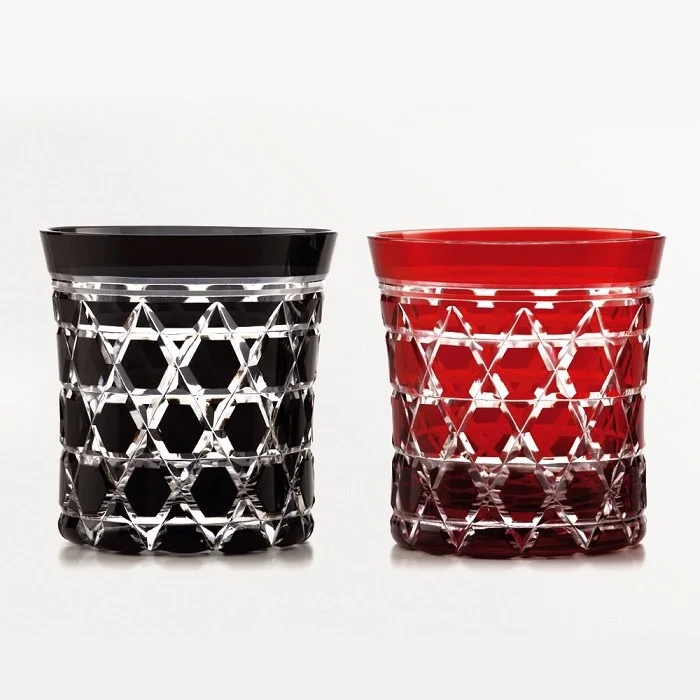
Detailed Meaning & Background: The hexagonal grid resembles woven bamboo baskets, a traditional motif deeply rooted in Japanese folklore for warding off misfortune and ensuring safety. Its symmetrical geometric balance also enhances light refraction when cut deeply into crystal glass.
2.Hakkaku-Kagome Pattern
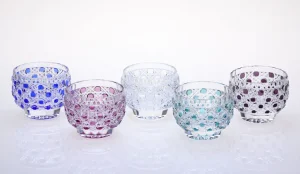
A continuous octagonal basket weave pattern, traditionally regarded as a symbol of protection against evil spirits.
Detailed Meaning & Background: Building upon the hexagonal variant, the octagonal basket weave represents expanded harmony and ultimate protection. The complex intersecting lines require an advanced level of layout precision (warizuke) from the artisan.
3.Nanako Pattern
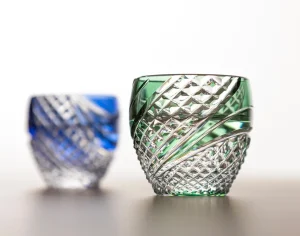
A pattern of fine intersecting cuts that resemble a cluster of fish eggs.
Detailed Meaning & Background: Taking its name from “nana-ko” (translating to fish roe), this historic pattern is formed by etching miniature square matrices across the exterior. It serves not only as a gorgeous standalone design but frequently acts as a textured background that makes primary motifs like chrysanthemums stand out with stunning contrast.
4.Asa-no-ha Pattern
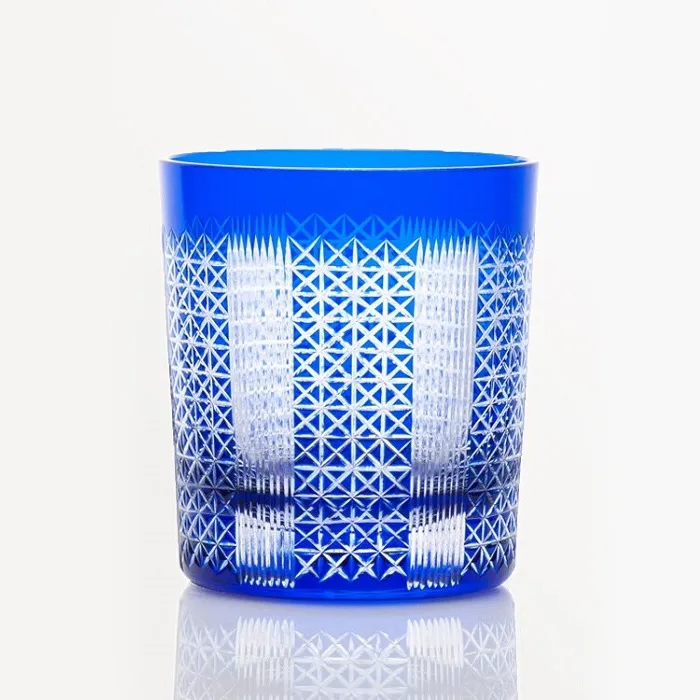
A pattern modeled after the shape of hemp leaves, exuding a delicate and natural beauty.
Detailed Meaning & Background: The hemp leaf grows rapidly and straight, making this geometric motif a classic Japanese symbol for healthy growth, resilience, and protection, especially traditionally chosen for children’s garments and celebratory gifts.
5.Yarai Pattern
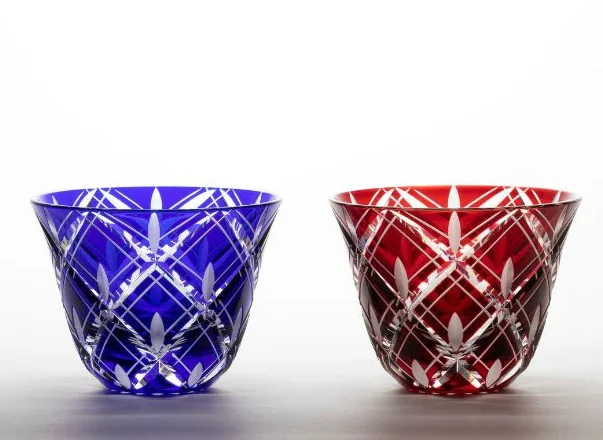
A pattern modeled after rain falling like arrows or the intersecting design of a bamboo fence.
Detailed Meaning & Background: Characterized by diagonal intersecting lines simulating driving rain or traditional rustic fences (yarai), this pattern provides a refreshing, structured look that fits both classic and contemporary tableware designs.
6.Shippō Pattern
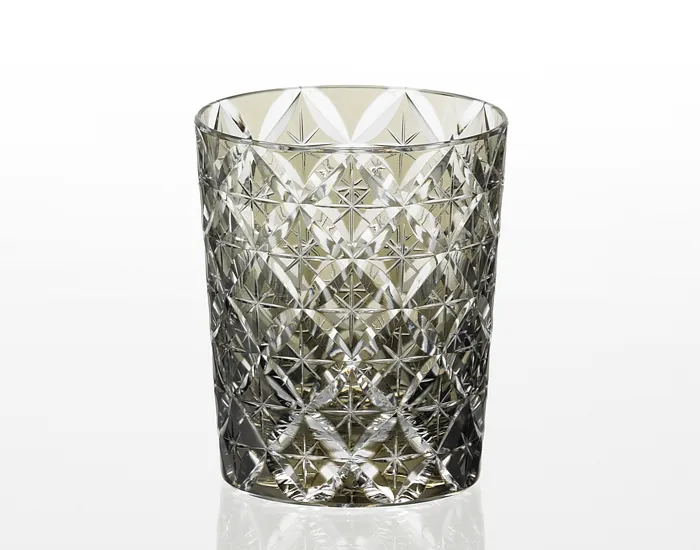
A continuous pattern of overlapping circles, each connected in quarters, symbolizing harmony and completeness.
Detailed Meaning & Background: Derived from the Buddhist concept of the “Seven Treasures” (gold, silver, lapis lazuli, crystal, coral, agate, and pearl), the overlapping circles represent infinite peace, smooth human relationships, and a wish for unending harmony.
7.Kiku-tsunagi Pattern
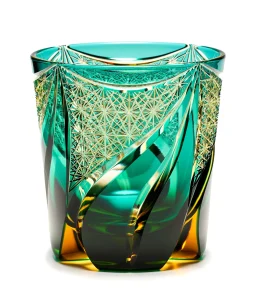
A pattern of fine intersecting cuts resembling chrysanthemum flowers, symbolizing longevity and eternal youth.
Detailed Meaning & Background: The chrysanthemum (kiku) is an imperial emblem of Japan associated with longevity, rejuvenation, and dignity. The tsunagi (interlocking) variation chains these floral motifs together in an unbroken web of brilliant, light-catching cuts that demand supreme manual dexterity.
8.Kikkamon Pattern
A sophisticated motif modeled after the noble chrysanthemum flower, long revered in Japan as a symbol of imperial dignity, longevity, rejuvenation, and supreme auspiciousness.
Detailed Meaning & Background: Unlike the interlocking Kiku-tsunagi, the Kikkamon typically features standalone or boldly blooming chrysanthemum petals carved with immense depth. It is traditionally chosen for high-end ceremonial gifts and prestigious collectors’ items to wish the recipient enduring health and prosperity.
9.Sasahanamon Pattern
A graceful pattern inspired by the sharp, elegant lines of bamboo leaves swaying gently in the breeze.
Detailed Meaning & Background: Because bamboo grows straight, tall, and exceptionally resilient even through harsh winter storms, the bamboo leaf motif symbolizes steadfast strength, upright character, and continuous growth. Its sleek, directional lines create a refreshing and sophisticated aesthetic on modern Edo Kiriko glassware.
10.Kikkomon Pattern
A geometric hexagonal pattern modeled after the hexagonal plates of a tortoise shell.
Detailed Meaning & Background: In Japanese culture, the tortoise is celebrated as a symbol of longevity and steadfast endurance (traditionally paired with the proverb that cranes live a thousand years, tortoises live ten thousand). The regular hexagonal structure represents stability, enduring good fortune, and a shield against misfortune.
Quick Reference: Edo Kiriko Pattern Summary
| Pattern Name | Visual Motif | Core Symbolic Meaning & Significance |
| Rokkaku-Kagome | Hexagonal basket weave | Protection against evil spirits, safety, and warding off misfortune |
| Hakkaku-Kagome | Octagonal basket weave | Expanded harmony, ultimate protection, and advanced craft precision |
| Nanako | Fine intersecting fish roe grid | Standalone texture or contrast background; traditional craftsmanship |
| Asa-no-ha | Hemp leaf geometry | Healthy growth, resilience, strength, and celebratory protection |
| Yarai | Driving rain or bamboo fence | Refreshing structure, resilience, and classic-modern balance |
| Shippō | Overlapping circles | Infinite peace, smooth relationships, harmony, and completeness |
| Kiku-tsunagi | Interlocking chrysanthemums | Longevity, eternal youth, dignity, and brilliant light reflection |
| Kikkamon | Standalone chrysanthemum | Imperial dignity, high-end celebration, health, and prosperity |
| Sasahanamon | Bamboo leaf lines | Steadfast strength, upright character, and continuous growth |
| Kikkomon | Tortoise shell hexagons | Longevity, stability, enduring good fortune, and protection |
Pick with a Keen Eye for Quality
High-quality Edo Kiriko glassware has four key characteristics:
– The patterns are deep and uniform.
Superior Edo Kiriko features crisp, evenly carved grooves. Because master craftsmen must manually adjust and maintain consistent pressure along curved surfaces, a uniform depth across every geometric line indicates elite control and years of rigorous training.
– The cuts are sharp and precise.
Authentic hand-cut patterns display sharp, diamond-like edges where lines intersect. In contrast, low-quality or mass-pressed imitations often feature rounded, soft edges inside the grooves. Furthermore, the intersections of lines (such as the center points of intersecting stars or basket weaves) must align perfectly without blurring, shifting, or overlapping clumsily.
– It reflects light vividly when illuminated
Utilizing high-purity crystal glass maximizes the refractive index, allowing light to bounce through the intricate cuts like a gemstone. When held up to the light, a true masterpiece projects a mesmerizing kaleidoscope effect through internal reflection, making the glass appear brilliantly alive.
– It is crafted by a reputable Edo Kiriko shop
Ensuring the piece comes from a certified workshop or recognized traditional artisan guarantees adherence to heritage manufacturing standards, often accompanied by official association seals, certificates, or the creator’s signature etched discreetly on the glass.
When choosing a piece, pay attention to the way it reflects light, the finishing of pattern intersections, the stability of the base, the smoothness of the rim, and any bubbles or scratches. Talking to artisans and visiting workshops can also help you find the perfect piece.
Handle Your Edo Kiriko with Care
To keep your Edo Kiriko looking its best, follow these care tips:
– Wipe with a soft cloth.
Gently clean the surface using a soft, lint-free cloth or a non-abrasive sponge with mild dish soap and lukewarm water. Avoid harsh scouring pads that can scratch the delicate hand-cut facets.
– Avoid using a dishwasher.
Never place Edo Kiriko in a dishwasher. The high water pressure, harsh chemical detergents, and intense thermal drying cycles can easily chip the thin rims or abrade the intricate, sharp geometric cuts.
– Do not use with boiling water or in a microwave.
Edo Kiriko crystal glass is not heat-resistant. Pouring boiling water directly into the glass or placing it in a microwave will cause thermal shock, leading to severe cracking or shattering.
– Avoid sudden temperature changes.
Protect the glass from rapid temperature shifts—for instance, never pour very cold liquids into a glass that has been sitting in a warm room, or vice-versa. Give the glassware ample time to slowly acclimate to temperature changes.
– Store separately to prevent contact with other tableware.
When storing your pieces in a cabinet, keep them well-spaced or in individual boxes. Stacking them or letting them crowd against other ceramics and glassware can cause chipping along the fine cut edges or rims.
With proper care, you can preserve the elegance of Edo Kiriko for years to come.
Summary
Edo Kiriko embodies Japan’s rich tradition and craftsmanship. Whether you are taking part in a hands-on workshop, admiring its intricate beauty, or experiencing the joy of owning a piece, you can immerse yourself in its timeless appeal. With proper care, Edo Kiriko remains a treasured piece that can be passed down for generations. Owning Edo Kiriko offers a deeper appreciation of Japanese culture and the remarkable artistry behind this traditional craft.
If you are interested in Edo Kiriko or planning a trip to Japan, ENJYU JAPAN specializes in tailor-made tours to create a unique and unforgettable experience. Feel free to reach out—we would love to help make your journey special.