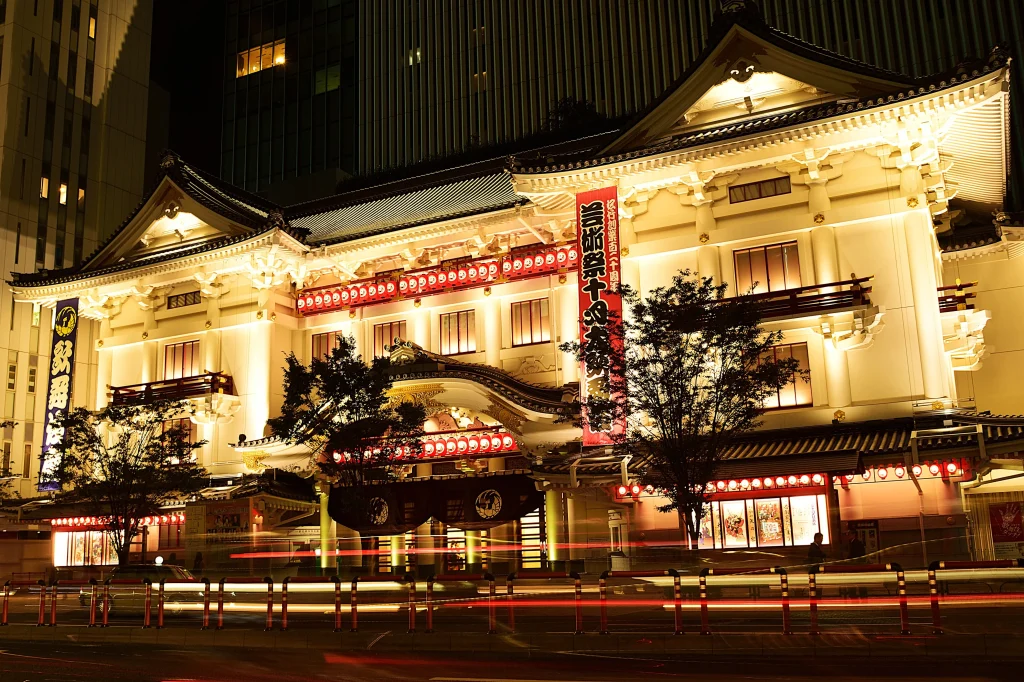
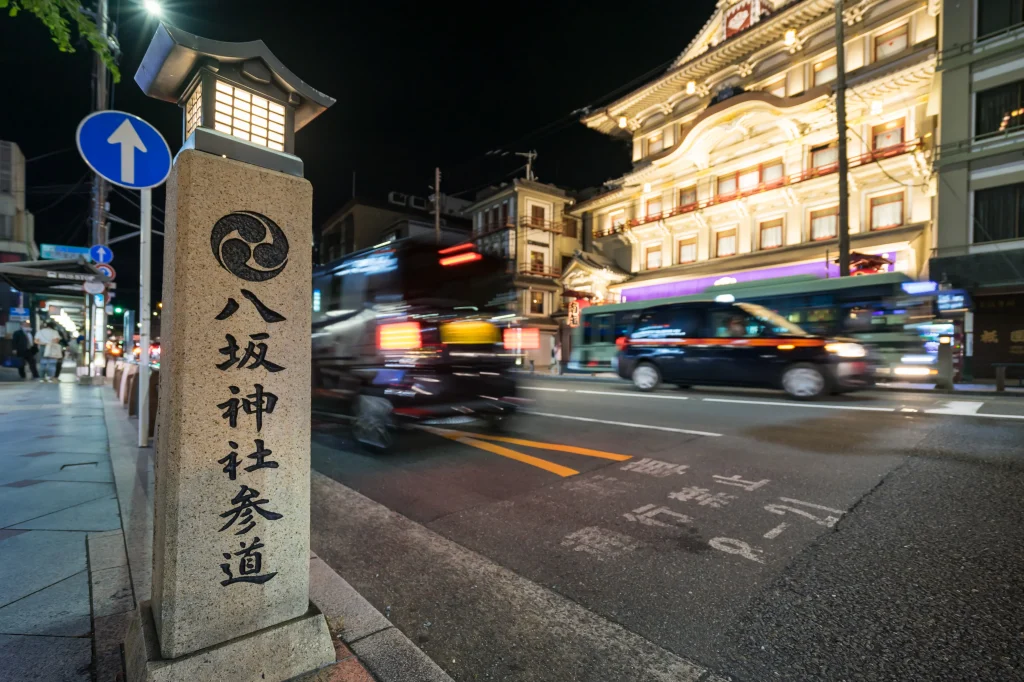
Miyako Odori opens with a call and an answer, and its curtain never falls between scenes. A few clear details will help you find your place in Kyoto’s spring.
Miyako Odori is Gion Kobu’s April dance performance, featuring geiko, Kyoto’s term for geisha, and maiko, their apprentices. These professional performing artists present dance and live music at Gion Kobu Kaburenjo, their theatre in eastern Kyoto. It is a public stage performance, not a private evening of conversation and games.
The 2027 season is scheduled for 1–30 April. Across approximately one hour, eight scenes carry the audience through the seasons. You can watch the performance alone or add tea beforehand. Start with your date and ticket choice; then take three simple points of attention into the theatre.
Miyako Odori 2027 at a Glance
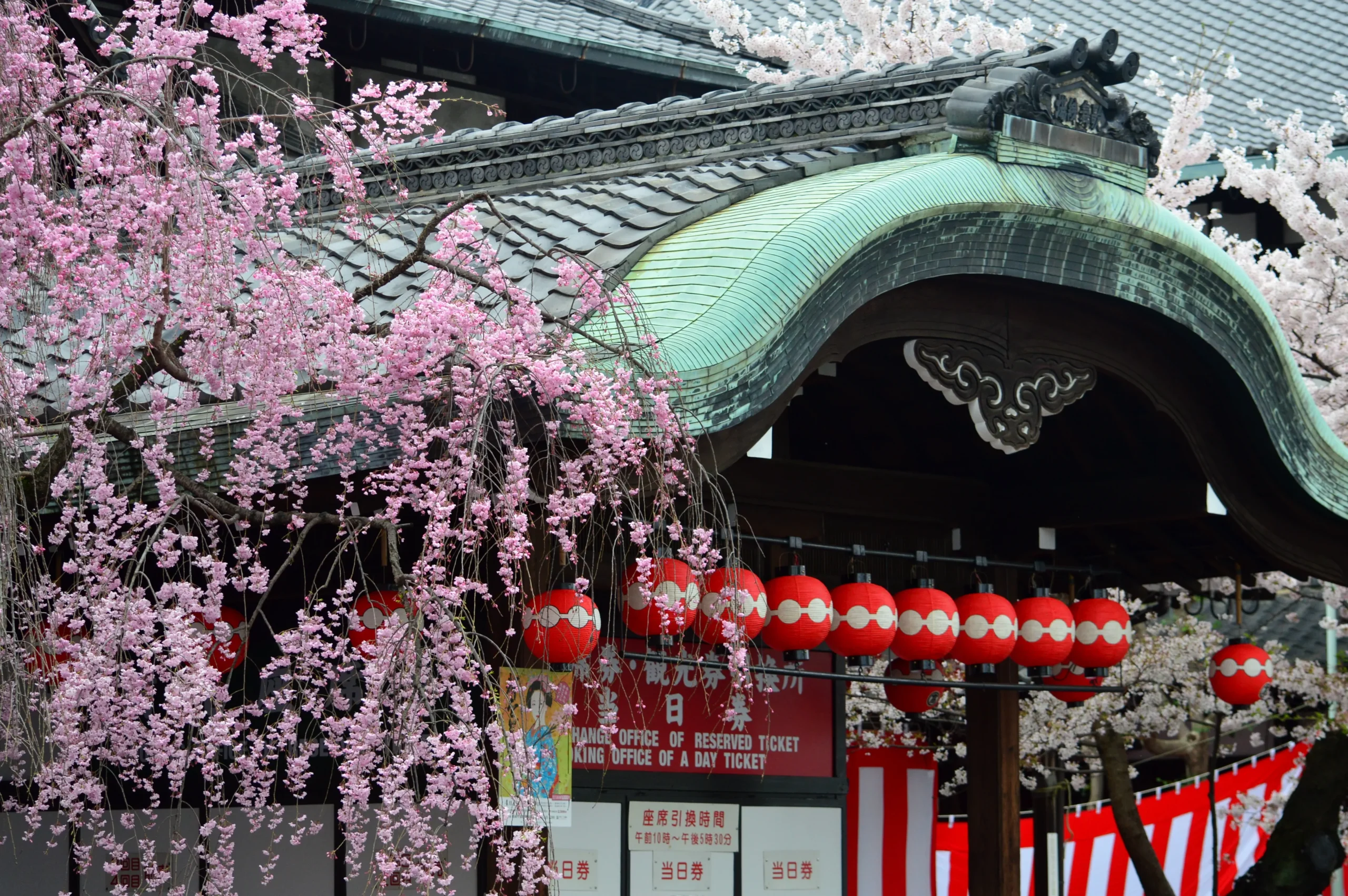
The organiser has announced three daily performances throughout April 2027. Choose a starting time that leaves room for travel, a meal and any tea service, rather than placing the theatre between two tightly scheduled appointments.
| Detail | Announced 2027 information |
|---|---|
| Dates | 1–30 April 2027 |
| Venue | Gion Kobu Kaburenjo, Kyoto |
| Starting times | 12:30, 14:30 and 16:30 |
| Running time | Approximately 60 minutes |
| General ticket prices | ¥5,000–¥8,000, including tax |
| Ticket sales begin | 6 January 2027 at 10:00 JST, UTC+9 |
| Booking channels | Official online ticket service or telephone |
| Programme booklet | ¥1,000 |
The organiser announced these plans in October 2026 and may publish further updates. General ticket sales are scheduled to begin on 6 January 2027. Before that date, an unavailable listing does not necessarily mean a performance has sold out.
Once booking opens, use the individual sales calendar to confirm your chosen date and time. The announced daily schedule provides the outline; the booking calendar shows which performances are available to purchase.
Choose Your Ticket and Decide Whether to Add Tea
Choose according to your interests, budget and seating needs. Tea adds a separate experience before the dance, but it is not necessary to follow the stage programme.
Compare the Main Ticket Options
The three general ticket categories differ in price and whether they include tea. “First class” and “second class” describe admission categories, not different performances.
| Ticket | 2027 price | What it includes |
|---|---|---|
| Second-class admission | ¥5,000 | Performance admission |
| First-class admission | ¥7,000 | Performance admission in the first-class category |
| First-class admission with tea | ¥8,000 | First-class admission and pre-performance tea |
First-class seating includes the first floor, rows A–D upstairs and side seating; second-class seating is in upstairs rows E–H. Side seats are tatami-style, with cushions on the floor. Use the official seating chart to check the position and seating arrangement before booking.
A ¥3,000 second-class student ticket is also listed. According to the organiser, it is available to middle-school, high-school, university, vocational-school and technical-college students, as well as younger children accompanied by a parent or guardian. Students of junior-high-school age and above must bring student identification. Travellers studying overseas should confirm their eligibility before booking.
What the Tea Service Adds
The tea ticket includes tea and a sweet before your booked performance, with geiko and maiko participating in the service. The sweets plate can be taken home. This is a shared tea service rather than a private conversation, meal or individual tea-making lesson.
Guests sit at tables and chairs in a format called ryūrei. Its history connects directly with visitors from abroad. According to the organiser, Gengensai, the eleventh head of the Urasenke tea school, devised the format for overseas guests who found kneeling difficult. It was first presented publicly at Miyako Odori in 1872.
If you would enjoy observing the tea preparation and service before the dance, this option adds another perspective on the artists’ work. If your priority is the performance itself, either admission-only category remains a complete choice.
Check the Conditions Before You Buy
The organiser states that tickets cannot be cancelled, changed or refunded. Settle your travel date and starting time before paying; any response to a cancelled performance is a separate matter.
Tea-ticket holders should plan to reach the venue at least 40 minutes before the show. If you have a food allergy or need particular seating, clarify those requirements before purchase. Tables and chairs at tea do not establish that every route through the building is step-free.
Three Things to Watch and Listen For
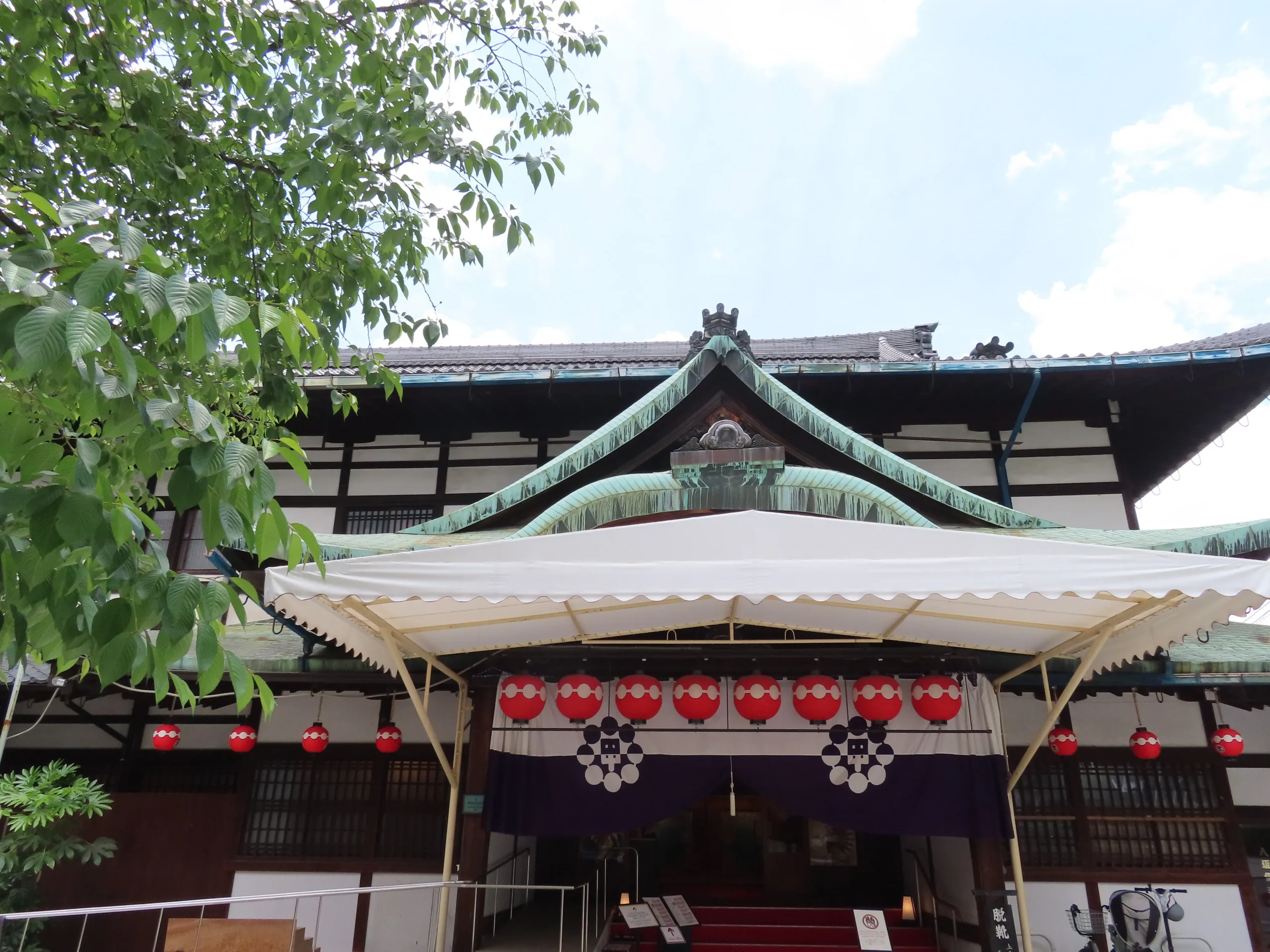
You do not need to identify every literary reference to begin following the performance. Start with three features: the opening ensemble, the changing seasons and the live musicians. They give your attention a clear route through the hour.
The Opening Call and the Group Dance
Listen for the opening call, “Miyako Odori wa,” and the answering “Yo-i Yasaa!” Then watch the dancers enter and form the opening ensemble.
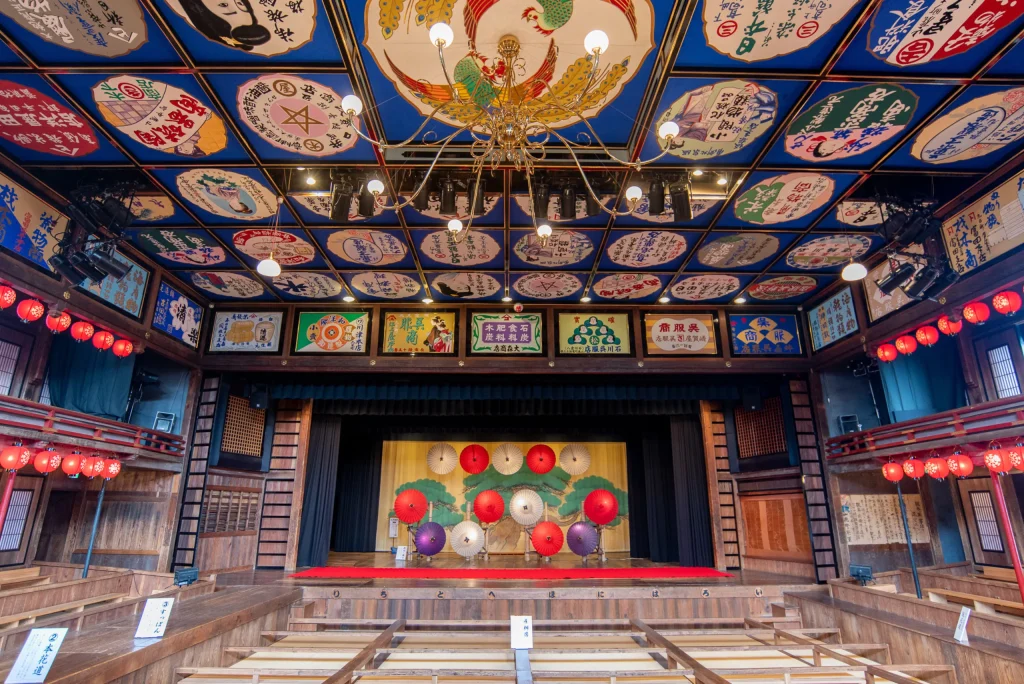
The theatre has hanamichi on both sides: passageways that connect the auditorium with the main stage. These entrances lead into the group dance before silver sliding panels. Notice how individual arrivals become a coordinated arrangement across the stage.
Rather than trying to watch every dancer at once, follow one briefly, then look across the ensemble. The shift between individual movement and the whole group makes the opening easier to take in.
Eight Scenes That Move Through the Seasons
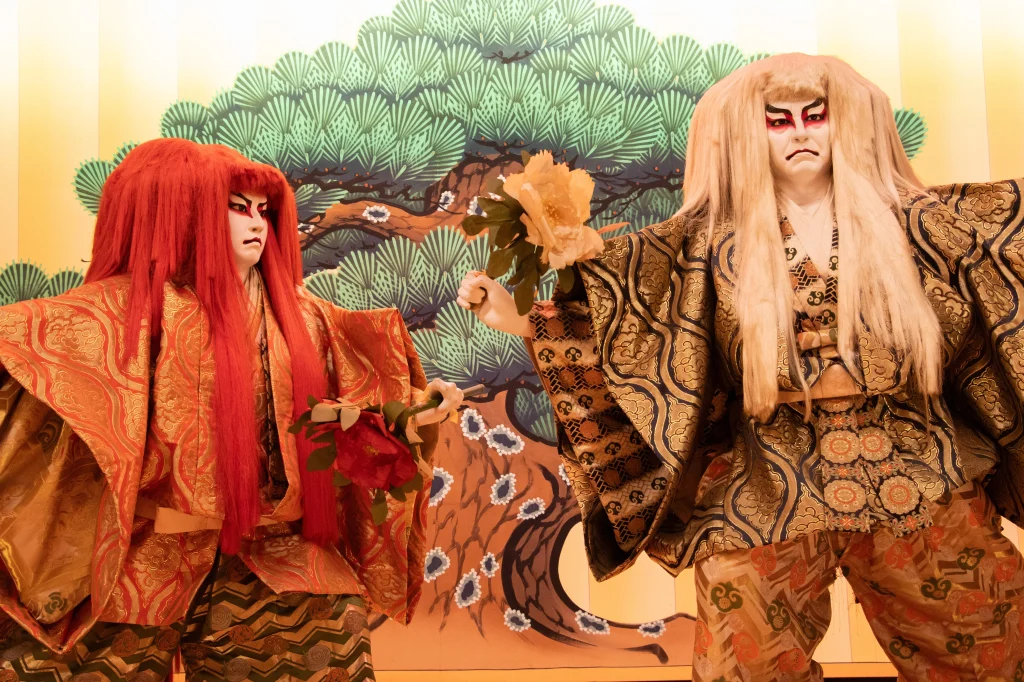
The performance progresses from spring through summer, autumn and winter, returning to spring at the end. The curtain does not fall between the eight scenes. Changes in scenery, costumes and the placement of performers help you recognise each transition.
Scenes draw on historical places and classical literature from across Japan. A short outline of the year’s production can help connect settings and characters, but the seasonal structure provides a useful thread even when the sung words are unfamiliar.
The stage’s spring imagery belongs to the production, not the weather outside. You do not need to arrange your visit around a particular cherry-blossom forecast to see the theatrical journey through the year.
The Live Musicians Beside the Stage
Give the musicians some of your attention, too. Geiko sing and play the shamisen, a three-stringed instrument, on one side of the stage. Maiko play flutes, drums and other accompanying instruments on the other.
Their visible positions make the musical work part of what you can watch. Try following a change in sound alongside a dancer’s movement or a new entrance. You need not decode the exact meaning of a gesture to appreciate how music and dance unfold together.
Why the Dance Began—and Why It Keeps Changing
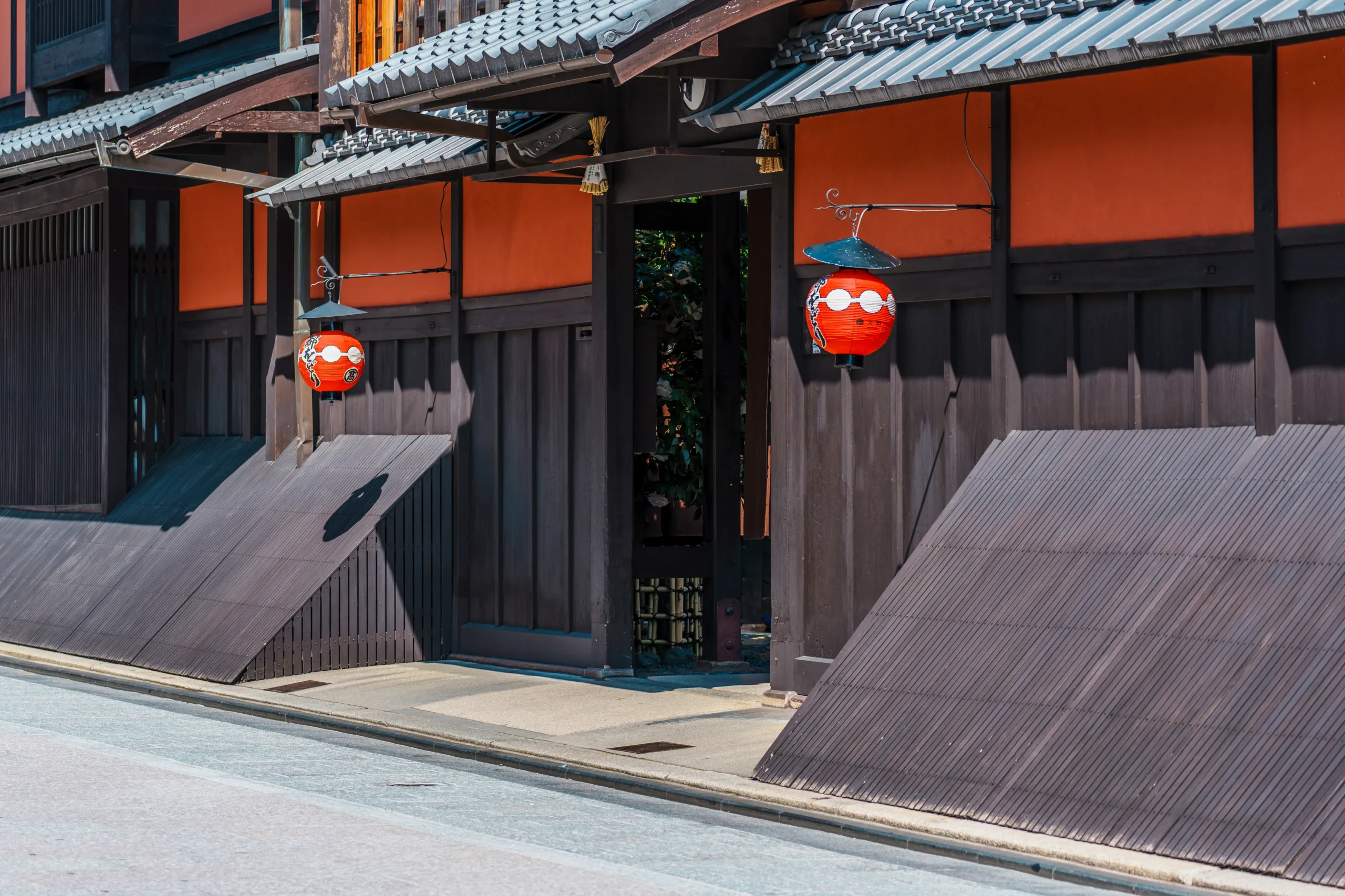
Miyako Odori combines an established dance tradition with a newly created production each year. Its history explains both the public group-dance format and the continuing work behind the choreography, costumes and scenery.
A Public Stage for Kyoto in 1872
Miyako Odori began in 1872 in connection with the Kyoto Exhibition, during efforts to revive Kyoto after the imperial capital moved to Tokyo. The organiser credits Jirōemon Sugiura, the ninth head of the establishment now known as Ichiriki-tei, and dance master Yachiyo Inoue III with developing the group-dance format.
That background gives the opening ensemble another dimension. It reflects a way of presenting Gion Kobu’s performing arts to a public audience, rather than keeping them solely within private entertainment.
The dance’s founding should not be confused with the age of the present theatre. Gion Kobu Kaburenjo was completed at its current location in 1913, and Miyako Odori returned there in April 2023 after renovation. The performance has also had periods of suspension, including wartime and the coronavirus pandemic; its long history is not an uninterrupted annual run.
The Inoue School and New Work Each Year
Gion Kobu’s dance tradition follows the Kyōmai Inoue school. Kyōmai means Kyoto-style dance, and the school identifies the tradition in which the performers train. The fifth Yachiyo Inoue is responsible for Miyako Odori’s choreography today.
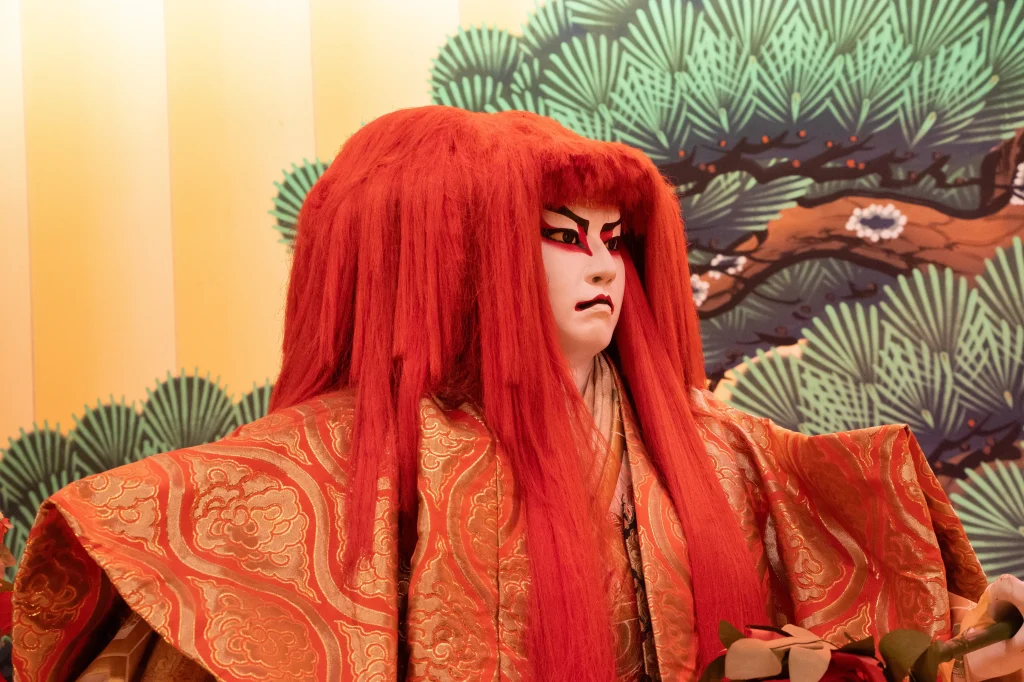
Each year brings a new production. Costumes incorporate kyō-yūzen, a Kyoto textile-dyeing technique, and Nishijin weaving, associated with the city’s Nishijin district. The scenery also draws on Japanese painting techniques.
Continuity therefore includes new writing, choreography and design. A returning visitor encounters inherited skills applied to another year’s work, rather than simply the same production repeated.
Book Officially and Prepare for the Language Gap
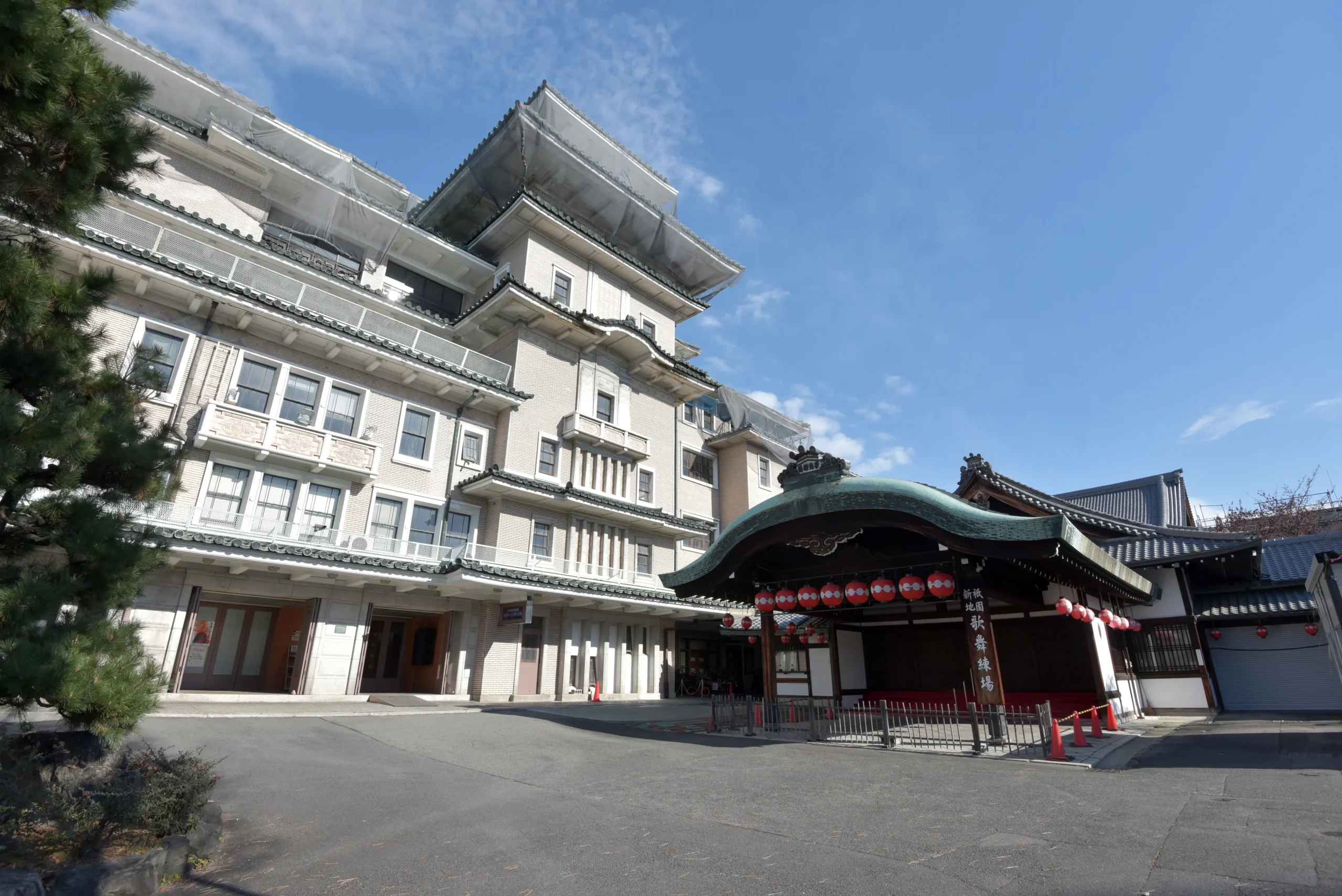
Buying the correct ticket and understanding the performance are separate tasks. Use the organiser’s booking route for the first, then consider how much explanation you would like during the show.
Follow the Official Booking Route
Begin with the official Miyako Odori booking information and follow its purchase link. As of November 2026, the 2027 GETTIIS event page does not offer English-language content. If you need help understanding the booking steps, contact the organiser before paying. The organiser recommends online membership registration before sales open.
Before payment, match five details with your itinerary:
- Event: Miyako Odori.
- Venue: Gion Kobu Kaburenjo.
- Date and starting time.
- Ticket category, with or without tea.
- Ticket collection or entry instructions.
Save the confirmation and the admission instructions after purchase. The individual sales screen should establish the accepted payment methods, any booking charges and how you receive or present your ticket. Do not assume that a payment receipt alone is sufficient for entry.
Use the Available Performance Explanation
The official website advertises an audio guide, but the 2027 language options, price and rental arrangements should be taken from the year’s service announcement.
For reference, the provider offered English guides for on-the-day rental at ¥800 in 2026. Its ¥700 advance-purchase option, plus a fee, applied to Japanese guides. These were different products; neither price should be treated as a confirmed 2027 charge.
A programme booklet is listed at ¥1,000, although its English content is not confirmed in the current announcement. If following the stories matters to you, establish the available explanation before visiting. For the broader distinction between theatre admission and private entertainment, ENJYU JAPAN’s guide to geisha experiences provides additional background.
Your Day at Gion Kobu Kaburenjo
Save the location first, then work backwards from your starting time. Tea-ticket holders need a longer arrival window; admission-only visitors can keep the sequence simpler.
Reach the Right Theatre
The address is 570-2 Gionmachi Minamigawa, Higashiyama-ku, Kyoto. Save both the address and the theatre name in English and Japanese: Gion Kobu Kaburenjo, 祇園甲部歌舞練場.
The organiser’s Japanese directions give these standard walking estimates:
- Keihan Gion-Shijō Station, Exit 6: approximately eight minutes.
- Hankyu Kyoto-Kawaramachi Station, Exit 1: approximately ten minutes.
A taxi from Kyoto Station takes approximately twenty minutes under standard conditions, with weather and traffic affecting the journey. Use the official access map to locate the theatre entrance rather than treating a station exit as the doorway.
If you need a lift or a route avoiding stairs, identify a suitable station exit separately. Walking directions and step-free directions answer different questions.
Arrival with or without Tea
With a tea ticket, reach the venue at least 40 minutes before your performance. The service begins one hour beforehand and is available only before the show associated with your ticket.
| Performance starts | Tea-ticket arrival target |
|---|---|
| 12:30 | By 11:50 |
| 14:30 | By 13:50 |
| 16:30 | By 15:50 |
Allow time for admission and finding the tea room. Follow the organiser’s instructions for your booked performance.
Follow staff directions through admission, tea, any guide collection and seating. Without tea, allow around thirty minutes as a planning margin, unless your ticket instructions specify otherwise. That is an itinerary suggestion, not an organiser-imposed arrival time.
Seating, Photography and Practical Needs
The theatre has no lift. Wheelchair users must telephone the organiser before buying tickets. If stairs are difficult, ask about access to your intended seat before booking. Confirm any companion seating needs at the same time. For children or late arrival, check the relevant admission conditions.
The published telephone number is +81 75 541 3391, with opening hours from Monday to Saturday, 10:00–17:00 JST. English telephone assistance is not confirmed.
The organiser’s 2026 guidance asked guests not to take photographs, film or record sound during the tea service or performance. Check the 2027 rules, follow staff instructions on bags and entry, and silence your phone before the show. Around Gion, keep to permitted routes and give artists travelling to work room to continue their journeys.
A Kyoto Plan for Rain, Sold-Out Shows or Different Dates
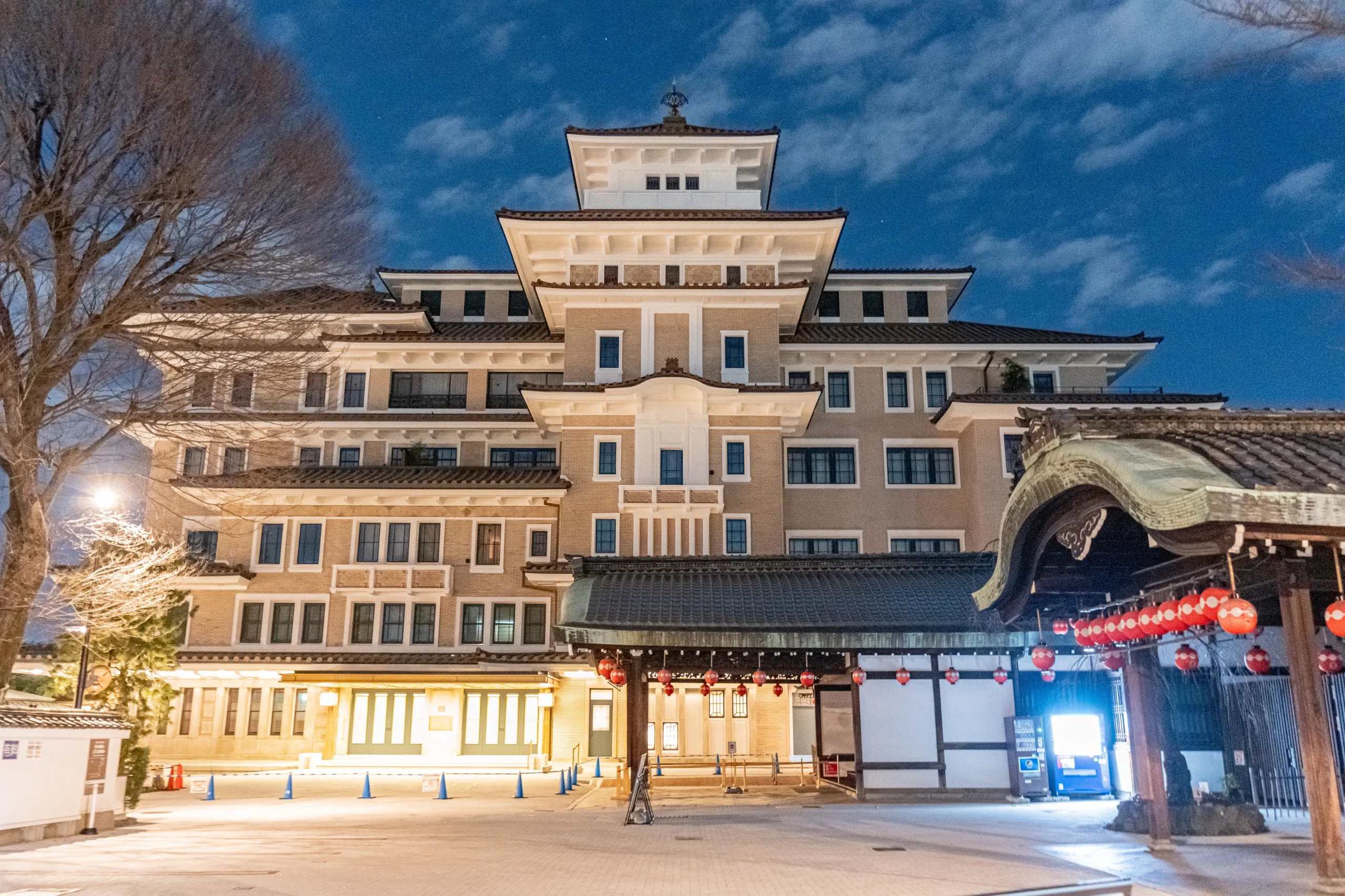
Adjust the part of the day affected by the problem. Rain, severe weather and unavailable tickets need different responses; a practical alternative should preserve your main interest without creating another difficult journey.
Keep the Performance and Shorten the Outdoor Route
For a dry day, a simple sequence is a short walk on public streets, a meal, arrival at the theatre and the performance. For a 14:30 show with tea, finish lunch early enough to reach the venue by 13:50.
In ordinary rain, shorten the walk and travel directly from your hotel or meal to the theatre. Keep the next stop indoors rather than depending on a long outdoor itinerary. ENJYU JAPAN’s April travel guide can help place the performance within a wider seasonal journey.
Severe weather is different. Consult the organiser’s announcements and transport conditions before leaving. Another nearby venue may face the same disruption, so moving to a second theatre is not automatically a safer alternative.
Change the Time—or Choose a Different Performance
If your preferred show is full, first look for another starting time that day, then another date within your stay. If neither works, choose a different performance according to its actual schedule and format.
Gion Corner offers an approximately fifty-minute introduction to several Japanese performing arts, including kyōmai. Its regular schedule lists 18:00 and 19:00 performances, with separate winter and closure arrangements.
Choose it for that broader selection, not as another session of Miyako Odori. For travel outside April, apply the same principle: find a public performance available on your dates, then confirm its district, venue and ticket arrangements.
Miyako Odori: Common Questions
A few distinctions can settle the final booking decisions.
Do I Need to Speak Japanese?
You can observe the dance, scene changes and live musicians without speaking Japanese. An available English guide or programme outline can help explain the literary references and lyrics.
Is Tea Included in Every Ticket?
No. Tea is included in the ¥8,000 first-class ticket with tea, not the ¥7,000 or ¥5,000 general admission categories.
How Early Should I Arrive?
With tea, arrive at least forty minutes before your show. Without tea, allow around thirty minutes as a planning margin and follow your admission instructions.
Is Miyako Odori the Same as Gion Odori?
No. Miyako Odori belongs to Gion Kobu and takes place in April. Gion Odori is Gion Higashi’s separate autumn performance. Similar names do not mean the same district or production.
Make Space for Kyoto’s Spring Dance
Choose your date, starting time and tea preference, then leave enough room to arrive comfortably. If you would like the performance within a wider journey, ENJYU JAPAN’s 10-Day Japan in April Tour includes Miyako Odori admission in its published itinerary. Ask which ticket arrangements are included when discussing your trip.
Let the curtain fall before you decide what comes next.
References
- Gion Kobu Kabukai – Miyako Odori: 2027 Dates, Ticket Prices, Booking Conditions and Tea Service
- Gion Kobu Kabukai – Miyako Odori English Guide: Seasonal Scenes, the Inoue Dance School and Ryūrei Tea Service
- Gion Kobu Kabukai – Access to Gion Kobu Kaburenjo: Station Directions and Location Map
- Earphone Guide – Miyako Odori 2026: English Guide Rental and Japanese Advance-Purchase Options
- Kyoto Traditional Musical Art Foundation – Gion Corner: Performing Arts Programme, Schedule and Reservations