If kabuki interests you but its unfamiliar details give you pause, let us first establish which performance fits the journey you have in mind.
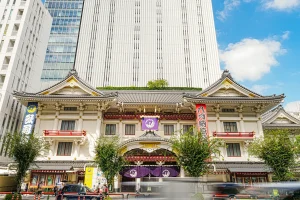
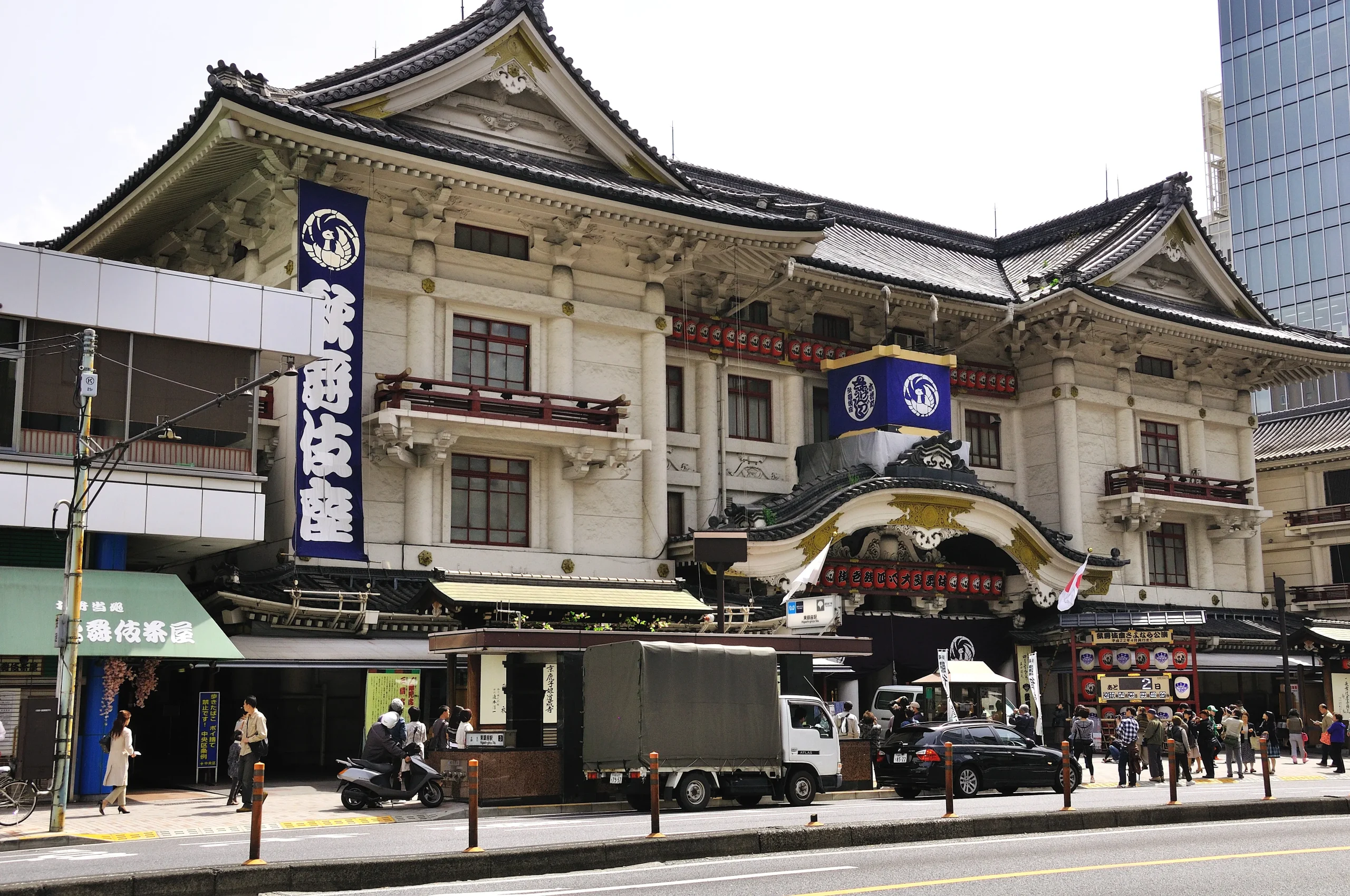
December 2026 offers two distinct choices: Tokyo’s Kabukiza Theatre, with three separately ticketed parts, and Kyoto’s Minamiza Theatre, with its annual kaomise gathering of actors from eastern and western Japan. Start with your travel dates, then compare the works, starting times and language support. Neither production continues through the final week of December.
You do not need to recognise every theatrical convention before attending. A few practical decisions can give the performance a comfortable place in your itinerary, with time around it for a meal or a short walk.
Information checked on 10 October 2026. Prices are in Japanese yen and include tax. Times use Japan Standard Time, JST (UTC+9). Exact running times and December single-act arrangements require further confirmation.
Where to See Kabuki in December 2026
Match the performance calendar to your stay before choosing a programme. Both theatres have scheduled days without performances, and Minamiza also has privately booked sessions. The dates below are your starting point.
| Theatre | Performance dates | Starting times | No performances | General sales scheduled to open |
| Kabukiza, Tokyo | 2–25 December 2026 | Part One: 11:00; Part Two: 14:30; Part Three: 18:00 | 9 and 17 December | 14 November, 10:00 JST |
| Minamiza, Kyoto | 1–24 December 2026 | Matinee: 10:30; evening: 16:00 | 9 and 17 December | 9 November, 10:00 JST |
These are the announced general sales dates. The multilingual service may offer an allocated selection of seats, so follow the relevant performance’s booking link for its sales arrangements.
Tokyo: Three Separately Ticketed Parts
Kabukiza’s three parts contain different works. A regular ticket admits you to one part, not the entire day, giving you a choice of morning, afternoon or evening starts.
A “part” is different from a single act. Each part includes its scheduled works, while single-act tickets cover an eligible act under separate arrangements. Choose the ticket format that matches your available time.
Kyoto: Matinee and Evening Kaomise
Minamiza’s matinee and evening are different programmes, each requiring its own ticket. The matinees on 12, 19 and 20 December, and the evening on 18 December, are designated private bookings.
Exclude those sessions when choosing a public performance. A privately booked matinee does not automatically make that day’s evening unavailable; check the particular programme and seat.
Arriving After the December Programmes End
If your visit begins on 26 December, these two productions will have finished. That does not establish the availability of other events, so choose a separately confirmed performance or cultural experience.
For other months and venues, ENJYU JAPAN’s kabuki schedule guide explains the broader calendar. Use it as an introduction, then match the individual production to your dates.
Tokyo or Kyoto? Choose by Time, Budget and Interests
The useful question is not which city has the better theatre, but which performance suits your stay. Begin with the city where you will already be staying, then consider the works, seat and cost. You need not add another journey to make the experience worthwhile.
Tokyo: Choose One Part, Not Necessarily the Whole Day
Part One pairs Harugasumi Kabuki Zōshi, a dance drama based on a romance involving Izumo no Okuni, with Irezumi Chōhan. Okuni is associated with kabuki’s beginnings, while the second work follows a gambler and his wife. The pairing offers dance and an intimate relationship drama.
Part Two combines Chūboku Motosuke, a new kabuki work about a servant’s loyalty, with Migawari Zazen, a comic dance drama involving marital deception. It may appeal if you would like a mixture of earnest storytelling and comedy.
Part Three presents the separated lovers of Yowa Nasake Ukina no Yokogushi and the dance drama Yagura no Oshichi. The latter uses ningyō-buri: an actor imitates the movements of a puppet in Bunraku, Japan’s traditional puppet theatre. This gives you a specific stage technique to watch.
Kyoto: Make Time for One Programme
Minamiza’s matinee combines historical drama, stylised action and the character-centred Kōchiyama. Its evening programme brings together domestic relationships, three dances and a story involving theatre people. The choice is about the works, not simply daylight versus darkness.
The 16:00 evening start does not establish the finishing time. Keep dinner and onward travel flexible until the official running-time schedule appears.
Single Acts and Seats: Match the Choice to Your Needs
| Published regular-seat category | Kabukiza, per part | Minamiza, per programme |
| Lowest-priced category | Third-floor B: JPY 4,500 | Fourth class: JPY 6,000 |
| First class | JPY 16,000 | JPY 26,000 |
| Highest published price | JPY 17,000 | Special seats: JPY 28,000 |
These are standard-seat prices, including tax. Language-guide rental and any applicable booking charges are separate. Compare the official seating plans as well as prices: a lower-priced seat may have a more distant or angled view.
The hanamichi is the actors’ runway through the audience. Its visibility depends on your seat, so consider both the main stage and this additional performance space.
Kabukiza’s fourth-level single-act seats are furthest from the stage, and some views are restricted. An upgraded second-level single-act option is also offered on selected dates, with more spacious seating nearer the stage. December’s eligible acts, prices and availability still need confirmation; do not assume every option operates every day.
Minamiza’s December announcement lists matinee and evening tickets. If watching only one act is essential, ask about the specific production rather than building your Kyoto itinerary around an assumed offering.
Why Kyoto’s Kaomise Matters in December
Kyoto’s December occasion connects the season with performers and the continuation of their art. Understanding kaomise, the nameboards and this year’s inherited stage name helps you recognise what distinguishes the visit.
Kaomise, Maneki and a Theatre’s New Season
Kaomise means “face-showing”: historically, it introduced the performers engaged for a theatre’s new season. Minamiza’s December production brings actors associated with eastern and western Japan together, carrying that theatrical tradition into the present.
The wooden nameboards associated with the occasion are called maneki. Shochiku’s historical account describes cypress boards and bold kanteiryū lettering, with thick strokes curling inward. Even without reading Japanese, you can notice how the black forms fill the wooden panels. The performers’ names become part of the theatre’s public face.
The 2026 installation date has not been verified for this guide. If the boards are important to your visit, refer to the year’s announcement for their display arrangements.
The Matinee: Historical Drama and Stylised Performance
The matinee includes the Amagasaki scene from Ehon Taikōki, a historical drama about rebellion and its consequences for a family. Political conflict and personal loss provide a starting point for following the characters’ relationships.
Otowagatake Danmari is presented for Onoe Sakon’s succession to the name Onoe Tatsunosuke III. Shūmei is the adoption of an inherited stage name, connecting a performer with an artistic lineage. Here, stylised action forms part of the presentation of that continuing tradition.
In Kōchiyama, a rogue impersonates a priest to enter a lord’s residence. Kataoka Nizaemon’s official interview discusses the character’s challenge to the powerful. Nizaemon and Matsumoto Kōshirō alternate on designated dates, so consult the A/B casting calendar if a particular actor is your reason for attending.
The Evening: Domestic Drama, Dance and a Theatre Story
The evening opens with the Nozaki Village scene from Shinpan Utazaimon. Its domestic conflicts offer a different focus from the matinee’s historical drama. The name-succession address is incorporated into this scene, rather than presented as a separate event.
Three dances—Manzai, Onna Date and Dango Uri—precede Kobikichō no Adauchi, a story involving a young man and theatre people. This combination may suit you if relationships, dance and theatre life hold particular interest.
Read the synopsis, then select a few details to follow: a hesitation, a change of pace or a shift in posture. A clear point of attention is more useful than trying to recognise every convention at once.
Tickets, Booking and English Support
Booking in English and following the performance are separate tasks. The sales service helps with the first; captions, guides and synopses support the second. Consider both before committing to a ticket.
Use the Official Booking Route
Begin with the production’s official page and follow its booking link. Before paying, review the city, date, part or programme, seat and delivery method. Save the confirmation email and follow its instructions rather than assuming every production uses the same collection procedure.
The official multilingual ticket service requires a payment card compatible with 3-D Secure 2 authentication and states that purchased tickets cannot be cancelled. Read the conditions before completing the transaction, especially if your travel plans may change.
Understand What “Sold Out” Means
“Sold Out” on the multilingual website does not always mean every sales channel has exhausted its seats. The service sells an allocation, and online sales normally close one day before Kabukiza performances and two days before performances at other theatres.
English telephone assistance is available on +81 3 6745 0888, from 10:00 to 17:00 JST. Same-day regular-performance tickets cannot be reserved by telephone, although remaining seats may be purchased at the box office.
For regular performance tickets, neither theatre holds a separate allocation for box-office sales. Kabukiza’s single-act tickets follow different arrangements, including a same-day window allocation. Refer to the December notice rather than applying the regular-ticket rules to a single act.
Check the Language Support for Your Performance
Kabukiza’s current guidance lists English or Simplified Chinese captioning devices. Rental is JPY 1,500 for a full programme and JPY 1,000 for a single act, payable in cash. Captions provide explanations and essential dialogue or lyrics; some short acts may not have the service.
Minamiza’s December listing advertises a rental English Guide and a free English Flyer. It does not specify the guide’s format, fee or quantity. Establish those details without assuming it is the same service as Kabukiza’s.
A synopsis gives you the relationships and events before the curtain rises. You can then use the available support while keeping your attention on the performers, rather than trying to work out the entire story during the show.
Arrive Prepared and Watch Comfortably
Save the theatre name, ticket instructions, correct entrance and a map before leaving your accommodation. Add any guide-collection details. A short arrival note can remove uncertainty without requiring much Japanese.
Confirm the Route for Your Ticket and Seat
Kabukiza connects directly to Higashi-ginza Station at Exit 3. Minamiza is approximately one minute from Gion-shijō Station’s Exit 6, or three minutes from Kyoto-kawaramachi Station’s Exit 1. Use the theatre’s access information to identify the appropriate route.
These directions do not guarantee step-free access. If you need a lift, wheelchair position or assistance reaching your seat, contact the theatre before purchasing. Follow the entrance instructions for your ticket, particularly for single-act seating.
As a planning allowance, aim to reach the area around 30 minutes early, with extra time for collection or guide rental. This is not a statement of the official opening time.
Keep Food and Etiquette Simple
Both theatres permit eating at seats during intermissions. For Kabukiza’s fourth-level single-act seats, plan to eat before or after your visit: these tickets do not provide access to the shops and restaurants on levels one to three.
Kabukiza has no dress code. Choose clothing that is comfortable for sitting and easy to adjust between the theatre and the walk outside. Turn off phones and smartwatches, and avoid recording, conversation, noisy packaging and leaning forward during the performance. These choices protect other spectators’ view and concentration.
Three Theatre Routes, with Plans for Rain or Sold-Out Shows
Keep the theatre day geographically simple. Rain calls for adjusting the surrounding walk; unavailable tickets call for changing the booking or experience. Respond to those problems separately, and let confirmed running times guide fixed reservations afterwards.
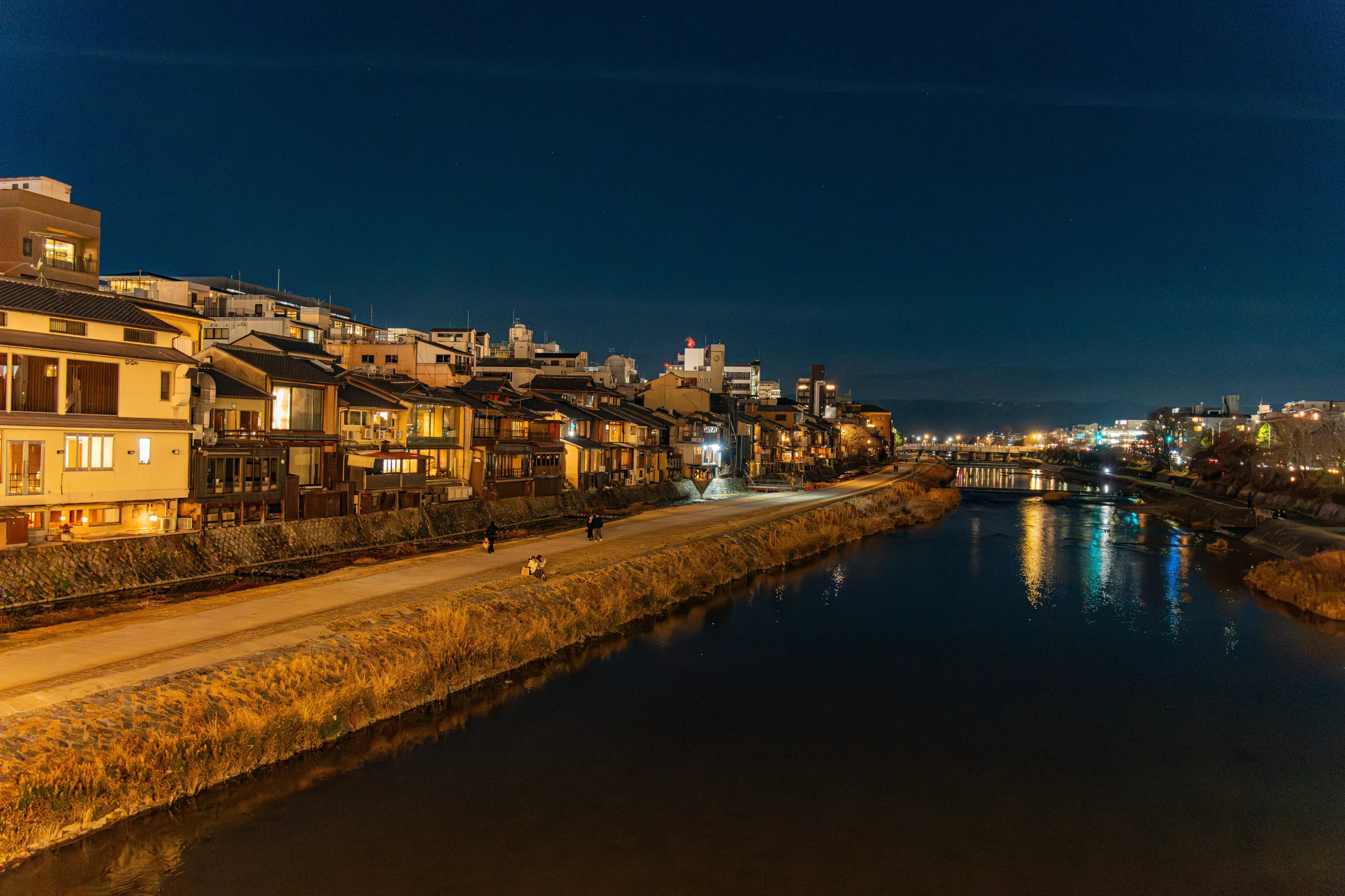
Kyoto: Kaomise with a Short Visit Around Shijō
| Plan | Suggested approach |
| A: Your chosen performance | Keep sightseeing near Shijō modest, attend one programme, and arrange an unhurried meal |
| B: Rain or cold | Shorten outdoor walking and go directly to the theatre after a nearby meal |
| C: No suitable tickets | Try another programme or date first, then select a different indoor experience |
Kyoto Museum of Crafts and Design introduces local craft materials, tools and production techniques. It is in Okazaki, requiring a separate journey from Minamiza. Published hours are 10:00–18:00, with admission until 17:30; adult admission is JPY 500.
Its announced December closures are 7, 21 and 29–31 December. Consult the latest calendar before visiting, as closure dates may change.
Alternatively, GEAR offers a non-verbal performance lasting about 90 minutes without an interval. It requires its own booking and is not kabuki. The third-floor venue has no lift and no wheelchair viewing spaces, so consider its physical conditions before choosing it.
Tokyo: Kabukiza with a Flexible Ginza Visit
| Plan | Suggested approach |
| A: Your chosen part or act | Combine it with a nearby meal and a short Ginza visit |
| B: Rain or cold | Reduce outdoor browsing and use the confirmed station connection |
| C: No suitable tickets | Try another part, date or December single act before choosing a different experience |
The Kabukiza Gallery offers a smaller indoor visit to the theatre’s world. Its general listing gives free admission and hours of 10:30–18:00, with irregular closures. Multilingual QR codes accompany the displays; refer to December’s opening arrangements before relying on the visit.
For a structured introduction, the official English-language kabuki workshop lists sessions on 7 December at 14:00, 11 December at 17:30 and 21 December at 14:00. The approximately 90-minute workshop uses demonstrations and English interpretation to explain acting and stage techniques.
Adults aged 16 and over pay JPY 15,000; children aged 6–15 pay JPY 10,000, and under-sixes cannot attend. Book separately through the designated service, not the regular Kabukiza box office. This is a different experience, not a cheaper substitute or a full kabuki performance.
Tokyo and Kyoto: Keep Transfers Separate from Performances
Where possible, place the performance on a day already spent in its city, rather than immediately after an intercity journey. This leaves more room for delays, ticket procedures and a comfortable arrival.
Consider the other city only when it already fits your route. For dates after both productions finish, choose an alternative with a confirmed opening or performance schedule. A return journey solely to find a seat need not become the centre of your holiday.
December Kabuki: Quick Questions
These answers bring together the conditions most likely to change your booking decision.
Can I See Kabuki After Christmas?
Not in these two December runs. Kabukiza ends on 25 December and Minamiza on 24 December; other productions require separate checking.
Do I Need to Understand Japanese?
You can use synopses and the advertised English support, but their coverage varies. Confirm the service for your programme rather than expecting every line to be translated.
What If Tickets Appear Sold Out?
The message may reflect the multilingual allocation or its sales deadline. Enquire through the English telephone service, then keep another date or experience ready.
Choose the Performance That Fits Your December Journey
Choose the occasion and works that interest you, then match them to your dates, energy and comfort. A part in Tokyo, a programme in Kyoto or an eligible single act can each deserve a place in the journey without filling the whole day.
If theatre needs to fit a wider itinerary, ENJYU JAPAN’s Tailor-Made Tour service offers a place to discuss your preferred pace and plans. Identify the performance you want, reserve through the appropriate channel, and leave room around it for the rest of your visit.
And when the curtain falls, allow yourself one small indulgence: leave the next hour unplanned.
References
- Shochiku / Kabuki-bito – December Grand Kabuki at Kabukiza: 2026 Dates, Three-Part Programme, Seat Prices and Ticket Sales
- Shochiku / Kabuki-bito – Minamiza Kaomise: 2026 Programmes, Name Succession, Seat Prices and Private Bookings
- Shochiku / KABUKI WEB – How to Buy Tickets: Multilingual Booking, English Telephone Assistance and Sales Deadlines
- Shochiku / KABUKI WEB – Service for International Visitors: Captioning Devices, Languages and Rental Fees
- Shochiku / Kabuki-bito – Kabukiza Single-Act Tickets: Reserved Seating for Same-Day Window Sales from October 2026
- Shochiku / KABUKI WEB – Upgraded Single Act Tickets: Second-Level Seating and Booking Arrangements
- Shochiku / Kabuki-bito – Preparing the Maneki Boards: Cypress Panels and Kanteiryū Lettering
- Shochiku / Etix – Official Multilingual Ticket Service: Kabuki Workshop Dates, Prices, Age Limits and Purchase Conditions
- Shochiku – Kabukiza Gallery: Admission, Opening Hours and Multilingual Displays
- Kyoto Museum of Crafts and Design – Plan Your Visit: Admission, Opening Hours and Transport
- Kyoto Museum of Crafts and Design – Closing Days for 2026: December and New Year Closures
- GEAR – Official FAQ: Non-Verbal Performance, Running Time, Stairs and Wheelchair Restrictions