If you’re visiting Japan, you might be wondering where to see ukiyo-e and which museums are worth fitting into your trip. Japan has several museums dedicated to the art, but they offer quite different experiences. Some focus on Hokusai or Hiroshige, while others introduce regional styles or connect the prints with the places that inspired them.
This guide introduces some of the most interesting ukiyo-e museums in Japan, along with a few different ways to experience the art today. If landscape prints are what first caught your attention, there are also places where the museum visit can be combined with old highways, post towns and scenery connected with the world depicted in the prints.
The History and Meaning of Ukiyo-e
Ukiyo-e emerged in the early 17th century and flourished from the late 18th to the mid-19th century, becoming a defining form of Japanese art. Early prints were mostly monochrome or hand-colored, but with the development of nishiki-e, a multi-color woodblock printing technique, ukiyo-e became increasingly colorful and detailed.
Deeply rooted in Edo-period popular culture, ukiyo-e captured kabuki actors, beautiful women, everyday life and famous landscapes. It could also be playful or strange. Ghosts, yokai, warriors and dramatic stories appeared alongside the landscapes that are now among its most familiar images.
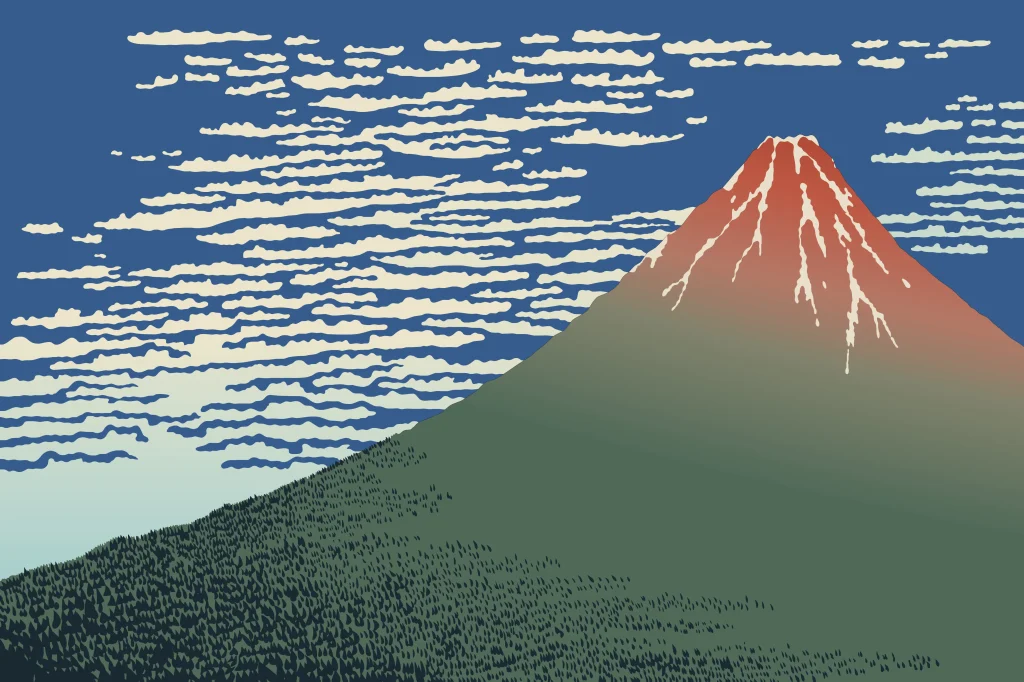
Some of the most iconic works include Thirty-Six Views of Mount Fuji by Katsushika Hokusai and The Fifty-Three Stations of the Tokaido by Utagawa Hiroshige.
Ukiyo-e also had a major influence outside Japan. In 19th-century Europe, the growing interest in Japanese art became known as Japonisme. Artists including Vincent van Gogh, Claude Monet and Edgar Degas were interested in the unusual compositions, cropping, flat areas of color and treatment of space they found in Japanese prints.
Van Gogh’s interest was especially direct. He made painted interpretations of Hiroshige prints, including Sudden Shower at Ohashi and Atake. For travelers already interested in Impressionism or modern Western art, seeing ukiyo-e in Japan can therefore reveal another side of works and artists they may already know.
Ukiyo-e Museums and Experiences in Japan
Japan has museums and galleries where visitors can see ukiyo-e from very different perspectives. One thing to keep in mind is that original woodblock prints are sensitive to light. Museums often rotate their displays, so a famous work listed in a collection is not necessarily on view on the day you visit.
If there is a particular print or artist you especially want to see, check the current exhibition before making a special trip.
The Hokusai-kan Museum
The Hokusai-kan Museum, located in Obuse, Nagano, is dedicated to Katsushika Hokusai. Established in 1976 in the town where Hokusai spent time during the later years of his life, the museum offers a closer look at the final phase of his artistic journey.
Its collection includes prints, paintings and books, but some of its most distinctive works are much larger than the ukiyo-e prints most visitors know. Two festival floats display ceiling paintings created by Hokusai late in his life, giving the museum a strong connection with his years in Obuse.
Nearby Gansho-in Temple adds another reason to spend time in the town. Its main hall contains a large phoenix ceiling painting that Hokusai completed at the age of 89. Visiting the museum and temple together gives a broader picture of his later work than a print exhibition alone.
The Japan Ukiyo-e Museum
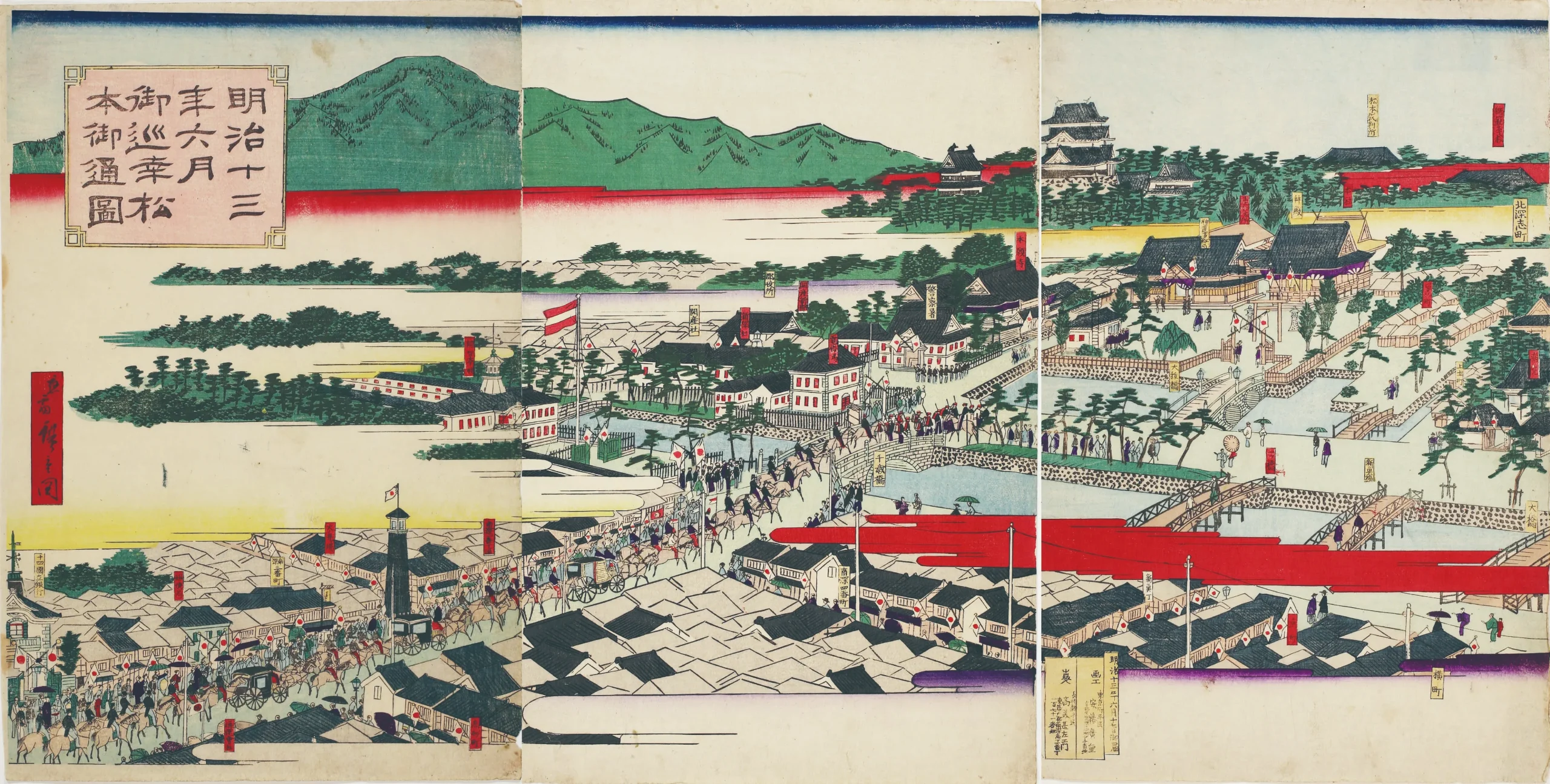
The Japan Ukiyo-e Museum, located in Matsumoto, Nagano, was established in 1982 to showcase the remarkable ukiyo-e collection assembled by generations of the Sakai family.
Its holdings number approximately 100,000 prints, paintings, scrolls, books and later works, with particularly strong representation of artists such as Hokusai, Hiroshige and Kuniyoshi.
Only a small part of such a large collection can be displayed at any one time, and exhibitions change periodically. The museum is therefore better understood as a chance to see a carefully selected part of an unusually deep private collection rather than a gallery where all of its famous works are permanently on view.
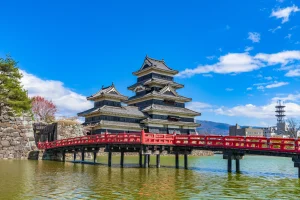
Bonus Experience: Hida Takayama Ukiyoe INN GARON
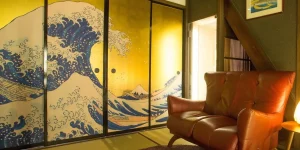
Hida Takayama Ukiyoe INN GARON offers something quite different from a conventional museum.
The inn occupies a traditional house in Takayama that has been converted into a private ukiyo-e gallery stay for one group per day. Reproductions of works by artists including Hokusai and Sharaku appear throughout the building.
These are not museum originals, but staying with the images around you gives you far more time to notice them than a short gallery visit normally would. GARON is also only a short walk from Takayama’s Sanmachi historic district, so the stay can be combined easily with the town’s traditional streets.
Shizuoka City Tokaido Hiroshige Museum of Art
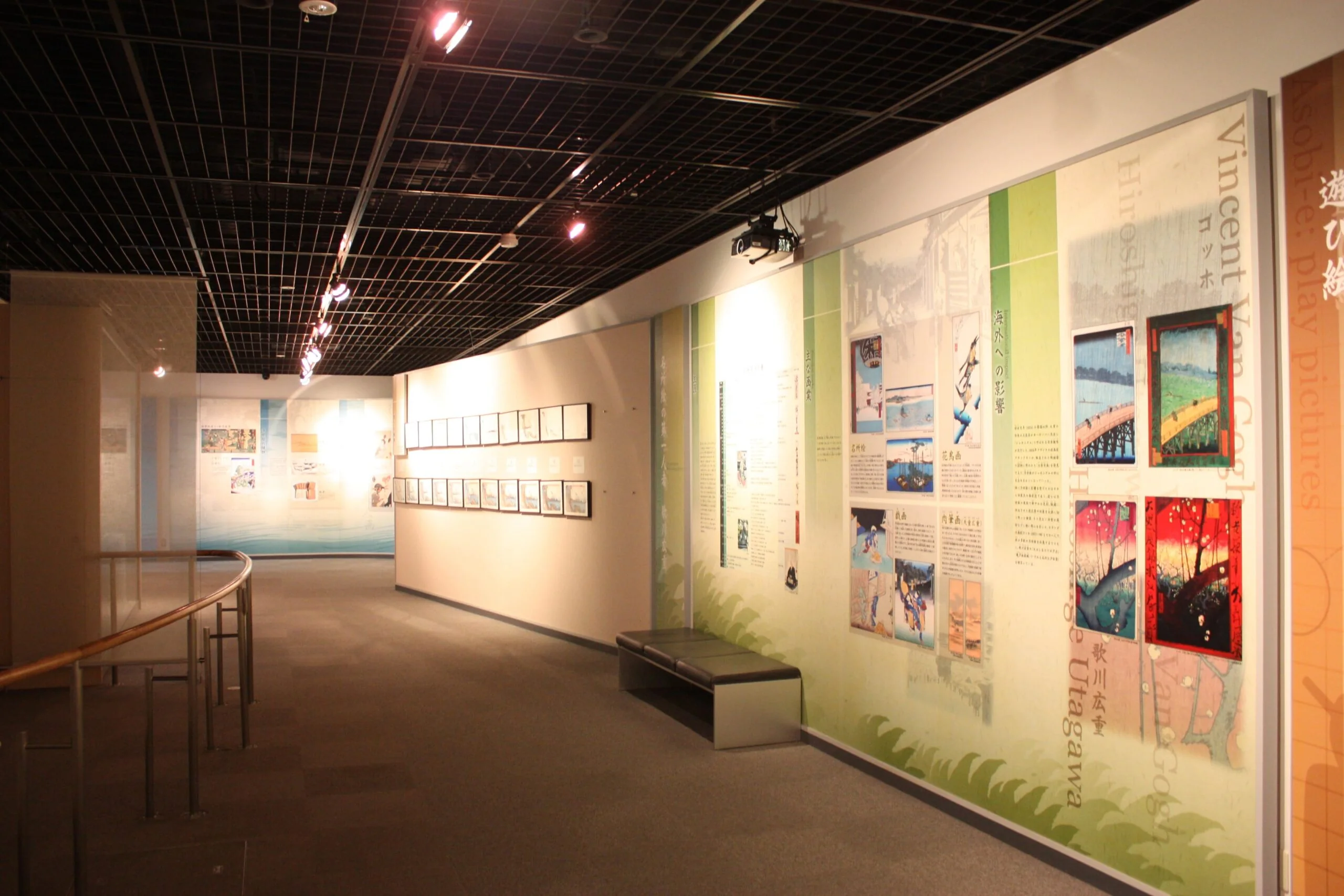
The Shizuoka City Tokaido Hiroshige Museum of Art was established in 1994 and was Japan’s first museum dedicated to Utagawa Hiroshige.
Its setting is a large part of its appeal. The museum stands in Yui, one of the old post towns along the Tokaido, on the site of the former honjin where high-ranking travelers once stayed. Its collection of around 1,400 works centers on Hiroshige and includes material connected with his famous Tokaido landscapes.
The main museum is currently closed for renovation from June 1, 2026 through March 31, 2027, with reopening planned for early April 2027. During the closure, the nearby Tokaido Yui-shuku Exchange Center is operating a satellite museum with reproduced prints and ukiyo-e-related activities. Check the museum’s official website before planning a visit.
The surrounding area makes this museum particularly interesting for anyone drawn to Hiroshige’s landscapes. Satta Pass, between Yui and Okitsu, appears in his Tokaido imagery. On a clear day, the view still takes in Mount Fuji and Suruga Bay, although railways and modern roads now run through the landscape below.
That contrast is part of what makes the location worth seeing. You are looking at the same geography Hiroshige interpreted, but also at nearly two centuries of change since the print was made.
Nakasendo Hiroshige Museum of Art
The Nakasendo Hiroshige Museum of Art in Ena, Gifu, gives Hiroshige’s work a different geographical context.
The historic Nakasendo passes through Ena, where Oi-juku was once an important post town. The museum holds more than 1,500 works and related materials, including around 900 ukiyo-e prints by Hiroshige. One of its important collections is The Sixty-Nine Stations of the Kisokaido, created by Keisai Eisen and Hiroshige.
Because ukiyo-e prints are vulnerable to heat and light, original works are rotated regularly rather than kept on permanent display.
The museum is about five minutes on foot from JR Ena Station, so it is also a relatively straightforward Central Japan stop. For travelers interested in landscape prints, it can work particularly well as part of a wider trip through the old post towns and mountain routes of the Nakasendo.
Read more: Traditional Old Towns in Japan
The Sumida Hokusai Museum
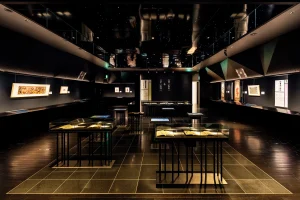
The Sumida Hokusai Museum, located in Tokyo’s Sumida area, opened in 2016 close to where Katsushika Hokusai was born and spent much of his life.
The museum explores his career through prints, sketches, models, changing exhibitions and digital material. Its educational exhibition makes extensive use of high-resolution reproductions, allowing visitors to study works that cannot remain exposed to light permanently. Original works are shown through rotating exhibitions.
That makes Sumida a useful place for understanding Hokusai’s life and work as a whole rather than visiting solely in the hope of seeing one famous print.
Ota Memorial Museum of Art
The Ota Memorial Museum of Art in Harajuku is another useful Tokyo option, especially for visitors who want a museum devoted to ukiyo-e rather than to one particular artist.
Its collection contains around 14,000 works, including pieces by Hokusai, Hiroshige, Utamaro and Kuniyoshi, as well as artists from other periods in ukiyo-e’s development.
There is no permanent exhibition. Works are changed monthly according to the current theme, so one visit might focus on Hiroshige while another could feature actors, animals, supernatural subjects or lesser-known artists. The museum also closes between exhibitions while displays are being changed, making it especially important to check the calendar before visiting.
Its Harajuku location makes it easy to combine with other parts of a Tokyo itinerary while offering a very different atmosphere from the streets immediately outside.
Kamigata Ukiyoe Museum
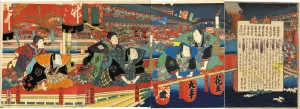
The Kamigata Ukiyoe Museum, located near Hozenji Temple in Osaka’s Dotonbori district, focuses on Kamigata ukiyo-e, the print tradition that developed around Osaka and Kyoto rather than Edo.
Many of its works depict kabuki actors. Compared with the more stylized actor prints associated with Edo, Kamigata artists often portrayed performers with more individual facial features and details connected with specific performances.
The museum is small, with around 30 works displayed at a time and exhibitions changing periodically. That makes it easy to include while exploring Namba and Dotonbori rather than planning a large part of the day around it.
Visitors interested in how ukiyo-e was made can also look into the museum’s woodblock-printing experiences. They are a useful reminder that a print depended on several skilled people, including the artist, carver and printer.
A Modern Way to Experience Ukiyo-e
Seeing an original print and seeing a digital interpretation are very different experiences, and there is value in keeping that distinction clear.
Original ukiyo-e lets you study the physical scale, paper, pigments and extraordinarily fine carved lines. Newer immersive exhibitions approach the same images differently, using movement and enlarged projection to draw attention to composition, color and storytelling.
The touring Ukiyoe Immersive Art Exhibition uses more than 300 works by artists including Hokusai, Hiroshige, Kuniyoshi, Utamaro and Sharaku as the basis for 3DCG animation and projection mapping.
The exhibition moves between cities, so check the official schedule for current and upcoming venues rather than planning around an old location. A permanent Ukiyoe Immersive Art Museum is also scheduled to open in Ginza, Tokyo, in spring 2027.
Interestingly, these exhibitions are not always purely digital. The touring exhibition has also included Edo-period prints and later reproductions alongside the projections, while the planned Ginza museum says it will display original ukiyo-e as well.
This kind of presentation also suits some of ukiyo-e’s stranger subjects. Ghosts, yokai and dramatic stories were an important part of Edo-period visual culture, not something added only by modern exhibitions.
For travelers particularly interested in that side of Japanese art, the Yumoto Koichi Memorial Japan Yokai Museum (Miyoshi Mononoke Museum) in Hiroshima Prefecture is an interesting related stop. It is a yokai museum rather than an ukiyo-e museum, but its collection includes colored woodblock prints alongside picture scrolls and other historical material. Interactive digital displays include a teamLab space where visitors can create a yokai and see it appear in the projected environment.
Experience It Yourself: A 7-Day Ukiyo-e Journey Through Central Japan
If reading about these museums has inspired you to see ukiyo-e in person, there is a way to experience two of them, the Hokusai-kan in Obuse and the Japan Ukiyo-e Museum in Matsumoto, as part of one cultural journey.
Our Ukiyo-e Scenic Rail Tour takes art lovers beyond the museums themselves and through parts of Central Japan that add context to the prints.
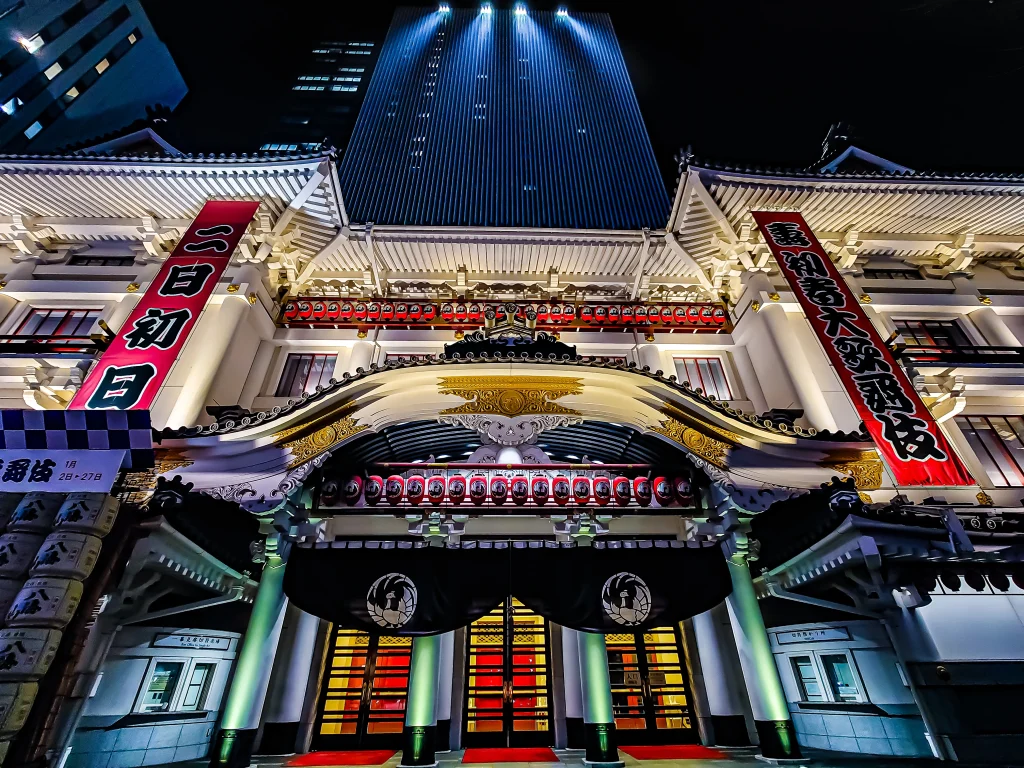
Along the way, you’ll visit Matsumoto, walk through the preserved post town of Narai-juku, travel through the Kiso Valley, and visit the two museums featured in this guide. The journey also includes hands-on craft experiences, scenic rail travel and a Kabuki performance in Tokyo.
For anyone especially interested in landscape ukiyo-e, this combination can make the art easier to place in context. A print of an old highway feels different after walking through a surviving post town and seeing the mountains, valleys and routes that shaped travel in Edo-period Japan.
Summary
Ukiyo-e has had an influence far beyond Japan, but seeing it here offers something that is difficult to reproduce elsewhere.
In Tokyo and Osaka, specialist museums reveal different artists and regional traditions. In Obuse, Matsumoto, Yui and Ena, the art can be connected with the towns, roads and landscapes around it. Newer immersive exhibitions offer another way into the same visual world without replacing the experience of seeing an original print.
If one artist or work is especially important to you, remember that original ukiyo-e is usually rotated for conservation reasons. Check the current exhibition before traveling a long distance solely to see a particular print.