If sumo interests you but its customs give you pause, let us establish a few facts before you choose your first visit.
Morning practice offers a chance to observe the preparation behind professional sumo: repeated movements, practice bouts and instruction. ENJYU JAPAN can arrange a stable tour around your travel dates and the visitor opportunities available. The location and conditions depend on the visit, rather than one fixed address or timetable.
This guide explains what you may see, how to assess a visit and what to prepare beforehand. With the practical details settled, you can give your attention to the wrestlers’ movements—and leave the rest of your morning pleasantly unhurried.
Understand What Morning Practice Offers
Begin with what interests you about sumo. Training, tournament competition and audience-focused demonstrations offer different ways to explore it.
Observe the Preparation Behind Competition
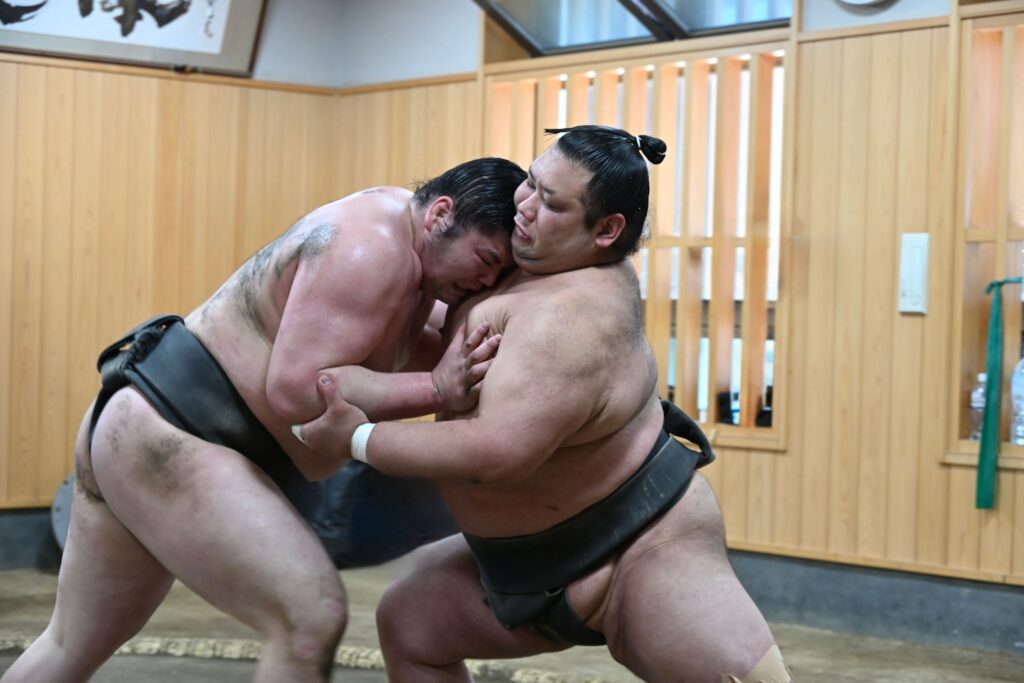
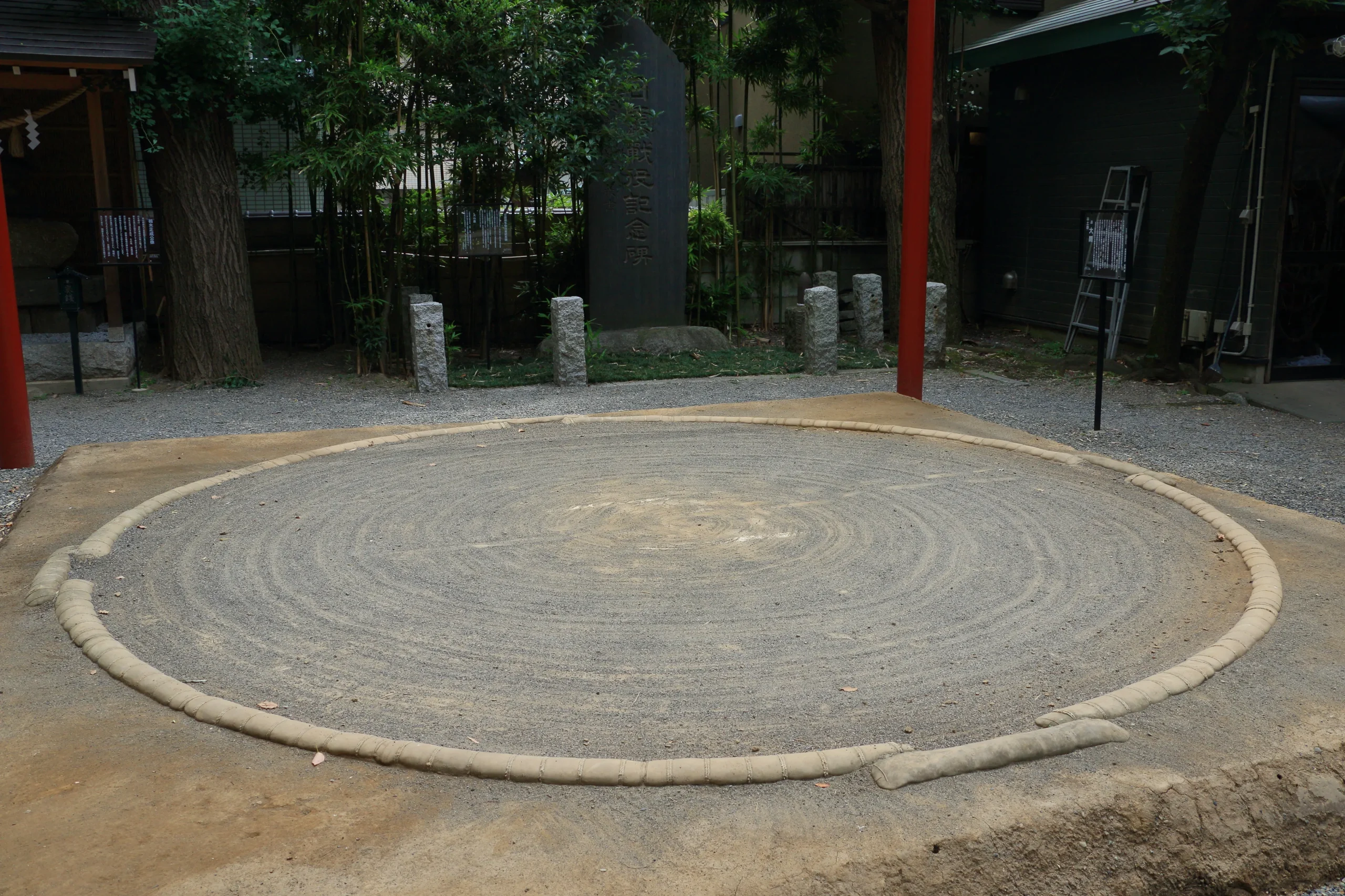
A heya is a sumo stable: the organisation and premises where wrestlers train and where stable life takes place. Asageiko means morning training. Visitors observe athletes preparing for competition, not a performance created for an audience.
Training follows the needs of the wrestlers. Its content and pace can vary, so a visit should not be approached as a fixed sequence of demonstrations. Repetition, instruction and pauses between exercises are part of the experience.
Watching practice suits travellers who enjoy looking closely at movement and technique. You do not need detailed knowledge beforehand, but an interest in quiet observation will help you appreciate the session.
Morning Practice, Tournaments and Sumo Shows
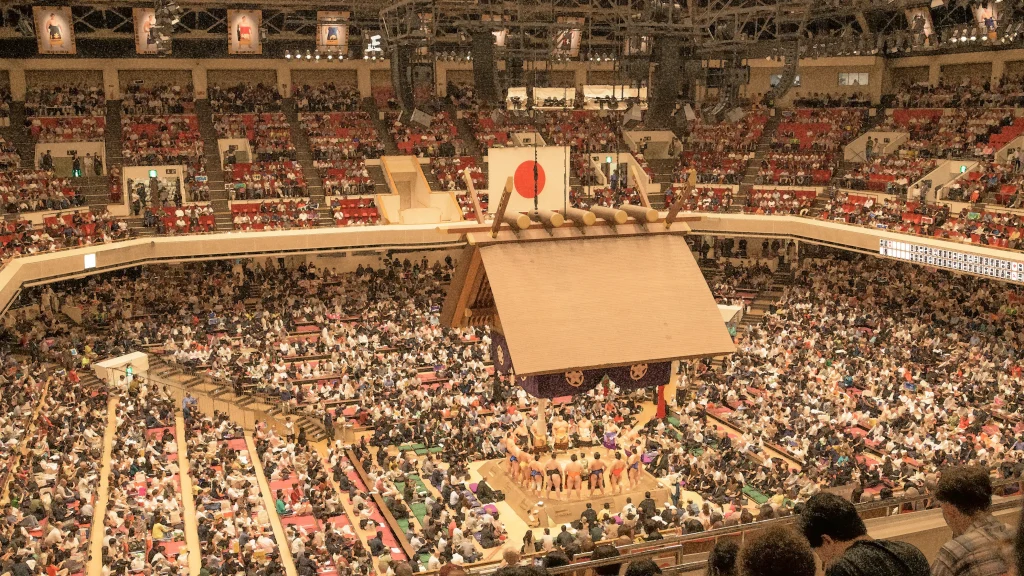
A Grand Sumo Tournament presents official competitive bouts. A sumo show may offer explanations, demonstrations and audience participation. Choose according to what you want to see, without treating the formats as interchangeable.
| Experience | What you primarily see | What to establish beforehand |
|---|---|---|
| Morning practice visit | Training, repetition and instruction | Available dates, viewing conditions and explanation |
| Grand Sumo Tournament | Official competitive bouts and tournament ceremonies | Tickets, seats and your preferred day |
| Sumo show | An audience-focused programme | Performers, content and any participation |
If observing active wrestlers’ preparation is your priority, check that this is what the proposed visit includes. If participation matters more, another format may be a better fit.
For tournament dates and tickets, see our Grand Sumo Tournament guide. Here, the focus is a morning at a stable.
Plan a Visit That Fits Your Trip
Your dates and practical needs are more useful starting points than a particular stable name. Consider what would make the visit comfortable and worthwhile for everyone in your party.
Consider Your Dates and Travelling Companions
Identify the mornings you could set aside during your Tokyo stay. If several are possible, keep more than one available until the arrangements are confirmed.
Consider your companions as well as your own interests. A child may find a long period of quiet observation difficult, while another traveller may need a chair or a route without stairs. Resolve essential requirements early rather than hoping they can be accommodated at the entrance.
Your hotel location also affects the morning. An early meeting may be straightforward from one district and require more travel from another. Check the journey once the meeting point is known.
Understand the Viewing Arrangement
Ask how the visit works: where you will observe, when explanations are provided and what happens before and after training. These details help you assess the experience rather than relying on its title alone.
A private guide does not automatically mean a private training session. Nor does a stable visit automatically include a meal, hotel transfer or photographs with wrestlers. Treat these as separate details to establish.
Finding a stable on a map does not give you permission to enter. For an arranged visit, follow the confirmed meeting instructions and wait for your host or guide.
Check Your Dates and Allow Enough Time
Training and visitor admission are separate questions. A tournament calendar provides context, but it does not establish whether a particular visit is available.
Check the Actual Visitor Opportunity
Competition, travel, training and the stable’s circumstances can affect arrangements. Avoid assuming that every stable receives visitors throughout a particular month.
Use this sequence:
- Identify suitable mornings during your stay.
- Check which visits are available on those dates.
- Resolve participation and comfort requirements before payment.
- Read the final itinerary before travelling.
If your first choice is unavailable, consider another morning before reorganising the whole journey. When your dates are fixed, a different sumo-related experience may suit your plans better.
Separate Meeting Time from Practice Time
Establish three timings: when to meet, how long you expect to watch and when the whole programme should finish. An advertised duration may include briefing, walking or other arrangements.
Ask whether the finishing time is fixed or approximate. Use that information to plan onward travel rather than assuming the full programme takes place beside the ring.
Leave a buffer before a long-distance train or another booking you cannot move. A break afterwards is easier to adjust than a tightly timed connection and gives you time to absorb what you have seen.
What to Check Before Booking
A suitable visit should work for everyone in your party. Precise questions are especially helpful when travelling with children or needing particular seating.
Seating, Children and English-Language Support
If floor seating is difficult, ask whether a suitable seat can be confirmed. A chair does not establish step-free access: the entrance and route to the viewing position are separate questions.
| Topic | What to confirm |
|---|---|
| Seating | Floor seating or a chair; confirmation of essential seating needs |
| Access | Steps, stairs and the route to the viewing position |
| Children | Age conditions and expected time spent observing quietly |
| English | When explanations are provided and how questions are handled |
| Meeting | Railway line, exit, map and contact details |
| Leaving | Toilet arrangements, early exit and re-entry |
| Recording | Photographs, video and online sharing |
Give the organiser your children’s ages and consider how comfortably they can remain quiet during observation. Choose a visit that your family can enjoy without unnecessary strain.
English explanation can take different forms. Ask whether it is provided before entry, during permitted parts of the visit or afterwards. Do not assume that questions can be asked throughout training.
Price, Inclusions and Changes
Check the final price for your dates and party size. Establish whether tax is included and whether the amount is per person or for the group.
Review transfers, meals, guide services and additional stops individually. If transport is included, clarify the pickup point and contact arrangements. For a meal, explain allergies or dietary requirements before accepting it.
Read the conditions for personal cancellation, operational cancellation, lateness and transport disruption. Ask what happens if the booked practice visit cannot take place.
If another date or experience is proposed, consider whether it suits your original purpose. A demonstration by retired wrestlers, for example, differs from observing active wrestlers’ training. Understand the replacement before agreeing to the change.
What to Look for During Practice
You do not need to know every winning technique to enjoy training. Following a few movements makes the session easier to understand.
Footwork, Balance and Repetition
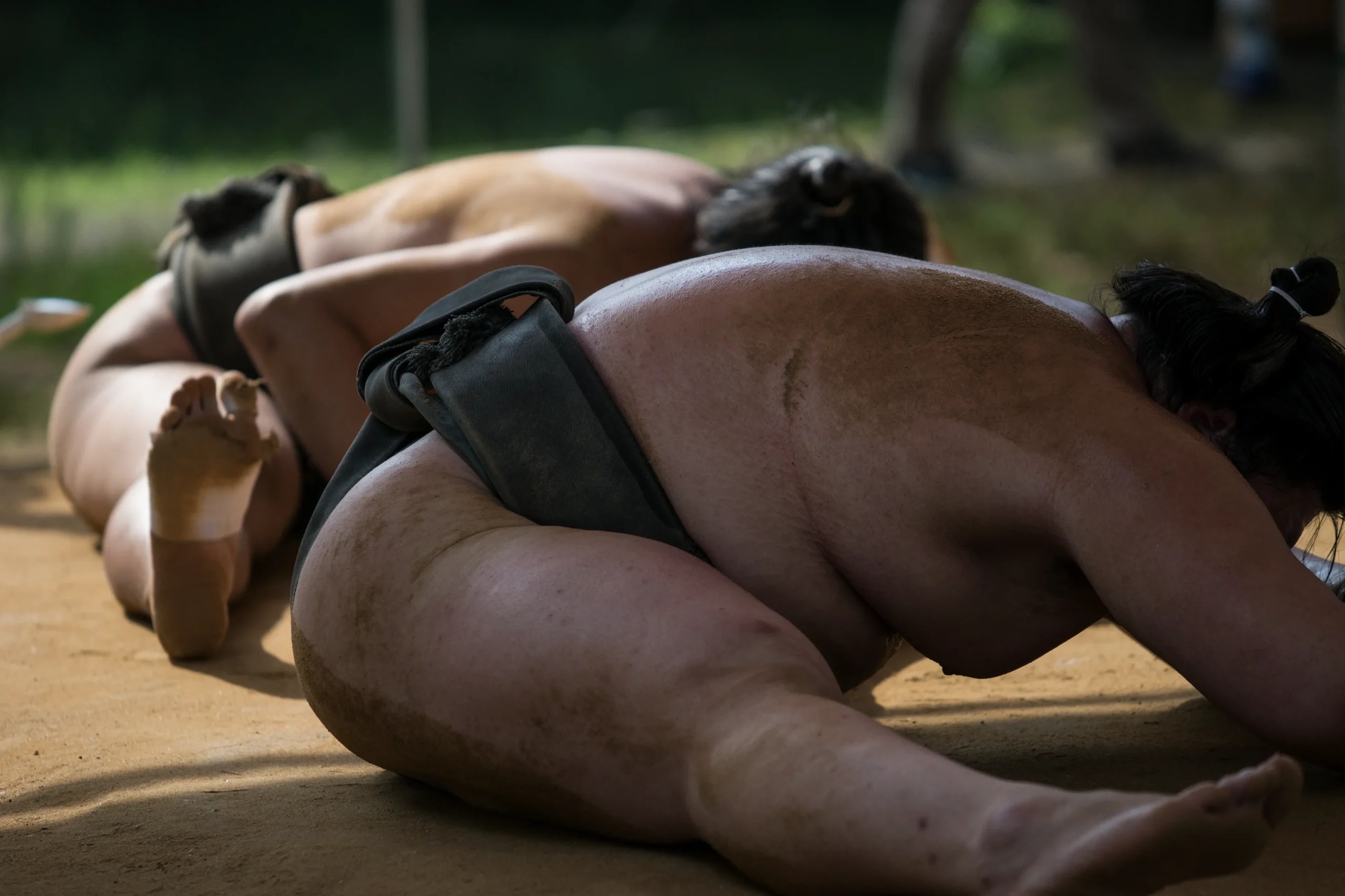
The Japan Sumo Association identifies shiko, suriashi and teppo as representative basic movements. Its explanation connects these fundamentals with controlling the body’s centre and maintaining a stable body axis.
- Shiko: raising and lowering a leg in a controlled stamping movement.
- Suriashi: moving with sliding steps.
- Teppo: practising pushing movements against a training pillar.
Choose one wrestler for a few repetitions. Watch his feet, the width of his stance and how his upper body moves. Then compare another wrestler’s approach.
These details offer more to observe than body size alone. Repetition gives you time to notice position and control that can be difficult to follow during a brief competitive bout.
Repeated Bouts and Changing Partners
In sanban-geiko, two wrestlers repeatedly face one another. In moshiai-geiko, the winner remains in the ring and chooses the next opponent. Recognising these formats helps explain why one wrestler continues while others wait.
The dohyo is the sumo ring, and a rikishi is a wrestler. As a wrestler approaches again, notice his opening stance and first steps. Does facing a new partner change his approach?
You may also see instruction from an oyakata, the stable master. Look at movement before and after guidance rather than guessing what a wrestler feels. Sessions vary; these terms are observation tools, not a promised sequence.
Arrive Prepared and Observe Respectfully
Preparation makes it easier to settle in quietly. Keep your booking instructions available, then follow the guidance given at the stable.
Before You Leave Your Hotel
Save your confirmation, route, contact details and any meeting-point photograph for offline use. Check the railway line and exit, not just the station name.
Read the latest message before departure. If the meeting arrangements have changed, update your route rather than relying on an earlier screenshot.
Wear clean socks and shoes that are easy to remove. Choose clothing suitable for the sitting position arranged for you. Ask about toilet access and luggage storage beforehand, and leave large bags elsewhere if they cannot be brought inside.
Prepare for the journey as well as the viewing. Even an indoor visit may involve walking or waiting outdoors, so dress for the forecast.
Quiet Observation and Photography
Remain in the designated position and keep your phone silent. Where photographs are permitted, follow instructions concerning flash and shutter sounds.
Check photographs, video and online sharing separately. Permission to take a photograph does not automatically include permission to record video or publish the material.
Follow the guidance on food, drink, movement and leaving the room. If you develop pain or feel unwell, quietly alert staff. Resolve foreseeable needs beforehand, but do not assume you must endure discomfort.
Outside the stable, keep entrances and pedestrian routes clear and avoid gathering noisily near neighbouring homes. Respect extends beyond the practice room to the surrounding neighbourhood.
Plan the Rest of Your Morning—and a Second Option
One cultural stop and a break usually make a more manageable morning than several appointments. Plan around the confirmed finishing point and what opens that day.
Choose a Cultural Stop That Fits Your Route
A stable visit does not automatically finish within walking distance of Ryogoku. Once the location is confirmed, calculate the onward journey before adding another attraction.
If Ryogoku fits your route, The Sumo Museum offers a focused continuation. Its rotating displays draw on woodblock prints, ranking lists and ceremonial aprons.
Regular admission is free, normally from 10:00 am to 4:30 pm, with entry by 4:00 pm. It normally closes on Saturdays, Sundays and public holidays, with exceptions. Exhibition changes and year-end holidays may cause additional closures. During Tokyo tournament days, an arena ticket is required and hours are 12:30–4:00 pm.
The Edo-Tokyo Museum provides a broader introduction to the city through reconstructions, models and everyday objects. It reopened on 31 March 2026 and normally opens at 9:30 am. Monday closures have holiday exceptions.
Alternatively, The Sumida Hokusai Museum introduces the artist’s world. It normally opens at 9:30 am and closes on Mondays, with holiday exceptions.
Choose one museum according to your interests and its calendar. For lunch and further local planning, see our guide to things to do in Ryogoku.
Match Your Second Option to the Situation
Unavailable visitor places, rain and transport disruption call for different decisions. A second option should make the day easier, not send you rushing between distant destinations.
| Situation | Next step | Alternative |
|---|---|---|
| Your preferred date is unavailable | Consider another morning | Choose a different sumo-related experience |
| The arranged visit changes or is cancelled | Review the proposed date or itinerary | Move to a confirmed cultural visit |
| Rain or strong heat | Confirm operation and reduce outdoor walking | Spend more time at an open indoor attraction |
| Your chosen museum is closed | Check another museum’s calendar | Rearrange the cultural visit |
| Severe weather or suspended trains | Stay somewhere safe and contact the organiser | Reschedule rather than travel farther |
A museum is useful only after you establish that it opens that day. Likewise, a replacement activity should fit your interests rather than simply fill time.
Frequently Asked Questions
These short answers bring together the main practical decisions before your visit.
Can I enter a stable without an arrangement?
For an arranged visit, use the confirmed meeting point and wait for your host or guide. Do not enter independently or assume that an address on a map indicates visitor access.
Is every visit at the same stable?
No single location should be assumed. Check the stable and meeting details confirmed for your visit.
Can I visit during a Grand Sumo Tournament?
Availability depends on the dates and arrangement. Establish whether the visit is possible and what the proposed session includes.
Can children attend, and are chairs available?
Age and seating conditions depend on the visit. Explain your party’s needs before booking and obtain a clear response.
Can I take photos or videos?
Ask about each separately, including online sharing. Follow the instructions given for your visit.
Make Room for a Thoughtful Morning
A rewarding visit begins with arrangements that fit you: a suitable viewing position, a confirmed date and time to enjoy what follows. Understanding a few movements can turn quiet observation into a thoughtful introduction to sumo.
If you would like help including a stable visit in your Tokyo plans, contact ENJYU JAPAN to discuss an arrangement that suits your dates and needs.
Leave a little of the day unclaimed; a well-planned journey should still allow your curiosity a graceful escape.
References
- ENJYU JAPAN – Travel Enquiries: Tailor-Made Itinerary Planning
- Japan Sumo Association – Sumo Health Exercises: Basic Training Movements (Japanese)
- Japan Sumo Association – Sumo Museum: Exhibitions, Opening Hours and Tournament-Day Admission
- Tokyo Metropolitan Government – Edo-Tokyo Museum: Reopening on 31 March 2026
- Edo-Tokyo Museum – Hours: Opening Times, Last Admission and Closures
- The Sumida Hokusai Museum – Plan Your Visit: Opening Hours, Admission and Visitor Information