Katsushika Hokusai said his own great-grandfather died in this district on a winter night in 1702, defending the man that forty-seven masterless samurai had come to kill. The family that later adopted Hokusai as a child lived on the site of that same house. And the giant paintings he made in front of crowds — sheets running to nearly a hundred and twenty tatami mats — he made in the grounds of a temple two streets away, on ground consecrated as a mass grave for the victims of a fire, where professional sumo was later born.
Ryogoku is about a dozen streets. All of that happened on them.
Most people come here for sumo and stay within a few hundred metres of the arena, which is a fair use of an afternoon and a poor use of the district. Almost everything worth seeing sits inside a walk of two kilometres on the east bank of the Sumida, in three layers stacked on the same plots of land: the sumo quarter, the Edo river town of Hokusai and the vendetta, and the ground where Tokyo keeps the remains of its two great catastrophes. Generic guides treat those as three separate itineraries. They are one place.
This guide goes through Ryogoku stop by stop, in walking order, with the practical notes attached to each — and it starts with the one decision that determines whether the day works at all, which is not the route but the day of the week.
Which Day to Visit Ryogoku
Four of the district’s museums close on Mondays, one closes at weekends instead, and the free museum inside the sumo arena is free except on the days sumo is actually happening. Get the day right and this is one of the best-value half-days in Tokyo. Get it wrong and you will stand in front of several locked doors.
| Day | Open | Closed |
|---|---|---|
| Tue–Fri | Everything | — |
| Sat | Edo-Tokyo Museum (until 19:30), Hokusai Museum, Sword Museum, Reconstruction Memorial Museum, gardens and parks | Sumo Museum, usually |
| Sun | Same as Saturday | Sumo Museum, usually |
| Mon | Sumo Museum, Ekoin, Kyu-Yasuda Garden, Yokoamicho Park and the Memorial Hall, Kira residence site | Edo-Tokyo, Hokusai, Sword and Reconstruction museums |
| Tokyo tournament days (Jan, May, Sep) | Sumo Museum daily on short hours, but only with a tournament ticket | — |
Ryogoku Kokugikan and the Sumo Museum
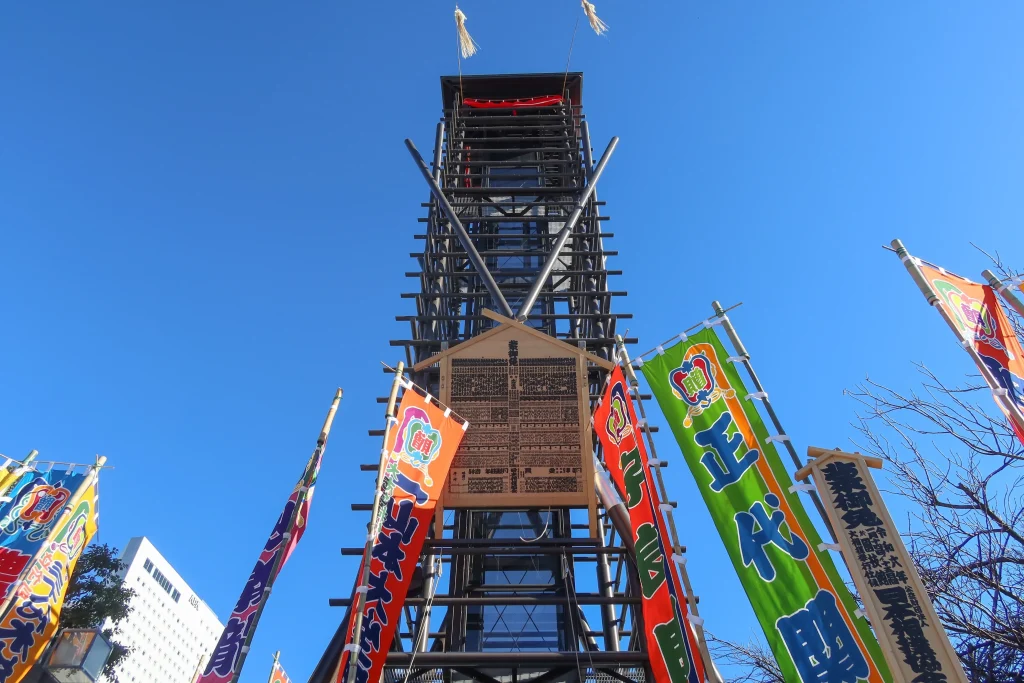
One minute from the JR west exit is the Ryogoku Kokugikan, the national arena, which hosts three of the six grand tournaments a year. The masu-seki — the low square boxes where four people sit on cushions on the floor — retract, so on the many days with no sumo in the building the floor is reconfigured and the hall is hired out for something else entirely.
On the ground floor is the Sumo Museum: one room, no permanent display, three special exhibitions a year built from woodblock prints, the great hand-brushed ranking sheets, and the heavy embroidered aprons wrestlers wear into the ring. It is free, and twenty minutes covers it.
Two things are worth knowing before you build a morning around it. A museum visit does not admit you to the arena bowl — you see the exhibition room and nothing else. And during a Tokyo tournament the museum opens every day but you need a tournament ticket to get in. So the combination most visitors want, sumo and the sumo museum on the same day, is the one combination that costs money.
The calendar is genuinely irregular rather than a tidy weekday pattern, too. It generally shuts at weekends, but opens on some weekend days when amateur tournaments fill the building, and can close for a week or more around exhibition changeovers. The Sumo Association publishes a day-by-day calendar, and it is the only thing worth trusting.
The arena’s signature food explains itself only if someone tells you. Kokugikan yakitori is chicken because a wrestler loses the moment his hand touches the ground, and a bird stands on two legs — an auspicious animal for this particular building. Some 45,000 skewers a day are grilled in the basement during a tournament, and they are seasoned to taste good cold, which is what a stadium food has to do.
The Sumo Stables on the Streets Around It
The sport lives outside the arena more than inside it. Of Japan’s forty-five sumo stables, sixteen have a Sumida address; two sit on the same block a few doors apart. That says more than any adjective about a “sumo neighbourhood” — the training houses are ordinary buildings on ordinary residential streets, and if you are in Ryogoku early enough you will hear one before you find it.
Their addresses are published; visiting arrangements are not. They are places where young men live as well as train, so treat the streets as residential and keep walking.
The entry requirements give you the scale of the people inside. A recruit must be at least 167 centimetres and 67 kilograms, have finished compulsory education, and be under twenty-three — and his application goes through the master of the stable he wants to join, not to the Association. The sport recruits the way a craft workshop does, by apprenticeship and personal introduction, which is also why the stables are houses rather than facilities.
Chanko, the hotpot the neighbourhood is full of, entered stable kitchens in the Meiji era for plain economic reasons: cheap per head when you are feeding thirty people, and it puts meat and vegetables in the same bowl. Lunch is the sensible hour for it anywhere in the district. The portions are built for people who started training at five in the morning.
Nomi no Sukune Shrine
About fifteen minutes from the arena is the sumo shrine: a small enclosure founded in 1885, burned in the 1923 earthquake and again in the 1945 air raid, and rebuilt in 1953 alongside a monument listing every grand champion in the sport’s history. A newly promoted yokozuna performs a dedication ring-entering ceremony here.
Its amulets, though, are not handed out at the shrine — they are issued inside the Sumo Museum, on the museum’s schedule. Walk here for the ground, but buy at the arena.
Ekoin Temple
Three minutes from the JR west exit is the temple that explains why everything else in Ryogoku is here.
In 1657 the Great Meireki Fire — remembered as the Furisode Fire, after the long-sleeved kimono the story blames it on — burned more than sixty percent of Edo and killed over a hundred thousand people, most of whom were never identified. The shogun granted land on the east bank of the river, a mound was raised over the dead, and a priest was ordered to hold a great memorial service. The prayer hall built for that service became Ekoin. Its founding principle was compassion for every living thing, claimed or unclaimed, human or animal, and the temple has taken that remarkably literally ever since.
Sumo arrived a century later. Tournaments staged to raise money for temple building were first held in these grounds in 1768, and from 1833 Ekoin became the fixed twice-yearly venue for Edo sumo — an arrangement that ran for seventy-six years, until the first Kokugikan was built on the temple’s northern edge in 1909. The national arena stands two streets away today because of a fire in 1657.
The precinct rewards a slow twenty minutes. There is the Rikizuka, a stone raised by the Sumo Association in 1936 for the elders of the sport, where new recruits still come to pray for strength. There is the grave of Nezumi Kozo, the Edo burglar never caught in the act, from which people have been chipping fragments as a luck charm since the eighteenth century — these days mostly students hoping to pass exams, which is why a spare stone is now provided for chipping. There is a Cat Mound from 1816, a memorial to fur seals from 1926, and a horse-headed Kannon carved by the second abbot for a shogun’s favourite horse, which is where the animal burials began.
The evening service at four is open to anyone who wants to put their hands together; other rites can delay it, so the temple asks you to phone on the day. If you have any interest in watching a working Japanese temple do the thing it exists to do, rather than looking at one, this is a rare open door, and it costs nothing.
Kyu-Yasuda Garden
Five minutes from the west exit, between the arena and the memorial park, is a free garden almost nobody plans for.
It was granted at the turn of the eighteenth century as a lord’s lower residence and built as a tidal strolling garden: a pond shaped after the character for “heart”, fed directly from the Sumida so that the water level and the shape of the shoreline moved with the sea twice a day. Walking it in the morning and again in the afternoon was walking two gardens. The river connection is long gone and the tide is now reproduced mechanically, so the effect survives and the mechanism does not.
Yasuda Zenjiro, founder of the financial house, bought it in 1891; after his death the family gave it to the city, and when it opened in 1927 it was the first Japanese garden in Tokyo opened to the public through a private gift. Tokyo designated it a Place of Scenic Beauty in 1996.
Two things shape when to go: only part of the garden stays open in the late afternoon, and it is lit after dark. Twenty minutes in daylight is about right — and if you are in the district for an evening tournament session, the lit loop is a better use of the gap than a coffee.
The Japanese Sword Museum
Standing on a corner of that same garden is a museum most itineraries miss entirely, because it is inside the garden rather than on a street.
The Japanese Sword Museum is run by the society formed in 1948 to save Japanese swords after the occupation authorities classified them as weapons and began confiscating them. What is now a National Treasure collection exists because a group of people spent the late 1940s arguing that these were not guns.
The building, by Maki and Associates, was designed as a garden museum and keeps the footprint of the public hall that stood here before it, trading that building’s dome for a low vaulted roof so it does not loom over the pond. The ground floor — shop, lounge, cafe — is open to anyone using the garden, with the blades on the top floor.
Show a same-day paid Hokusai Museum ticket stub and the adult admission drops, which is a real argument for doing the two in one afternoon. Check before you go, though: it closes on Mondays and also during exhibition changeovers, a closure that will not appear in any normal weekly calendar.
Yokoamicho Park and the Tokyo Memorial Hall
Ten minutes north of the station is the part of the district that changes the tone of the walk.
Tokyo bought the site of an army clothing depot in 1922 and was still converting it into a park when the Great Kanto Earthquake struck at lunchtime on 1 September 1923. Local people fled to the open ground carrying futons and household goods, and kept arriving until it was full. A typhoon’s wake was blowing hard, fires closed in from every side, the embers caught the belongings people had piled around themselves, and a fire tornado swept the site. Thirty-eight thousand people died on this one plot of land.
The Tokyo Memorial Hall was completed in 1930 to hold the remains of around 58,000 earthquake dead. In 1951, after the temporarily buried victims of the Tokyo air raids were reinterred, 105,000 more unidentified people were enshrined here and the building was renamed. It holds 163,000 sets of remains. It is an ossuary rather than a monument, which is worth knowing before you walk in — and the hall states plainly that it is non-religious and that you may pray in whatever way you wish, which settles the question most visitors from abroad quietly worry about.
Ito Chuta designed it in reinforced concrete after a public competition failed to produce a winner anyone would adopt, and the result borrows from everywhere at once: a shrine-and-temple exterior, a three-storey pagoda holding the ossuary that draws on Chinese and Indian forms, and an interior laid out in rows of columns like a basilica. It should not work and it does.
Two details give the park its shape. The bell in the grounds was cast in China by Buddhists who had held memorial services in Hangzhou and Shanghai after the earthquake and then declared they would send a bell to be struck for years to come; it travelled Hangzhou to Shanghai to Yokohama and arrived in November 1925. And the Japanese garden north of the hall exists because gardens like Kyu-Yasuda, two blocks away, had sheltered people during the fires. The lesson was written straight into the plan.
There is also a monument to the air-raid dead whose interior, holding the register of names, opens to the public on exactly two days a year: 10 March and 1 September, the dates of the two grand memorial services. If your trip crosses either date, the park will be full of bereaved families, and it is not a day to arrive as a sightseer.
The Tokyo Reconstruction Memorial Museum
Beside the hall, in the same park, is a small free museum from 1931 that is easy to walk past and should not be.
It displays objects recovered from the earthquake — melted, fused, warped things, almost all of them original rather than reproductions — alongside a floor on the 1945 firebombing that includes incendiary bomb casings and ordinary household items belonging to people who did not survive. Larger wreckage sits outdoors next to the building. Large bags go into free lockers at the entrance.
Forty-five minutes covers both this and the hall, and it is the part of Ryogoku people remember longest.
Honjo Matsuzakacho Park: The Kira Residence Site
Seven minutes from the JR east exit is a small park that reliably confuses visitors, and it is worth five minutes precisely because it is the wrong size.
On the fourteenth night of the twelfth month of 1702, about forty-seven masterless samurai broke in through the front and rear gates of the Kira mansion at around three in the morning and killed Kira Kozukenosuke, avenging the forced suicide of their own lord. It became the national drama Japanese audiences still watch every December, and the reason a visitor from abroad has usually heard of it before arriving.
What survives is a fragment of 97.56 square metres — roughly one eighty-sixth of the original grounds, and smaller than a tennis court. Local residents bought it in 1934 to preserve the well where Kira’s head was washed, gave it to the city, and it opened as a park on 14 December 1935, deliberately the same calendar date as the raid. A statue of Kira stands inside, which is itself a small local correction: in the play he is the villain, and in this neighbourhood he is the man whose house was broken into.
The bus stop on the corner is named for two things at once, the Kira site and the birthplace of Katsu Kaishu, the shogunate naval official who later negotiated the surrender of Edo without a battle. His childhood ground is Ryogoku Park now, a short walk away, and itself one of the small parks built into the city during the reconstruction after 1923.
The Sumida Hokusai Museum
Hokusai was born in this district around 1760, near a street named after the drainage channel dug down the middle of it. The channel was filled in long ago; the road built over it now carries his name informally, and along the neighbouring blocks his pictures are printed on the street lamps. He moved constantly, leaving a string of recorded addresses inside these few streets, including one he shared with his daughter Oi, who was a painter herself and by some accounts the better colourist. At eighty he lost his home to fire and escaped holding a single brush, after which he worked for a while using a broken sake bottle as a brush-washer.
The Sumida Hokusai Museum built for him sits nine minutes from the JR east exit: a mirror-finished aluminium block by Kazuyo Sejima, cut with slits so that it has no back and can be walked into from any side. The top floor looks out towards Tokyo Skytree. House rules are stricter than most — pencils only for notes, no photography at all in the special exhibition rooms, umbrellas left at the door — and if you want to use a translation app you tell the staff and wear the permit card they hand you.
It stands on what was the Tsugaru family’s Edo residence, which supplies one of the Seven Wonders of Honjo, the local ghost stories. The Tsugaru house signalled fires with a drum when every other daimyo mansion used wooden clappers, and the unexplained drumming became a tale. Another of the set is placed on the moats that once ran where the arena and the memorial park now stand. There are never actually seven — only two of the stories appear in every version, and the city lists ten — and noticeboards around the district carry them where they happened, which is a pleasant way to be steered down a side street.
The Edo-Tokyo Museum
The largest thing in the district was shut for four years. It closed in April 2022 for its first major renovation since opening in 1993, and the Edo-Tokyo Museum reopened in March 2026, three minutes from the JR west exit.
The full-scale reconstruction of the northern half of the Nihonbashi bridge is still the centrepiece — you walk across it — along with the detailed models of Edo townhouse blocks that reward more time than most people give them. The refit added a walk-through reproduction of the old Asakusa Hanayashiki entrance gate, a stage of eleven suits of armour, Hiroshige’s One Hundred Famous Views of Edo shown complete, and a reconstruction of a 1920s apartment furnished to period. Give it two to three hours.
Photography is allowed in principle in the permanent exhibition rooms, wheelchairs and strollers are lent free, and audio guides, remote sign-language interpretation and multilingual material are all provided. If anyone in your group needs that kind of support, this is the stop on the walk that is set up for it.
The scheduling detail that matters: it closes every Monday, and on Saturdays it stays open two hours later than usual. Saturday is the day the sumo quarter’s free museum is normally shut and this one runs late, so a Saturday in Ryogoku is really a visit to this building with the neighbourhood arranged around it.
Ryogoku Edo NOREN
The old station building beside the west exit is worth putting your head into on the way past, and costs nothing. It keeps an atrium built like an Edo merchant house, a fire-watch tower, and a full-size sumo ring — which is for looking at, not standing in, poles included.
Groups should note that guided tours now need permission arranged in advance; since the museum reopening brought heavy footfall in 2026, tours arriving unannounced are turned away.
A Half-Day Walking Route Through Ryogoku
Half a day covers the district comfortably. A full day covers it with the Edo-Tokyo Museum in the middle, which is a fair trade — it is one of the better city museums in Japan and three minutes from the platform.
In order, starting on a weekday morning:
- Sumo Museum, at opening — while it is open at all. Twenty to thirty minutes.
- Kyu-Yasuda Garden and the Japanese Sword Museum — five minutes’ walk; twenty minutes for the garden, an hour if you go up to the blades.
- Yokoamicho Park, the Memorial Hall and the Reconstruction Memorial Museum — an hour for both buildings and the monuments.
- Ekoin — twenty minutes, and the evening service if the timing lands.
- The Kira site, then the Hokusai Museum — five minutes at the park, an hour at the museum, heading back east.
Two pieces of sequencing advice. Put the memorial ground either first or last, never in the middle: it is not a difficult place to visit, but it does not sit well between a garden and a museum shop, and the walk works better if it has somewhere to land afterwards. And if you are coming on a Monday, invert the whole thing — the four museums are shut and what remains is the outdoor district, which is a genuinely good walk but a different one.
Why Ryogoku Rewards a Second Look
Every major stop here is a second act on the same ground. A mass grave for fire victims became the home of professional sumo, which then moved two streets north into an arena. An army clothing factory became a park and then a burial ground. A lord’s tidal garden now holds a national sword collection, and a daimyo’s mansion site holds a Hokusai museum. Tokyo is usually described as a city that erases itself. Ryogoku is the twelve streets where it kept reusing the same plots and remembering what they had been.
That layering is also why the district is easy to under-visit. Nothing here announces itself: the temple looks like a neighbourhood temple, the Kira site looks like a gap between houses, the sword collection is behind a garden. A first visit usually catches one layer of the three, and the sumo layer is the loudest.
Building the eastern half of old Tokyo into a trip, rather than the rebuilt western half most itineraries default to, takes that kind of local knowledge: what is open on which day, which memorial dates change the mood of a neighbourhood, which short walks connect stories that look unrelated on a map. That is a large part of what ENJYU JAPAN does when planning a Tailor-Made Tour, working with guides who live in these districts. If the older, quieter Tokyo is the one you came for, it is worth a conversation before you fix the dates.