You have probably eaten sushi already. What changes when you come to Japan is not simply the quality, but the number of ways you can experience it.
A sushi meal might be an inexpensive supermarket dinner, a touchscreen order at a conveyor-belt restaurant, breakfast near a fish market, a small neighborhood counter, or an omakase course where the chef chooses what comes next. You may also encounter fish you have never ordered before, meat-topped sushi, and regional styles that look nothing like modern nigiri.
The useful question is therefore not just “what is sushi?” It is which sushi experiences are worth making room for on your trip.
What Changes When You Eat Sushi in Japan?
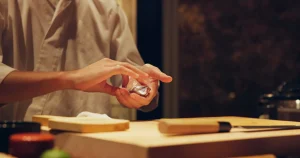
First, sushi does not mean raw fish.
The defining part is the seasoned vinegared rice. Nigiri topped with tuna is sushi, but so is a fried tofu pocket filled with sushi rice. Sashimi, on the other hand, is sliced fish served without sushi rice.
This distinction is useful if you are hesitant about raw seafood. Cooked shrimp, egg, eel, tofu, vegetables and other cooked toppings are common, particularly at casual restaurants.
Sushi outside Japan has also developed its own traditions. California rolls, spicy mayonnaise, cream cheese and large specialty rolls are not “fake sushi.” They reflect how the food changed after spreading internationally.
In Japan, the emphasis is often different. Nigiri is more prominent, rolls tend to be simpler, seasonal fish has a larger role, and the rice itself matters more than many visitors expect.
At the same time, modern Japanese sushi is not always restrained or traditional. Walk into a large conveyor-belt chain and you may find beef, hamburger steak or mayonnaise-topped sushi next to tuna and sea urchin.
Rather than asking which version is more authentic, it is more interesting to ask what you can try here that you rarely order at home.
Which Sushi Experience Is Right for You?
You do not need an expensive reservation to have an interesting sushi meal.
| Sushi experience | A good choice when you want… | Cost level | Planning |
|---|---|---|---|
| Supermarket or food-hall sushi | Something easy and inexpensive | Low | None |
| Conveyor-belt sushi | Variety and an easy first experience | Low to moderate | Usually little |
| Neighborhood sushi counter | A quieter made-to-order meal | Moderate | Depends on the restaurant |
| Fish-market breakfast | Food combined with morning sightseeing | Low to moderate | Check market days |
| Edomae-style counter | Traditional preparation techniques | Moderate to high | Often useful |
| Omakase | A chef-led meal as a main event | High | Often worth arranging ahead |
There is no need to pick only one. In fact, trying two or three very different formats gives a better picture of sushi in Japan than spending the entire trip searching for one supposedly perfect restaurant.
Conveyor-Belt Sushi: An Easy Place to Start
Conveyor-belt sushi, commonly called kaitenzushi, is sometimes treated simply as the cheap end of Japanese sushi. For travelers, it has another advantage: it is one of the easiest places to experiment.
Many modern restaurants use touchscreen or smartphone ordering, with made-to-order dishes delivered directly to your seat. You can order one plate, decide whether you like it and then try something completely different.
This is especially useful when people in your group have different tastes.
Someone who wants classic sushi can order tuna, mackerel or squid. Someone uncomfortable with raw fish can usually find cooked shrimp, egg, eel and other cooked choices. Major chains may go much further, with meat-topped sushi such as beef or hamburger steak alongside noodles, fried dishes and desserts.
That makes conveyor-belt sushi particularly convenient for families and mixed groups.
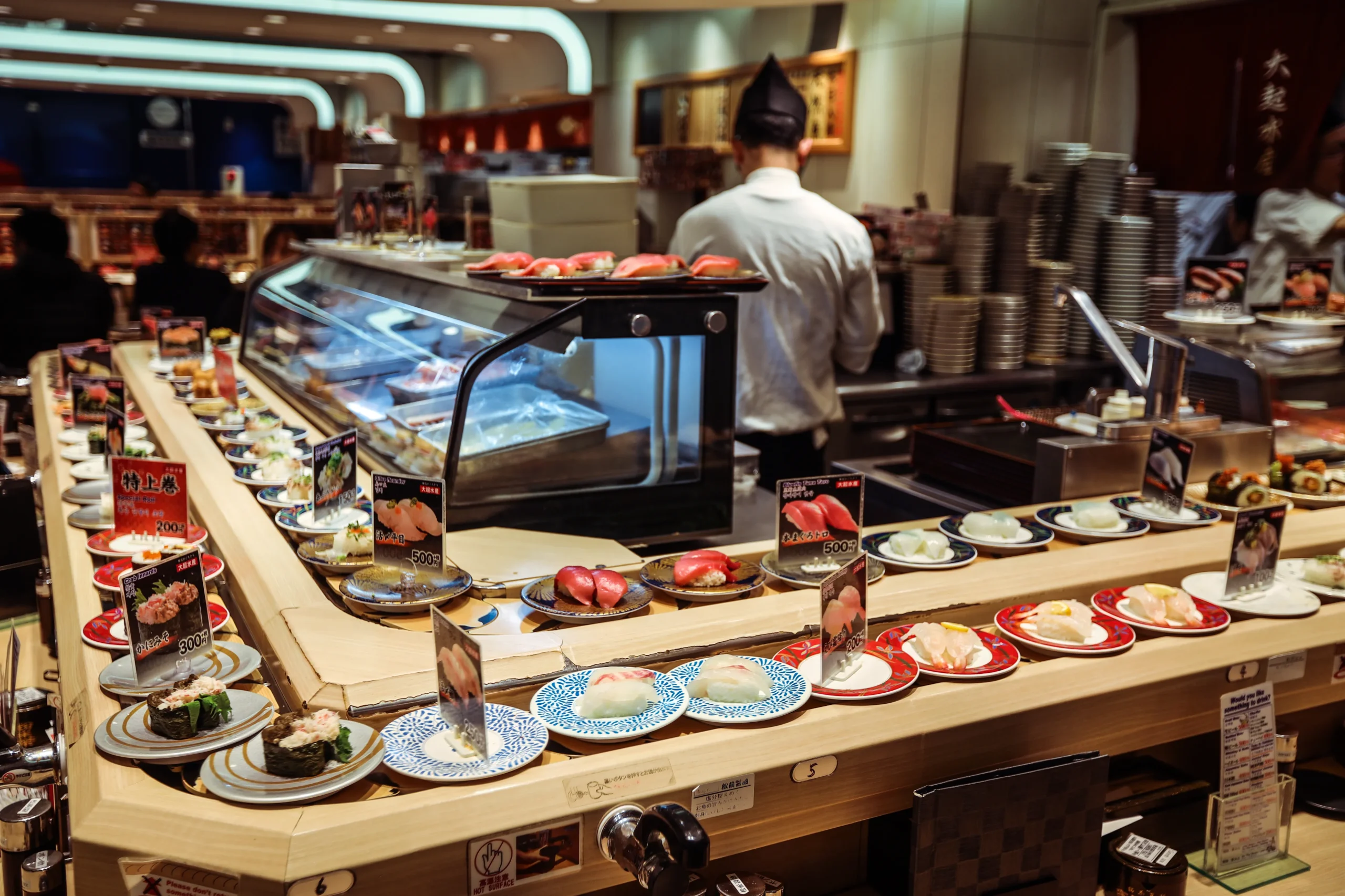
For a first sushi meal, this freedom can actually be more useful than omakase. You can learn what you like without committing to the chef’s selection.
The Neighborhood Sushi Counter: A Useful Middle Ground
Between the large chains and expensive omakase restaurants is a category visitors can easily overlook: the ordinary local sushi shop.
These may be small counter restaurants near stations, shopping streets or residential neighborhoods. They give you the experience of watching sushi being prepared to order without necessarily turning the meal into a major luxury expense.
The trade-off is that smaller places may have less English support and their reservation policies vary.
If you already enjoyed kaitenzushi and want the next step without committing to a high-end restaurant, a straightforward local sushi counter can be a good choice.
Supermarket Sushi Is Part of Everyday Japan
Some of the sushi you eat in Japan may never come from a restaurant.
Supermarkets sell ready-made nigiri, rolls and mixed sushi sets, while department-store food halls often have large prepared-food counters with more elaborate selections.
This is particularly useful when you arrive somewhere late, want a quick hotel-room dinner, or simply do not want every meal to become an event.
It also shows another side of sushi: ordinary food that people can pick up on the way home, rather than something reserved for special occasions.
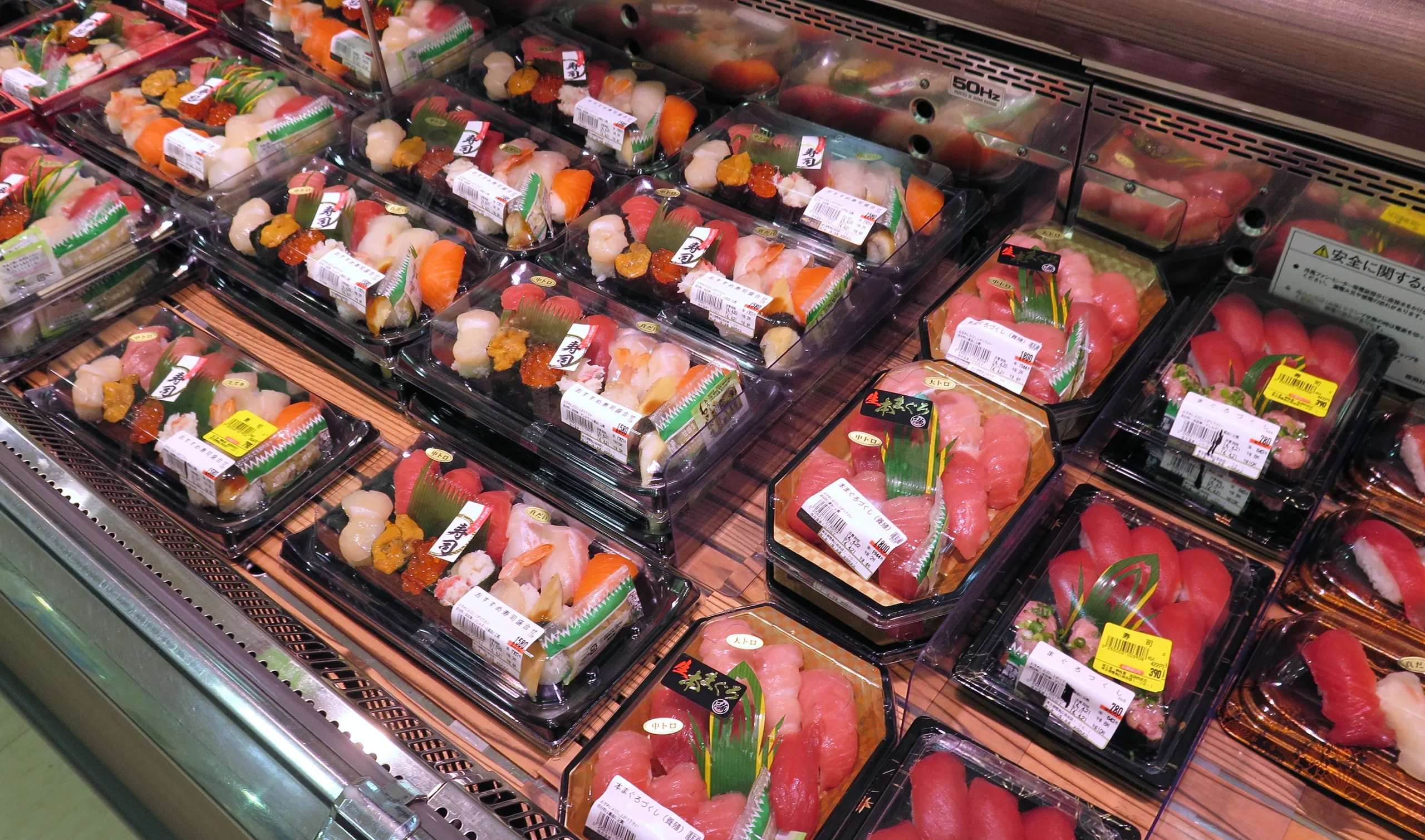
A supermarket pack is not supposed to replace a good sushi counter. They serve completely different purposes, which is exactly the point.
Omakase: When Sushi Becomes the Main Event
At an omakase meal, the chef decides what to serve and in what order. The selection can change with the season and what is available that day.
This can be a memorable option when the meal itself is an important part of your trip. It also removes the need to choose from an unfamiliar menu.
But omakase is not automatically the best way to experience sushi in Japan.
If you are still discovering which fish, textures and preparations you enjoy, a more casual restaurant gives you much more freedom. Omakase makes more sense when you are comfortable handing control to the chef and want to spend more time and money on one meal.
Popular small counters can require advance planning, so this is the one sushi format worth thinking about before you arrive rather than assuming you can decide on the day.
Sushi Types Worth Recognizing
You could learn dozens of sushi names before your trip. You do not need to.
A smaller group covers most of what a visitor is likely to encounter.
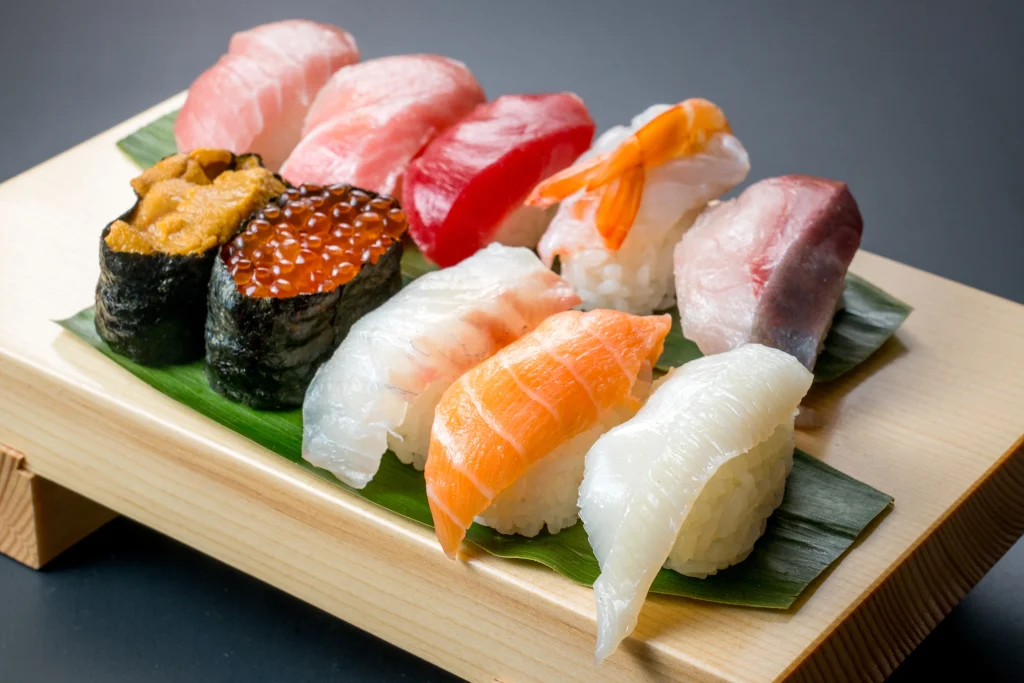
Nigiri
A small mound of sushi rice topped with fish, shellfish, egg or another ingredient. This is probably the form most people picture when they think of Japanese sushi.
Maki
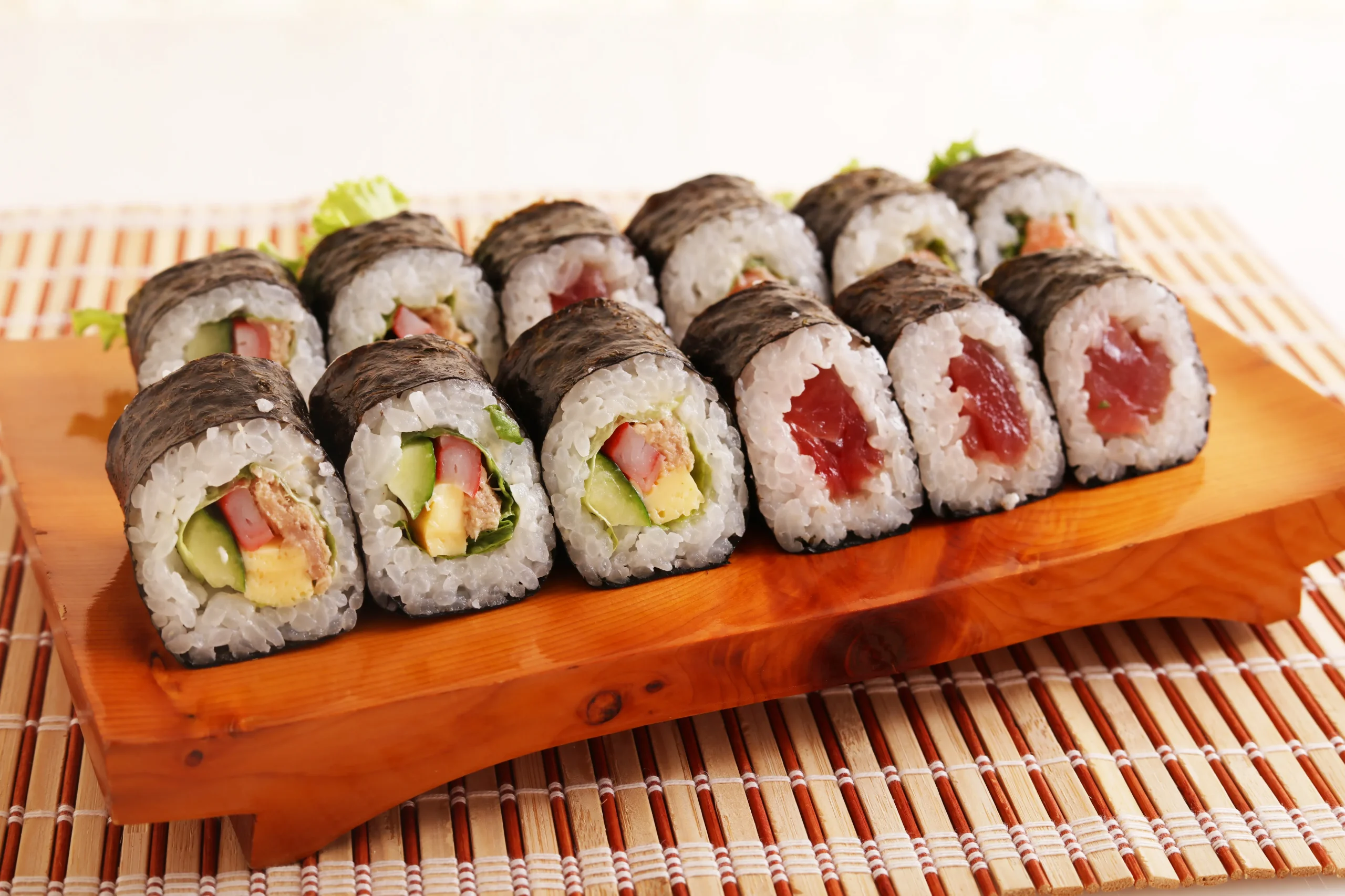
Rice and fillings rolled in seaweed and sliced. Simple tuna and cucumber rolls are common examples.
Gunkan
Rice wrapped with a strip of seaweed to create a small cup for loose toppings such as salmon roe, sea urchin or natto.
Temaki
A cone-shaped hand roll. If you have seen the growing number of hand-roll restaurants overseas, this is the Japanese format behind them.
Chirashizushi
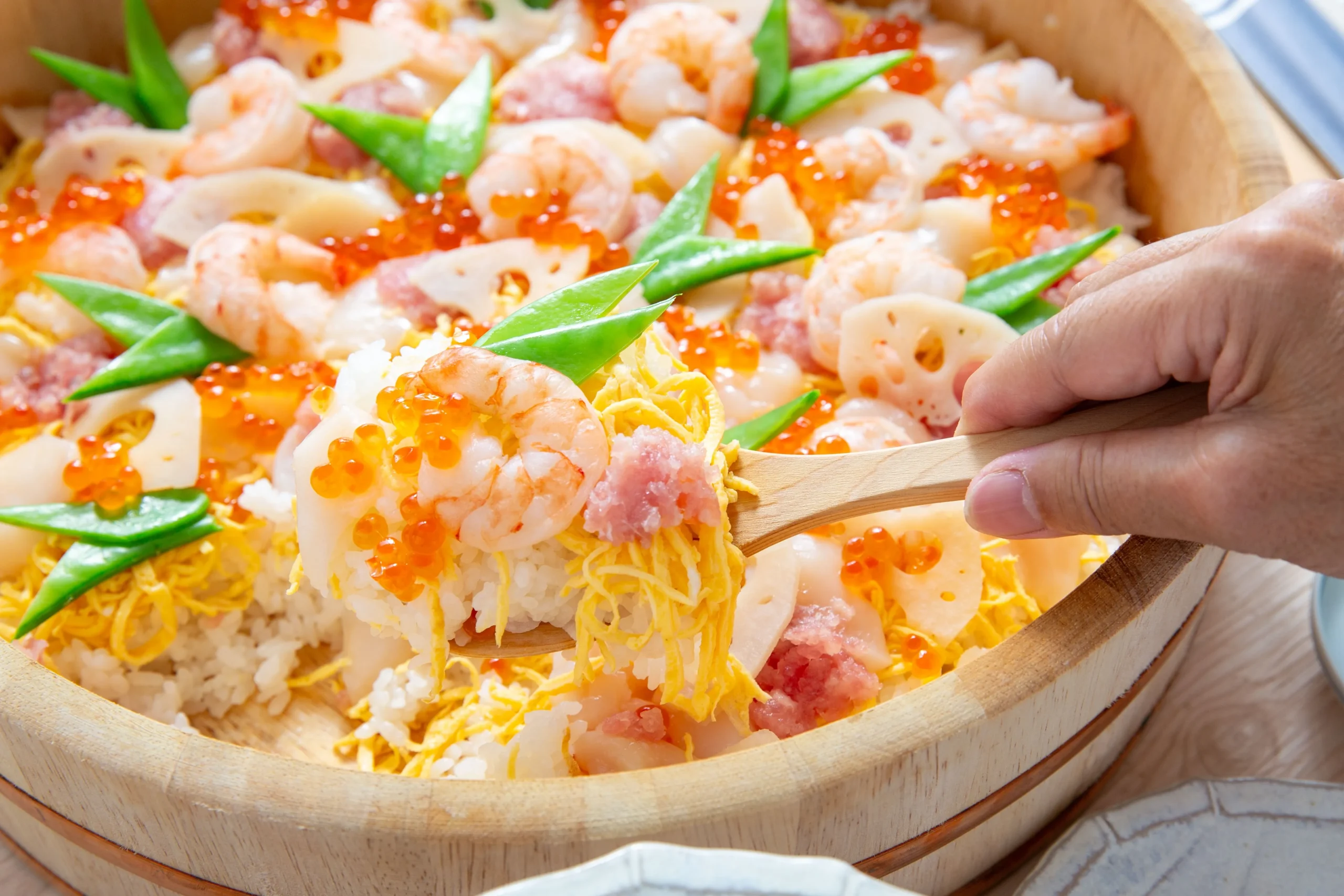
Sushi rice served in a bowl with seafood, vegetables and other toppings arranged over it.
If you know poke bowls, chirashizushi may look somewhat familiar at first glance because both place toppings over rice. The similarity is mainly visual. Chirashizushi uses seasoned sushi rice and belongs to a Japanese sushi tradition, while poke is Hawaiian.
Inarizushi
Sushi rice inside a sweet-savory fried tofu pocket. It is also one of the clearest examples of sushi that contains no raw fish.
Oshizushi
Pressed sushi made by forming rice and toppings in a mold. It is particularly associated with regional traditions outside Tokyo and shows how much broader Japanese sushi is than nigiri alone.
Go One Step Beyond Salmon and Tuna
There is nothing wrong with ordering familiar fish. But Japan is a good place to add one or two things you rarely see at home.
Kohada, a small silver-skinned fish traditionally cured with salt and vinegar, is a classic example. Aji, or horse mackerel, is another approachable choice and is often served with ginger or green onion. Anago, sea eel, is cooked and typically served soft rather than raw.
Sea urchin, squid, shellfish and fish roe also appear frequently, while more adventurous seasonal ingredients can vary considerably by region.
The aim is not to order the strangest item on the menu. Trying an unfamiliar fish such as kohada or aji can tell you far more about Japanese sushi than choosing something extreme simply for the story.
One especially interesting thing about kohada is that its character comes partly from careful curing. It is a good reminder that traditional sushi technique involves much more than slicing very fresh fish and placing it on rice.
Which Parts of Japan Are Interesting for Sushi?
There is no single “best sushi region.”
Tokyo is closely associated with Edomae-style nigiri and has an enormous range of sushi restaurants.
Hokkaido is known for cold-water seafood including sea urchin, roe, crab and shellfish.
Along the Sea of Japan coast, areas such as Toyama and Ishikawa have strong seasonal seafood traditions.
Osaka and the wider Kansai region developed pressed-sushi styles quite different from Tokyo nigiri.
For most travelers, you do not need to reroute your entire trip for sushi. But if food is already a major interest, regional differences can become a good reason to try sushi more than once.
Have Sushi for Breakfast After Visiting a Fish Market
Sushi does not have to be dinner.
A fish-market morning can combine food with sightseeing and make useful use of the early hours, particularly if jet lag has you awake long before most attractions open.
Tsukiji or Toyosu?
These two Tokyo markets are often confused.
Toyosu Market is the working wholesale market that replaced the former inner market at Tsukiji. Visitors can observe parts of the professional market from designated viewing areas, including the early tuna auction.
Tsukiji Outer Market remained in its original location and is still filled with food shops, restaurants and seafood vendors.
For most visitors who mainly want to wander, eat and then continue into central Tokyo, Tsukiji is the easier option. It requires less planning and is within walking distance of Ginza.
Toyosu is more interesting when seeing the functioning wholesale market itself is part of the reason you are going.
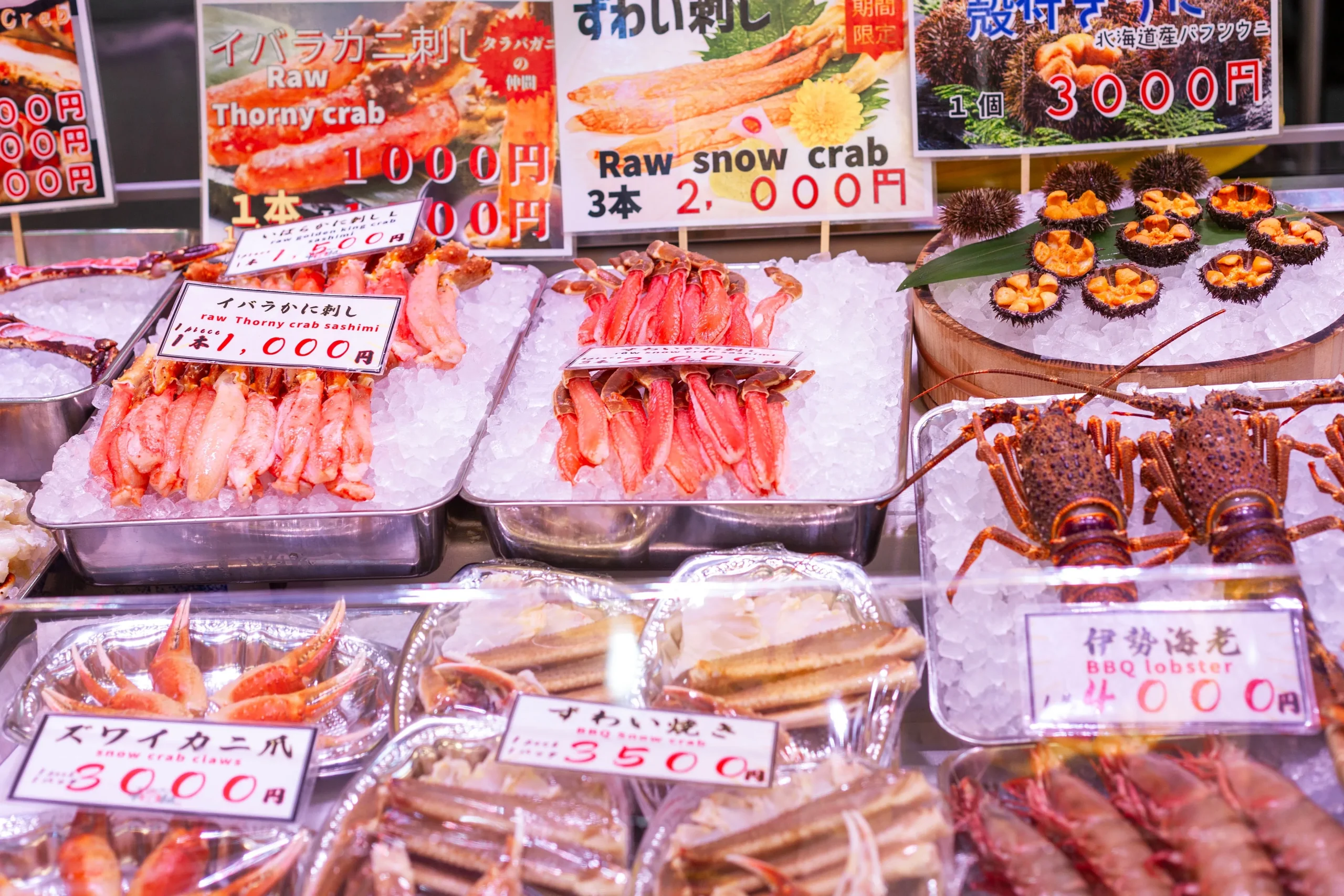
Whichever you choose, check the current market calendar and restaurant hours before building your morning around it. These are working markets, so operating days do not necessarily match normal tourist schedules.
And there is another useful misconception to drop: the freshest possible fish is not automatically the best sushi.
Traditional sushi preparation can involve controlled aging, marinating, curing or cooking. A market breakfast is worth doing for the seafood, atmosphere and morning experience, not because a fish being only a few hours out of the water is the only measure of quality.
Can You Still Taste Sushi From Centuries Ago?
The usual sushi history goes something like this: fermented fish came first, and modern nigiri appeared much later.
That becomes much more interesting when you realize you can still taste both parts of that history.
Funazushi: A Link to Sushi’s Fermented Past
Before modern refrigeration, one way to preserve fish was to ferment it with salt and rice. This older family of sushi is called narezushi.
One surviving example is funazushi, a specialty of Shiga Prefecture around Lake Biwa. Traditionally made using local crucian carp, it develops a pronounced sour, fermented flavor that is very different from ordinary nigiri.
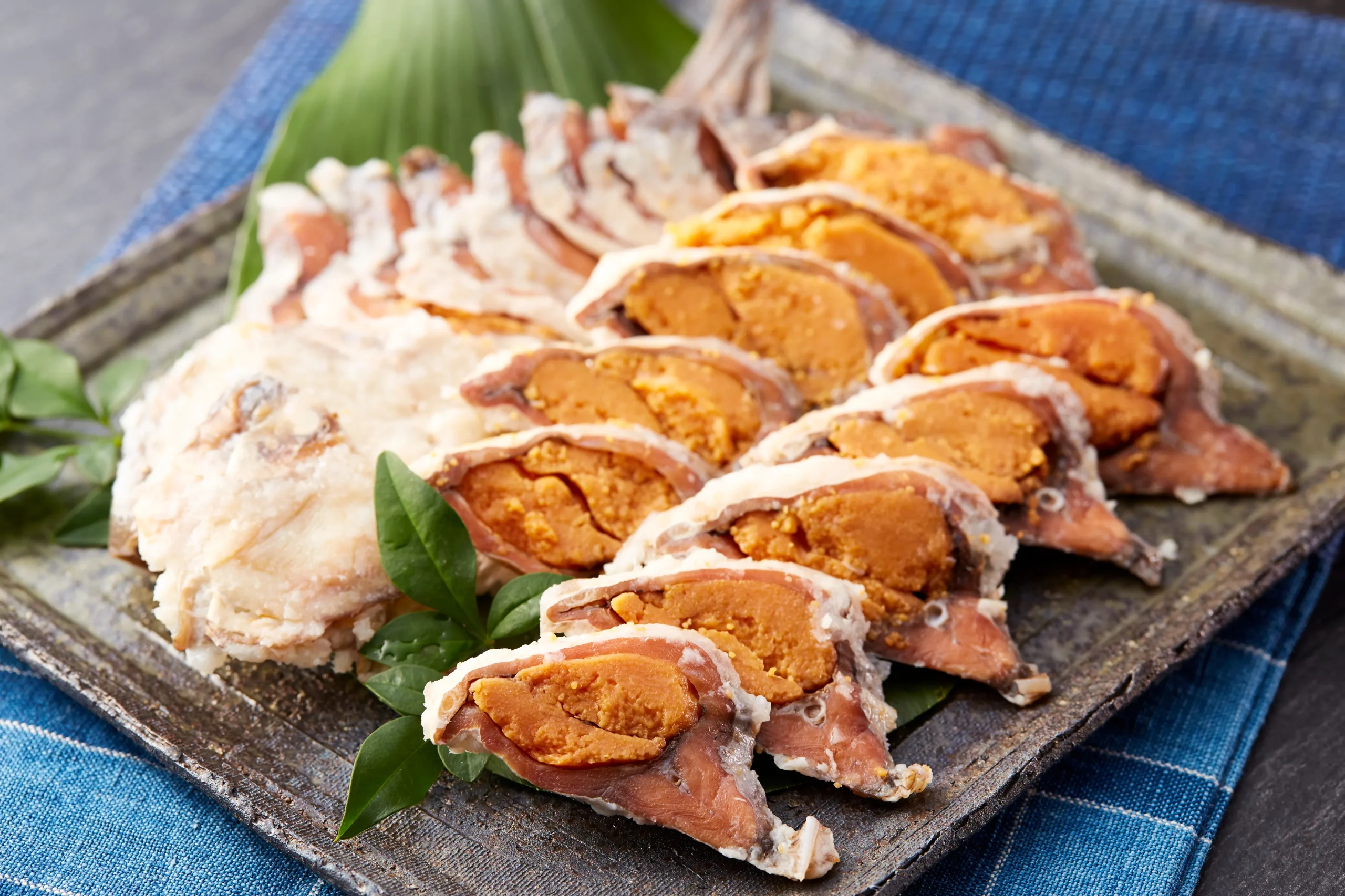
This is not something every first-time visitor needs to seek out. It makes much more sense for someone interested in fermentation, regional food or culinary history.
But that is precisely why it adds something to the article that a list of sushi dates does not: sushi’s older history is still part of living regional food culture.
Read more: Japanese Fermented Foods
Edomae Sushi: The Roots of Modern Nigiri
The more direct ancestor of modern nigiri developed in Edo, present-day Tokyo.
Without refrigeration, seafood was often prepared through methods such as salting, vinegar curing, marinating, simmering or steaming.
Modern Edomae-style sushi can still draw on these techniques.
So if you arrive expecting the highest form of sushi to mean untouched raw fish served as quickly as possible after the catch, an Edomae counter may change that idea completely.
Sushi Etiquette Without the Stress
Sushi etiquette is much easier than many guides make it sound.
Hands or chopsticks?
Both are fine.
You may have heard that “proper” sushi should always be eaten with your hands. Eating nigiri by hand has a long history, but chopsticks are completely normal in modern Japan.
Use whichever feels comfortable.
Do not soak the rice in soy sauce
With nigiri, lightly dipping the topping rather than the rice keeps the rice from absorbing too much soy sauce or falling apart.
At some higher-end restaurants, the chef may already have seasoned the piece.
Ginger goes between pieces
Pickled ginger is normally eaten between different pieces to refresh your palate. It is not intended as a topping.
Do not return conveyor-belt plates
Once you take a plate from the circulating belt, keep it. Do not put it back after touching or inspecting it.
That is enough for most visitors. There is little value in memorizing so many rules that you become nervous about eating.
Read more: Things to Know Before Going to Japan
Is Sushi Actually Healthy?
Sushi can certainly form part of a nutritious meal. Fish provides protein and, depending on the species, nutrients such as omega-3 fats.
But “sushi” is too broad a category to label automatically healthy.
Simple fish nigiri is very different from fried dishes, mayonnaise-heavy toppings, meat sushi or a large meal with plenty of soy sauce. The amount and type of rice, toppings and sauces all matter.
Raw seafood also carries a higher food-safety risk than cooked seafood. Travelers who are pregnant, immunocompromised or otherwise at greater risk from foodborne illness should follow appropriate official guidance and advice from their healthcare provider.
For everyone else, it makes more sense to look at what is actually on the plate than to treat sushi as a health food category.
What Sushi Experiences Are Worth Adding to Your Trip?
For a first visit, you do not need to choose between an inexpensive conveyor-belt restaurant and a luxury omakase.
They show completely different sides of Japanese sushi culture.
A useful combination might be:
- a casual conveyor-belt meal where you can experiment;
- a small local sushi restaurant;
- sushi or seafood during an early market morning.
Add omakase if you want one meal to become a major part of the trip. Seek out something regional such as funazushi if culinary history is genuinely one of your interests.
And somewhere in between, buy supermarket or department-store sushi simply because it is part of how sushi fits into ordinary life in Japan.
The goal is not to find the single “most authentic” meal. It is to realize that supermarket packs, family-friendly conveyor belts, neighborhood counters, Edomae techniques and centuries-old fermentation traditions can all coexist within Japanese sushi culture.
If food is an important part of why you are visiting Japan, ENJYU can also build different culinary experiences into a wider tailor-made itinerary so that markets, regional specialties and special meals fit naturally around the rest of your trip.