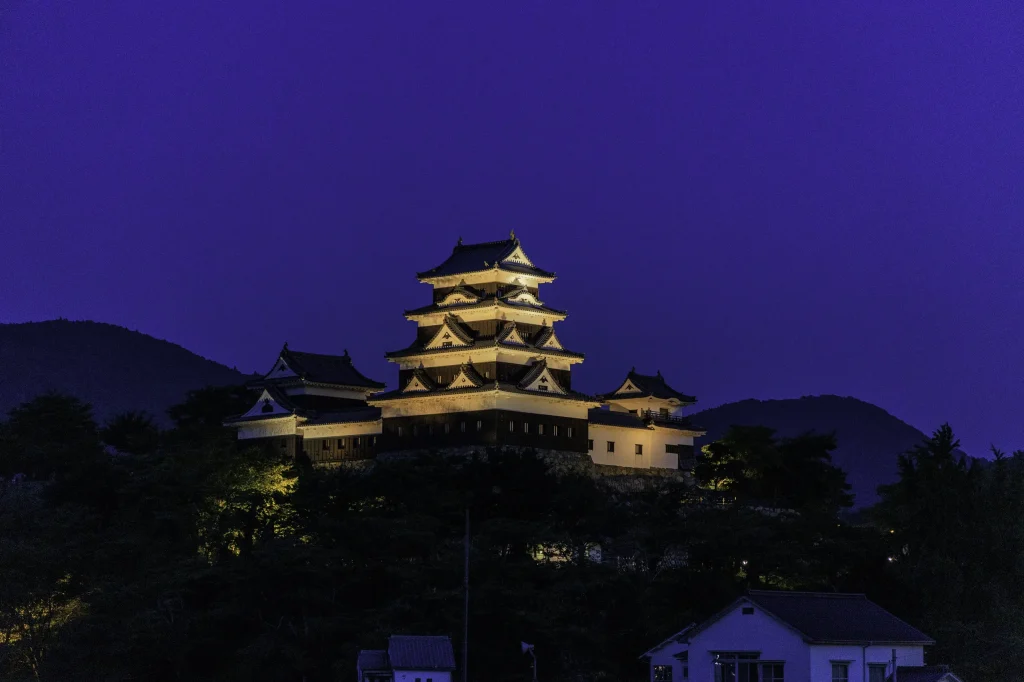
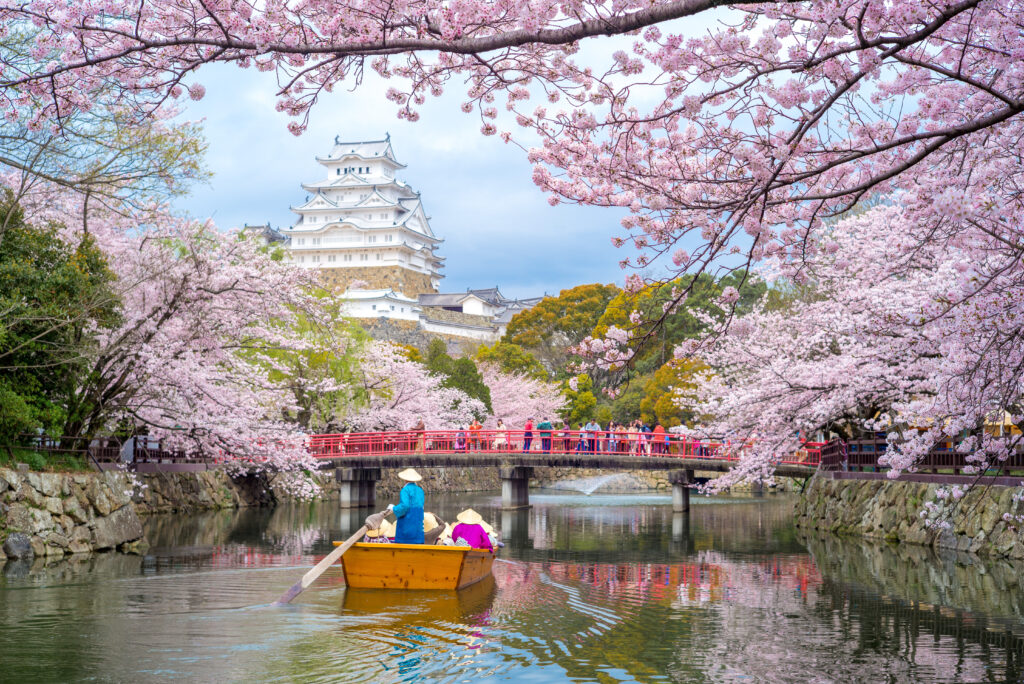
By day, Japanese castles are places to climb stairs, admire old timberwork and share the view with other visitors. Then the gates close. At Ozu, the evening may begin with the sound of a conch shell and a procession of armored attendants. At Marugame, guests can look out across the town from a hilltop where the castle has stood for centuries. At Hirado, the view comes with a bathtub overlooking the sea.
Four destinations offer very different versions of a castle stay: Ozu, Marugame, Fukuyama and Hirado. What happens between check-in and breakfast matters as much as the bedroom.
Four Castle Stays at a Glance
| Castle | The place you sleep | Two-adult starting price | Character of the stay |
|---|---|---|---|
| Ozu, Ehime | Reconstructed wooden main tower | ¥1,320,000, tax included | Elaborate historical welcome and dinner |
| Marugame, Kagawa | 1933 guesthouse beneath an original tower | ¥1,265,000 full experience; ¥275,000 room-only, tax included | Castle ceremonies or a quieter independent stay |
| Fukuyama, Hiroshima | Rebuilt Tsukimi Yagura tower | ¥1,320,000, tax included | Private evening museum, dining and performances |
| Hirado, Nagasaki | Renovated Kaiju Yagura tower | From ¥330,000, room-only | Contemporary suite, sea views and optional activities |
Figures are totals for two adults. Full experiences include meals; Hirado is room-only. Rates checked November 2026.
Ozu: When the Castle Welcomes You as Its Lord
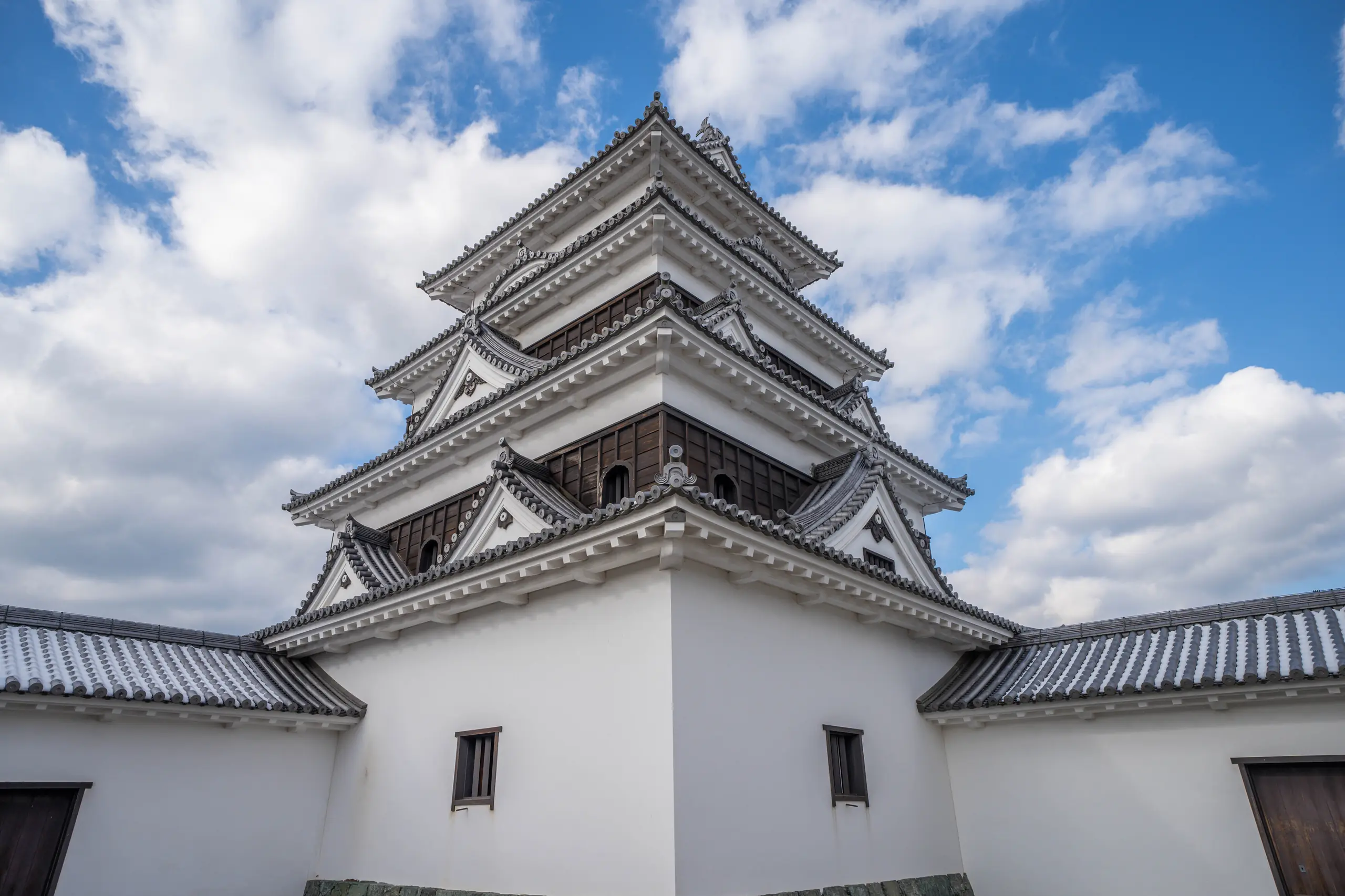
At Ozu, guests may change into armor or traditional clothing before entering the castle. The arrival is based on the entrance of a real feudal lord in 1617: drums, conch-shell calls, attendants carrying banners and, when arranged, a salute from matchlock guns. Guests become part of the scene. For travelers accustomed to visiting castles during museum hours, the difference is striking: the welcome is arranged for their party alone, and the ceremony gives the familiar castle courtyard a completely different purpose.
Dinner follows in a surviving historic turret, with dishes inspired by the region’s former rulers. Traditional music or dance may follow. After visitors have left, the castle grounds are yours to explore in private.
The sleeping room is surprisingly spare. Photographs show futons laid out beneath substantial wooden beams, with tatami flooring and soft lamps rather than a grand four-poster bed. The tower was carefully reconstructed in wood in 2004. It is not an original bedroom, but its timber framework makes the setting memorable.
There is a trade-off. The main tower has no ensuite bathroom. Bathing takes place in a separate private lounge with a view back toward the illuminated castle. Breakfast follows at Garyu Sanso, a riverside garden villa. Ozu is for travelers who want to participate in the story.
Reference: Ozu Castle Stay – Experience
Marugame: An Old Castle Above the Town, and Time to Enjoy It
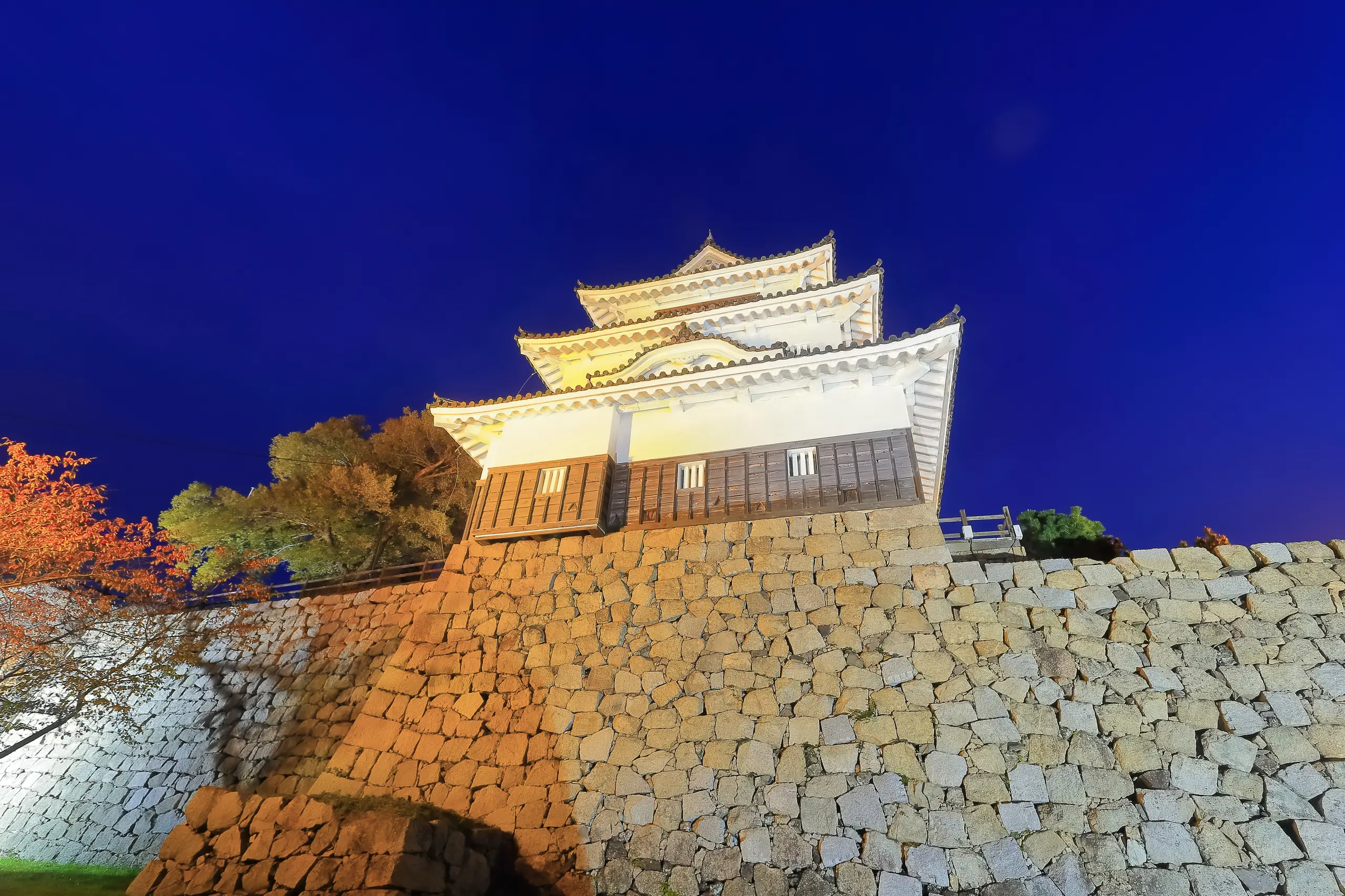
At Marugame, towering stone walls and a steep slope lead toward one of Japan’s twelve surviving original castle towers. The full experience starts with a rickshaw ride and drum welcome.
Full-program guests enter the original tower privately after closing, then sleep at Enjyukaku Bekkan, a historic guesthouse nearby. Built in 1933 using architectural fittings from the former Tokyo residence of the Kyogoku family, it feels closer to a refined Japanese home than a defensive building. Official photographs show tatami rooms, carved wooden details, low beds, comfortable seating and wide views toward the surrounding plain.
One couple interviewed after their stay remembered the views at night and at sunrise. That is an advantage a daytime admission ticket cannot offer. The same hillside and townscape look different when the lights come on below and when the morning begins without the usual crowds. The full program also brings dinner and cultural activities, followed by experiences such as traditional fan making or tea in a historic garden. The experience continues into the morning.
Since September 2026, a separate room-only plan has made the guesthouse available from ¥275,000 for one or two people. Unlike the ¥1,265,000 full experience, meals and private tower access are not included; optional activities can be arranged. It is a markedly different way to spend the night.
Reference: Marugame Castle – Castle Experience
Reference: Kazeno Heritage – Enjyukaku Bekkan Rooms
Fukuyama: A Private Castle Night Just Steps From the Bullet Train
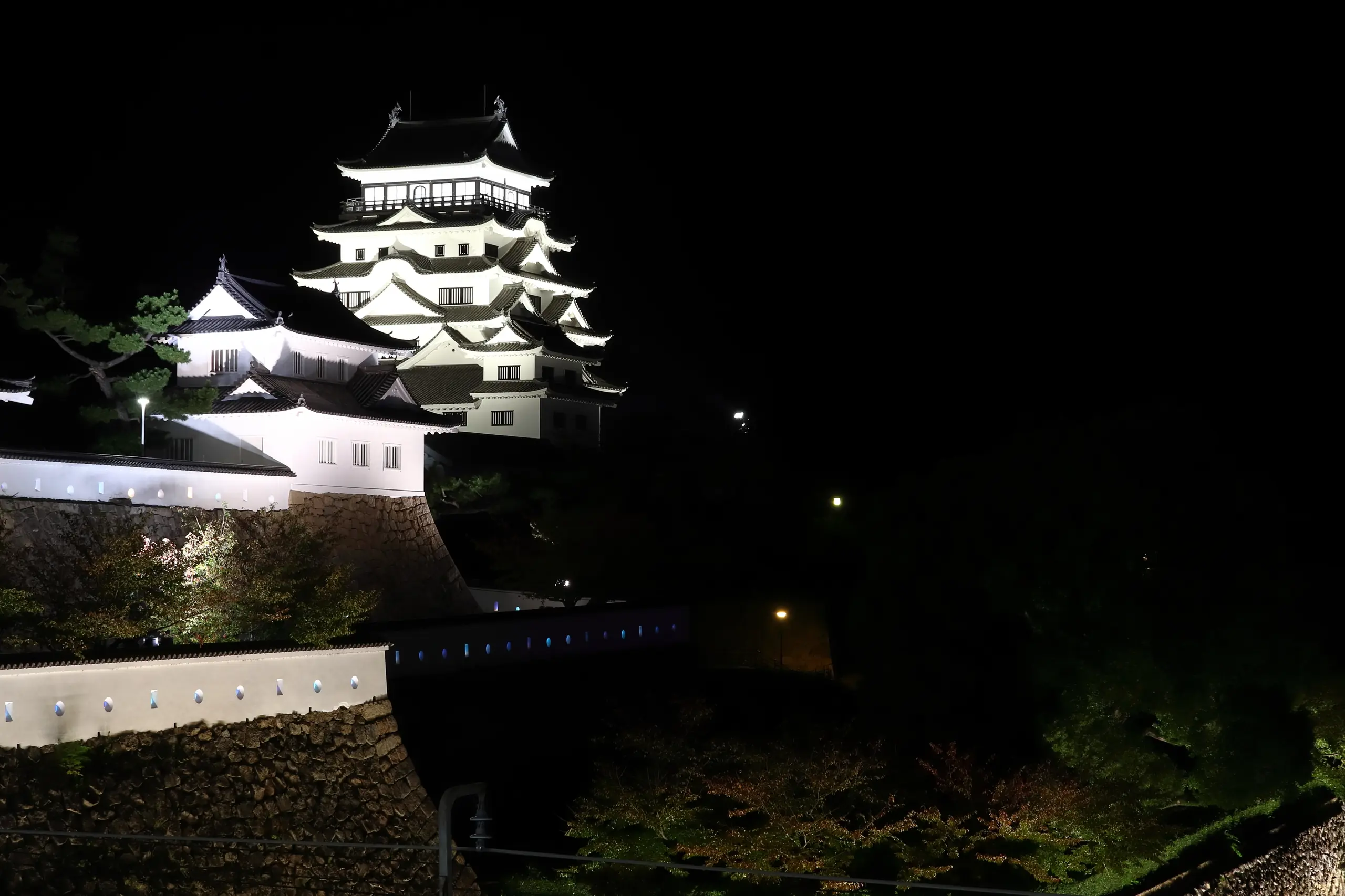
Only five minutes from Fukuyama Shinkansen Station, the castle turns from a busy landmark into a private venue after closing.
Guests are welcomed as honorary castle lords and dine inside Tsukimi Yagura, a tower with sliding screens and tatami rooms. An overnight trial guest from Australia described enjoying the traditional setting, a performance of Noh theater and the unfamiliar local ingredients served at dinner. The published itinerary also includes private viewing of the castle museum and drinks in a top-floor night lounge, with the illuminated city below. Moving between buildings becomes part of the evening: a ceremonial arrival, a meal in the turret, the castle tower after closing, and finally a quiet room to sleep.
In photographs, softly lit rooms frame the white castle tower glowing after dark, with the station just beyond the grounds. Later, guests return to the second floor of Tsukimi Yagura to sleep. Bathing is in the separate Oyudono building, where the program describes a steam-bath-style experience.
Both the main tower and sleeping turret were rebuilt in 1966. For travelers who want an immersive evening without a lengthy detour from an Osaka–Hiroshima rail journey, Fukuyama is compelling.
Reference: Fukuyama Castle Stay – Experience
Hirado: A Castle Tower Reimagined as a Seaside Retreat
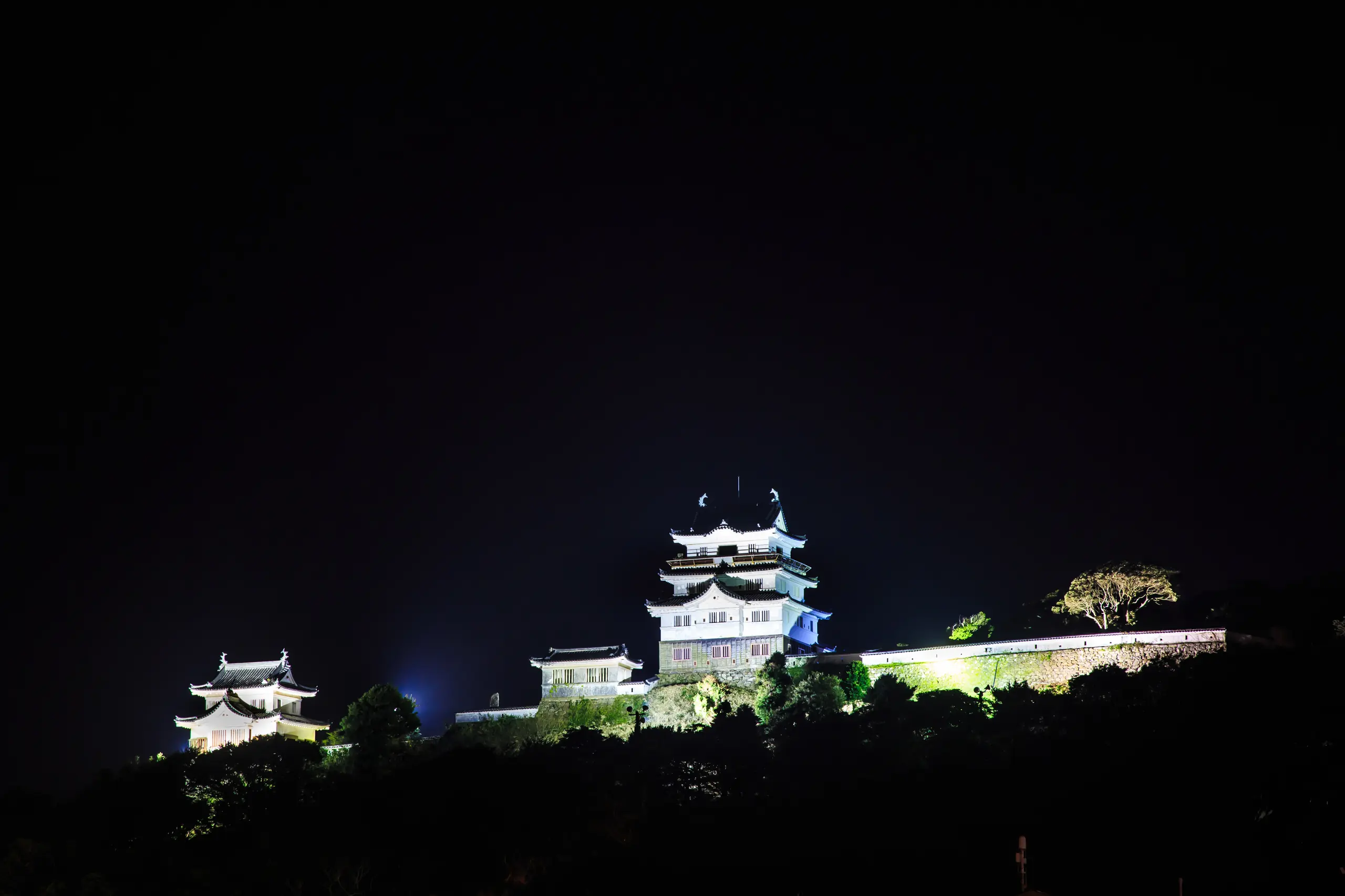
Hirado offers the most independent stay. Kaiju Yagura rises above a harbor that once supported international trade. Inside, the atmosphere is unmistakably contemporary: a spacious living and dining room, two double beds upstairs, a wooden deck and a bathroom enclosed by glass on three sides. The water and Hirado Bridge become part of the view. For a couple who prefer to spend the evening talking, watching the water or simply enjoying the room, that may be more appealing than the elaborate group ceremonies offered elsewhere.
This is the castle stay for someone who wants space to settle in rather than a timetable full of ceremonies. The standard reservation is room-only, while extras such as a private traditional dance, tea ceremony or after-hours castle access may be arranged at additional cost. The private bathroom makes it closer to a luxury villa than a historical reenactment.
Built in concrete in 1962 and later converted, the turret has a castle silhouette but a thoroughly modern interior. Unlike Ozu, this is a stay shaped by its sea views and privacy, not by reenactment.
Reference: Hirado Castle Stay – Accommodation and Experiences
What a Castle Night Is Like After the Photographs
The polished images do not show every practical detail. A tower designed for defense was never intended to have a hotel bathroom beside every bed. At Ozu and Fukuyama, guests leave their sleeping building to bathe. Marugame’s room-only guesthouse provides two beds and two futon sets; ask separately about the facilities included in the full Castle Experience. Hirado offers the convenience of a bathroom within its suite, but the operator says the property is not barrier-free.
A Japanese castle room is also quite different from a European stone castle bedroom. Some are reconstructions, and Marugame’s original keep is not the sleeping building. The attraction is the place, not a promise of untouched antiquity.
Ozu and Fukuyama provide organized evenings. Marugame offers a full program or room-only stay; Hirado lets guests shape the night with optional activities.
Cost, Booking and the Journey There
A full castle program is a major purchase. Ozu and Fukuyama list ¥660,000 per adult for two; Marugame lists ¥632,500. Rates per adult decrease for larger parties, subject to each property’s capacity. The separate Marugame guesthouse starts at ¥275,000 per building, including tax, while Hirado’s room-only listing starts at ¥330,000. Check the current quote, optional experiences and meal arrangements before comparing totals.
For the full Ozu, Marugame and Fukuyama programs, an inquiry comes before confirmation. A 10% deposit follows a provisional booking, and full payment is normally due at least 21 days before arrival. Ozu requires inquiries at least a month ahead and operates seasonally, excluding August and December through February. Marugame and Fukuyama publish shorter inquiry cutoffs, but these sit awkwardly beside the payment deadline. Contact the operator at least a month ahead wherever possible and ask if a later request can actually be accepted.
Fukuyama is convenient by Shinkansen. Ozu and Marugame fit Shikoku routes; Hirado is farther out in northwestern Kyushu and easier by car. Plan to arrive before the evening begins.
Which Castle Stay Would You Remember Most?
For the full sense of being welcomed into another period, Ozu offers the most theatrical arrival and the rare experience of sleeping inside a wooden main tower. Marugame is especially appealing to those who love original castle architecture, sweeping views and the option to stay at a gentler pace. Fukuyama pairs cultural performances with a remarkably convenient location, while Hirado puts the scenery and comfort of a private seaside suite first.
Give the castle night room in the itinerary. ENJYU JAPAN can build a Tailor-Made Tour around it, with realistic transfers, nearby stays and time to discover the surrounding town.