There are many ways to explore Japan, but few are as refreshing and unique as discovering it from the water. Whether you’re gliding past city skylines or drifting through serene natural landscapes, a boat ride offers a whole new perspective on your journey.
Moving at a gentle pace, these cruises allow you to take in everything from illuminated bridges in Tokyo to mountain gorges and historic canal towns. Although river cruises are the focus of this guide, we have also included a few lake, bay, canal, and coastal rides that offer a similar way to experience Japan from the water.
The experiences vary considerably in length and planning. Some take only 10–30 minutes and are easy to add to a day of sightseeing, while others last around 90 minutes to two and a half hours and deserve a larger place in your itinerary. Season, weather, and reservation requirements also matter, so each entry below includes the practical points worth checking before you go.
Urban Cruises: Scenic Boat Rides Through Cities
Water Bus Tokyo Bay Cruise|Tokyo
About an hour for Asakusa–Odaiba services, depending on the boat and current route
Tokyo sightseeing between Asakusa and the bay area
Asakusa, Hinode, or Odaiba
Check the current timetable; advance booking can be useful on busy dates
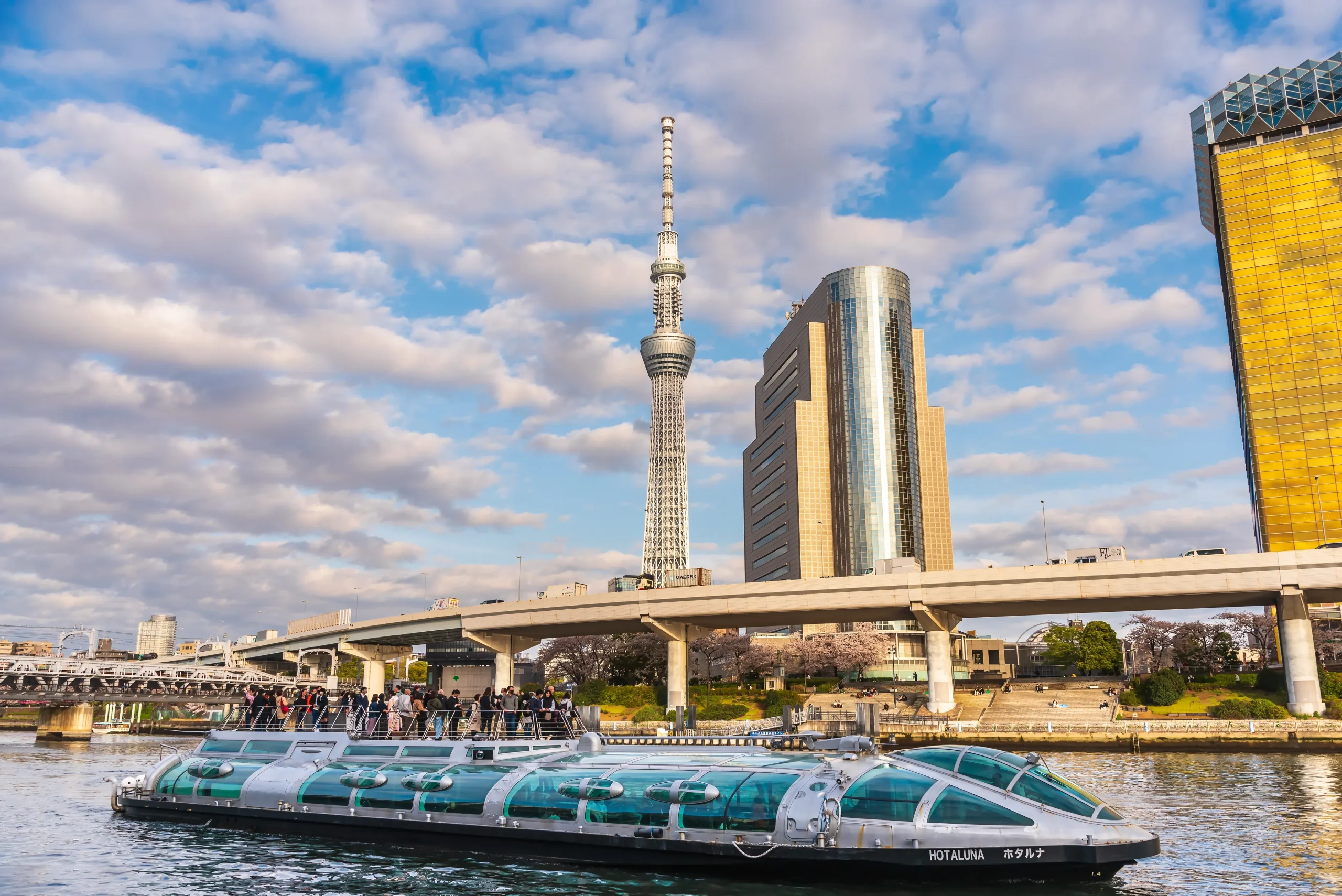
If you are planning to explore Tokyo, the water bus departing from Asakusa offers a refreshing and scenic way to experience the city. Cruising along the Sumida River toward Tokyo Bay, you can enjoy a very different view of Tokyo from the water.
One of the standout vessels is the Hotaluna, a sleek, futuristic ship designed by legendary manga and anime creator Leiji Matsumoto. Routes vary by service, with Tokyo Cruise boats connecting waterfront areas such as Asakusa, Hinode, and Odaiba.
As the boat moves away from Asakusa, the dense streets gradually give way to bridges, high-rise buildings, and wider views across the bay. If your sailing runs later in the day, the changing light makes the journey especially atmospheric as Tokyo’s waterfront begins to illuminate.
For travelers who want an easy boat ride that also moves them between sightseeing areas, the water bus is one of the simplest options in Tokyo.
Tokyo Yakatabune|Tokyo
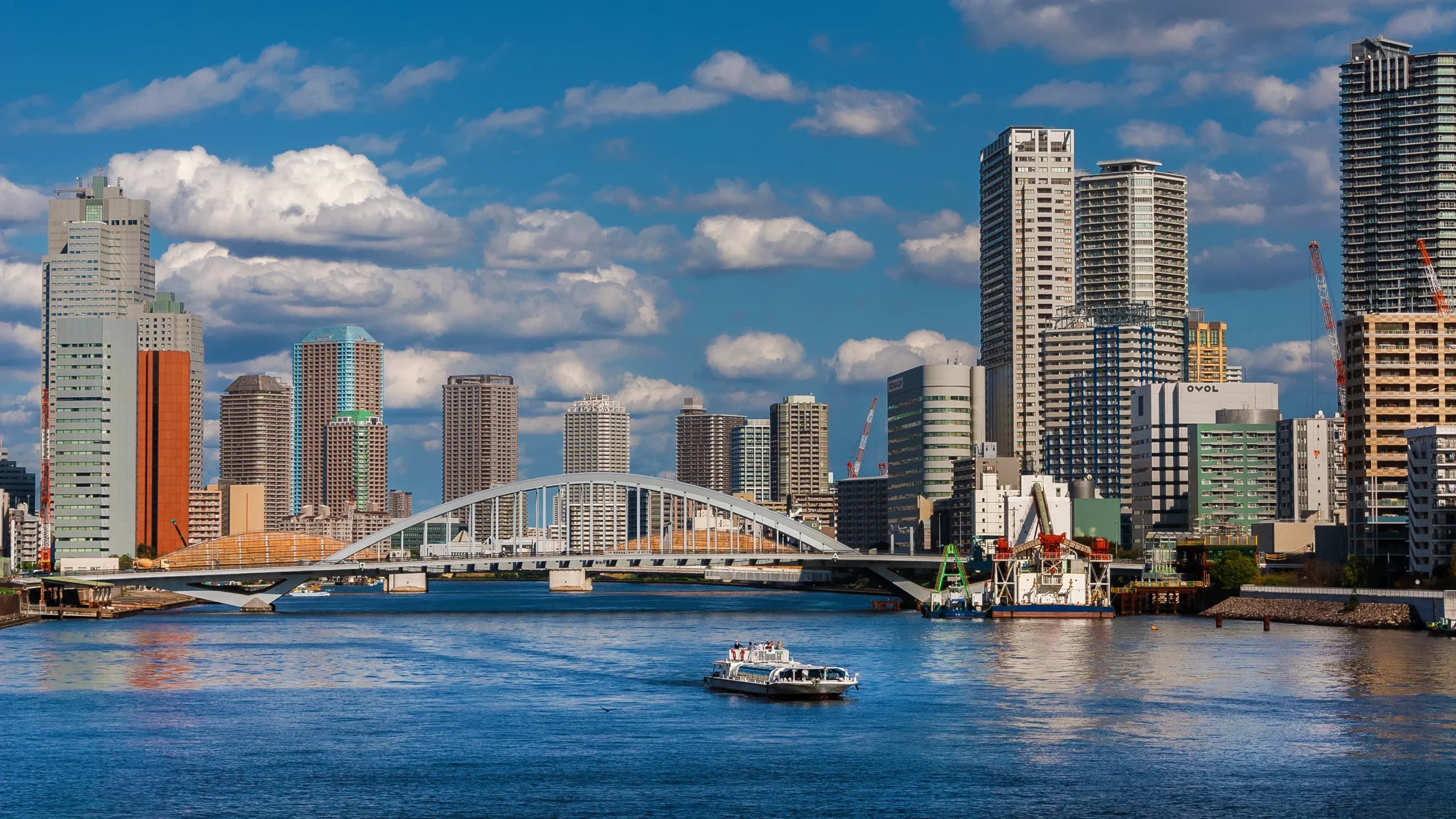
Around 2½ hours for many scheduled cruises
An evening experience combining Tokyo views with dinner
Tokyo waterfront, including the Sumida River and Odaiba areas
Advance booking recommended; book earlier during cherry blossom and summer fireworks periods
A yakatabune offers a completely different way to experience Tokyo’s waterways. These traditional roofed pleasure boats are built around spending time on the water rather than simply using the boat as transportation.
Many cruises include a meal such as tempura or sushi while the boat follows the Sumida River or heads toward Tokyo Bay and Odaiba. Depending on the operator and vessel, some also have an open deck where passengers can step outside for skyline views.
Scheduled cruises are commonly held in the evening and often last around two and a half hours, although lunch and private options also exist. This makes yakatabune a much bigger commitment than the Tokyo Water Bus, but also a fuller evening experience.
Reservations are particularly important during the cherry blossom season and around major summer fireworks events. If you want a quick daytime sightseeing connection, choose the water bus. If you want the boat ride itself to be one of the highlights of your evening, a yakatabune is the more fitting choice.
Hakone Sightseeing Cruise|Kanagawa
Roughly 25–40 minutes depending on the section traveled
A Hakone sightseeing loop with Lake Ashi, Hakone Shrine, and the ropeway
Tōgendai, Hakone-machi, or Moto-Hakone
Regular service, but check the latest timetable and weather
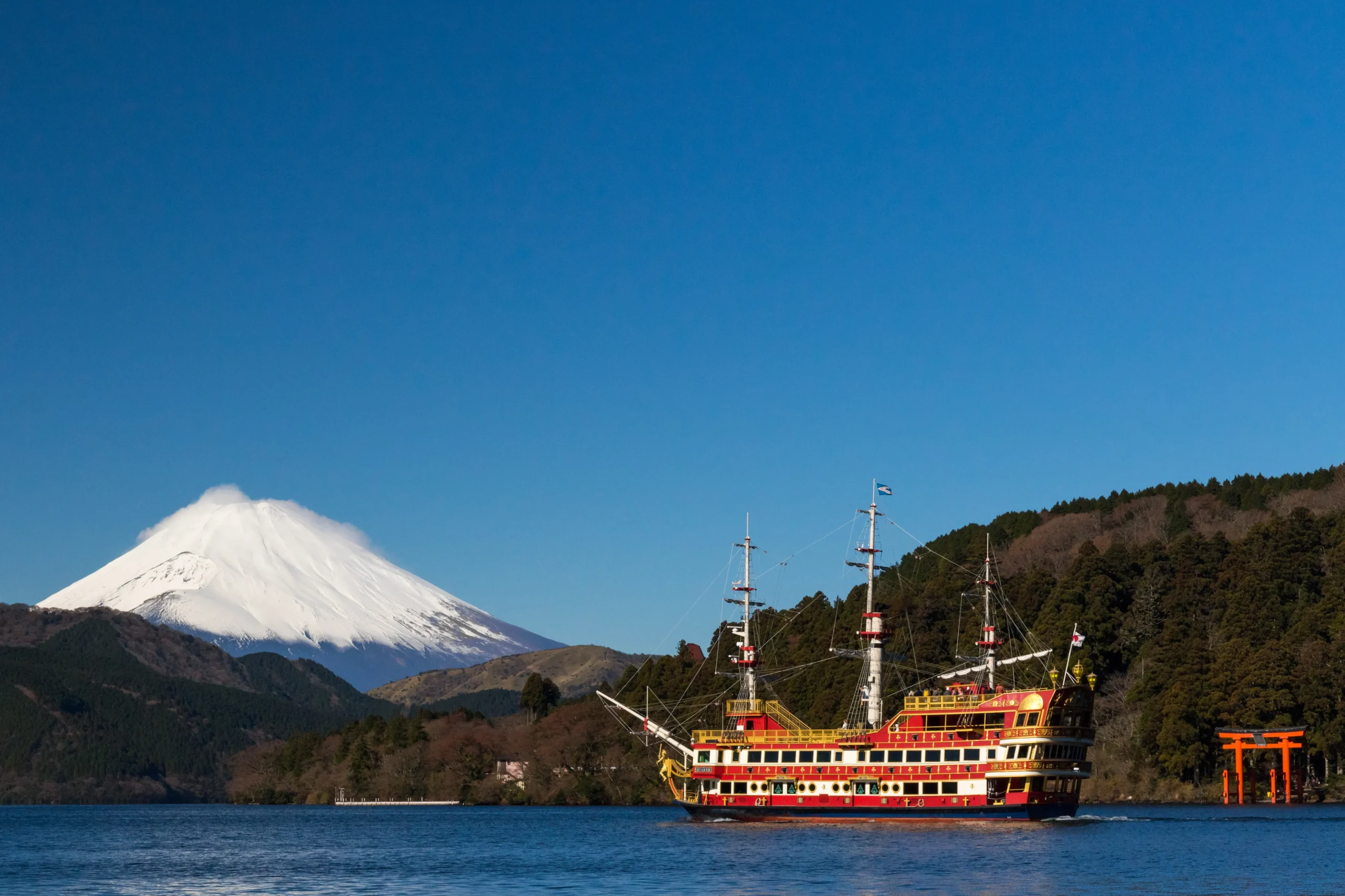
A signature experience in Hakone, the Hakone Sightseeing Cruise, better known as the Hakone Pirate Ship, crosses Lake Ashinoko between Tōgendai, Hakone-machi, and Moto-Hakone.
This is technically a lake cruise rather than a river cruise, but it belongs in this guide because of how naturally it fits into a Hakone sightseeing day. The ships are styled after classic European vessels, adding a playful element to the journey.
Depending on the route and weather conditions, you may catch a view of Mt. Fuji rising beyond the lake and Hakone Shrine’s torii gate. Visibility is never guaranteed, but the combination of water, mountains, and shrine scenery is one of Hakone’s most recognizable landscapes.
Seasonal event cruises may also operate at certain times of year, including around local festivals, so check the current Hakone Sightseeing Cruise schedule if you are visiting during a special event.
This pirate ship crossing is part of ENJYU JAPAN’s 4-day Tokyo & Hakone river cruise tour, together with the Sumida River water bus and Mt. Fuji-area sightseeing.
Sea Bass Cruise | Kanagawa
Around 10–20 minutes for many regular waterbus legs; special cruises are longer
Moving between Yokohama Station, Minato Mirai, the Red Brick Warehouse, and Yamashita Park
Yokohama
Regular waterbus and special-cruise arrangements differ, so check the specific service
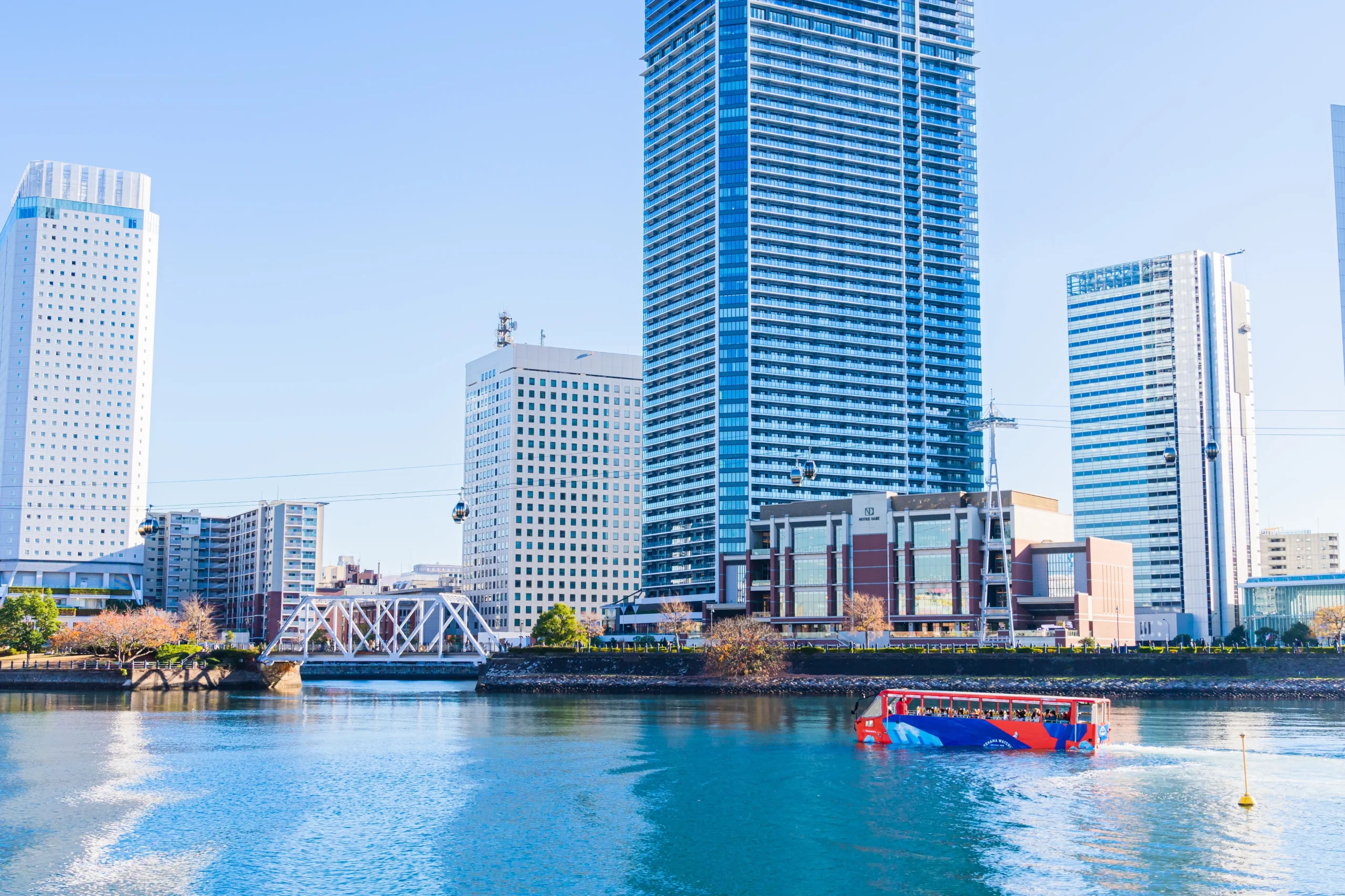
The Sea Bass is a convenient waterbus connecting several of Yokohama’s major waterfront areas, including Yokohama Station East Exit, Minato Mirai, Yokohama Hammerhead, the Red Brick Warehouse, and Yamashita Park.
Rather than taking a train between these areas, the Sea Bass lets you turn the transfer itself into a short sightseeing cruise. Views across the port and Minato Mirai skyline make it particularly useful for travelers spending a day around central Yokohama.
It is important, however, not to confuse the regular waterbus with Sea Bass special cruises. Industrial-night-view cruises and other themed sailings are separate products with their own routes, durations, tickets, and operating dates. If the Kawasaki and Keihin industrial waterfront is what interests you, look specifically for the current factory-night-view cruise rather than assuming it is part of a normal Sea Bass journey.
Osaka Water Bus Aqua-Liner Cruise | Osaka
Around 55 minutes
Osaka Castle and central Osaka sightseeing
Osaka Castle Park
Check current operating dates; advance tickets may help on busy days
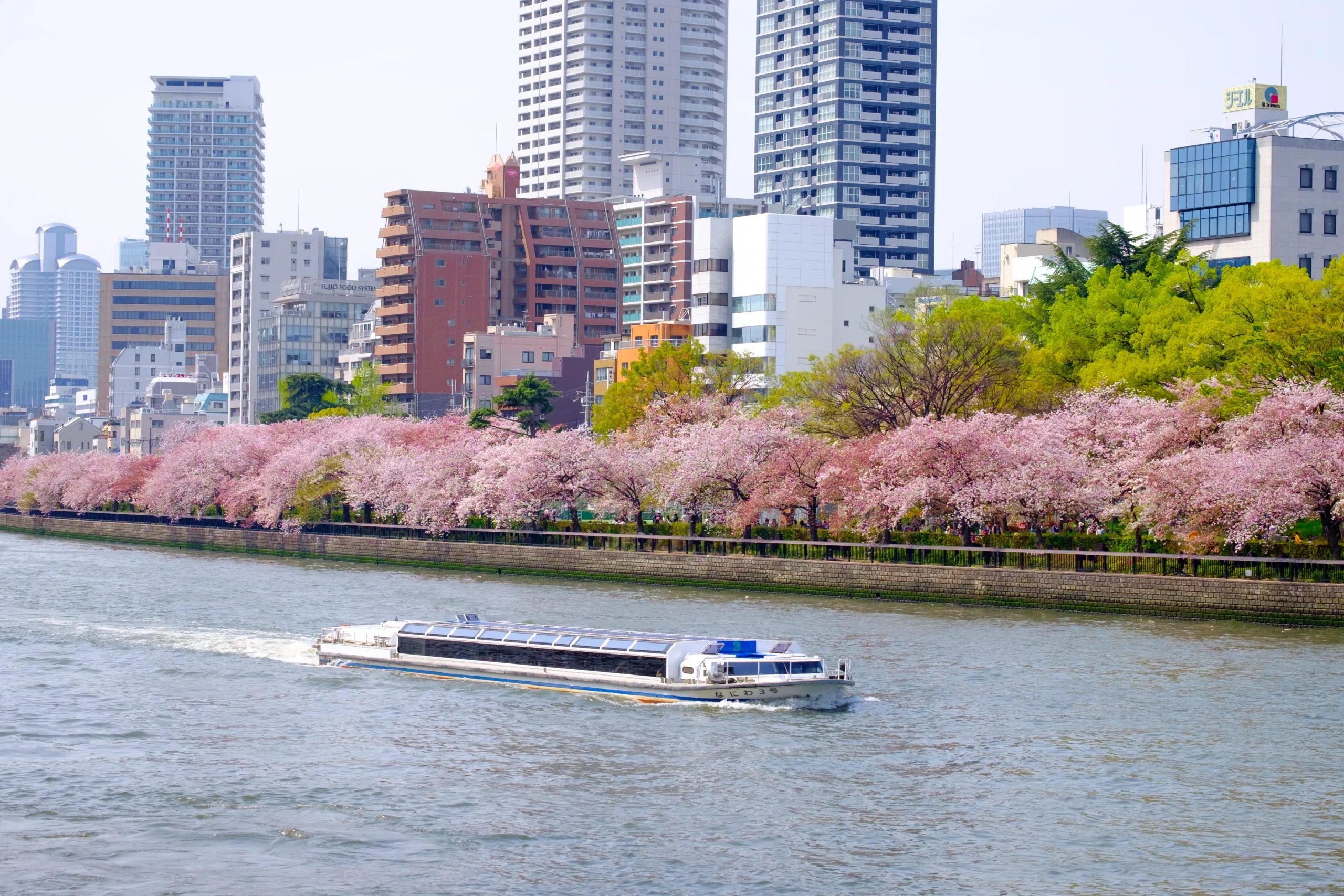
The Aqua-Liner is a sightseeing water bus that offers a different way to explore Osaka, a city that developed around an extensive network of waterways.
Departing from Osaka Castle Port within Osaka Castle Park, the cruise passes a mix of historic landmarks and modern architecture.
Passengers can see Osaka Castle from the water as well as the early 20th-century Osaka City Central Public Hall. The route also shows the contrast between high-rise buildings and greener stretches of riverbank.
The low-profile sightseeing boats are designed for Osaka’s waterways and bridges, making the journey itself part of the city’s “water capital” character without requiring a major detour from a standard Osaka itinerary.
You can ride the Aqua-Liner as part of ENJYU JAPAN’s 8-day river cruise journey, which links cruises in Tokyo, Hakone, Kyoto, and Osaka into one route.
Tombori River Cruise | Osaka
About 20 minutes
Adding a quick boat ride to Dotonbori and Namba sightseeing
Dotonbori / Namba
Tickets are generally arranged for a specific same-day departure; popular evening times can fill
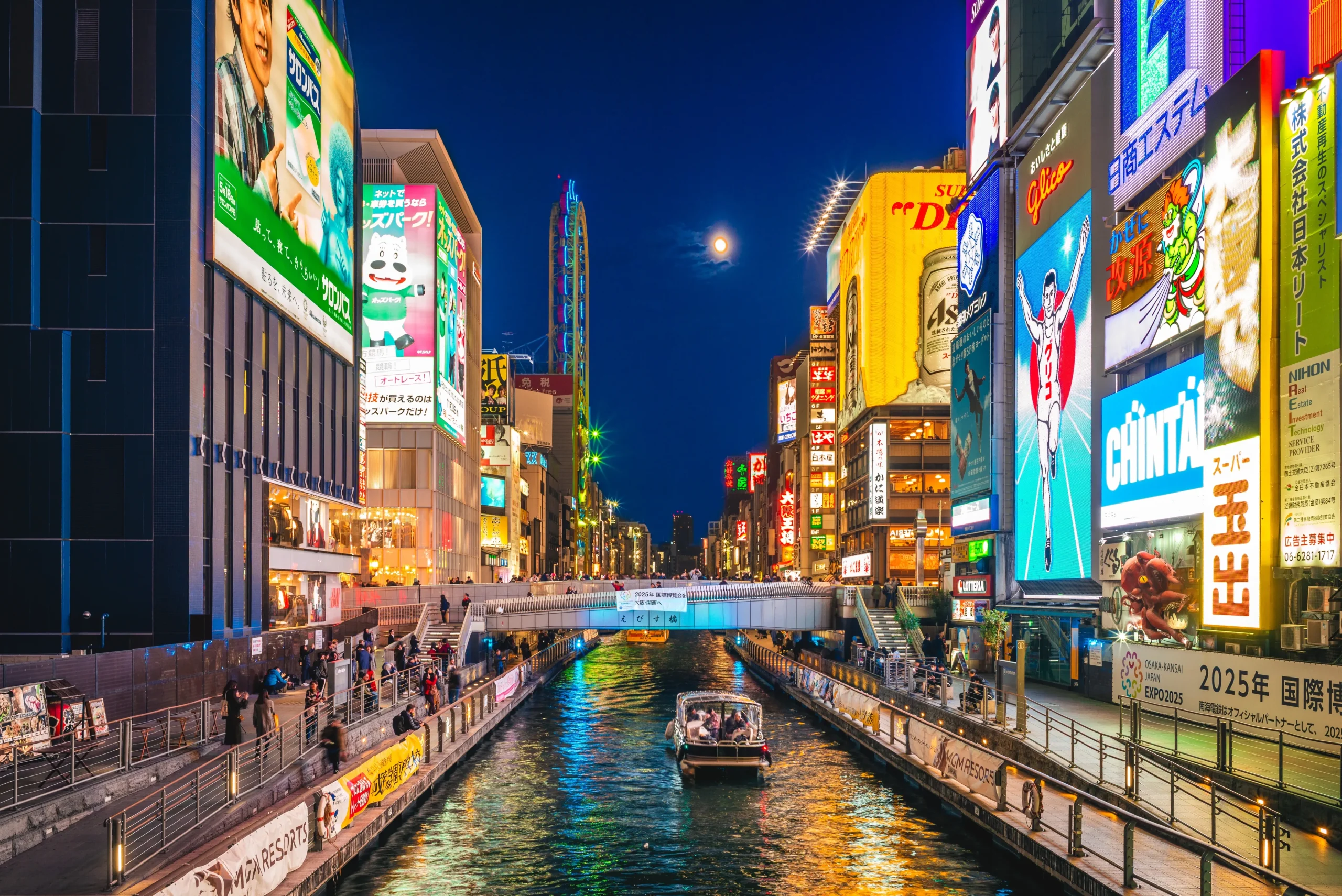
If you want to see Osaka from the water but do not have an hour for the Aqua-Liner, the Tombori River Cruise is an easy alternative in the middle of Dotonbori.
The short journey departs from Tazaemonbashi Pier and passes beneath nine bridges while traveling through one of Osaka’s busiest entertainment districts. Instead of the greener waterways and civic architecture around Osaka Castle, the scenery here is unmistakably Dotonbori: crowded bridges, giant signs, restaurants, and dense city streets.
Its biggest advantage is how easily it fits into an existing evening. You can secure a departure time, continue exploring Dotonbori or Shinsaibashi, take the cruise, and then return to dinner or nightlife without reorganizing the rest of your day.
Evening departures are especially appealing because of the illuminated waterfront, but they can also be among the more popular times, so it is better not to leave ticketing until the very end of the night.
River Adventures: Traditional Rafting and Gorge Cruises
Kinugawa River Boat Cruise|Tochigi
About 30 minutes on the river, plus the return transfer
A spring-to-autumn stay in Kinugawa Onsen
Kinugawa Onsen
Same-day availability may be possible, but operation depends on weather and river conditions
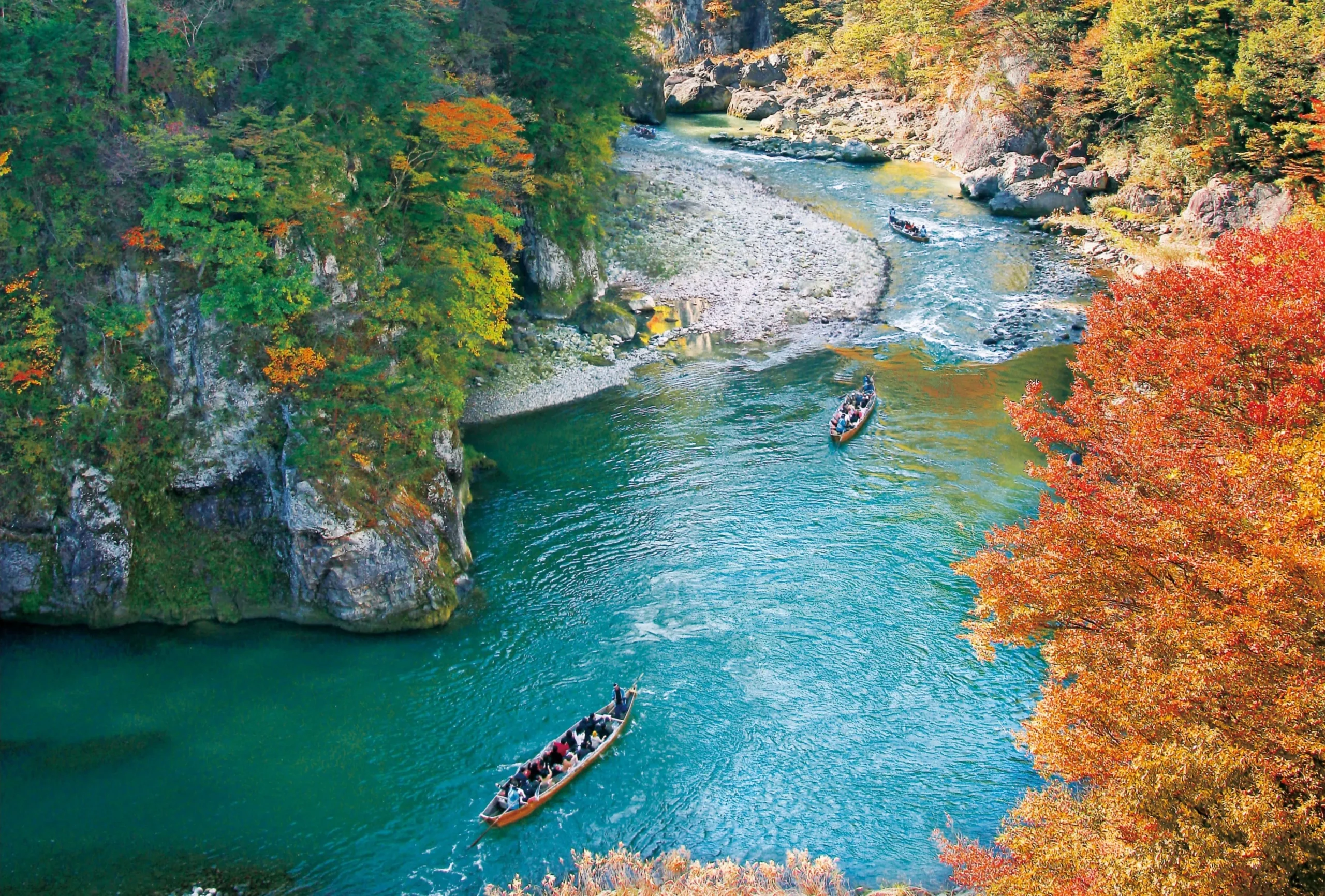
The Kinugawa River Boat Cruise takes passengers through one of the most dramatic sections of the Kinugawa Onsen landscape.
Skilled boatmen steer the traditional vessel through the gorge using long poles, responding to the changing current as the river passes steep rock formations and forested slopes. The ride has enough movement to feel lively without becoming a full rafting experience.
Among the rock formations along the route are shapes traditionally compared with a gorilla and a battleship, while the boatmen’s commentary adds a more local and personal element to the journey.
The scenery changes markedly through the operating season. Spring brings flowering trees and fresh greenery, summer fills the gorge with deeper green, and autumn is the most colorful period.
Because the service is seasonal and can be affected by high water or poor conditions, check its current operating status before building a trip around it.
Hozugawa River Boat Ride | Kyoto
About 2 hours
Traveling from Kameoka into Arashiyama as part of a Kyoto day
Kameoka; the ride finishes in Arashiyama
Recommended, particularly in popular seasons
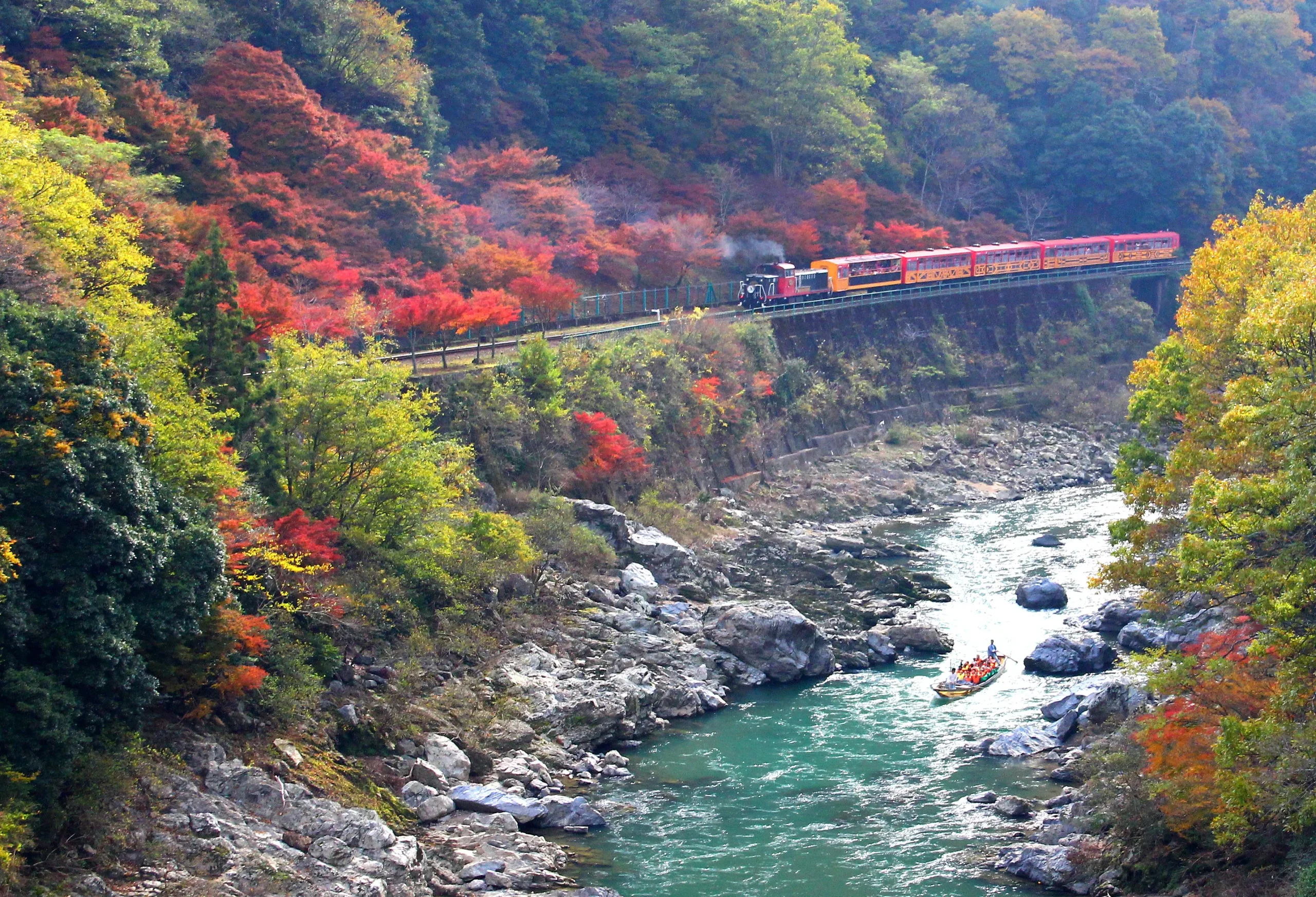
The Hozugawa River Boat Ride follows a roughly 16-kilometer route from Kameoka to Arashiyama. The river has more than 400 years of transport history, originally carrying timber and goods downstream before developing into one of Kyoto’s best-known scenic boat journeys.
Expert boatmen steer the vessel by hand through the twists, shallows, and faster sections of Hozu Gorge. The journey takes around two hours, although water levels can affect the exact duration.
Spring brings cherry blossoms along parts of the valley, summer fills the gorge with deep green, and autumn turns the surrounding hills red and gold. The route also intersects visually with the Sagano Romantic Train, creating one of the most memorable moments of the journey when train and boat pass through the same landscape.
One practical advantage is where the ride ends. Passengers arrive directly in Arashiyama, making it easy to continue to Togetsukyo Bridge, the Bamboo Grove, Tenryu-ji Temple, or other nearby sights.
The boarding point is around an eight-minute walk from JR Kameoka Station, while travelers arriving at Torokko Kameoka Station can connect onward by local transport.
Rain alone does not necessarily stop the boats, but storms and high water can cause cancellations. The service also closes annually from December 29 through January 4. Winter operations continue, but the current winter setup is an open boat, so warm clothing is essential and travelers should check the latest seasonal guidance before visiting.
This historic ride is one of the scenic highlights of ENJYU JAPAN’s 8-day river cruise tour, ending in Arashiyama for temple and bamboo-grove sightseeing.
Geibikei Gorge River Cruise | Iwate
About 90 minutes, including a short walk at the turnaround point
A Tohoku itinerary around Ichinoseki and Hiraizumi
Geibikei / Ichinoseki
Individuals can generally join scheduled boats; groups should arrange ahead
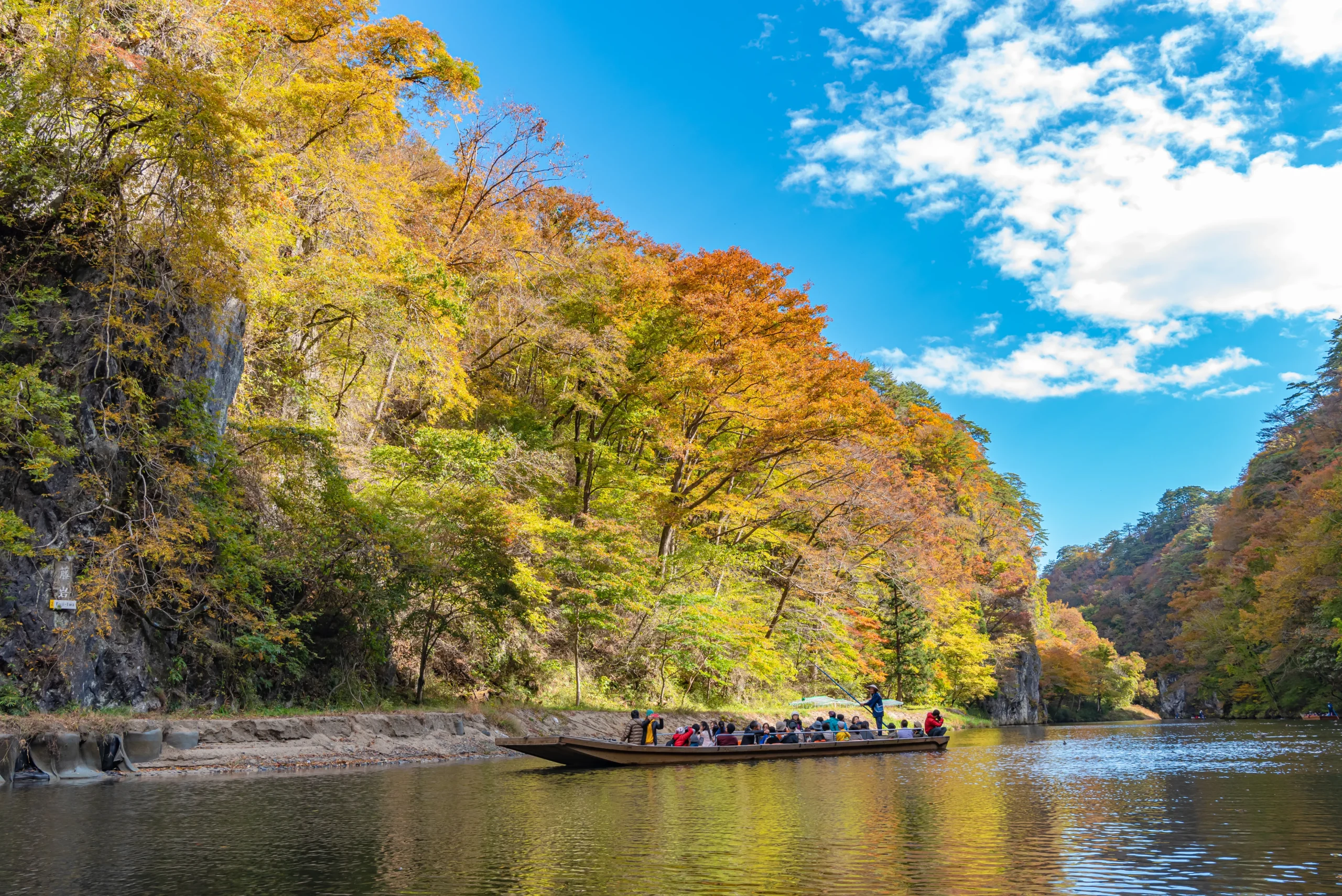
Geibikei Gorge in Iwate offers a quieter kind of river journey. Rather than following rapids downstream, a boatman guides a flat-bottomed wooden boat through the gorge using a long pole.
The approximately 90-minute round trip travels between high limestone cliffs along the Satetsu River. At the far end, passengers normally have around 15–20 minutes to step off the boat and walk, so comfortable shoes are useful even though the main experience is seated.
On the return journey, the boatman traditionally sings Geibi Oiwake, a local folk song. With little engine noise around you, the singing and the natural acoustics of the gorge make this one of the most distinctive boat experiences in the article.
Geibikei operates through the year, and winter brings kotatsu boats that let passengers stay warm while seeing the gorge in a much quieter season.
Geibikei Station is only a short walk from the boarding area, with rail connections from Ichinoseki. That makes the cruise particularly practical for travelers already visiting Hiraizumi who want to add another half-day experience in southern Iwate.
Kuma River Boat Cruise | Kumamoto
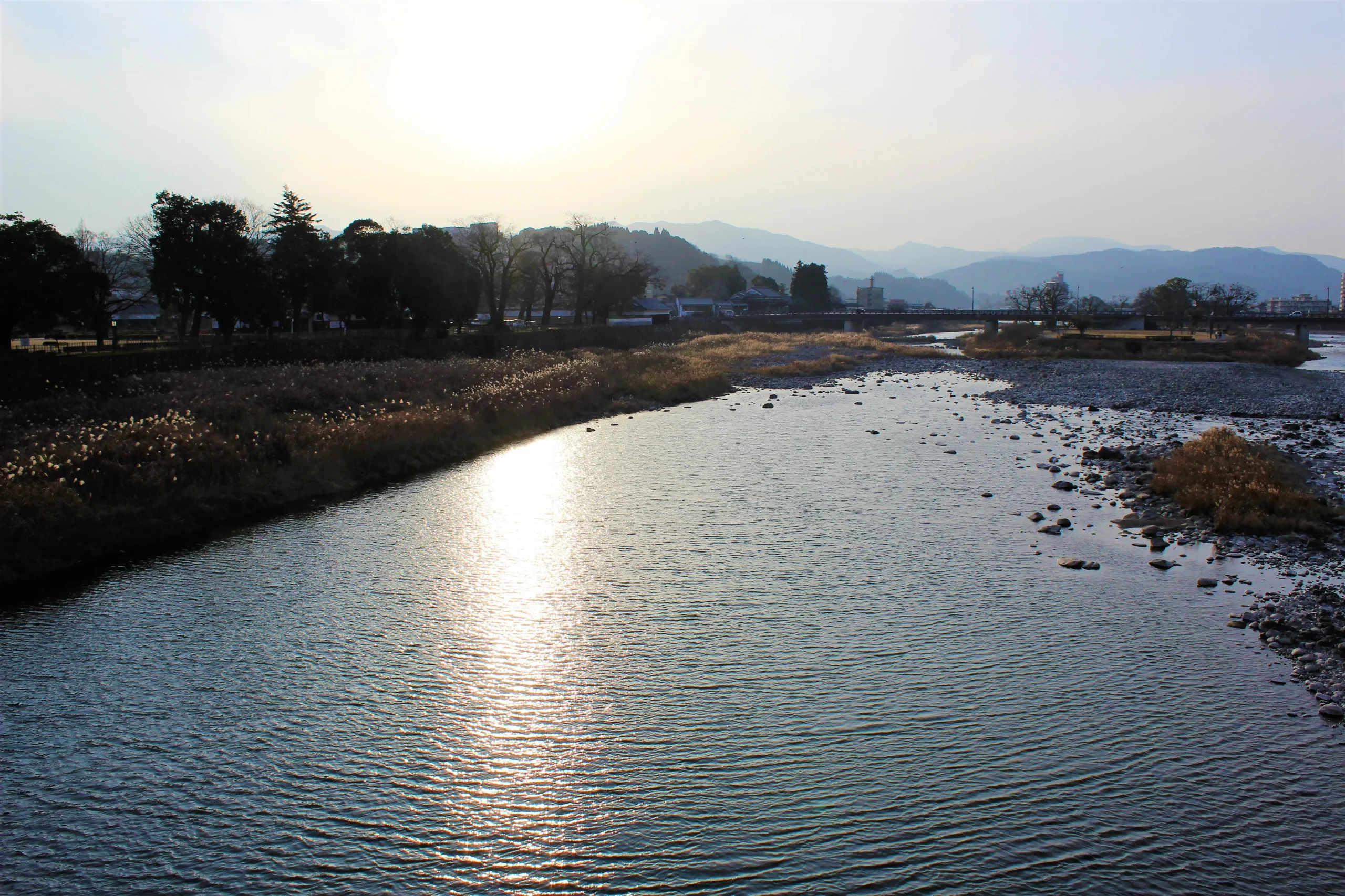
Around 50 minutes when the main Seiryu Course operates
A visit to Hitoyoshi combined with local sightseeing or onsen
Hitoyoshi
Recommended if you need a particular departure; always check current river conditions
The Kuma River has long been known for its strong current, but around Hitoyoshi you can also experience a much gentler side of the river.
The traditional Seiryu Course follows a comparatively calm section for around 50 minutes, with boatmen guiding passengers through seasonal scenery from a wooden boat. It is a much more relaxed experience than the rafting trips available elsewhere on the river.
Winter has also traditionally brought a kotatsu-boat version, adding the Kuma River to Japan’s small group of cold-season river experiences where passengers can sit warmly while watching the landscape outside.
River level matters here. The main sightseeing course has experienced temporary suspensions when water becomes too low, while heavy rain and high water can also affect operation. If Hitoyoshi is a significant detour in your itinerary, confirm the current course status shortly before traveling rather than assuming every river option is running.
For travelers wanting something more active, rafting offers a completely different way to experience the Kuma River and generally requires advance booking.
Nagatoro River Cruise | Saitama
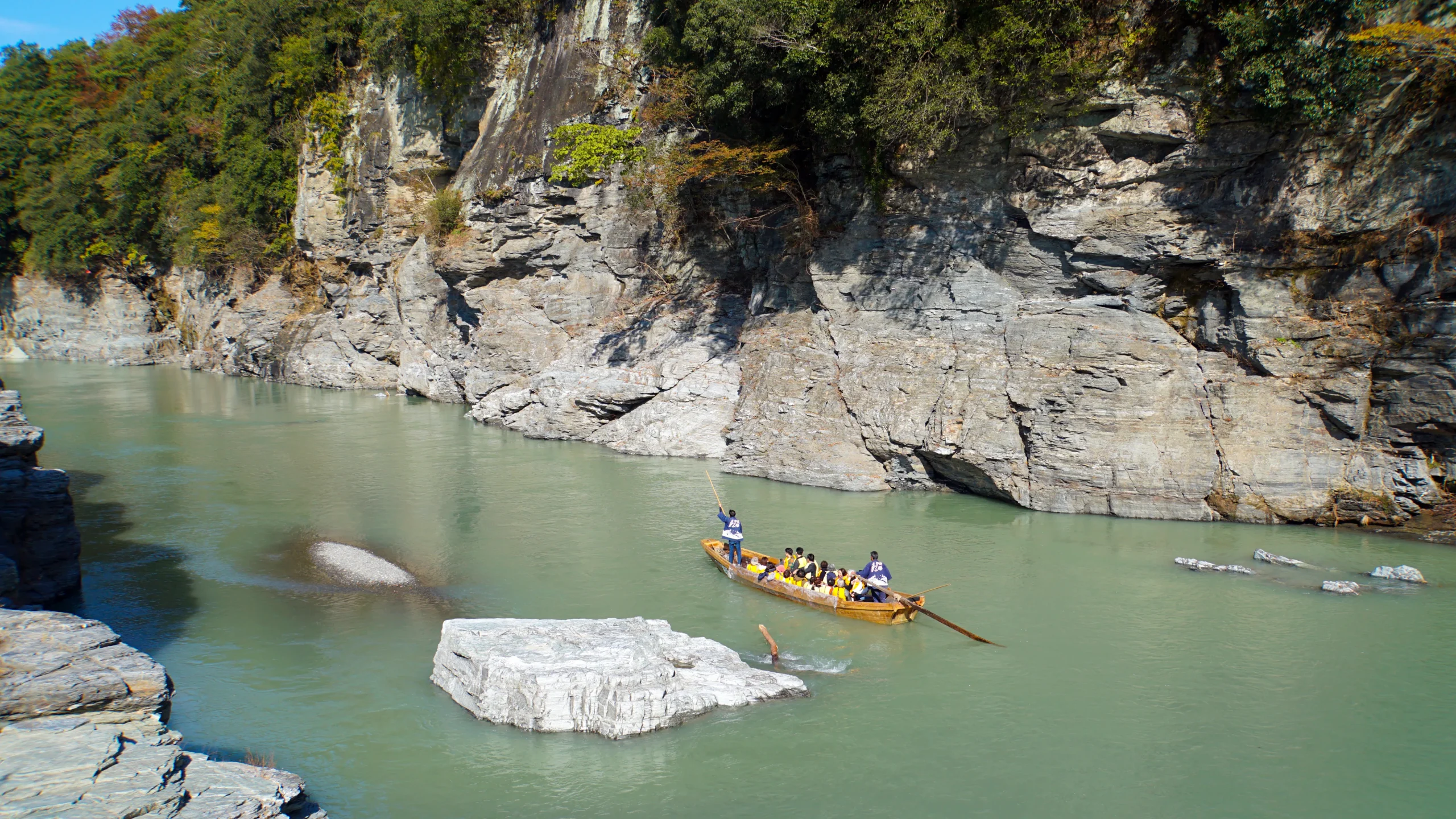
Around 20 minutes for a typical individual course
A Tokyo day trip focused on nature, rocks, and Chichibu-area scenery
Nagatoro Station
Small groups may be able to join on the day, but water levels affect operation
Surrounded by the mountains of Saitama, Nagatoro is known for its unusual rock formations and the Arakawa River running through the valley.
Traditional wooden boats descend sections of the river while skilled boatmen use long poles to steer through calm water and occasional faster currents. The ride is relatively short, which makes it easy to combine with the Iwadatami rock formations, Hodosan Shrine, or other Nagatoro sightseeing.
Spring offers fresh greenery, while autumn brings some of the most colorful scenery. Water levels can change both the route and whether boats operate, so same-day conditions matter more here than with an urban cruise.
Nagatoro is also associated with special winter kotatsu boats. If you are considering a cold-season trip, compare it with Geibikei or Yanagawa: Nagatoro gives you a river-valley setting, Geibikei a high-walled gorge, and Yanagawa a historic canal town.
The Nagatoro boat ride features in ENJYU JAPAN’s 6-day rivers and onsen tour, combined with Hakone and an overnight stay in an onsen ryokan.
Local Cruises: Unique and Cultural Boat Experiences
Kumano River Boat Tour | Wakayama
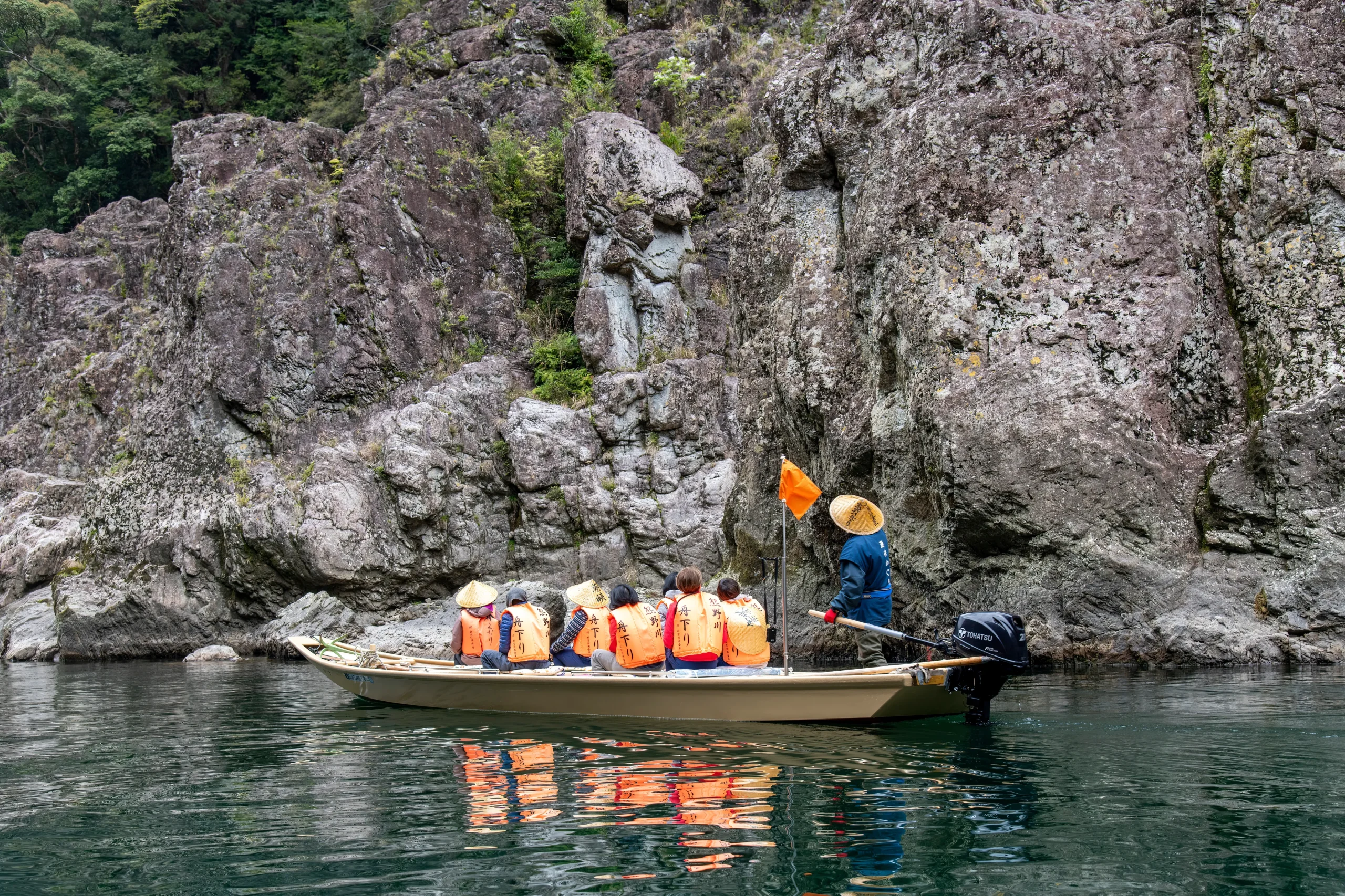
Around 90 minutes
Combining the Kumano Kodo with the sacred sites around Hongu and Shingu
Kumano / Shingu area
Arrange ahead and confirm seasonal operation
Long ago, imperial pilgrims and aristocrats traveling the sacred Kumano Kodo route would journey by boat down the Kumano River after visiting Kumano Hongu Taisha, continuing toward Kumano Hayatama Taisha and the wider Kumano Sanzan pilgrimage landscape.
The river route forms part of the UNESCO World Heritage “Sacred Sites and Pilgrimage Routes in the Kii Mountain Range” and is often described as a waterborne section of the pilgrimage.
Today, travelers can retrace part of that journey by boat. Along the way are forested mountainsides, steep rock formations, waterfalls, and places tied to local stories and religious history.
What makes this ride particularly valuable is its relationship with the walking route. After experiencing sections of the Kumano Kodo on foot, moving along the river gives you another sense of how pilgrims once crossed this landscape.
Rather than feeling like a standalone sightseeing attraction, it works especially well as part of a wider Kumano itinerary.
Yanagawa Donkobune Punting | Fukuoka
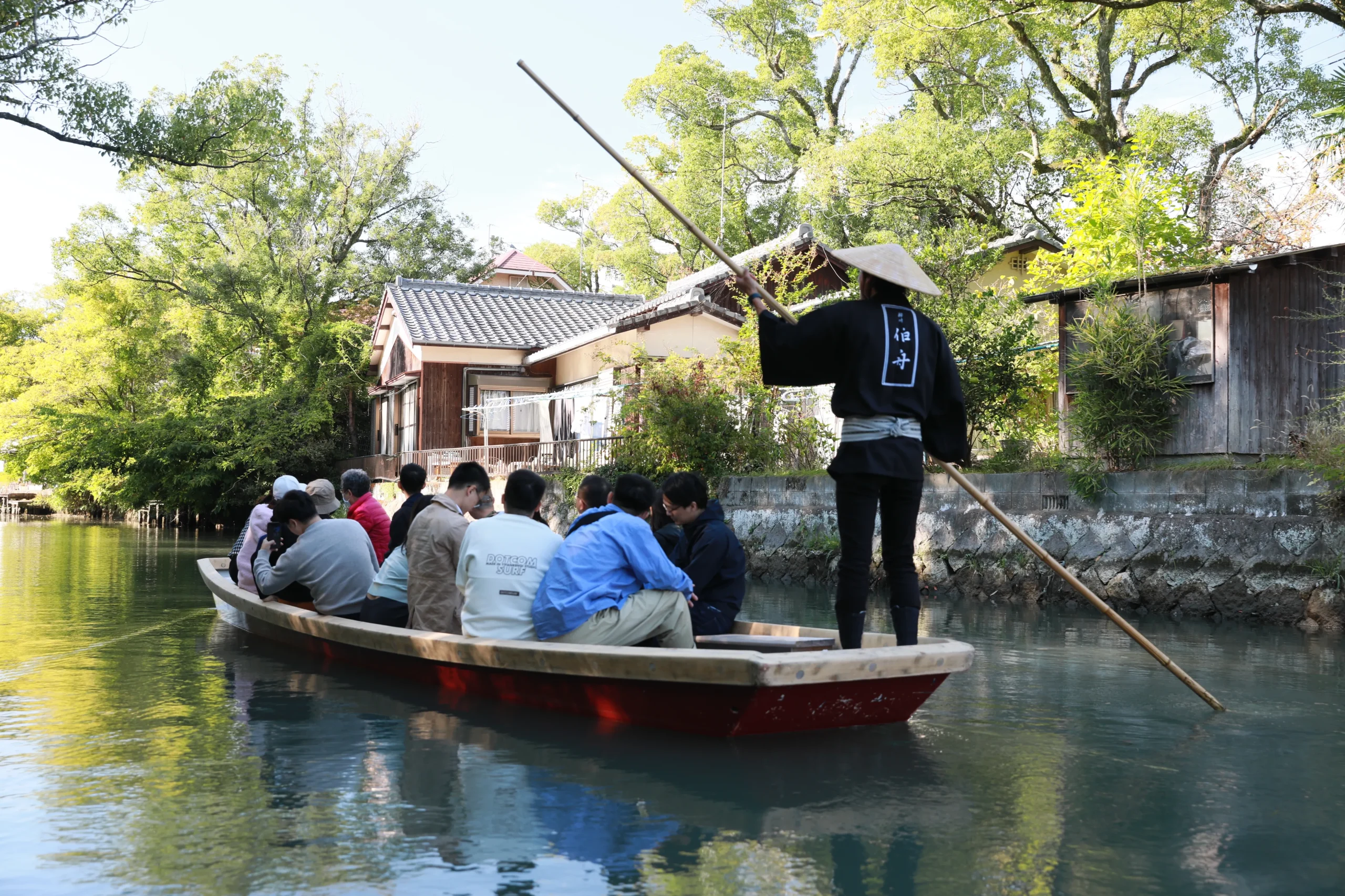
About 1 hour for a standard course
A relaxed day trip from Fukuoka
Nishitetsu Yanagawa Station
Varies by operator; check ahead if timing matters
South of Fukuoka City, Yanagawa is famous for the waterways that once formed part of its castle-town defenses and transport network.
Traditional donkobune boats move slowly through these canals while a boatman stands at the stern and steers with a long pole. The setting is very different from Japan’s gorge cruises: here the pleasure comes from old stone walls, trees leaning over the water, low bridges, and the streets of a historic town unfolding beside the canal.
A standard trip lasts about an hour. Several boarding areas are within walking distance of Nishitetsu Yanagawa Station, while the train from central Fukuoka takes under an hour, making Yanagawa one of the easier regional boat experiences to include without changing hotels.
In winter, some operators use kotatsu boats. Rain can mean the kotatsu itself is not used even when cruises continue.
There is one particularly important February caution. Every year, sections of the canals undergo a short mizu-ochi period when water is drained for maintenance. During this period the normal route is shortened, so anyone traveling in mid- to late February should check that year’s dates before planning the cruise as a major part of the day.
After the boat ride, Yanagawa’s local specialty of steamed eel over rice makes it easy to turn the outing into a leisurely half-day rather than immediately returning to Fukuoka.
Tub Boat Ride | Niigata
Around 10 minutes at Yajima–Kyojima
Adding a distinctive local experience to sightseeing in southern Sado
Ogi, Sado Island
Individual rides at Yajima–Kyojima generally do not require advance reservations
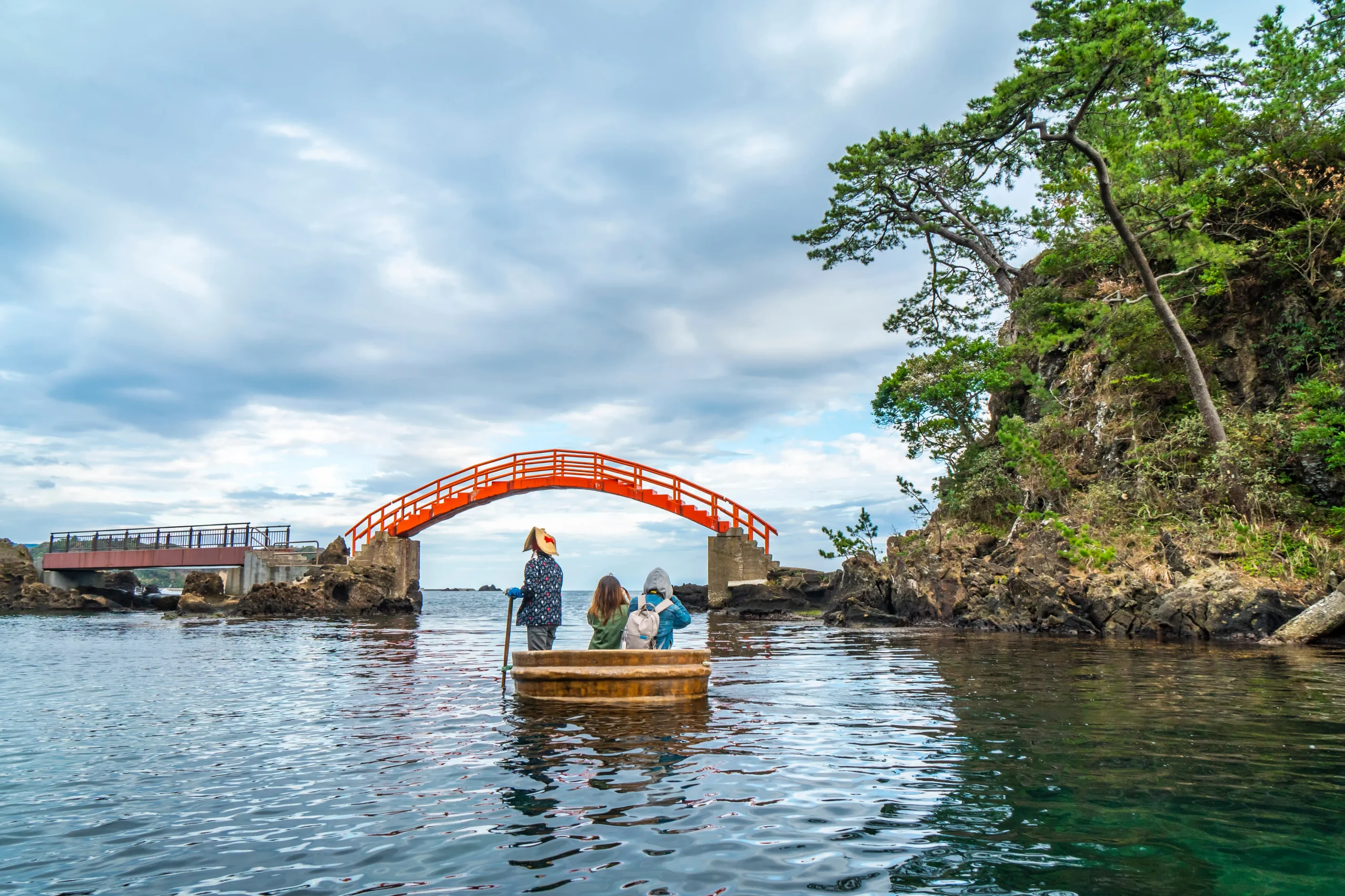
One of the most recognizable experiences on Sado Island is riding a tarai-bune, a traditional tub boat originally developed for fishing along the island’s rocky coast.
Shaped like a large wooden washtub, these small boats were practical in narrow coves where conventional boats were harder to maneuver. They were used for gathering seaweed, shellfish, and other coastal resources and remain closely associated with life around the Ogi Peninsula.
Today, visitors can try them at several locations in southern Sado. Yajima–Kyojima is particularly scenic, with a red arched bridge crossing the inlet above clear water.
The experience is short, so it should not be treated as a major excursion by itself. Its appeal comes from combining the unusual boat with the surrounding coastal landscape and the traditional villages and sights of southern Sado.
Kitayama River Log Rafting | Wakayama
Around 70 minutes on the raft, with roughly 2 hours for the overall activity
Travelers actively exploring the remote Kumano region
Kitayama / Okutoro
Advance reservation required
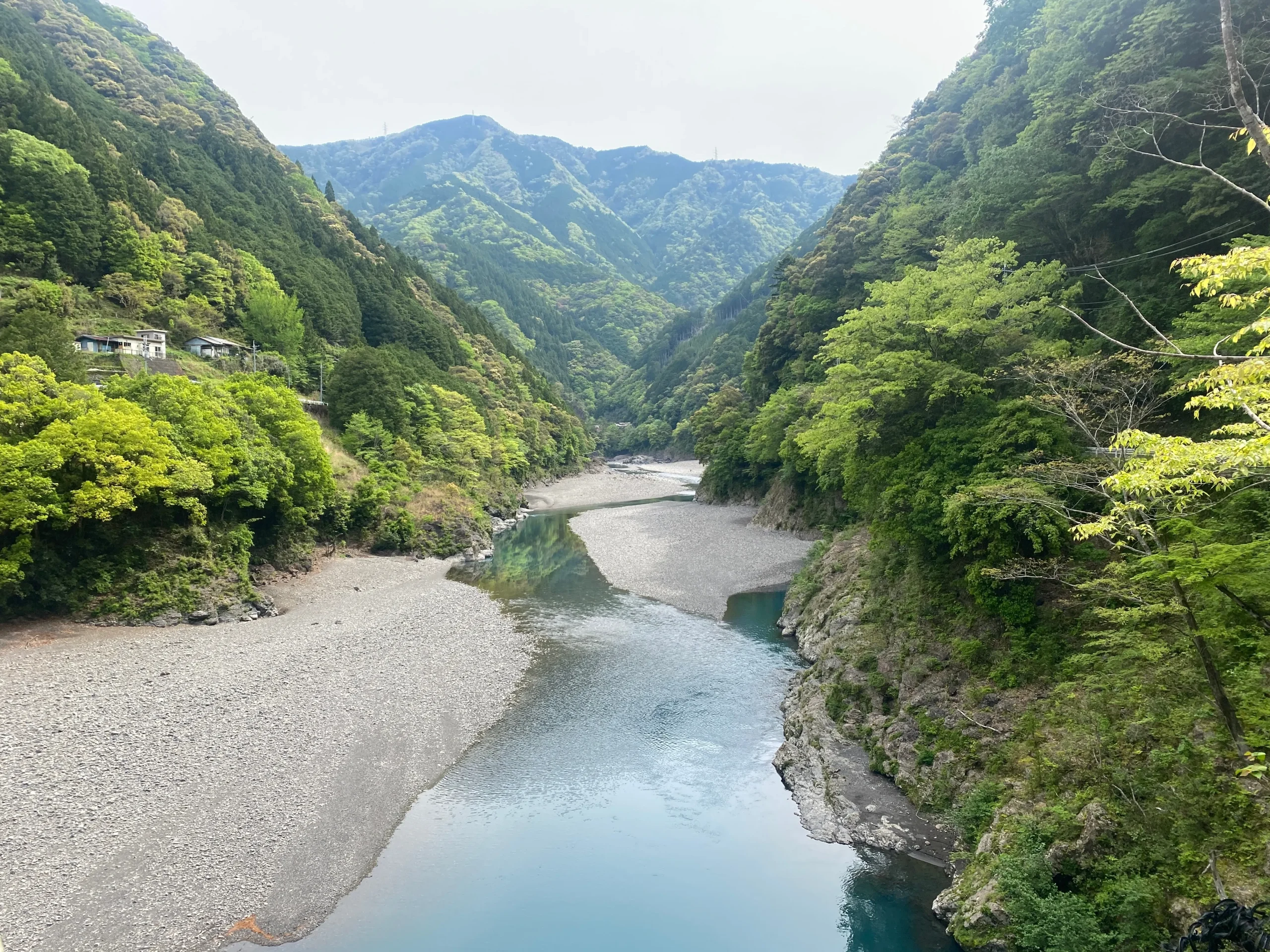
On the Kitayama River, traditional wooden rafts once used to transport timber downstream have been recreated as one of Japan’s most unusual river experiences.
The long rafts are controlled by skilled ikadashi raft masters using poles as they move through the river between steep, forested valley walls. Passengers stand on the raft rather than sitting inside a conventional sightseeing boat, giving the journey a much more direct connection to the water and current.
Historically, timber from the mountains was floated downstream toward Shingu through the Kumano river system. The modern experience keeps that rafting tradition alive, but it is seasonal rather than a year-round sightseeing cruise and should be reserved ahead.
Kitayama is also comparatively remote. This is best treated as a planned part of a Kumano-region itinerary rather than a casual attraction to add at the last minute.
Timeless Waters: Peaceful Boat Tours Through Historic Scenery
Robune Cruise | Ibaraki
Around 30 minutes
Visiting Itako during the Suigo Itako Iris Festival
Itako
Check the current festival programme
In Itako City, Ibaraki, traditional hand-rowed robune recall a time when boats were part of everyday transportation through this canal-rich area.
The hand-rowed sightseeing boats are particularly associated with the Suigo Itako Iris Festival rather than being a standard year-round attraction, so timing matters if this specific traditional experience is what you want to see.
The best-known sight during the festival is the Yomeiri-bune, or bridal boat procession. A bride dressed in traditional white wedding clothing travels along the canal, continuing a local image that has become closely associated with Itako’s waterside culture.
Outside the festival period there are other ways to experience the waterways, but travelers interested specifically in the robune should plan around the seasonal programme rather than assuming the same service is available throughout the year.
Hachimanbori Boat Rides | Shiga
Around 30 minutes for a typical ride
Historic Omihachiman sightseeing
Omihachiman
Depends on the operator; some boats accept walk-ins while the traditional hand-rowed option requires advance booking
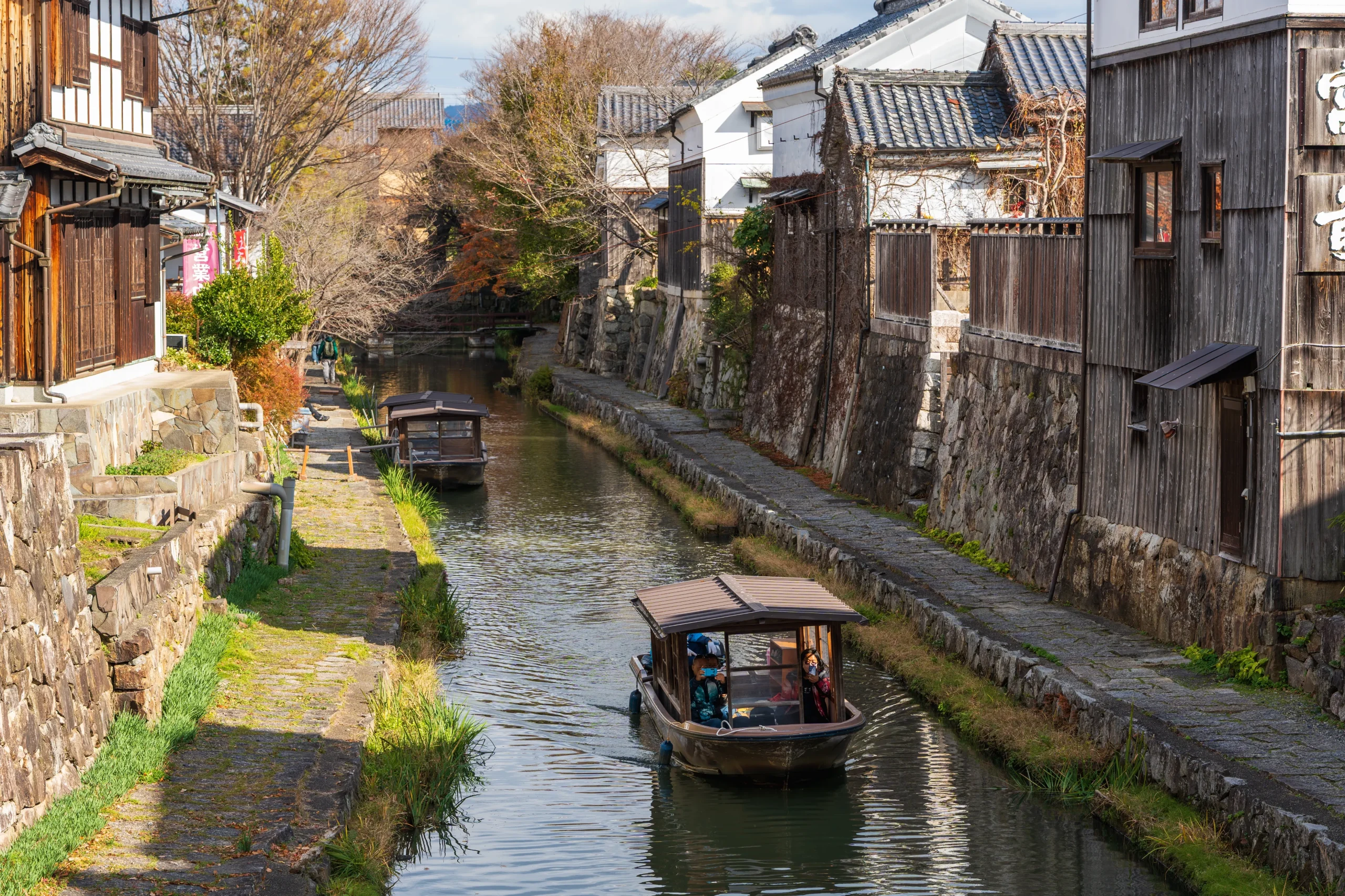
Step into the past with a boat ride along the Hachiman-bori Canal in Omihachiman, a historic merchant town near Lake Biwa.
The waterway developed in the late 16th century when Toyotomi Hidetsugu constructed Hachimanyama Castle. Connected with Lake Biwa, it served not only as part of the castle defenses but also as an important route for commerce.
Once a busy hub of water transportation, the canal played a central role in the life of the castle town. Today, boats travel between traditional buildings, white-walled storehouses, and old merchant houses that still preserve much of Omihachiman’s historical character.
The canal has frequently appeared in Japanese films and period dramas, and from the water it is easy to understand why: modern roads and traffic recede from view, leaving the waterway and old architecture in the foreground.
Different operators offer somewhat different experiences. Motorized roofed boats may accept passengers without reservations when space is available, while the smaller traditional hand-rowed boats require advance booking.
Cherry blossoms and fresh greenery soften the canal in spring, while autumn foliage and winter scenery each give the town a different atmosphere.
Himeji Han-Wasen | Hyogo
Around 30 minutes
Adding a different perspective to a Himeji Castle visit
Himeji Castle
Seasonal and limited-date operation; check the latest calendar before visiting
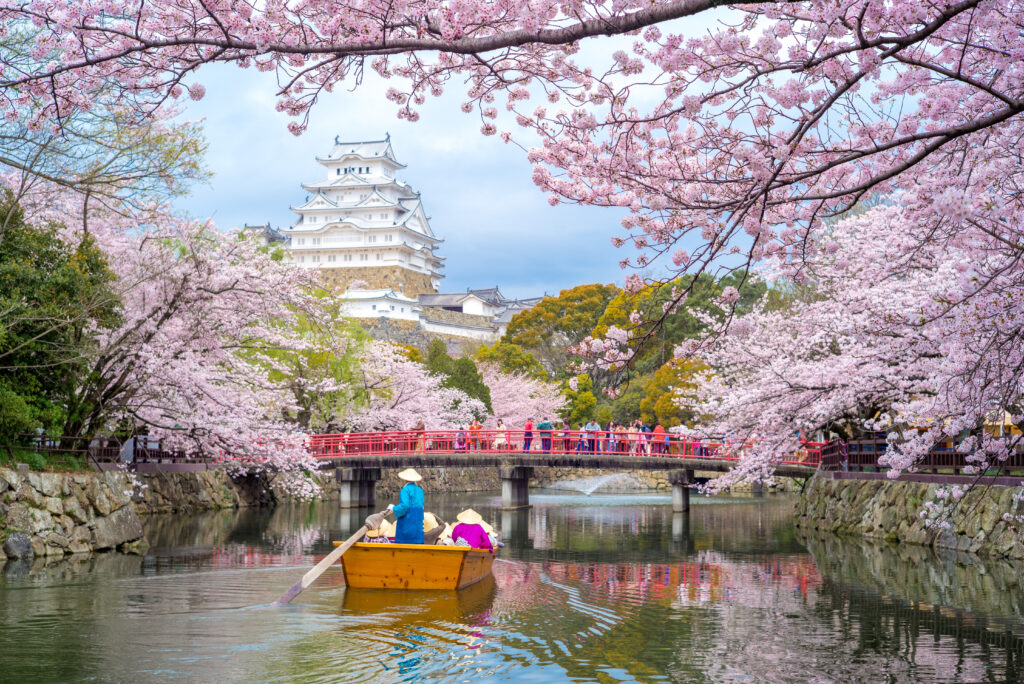
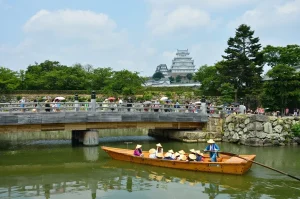
The Himeji Han-Wasen takes visitors along the inner moat of Himeji Castle, giving a low, water-level perspective on one of Japan’s best-known castles.
The traditional-style wooden boats were reconstructed using techniques intended to preserve local boatbuilding culture. As the boat moves through the moat, the castle’s white walls and main keep appear above the water and surrounding trees.
Known as the “White Heron Castle,” Himeji is usually experienced by approaching its gates and climbing through the castle itself. Seeing it from the moat changes that perspective and gives you a better sense of how the castle related to the water surrounding its defenses.
The experience is relatively short, but operation is seasonal and limited to selected dates rather than running continuously throughout the year. Check the current schedule before making it an essential part of your Himeji visit.
Summary
A cruise in Japan does not necessarily mean spending half a day or longer on a large ship. The experiences in this guide range from roughly 10- to 20-minute city and coastal rides to two-hour gorge journeys and evening cruises lasting around two and a half hours.
That variety is precisely what makes them useful when planning a trip. A Tombori cruise can slip easily into an evening in Osaka, the Tokyo Water Bus can double as transportation, while Hozugawa or Geibikei deserves a larger part of the day. Experiences such as Kumano, Kitayama, and Yanagawa make more sense when they are integrated into the surrounding destination rather than treated as isolated attractions.
Season and river conditions matter more for traditional boat rides than for most ordinary sightseeing. Before traveling specifically for one, check current operation, particularly for gorge descents, winter boats, and seasonal services.
If a journey built around Japan’s waterways sounds appealing, ENJYU JAPAN currently offers three itineraries that combine several of these experiences with the surrounding destinations: a 4-day Tokyo and Hakone trip, a 6-day rivers and onsen journey, and an 8-day route from Tokyo to Osaka.
If you would rather build the route around your own dates and interests, tell us what kind of scenery and pace you are looking for through the .