If you are looking for an antique market in Japan, the real question is not only where to go. You also need to know whether the market actually runs while you are there.
Some of Japan’s better-known markets take place once or twice a month. Others run only a few times a year. The experience also varies a lot. You might spend a morning comparing ceramics at an indoor dealer fair, or browse old tools and kimono between food stalls in the grounds of a temple.
This guide covers eight markets in Tokyo, Yokohama, Nagoya, Kyoto, and Osaka, with current 2026–2027 dates where they have been announced. It should help you work out which one fits your route and how much of your day it deserves.
Japanese Antique Market Schedule: 2026–2027
| Market | Area | When | Hours | Format | Good choice when… |
|---|---|---|---|---|---|
| Oedo Antique Market | Tokyo | Selected dates; see articles | 9:00–16:00 | Outdoor | You want an easy first antique market in central Tokyo |
| Setagaya Boro-ichi | Tokyo | Dec 15–16 and Jan 15–16 every year | Usually 9:00–20:00 | Outdoor street market | Your winter dates happen to line up |
| Heiwajima Antique Fair | Tokyo | Sep 12–13 and Dec 5–6, 2026 | 10:00–17:00, final day to 16:00 | Indoor | You want focused antique browsing without worrying about rain |
| Yokohama Antique World | Yokohama | Oct 10–11, 2026; Jun 19–20, 2027 | 10:00–17:00 | Indoor | You want a dealer fair that fits into a Yokohama day |
| Osu Kannon Antique Market | Nagoya | 18th and 28th every month | Around 5:00–16:00 | Outdoor temple market | You are already stopping in Nagoya |
| Toji Kobo-ichi | Kyoto | 21st every month | 7:00–15:30 | Outdoor temple market | You want a market that can become the main part of the day |
| Kyoto Antique Fair | Kyoto | Oct 30–Nov 1, 2026 | 10:00–17:00, final day to 16:00 | Indoor | You are more interested in antiques than general flea-market browsing |
| Shitennoji Antique Market | Osaka | 21st and 22nd every month | Go early; stalls run through the temple fair day | Outdoor temple market | You want an easy market stop during an Osaka stay |
Dates and conditions can still change, so check the relevant official page shortly before you go.
Not Sure Your Dates Line Up?
Most of these markets run on a fixed day of the month rather than a weekend, so the calendar decides more than the map does. If you tell us your entry date and how long you are staying, we can work out which of them fall inside your trip.
Why These Markets Are Worth More Than a Shopping Stop
A good market can change the pace of a travel day.
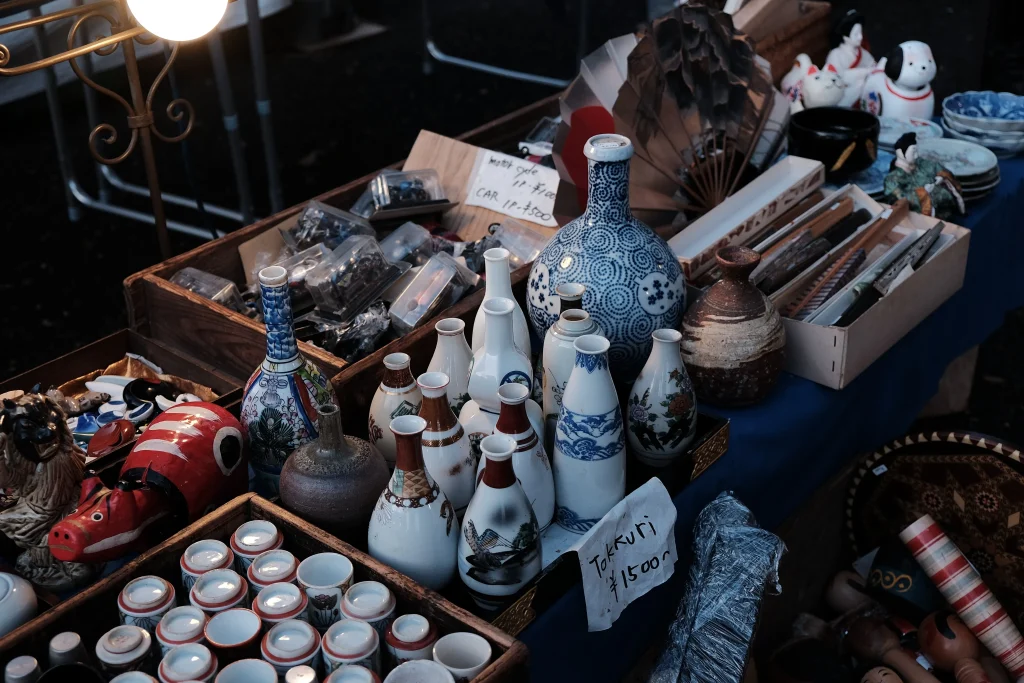
You might go looking for ceramics and end up spending most of your time around old wooden drawers, faded shop signs, tools, textiles, or toys from a few decades ago. At temple markets, antiques share the grounds with food stalls and more ordinary household goods. At indoor fairs, the experience is quieter and more focused on comparing what individual dealers have brought.
That difference matters more than the name of the market. If you want to hunt seriously for antiques, an indoor fair may suit you better. If the setting and atmosphere are part of the appeal, Toji or Shitennoji may be a better use of your morning.
If vintage clothing and general secondhand shopping are closer to what you have in mind, Japan has a much larger scene beyond the antique markets covered here.
Read more: Thrift Shops in Japan
Oedo Antique Market | A Good Place to Start in Tokyo
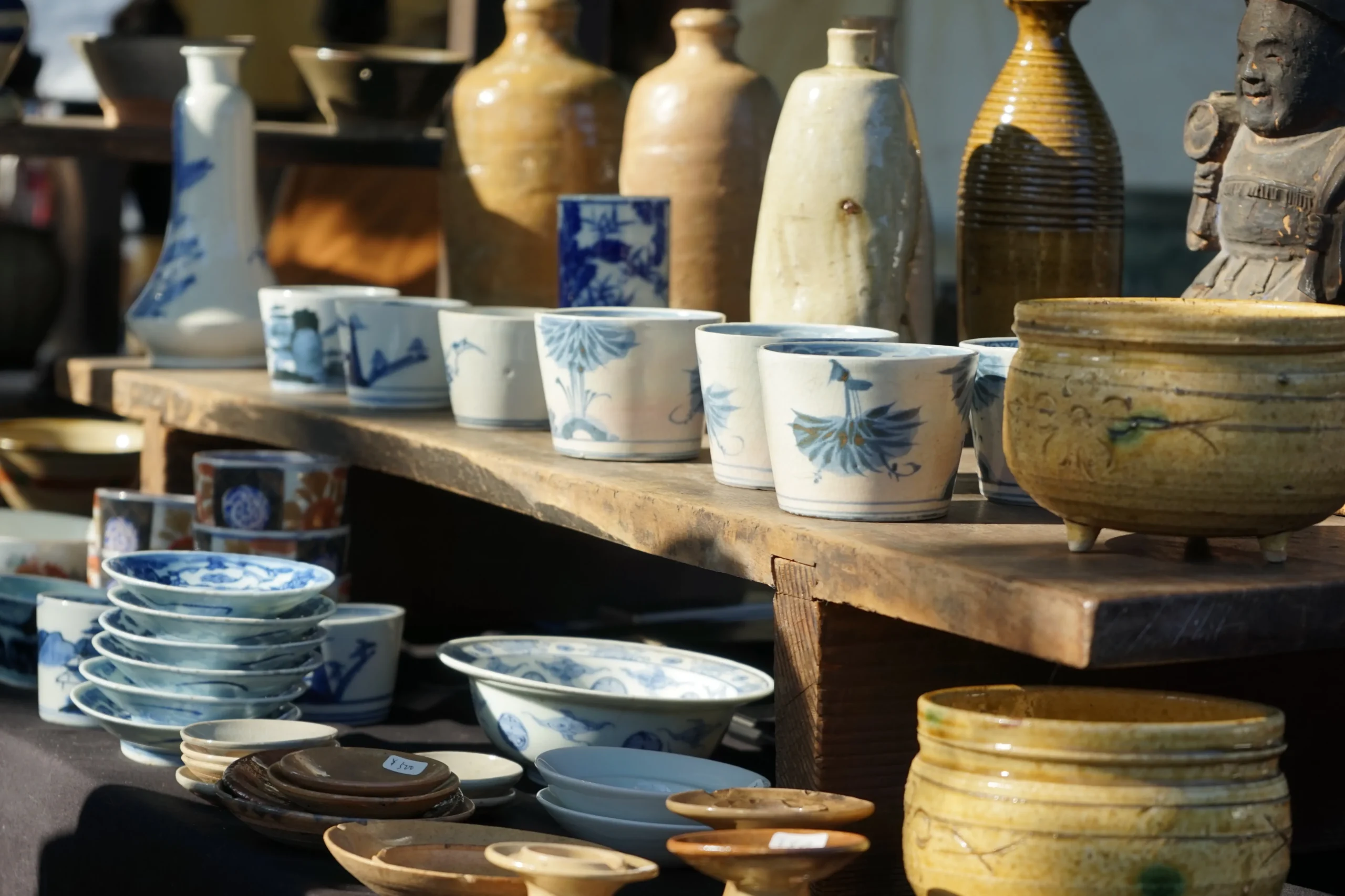
Oedo Antique Market is an easy introduction because it takes place outside Tokyo International Forum in Yurakucho, close to Ginza and Tokyo Station.
Around 250 dealers take part, and admission is free. The market runs from 9:00 to 16:00.
The remaining 2026 dates are:
- September 12 and 21
- October 4 and 31
- November 7 and 23
- December 12 and 20
The currently announced 2027 dates are:
- January 9 and 17
- February 7 and 21
- March 21 and 28
One useful correction: do not rely on the “first and third Sunday” rule that still appears in some English guides. The official 2026 calendar includes Saturdays and a Monday public holiday. Use the actual calendar instead.
Oedo is less about digging through piles of random secondhand goods and more about looking carefully. A dish becomes more interesting after you have seen several similar ones. The same goes for textiles, prints, boxes, jewelry, and smaller decorative objects.
Rain is the main drawback. The market is cancelled when it rains, with no substitute indoor venue. There is also no August edition because of the summer heat.
Setagaya Boro-ichi | A Winter Market with a Different Feel
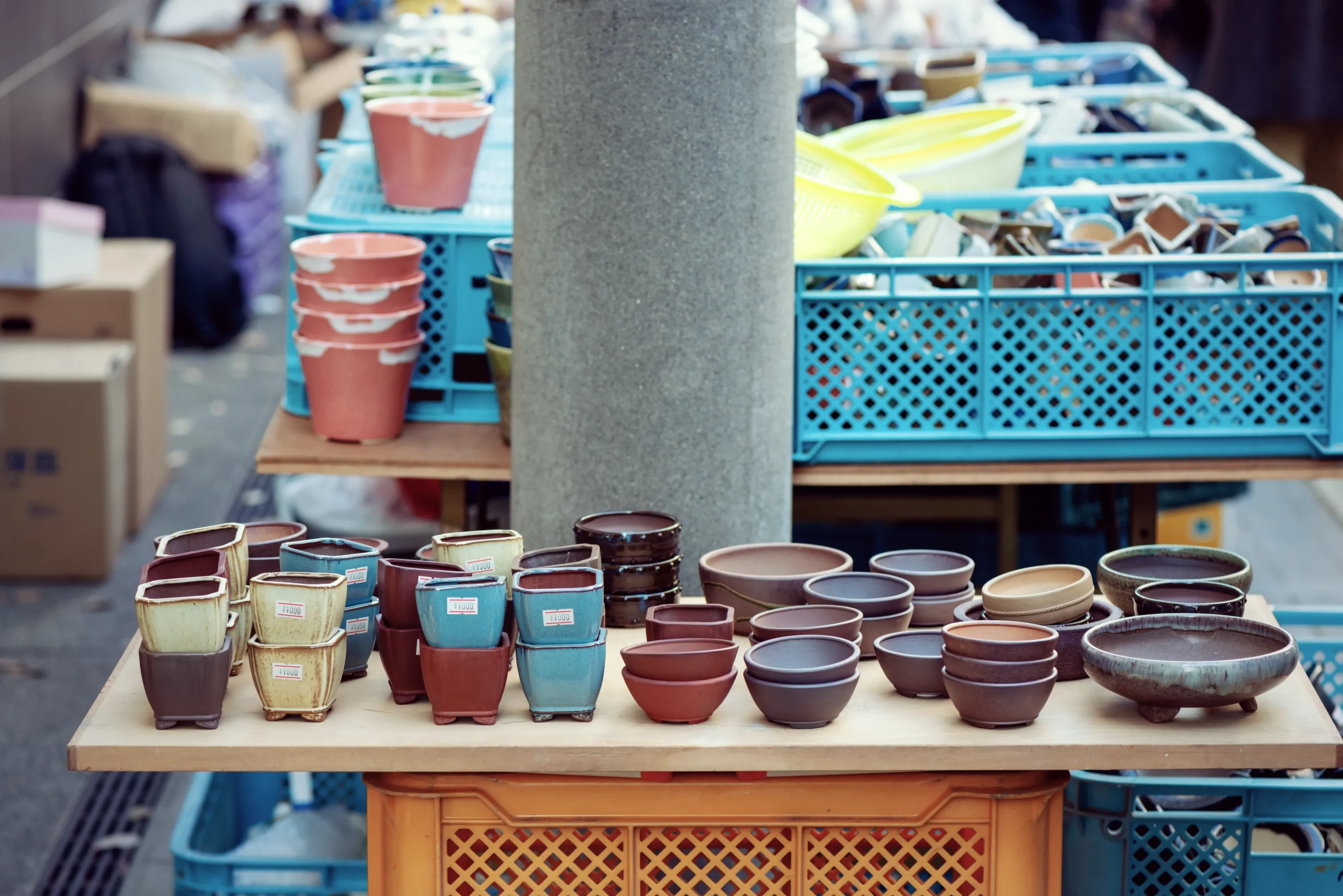
Setagaya Boro-ichi is not an event you can add to any Tokyo trip. Its dates are fixed every year:
- December 15 and 16
- January 15 and 16
That puts the next markets on December 15–16, 2026 and January 15–16, 2027. Setagaya City states that the market attracts around 200,000 people in a day.
Unlike Oedo, the focus is not only antiques. Stalls stretch through the streets around Boroichi-dori, with household goods, clothing, food, tools, and other items mixed in.
The fixed dates are useful but easy to misunderstand. They do not move to the weekend, so some years the market falls on ordinary weekdays.
If your trip happens to line up with it, Boro-ichi works well for someone who wants the feeling of a large neighborhood event as much as the shopping itself.
Heiwajima Antique Fair | An Indoor Tokyo Alternative
Heiwajima Antique Fair feels closer to a specialist fair than a street market.
The next 2026 editions are September 12–13 and December 5–6, held at Tokyo Ryutsu Center. Admission is free. Hours are 10:00 to 17:00, with the final day closing at 16:00.
Its indoor setting is the obvious advantage, but the location is useful too. Ryutsu Center Station is on the Tokyo Monorail, so Heiwajima can work surprisingly well around a Haneda Airport arrival or departure if your timing makes sense.
This is a better fit than Oedo if you mainly want to inspect antiques in one place and would rather not make your plans dependent on the weather.
Yokohama Antique World | Pair the Fair with a Yokohama Day
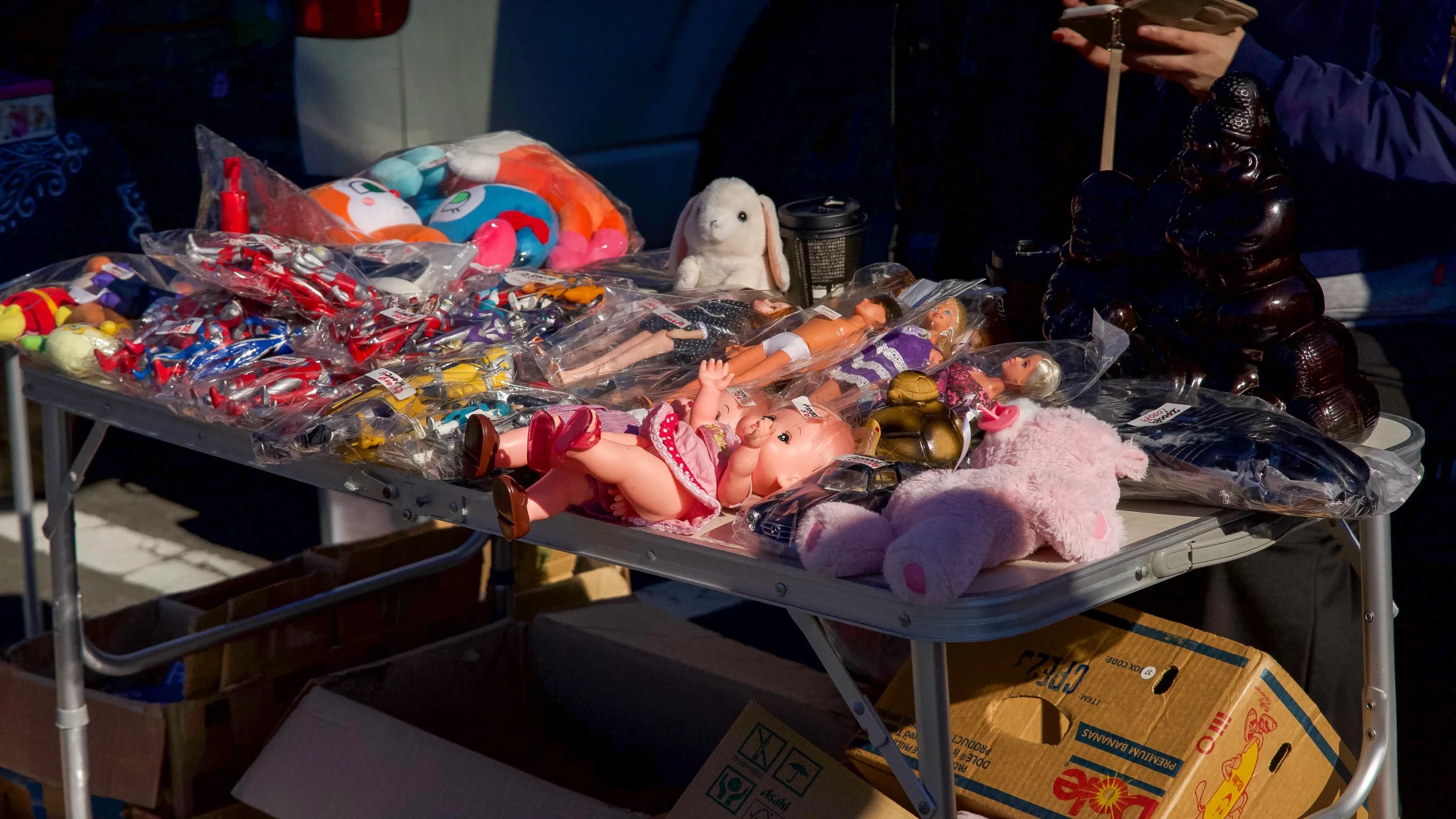
Yokohama Antique World is another indoor option, but it is held less often.
The next event runs on October 10–11, 2026, followed by June 19–20, 2027. Both are scheduled from 10:00 to 17:00.
There is also an important venue update. The fair now takes place at Yokohama Sanbo Hall Marinelia in Yamashita-cho, not Pacifico Yokohama. Admission is currently ¥500.
Nihon-odori Station is nearby, and the venue sits within easy reach of Yamashita Park and Chinatown. That makes this one easier to justify even if antique shopping is only part of your day.
Rather than traveling out to Yokohama solely for the event, I would combine the fair with the surrounding area.
Osu Kannon Antique Market | Easy to Add to a Nagoya Stop
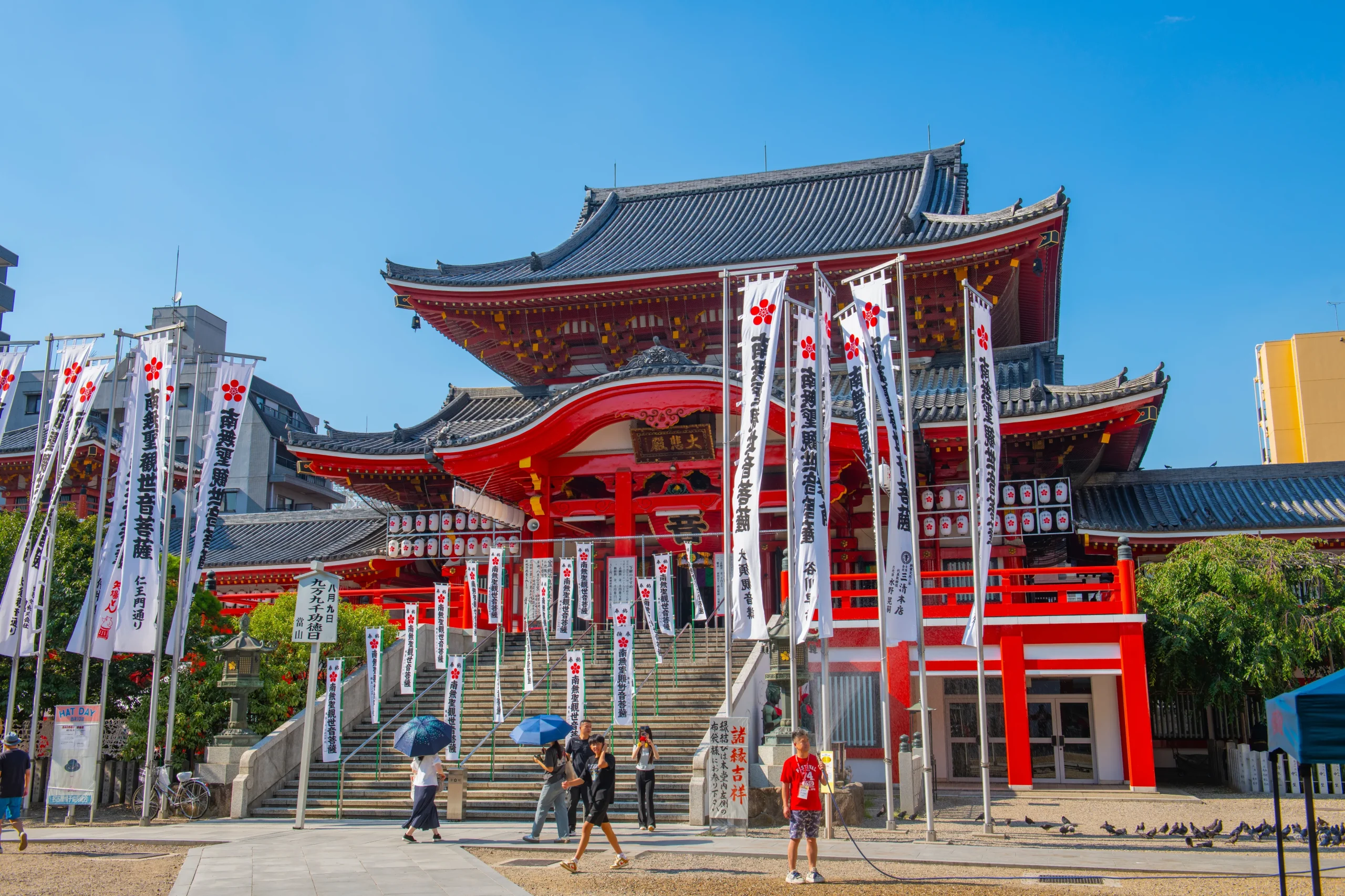
Osu Kannon works because it asks very little of your itinerary.
The market takes place on the 18th and 28th of every month, with around 80 stalls. Sellers begin setting up from about 5:00 and usually pack up around 16:00.
You may find ceramics, old books, dolls, furniture, kimono and fabric, records, posters, toys, and smaller collectibles. The market is much smaller than Toji, but that can be a good thing if you only want to browse for an hour or two.
The temple sits beside the Osu shopping district, so there is no need to treat the market as a separate excursion. You can continue into the covered streets for food, shopping, or more secondhand stores.
Read more: Japan’s Golden Route
For travelers moving between Tokyo and Kansai, this is probably the easiest market on the list to add without changing the shape of the trip.
Toji Kobo-ichi | Kyoto’s Big Market Day
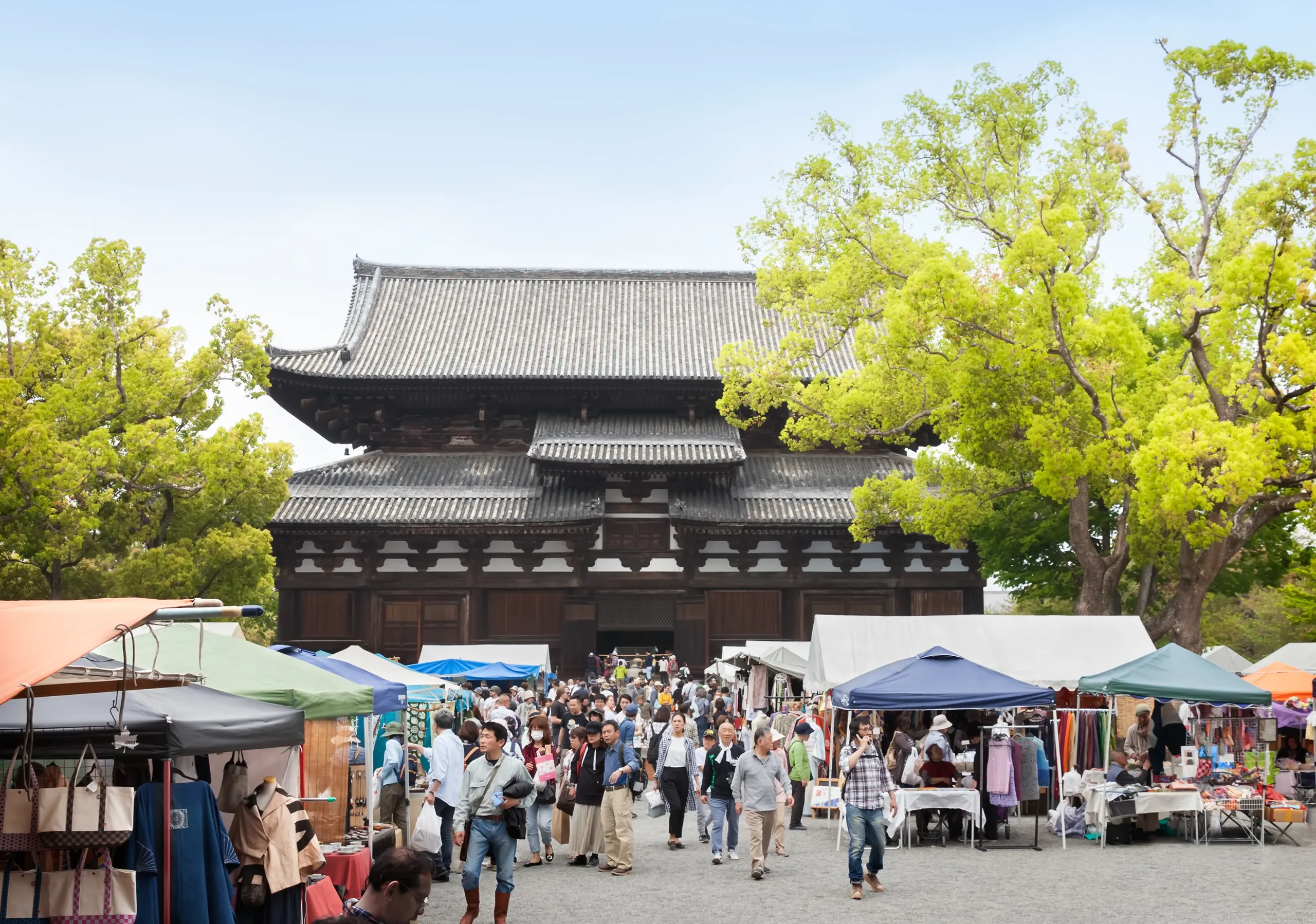
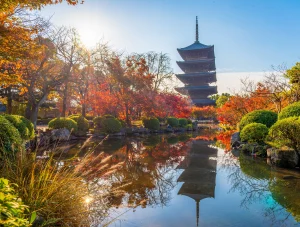
Toji is the market I would give the most time.
It takes place on the 21st of every month, from 7:00 to 15:30 according to Kyoto City’s current listing. Toji Temple also confirms that the market is a monthly event.
More than 1,000 stalls can fill the grounds, selling antiques alongside ceramics, local goods, textiles, food, and handmade items.
The size is part of the appeal, but so is the setting. You can spend a couple of hours browsing and still feel that you have visited Toji rather than merely attended a market placed inside it.
The original article described Toji well: the market can comfortably become the main event of the day. That still holds. If you try to squeeze it between several major Kyoto sights, you lose much of what makes it enjoyable.
If the 21st does not fit your trip, Toji also holds a smaller antique market on the first Sunday of every month. Another Kyoto option is the market at Kitano Tenmangu on the 25th, which can be useful if your dates fall a few days later.
ENJYU’s 6-Day Japan Antique Hunting Tour runs from November 19–24, 2026 and is specifically timed so the itinerary includes Toji’s November 21 market, followed by antique, craft, and vintage stops across Kyoto and Osaka.
Kyoto Antique Fair | Better for Focused Antique Browsing
Kyoto Antique Fair is quite different from Toji.
Instead of a temple market with food, daily goods, and a wide mix of stalls, this is an indoor event at Kyoto Pulse Plaza with a stronger dealer and collector focus.
The next fair runs on October 30, October 31, and November 1, 2026. Hours are 10:00 to 17:00, with the final day closing at 16:00, and admission is free.
If your dates happen to match, the choice between Toji and Kyoto Antique Fair is fairly simple. Go to Toji if the market setting and the wider day matter as much as what you buy. Choose Kyoto Antique Fair if you want to spend your time comparing antiques indoors.
Shitennoji Antique Market | The Easy Osaka Option
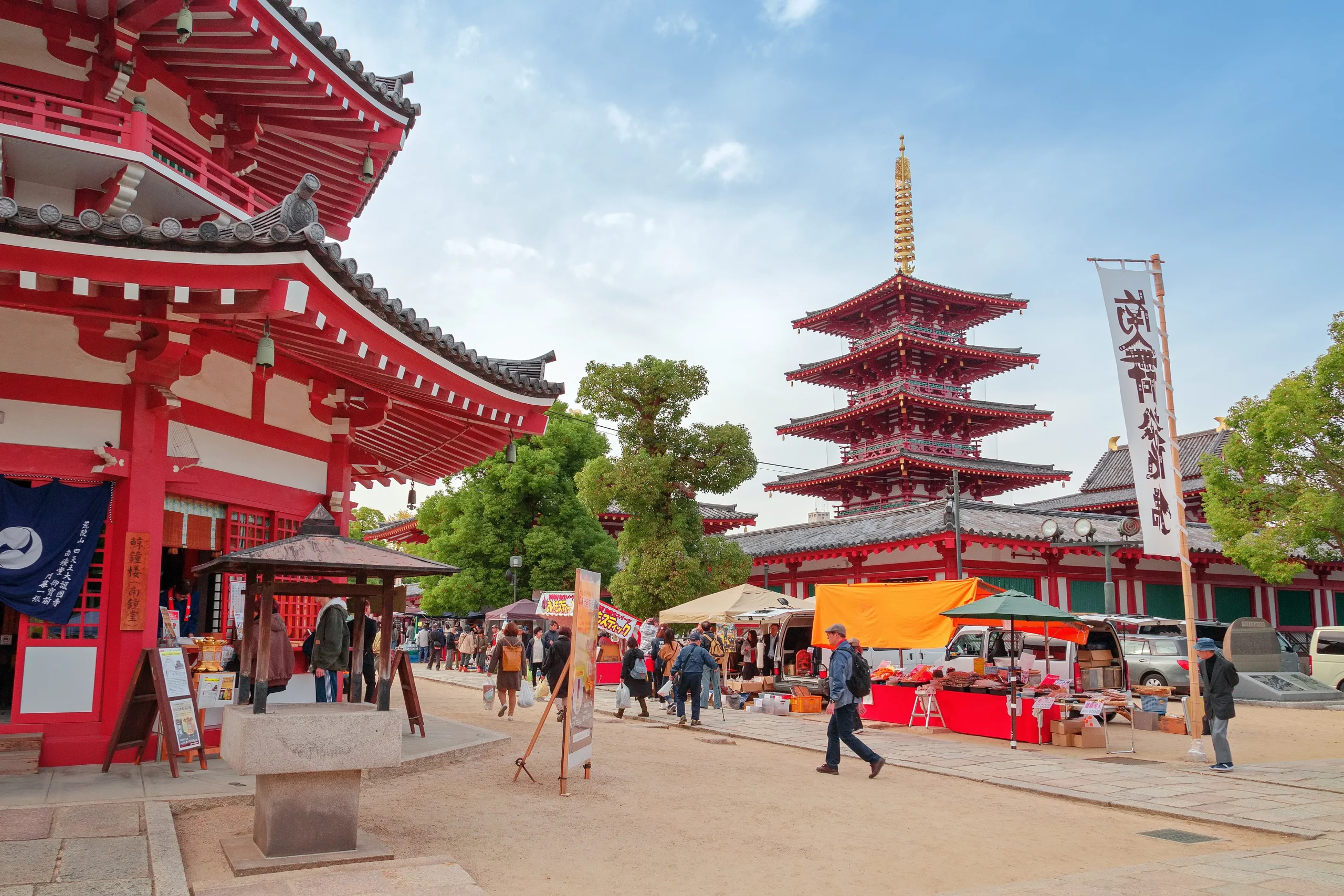
Shitennoji’s market is held on the 21st and 22nd of every month. Antique dealers, secondhand sellers, and food stalls set up around the temple grounds. Osaka’s official tourism site recommends arriving early because experienced buyers tend to come in the morning.
The temple is about five minutes on foot from Shitennoji-mae Yuhigaoka Station. The official visitor information gives longer temple opening hours on the 21st, but it does not provide one precise timetable for every market stall, so it is better to think of this as a morning-to-afternoon market rather than plan around a fixed closing time.
Shitennoji is less demanding than Toji. You can browse for a while, then continue toward Tennoji or another part of Osaka.
There is also a useful calendar pairing for travelers staying in Kansai: Toji runs on the 21st, while Shitennoji continues on the 22nd. If antiques are an important part of your trip, you can visit the Kyoto market one morning and the Osaka market the next without moving hotels.
Which Market Fits Your Trip?
There is no need to chase the largest market if another one fits your route better.
For a first antique market in central Tokyo, Oedo is the simplest place to start. Heiwajima makes more sense if you want an indoor fair and your dates match.
Boro-ichi is mainly worth considering when you are already in Tokyo in mid-December or mid-January. It is too date-specific to plan around otherwise.
In Kyoto, Toji is the stronger choice when you want the market to become part of the travel experience itself. Kyoto Antique Fair suits someone who is mainly there for antiques and prefers an indoor dealer event.
Osu works well as a short Nagoya stop. Shitennoji is similarly easy to fit into an Osaka stay.
Yokohama is slightly different. I would go if the fair dates line up with a day you already wanted to spend around Chinatown, Yamashita Park, or the waterfront.
If you want to visit several markets, the calendar starts to matter more than the geography. These events happen on their own dates, so the route sometimes has to be built around them rather than the other way around.
That is the part most people underestimate. Fixing even two market dates inside a two-week trip decides which nights you spend where, which day you move between cities, and what is realistic in between. Building a route backwards from fixed dates is the ordinary work of a Tailor-Made Tour, and it is easier to do before the hotels are booked than after.
First-Time Tips for Antique Markets in Japan
Bring cash
Payment methods vary from seller to seller. Cash is still the safest option, especially at temple and outdoor markets.
Go earlier rather than later
You do not need to arrive before sunrise, but morning gives you a better chance to see the full market before sellers start packing up.
At Osu, stalls begin from around 5:00. At Shitennoji, Osaka’s tourism authority specifically recommends an early visit.
Bargaining is possible, but keep it low-key
Some sellers may be open to a small discount, particularly if you are buying several items. Aggressive haggling is not necessary.
Ask politely and be prepared to accept the listed price.
Check the weather and the organizer
Oedo is cancelled in rain. Indoor events such as Heiwajima, Yokohama Antique World, and Kyoto Antique Fair do not have that problem.
Even when a market normally follows a fixed monthly schedule, a final check before you leave your hotel is worthwhile.
How to Build a Day Around a Market
The original version of this article made a useful point: let the market set the pace of the day.
That works particularly well at Toji, Osu, and Yokohama. Go while your attention is fresh, browse without rushing, then continue into the surrounding area rather than trying to fit the market between several unrelated attractions.
You are not only deciding what to buy. You are deciding what kind of morning you want.
A Better Souvenir Is Often the Hour You Spent There
The thing you remember may not be the thing you bought.
It might be a worn tea bowl, a stack of old fabric, a wooden drawer with years of use in it, or simply the time you spent looking more carefully than you normally do while traveling.
That is why these markets work even for people who do not think of themselves as collectors. Pick one that fits your dates and route, give it enough time, and let the rest of the day follow from there.
Explore Japan’s Antique Markets with ENJYU JAPAN
Every market in this guide is free to walk into, and none of them need a guide. What is harder to arrange on your own is the rest of the day, and the days on either side of it.
ENJYU JAPAN’s 8-Day Japan Antique Hunting Tour runs from 19 to 24 November 2026, and the itinerary is built backwards from a single fixed date: Toji’s Kobo-ichi on the 21st. That morning goes to the thousand-odd stalls in the temple grounds, and the same evening falls inside Kiyomizu-dera’s autumn illumination, which runs from 21 to 30 November.
The other days are the context around the market rather than more of the same:
- Tokyo — the old shops of Yanaka and Nezu, Kappabashi’s kitchenware street for vintage ceramics, lacquerware and tools, Tsukiji Outer Market, and the Nezu Museum.
- Kyoto, after Toji — Kawai Kanjiro’s House, where the Mingei potter lived and worked; the kilns and shops of the Gojo-zaka pottery district; and Gion’s Shinmonzen and Furumonzen streets, the city’s long-standing dealer district for ceramics, scrolls and Buddhist art.
- Osaka — Nakazakicho, where vintage and secondhand shops occupy old townhouses.
It is a private tour with a dedicated English-speaking guide. Temples come with English signage; market stalls do not, and the questions actually worth asking — how old this is, whether it has been repaired, whether it will survive the flight home — are difficult to ask in gestures.
If those dates do not work
The tour has one departure. The markets in this guide run all year. If November 2026 does not fit, the same idea can be planned around whichever market falls inside your own dates — a Tailor-Made Tour starts from your entry date rather than ours. Extra days, activities and accommodation can also be added to the fixed itinerary on request.