If you are planning to see professional sumo in Japan in 2026, begin with the current ticket situation. The September Grand Sumo Tournament in Tokyo runs from 13 to 27 September, but the Japan Sumo Association currently lists tickets as sold out for all dates.
The next Grand Sumo Tournament is in Fukuoka. It runs from 8 to 22 November 2026, and advance ticket sales are scheduled to begin on 19 September. For travellers who do not already have a September ticket, Fukuoka is the next official tournament to plan around.
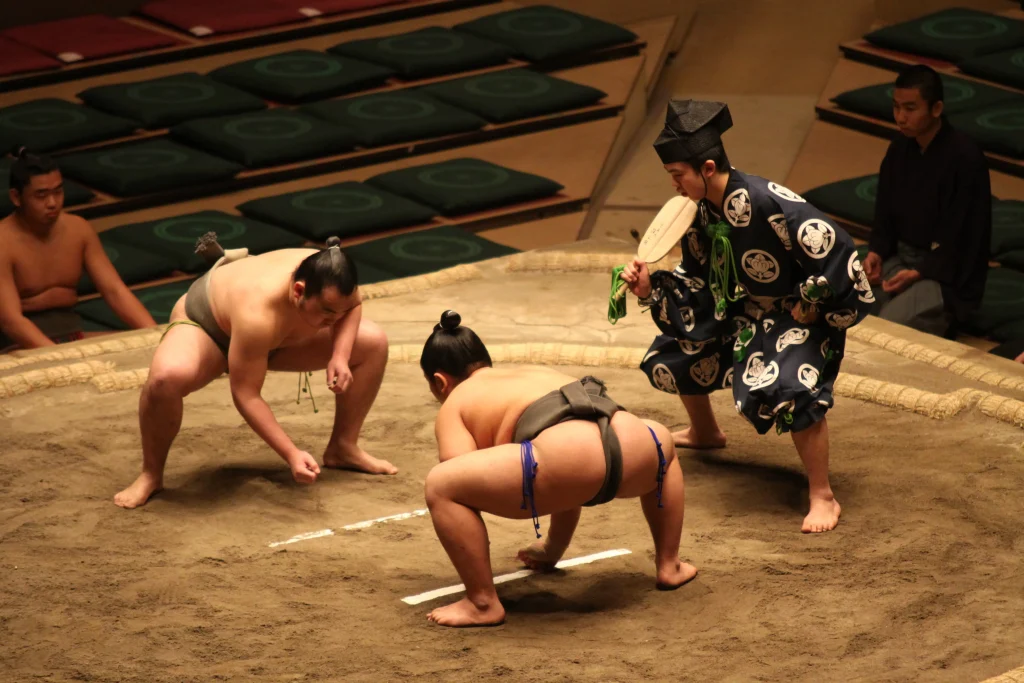
Sumo is more than a contest between two wrestlers. Professional sumo preserves rituals associated with Shinto, including salt purification and ceremonial movements around the dohyō, the raised clay ring where bouts take place. A bout may last only a few seconds, but it sits within a longer sequence of preparation, rank, discipline, and ceremony.
This guide covers the 2026 and 2027 schedules, ticket prices, seating choices, tournament-day customs, and other ways to experience sumo in Japan.
If your dates do not line up with a tournament, two English-guided jungyo days in Kyoto and Osaka are open for October 2026, and we are taking requests now for the January and March 2027 tournaments.
Next Grand Sumo Tournament: September 13–27, 2026 in Tokyo
The July Nagoya Basho finished on July 26, 2026. The next Grand Sumo tournament — the Aki Basho — runs September 13 to 27, 2026 at the Ryōgoku Kokugikan in Tokyo.
| Tournament | September Grand Sumo Tournament (Aki Basho) |
| Dates | September 13–27, 2026 (15 days) |
| Venue | Ryōgoku Kokugikan, Tokyo |
| Tickets on sale | August 8, 2026 |
| After that | November 8–22, 2026 — Fukuoka Kokusai Center |
Two things worth knowing about that August 8 ticket race. First, the best seats for weekends and the final days routinely sell out within hours of release. Second, the September tournament is in Tokyo, which means it’s the easiest of the six to build a trip around — and also the most competitive for tickets.
If you’d rather not race the clock on a Japanese-language ticket site, we hold seats in advance for our guided tournament days.
Grand Sumo Tournament 2026 Schedule
Japan holds six official Grand Sumo tournaments each year. Tokyo hosts three, while Osaka, Nagoya, and Fukuoka each host one.
| Tournament | Venue | Location | First Day | Final Day | Tickets On Sale |
|---|---|---|---|---|---|
| The January Tournament(Finished) | Kokugikan | Tokyo | January 11 | January 25 | Dec 6, 2025 |
| The March Tournament (Finished) | EDION Arena Osaka | Osaka | March 8 | March 22 | Feb 7, 2026 |
| The May Tournament (Finished) | Kokugikan | Tokyo | May 10 | May 24 | Apr 4, 2026 |
| The July Tournament (Finished) | IG Arena | Nagoya | July 12 | July 26 | May 16, 2026 |
| The September Tournament | Kokugikan | Tokyo | September 13 | September 27 | Aug 8, 2026 |
| The November Tournament | Fukuoka Kokusai Center | Fukuoka | November 8 | November 22 | Sep 2026 |
Reference: Japan Sumo Association, Ticket Information – Grand Tournament Schedule
Every tournament begins on a Sunday and lasts for 15 days. If sumo is an important reason for your trip, choose your travel dates around this calendar before reserving accommodation.
Grand Sumo Tournament 2027 Schedule
The Japan Sumo Association has already published the 2027 tournament calendar and advance-sale dates. This allows travellers to plan a Japan itinerary well before flights and hotels become more expensive.
| Tournament | Venue | Location | First Day | Final Day | Advance Ticket Sales |
| The January Tournament | Ryōgoku Kokugikan | Tokyo | January 10, 2027 | January 24, 2027 | December 5, 2026 |
| The March Tournament | EDION Arena Osaka | Osaka | March 14, 2027 | March 28, 2027 | February 6, 2027 |
| The May Tournament | Ryōgoku Kokugikan | Tokyo | May 9, 2027 | May 23, 2027 | April 10, 2027 |
| The July Tournament | IG Arena | Nagoya (Aichi) | July 11, 2027 | July 25, 2027 | May 15, 2027 |
| The September Tournament | Ryōgoku Kokugikan | Tokyo | September 12, 2027 | September 26, 2027 | August 7, 2027 |
| The November Tournament | Fukuoka Kokusai Center | Fukuoka | November 14, 2027 | November 28, 2027 | September 18, 2027 |
Reference: Japan Sumo Association, Ticket Information – Grand Tournament Schedule
Ticket dates and sale conditions can change. Before arranging travel around a specific tournament, check the current schedule and the Ticket Oosumo purchase page.
Where Are Grand Sumo Tournaments Held?
The four host cities offer different ways to add sumo to a wider journey through Japan.
| Venue | City | Tournaments | Suitable Itinerary |
| Ryōgoku Kokugikan | Tokyo | January, May, September | Tokyo stays and first visits to Japan |
| EDION Arena Osaka | Osaka | March | Osaka, Kyoto, Nara, and Kansai routes |
| IG Arena | Nagoya | July | Central Japan summer travel |
| Fukuoka Kokusai Center | Fukuoka | November | Kyūshū and autumn itineraries |
Tokyo: Ryōgoku Kokugikan
Ryōgoku Kokugikan is Tokyo’s main venue for professional sumo. It hosts the January, May, and September Tournaments, and it contains the Sumo Museum.
JR Ryōgoku Station’s West Exit is approximately two minutes from the arena. The area also has sumo stables, restaurants serving chanko-nabe, and streets closely connected with the sport. A tournament visit can therefore be combined naturally with a walk through Ryōgoku.
Osaka: EDION Arena Osaka
The March Tournament takes place at EDION Arena Osaka, near Namba. It works well for travellers who are already visiting Osaka, Kyoto, or Nara.
Nagoya: IG Arena
The July Tournament is held at IG Arena in Nagoya. Older guides may mention the former Aichi Prefectural Gymnasium, so check the current venue before arranging transport.
Fukuoka: Fukuoka Kokusai Center
The November Tournament takes place at Fukuoka Kokusai Center. It suits travellers who want to combine professional sumo with a Kyūshū itinerary, from Fukuoka’s food culture to nearby destinations such as Dazaifu or Yanagawa.
Which Sumo Seats Should You Choose?
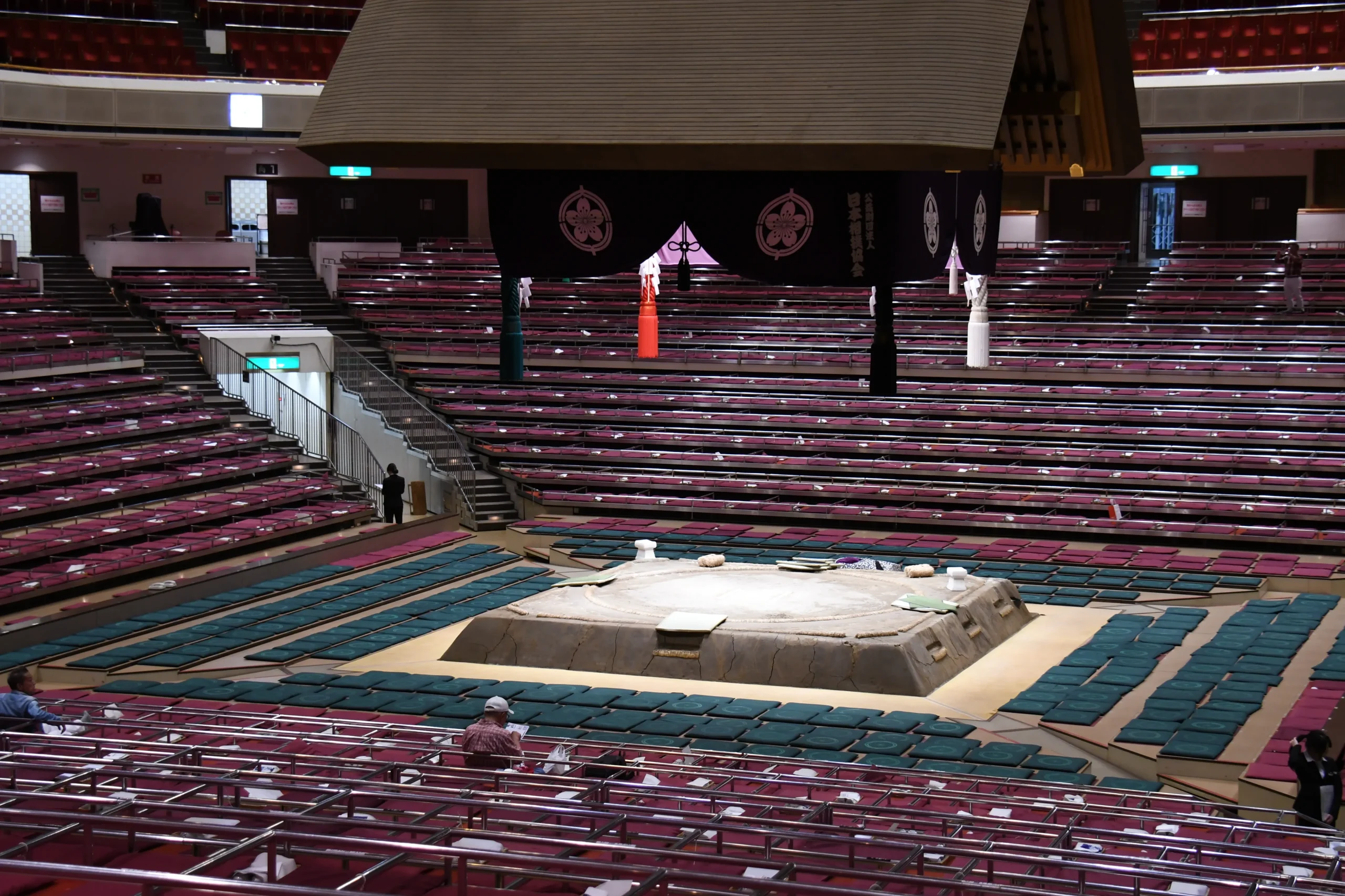
The best seat depends on what you value most: comfort, proximity to the ring, a traditional setting, or price.
| Seat Type | Experience | Best For |
| Tamari-seki | Ringside cushions beside the dohyō | Visitors who want the closest possible view |
| Masu-seki | Traditional floor-level box seating | Groups and travellers seeking a Japanese seating style |
| Chair seats | Conventional arena seating with back support | First-time visitors, solo travellers, and those prioritising comfort |
Chair Seats: The Practical Choice
Chair seats offer conventional seating and a broad view of the ring and arena. They are often the most practical choice for first-time visitors or travellers attending alone.
For the September 2026 Tournament, Chair C seats cost ¥3,500 on weekdays and ¥4,000 on weekends and public holidays. Chair B seats cost ¥5,000 on weekdays and ¥5,500 on weekends and public holidays.
These prices apply to the September 2026 Tokyo Tournament. Prices may differ at other venues, so check the current ticket page before booking.
Masu-seki: Floor-Level Box Seating
Masu-seki are square floor-level boxes with cushions. Visitors remove their shoes and sit on the provided cushions rather than on conventional chairs.
A box is normally sold as a complete four-person unit. For the September 2026 Tournament, a Masu C box costs ¥34,000 per box on weekdays and ¥38,000 per box on weekends and public holidays. That is the full-box price, not the price per person.
Masu-seki suit travellers who want a more traditional setting and are comfortable sitting on the floor. Check the current venue rules before planning food or drink in your seating area.
Tamari-seki: Ringside Seats
Tamari-seki are the cushions nearest the dohyō. They offer a close view of the wrestlers, the gyōji referee, and the preparation before each bout.
They are also a separate category with stricter seating rules. For the September 2026 Tournament, eating and drinking are not permitted in tamari-seki, and visitors may not bring in chair seats or additional cushions. Wrestlers can leave the ring during a bout, so follow staff instructions carefully.
How to Buy Grand Sumo Tickets
The official English-language purchase route is Ticket Oosumo.
Ticket Oosumo English — Official Ticket Service
Start by checking the tournament schedule and its advance-sale date. Ticket Oosumo processes general ticket sales on a first-come, first-served basis and closes sales when the available tickets are sold. Seat numbers are assigned by random draw, rather than by the order in which customers complete payment.
Ticket Oosumo also notes that some additional tickets may become available after a category has sold out. This does not guarantee availability, but it means that readers should check the official service rather than relying on an old sold-out notice.
Use official channels and take care with unauthorised resale sites. The Japan Sumo Association states that entry may be refused for tickets purchased through resale websites or social-media transactions.
Buying Tickets Yourself or Joining a Guided Experience
Buying directly is usually the lowest-cost option for travellers who can arrange the day independently. A guided experience can be more useful when time is limited and you want a stable visit, English-language explanation, and a complete itinerary.
| Feature | Independent Ticket | Guided Sumo Experience |
| Ticket | Buy through the official ticket system | May be included where stated on the current tour page |
| Cost | Lower ticket cost | Higher overall cost, including additional services |
| Cultural context | Research ranks, rituals, and venue details independently | Explanation in English during the experience |
| Morning practice | Arrange access separately | May be included, depending on the itinerary |
| Planning | Arrange tickets, access, and timing yourself | Itinerary planned around the experience |
| Best for | Flexible, self-directed travellers | Travellers with fixed dates or limited time |
A guided experience is not essential to enjoy sumo. Its value lies in the wider context: understanding the rankings, watching the preparation around each bout, and visiting the neighbourhood or a sumo stable with someone who can explain what you are seeing.
Guided Sumo Experiences with ENJYU JAPAN
Our September 2026 Grand Sumo departures have finished. What is bookable now, and what is opening next, is below.
Bookable now — two guided jungyo days in October 2026. Kyoto on Friday, October 16 and Osaka on Saturday, October 17, one day apart and about thirty minutes from each other by train, so both can be taken from a single base. English-speaking guide for the full day, a reserved stand seat held before you book, and a boxed lunch and tea at the venue. JPY 25,000 per person for either day.
| Tour | Date | Venue | Price | Details |
|---|---|---|---|---|
| 1-Day Kyoto Sumo Jungyo Tour | Friday, October 16, 2026 | Nisshin Denki Arena Kyoto | JPY 25,000 | |
| 1-Day Osaka Sumo Jungyo Tour | Saturday, October 17, 2026 | Okini Arena Maishima | JPY 25,000 |
A jungyo day is not a shortened tournament, and in one respect it offers more: the wrestlers come in front of the audience before any formal bout, with a question-and-answer corner at Kyoto and a handshake session at Osaka. Neither happens at a Grand Sumo Tournament. → More on what a jungyo day looks like
Planning January to March 2027? Send us a request now.
Our next Grand Sumo tours will be built around the January Tournament in Tokyo (January 10–24, 2027) and the March Tournament in Osaka (March 14–28, 2027). The departure dates and itineraries are not fixed yet.
Tell us which month you are considering, and we will come to you with the dates as soon as they are set — before the tours are listed publicly. There is nothing to pay and nothing to commit to at this stage.
This matters more than it sounds. Advance tickets for the January Tournament go on sale December 5, 2026, and for the March Tournament on February 6, 2027. Weekend days and the final three days of a tournament regularly sell out within hours of release, so the seat, not the itinerary, is what decides whether a fixed set of travel dates works.
Request January–March 2027 sumo tour dates
What a Guided Experience Adds
A guided experience is not essential to enjoy sumo. Its value lies in the wider context: understanding the rankings, watching the preparation around each bout, and visiting the neighbourhood or a sumo stable with someone who can explain what you are seeing.
If you are flexible and comfortable arranging the day yourself, buying through the official ticket service is usually the lowest-cost option. If your dates are fixed and you want a stable visit and English-language context, a guided experience may offer more than the ticket price alone.
A Day at a Grand Sumo Tournament
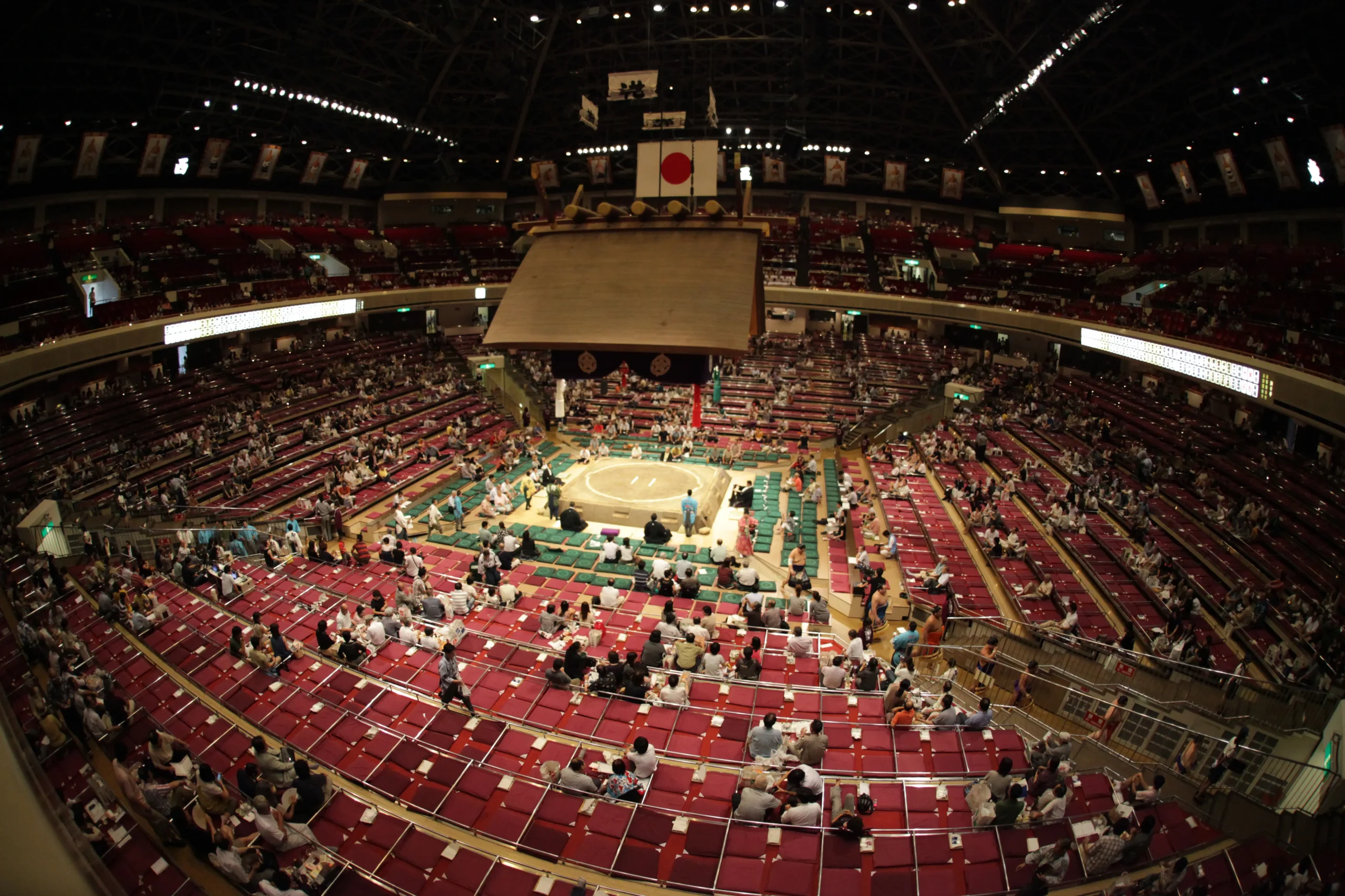
A tournament day progresses through the divisions. Lower-division wrestlers compete first, followed by jūryō, and then makuuchi, the top division.
This structure gives visitors two useful choices:
- Arrive earlier to watch lower divisions and see how wrestlers work through the professional ranking system.
- Arrive later if your main priority is makuuchi, the top division, and the most prominent bouts.
The atmosphere changes as the top divisions approach. Jūryō includes wrestlers known as sekitori, salaried professionals. The makuuchi wrestlers then enter in ceremonial aprons called keshō-mawashi. If a yokozuna is competing, the highest-ranked wrestler performs a separate ring-entering ceremony.
The final part of the programme features the top-ranked wrestlers competing that day. The day closes with the yumitori-shiki, or bow-twirling ceremony.
For the September 2026 Tournament, doors open at 8:45 am on Days 1–12, 10:30 am on Days 13 and 14, and 10:00 am on the final day. Main top-division bouts begin at around 2:00 pm, but the day’s precise progress can vary. Check the official guidance for the tournament and date you attend.
Basic Rules of Sumo
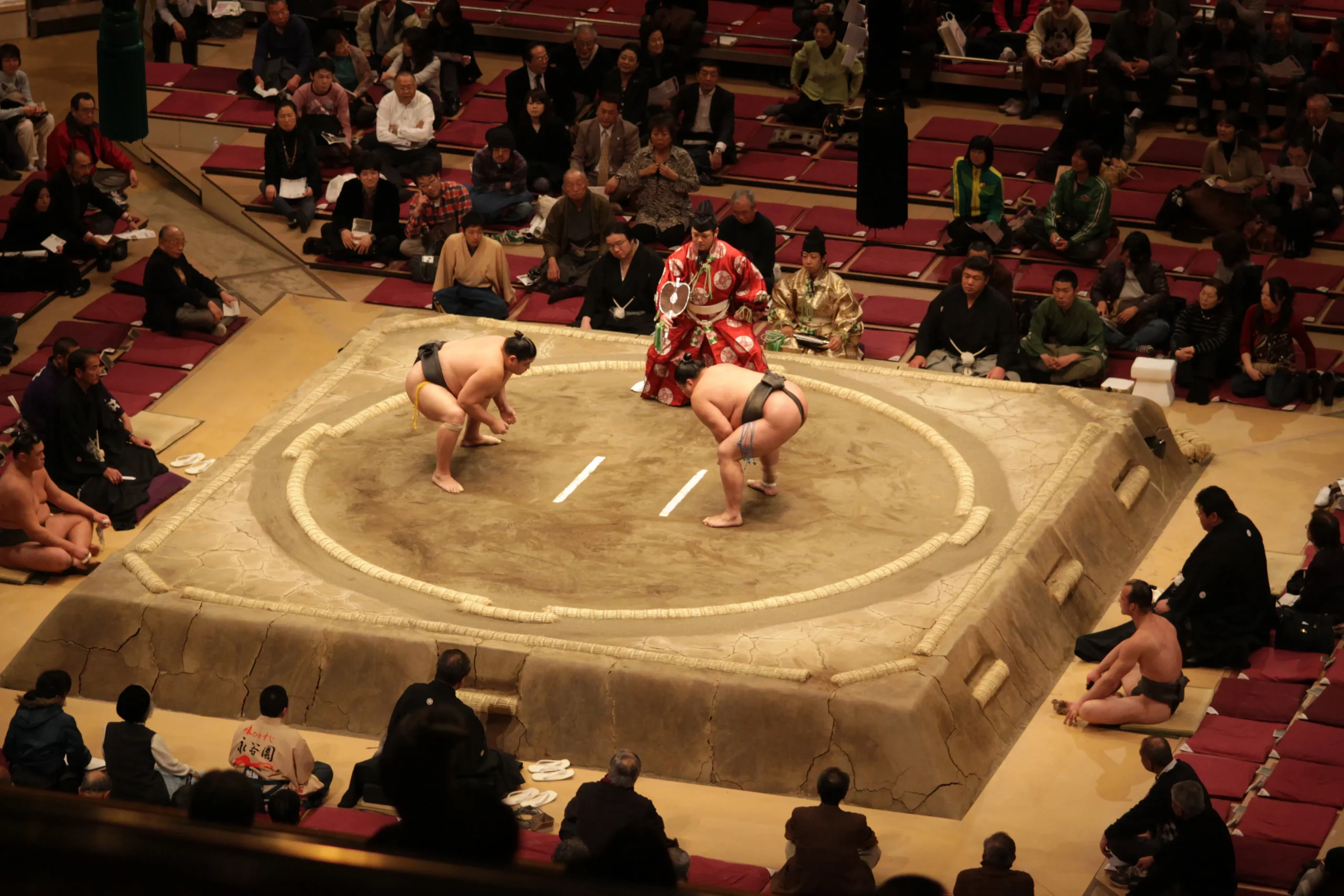
The basic objective is simple. A wrestler wins by forcing his opponent outside the dohyō or by making any part of the opponent’s body, other than the soles of the feet, touch the ground.
Each bout begins with the tachi-ai, the first collision. From there, a match may end immediately or become a contest of balance, grip, movement, and force.
Professional sumo has no weight classes. A lighter wrestler can defeat a heavier opponent through timing, position, and technique. The Japan Sumo Association lists 82 official winning techniques, known as kimarite, as well as five non-technique winning results.
For a first-time visitor, you do not need to memorise every technique. Watch the wrestlers’ feet, their balance, and their position near the straw boundary of the ring.
Sumo Rituals: What Are You Watching?
The ceremony around a bout is part of professional sumo itself. It is not simply decoration before the action begins.
Wrestlers throw salt into the dohyō as an act of purification. They crouch, face one another, and repeat their preparation before the tachi-ai. The movement called shiko involves raising and stamping the legs, and it forms part of sumo’s ceremonial and physical preparation.
Under the arena lights, the referee’s calls carry across the hall while the wrestlers prepare in silence. The sudden impact of the tachi-ai changes that stillness in an instant. This contrast between measured preparation and explosive movement is one of the clearest ways to understand sumo.
How to Watch Sumo Respectfully
The Japan Sumo Association publishes visitor guidance for each tournament. For the September 2026 Tournament, spectators must remain in their assigned seats, and visitors are asked not to bring outside food or drink into the venue.
Food and drinks can be purchased inside the arena, and eating in seating areas is permitted except in tamari-seki. The exact rules may differ by venue and tournament, so always check the current guidance.
- Keep these practical points in mind:
- Keep your ticket or digital-ticket information with you.
- Watch from the seat shown on your ticket.
- Avoid moving seats during a bout.
- Do not touch wrestlers or officials.
- Do not throw cushions.
- Follow the current rules on food, drink, and photography.
- Do not eat or drink in tamari-seki.
- Re-entry is allowed once per day for the September 2026 Tournament. Keep your ticket stub if you plan to leave and return later.
Respecting these rules allows everyone to focus on the bouts, the ceremonies, and the atmosphere of the hall.
What is the difference between Honbasho and Jungyo?
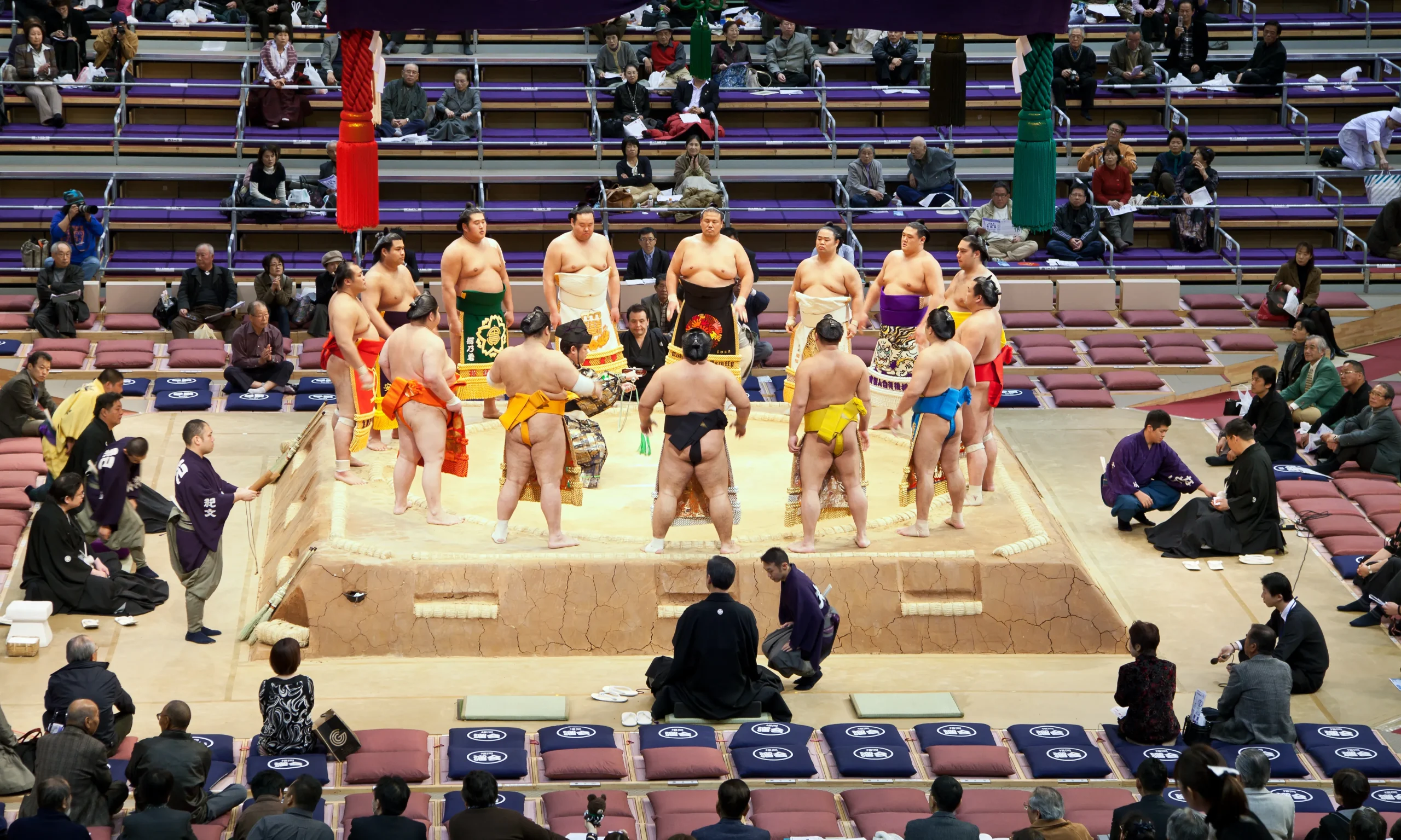
A honbasho is an official Grand Sumo Tournament. It lasts for 15 days, takes place six times each year, and contributes to changes in the banzuke rankings.
A jungyō is a regional exhibition tour. It brings professional sumo to towns and cities outside the regular Grand Sumo Tournament calendar. Results do not affect the rankings, and programmes vary by venue.
| If You Want… | Better Choice |
| Bouts that affect wrestlers’ rankings | Honbasho |
| The full 15-day tournament structure | Honbasho |
| A regional one-day sumo event | Jungyō |
| A route beyond the four tournament cities | Jungyō |
Read More: The 2026 Sumo Jungyo Schedule: August and October Dates Across Japan
Jungyō schedules change each year and may be announced in stages. Check the Japan Sumo Association’s latest information before making travel plans around a particular tour stop.
Two Jungyo Days You Can Still Join in October 2026
The 2026 autumn jungyo runs October 6 to 25, and two of its stops fall a single day apart in Kansai: Kyoto on Friday, October 16, and Osaka on Saturday, October 17. ENJYU JAPAN guides both, in English, with the seat held before you book.
A jungyo day is not a shortened tournament. It is a different day. The doors open on public training you watch from your seat, and both of these stops put the wrestlers in front of the audience before any formal bout begins — a question-and-answer corner at Kyoto, a handshake session at Osaka. Neither happens at a honbasho. The competition follows in the afternoon and closes the way the Kokugikan does: makuuchi bouts, the yokozuna ring entrance, and the bow-twirling ceremony.
| 1-Day Kyoto Sumo Jungyo Tour | 1-Day Osaka Sumo Jungyo Tour | |
|---|---|---|
| Date | Friday, October 16, 2026 | Saturday, October 17, 2026 |
| Venue | Nisshin Denki Arena Kyoto | Okini Arena Maishima |
| Meet | 9:00 AM, Nishi-Kyōgoku Station | 9:00 AM, arena front entrance |
| Day ends | Around 3:00 PM | Around 3:00 PM |
| Seat | Reserved stand chair seat (S class) | Reserved stand chair seat (A class) |
| Also included | English-speaking guide all day; bento lunch and tea at the venue | English-speaking guide all day; bento lunch and tea at the venue |
| Price | JPY 25,000 per person | JPY 25,000 per person |
Other Ways to Experience Sumo
A Grand Sumo Tournament is the fullest way to see professional sumo. However, it is not the only way to understand the sport and its culture.
Observe Morning Practice
A sumo stable, or heya, is where wrestlers live and train under their stablemaster. A formally arranged morning visit can reveal the preparation behind the tournament: repeated footwork, strength drills, and practice bouts.
Do not treat a stable as a public attraction. Spontaneous visits are not encouraged, and each stable has its own rules and schedule. Arrange access in advance and follow the instructions given by your host.
Eat Chanko-nabe
Chanko-nabe is the hearty hot pot closely associated with sumo wrestlers and stables. A meal in Ryōgoku can add a food-focused element to a day spent at the Kokugikan or the Sumo Museum.
Visit the Sumo Museum
The Sumo Museum is on the first floor of Ryōgoku Kokugikan. Its exhibitions include nishiki-e woodblock prints, banzuke ranking lists, and keshō-mawashi ceremonial aprons.
Admission is normally free. During a Grand Sumo Tournament, however, you need a tournament ticket to enter the Kokugikan. Outside tournament periods, the museum is normally open from 10:00 am to 4:30 pm, with final entry at 4:00 pm. On tournament days, it is normally open from 12:30 pm to 4:00 pm. Check the museum calendar before visiting, because exhibition changes and closures can affect opening.
Hands-On Sumo Experiences
If you want to try sumo for yourself, consider joining a sumo experience program. Under the guidance of a former wrestler, you’ll learn the basic movements and how to show respect in the ring. Participants even have the chance to wear a mawashi belt and step into a ring for a mock bout.
This interactive experience is not only fun but also offers insight into the physical discipline and traditions behind the sport—making it a memorable way to engage with sumo beyond simply watching.
Sumo Museum
For those interested in sumo’s history, the Sumo Museum in Tokyo’s Ryōgoku district is a must-visit. Though compact in size, the museum features a rich collection of exhibits, including photos of legendary wrestlers, elaborately decorated kesho-mawashi (ceremonial aprons), and historical rankings.
The exhibitions change with the seasons, so there’s always something new to discover. A visit here offers a deeper understanding of sumo’s place within Japan’s cultural heritage.
Frequently Asked Questions
When is the next sumo tournament?
The September Grand Sumo Tournament (Aki Basho) runs September 13–27, 2026 at Ryōgoku Kokugikan in Tokyo, with tickets on sale from August 8, 2026. After that, the November tournament runs November 8–22 in Fukuoka.
Is it difficult to get Sumo tickets?
Yes, especially for weekends and the final three days, which often sell out within hours of release. Tickets generally go on sale one to two months before each tournament. Checking the exact release date in advance is essential — and if your travel dates are fixed, a guided tour with a pre-secured seat removes the risk entirely.
How much do sumo tickets cost in Japan?
For the September 2026 Tournament, Chair C seats cost ¥3,500 on weekdays and ¥4,000 on weekends and public holidays. A four-person Masu C box costs ¥34,000 per box on weekdays and ¥38,000 per box on weekends and public holidays.
Which seats are best for watching Sumo: Box or Chair?
Chair seats are usually the simplest choice for comfort and price. Choose a masu box if you want the floor-level Japanese seating experience and are comfortable buying a complete box.
How long does a sumo match go for? What time should I arrive?
A full tournament day runs from around 8:30 AM to 6:00 PM at major venues. Most visitors arrive around 2:00 PM to watch the top-division matches, which begin in the late afternoon. Arriving earlier allows you to see lower-division bouts and explore the arena. Arrive earlier if you want to watch lower divisions and understand the full structure of a tournament day. Arrive later if you mainly want makuuchi, the top division. Check the official opening time and current programme guidance before travelling.
What is the dress code for a sumo match?
There is no official dress code for sumo tournaments. Casual clothing is acceptable, though comfortable attire is recommended for masu box seats, where you sit on floor cushions for extended periods.
Is sumo wrestling family-friendly? Can I bring my children?
Yes. For the September 2026 Tournament, everyone aged four and over needs an admission ticket. Check the current guidance for the tournament you plan to attend.
What if there’s no tournament during my trip? Can I still see Sumo?
Often yes. Even outside the six honbasho, you may be able to watch morning practice at a sumo stable or attend a jungyō regional exhibition tour. The 2026 autumn jungyo runs October 6 to 25, and ENJYU JAPAN guides two of its stops in English: Kyoto on October 16 and Osaka on October 17, both with a reserved seat included.
▶︎1-Day Kyoto Sumo Jungyo Tour – October 16, 2026
▶︎1-Day Osaka Sumo Jungyo Tour – October 17, 2026
Summary
Grand Sumo tournaments are held six times a year in the odd-numbered months, and they’re the heart of the sumo calendar. The next one — the September Aki Basho, September 13–27, 2026 at Ryōgoku Kokugikan in Tokyo — has tickets going on sale August 8.
But tournaments aren’t the only way in. Regional exhibition tours (jungyō), early-morning training at a sumo stable, chanko-nabe restaurants run by former wrestlers, and hands-on sumo experiences all offer a way to connect with the sport, whatever month you’re in Japan.
Whichever route you choose, seeing sumo live is one of the most direct connections to Japanese culture a visitor can have.
Three ways we can help:
- See sumo this October, in Kyoto or Osaka
Two guided jungyo days, October 16 and 17, with an English-speaking guide and a reserved seat. Places are limited. - Ask about a sumo morning practice experience
Our September 2026 Grand Sumo Tour packages are now fully booked, but depending on your travel dates, we may still be able to arrange an English-guided visit to a sumo stable to watch morning practice. - Build a private trip around a tournament
Our travel planners will design a tailor-made itinerary around any 2026 or 2027 tournament date. We’re already taking 2027 inquiries.
A Grand Sumo Tournament becomes more rewarding when the tournament calendar shapes your itinerary, rather than being added to an already fixed trip.
For 2026, the immediate choice is clear. The September Tokyo Tournament is officially sold out, while the November Tournament in Fukuoka is the next opportunity to watch an official 15-day tournament. For 2027, the full calendar allows far earlier planning.
If you are flexible and comfortable arranging the day yourself, buying through the official ticket service is usually the lowest-cost option. If your dates are fixed and you want a stable visit, English-language context, and a carefully planned itinerary, a guided experience may offer greater value than the ticket price alone.
A seat at the tournament gives you more than a contest. It lets you see how ritual, ranking, craft, and daily discipline come together in professional sumo.