Your curiosity deserves a clear answer; let us find the kabuki performance that best fits your time in Osaka.
You can still see kabuki in Osaka when an announced production matches your dates. Osaka Shochikuza closed in May 2026, but Shin-Kabukiza has announced a run for January 2027. Begin with the performance calendar, then consider the programme, seats, language support and booking arrangements.
This guide helps you choose an Osaka performance, consider Kyoto when appropriate, and keep an alternative close at hand. You need not learn every theatrical term before attending. Understanding the main characters and leaving time around the show gives you a manageable starting point.
Checked: 10 October 2026. The January 2027 programme is announced; general ticket sales have not yet opened.
Can You See Kabuki in Osaka Now?
Yes, provided an announced production coincides with your stay. Osaka Shochikuza’s closure changed where to look, not whether kabuki can be performed in the city. Find the production before planning the journey.
Osaka Shochikuza Has Closed
Osaka Shochikuza completed its final performances in May 2026. Shochiku states that the theatre has been closed since 27 May. Earlier descriptions of its ticket desk, short evening programmes and visitor services are historical information, not current booking advice.
This guide does not recommend an interior visit because public access has not been established. For your theatre day, choose a venue with an announced performance.
Check the Programme, Not Just the Theatre Name
Shin-Kabukiza has a confirmed kabuki production in January 2027, but its name does not mean every show there is kabuki. Conversely, the National Bunraku Theatre hosted a kabuki programme in August 2026, although its principal art form is puppet theatre. The individual production is the deciding factor.
| Your priority | Where to start | Main condition |
|---|---|---|
| Live kabuki within Osaka | An announced Osaka production | Your date must fall within the run |
| Live kabuki when Osaka dates do not fit | Minamiza in Kyoto | Check the programme and return journey |
| Osaka’s wider theatre culture | Bunraku or an actor-print museum | These offer different experiences |
These choices suit different interests: live acting, puppet theatre, or actor prints documenting Osaka’s stages. Choose the experience first, then its practical arrangements.
For a broader introduction, ENJYU JAPAN’s Noh and Kabuki guide explains the differences between theatrical forms. Here, the priority is finding something that fits your Osaka stay.
Find an Osaka Performance That Fits Your Dates
Read the year, date and starting time together. A run can include non-performance days, while its matinee and evening programmes may contain different works. Choosing the session means choosing the programme too.
The Confirmed January 2027 Programme at Shin-Kabukiza
The New Year Kabuki Special Performance is an announced Osaka option for early 2027.
| Detail | Published information |
|---|---|
| Dates | 9–24 January 2027 |
| No performances | 15 January |
| Matinee | 11:00 |
| Evening programme | 16:30 |
| General ticket sales | From 30 November 2026, 10:00 Japan Standard Time |
| Regular prices | ¥5,000–¥18,000, including tax |
Both starting times appear on every performing day in the published schedule. End times were not listed when this guide was checked. Leave dinner and onward transport flexible until the running time is available.
The matinee contains three works, including Kuruwa Bunshō: Yoshidaya, discussed below. The evening also contains three works, including scenes from Yoshitsune Senbon Zakura and the dance Sagi Musume. Read the descriptions before selecting a session: the programmes are separate purchases and experiences.
The English announcement provides basic dates, while the theatre’s Japanese production page contains fuller details. English synopses, audio commentary, captions and single-act tickets have not been confirmed for this run in the information checked.
How to Search Beyond One Announced Run
For other dates, begin with the official kabuki performance schedule, including its “Other Theatres” section. Open the individual listing and identify the art form, city, venue, year and session before comparing prices.
Save the production title, date, session and official page together. These details help when asking questions or comparing another performance. If your month has no announcement yet, wait for a relevant production before reserving a theatre day.
Buy the Right Ticket and Check English Support
If Japanese booking screens feel like the difficult part, resolve the purchase and collection steps before paying. English information, an English checkout and assistance during the show are separate matters.
Start with the Official Performance Page
Follow the seller links for your chosen production. Before payment, establish:
- The date and matinee or evening programme.
- The correct theatre and city.
- Seat category, quantity and total charge, including fees.
- Any language support you require.
- How and when tickets must be paid for and collected.
Booking from Outside Japan
Shin-Kabukiza’s own online ticket system requires registration and does not accept an address outside Japan. Other official sellers may have different requirements. Establish a suitable route rather than entering inaccurate registration details.
Shochiku lists [email protected] for English enquiries about theatres and programmes. Send the production link, preferred date and session, and number of tickets. Ask which purchase and collection route suits an overseas visitor. This is an enquiry service, not a reservation guarantee.
Telephone Reservations and Ticket Collection
The January production lists Shin-Kabukiza’s telephone reservation centre at +81-6-7730-2222, operating from 10:00–16:00. English assistance has not been confirmed. If your accommodation offers help with Japanese instructions, arrange it before relying on telephone booking.
The theatre’s general guide accepts telephone reservations until the day before a performance. It offers Seven-Eleven counter collection using a 13-digit reservation number, although some tickets are excluded. Ask whether this applies to your ticket, together with the collection deadline and additional fees.
Buying at the Box Office
The box offices sell advance and same-day tickets, subject to remaining seats and opening hours. A same-day visit is therefore a possibility, not a substitute for a reserved seat.
Purchase Conditions and Documents to Save
Keep your confirmation and collection instructions accessible offline. Shin-Kabukiza’s online purchases cannot be cancelled or changed at the customer’s request. Settle payment, collection and seller conditions before completing the transaction.
Compare Seats and Confirm Any Shorter Ticket
The January production lists these regular prices:
| Category | Price, including tax |
|---|---|
| Special | ¥18,000 |
| First | ¥16,000 |
| Second | ¥10,000 |
| Third | ¥5,000 |
Prices changed from the initial announcement. The organisers also warn that some seats have restricted or no views of parts of the stage or hanamichi, the walkway extending through the audience. Use the production’s seating plan rather than price alone to judge your view.
The U-30 offer halves First, Second and Third Class prices for visitors aged 30 or younger on the performance day. Advance sales are through Ticket Pia. Exchange the voucher for a seat ticket that day, presenting original identification showing your date of birth. Copies and photographs are not accepted.
U-30 seats cannot be arranged alongside standard tickets, even when purchased together. Quantities are limited, and overseas purchasing remains to be confirmed. Consider these conditions before making the discount part of your budget.
No single-act option has been confirmed for this run. Tokyo’s shorter-ticket arrangements should not be assumed to apply in Osaka.
Separate English Information, Audio and Captions
An English webpage helps with planning; a synopsis explains characters and events. An audio guide provides spoken assistance, while captions supply written information. Ask about the form of support, its price and any limited supply.
For comparison, Minamiza’s October 2026 production advertises a free English flyer and limited English audio guides. Those services belong to that production, not every month or theatre.
If following the plot matters to your enjoyment, settle this question before choosing a seat. You can then compare a supported show with one requiring more preparation.
What Makes Osaka Part of the Kabuki Story?
Osaka’s contribution becomes easier to understand through a particular work. The January matinee’s Yoshidaya connects regional tradition with a character’s circumstances and details you can recognise on stage.
Kamigata and the Style of Wagoto
The Kyoto–Osaka region is known here as Kamigata. One of its important kabuki traditions is wagoto, associated with softer acting and romantic feeling. The theatre describes Yoshidaya as a celebrated work of Kamigata wagoto, making it an introduction through performance rather than terminology.
This is one strand within a varied repertoire. The same production includes satire, thieves’ adventures, historical conflict and dance. Read each work’s description instead of expecting a single regional style throughout.
What to Notice in Yoshidaya
The scene takes place in Osaka’s historical Shinmachi pleasure quarter. Izaemon, a formerly wealthy young man, has been disowned after extravagant spending. He arrives wearing kamiko, a garment made of paper. His lover is Yūgiri, a leading courtesan in the district.
His clothing makes the change in his fortunes visible. Watch that loss of status alongside his comic behaviour and romantic feeling. The costume gives you a way into the scene before you understand its dialogue.
The official description also highlights Takemoto and Tokiwazu, musical traditions combining vocal performance and shamisen accompaniment. Listen to the changing sound while following Izaemon’s relationship with Yūgiri. Knowing the characters gives those details a purpose.
For another work, begin with its characters and setting, then use costume, movement and music as additional clues.
Plan a Theatre Day from Your Osaka Base
Make the performance the fixed point of the day and leave surrounding activities flexible. Plan the journey, meal and return together rather than adding sightseeing first.
An Osaka Day Around Shin-Kabukiza
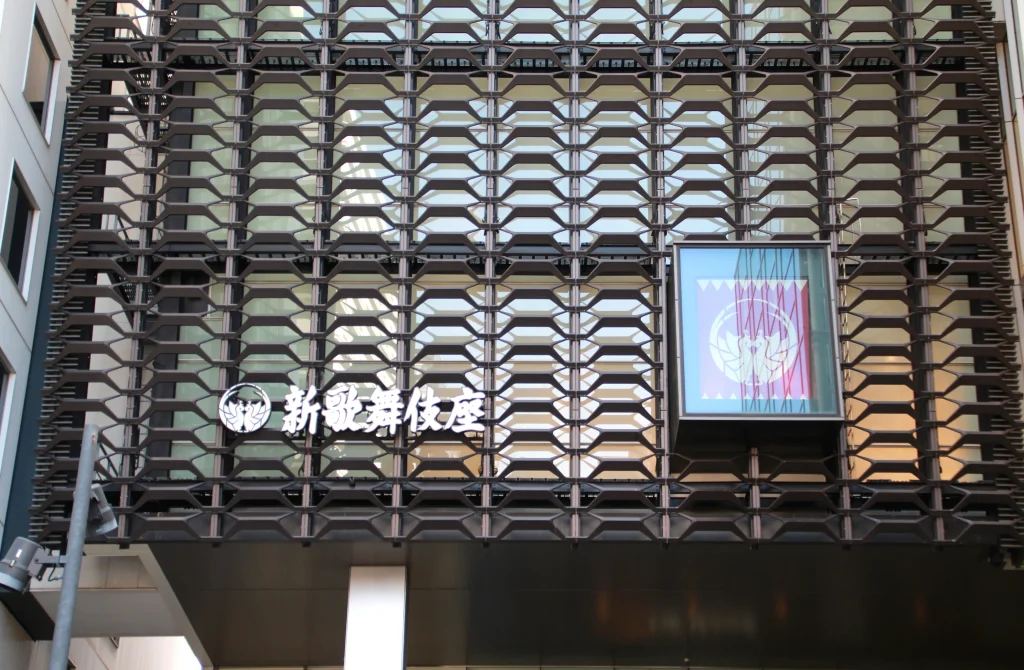
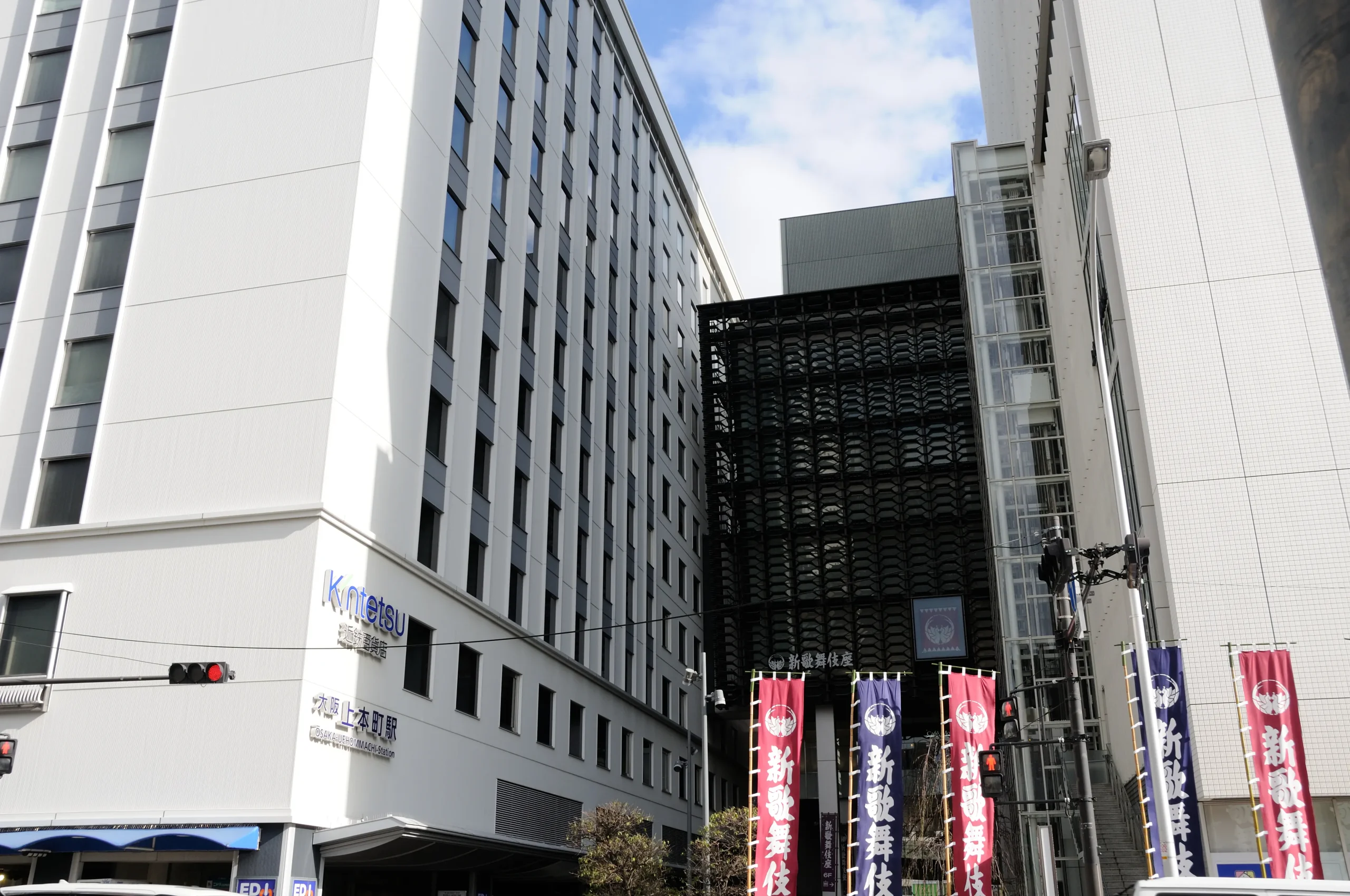
Make the performance the centre of your day, with enough time for the journey, meals and any assistance you need. Shin-Kabukiza occupies floors six to eight of Uehommachi YUFURA. It connects directly with Osaka-Uehommachi Station and is about five minutes on foot from Tanimachi 9-chome Station. Allow for movement through the station and building, not just the train ride.
For a matinee, keep the morning straightforward and leave the meal afterwards flexible. For an evening performance, avoid a crowded morning schedule and consider eating before the show. The following points help you plan either visit without unnecessary rushing.
| Planning point | What to do |
|---|---|
| Matinee route | Hotel → station → Shin-Kabukiza → meal → hotel |
| Arrival allowance | Aim to reach the theatre 30–45 minutes before the start. This is a planning allowance, not an official entry deadline. |
| Ticket collection | Complete collection according to your seller’s instructions; do not assume every ticket can be collected at the theatre. |
| Finding your destination | Save 大阪上本町 for the station and 新歌舞伎座 for the theatre on your phone to show staff or a driver. |
| Assistance | Add time for any assistance you have arranged. |
| Evening programme | Keep the morning light and eat beforehand if that suits you. |
| Ordinary rain | Omit optional outdoor walking and travel directly to the theatre. |
| Large luggage | Leave it at your accommodation; theatre lockers are limited. |
A Kyoto Day Trip for Kabuki at Minamiza
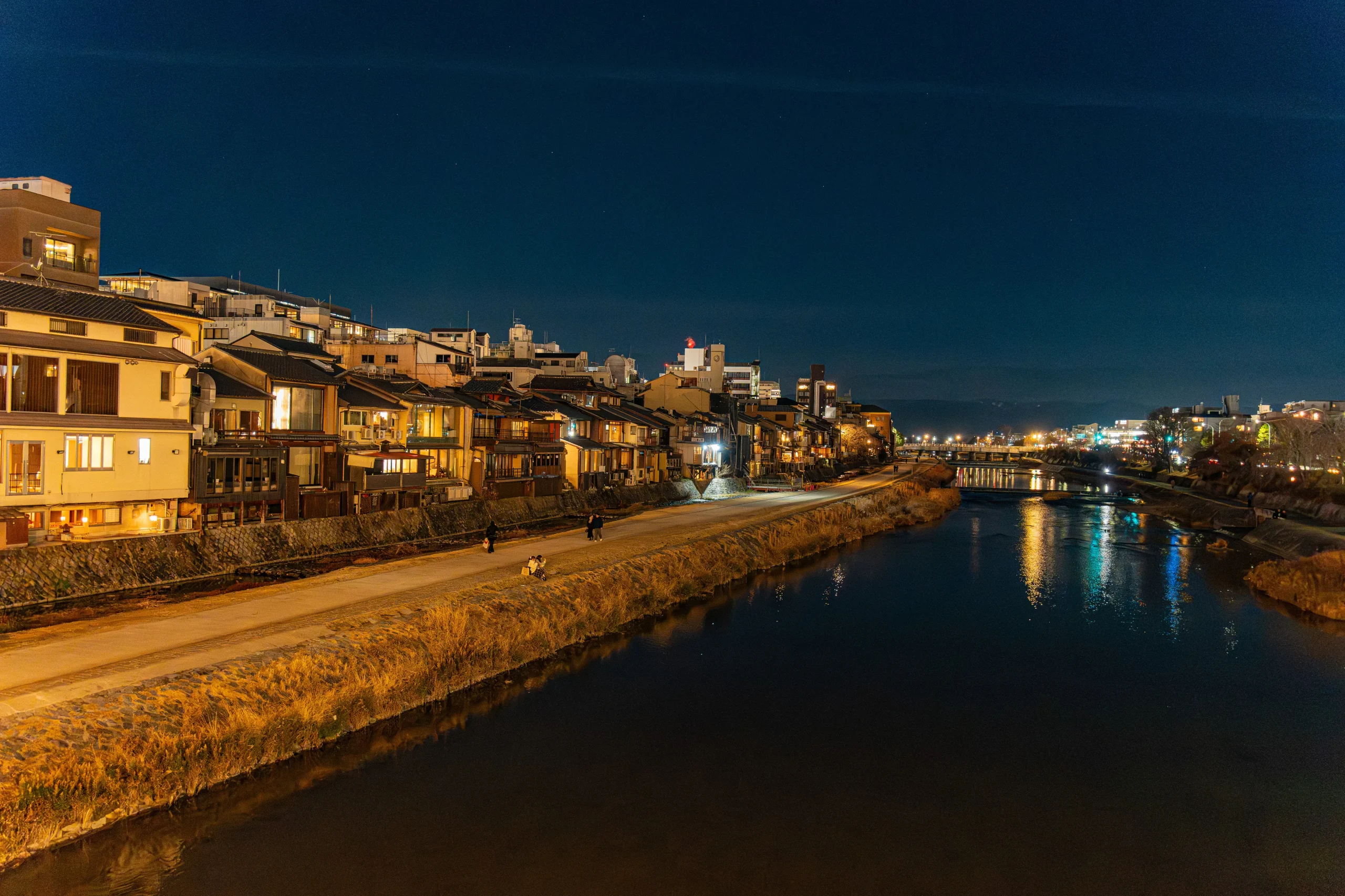
Consider Kyoto when live kabuki matters more than remaining in Osaka. Choose a confirmed production first, then compare journeys from your accommodation and the return after its published finish time.
Compare Keihan services from Yodoyabashi to Gion-shijo with Hankyu services from Osaka-Umeda to Kyoto-kawaramachi. Choose according to your hotel location, then consult current fares, timetables and service information.
Minamiza’s directions give a one-minute walk from Gion-shijo Station exit 6, or three minutes from Kyoto-kawaramachi Station exit 1. These walking times do not establish a step-free route. Travellers needing lifts should plan the appropriate station path separately.
Kyoto route: Osaka hotel → Kyoto station → meal → Minamiza → Osaka hotel.
Keep sightseeing optional, and avoid a tightly timed airport departure or dinner reservation afterwards. Rain calls for less outdoor walking; serious transport disruption calls for checking operators and theatre notices before travelling.
If Your First Plan Does Not Work
A suitable alternative preserves what matters most to you. Decide whether that is live kabuki, Osaka’s wider theatre culture, or modest travel demands.
Plan B: Another Kabuki Performance in Kansai
If your preferred Osaka session is unavailable, compare another date or programme before looking at Kyoto. Shin-Kabukiza keeps separate seats for telephone and online sales, so an unavailable online option does not necessarily settle every official purchasing route.
At Minamiza, the October 2026 listing explains that its multilingual agency sells an allocation and stops sales two days before a performance. “Sold Out” does not always mean the whole theatre is full. Follow the production’s instructions for enquiries about remaining seats.
Read your existing booking conditions before buying a replacement. A change of plans does not automatically create a right to exchange or refund.
Plan C: A Different Osaka Cultural Experience
At the National Bunraku Theatre, puppets, narration and shamisen music form a different theatrical art. Choose a production that overlaps your visit rather than treating bunraku as continuously available.
The autumn run lasts from 31 October–23 November 2026, excluding 6 and 16 November. Each part costs ¥6,500. A free English synopsis is listed, while English audio is available only for Part Three at ¥800. That session runs from 17:45 to approximately 20:20, so consider its support and finish time together.
English telephone booking is listed at +81-3-3230-3000, from 10:00–18:00. The theatre is a one-minute walk from Nippombashi Station exit 7. If these dates match your stay, consider this Osaka option. For another month, consult the relevant programme rather than assuming identical times or support.
For a quieter encounter, Kamigata Ukiyoe Museum displays woodblock actor prints associated with Osaka’s stages. Look at costume patterns, faces and printed lines as records of theatrical identity. ENJYU JAPAN’s ukiyo-e museum guide provides the wider context.
The Osaka tourism bureau lists adult admission at ¥700, opening hours of 11:00–18:00, and last entry at 17:30. The museum closes on Mondays, or the following day when Monday is a public holiday. Review current opening arrangements before visiting.
Museum route: Namba → museum → nearby meal. In rain, omit the additional neighbourhood walk.
| Situation | Practical adjustment |
|---|---|
| No suitable Osaka ticket | Compare another session, date or Kyoto production |
| You prefer to remain in Osaka | Look for bunraku or visit the actor-print museum |
| Ordinary rain | Keep the indoor visit; reduce outdoor stops |
| Transport disruption | Consult operators before travelling |
| Performance cancellation | Follow the organiser’s refund instructions |
| Fatigue | Remove surrounding sightseeing and protect rest time |
Where Shin-Kabukiza announces refunds after postponement or cancellation, a deadline applies. Follow the published procedure promptly rather than assuming reimbursement is automatic.
Theatre Etiquette, Dining and Accessibility
Download your ticket instructions and synopsis before arrival. Switch off your phone during the performance, and do not photograph or record the stage. Follow the venue’s guidance on late entry and re-entry.
Shin-Kabukiza permits eating at your seat before the performance and during intervals. Bento sales depend on the production, so arrange your meal without assuming food will be sold that day.
Wheelchair spaces are limited and located behind the first and second auditorium levels. Multipurpose toilets are provided on those levels. Contact the theatre before purchasing, and arrange a companion if you require physical assistance: staff cannot provide hands-on help.
The January production requires an individual ticket for children aged four and above, including preschool children. This does not resolve admission for younger children. Ask about the production-specific policy before booking.
Questions About Kabuki in Osaka
Before you book, these three distinctions are worth keeping in mind.
Can I Still See Kabuki in Osaka?
Yes, when an announced production matches your stay. The January 2027 Shin-Kabukiza run is a confirmed example.
Does Shin-Kabukiza Stage Only Kabuki?
No. Its programme includes other theatre and music productions. Identify the art form and dates before reserving a theatre day.
Are English Guides or Single-Act Tickets Available?
They depend on the production. Neither has been confirmed for the January run in the information checked.
Allow Osaka an Evening of Your Own
Begin with your dates, then settle support, seats, ticket collection and the journey home. One carefully chosen performance deserves enough space around it to enjoy the visit without rushing.
If you would like cultural visits to fit within a wider journey, ENJYU JAPAN’s Tailor-Made Tour service offers a place to discuss your interests and preferred pace. Particular tickets and theatre services remain subject to their published conditions and availability.
Choose the performance that speaks to you, and leave the rest of the evening delightfully yours.
References
- Shochiku – Osaka Shochikuza: Theatre Closure Information
- Shin-Kabukiza – January 2027 New Year Kabuki Special Performance: Programme, Dates, Prices and U-30 Ticket Conditions
- Shochiku / KABUKI WEB – Official Kabuki Performance Schedule: Current and Upcoming Productions
- Shin-Kabukiza – Online Ticket FAQ: Overseas Address Restrictions, Payment, Collection and Cancellation Conditions
- Shin-Kabukiza – Ticket Purchase Guide: Telephone Reservations, Seven-Eleven Collection and Box-Office Sales
- Shochiku – English FAQ: Enquiries about Kabuki Theatres and Programmes
- Shin-Kabukiza – Access: Osaka-Uehommachi Station Connection and Directions from Tanimachi 9-chome
- Shin-Kabukiza – Theatre Facilities: Interval Dining, Wheelchair Spaces, Toilets and Lockers
- Shochiku / KABUKI WEB – Minamiza Theatre: Upcoming Performance Information
- Shochiku / KABUKI WEB – Minamiza Theatre Information: Station Access and Seating Plans
- Shochiku / KABUKI WEB – October 2026 Programme at Minamiza: English Guides and Ticket Availability
- Keihan Electric Railway – Railway Lines: Connections between Osaka and Kyoto
- Hankyu Railway – Osaka-Umeda to Kyoto-Kawaramachi: Weekday Departure Timetable
- Japan Arts Council – Autumn Bunraku Performance 2026: Dates, Prices, English Support and Booking Information
- Osaka Convention & Tourism Bureau – Kamigata Ukiyoe Museum: Actor Prints, Admission, Opening Hours and Access
- Shochiku – Theatre Etiquette: Mobile Phones, Photography, Recording and Audience Consideration