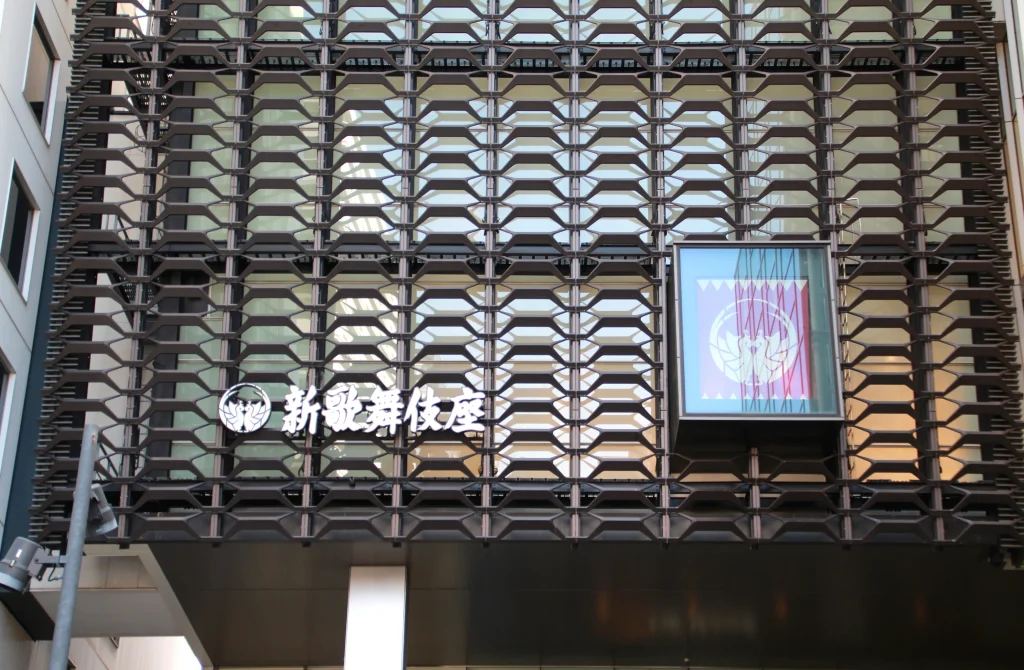
If a sumo wrestler’s topknot has caught your eye, let us follow that detail; it offers a clear and rewarding introduction to the sport.
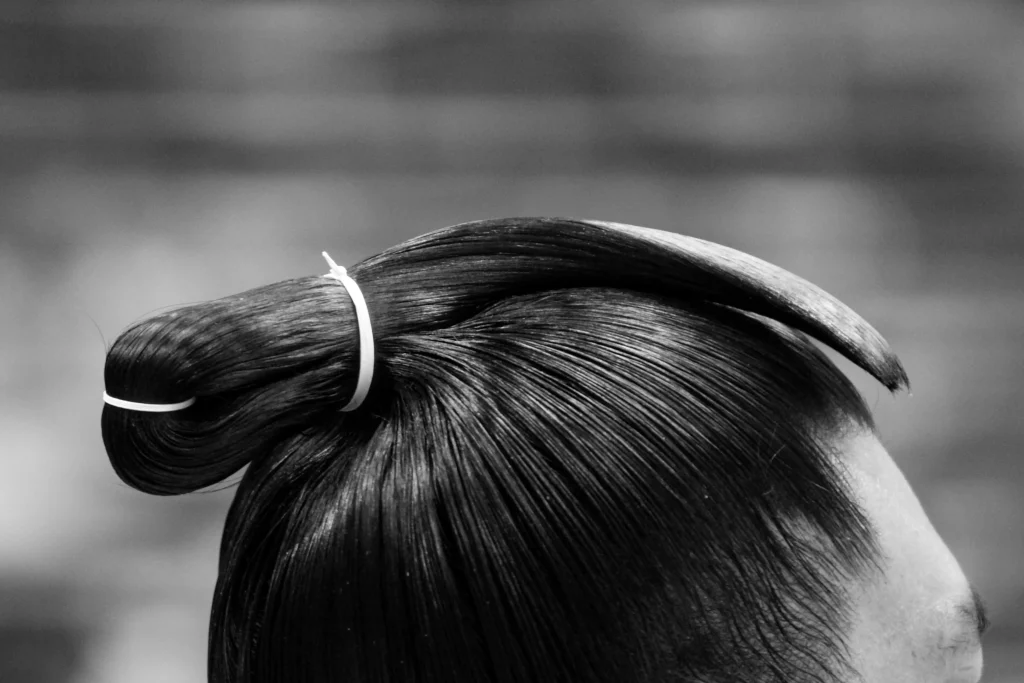
Sumo hair is arranged in a traditional topknot called a mage, often described as a chonmage. A specialist hairdresser, known as a tokoyama, shapes it. The more elaborate oicho-mage spreads into a form resembling a ginkgo leaf. At retirement, a wrestler’s topknot is cut in a ceremony called danpatsu-shiki. These terms connect the hairstyle, the person who creates it and the occasion when it is removed.
Some retirement events sell public admission tickets, and selected ceremonies offer separate packages that allow guests to make a ceremonial cut. Understanding the hairstyle helps you appreciate what you are watching. Understanding the ticket conditions helps you choose an experience that fits your journey. Begin with the culture, then decide how you would like to encounter it.
What Is a Sumo Wrestler’s Hairstyle Called?
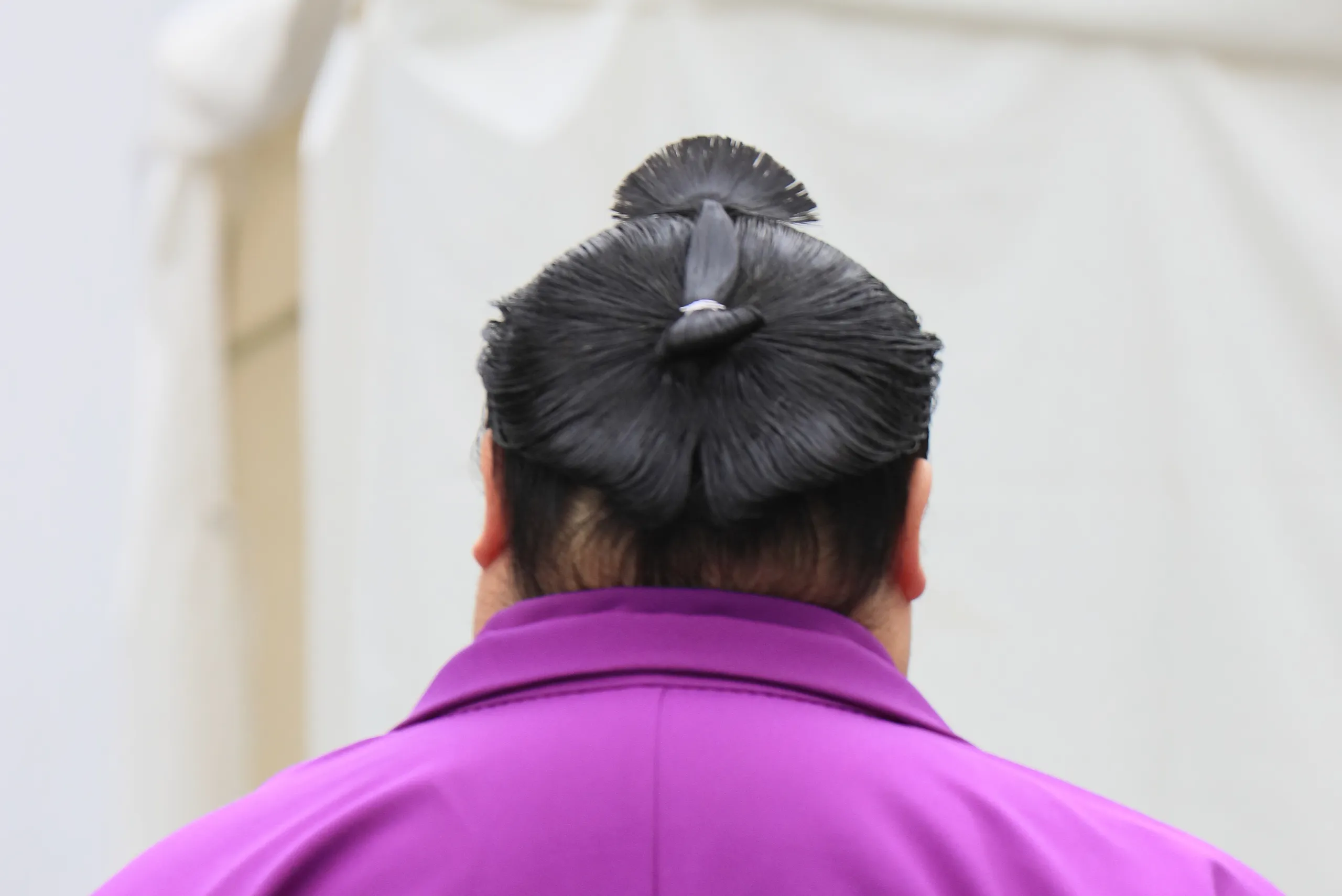
Two forms are useful to recognise: the simpler topknot and the formal, fan-shaped oicho-mage. Their appearance offers clues about both the wrestler and the occasion.
The Everyday Topknot and the Oicho-mage
The simpler chonmage gathers the hair into a compact, folded knot. The oicho-mage has a broader end, carefully spread to resemble a large ginkgo leaf. Look at the upper part of the hairstyle: that open fan distinguishes it from the smaller knot.
The formal style is associated with sekitori, wrestlers in juryo and makuuchi, professional sumo’s two highest divisions. It does not replace the simpler hairstyle in every setting. A wrestler’s appearance away from a formal event may therefore differ from the familiar tournament image. The setting is part of understanding what you see.
| Hairstyle | Main visual feature | Usual association |
| Chonmage | A compact, folded topknot | The simpler form seen in professional sumo |
| Oicho-mage | An end spread into a ginkgo-leaf shape | Formal appearances by wrestlers in the top two divisions, with specific exceptions |
These hairstyles preserve elements of older Japanese hairdressing. If that background interests you, our history of sumo follows the wider development of the sport. For your next visit, recognising the two shapes is a useful first step.
Why the Topknot Does Not Always Tell You the Rank
Lower-division wrestlers can wear an oicho-mage on certain occasions, including shokkiri, a comic demonstration of sumo rules, and their own retirement hair-cutting ceremony. A fan-shaped topknot therefore does not always identify the division in which a wrestler competes. Read the hairstyle alongside the occasion, rather than treating it as a complete statement of rank.
The Tokoyama: The Specialist Behind the Topknot
A tokoyama does more than tie long hair together. Preparing the hair, shaping the sides and refining the finished knot require different tools, materials and judgement.
Shaping the Hair, Not Simply Tying It
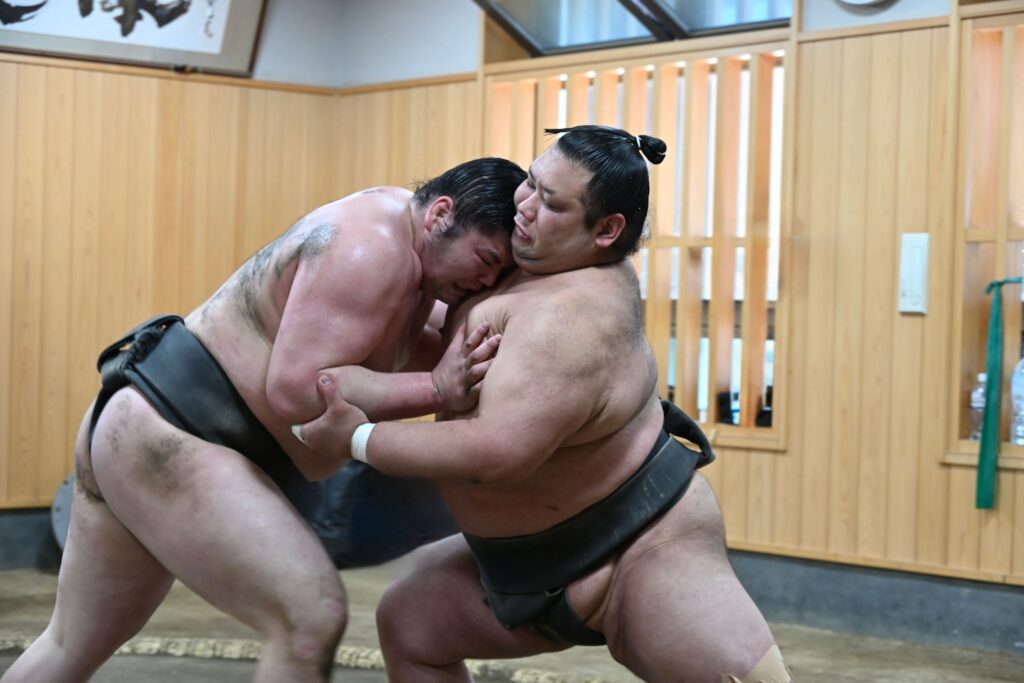
Tokoyama are members of the Japan Sumo Association and work within sumo stables, the organisations where wrestlers train. Their work has a grading system, but the Association explains that shaping an oicho-mage is not restricted to one particular grade. Acquiring the necessary practical skill matters, rather than holding a specific title alone.
Their tools include wooden combs with different functions. A fine comb helps spread the end of the hair into the formal fan. A strong cord made from specially processed Japanese paper secures the knot. Each material serves a practical purpose within the finished shape.
The rounded sections on either side of the head are called bin. The Association describes kuse-momi, a kneading technique used when working with strongly textured hair, as part of shaping those sides. The finished outline depends on adapting the work to the individual wrestler’s hair.
When you next see a wrestler, look beyond the fan itself. Notice the side sections and the lines leading towards the knot. Those visible details give you a precise way to appreciate the hairdresser’s work.
What the Hair Oil Does
The styling preparation is commonly called bintsuke-abura. The Association distinguishes three consistencies: softer suki-abura, intermediate nakaneri and firmer bintsuke-abura. The firmer preparation helps with strongly textured hair when shaping the sides. Choosing the consistency is part of adapting the material to the hair.
If seeing the process interests you, look for a published hairdressing demonstration. The Association’s provincial-tour guide mentions such demonstrations among possible activities. Choose an event that explicitly lists one; a stable visit does not automatically include watching its tokoyama work.
What Happens at a Sumo Hair-Cutting Ceremony?
A danpatsu-shiki marks retirement through the cutting of the wrestler’s topknot. People connected with his career make cuts in turn, before his stablemaster completes the removal.
The Guests’ Cuts and the Final Cut
The individual cuts and the final cut serve different purposes. People who have supported the wrestler put scissors into the hair a little at a time. At the end, his stablemaster at retirement cuts off the topknot completely. This final action is called tome-basami.
Knowing that sequence helps if you cannot understand every announcement. You can follow the succession of participants, then recognise the final action. The central change remains visible without translating every introduction.
If a programme or career introduction is available, reading it beforehand can add context. Identifying some of the people involved is more rewarding than trying to recognise everyone on the day. A short introduction to the wrestler’s career can make the ceremony easier to follow.
The Ceremony and the Wider Retirement Event
The hair-cutting may form part of a larger intai-zumo, or retirement sumo event. Its programme can include bouts and dohyo-iri, the wrestlers’ ceremonial ring entrances. It is not another day of the regular tournament calendar, so read the programme rather than assume a familiar schedule.
Endo’s announced retirement programme, for example, lists juryo bouts, his hair-cutting ceremony and ring-entering ceremonies. This shows why the opening time, the start of bouts and the hair-cutting itself are separate points in the day. Reserve time for the programme you want to see, not only the moment when the hair is cut.
Choose a retirement event if its personal and cultural focus appeals to you. For a visit centred on tournament competition, our Grand Sumo tournament guide covers that different experience. Neither needs to substitute for the other.
Can Visitors Attend—or Take Part?
Visitors can attend retirement events that offer public admission. Making a cut in the topknot requires separate permission or arrangements, so begin by deciding which experience you want.
Watching and Joining the Hair-Cutting Are Different
An ordinary admission ticket lets you watch under its stated conditions. It does not automatically give you permission to approach the wrestler or cut his hair. The distinction is between admission and participation, not between tourists and established fans.
Hidenoumi’s ceremony on 3 October 2026 advertised both viewing tickets and a hair-cutting participation ticket that included an S seat. It is now a past event, but it provides a documented example of an arrangement available to the public. It should be read as a past example, not a booking opportunity for a future trip.
That event also offered women the opportunity to make a cut beside the ring, while keeping the ring itself restricted. Viewing, participating and entering the ring are therefore separate questions. Before booking another event, establish where participants will make their cut and which access restrictions apply.
If you prefer to watch, ordinary admission may be all you need. If participation appeals to you, establish whether admission is included and what instructions apply. Those answers should be clear before payment.
Check the Date, Ticket and Support Before Paying
Start with an Association announcement or the organiser’s official page, then follow the designated sales link. In Japanese searches, 引退相撲 means retirement sumo and 断髪式 means hair-cutting ceremony. Adding the wrestler’s name can help identify the correct event.
Older pages may remain online after their event has finished. Confirm the full date, including the year, before comparing prices or planning accommodation. A page that still describes tickets is not proof of current availability.
| Check | What to establish |
| Date and availability | Is the event still ahead, and can you currently buy admission? |
| Ticket rights | Does it provide entry, hair-cutting participation or only souvenirs? |
| Price unit | Is the amount per person or for an entire seating box? |
| Seat type | Will you sit on a cushion or in a chair? |
| Language support | Is there a guide, an escort or written information? |
| Payment and collection | Can you pay from overseas and obtain the ticket during your stay? |
| Changes and cancellation | What happens if your travel plans change? |
An English booking page does not establish that live interpretation is included. If understanding the introductions matters to you, establish exactly what support accompanies the ticket. A translated sales page and commentary during the ceremony serve different needs.
Prices also need context. At Hokutofuji’s May 2026 retirement event, a category C chair ticket cost ¥4,000. An S-category box for four people cost ¥60,000. These are past prices, not standard admission prices, but they show why the number of people covered matters.
A Current Example: Endo’s Announced Event
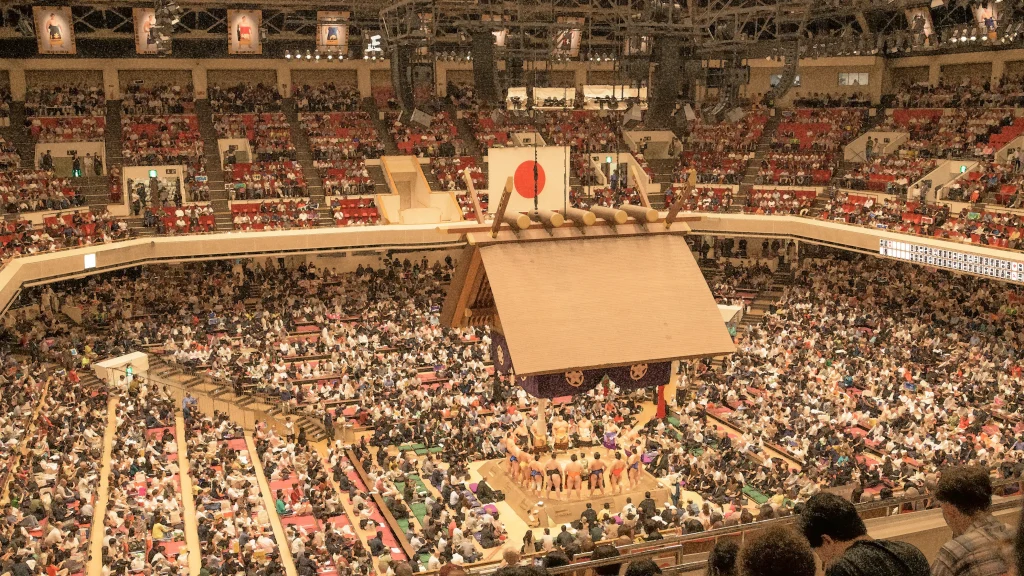
Endo’s retirement event is announced for 30 January 2027 at Ryogoku Kokugikan. The organiser lists doors opening at 10:00, bouts beginning at 11:30 and an expected finish at 16:00. These are timings for the wider event, not a confirmed start time for the hair-cutting itself.
The organiser’s official page also states that a souvenir-set voucher does not permit entry: a separate admission ticket is required. Use its latest notice and designated seller to establish current admission availability before making travel commitments. An announced event and an available seat are separate pieces of information.
Plan a Comfortable Visit—and Another Option
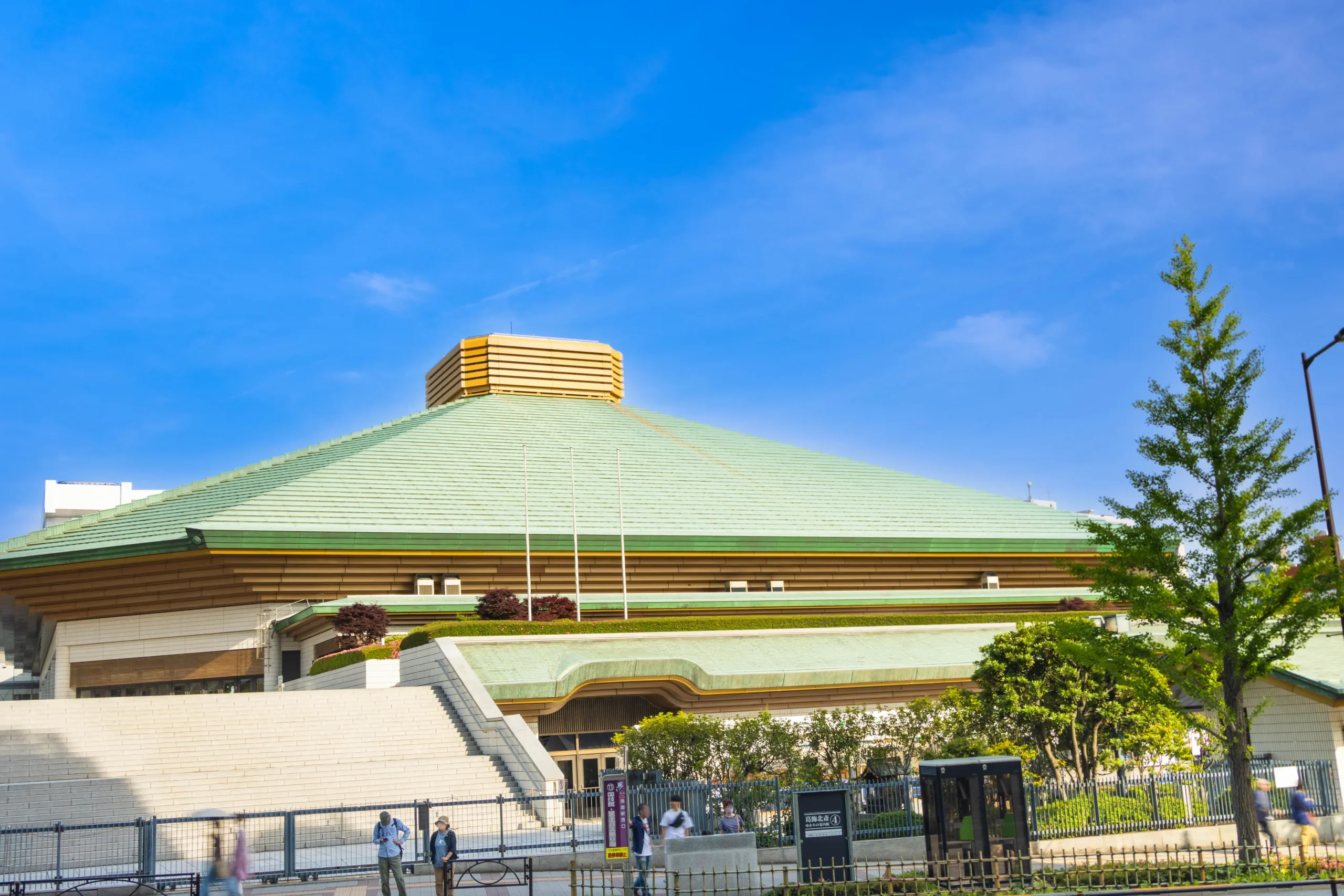
Once you have confirmed admission, organise the day around the event’s timetable. Arriving with time to spare is more useful than squeezing another stop into the morning.
Save the Arrival Details and Choose Your Seat
The Kokugikan’s address is 1-3-28 Yokoami, Sumida-ku, Tokyo. Its official directions use JR Ryogoku Station’s West Exit or Exit A3 at Ryogoku Station on the Toei Oedo Line. These are different stations, so save the route matching your train.
Save your booking confirmation and collection instructions offline as well. Allow time for ticket collection and finding your seat, following any arrival instructions from the organiser. If you need help, showing the venue name and reservation is simpler than explaining unfamiliar terms.
Masu-seki are traditional box seating areas where spectators sit on cushions. A chair may suit anyone who finds prolonged floor sitting uncomfortable. Establish how many people the box ticket covers before comparing its price with individual chair seats.
For wheelchair seating, ask the organiser about the event’s allocation and companion arrangements before buying. Also establish children’s admission requirements, photography rules and whether you may leave and return. Use the event’s own conditions rather than assume that another ceremony followed the same rules.
If the Date, Tickets or Weather Do Not Fit
A missed ceremony need not become a search for an identical substitute. Choose another experience according to what interested you: live competition, historical materials or the work behind a wrestler’s appearance.
The Sumo Museum inside the Kokugikan exhibits materials including woodblock prints, ranking sheets and ceremonial aprons. Displays change, so particular topknots or hairdressing tools are not guaranteed. Plan around the current exhibition rather than an assumed collection of objects.
Normal hours are 10:00–16:30, with last entry at 16:00. The museum normally closes on weekends and public holidays, with exceptions and additional exhibition-change closures. Admission is free under ordinary conditions, but during Tokyo Grand Sumo tournaments you need a tournament ticket. Consult the calendar for your date, including any retirement-event day.
| Situation | First option | Second option | Third option |
| You have admission, but ordinary rain is forecast | Travel directly to the indoor event | Shorten outdoor sightseeing afterwards | Move the neighbourhood walk to another day |
| The ceremony is sold out or outside your dates | Consider another officially announced sumo event | Visit the museum on an open day | Choose an indoor stop from the Ryogoku guide |
| Severe weather disrupts transport | Follow transport and organiser updates | Move optional activities to another day | Stay somewhere safe rather than force the journey |
Our Ryogoku guide keeps the surrounding choices together. Stable practice is better treated as a separately planned visit, not a same-day replacement. An alternative works best when it has a clear purpose of its own.
Frequently Asked Questions
These short answers separate the hairstyle, the viewing ticket and permission to participate.
Do All Sumo Wrestlers Wear an Oicho-mage?
No. It is normally associated with sekitori, but lower-ranked wrestlers can wear it on specified occasions, including their own hair-cutting ceremonies and shokkiri demonstrations.
Can Visitors Buy Tickets to a Hair-Cutting Ceremony?
Yes, when the organiser offers public admission. Establish the current date, availability and collection conditions through the designated seller.
Can Visitors Take Part in Cutting the Hair?
Some events offer participation arrangements. An ordinary admission ticket does not include that right unless the organiser explicitly says so.
Can Women Attend or Join the Hair-Cutting?
Women can attend public events offering admission. Hair-cutting arrangements are event-specific; Hidenoumi’s 2026 ceremony offered women participation beside the ring.
See Sumo with a Clearer Eye
Understanding the topknot gives you something precise to notice: its shape, the hairdresser’s adjustments and the final cut that marks retirement from competition. You need not know every rank or recognise every guest to begin appreciating those details.
Choose an experience that matches your interests, confirm admission and select a comfortable seat. If you would like to build a wider journey around your interest in sumo, ENJYU JAPAN’s Tailor-Made Tour service offers individual travel planning.
Keep your plans precise, and leave your curiosity a little freedom; the finest detail may be the one you had not thought to seek.
References
- Web Japan – The Art of Hairstyling in Japan: Sumo Topknots, Tokoyama and Retirement Ceremonies
- Japan Sumo Association – Sumo Quiz No. 1224: Tokoyama Grades and Oicho-mage Skills
- Japan Sumo Association – Sumo Quiz No. 1074: Hair Oils and Shaping the Sides of the Topknot
- Japan Sumo Association – A Day at Jungyo: Hairdressing Demonstrations and Sumo Performances
- Hidenoumi Retirement Ceremony – October 2026 Event: Admission and Topknot-Cutting Participation Plans
- Japan Sumo Association – Hokutofuji’s May 2026 Retirement Event: Seat Prices and Admission Conditions
- Endo Retirement Event Office – January 2027 Ceremony: Programme, Ticket Notices and Souvenir Vouchers
- Ryogoku Kokugikan – Official Visitor Information: Address and Station Access
- Japan Sumo Association – Sumo Museum: Collections, Opening Hours and Admission