Beyond Kyoto’s temples and theatres lies a question for the curious visitor: where does a neighbourhood gather, and how might you join it?
The Kankame Inari Yomiya Festival offers one answer. Held on the evening before the main festival of Gion Higashi’s local guardian shrine, it brings together a community occasion and activities that visitors can enjoy. Knowing its setting helps you approach the evening without expecting either a theatre production or private entertainment.
The latest regional announcement verified for this guide listed the 2026 festival for 14 May, from 17:00 to 21:30. It advertised drinks, games, tea, maiko dance and flute performances. As of 1 November 2026, no announcement for the 2027 festival was found in the official and regional sources reviewed. For future dates, check the Gion Shopping Street Promotion Association’s news page for 観亀稲荷神社宵宮祭, rather than carrying the 2026 schedule forward.
What Is the Kankame Inari Yomiya Festival?
This is a neighbourhood shrine celebration, with performing arts and opportunities to participate forming part of the evening. Understanding that relationship gives you a clearer idea of what to expect.
A Shrine Evening in Gion Higashi
Gion Higashi is one of Kyoto’s five traditional geiko districts, known as hanamachi or kagai. Geiko are professional entertainers trained in traditional performing arts; maiko are apprentices. Their participation connects the advertised activities with the district in which they work.
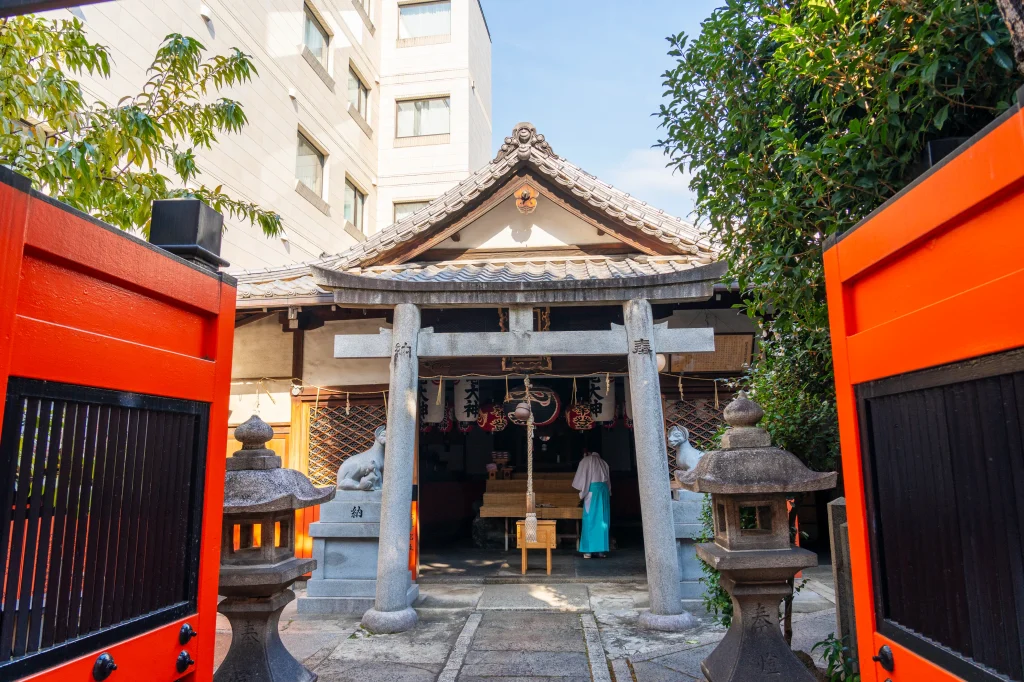
Kankame Inari Shrine is associated with Gion Higashi’s ujigami, its local guardian deity. The regional festival notice describes the small shrine as a familiar local presence, affectionately called “Kanki-san”. Here, yomiya means the evening celebration before the shrine’s main festival, so the name explains its place in the religious calendar.
How It Differs from Other Gion Experiences
This event is separate from July’s Gion Matsuri, covered in our Gion Matsuri guide. It is also different from Gion Higashi’s autumn Gion Odori theatre production. A shrine gathering and a ticketed dance performance offer distinct ways to encounter the district.
A private banquet requires another set of arrangements. An advertised opportunity to converse at a festival counter does not imply a personal appointment, an English-speaking host or a reserved photograph. Our guide to geisha experiences explains the broader formats; this article focuses on joining the shrine evening.
Dates, Location and What Has Been Confirmed
The most useful preparation is checking which year an announcement covers. A dated local notice gives you a basis for planning, while an older listing provides background rather than a future schedule.
The Latest Festival Announcement
The Gion Shopping Street Promotion Association published the verified 2026 notice on 28 April. The table below records what it advertised, not a confirmed programme for the next edition.
| Item | Verified 2026 announcement |
|---|---|
| Date | Thursday, 14 May 2026 |
| Time | 17:00–21:30 |
| Location | In front of Kankame Inari Shrine |
| Activities | Drinks counter, games, tea service, maiko dance and flute performances |
| Weather | Details could change because of weather |
| Current status | Past event notice; not a future booking schedule |
When the next edition is announced, check the year, date, hours and activities before planning your visit.
Admission, Reservations and Spending
The verified notice does not specify admission charges, booking requirements, individual activity prices or payment methods. Confirm these before setting your festival budget, keeping entry separate from any spending on tea, drinks or games.
The contact named in the notice is Gion Higashi Kabukai, the district’s performing-arts association: 075-561-0224 within Japan, or +81 75 561 0224 internationally. English telephone assistance has not been verified. If you need help with the Japanese enquiry, ask your accommodation whether staff can assist.
Combine your questions into one request: admission, booking, activity charges and any essential seating or access needs. Carry some yen as a backup, since payment methods were not stated. Set aside transport and dinner costs first, then decide which activities you would like to join.
Why the Shrine Matters to Gion Higashi
The shrine belongs to the district’s life beyond this single evening. Its annual observances and community use explain why the setting matters, without requiring a long account of its origins.
A Local Guardian Shrine
Kankame Inari Shrine enshrines Gion Higashi’s local guardian deity, known in Japanese as an ujigami. Strictly speaking, ujigami refers to the deity rather than the building, but everyday language often connects the deity with the place of worship. The shrine is affectionately known as “Kanki-san”.
The deities enshrined here are Kagutsuchi, a deity of fire, and Ukanomitama, an Inari deity associated with grain and prosperity. The shrine is also associated with prayers for protection against fire. These beliefs help explain its significance as a place of worship for the neighbourhood.
As you enjoy the advertised activities, leave room for worshippers and follow guidance about where to stand or enter. Save the Japanese name 観亀稲荷神社 when preparing your route.
A Place in the District’s Annual Life
Gion Higashi’s introduction lists a February observance, a major May festival and a November fire observance. It also describes an attached shrine building available for multipurpose use. These details connect religious occasions with the district’s shared spaces.
The same introduction describes teaching in dance, singing, flute, musical accompaniment and tea preparation. The skills seen during an advertised festival performance belong to continuing disciplines. That wider context helps you appreciate the work behind the evening without assigning an unverified meaning to every gesture or object.
What Visitors Can Join—and Three Things to Notice
Choose from the current programme rather than assuming every previous feature will return. The 2026 notice offers a useful introduction to the range of activities that may be arranged.
Dance, Flute, Tea, Drinks and Games
The announcement advertised maiko dance on a temporary stage and performances by the Gion Shinobue Club. A shinobue is a bamboo flute played sideways. Dance and flute were both listed, but the notice did not establish that the flute accompanies the dance; give each its own attention.
The drinks counter offered beer and soft drinks, with opportunities for conversation with geiko and maiko. Games and a tea service in the shrine grounds were also advertised. Alcohol was therefore not the only option, although individual prices and participation procedures were not stated.
| Activity | What to establish before joining |
|---|---|
| Dance or flute performance | Start time, viewing area and photography rules |
| Tea service | Price, timing, seating arrangements and how to join |
| Drinks counter | Menu, prices and ordering arrangements |
| Games | Participation method and any charge |
Conversation was part of the advertised offering, but its duration and language depend on the arrangements. A greeting and attentive listening can be worthwhile without expecting an extended exchange. Let the activity and the staff’s guidance set the boundaries.
Keep dinner separate in your planning, since a drinks counter does not establish that a full meal is available. If you have dietary restrictions, check ingredients before choosing refreshments. Arrange your meal elsewhere if you need detailed answers about preparation.
Three Ways to Understand the Setting
You do not need specialist knowledge to begin noticing how the evening works. These three points offer an entrance rather than a checklist to complete.
- The shrine and the activity areas. Notice where people worship, watch and participate, following signs and staff guidance rather than guessing where you may enter.
- Movement and sound. During dance, watch changes in posture, hands and movement. During flute playing, listen to how phrases begin and pause.
- Joining and watching. A game or counter interaction invites a different response from a performance. Let the activity’s instructions guide your involvement.
Choose one point at a time. The aim is not to identify every technique, but to understand enough to give the occasion your attention.
Getting There and Joining Comfortably
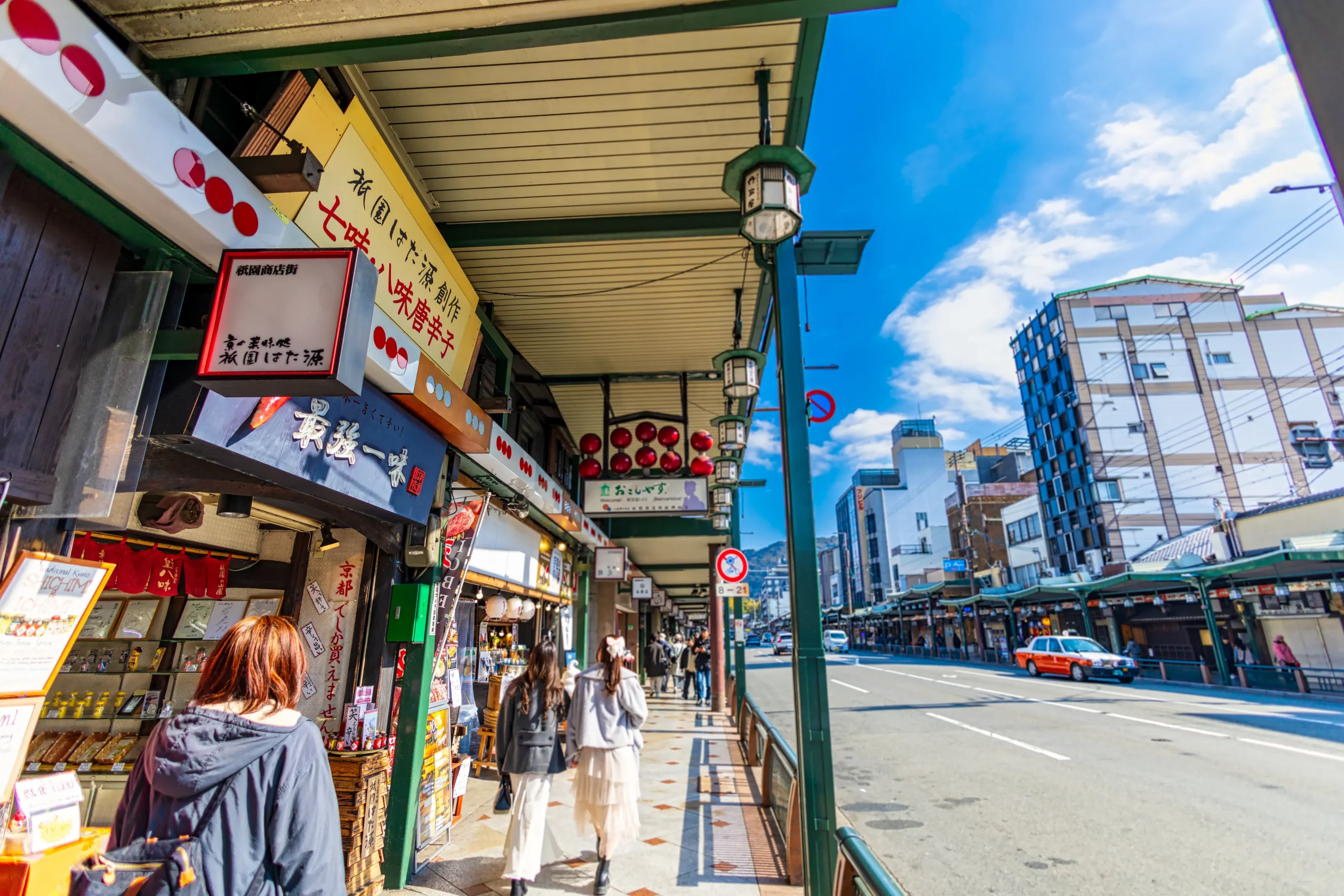
A saved place name and a clear final approach are especially useful when local information is mainly in Japanese. Prepare the route once, then concentrate on the event when you arrive.
Save the Shrine Name and Final Approach
Save 観亀稲荷神社 on your phone, together with the current announcement, your accommodation details and your return route. Search for the shrine itself, not simply the wider Gion area.
The regional notice places it approximately 150 metres west along 中末吉町通り, the street one block north of Gion Kaikan. To reach that landmark, allow about ten minutes on foot from Exit 7 of Keihan Gion-Shijo Station to Gion Kaikan. From there, go one street north, then west along 中末吉町通り. Preserve this distinction when checking your map.
Gion-Shijo Station provides a rail arrival point. If you need route assistance, the KEIHAN Tourist Information Center at Gion-Shijo Station lists English assistance and opening hours of 10:00–18:00. Use it before closing if needed; festival-specific conditions should still come from the organisers.
A Simple Arrival Sequence
On arrival, look for the current information before choosing an activity. Establish its time, price and joining arrangements, then participate or watch from the designated area. This is a sequence of decisions, not a claim that tea, dance and games occur in a fixed order.
Save return transport options before leaving your accommodation, particularly if you have an onward journey that evening. Planning the return removes one distraction without requiring you to schedule every moment of the visit.
Language, Photos and Physical Comfort
Have translation support ready and keep your phone charged. Useful questions include “How much is this?”, “Where should I wait?” and “May I take a photograph?” Short, specific questions make it easier to seek guidance without assuming English service.
For photographs, check both the event rules and the person’s agreement. Permission from an individual does not override restrictions on a performance. Keep paths clear and allow performers to move without following them; enjoying an encounter need not depend on recording it.
If your visit depends on a chair, step-free access or a nearby toilet, resolve those needs before travelling. The notice does not describe these facilities. Comfortable shoes, a small bag and manageable rain protection can support the visit, but they do not replace essential access information.
Three Ways to Plan Your Evening
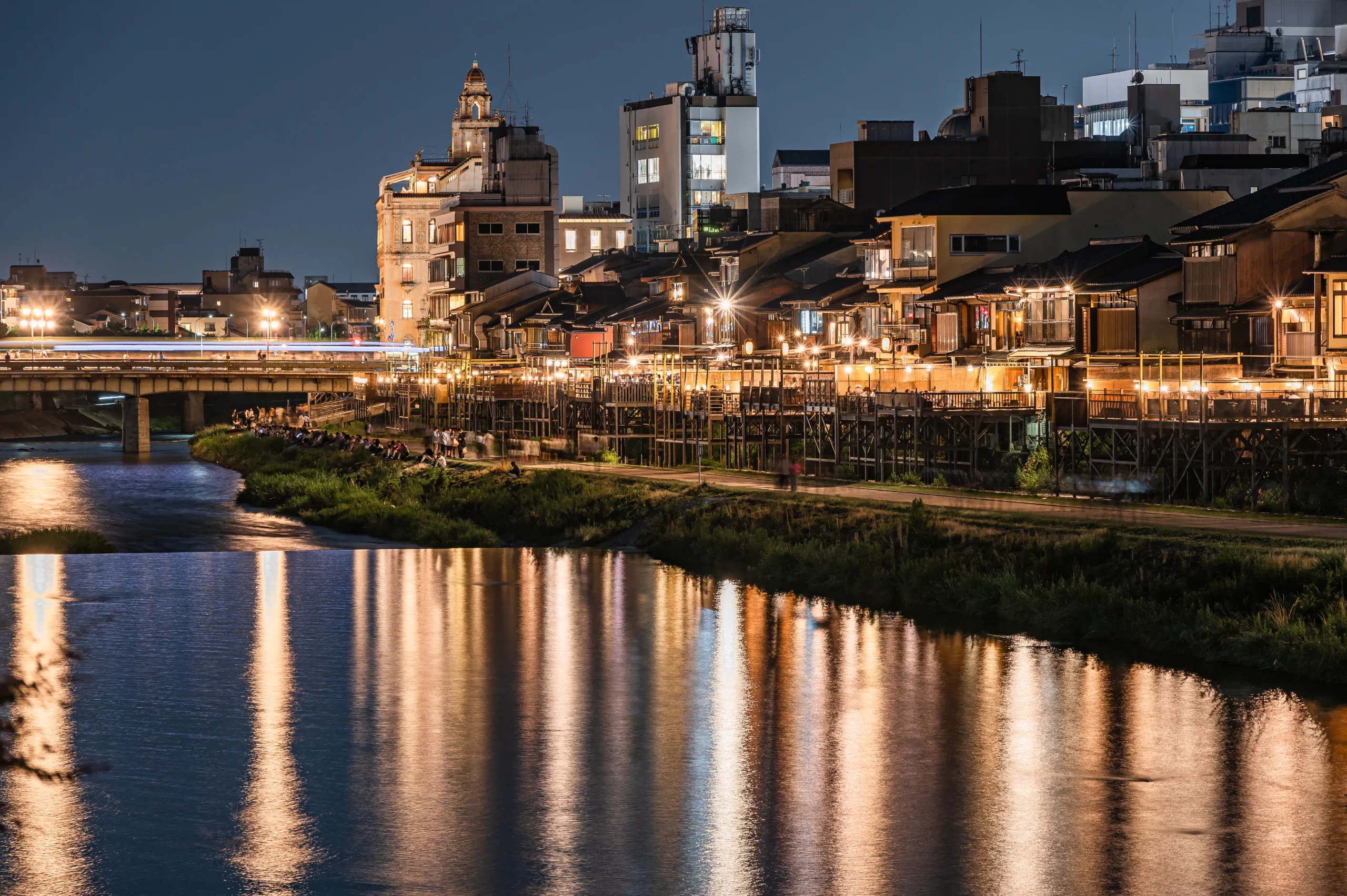
A useful alternative changes the part of the plan causing difficulty. Separate ordinary rain, programme changes and unsafe travel rather than treating them as the same problem.
Plan A: Visit with Time to Pause
When the event is confirmed and travel is straightforward, keep the route simple:
Current announcement check → shrine → selected activities → food or rest → return.
If dance is your priority, arrange dinner around the confirmed performance time. If participation matters more, allow time to understand the joining arrangements. Avoid placing an inflexible reservation immediately after the activity you most want to enjoy.
Plan B: Keep the Festival Visit Short
If ordinary rain or the actual crowd makes a longer outing tiring, confirm what is operating and choose a shorter visit. One available activity may suit you better than trying to cover the entire programme.
The regional notice allows for weather-related changes, so do not assume sheltered viewing, seating or unchanged performances. Identify a separate place to rest if necessary. If the activity you wanted is no longer offered, use your alternative rather than waiting without a clear reason.
Plan C: Choose an Indoor Performance—or Stay Local
For cancellation, incompatible dates or a preference for seated viewing, Gion Corner offers an indoor introduction to several traditional arts. Its programme includes Kyoto dance, tea preparation, music on the koto, a Japanese string instrument, and other performances.
The regular schedule lists 18:00 and 19:00 performances lasting about 50 minutes, with a standard adult price of ¥5,500. Confirm the actual date, availability and ticket conditions before booking; seasonal arrangements and closing days also apply.
This theatre in Gion Kobu is a different cultural choice, not a replacement for Gion Higashi’s shrine gathering or conversation opportunities. Arrange a ticket, plan dinner around the performance and travel with time to settle.
If severe weather disrupts transport, remove that journey too. Stay near your accommodation or use its facilities, choosing another cultural outing when movement is safe. An alternative should reduce the difficulty, not send you farther into it.
Choose the Gion Higashi Experience That Fits Your Journey
The shrine evening and the district’s theatre production offer different ways to encounter Gion Higashi. Choose according to whether you want to join a community occasion, watch a stage performance or arrange more focused interaction.
For an autumn visit, Gion Odori presents the district’s arts at Gion Kaikan. Its announced 2026 run is 1–10 November. It belongs to a different travel season, rather than serving as a same-evening weather alternative.
Return to the geisha-experience guide if an arranged setting is central to your interests. Keeping these formats distinct makes dates, budgets and expectations easier to compare.
Leave Room for the Evening You Choose
A rewarding visit begins with the current announcement, a clear route and one or two activities you genuinely want to join. You do not need to master every custom: bring enough preparation to choose comfortably, then give the setting your attention.
If you would prefer help fitting cultural visits into a broader stay, ENJYU JAPAN’s Tailor-Made Tour service offers personalised travel planning. Any festival-specific arrangements should be established separately rather than assumed.
A shrine its neighbours call “Kanki-san” asks for little: a saved name, a clear route and a little curiosity.
References
- Gion Shopping Street Promotion Association – Kankame Inari Shrine Yomiya Festival: 2026 Dates, Activities and Contact Information
- Gion Higashi Kabukai – About Gion Higashi: District History, Kankame Shrine and Annual Observances
- Keihan Electric Railway – Information for Travelers: Tourist Information Centers and Station Maps
- Gion Corner – Traditional Arts Performance: Schedules, Tickets and Access
- Gion Higashi Kabukai – Gion Odori: 2026 Performance Dates, Tickets and Venue