When a cherished ceramic bowl slips from your hands and shatters, what then? Throw it away? Hide the cracks with clear glue? In Japan, a centuries-old practice takes a different path: it highlights the breaks with gold. This is kintsugi (which literally means “golden joinery”). More than a repair method, it is a way of seeing imperfection, damage, and time itself. In this article, you will find what kintsugi is, the ideas that shape it, how it moved from tea rooms to modern life, and how its wisdom can guide everyday choices.
What is Kintsugi? The Art That Celebrates Scars
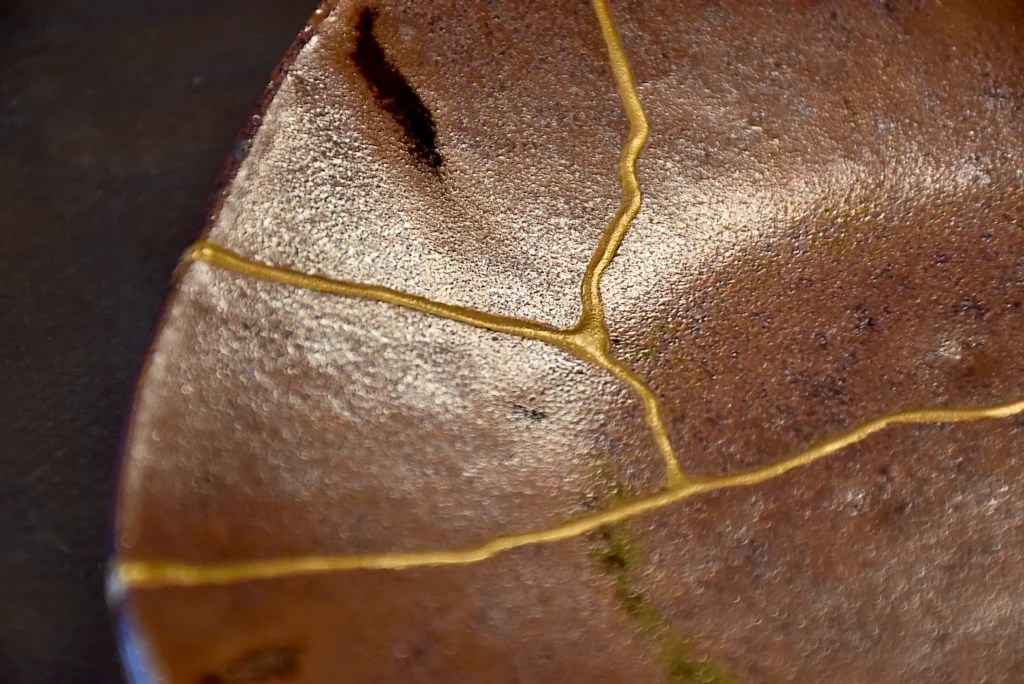
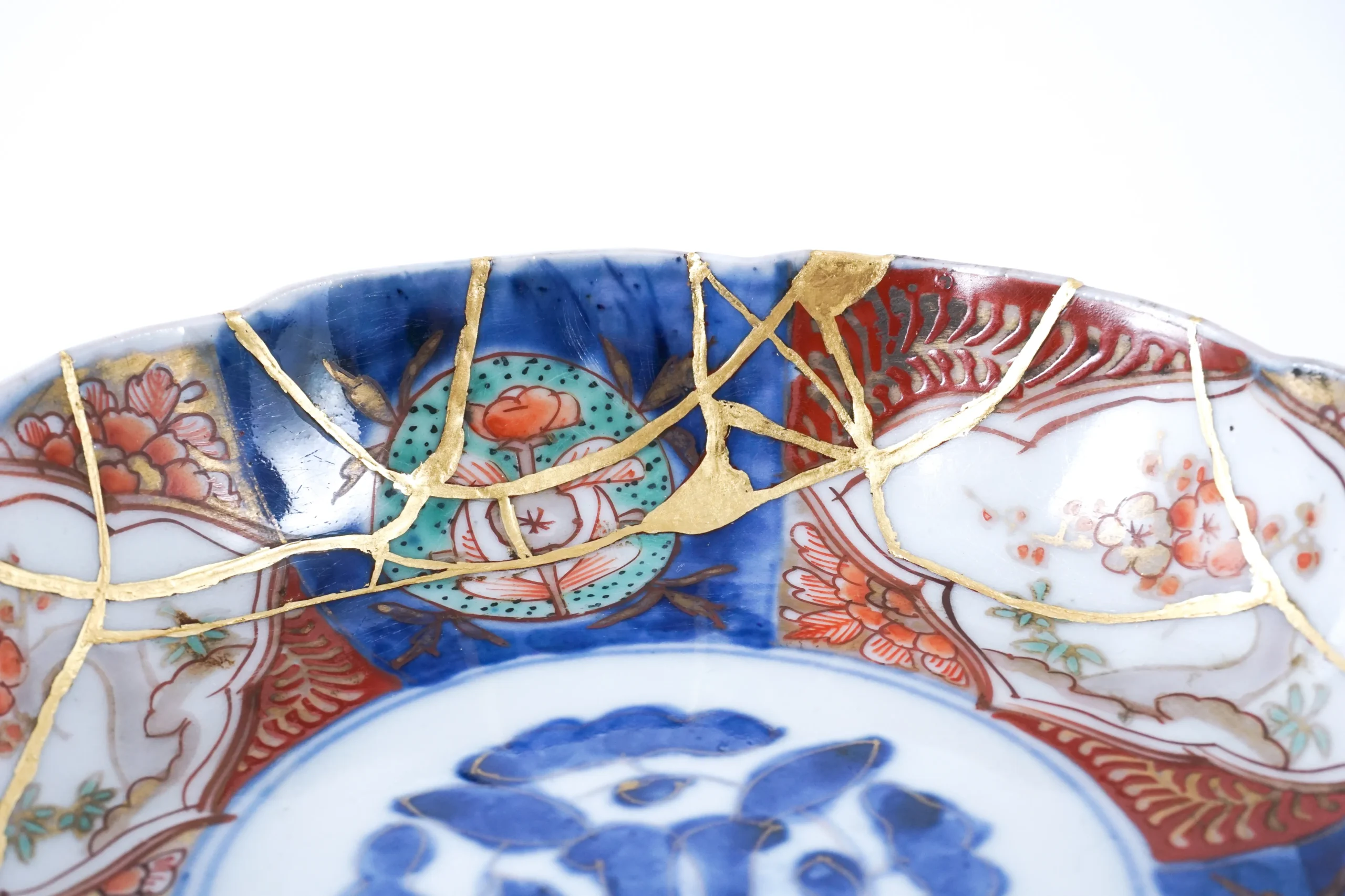
Kintsugi repairs broken pottery with urushi (natural lacquer from the Japanese lacquer tree) mixed with powdered gold, silver, or platinum. Rather than concealing damage, it turns cracks into luminous seams that often become the most striking feature of a piece. Breakage is not an ending but the start of a more meaningful chapter.
Practitioners use several core approaches. Hibi, seals hairline cracks with gold-dusted lacquer. Wareme, rejoins separated fragments, leaving bold gilded lines where pieces meet. Yobitsugi, replaces missing sections with fragments from another vessel, creating a new aesthetic whole.
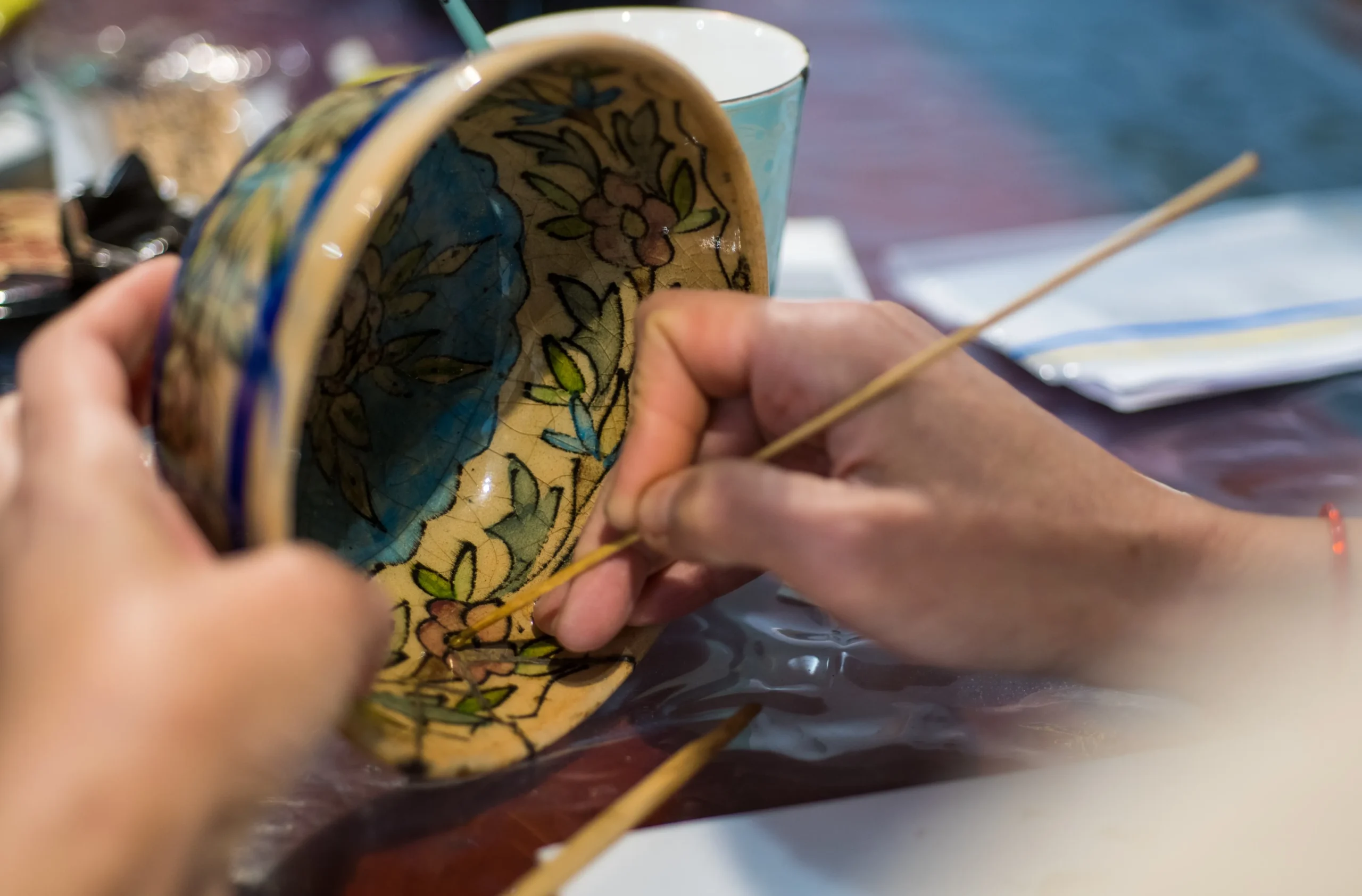
The process demands patience. Adhesion begins with ki-urushi (raw lacquer), then careful refinement layers such as suki-urushi (clear) and roiro (blackened) are applied, each curing for days or weeks in a humid environment. Artisans choose gold powders of different particle sizes to vary shine and line quality before the final polish.
Within chanoyu (the tea ceremony), a kintsugi bowl may become more valuable than it was unbroken. Its seams signal memory: a dropped bowl during a gathering, survival through an earthquake, or an owner’s devotion to careful restoration. Each golden line marks time and relationship that a flawless surface cannot show. Kintsugi overturns the reflex that “broken equals worthless” and proposes that honored damage adds depth, character, and beauty.
The Philosophy Behind the Gold: Wabi-Sabi and Mottainai
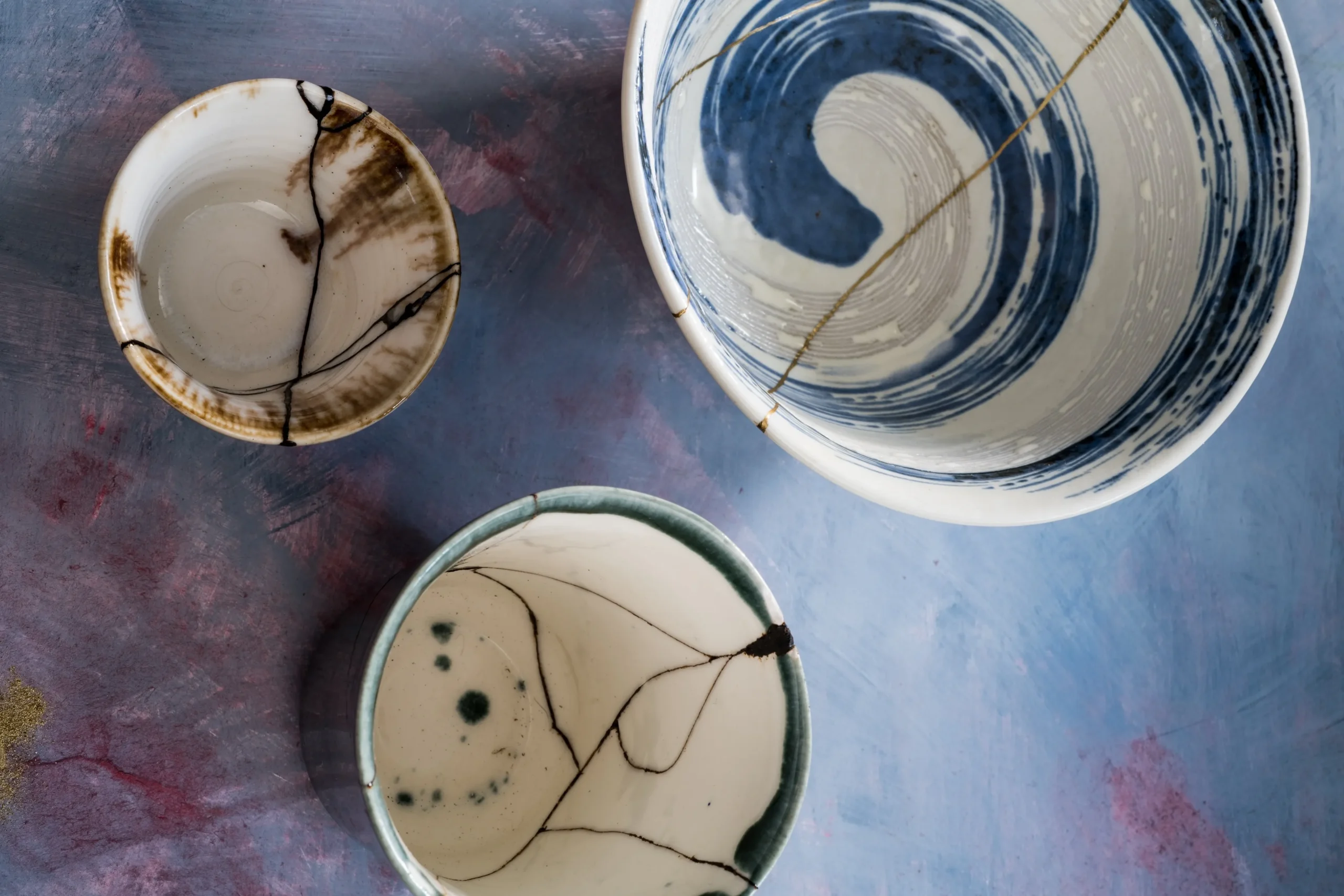
Kintsugi is the physical expression of wabi-sabi and mottainai. Understanding them shows why kintsugi resonates beyond craft.
Wabi-sabi, influenced by Zen, finds beauty in imperfection, impermanence, and incompleteness. “Wabi” evolved toward simple, austere beauty; “sabi” points to the grace of age and use. Kintsugi accepts the break as part of the object’s true story rather than trying to erase it. The lines are like wrinkles on a face or moss on an old lantern: signs of life that deserve regard.
Mottainai expresses regret over waste and respect for the inherent value of things. It grew in a resource-limited island context where reuse and repair were essential, especially during the Edo period (1603–1868). Under mottainai, kintsugi is an act of gratitude. Time, skill, and precious material invested in a damaged bowl acknowledge the clay, the potter, the kiln, and the moments shared with the object. The repair enriches the relationship and transforms a possession into a vessel of memory.
This stands against disposable habits common in modern consumer culture. Kintsugi suggests a broader calculation of value that includes history and meaning alongside cost and function.
From Tea Ceremony to Modern Life: The Evolution of Kintsugi
Kintsugi arose during the Muromachi period (between 1336 – 1573), when the tea ceremony blossomed. A familiar legend tells that shogun Ashikaga Yoshimasa sent a favorite Chinese bowl to China for repair; it returned stapled with crude metal. Japanese artisans pursued a more elegant solution, developing lacquer-and-gold mending. The tea ideal of ichi-go ichi-e (An idiom that means “Every encounter is a once-in-a-lifetime encounter”) aligned with a bowl whose visible scars record unrepeatable moments.
Today, kintsugi speaks to new challenges.
In therapy and psychology, kintsugi serves as a metaphor for healing and resilience. Clinicians help people reframe trauma or failure as integrated experiences that become sources of wisdom. Research on post-traumatic growth shows potential gains in appreciation of life, relationships, personal strength, new possibilities, and spiritual or philosophical depth.
In sustainability, kintsugi aligns with repair culture. As awareness grows about the costs of constant replacement, the Right to Repair movement argues for products that can be maintained and fixed. Designers and menders turn visible stitching and patches into features, not flaws.
Contemporary artists also experiment with kintsugi-inspired methods, merging the aesthetics of fracture and renewal in public art, textiles, and sculpture.
How to Apply Kintsugi Philosophy to Your Life
You do not need a broken bowl to put kintsugi into practice.
1) Recognize your golden seams.
Career setbacks, relationship endings, health challenges, and mistakes shape identity. The kintsugi view invites you to tell your story in a way that honors both the breaking and the mending, noting how difficulties led to growth.
2) Choose repair over replacement when you can.
Before discarding a worn item, consider repair. If you mend visibly, you keep history alive. The mottainai mindset turns you from passive consumer to active curator of your belongings.
3) Release perfectionism.
Wabi-sabi suggests that flawlessness is neither attainable nor especially interesting. Aim for excellence without demanding the impossible. When you or others fall short, respond with curiosity and learning. Imperfection can shape character.
4) Seek authentic encounters with the craft.
English-friendly workshops in Tokyo and Kyoto teach both technique and cultural context, and museums provide historical examples. Pair a class with a tea ceremony for a fuller view of the aesthetic.
Embracing the Beauty of Imperfection
Kintsugi is technique, aesthetic, philosophy, and practice. From its roots in tea culture to its relevance in therapy, sustainability, and art, it offers a clear idea: breaks and repairs do not diminish things or people. They can add history, character, and beauty.
The lesson is simple and brave. Perfection is neither possible nor required. Time adds value. Scars deserve acknowledgment, and sometimes celebration. In a fractured world, this old Japanese wisdom suggests that careful mending can make us more whole.
If you are traveling to Japan, consider a workshop to experience the process firsthand. If you are at home, begin by noticing the “breaks” in your life and asking how to treat them like golden seams. Either way, kintsugi provides a memorable way to understand Japanese culture and a practical guide for living with more care.