For many travelers, these art forms seem intimidating at first. They are often described as “difficult,” “slow,” or “only for experts.” In reality, you do not need background knowledge or language skills to enjoy them. What matters most is choosing the style that matches how you like to experience culture while traveling.
Noh theatre is a refined, minimalist art supported by samurai and nobles. It values stillness, spiritual depth, and quiet emotion. Kabuki theatre, on the other hand, grew out of Edo-period town life. It is colorful, dramatic, and designed to entertain large crowds. Both are recognized by UNESCO as Intangible Cultural Heritage, along with Bunraku, Japan’s classical puppet theatre. Yet the experience of watching them could not feel more different.
This guide explains the key differences in history, visual style, movement, stories, and audience experience, then helps you decide which one best matches your travel style, with Bunraku as a third option worth considering.
Origins: How Noh and Kabuki Grew from Different Worlds
Understanding where these theatre forms came from makes everything else easier to grasp.
Noh: A refined art shaped by warriors and nobles
Noh developed in the 14th century. It was refined by performers such as Kan’ami and his son Zeami, and gradually gained the support of samurai leaders and aristocrats.
Because of this background, Noh became a highly formal art. Performances followed strict rules, and the focus shifted toward elegance, restraint, and emotional depth. Rather than trying to impress through action, Noh aimed to express ideas like impermanence, memory, and inner suffering.
This is why Noh can feel quiet, slow, and almost meditative. The goal was never realism, but emotional truth. By reducing movement and decoration, Noh allows the audience to focus on feeling rather than story, creating a shared, quiet space between performer and viewer.
Kabuki: Popular theatre born in the city
Kabuki began around 1603, when a performer named Izumo no Okuni presented bold dances in Kyoto. These performances quickly gained attention for being unusual and exciting.
As Kabuki spread, it became deeply connected to city life in Edo, present-day Tokyo. Merchants and townspeople flocked to the theatre for drama, romance, humor, and spectacle. Kabuki embraced popularity and commercial success, always looking for new ways to keep audiences engaged.
In short, Kabuki was created to be seen and enjoyed, not quietly contemplated.
Bunraku: A third pillar worth knowing
Bunraku, or traditional puppet theatre, developed in 17th-century Osaka. It combines chanting, shamisen (a traditional Japanese three-stringed plucked instrument) music, and large, carefully crafted puppets.
Many famous Kabuki stories were first written for Bunraku, making it an important bridge between the two traditions. Today, Noh, Kabuki, and Bunraku are all recognized by UNESCO as living cultural heritage, not relics of the past.
Faces on Stage: Hiding Emotion vs Showing It Clearly
The clearest difference appears the moment the performers step on stage.
Noh: Emotion is hidden, not shown
Noh is famous for its wooden masks. These masks usually have calm, neutral expressions. At first glance, they may seem unreadable.
But the secret lies in movement. A slight tilt of the head or a change in lighting can make the same mask appear sad, peaceful, or tense. Instead of showing emotion directly, Noh invites the audience to sense it quietly by taking notice of the little details.
This approach is often described as the beauty of omission. Less is shown so more can be felt.
Kabuki: Emotion is amplified
Kabuki does the opposite. Emotions are made big and visible.
Some roles use dramatic makeup with bold lines painted across the face. Red often suggests strength or justice. Blue often signals danger or evil. Even from the back of the theatre, the audience can immediately understand a character’s nature.
Not every Kabuki play uses this makeup, but when it appears, it becomes one of the most memorable visual elements.
Bunraku: Puppets that feel alive
In Bunraku, large puppets are operated by a team of performers working together. Eyelids move, fingers tremble, and heads turn with surprising precision.
Many first-time viewers are shocked by how emotional these puppets feel. The careful coordination allows for expressions that can feel even more delicate than those of human actors.
Movement, Music, and Stage: Stillness or Spectacle
Watching Noh and Kabuki feels completely different, even before you understand the story.
Noh: A quiet, focused experience
A Noh stage is simple. There are no large sets or flashy effects. Movement is slow and controlled, often using sliding steps across the floor.
Music is minimal, using flute, drums, and chanting to support the atmosphere. Silence is just as important as sound.
Watching Noh can feel like watching time slow down. It rewards patience and attention.
Kabuki: Energy fills the space
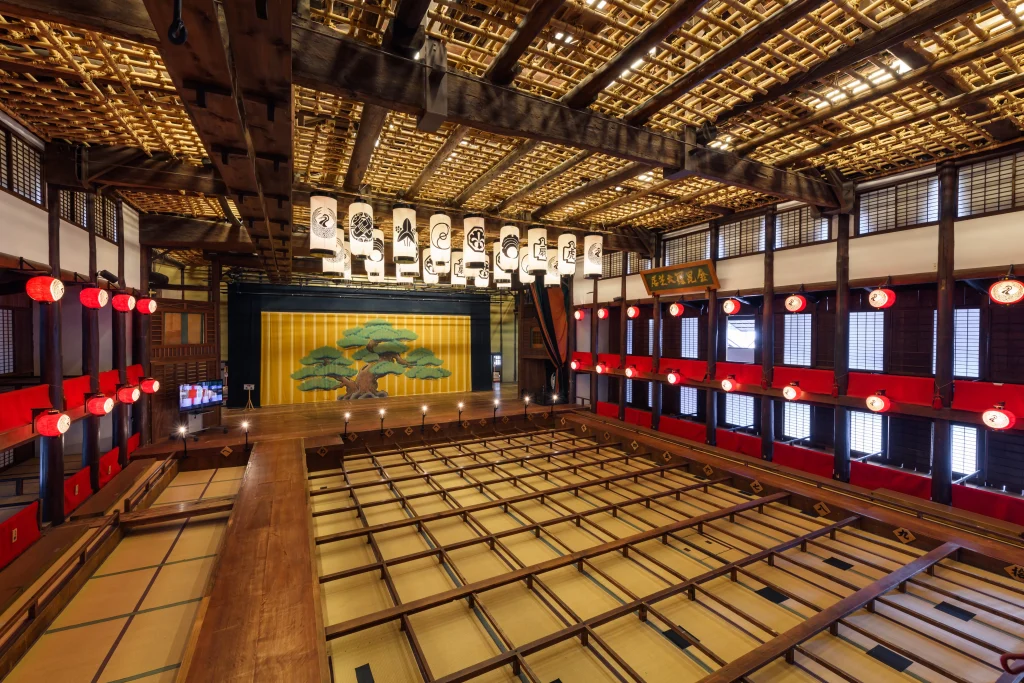
Kabuki is designed to be dynamic. Actors strike powerful poses at dramatic moments, holding them so the audience can absorb the emotion. Some entrances happen through walkways that cut through the audience, bringing performers very close to spectators.
Stages rotate, trapdoors open, and in some productions actors even appear to fly. Music and narration drive the rhythm and heighten emotions.
Kabuki aims to excite and entertain from beginning to end.
Bunraku: Voices and movement in harmony
In Bunraku, a single narrator voices all characters, supported by shamisen music. The puppets move in perfect timing with the voice and sound.
The audience sees everything. Nothing is hidden, and that transparency becomes part of the art.
Stories and Themes: Spirits and Silence vs Human Drama
The kinds of stories told also reflect the nature of each form.
Noh stories: Memory and the unseen world
Noh plays often fall into categories like gods, warriors, women, madness, and demons.
Many follow a dream-like structure. A traveler meets someone connected to a tragic past. As the play unfolds, that person may reveal themselves as a spirit tied to unresolved sorrow. Through music and dance, the past is remembered and gently released.
The focus is not action, but emotional weight.
Kabuki stories: Passion and conflict
Kabuki stories are more direct. Some focus on historical events involving loyalty and sacrifice. Others explore love affairs, family struggles, betrayal, and social pressure among ordinary people.
These stories are dramatic and emotional, and their themes feel familiar even today.
Bunraku: The source of many famous tales
Many classic Japanese stories, including tragic love tales and stories of loyalty, first appeared in Bunraku before moving to Kabuki.
This makes Bunraku an important link between the quiet world of Noh and the emotional intensity of Kabuki.
For First-Time Visitors: Which One Fits Your Travel Style?
If you are visiting Japan and want to see traditional theatre, choosing the right starting point matters.
Choose Kabuki if you value spectacle and clarity
Kabuki is often the easiest entry point. The visuals are strong, the emotions are clear, and you can enjoy the show even without understanding Japanese.
Many theatres offer short programs or single-act tickets, which makes Kabuki easy to fit into a busy travel schedule.
Choose Noh if you enjoy calm and depth
If you are drawn to quiet spaces, spiritual themes, and minimalist design, Noh may resonate with you.
Reading a short summary before the performance can greatly deepen the experience. Some theatres also offer subtitle screens to support non-Japanese speakers.
Consider Bunraku if you love stories and craftsmanship
If you are interested in narrative depth, music, and traditional craftsmanship, Bunraku is a strong option. It pairs especially well with travel in Osaka and the Kansai region.
Whichever you choose, many theatres now offer English subtitles, audio guides, or partial tickets that lower the barrier for first-time visitors.
Practical Snapshot: Time, Budget, and What to Expect
Here is a simple overview to reduce first-time anxiety.
Time commitment
Noh performances often last one to two hours.
Kabuki full programs can take half a day, but single acts often run about an hour.
Bunraku programs usually last three to four hours including breaks.
Language support
Major urban theatres increasingly offer English subtitles or audio guides, though availability depends on the performance.
Where to watch
Tokyo, Kyoto, and Osaka all have major theatres located along common travel routes.
Dress and manners
There is no formal dress code. Casual, clean clothing is fine. Photography during performances is not allowed, and arriving on time is important.
From One Night at the Theatre to a Deeper Cultural Journey
Noh, Kabuki, and Bunraku are not experiences meant to stand alone. They gain meaning when combined with temples, museums, historic streets, and local food.
A longer stay allows for a deeper route. Kabuki in Tokyo, Noh in Kyoto or Nara, and Bunraku in Osaka can form a quiet cultural thread running through your journey.
Planning this kind of experience can be difficult on your own, especially when schedules, locations, and travel time must line up. A Tailor-Made Tour with ENJYU JAPAN allows you to choose which performing art fits your interests and weave it naturally into your itinerary, together with nearby cultural sites.
Even for travelers who normally avoid theatres or performances, these experiences can become unexpected highlights. Sitting quietly among a Japanese audience, sharing reactions without words, creates a rare sense of connection. It is not about understanding everything, but about being present in the moment.