If you are drawn to Kyoto’s traditional dances but worry they may be difficult to understand, let us begin with a few clear details, so that curiosity can take the place of uncertainty.
Kitano Odori is the spring performance of Kamishichiken, Kyoto’s oldest geiko district. Geiko are professional female artists who perform dance and music, known elsewhere in Japan as geisha; maiko are apprentices. At Kamishichiken Kaburenjo Theatre, they present a public production combining dance drama, pure dance and a distinctive finale.
In the completed 2026 season, performances ran from 20 March to 2 April, with two shows daily and tickets from ¥6,000. The next season’s arrangements need to be matched to your travel dates. With your booking settled and a few points of attention in mind, you can give the stage an unhurried afternoon.
Kitano Odori at a Glance
Begin with the performance year, not simply the season. The previous production provides a useful reference for budgeting and timing, while the current announcement determines what you can book.
Dates, Venue and the Latest Booking Status
Information checked on 13 October 2026: the 2027 performance dates, programme, ticket prices and booking arrangements have not been verified for this guide. Follow the organiser’s website for the next season’s details.
| Detail | Completed 2026 season — reference only |
|---|---|
| Dates | 20 March–2 April 2026 |
| Daily performances | 14:00 and 16:30 |
| Running time | Approximately 90 minutes |
| Doors open | One hour before the performance |
| Venue | Kamishichiken Kaburenjo Theatre |
| Performance-only ticket | ¥6,000, including tax |
| Ticket with tea | ¥7,000, including tax |
| Seating | All seats reserved; positions assigned |
These figures describe an event that has ended. Use them to estimate the scale of the visit, then confirm your chosen date and ticket against the new announcement before committing to travel.
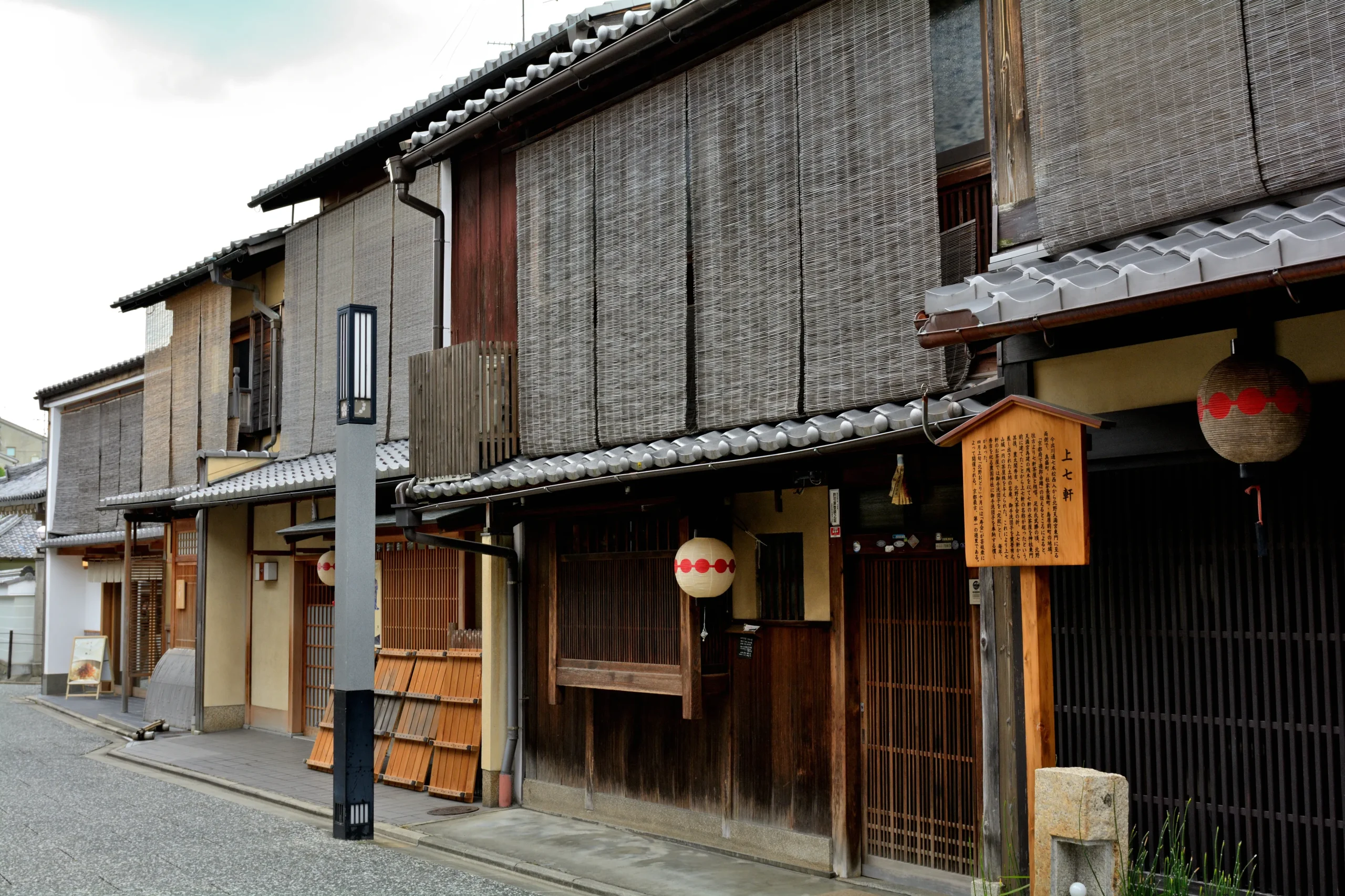
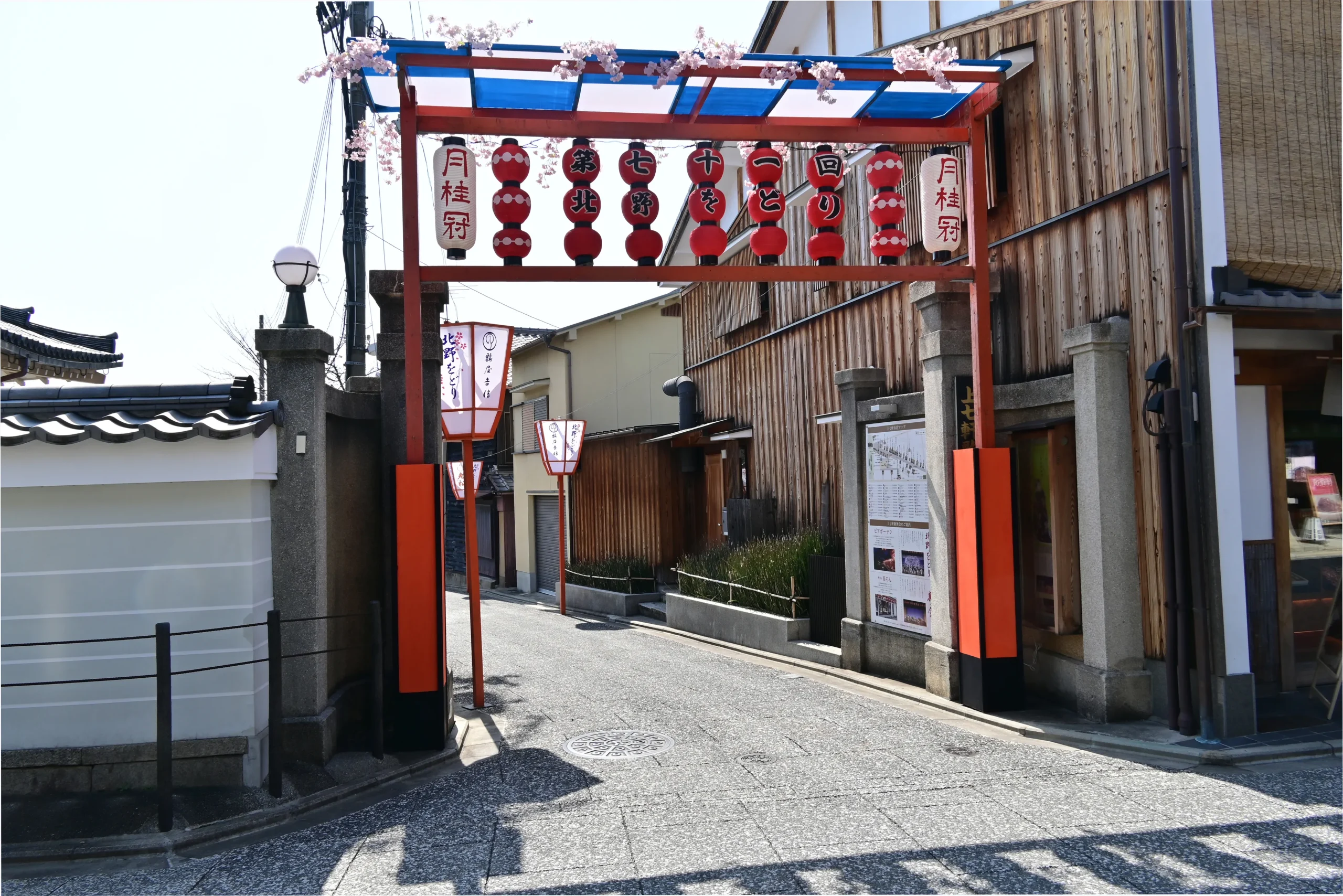
The theatre stands beside Kitano Tenmangu Shrine in north-western Kyoto, rather than in Gion. Save its Japanese name, 上七軒歌舞練場, alongside your booking. This distinguishes your destination from the city’s other dance theatres.
Is This the Experience You Are Looking For?
Choose Kitano Odori if you want to watch Kamishichiken’s artists in a substantial stage production. Conversation, games and posed photographs belong to separately arranged experiences. Our guide to geiko, maiko and geisha experiences explains those broader options.
Allow time beyond the approximately 90-minute show. In 2026, arriving when doors opened meant about two and a half hours until the performance ended, before departure. Ticket collection and tea are easier to enjoy when the afternoon is not scheduled tightly.
Three Things to Watch on the Kitano Odori Stage
The production moves through dance drama, pure dance and the closing Kamishichiken Yakyoku. These sections invite different ways of watching, giving you a framework even when the dialogue is unfamiliar.
Follow the Characters in the Dance Drama
The dance drama combines movement with spoken dialogue. The official tourism description highlights numerous lines and a briskly developing story, so a short synopsis is useful preparation. Look for the principal characters, setting and opening situation in the current programme.
Once the show begins, follow entrances, departures and changes in position. Notice who appears together, who responds, and how a new scene changes their relationships. These visible details give you something specific to follow when a passage moves beyond your Japanese.
You need not translate every sentence to remain interested. Return to the characters and the scene before you, using the synopsis as orientation rather than treating comprehension as a test.
Notice How Movement Meets Music
The pure-dance section shifts attention towards movement and sound. The production includes singing and shamisen music; a shamisen is a three-stringed Japanese instrument. Listen to a musical phrase, then notice how a gesture begins, holds or finishes around it.
Try watching a dancer’s hands for a short passage before looking at the entire group. When a folding fan is used, observe its changing position alongside the body. Timing, direction and shape offer concrete details to appreciate without naming every technique.
Kamishichiken follows the Hanayagi school, one tradition within Japanese dance. The cultural foundation’s explanation highlights broad movement across the stage and a strong sense of rhythm. Watching both individual dancers and the space between them gives that description a practical use.
Look for the Contrast in Kamishichiken Yakyoku
Kamishichiken Yakyoku gives the finale its recognisable identity. Official descriptions highlight geiko in matching black formal kimono bearing crests, alongside maiko in brightly coloured costumes. That contrast offers a clear visual focus as the performers gather.
Look first at one dancer, then at the composition across the stage. Notice how clothing and placement contribute to the larger picture. The tourism federation also describes a shower of cherry blossom at the conclusion, bringing the closing scene to a distinct finish.
The Shrine and District Behind the Performance
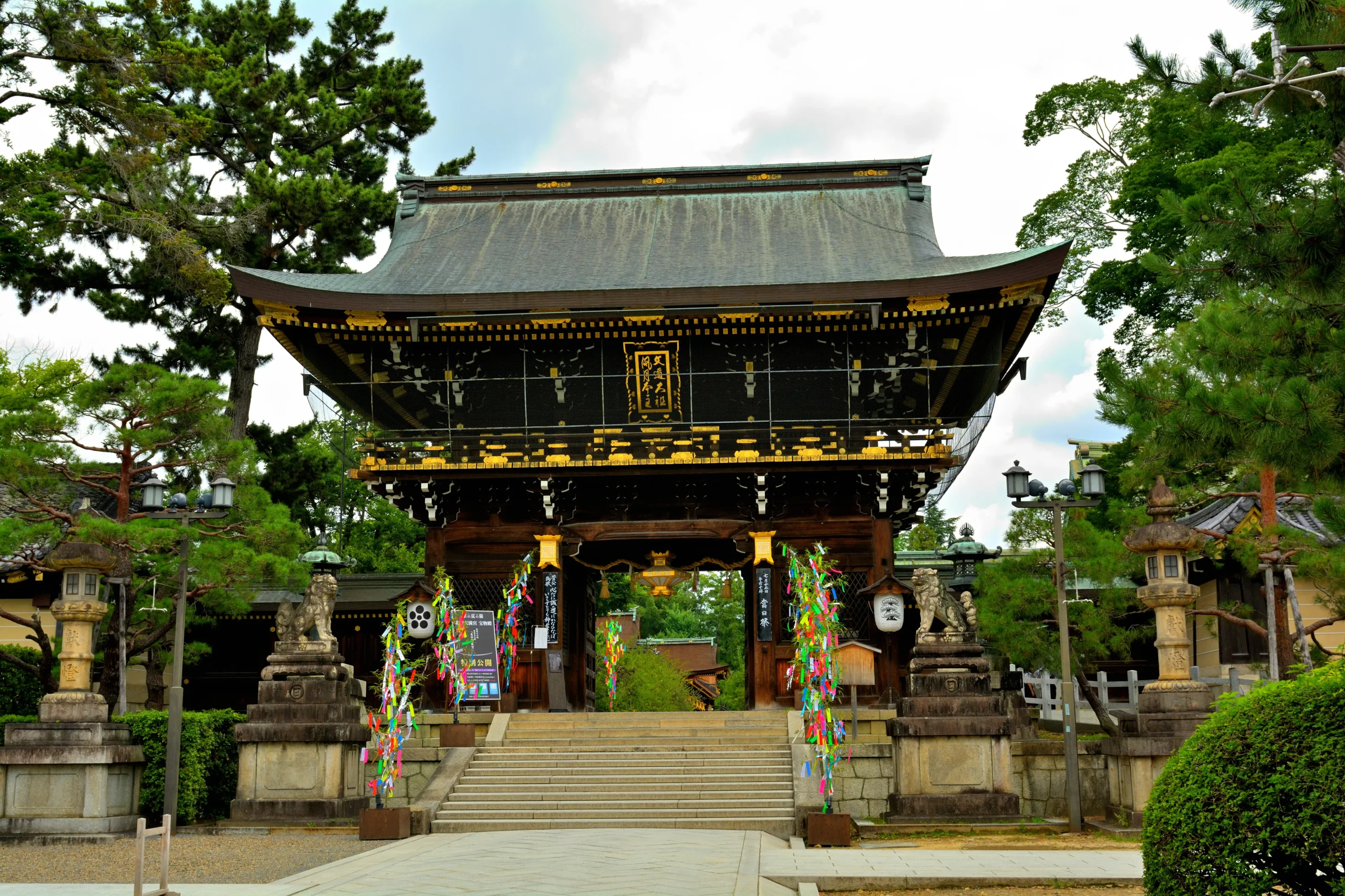
Kitano Odori’s history connects its theatre with the neighbouring shrine and the surrounding district. Understanding those relationships adds depth to your visit without requiring a long lesson in Kyoto’s past.
Kamishichiken Beside Kitano Tenmangu
Kamishichiken developed beside the eastern approach to Kitano Tenmangu Shrine. Its name refers to seven teahouses traditionally said to have been built using materials left from rebuilding the shrine. The story connects the neighbourhood’s origins with people visiting the sacred site.
The performing association also describes Kamishichiken’s relationship with Nishijin, Kyoto’s weaving district. This places the arts within a neighbourhood shaped by textile production as well as shrine visitors. For the craft itself, our guide to Nishijin weaving offers a separate introduction.
Why Kitano Odori Began in 1952
The first Kitano Odori was staged at Kamishichiken’s theatre in 1952 to commemorate Kitano Tenmangu’s Daimantosai celebrations. The anniversary honoured Sugawara no Michizane, the scholar and statesman enshrined there, rather than marking the shrine’s foundation.
Daimantosai marks 50-year milestones following Michizane’s death, while Hanmantosai marks the intervening 25-year anniversaries. The shrine identifies 2027 as a Hanmantosai year. Any associated ceremonies should be planned separately from your theatre booking: connected histories do not make them the same event.
A Local Tradition on a Public Stage
The artists performing here belong to Kamishichiken’s own tradition. Its public production gives visitors a way to appreciate that work without arranging private entertainment. The district’s long history provides the setting, while the dancers and musicians give the afternoon its present-day substance.
This is the useful connection to carry into the auditorium. The shrine, neighbouring streets and theatre are not unrelated stops on a sightseeing list; they help explain why this particular stage belongs here.
How to Book Tickets and Decide on Tea
Once the dates fit your journey, choose the ticket and purchase route together. Tea, seat allocation and cancellation terms can affect the rest of your day, so resolve the essential points before paying.
Performance Only or a Ticket with Tea?
Tea is an addition to the theatre visit, rather than a requirement for appreciating the dance. In 2026, including it increased the ticket price by ¥1,000. Choose according to your available time and personal preferences.
| Ticket choice | When it may suit you |
|---|---|
| Performance only | You prefer a shorter visit or greater flexibility around food and drink |
| Ticket with tea | You would enjoy the pre-performance tea occasion and can arrive earlier |
If seating or dietary requirements affect your choice, ask about them before purchasing. Treat the tea option as the service described in the current programme, rather than expecting a practical lesson or an extended conversation with a performer.
Booking from Overseas
Begin with the current season’s ticket link on the organiser’s website. Confirm the event name, year, date, time, ticket type and number of guests before entering payment details. This keeps the reservation aligned with your itinerary.
Read the seller’s instructions for:
- Accepted cards and telephone-number formats.
- Account registration or text-message verification.
- Whether confirmation must be printed.
- Whether you receive an admission ticket or an exchange voucher.
- Collection deadlines and any payment due at the venue.
If you cannot complete the process, ask the seller for instructions or your accommodation whether it can assist. The organiser issued an accommodation-provider booking form for 2026. Establish whether your accommodation offers such assistance before relying on it.
Check Seats, Age Rules and Cancellation Before Paying
Read the terms attached to the route you use. The 2026 accommodation form assigned seats without allowing guests to select their positions and prohibited changes or cancellation after booking. Your current seller’s conditions should guide your decision.
For wheelchair seating, explain whether you will remain in your chair or can transfer, and ask about a companion’s seat. For children, provide their age on the show date and school status. The 2026 Japanese form excluded preschool children, while its English wording said “over 6”; confirm eligibility rather than reducing this to a simple age rule.
Arrival, Tea and Theatre Etiquette
A prepared arrival is especially helpful when you cannot easily read signs or discuss a reservation in Japanese. Keep the essential details together, then follow the instructions issued for your ticket.
Prepare Your Arrival
Keep the venue details and your reservation information together on your phone for an easier arrival. Save the following details, and pin the theatre itself on your map rather than only the nearby shrine.
| Detail | What to save |
|---|---|
| Theatre name in Japanese | 上七軒歌舞練場 |
| Full Japanese address | 京都市上京区今出川通七本松西入真盛町742 |
| Booking reference | Your reservation number or confirmation |
| Performance time | The date and start time shown on your booking |
| Ticket type | Performance only or a ticket with tea |
Allow Time for Tea Before the Performance
The 2026 tea-service window ran from 60 minutes to 10 minutes before curtain time. For the 14:00 show, that meant 13:00–13:50. This was an attendance window, not a one-hour tea session.
The same event listing stated that visitors missing tea received a manju, a small filled bun, to take away instead. For your season, work backwards from the published deadline and allow time for ticket collection first. A realistic journey is the best preparation for an unhurried start.
Language, Mobility and Respectful Viewing
Arrange important enquiries before arriving. The 2026 accommodation form stated that foreign-language staff were unavailable at the venue. Translated programme notes and English booking are separate services, so establish which support is available for your visit.
For access questions, ask about steps, toilets, auditorium seating and the tea area together. The published contact is +81 75 461 0148, weekdays 10:00–17:00 Japan time. Someone assisting with your reservation may also help communicate a detailed enquiry.
Follow the theatre’s current rules on photography, recording, food and entry during the show. Silence your phone and keep passageways clear. Outside, respect private entrances and allow performers travelling to work to continue without being followed or stopped.
Getting There and Planning for Changing Conditions
Make the booked show the fixed point of your day, with sightseeing around it kept flexible. The following routes let you adjust for walking needs, ordinary rain or a change in ticket availability.
Choose a Route That Fits Your Walking Needs
The organiser’s 2026 access guidance provides these starting points. Bus times are approximate journey estimates; add waiting time and a margin for traffic.
| Starting point | Published bus route and approximate journey | Final approach |
|---|---|---|
| Kyoto Station | City Bus 50 to Kitano Tenmangu-mae; 30 minutes | Approximately three minutes’ walk |
| Nijo Station | City Bus 55 to Kitano Tenmangu-mae; 11 minutes | Approximately three minutes’ walk |
| Imadegawa subway station | Westbound City Bus 203 to Kitano Tenmangu-mae; eight minutes | Approximately three minutes’ walk |
| Randen Kitano-Hakubaicho Station | Walk east along Imadegawa-dori | Approximately ten minutes in total |
Match the route to the current timetable before travelling. If reducing walking is important, a taxi towards the theatre area may be useful, while allowing for the final approach. Avoid making a close connection depend on the shortest published estimate.
Plan A — The Shrine First, Then the Show
In suitable weather, visit Kitano Tenmangu before the performance, take a meal or rest, then make a short walk through Kamishichiken. Finish at the theatre with time for collection and tea if booked. This connects the district’s history without filling every spare minute.
The shrine currently opens from 07:00 to 17:00, while the Sankomon gate before the main sanctuary closes 30 minutes earlier. Visiting first avoids fitting worship around the show’s finishing time. Special-event hours should be matched to your date.
Plan B — Keep the Performance and Reduce Outdoor Travel
For ordinary rain, simplify the surrounding plans: eat or rest at your accommodation, travel to the theatre, attend the show and return afterwards. Some outdoor movement remains even with a taxi, so suitable rainwear is still useful.
An optional indoor addition is Nishijin Textile Center, with free admission. Its published hours are 10:00–16:00 from October to March and 10:00–17:00 from April to September. It closes on Mondays, or Tuesday when Monday is a public holiday. Add it only when the transfers leave a comfortable arrival margin.
Plan C — Another Performance When Dates or Seats Do Not Fit
If your preferred show is unavailable, look for another date or time through the authorised sales routes. If your stay is fixed, compare the newly announced schedules of the other districts. As a previous-season reference, Miyako Odori ran throughout April 2026, making it an option for visitors arriving after Kitano Odori ended.
For a different format, Gion Corner introduces several traditional arts in approximately 50 minutes. Regular evening shows start at 18:00 and 19:00; winter schedules and closure dates differ. Premium seats include a tablet with explanations and translations, so review that option if language support matters to you.
Plan this alternative around Gion, with a meal or rest nearby. It is a different cultural introduction, not the same production in another theatre. During severe weather, prioritise transport and event notices rather than substituting another difficult journey.
Kitano Odori FAQs
These short answers bring together the final choices to settle before booking.
Can I Attend Without an Introduction?
Yes. Kitano Odori is a public ticketed show. Private entertainment at an ochaya, a teahouse where geiko entertain guests, involves different arrangements.
Do I Need to Understand Japanese?
Japanese helps with dialogue, while movement, music and the finale offer other points of interest. A synopsis adds context; establish whether translated material is available.
Should I Choose a Ticket with Tea?
Choose it if the additional occasion appeals and you can arrive before its deadline. Performance-only admission is simpler when timing, seating or dietary requirements take priority.
Can Children Attend?
Confirm the current condition before paying. The 2026 Japanese form excluded preschool children, while the English wording said “over 6”. Give the organiser your child’s age and school status.
Make Time for Kamishichiken’s Spring Stage
Kitano Odori offers a focused introduction to Kamishichiken: its artists, its dance tradition and its relationship with the neighbouring shrine. A few points of understanding are enough to begin looking more closely.
Confirm the season, select your ticket and leave space around the show. A shrine visit, a short walk and a comfortable arrival can make a satisfying afternoon without an elaborate itinerary. Once those details are settled, the stage deserves the time you have set aside.
Set aside the afternoon with care, then leave Kyoto a little freedom to surprise you.
References
- Kamishichiken Kabukai – 74th Kitano Odori Accommodation Booking Form: 2026 Tickets, Seat Allocation and Visitor Conditions
- Kyoto City Tourism Association – The 74th Kitano Odori: 2026 Dates, Prices, Tea-Service Times and Contact Details
- Kyoto Prefecture Tourism Federation – Kitano Odori: Dance Drama, Pure Dance and the Kamishichiken Yakyoku Finale
- Kitano Tenmangu – Mantosai History: Kitano Odori’s 1952 Origins and the 2027 Hanmantosai
- Kitano Tenmangu – Visiting Hours and Access: Shrine Opening Times and Public Transport Routes
- Nishijin Textile Industry Association – Nishijin Textile Center: Exhibitions, Visitor Activities and Opening Information
- Kyoto Traditional Musical Art Foundation – Gion Corner: Performance Times, Ticket Options and Reservations