Japan is full of gorgeous souvenirs, but few are as useful as a good kitchen knife. A well-made blade is something you notice immediately: it glides instead of crushing, feels steady in your hand, and makes simple cooking feel strangely satisfying.
This guide shows how sword-era techniques connect to modern blades, which knife towns to visit, and how to choose, care for, and bring a knife home safely.
How Sword Culture Connects to Kitchen Knives
Japanese knife-making did not magically appear out of nowhere. Many of the core techniques overlap with sword-era production: forging and shaping the steel, heat treatment to harden it, and careful polishing and finishing.
In the Meiji period, the 1876 Haitōrei proclamation restricted sword wearing, which changed how blade culture fit into daily life. Craft regions adapted in different ways over time, but what stayed consistent are the skills in steel, heat, and finishing. They shifted into tools people actually use every day.
And so, hundreds of years of careful craftsmanship also shaped kitchen knives used in daily cooking. That is one reason Japanese knives are not just souvenirs. They are part of living culture.
Japan’s Big Three Knife Towns: Sakai, Seki, and Echizen
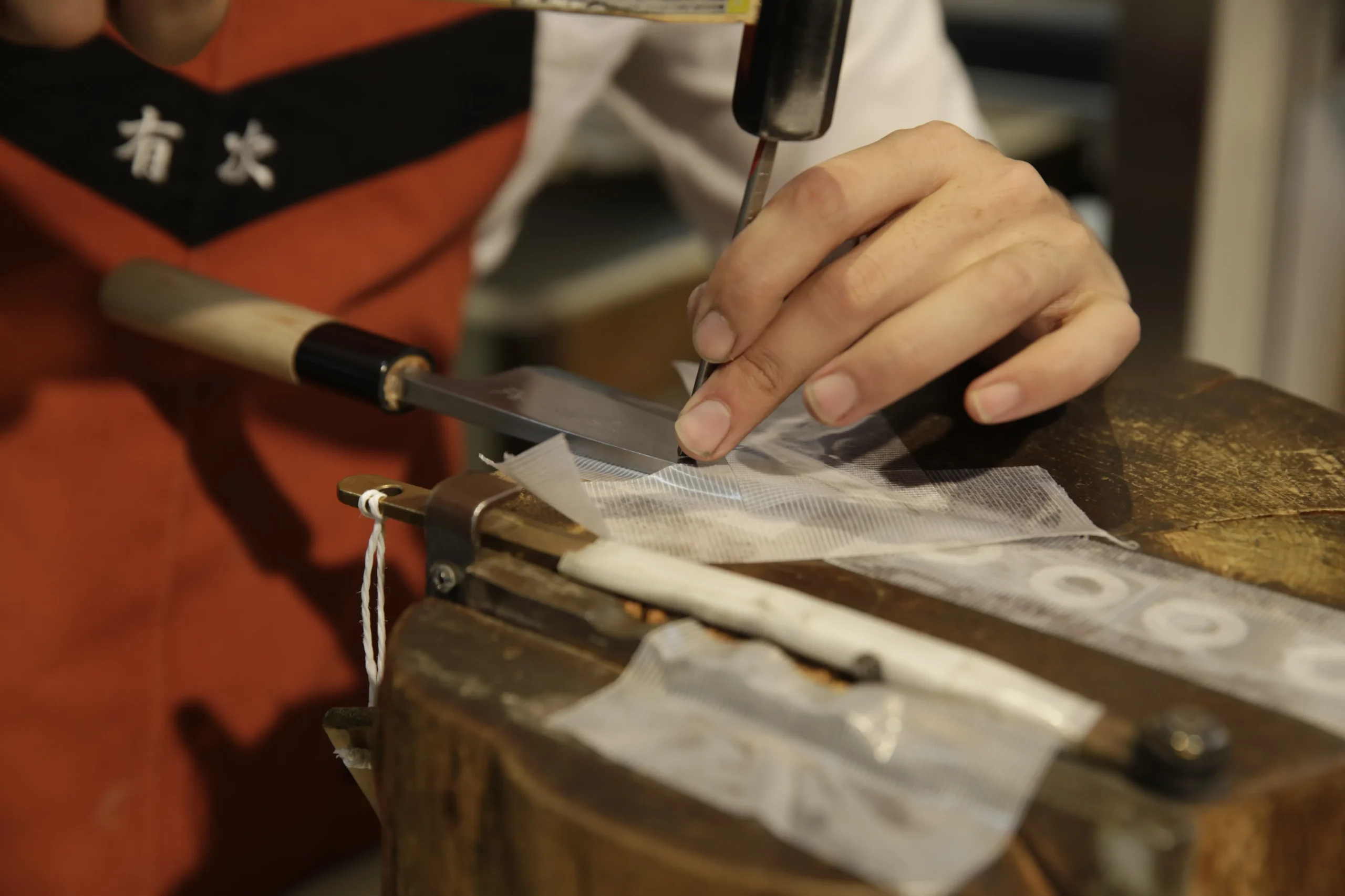
Japan has many knife-making regions, but for travelers, three areas stand out because they are accessible, well-known, and easier to experience through museums, cooperative facilities, and local events.
Sakai (Osaka): Trade, Specialization, and Professional Knives
Sakai is one of the most famous knife-making towns in Japan, especially for kitchen knives used by professional chefs. Historically, Sakai was a port city with strong trade networks, which helped its crafts spread.
One of Sakai’s unique features is specialization. In traditional production, different craftspeople often focus on different steps: forging, sharpening, handle making, and finishing. That division of labor helped Sakai become known for precise, high-quality blades.
If you visit, the Sakai Traditional Crafts Museum is a good place to start. It gives context, shows tools and history, and helps you understand why Sakai knives are so respected.
Who Sakai is best for: Travelers who want a clear introduction to knife culture, enjoy museums, and want to connect the craft to everyday cooking.
Seki (Gifu): Swordsmith Roots and a Blade Festival
Seki is one of Japan’s most famous “city of blades”. Local histories often connect Seki’s early growth to swordsmith lineages, including a smith often described as Motoshige. Today, the city still leans into that identity, and you can visit museums that focus on swordsmithing tradition and the broader blade heritage.
But the real highlight is the annual Seki Knife Festival, which turns the town into a celebration of blades, tools, and craft identity. It’s not only a market. It’s a whole-town event with demonstrations and activities tied to Seki’s craft identity. It’s traditionally held on the Saturday and Sunday before Sports Day in October, with venues spread across town; in 2026, the festival runs October 10 to 11. Dates can shift slightly year to year, so check the official festival listing before you plan your trip.
If you like your travel with a bit more movement and atmosphere, Seki can be an exciting choice.
Who Seki is best for:Travelers who like festivals, want to shop, and enjoy craft culture as a lively community event.
Echizen (Fukui): An Open-Factory Knife Village
Echizen is another famous blade region, and for visitors, the most accessible experience is Takefu Knife Village. This is a cooperative-style area where multiple makers work in close proximity, and where visitors can often see craft work happening.
It feels more like stepping into a working craft space than a traditional museum. That makes it especially interesting if you want to see the craft as a living workplace.
Who Echizen is best for: Travelers who want an “open-factory” feeling, enjoy seeing makers at work, and want to experience a cooperative craft environment.
Can Travelers do a Knife-Making Workshop in Japan?
Yes, but what you can do depends on the workshop, the time you have, and what “knife-making” means in that setting.
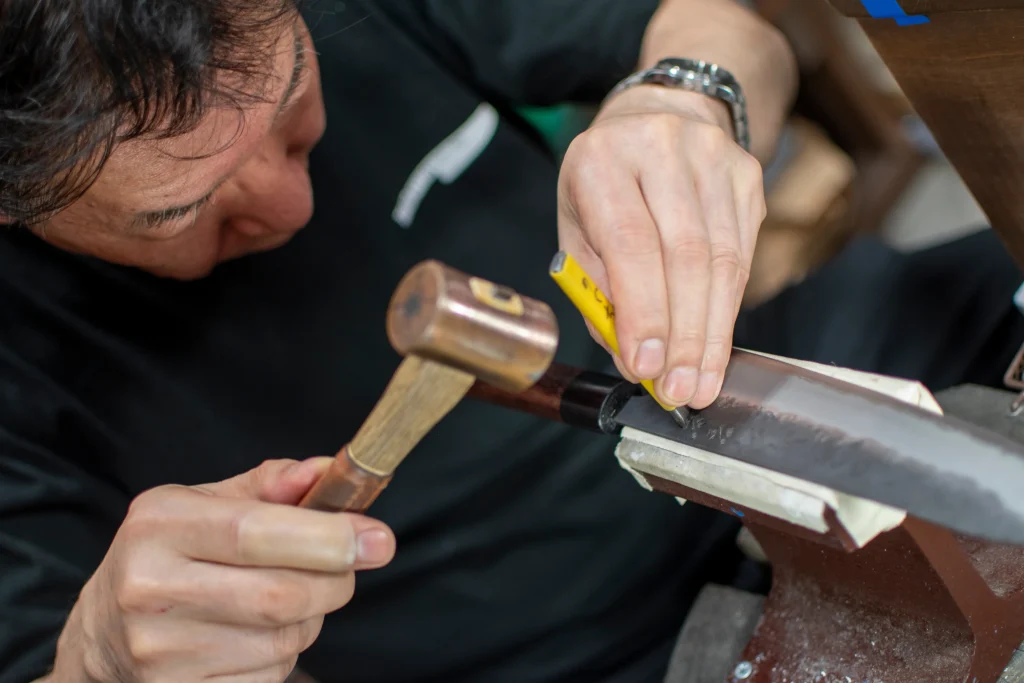
In many places, true forging (heating steel, hammering, heat-treating) is limited for short-term visitors, because it requires specialized equipment, safety controls, and time. Traveler-friendly experiences are more commonly:
- Handle-making / assembly (fit a handle, pin it, finish it)
- Sharpening sessions (learn whetstone basics and edge maintenance)
- Polishing and finishing (depending on the facility)
- Observation-focused visits where you watch multiple craftspeople work up close
If you want a hands-on experience, look for pages that clearly mention:
- The length of the session
- What you actually do (forge vs assemble vs sharpen)
- Language support
- Whether you take the knife home or shipping is recommended
Planning tip: If your goal is to learn, weekdays are often easier to book and calmer. If your goal is to feel the culture (and shop), festival weekends can be worth the crowds.
Named Workshops You Can Actually Book
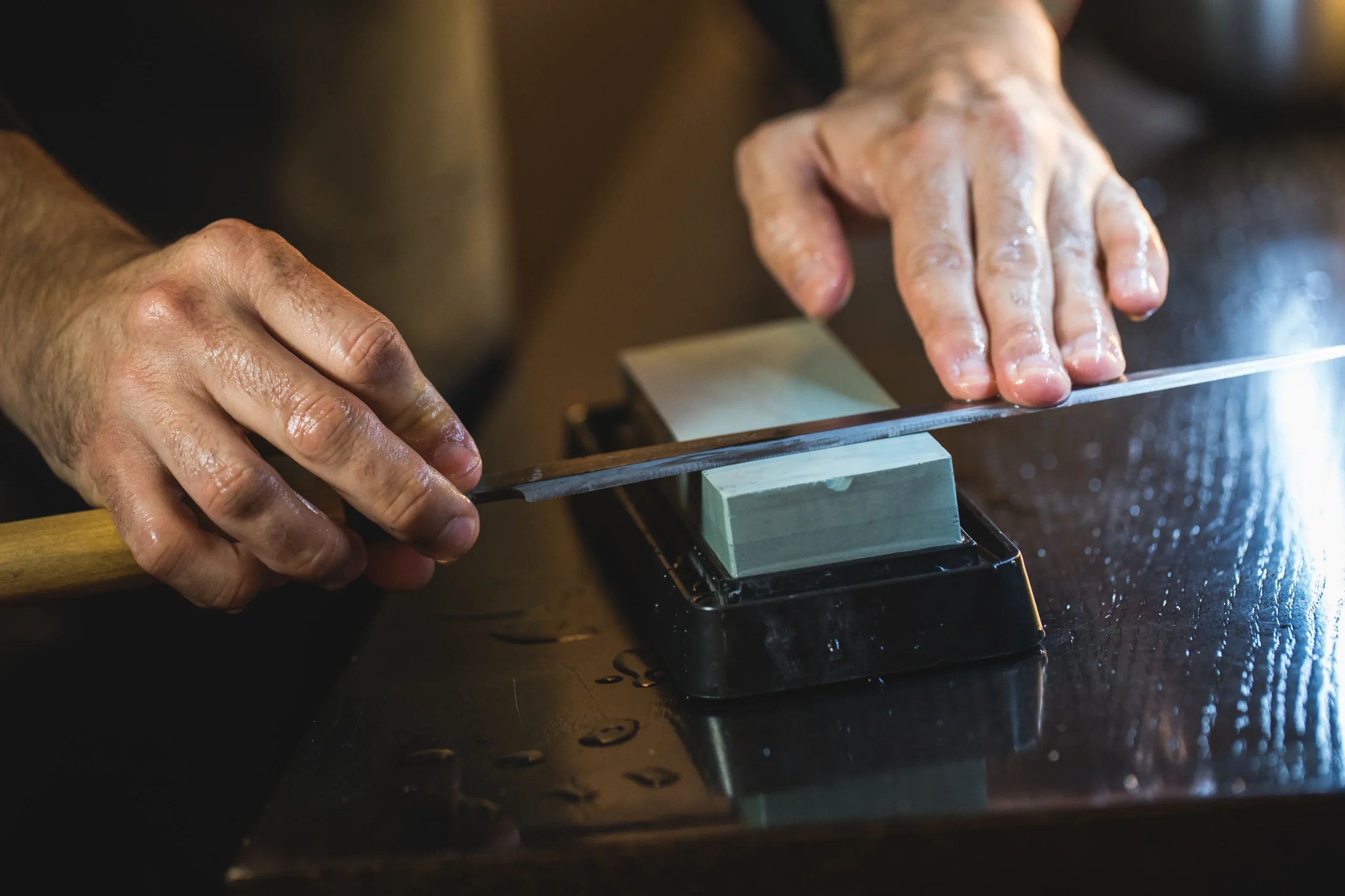
Knowing what to check for on a booking page is useful, but nothing beats seeing what’s actually on offer. Here are real, bookable experiences in each region, with the details that actually decide whether a workshop fits your trip.
Wada Shoten (Sakai)
Wada Shoten is a family-run cutlery shop two minutes on foot from the Sakai Traditional Crafts Museum, run by craftspeople with decades of hands-on experience in handle-fitting and sharpening. The experience is not forging from raw steel. Instead, you compare the sharpness of a genuine Sakai knife against an ordinary one, sharpen it yourself on a whetstone, then fit and pin your own handle under a craftsman’s guidance. Final adjustments are made for you before you leave.
Sessions run in Japanese or English, and English sessions include Wada Shoten’s own interpreter. Other languages need a separate private booking that you arrange yourselves.
The experience takes 1.5 to 2 hours and covers a real Santoku, Petty, Deba, or sashimi knife that you take home the same day. Kanji engraving is available if you let them know in advance. Participants must be 11 or older, and anyone aged 11 to 17 must come with a guardian. The shop is closed on Sundays, the third Tuesday of the month, and over New Year’s.
G.SAKAI Knife Museum and Factory (Seki)
In Seki, you can combine a museum visit with genuine hands-on forging. It takes you through G.SAKAI’s knife museum and factory before a custom knife-making session, with a choice of four knife types. Sessions run in the morning or afternoon, and your name or a pattern can be engraved into the finished blade.
Participants must be 12 or older, and this tour goes further into real forging than a sharpening and handle-fitting session. It suits travelers who want to shape steel themselves rather than finish a blade someone else forged.
Takefu Knife Village (Echizen)
For travelers who want the most complete version of “making a knife,” Takefu Knife Village’s Santoku Knife Course is the most thorough option among the three big knife towns. It is listed on the village’s own booking page for overseas visitors.
The course starts at 9:30 and lasts about six hours. A working craftsman guides you through nearly the entire process: heating steel in the forge, hammering it into shape on a belt hammer, quenching and heat-treating the blade, sharpening it, engraving your name, and fitting a handle.
A translator is included, and participants must be 18 or older. If a full day of forging doesn’t fit your schedule, the village also runs two shorter options. The Factory Tour and Forging Workshop takes 1 to 2 hours, is guided in English, and includes a translator. The standalone Sharpening Course also takes 1 to 2 hours and covers either a double-bevel or single-bevel knife. Both are easier to fit into a short stop in Fukui.
Kanetaka Hamono (Kyoto)
If your route follows the Golden Route and a detour to Sakai, Seki, or Echizen does not fit your schedule, Kanetaka Hamono offers a forging experience inside Kyoto itself. The workshop is behind its shopfront near Oike, in the city center.
The smithy moved to its current location in 1770 and is now run by the seventh generation. The session lasts about 90 minutes. You heat a steel blank in the forge, hammer it into shape yourself, and grind an edge on it. English-guided sessions are available.
One detail catches people off guard: you do not take the knife home that day. The craftsman finishes the hardening, tempering, and final sharpening afterward and ships the knife to you, which commonly takes one to two months. Handle selection, engraving, and a hands-on sharpening lesson are available as optional add-ons.
Quick comparison
Wada Shoten is the easiest to combine with a short museum stop. It needs no forging skill, and you leave with your knife the same day. G.SAKAI’s package goes deeper into real forging without taking a full day. Takefu Knife Village’s six-hour course covers the most of the process, and its 1-to-2-hour factory tour is a shorter way to try the craft. Kanetaka Hamono is the only one of the four that doesn’t require leaving Kyoto, and it is the only one where your knife arrives by mail instead of going home with you that day.
The Core Knife Types
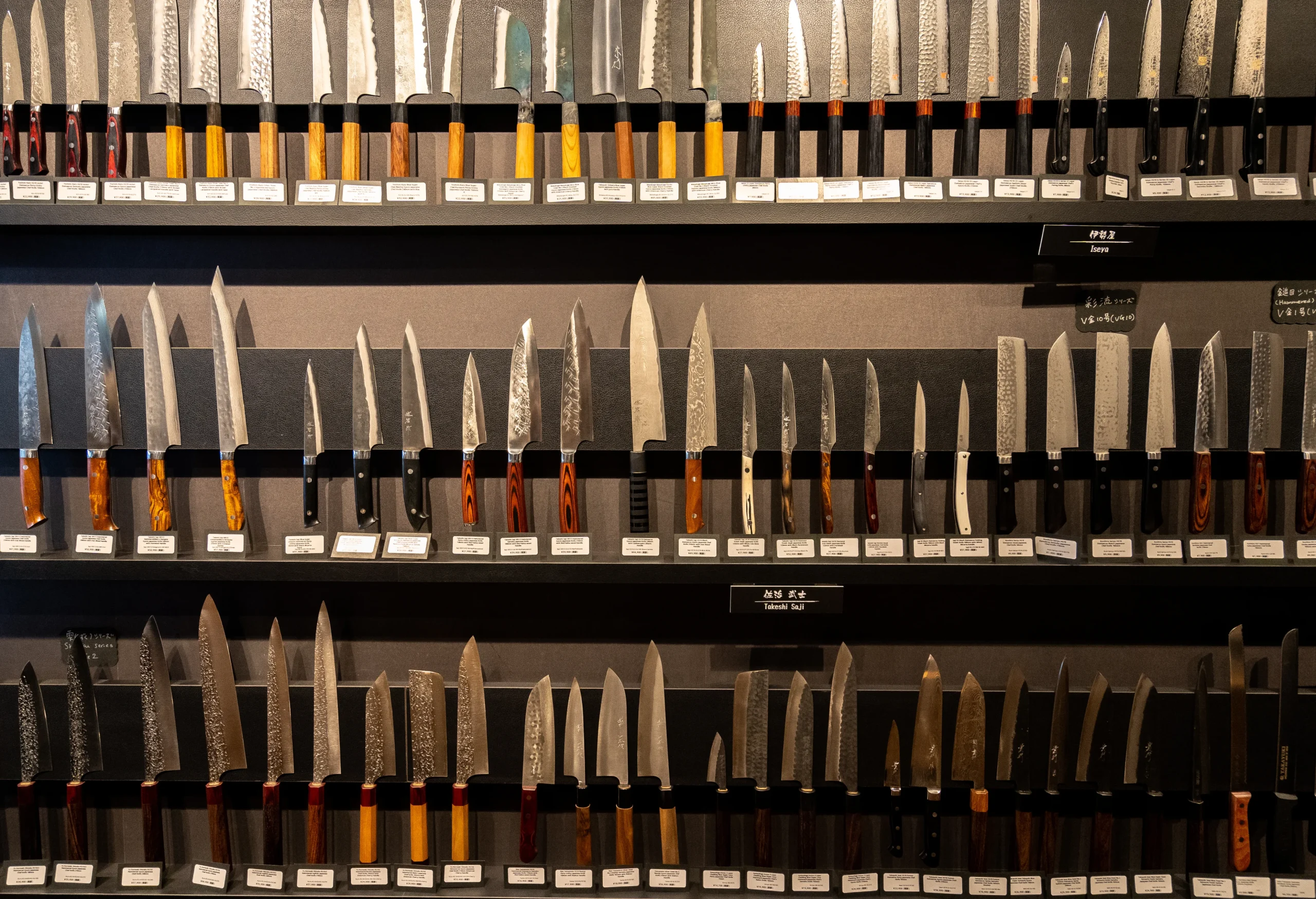
If you walk into a knife shop in Japan, you might hear a lot of specific terms. Here are the ones travelers often encounter, explained in simple ways.
- Santoku: A popular home knife that literally means “three virtues,” commonly interpreted as meat, fish, and vegetables. It is usually shorter and feels approachable.
- Gyuto: Often compared to a Western chef’s knife. It is versatile and good for many tasks, from meat to vegetables.
- Deba: A heavier knife used for fish and sometimes poultry. It is made for breaking down fish and handling harder work.
- Yanagiba: Long, thin, and used for slicing sashimi. Often associated with sushi chefs.
- Nakiri: A vegetable knife with a straight edge. It is excellent for chopping vegetables and makes clean cuts.
Many traditional Japanese knives use a single-bevel edge for specific tasks, while many modern home-friendly options are double-bevel and easier to maintain. If you are buying your first Japanese knife, a double-bevel gyuto or santoku is usually the easiest entry point.
Why “Decorative Cutting” gets easier with the right blade
If you have ever watched Japanese chefs cut ingredients into neat shapes or paper-thin slices, it can look like magic. In reality, skill matters most. But the tool also changes the learning curve.
A sharp, well-balanced knife helps you cut cleanly with less pressure. That makes it easier to practice techniques like katsuramuki (thin peeling), clean sashimi slices, or fine shredded cabbage.
Good knives do not do the work for you, but they reduce friction. That is why many people feel the difference immediately when they try a well-made blade.
Where to Buy: Knife Shops Worth Seeking Out
Not every traveler has time for a knife town or a workshop, and that is fine. Some of the best places to bring home a genuine Japanese knife are shops you can fold into a normal sightseeing day.
Kappabashi Kitchenware Town (Tokyo)
Kappabashi, Tokyo’s kitchenware district a five-minute walk from Tawaramachi Station on the Ginza Line, packs roughly 160 shops along its main road and side streets, selling everything from professional-grade stoves and lacquerware to high-quality Japanese knives, with most stores open to browsing by the general public.
It sits within walking distance of Asakusa’s Senso-ji and Ueno Park, so it slots easily into a day built around either. Tsukiji Outer Market, a short trip away and better known for food, is also worth a look for cookware and knife shops if your itinerary already has you there for breakfast or a market stroll.
Aritsugu (Kyoto)
Aritsugu’s main shop sits on Nishikikoji-dori, the street running through Nishiki Market, an eight-minute walk from Kyoto Kawaramachi Station. The company traces back to 1560, when its founder, Fujiwara Aritsugu, opened as a swordsmith and was later granted the right to supply the Kyoto Imperial Palace, a roughly 450-year history it still trades on today. As trade shifted from swords to everyday tools, Aritsugu moved into small blades and, eventually, the kitchen knives and cookware it is known for now, alongside sharpening and repair for the pieces it sells.
It’s open 10:00 to 17:00 (new sales are taken until 16:30) and closed on Wednesdays, over New Year (January 1 to 4), and for annual inventory on January 31, so it’s worth checking the date before you build it into a Kyoto day.
Sakai Ichimonji Mitsuhide (Osaka)
In Osaka, the Doguyasuji shopping street near Namba Station is lined with restaurant-supply shops, and Sakai Ichimonji Mitsuhide, which has traded there for roughly 70 years, is its best-known knife specialist, carrying on Sakai’s blade-making tradition across Japanese, Western, and household-style knives as well as whetstones. Any knife bought in-store can be engraved with a name free of charge, and the shop also takes in older or damaged knives, including ones inherited from family, for professional resharpening. It maintains an English-language version of its site, a reasonable way to browse the range or plan a visit before you arrive.
A few habits make any of these stops smoother: bring cash as a backup even where cards are accepted, ask directly about engraving or resharpening since exactly what’s offered varies shop to shop, and if a shop offers to ship your knife home, weigh that against the customs and import rules covered below before you decide.
A Fourth Region Worth Knowing: Sanjo-Tsubame (Niigata)
If Sakai, Seki, and Echizen already feel like the well-trodden path, Sanjo-Tsubame in Niigata is the region locals and serious cooking enthusiasts often mention next. Sanjo grew as a metalworking town from the Edo period onward, first making nails and farm tools before its blacksmiths moved into knives, and the area’s forges still supply many professional kitchens across Japan without the tourist crowds of the bigger three towns.
For visitors, Sanjo Kaji Dojo is the place to go, though it’s worth knowing there are a few different tiers of experience under one roof. Because so many international visitors were asking for something more in-depth, the dojo now runs a Trial Knife Making Experience aimed specifically at overseas guests: a morning (9:00 AM) or afternoon (1:00 PM) session lasting roughly two to three hours, booked in advance through an online form, on a limited, trial basis.
If you would rather try something more casual without booking ahead, the dojo’s walk-in Regular Workshops run daily (except closed days) from 9:00 to 11:00 AM and 1:00 to 3:30 PM for groups of three or fewer, no reservation needed: hammering a nail into your own letter-opener, sharpening a knife you bring from home, or forging a traditional Japanese nail by hand.
The deepest option, a full Santoku Knife Making Workshop that takes you from spring-hammering through quenching, tempering, and hand-sharpening a 150mm kitchen knife you take home, is run as a scheduled, Japanese-language-only course a few times a year for a fixed group size, so it needs to be booked well ahead and won’t suit every traveler’s dates or language needs.
What makes Sanjo-Tsubame worth the detour is not just the lower crowds. The smiths here are usually making tools for professional kitchens rather than for tourists, so a visit feels less like a staged demonstration and more like watching a working trade continue as it always has. For travelers who want a knife that carries a real story, not just a name on a certificate, that difference is often what stays with them long after the trip ends.
Choosing, Caring for, and Bringing a Knife Home Safely
If you plan to buy a knife in Japan, here are the main things to keep in mind.
Choosing your First Knife
If you are unsure, start with something versatile. A gyuto or santoku is usually the safest choice for most home kitchens.
Think about:
- blade length (shorter is easier to control)
- handle style (Western-style vs Japanese-style)
- maintenance (stainless is easier than carbon steel)
- sharpening habits (will you use whetstones or professional sharpening?)
Basic Care
Japanese knives tend to be harder and sharper than many mass-market Western knives, but that also means they can be more delicate if misused.
Simple care tips:
- avoid cutting frozen food or hard bones (unless the knife is designed for it)
- hand wash and dry immediately
- store safely (sheath, knife block, or magnetic strip)
- learn basic whetstone sharpening if possible
Bringing a Knife Home
In general, do not plan to carry knives in your hand luggage. Pack them in checked baggage, ideally with the blade protected.
Also remember: import rules differ depending on your destination. Some countries have restrictions on blade length, knife type, or shipping. It’s worth checking your home country’s customs rules before you buy.
Budgeting for a Knife Experience
Costs vary widely depending on how deep you want to go and how much English support you need, so it helps to think in three tiers.
At the lower end, Takefu Knife Village’s short factory tour and forging workshop runs 13,000 yen for one to two hours with a translator included, and its standalone sharpening course is 17,000 yen; Sanjo Kaji Dojo’s daily walk-in sessions (sharpening your own knife, or hammering out a small paper knife or nail) cost nothing to try but don’t produce a full kitchen knife.
In the middle tier, Wada Shoten’s sharpening-and-handle session runs 18,000 yen in Japanese or 32,000 yen with an English-speaking staff interpreter, both for about 1.5 to 2 hours, and Sanjo Kaji Dojo’s Japanese-language Santoku course (when dates are open) costs 25,300 yen for a half day.
At the top end, G.SAKAI’s museum, factory tour, and custom knife-making package in Seki runs 50,000 yen, Takefu’s full six-hour Santoku forging course is 35,000 yen including a translator, and Kanetaka Hamono’s English-guided forging experience in Kyoto starts around $503 per person, the priciest of the group, reflecting its central Kyoto location and the fact that a craftsman finishes and ships your knife afterward rather than handing it to you the same day.
None of this includes buying a finished knife off the shelf at a shop like Aritsugu or Sakai Ichimonji Mitsuhide, where prices depend entirely on the blade, steel, and size you choose.
Easy Ways to Add a Bit of Knife Culture to a Japan Itinerary
You do not need to build an entire trip around knives to enjoy this part of Japanese culture. Here are simple ways to include it:
Add a museum stop and a sharpening session at Wada Shoten in Sakai during an Osaka trip. Visit Seki during festival season (October 10 to 11 in 2026) if your route includes central Japan, and add the G.SAKAI museum if you want to see forging up close. Combine Echizen with other Fukui travel (temples, coast, traditional crafts), and book the Takefu Knife Village class ahead of time if you want to make your own knife rather than just watch.
If Sakai, Seki, and Echizen do not fit your route, forge a knife without leaving Kyoto at Kanetaka Hamono, or pick one up at Aritsugu in Nishiki Market.
Browse Kappabashi in Tokyo or Doguyasuji in Osaka for a no-commitment way to bring home a quality blade without booking anything in advance.
For travelers building a longer, off-the-beaten-path route, consider Sanjo-Tsubame in Niigata as a lesser-known alternative to the big three towns. Knife culture connects to food, history, and local crafts. Even a short visit can add a meaningful layer to a Japan trip.
Plan Your Knife Making Trip to Japan with ENJYU JAPAN
Knife travel gets even better when it matches your style: museums and history, festival energy, or quiet workshop observation.
If you’re planning a longer trip (especially 10 nights or more), you can compare regions like Sakai, Echizen, Kyoto, and even off-the-beaten-path Niigata in one itinerary and see how different local histories shaped different approaches to the same craft.
ENJYU JAPAN can help you plan the timing and logistics so a knife-focused route fits smoothly into your trip.