Kutani ware is a Japanese porcelain tradition from Ishikawa Prefecture, best known for its rich overglaze decoration and bold use of color. Its history stretches back to the Edo period, followed by a period of disappearance and revival that produced several very different artistic styles.
Today, Kutani ware is still made mainly in southern Ishikawa, particularly around Kaga, Nomi, Komatsu, and Kanazawa. Travelers can see historic pieces in museums, visit studios, shop directly from makers, and in some places try painting or pottery themselves. If you are interested in experiencing the craft during your trip, the best place to go depends on how much time you have and where in Ishikawa you are staying.
What is Kutani Ware?
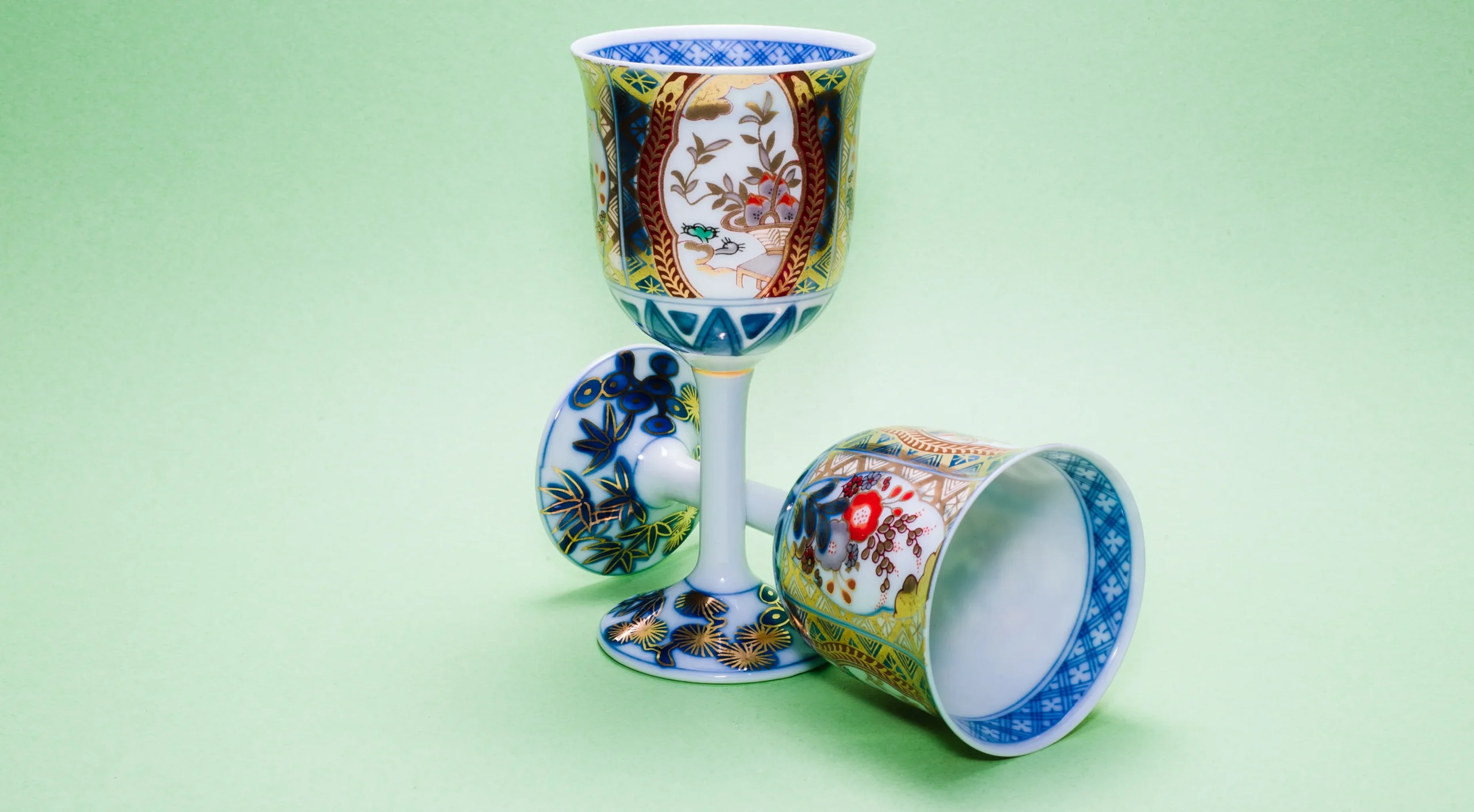
Kutani ware refers to porcelain produced mainly in southern Ishikawa, including Kaga, Nomi, Komatsu, and Kanazawa. The name comes from Kutani, an area in present-day Kaga City that is traditionally associated with the craft’s early development.
Renowned for its vivid colors and intricate hand-painted designs, Kutani ware became known both in Japan and overseas. To understand why Kutani pieces can look so different from one another, it helps to first look at the craft’s unusual history.
History of Kutani Ware
The history of Kutani ware dates back to the early Edo period in the 17th century. Production developed around Kutani under the Daishoji domain, a branch of the Kaga domain. However, production suddenly ceased in the early 1700s. Pieces associated with this early period are generally known as Ko-Kutani, or Old Kutani.
The exact origins and attribution of some Ko-Kutani pieces remain a subject of research, so the early history is not quite as simple as the name may suggest.
In the early 19th century, pottery production was revived in the Kaga region. A number of kilns developed their own techniques and decorative styles, beginning what is now called Revived Kutani.
During the Meiji era, Kutani ware became an important export. Its detailed decoration and strong colors attracted attention at international exhibitions, including the 1873 Vienna World Exposition, and the name “Japan Kutani” became familiar in overseas markets.
New techniques, larger-scale production, and the different approaches of individual kilns helped Kutani ware develop into the varied craft tradition seen today.
Characteristics of Kutani Ware
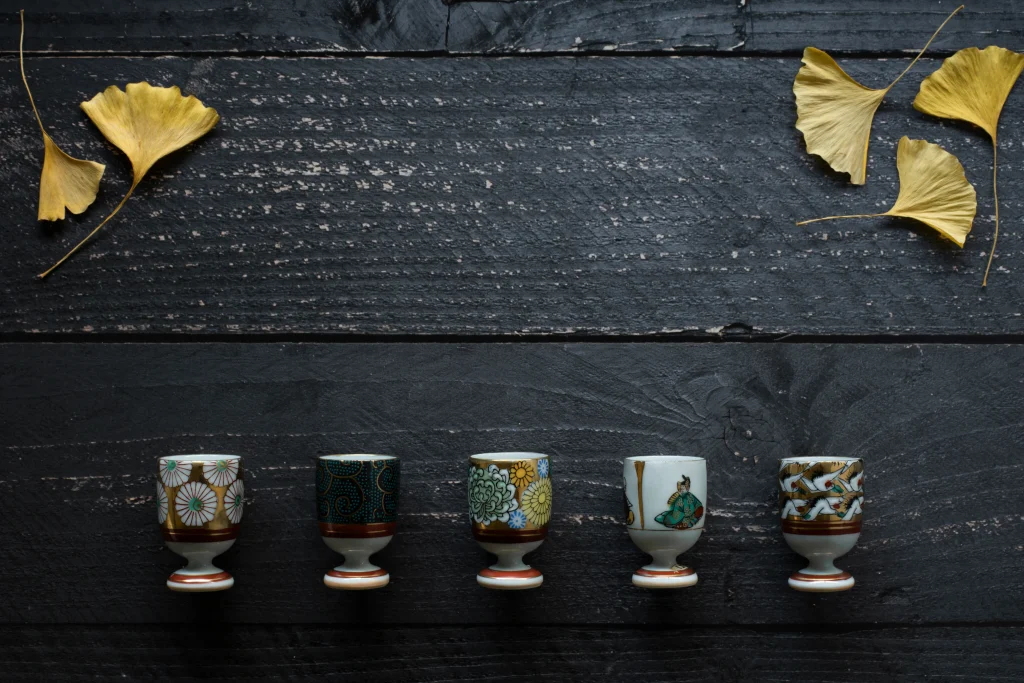
A hallmark of Kutani ware is the use of Kutani Gosai, the traditional five-color palette of red, yellow, green, purple, and dark blue. These colors are applied as overglaze decoration after the porcelain body has already been fired.
The five colors are an important starting point for understanding Kutani ware, but not every Kutani piece looks alike or necessarily uses all five. Different periods and kilns developed their own approaches. Some styles emphasize rich green and yellow, while others use detailed red linework, gold decoration, or more restrained compositions.
This variety is part of Kutani ware’s appeal. A vividly colored traditional plate and a simple contemporary cup can both belong to the same craft tradition while looking completely different.
The Process for Making Kutani Ware
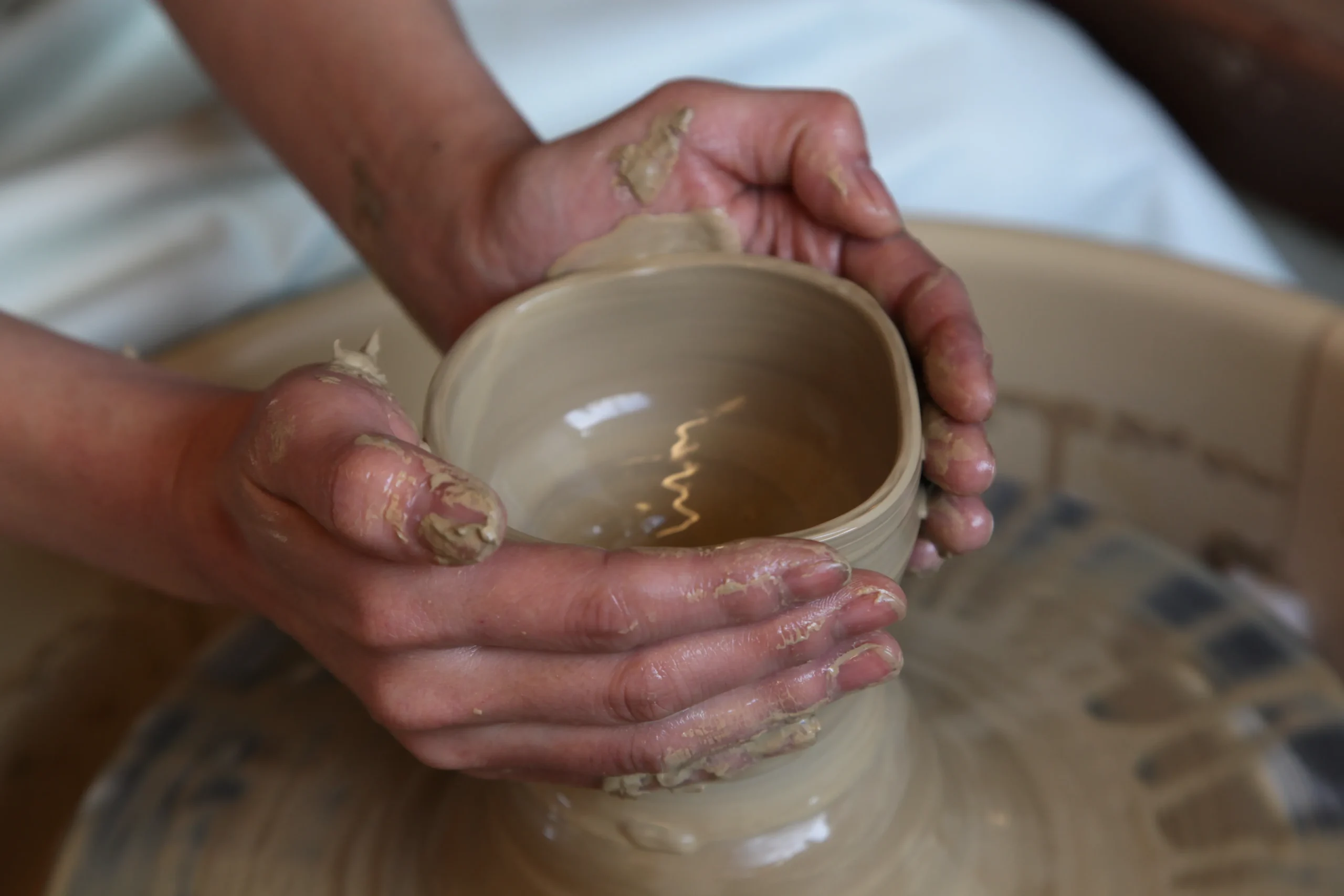
The vivid decoration of Kutani ware depends on several stages of shaping, firing, glazing, and painting. Methods vary between makers, but the basic process can be divided into six stages.
1. Shaping
The porcelain body is made from pottery stone and clay materials, including Hanasaka pottery stone traditionally associated with Komatsu.
After the material has been prepared, artisans form the piece using methods such as a potter’s wheel. It is then dried and given an initial, lower-temperature firing to prepare it for the next stages.
2. Underpainting
After the initial firing, underglaze decoration can be applied to the surface. This creates lines or designs that will remain beneath the glaze and can add depth to the final decoration.
3. Glazing
The piece is coated with glaze, which will form a smooth glass-like surface during firing. The glaze protects the porcelain and creates the clean base on which Kutani’s colorful overglaze decoration can later be applied.
4. Main Firing
The glazed piece is fired at approximately 1,300°C. At this high temperature, the glaze melts and forms the smooth white surface characteristic of porcelain.
Traditional climbing kilns were once used for this stage. Today, electric and gas kilns allow craftspeople to control firing conditions more consistently.
5. Overpainting
Once the porcelain body is complete, artisans paint the surface with overglaze pigments.
This is where the colors associated with Kutani Gosai are most visible. Different kilns and painters use the palette in very different ways, from large areas of green and yellow to fine red lines and contemporary designs.
6. Overglaze Firing
The painted piece is fired again at a lower temperature than the main firing. This fixes the pigments to the glazed surface and gives many Kutani colors their distinctive glossy appearance.
The result is the decorated Kutani ware seen in tableware, sake cups, vases, ornaments, and art pieces.
Two Kutani Makers to Know
Individual kilns have played a major role in keeping Kutani ware alive while continuing to develop new designs. These two makers show how different the same craft tradition can look.
Kutani Bitoen
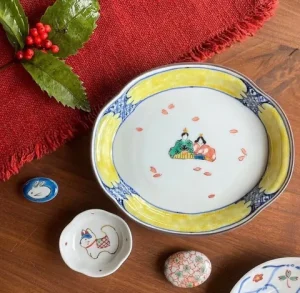
Founded in 1914, Kutani Bitoen has developed a style that tends to be quieter and more restrained than some of the heavily decorated Kutani ware seen elsewhere.
Its tableware combines traditional techniques with designs intended for everyday use. Rather than covering every surface with elaborate decoration, many pieces use simpler patterns and compositions that make them easy to incorporate into a modern home.
Kutani Bitoen is based in Yamashiro Onsen in Kaga. Its showroom displays around 300 types of Kutani ware, making it a useful stop for travelers who want to see and buy pieces from an established Kutani maker.
Bitoen does not currently offer pottery or painting workshops. For travelers staying in Yamashiro Onsen, however, it can be combined naturally with the historic Kutani kiln site introduced later in this article.
Kamide Choemon Kiln
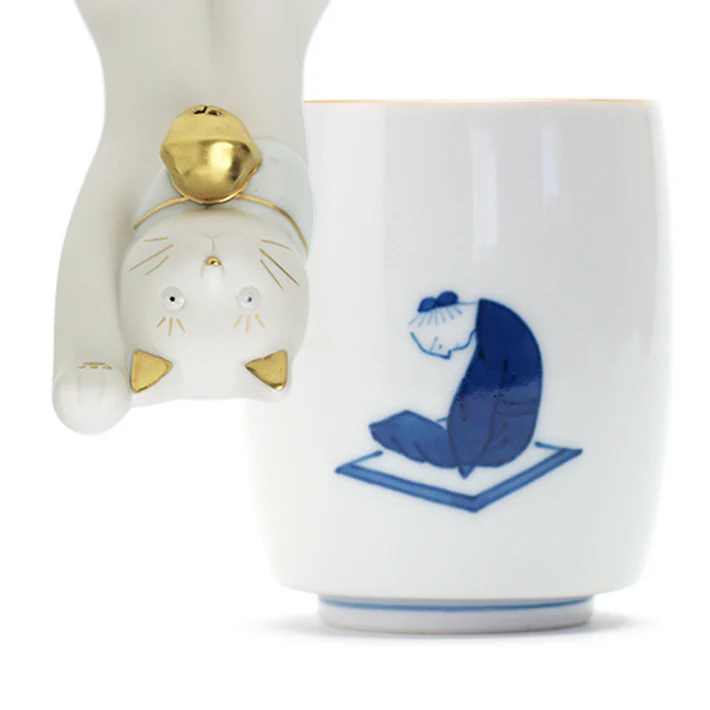
With a history dating back to 1879, the Kamide Choemon Kiln is another long-established Kutani maker, based in Nomi.
Its work shows a very different side of the tradition. Alongside classic tableware and decorative pieces, the kiln has become known for playful and contemporary designs, including unusual figurines and collaborations that reinterpret traditional Kutani painting for modern audiences.
This willingness to experiment makes Kamide Choemon a good example of how Kutani ware continues to change rather than simply reproducing old patterns.
Travelers should not, however, treat the kiln as a regular factory-tour attraction. Current official information states that factory tours are not being accepted. Its work can still be found through its shops and retail channels, but anyone hoping to visit the Nomi site should check the latest information in advance.
Where to Experience Kutani Ware in Ishikawa
Museums, kilns, and workshops give very different ways of getting to know Kutani ware. The best choice depends partly on your itinerary. Kanazawa is easiest if you have limited time, Nomi gives you a more concentrated Kutani-focused visit, and Kaga is particularly interesting for travelers who want to combine craft history with an onsen stay.
Kutani Kosen Kiln, Kanazawa
Kutani Kosen Kiln is a practical choice for travelers who are already staying in Kanazawa and do not want to devote a separate day to southern Ishikawa.
The working kiln produces Kutani ware in its own studio and offers opportunities to see the production environment. Painting and pottery experiences are also available, giving visitors a chance to work directly with the craft rather than only viewing finished pieces.
Reservations are recommended for its hands-on experiences and studio visits. Pieces made during ceramic workshops also need to be fired afterward, so do not expect to carry your finished work out of the studio immediately.
Kutani Ceramic Art Village, Nomi
For travelers who want to make Kutani ware a larger part of their trip, Kutani Ceramic Art Village in Nomi is one of the strongest places to visit.
The complex brings together museums and galleries, specialist Kutani shops, craft facilities, and opportunities to try ceramic painting. This makes it possible to see historical and contemporary work, learn about the craft, shop for pieces, and try part of the process in one area.
Nomi requires more transport planning than a Kutani experience in central Kanazawa, but the advantage is concentration. Instead of visiting a single shop or kiln, you can spend several hours focusing almost entirely on Kutani ware.
Read more: Crafts to Do in Japan: Hands-On Experiences and Where to Try Them
Kutani-yaki Kiln Museum, Yamashiro Onsen
The Kutani-yaki Kiln Museum in Yamashiro Onsen is particularly interesting if the history of the craft caught your attention.
The site preserves a historic climbing kiln connected with the 19th-century revival of Kutani ware. Seeing the kiln makes the production history much more tangible than simply reading about how porcelain was fired.
The museum also offers pottery and Kutani painting experiences.
There is one important practical limitation for international travelers: the museum currently states that participants in its hands-on experiences must be accompanied by someone who speaks Japanese. The museum also asks visitors to inquire in advance because experiences are not available every day.
If you are staying in Yamashiro Onsen, the museum pairs particularly well with nearby Kutani Bitoen. One focuses on the history and making of Kutani ware, while the other is a good place to see and buy contemporary pieces.
Kutaniyaki Art Museum, Daishoji
Travelers more interested in art and history than in making something themselves may prefer the Kutaniyaki Art Museum in Daishoji.
Its collection helps explain how dramatically Kutani ware changed across different periods and kilns. This is a useful place to see the stylistic differences described earlier in the article rather than trying to understand them from terminology alone.
The museum is also comparatively straightforward to incorporate into a Kaga-area trip because it is within walking distance of Daishoji Station.
For someone who wants to understand why one Kutani piece may be dominated by green and yellow while another uses delicate red or gold decoration, this museum may be more useful than another general pottery workshop.
Summary
Kutani ware is not defined by one pattern or one style. Its history includes early production, disappearance, revival, international success, and generations of artists who continued to reinterpret the craft.
The traditional Kutani Gosai colors remain one of its best-known features, but visiting Ishikawa makes the variety much clearer. Travelers with limited time can try a Kutani experience in Kanazawa, while Nomi offers a deeper concentration of museums, shops, and hands-on craft. Kaga and Yamashiro Onsen are especially rewarding for those interested in Kutani’s history as well as the finished pieces.
If Kutani ware is one of the main reasons you want to visit Ishikawa, ENJYU’s 4-Day Kutani Ware and Mino Ware Tour combines Kutani museums, Gosai painting, and kiln visits with an English-speaking guide and private transfers between the rural Kutani sites. The trip then continues to Mino ware in Gifu.
Whether you buy a small cup, spend time in a museum, or try painting a piece yourself, seeing Kutani ware in Ishikawa gives much more context to the colors and techniques that made the craft famous.