Forecast and venue information last checked: 30 September 2026.
Kyoto’s finest autumn colour can be an elusive prize, but the clever traveller knows when to plan precisely—and when to let the season keep one secret.
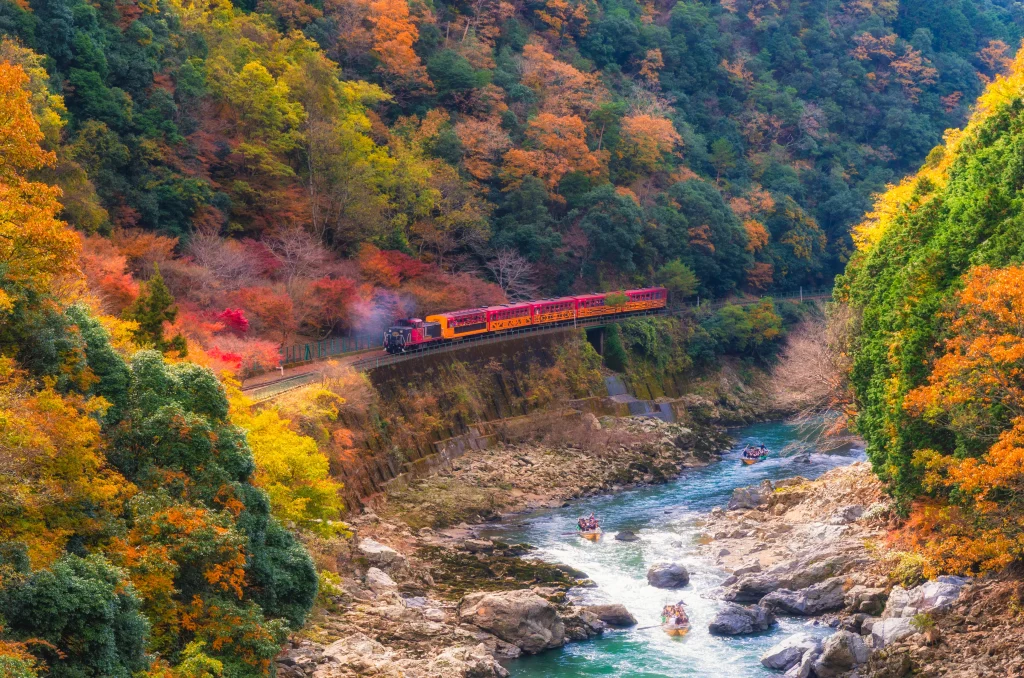
Kyoto’s maple leaves are currently forecast to reach their viewing date later than the long-term average in 2026. Japan Meteorological Corporation’s first forecast, released on 2 September, places Kyoto’s maple viewing date on 11 December, compared with the long-term average of 5 December. This gives you a sensible travel window, not a promise that every temple garden will reach its best colour on the same day.
The most reliable approach is to give each source a different job. Use the forecast to choose dates, official temple notices to decide what to book, and current foliage reports to choose where to go on the day. This leaves room for changing colour, busy transport and wet weather, while preventing the trip from becoming a timetable exercise.
When Will Kyoto Autumn Foliage Peak in 2026?
As of 30 September 2026, the first forecast places Kyoto’s maple viewing date on 11 December. Plan around late November through mid-December, then refine your choices with each venue’s official information and current local reports.
The Latest 2026 Forecast
Japan Meteorological Corporation issued its first 2026 autumn foliage forecast on 2 September. It places Kyoto’s viewing date for red maple leaves on 11 December. The long-term average is 5 December.
Ginkgo leaves follow a different timetable. Their forecast viewing date is 27 November, compared with a long-term average of 24 November. Travellers who hope to see both yellow ginkgo and red maples may therefore find a wider range of autumn colour from late November onwards.
If red maples are your priority, begin with early to mid-December as your provisional travel window. First, secure accommodation and any limited-entry visits, choosing flexible terms where possible. Then check the next forecast update before committing to other non-refundable arrangements.
Use the forecast to refine your plans, not to chase a single perfect day.
What the Forecast Date Does—and Does Not—Mean
The forecast follows the observation standard used by the Japan Meteorological Agency. It is based on a designated observation tree, rather than a survey of every maple garden in Kyoto. The maple autumn-colour date is the first day when most leaves on that tree have changed and little green remains.
This standard helps compare one year with another. It does not identify one shared peak date for every temple. Kyoto’s long-term average is 5 December. The Kyoto Local Meteorological Observatory recorded 10 December in 2025 and a record-late 20 December in 2024. The earliest recorded date was 10 November in 1976.
Gardens can change at different speeds because tree species, shade, local temperatures and recent weather differ. A garden may also be rewarding before the observation date, when several stages of colour remain visible together. Use the forecast for dates, official calendars for bookings and current reports for the day’s choice.
Kyoto Autumn Foliage by Travel Date
Kyoto’s autumn does not divide neatly into “too early”, “perfect” and “too late”. Each period offers a different balance of colour, cultural events, special access and visitor numbers. A later forecast simply means that natural colour and limited autumn programmes may not align exactly.
22 October–13 November: Festivals and Early Colour
For travellers seeking deep red maples, this period is usually early in central Kyoto. It can still be an excellent time for seasonal culture, temple architecture and the first signs of autumn colour.
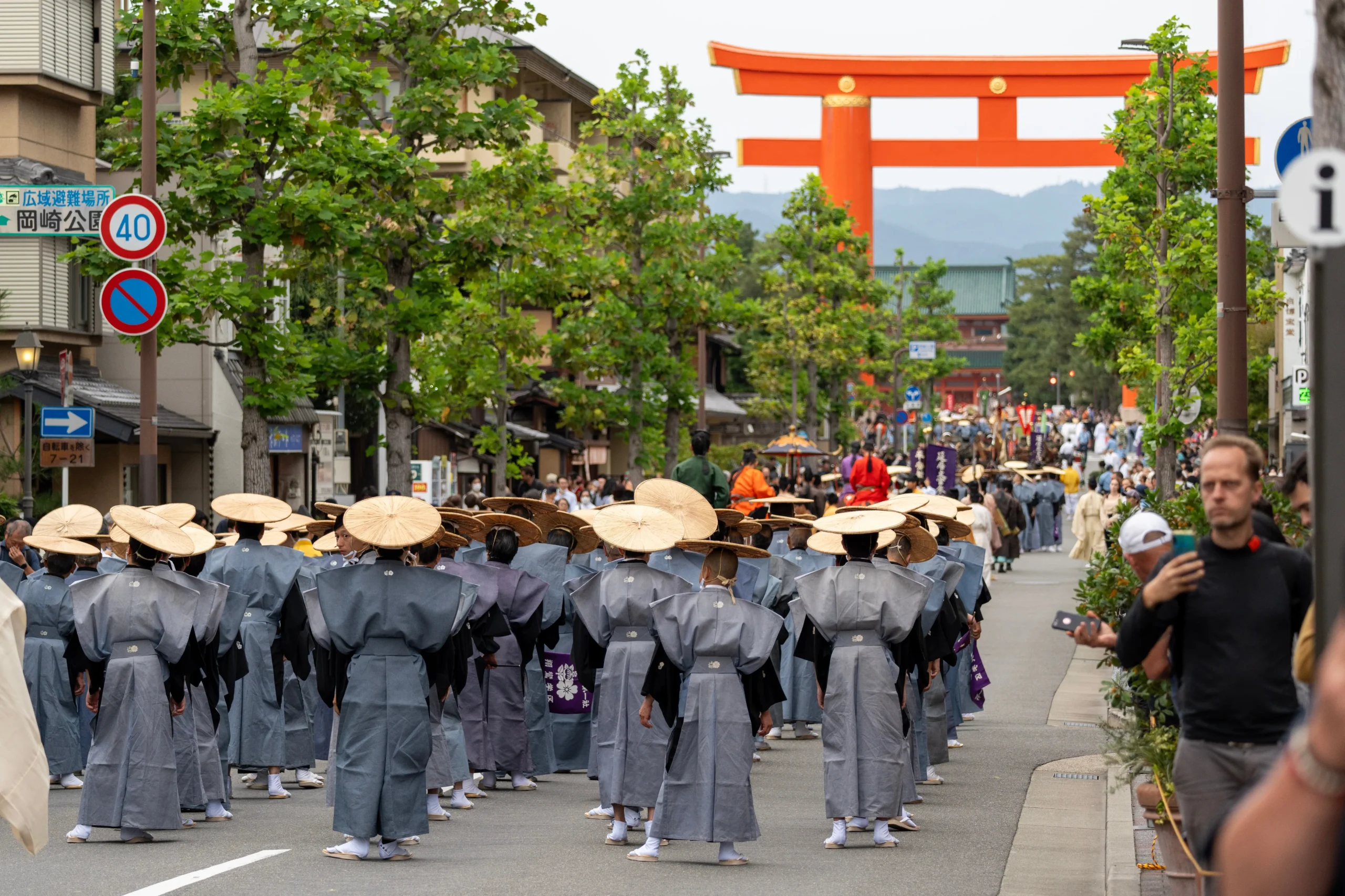
Jidai Matsuri, the Festival of the Ages, takes place on 22 October. Its procession travels from Kyoto Imperial Palace to Heian Jingu Shrine, with participants wearing costumes representing periods from Kyoto’s history. Kurama Fire Festival is held on the same date at Yuki Shrine in the mountain village of Kurama. Traffic restrictions begin from 3 p.m. and local car parks close, so allow extra time for the journey back.
Read More: 4 Japan’s Fire Festivals in 2026: Which One Fits Your Trip
Arashiyama Momiji Matsuri is confirmed for 7 and 8 November 2026. It takes place beside the Oi River upstream of Togetsukyo Bridge from 11:30 a.m. to 5 p.m., subject to cancellation in rain.
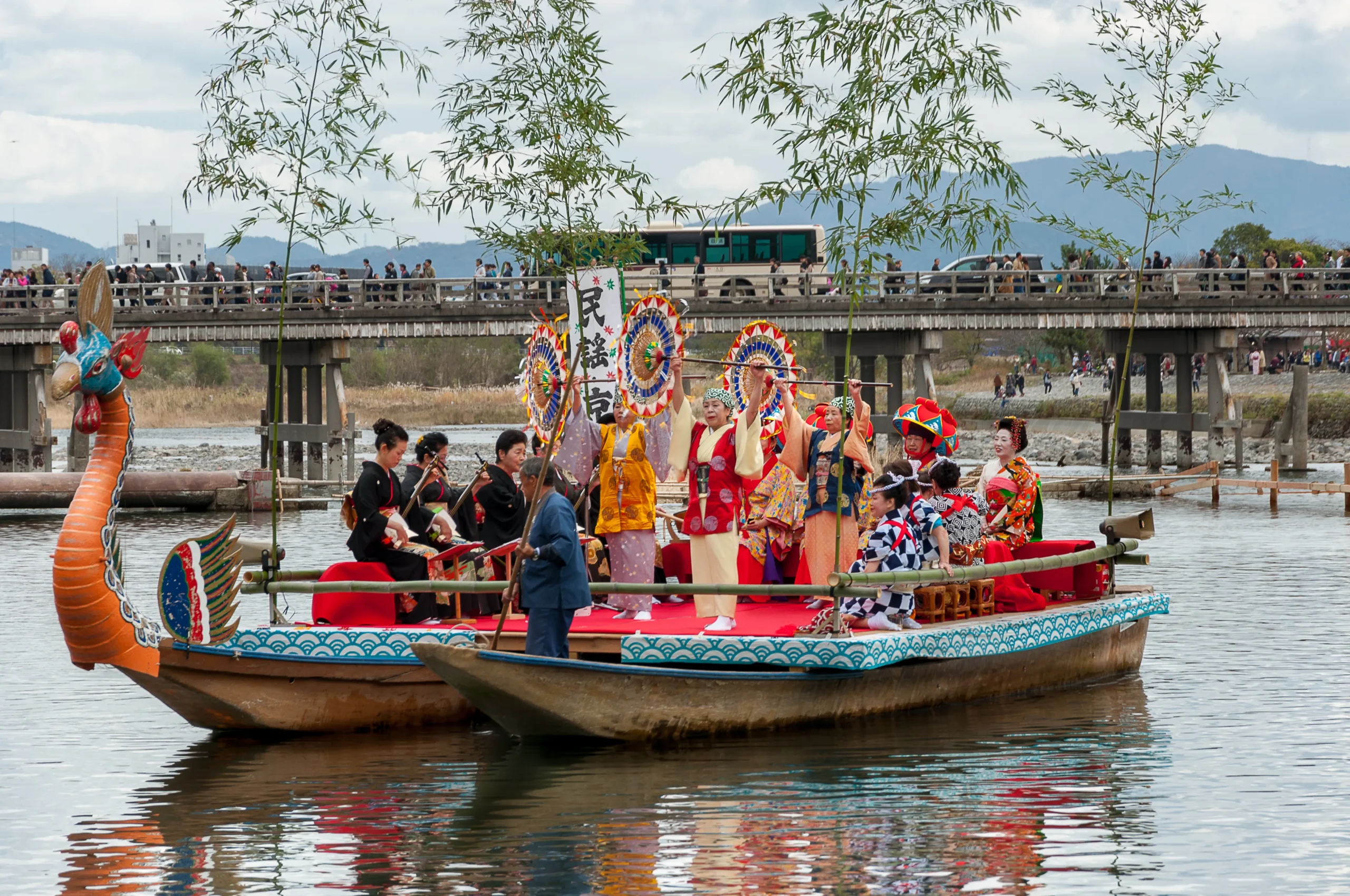
General viewing is free, although participation in some activities requires a ticket. The event celebrates Arashiyama’s maples through performances on decorated boats. It is a cultural occasion, rather than proof that peak foliage has arrived.
14–22 November: Early Openings and Mixed Colour
From mid-November, several major temples begin their autumn arrangements. This period suits travellers who enjoy an early start and accept that colour may still be developing.
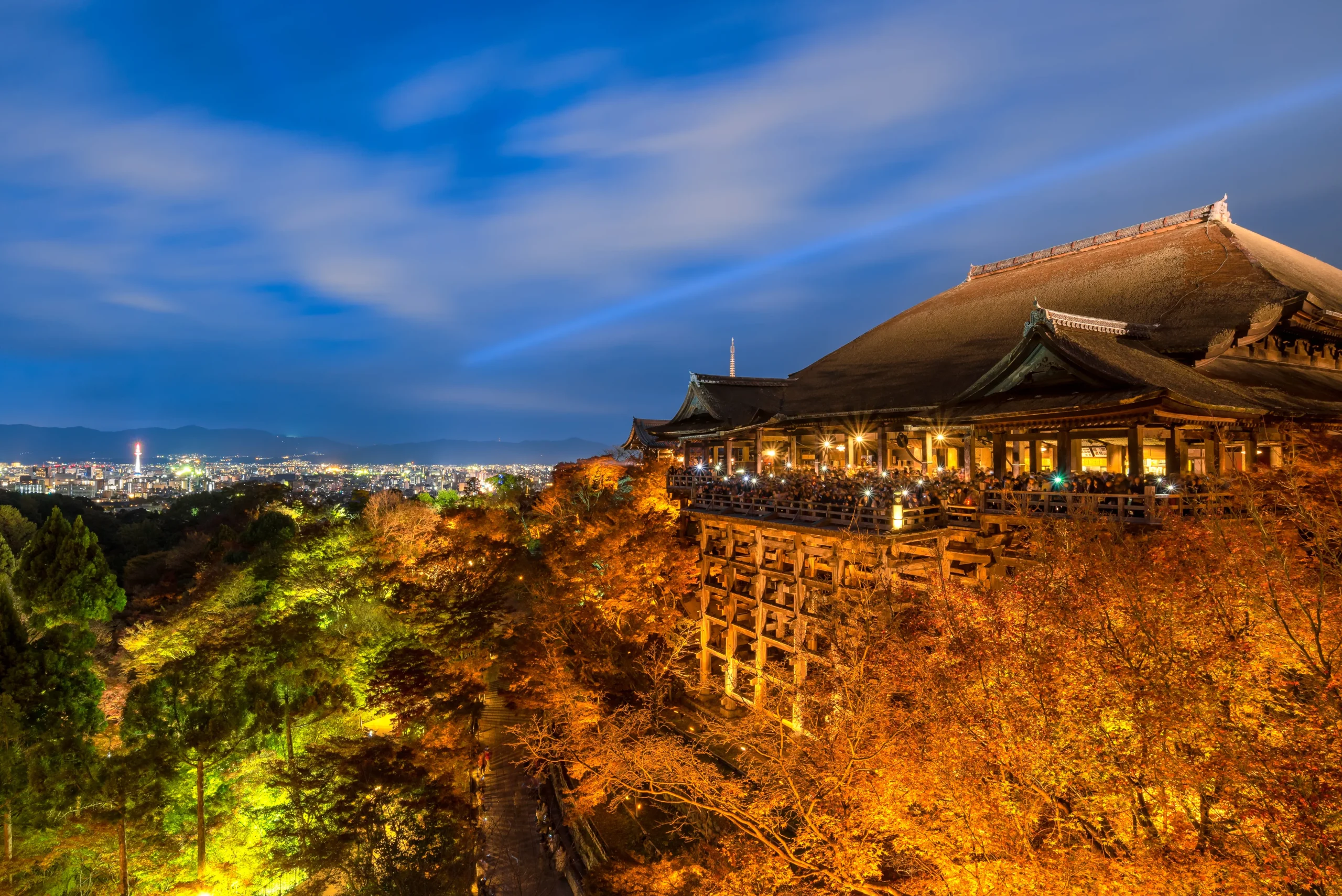
Tenryu-ji offers special early garden admission from 14 to 30 November. Tofuku-ji begins its autumn admission period on 14 November. Kiyomizu-dera begins its 2026 autumn special night viewing on 21 November.
Depending on the location and weather, a garden may show green, yellow, orange and red within the same view. Major sites can already be busy, especially at weekends. This period is a good choice for travellers who value changing colour and special access, rather than only a fully red canopy.
23 November–6 December: The Main Special-Opening Window
This is the busiest period for special autumn openings and evening programmes. Tofuku-ji, Kitano Tenmangu, Eikando and Rurikoin all have autumn arrangements during at least part of this window. Kiyomizu-dera’s night viewing also falls within it.
The forecast maple date is later, on 11 December, but this period offers the widest choice of planned autumn experiences. Popular venues, weekends and the period around dusk can be very busy. A practical planning rule is one early start, one compact area and one evening experience.
Choose a famous temple if it matters to you. The important point is to give it enough time. A carefully chosen visit is usually more rewarding than trying to fit several major temples into one afternoon.
7–15 December: Later Colour, Fewer Special Openings
This period includes the forecast maple viewing date of 11 December. It may still offer promising colour, but the number of autumn-only programmes becomes smaller.
Tofuku-ji, Kitano Tenmangu and Eikando end their listed autumn programmes on 6 December. Rurikoin’s autumn special opening continues until 13 December. If your dates fall after the main special-opening window, check current reports first, then choose temples and gardens that remain open under ordinary or special admission.
Late-season planning works best when leaf colour is not the only reason to visit.
Temple halls, garden structure, moss, autumn exhibitions and seasonal food can remain meaningful parts of the day. The sharper air, maple leaves loosening from their branches and paths settling into quiet have long found a place in Japanese poetry—where autumn is treasured not only at its height, but also in its passing.
2026 Autumn Openings and Light-Ups at a Glance
This table compares operating information, not the predicted colour at each venue. Check each official notice before travelling, particularly when your plans involve a reservation, a night visit or a non-refundable ticket.
|
Experience |
Area | 2026 dates / status | Hours and fee | Booking |
Best for |
|
Arashiyama Momiji Matsuri |
Arashiyama |
Confirmed: 7–8 November | 11:30 a.m.–5 p.m.; general viewing free; cancelled in rain | Check final programme | River scenery and seasonal performing arts |
|
Kitano Tenmangu Odoi Momijien |
Kitano |
Confirmed: 31 October–6 December; light-up 13 November–6 December | 9 a.m.–4 p.m.; light-up until 8 p.m.; adult ¥1,500, child ¥700 | Check current admission notice | A historic earthwork with upper and lower maple paths |
|
Tofuku-ji Tsutenkyo and Kaisando |
South-east Kyoto |
Confirmed: 14 November–6 December | Opens 8:30 a.m.; adult ¥1,000; child ¥500 | Check current admission notice | A valley view above the maple canopy |
|
Tenryu-ji Garden |
Arashiyama |
Confirmed: special early garden admission, 14–30 November | Garden reception from 7:30 a.m.; standard garden admission | Check current admission notice | An early start in Arashiyama |
|
Eikando Autumnal Exhibition and Light-up |
Northern Higashiyama |
Confirmed: exhibition 11 November–6 December; light-up 20 November–6 December | Day entry: 9 a.m.–4 p.m., adults ¥1,500; night entry: 5:30–8:30 p.m., ages 12+ ¥1,000. Separate admission. | Check the official notice before visiting | Temple halls, hillside paths and an evening garden |
|
Kiyomizu-dera |
Southern Higashiyama |
Confirmed: autumn night viewing, 21–30 November | Temple opens 6 a.m.; night last entry 9 p.m., closes 9:30 p.m. | Check current admission notice | An early start or an evening temple visit |
|
Rurikoin Autumn Special Opening |
Yase |
Confirmed: 1 October–13 December; advance-admission visits from 13 November–6 December allocated by lottery | Outside the advance-admission period: 10 a.m.–5 p.m., last entry 4:30 p.m. For visits 13 November–6 December: 9 a.m.–6 p.m., last entry 5:30 p.m.; ¥2,000 | Check the latest lottery and availability notice | A framed garden view from inside a traditional shoin building |
|
Eizan Railway Momiji Tunnel |
Ichihara–Ninose |
Partly confirmed: tunnel attraction; 2026 special autumn operation dates to be announced | Normal rail fare; check autumn operating notice | Check official notice | Viewing maples without adding another garden walk |
Arashiyama: Use the Early Opening as Your Anchor
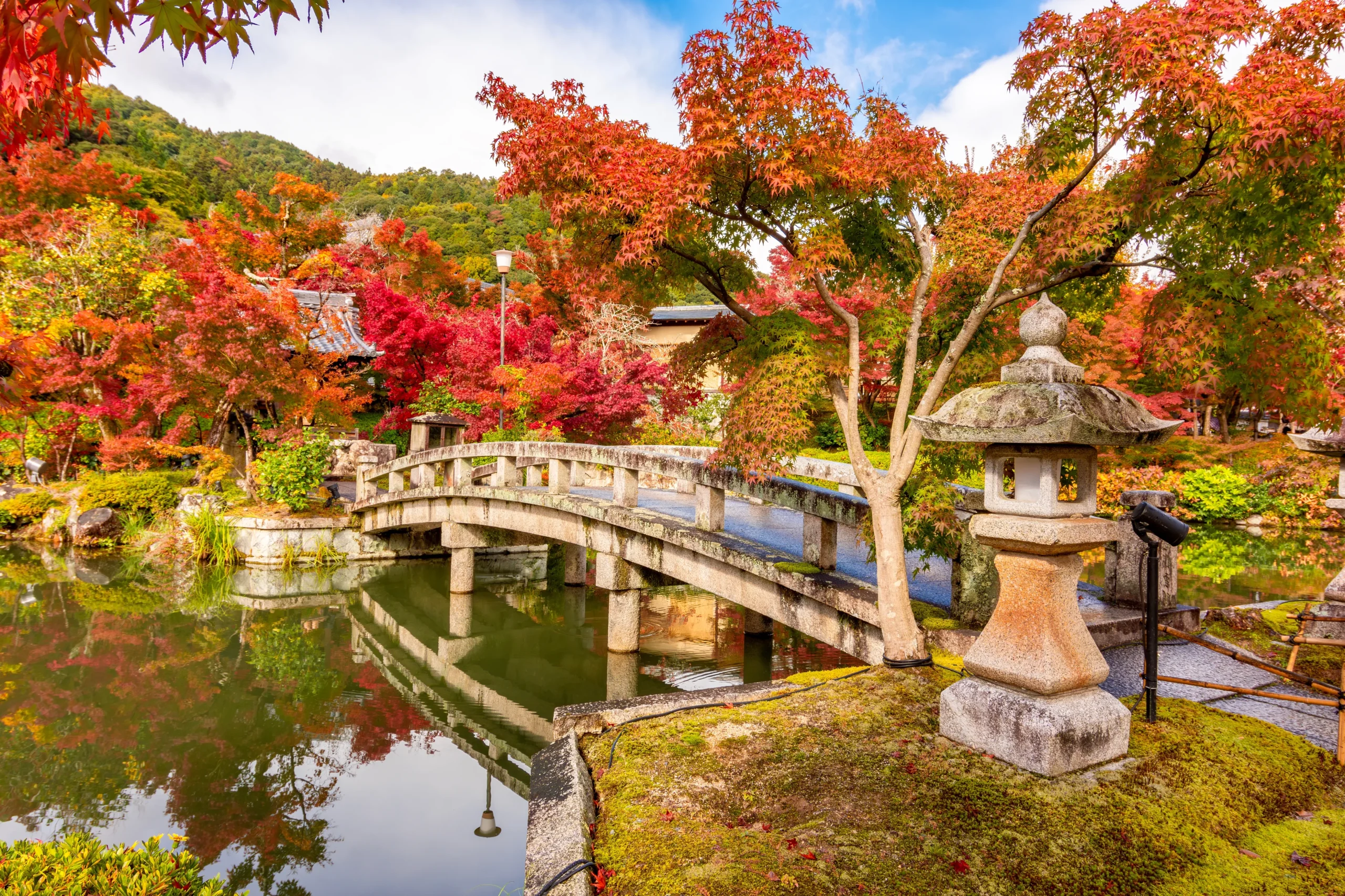
Tenryu-ji gives an Arashiyama day a clear starting point. From 14 to 30 November, garden reception begins at 7:30 a.m. The early arrangement applies to the garden; other entrances and temple buildings may follow different schedules, so check before leaving your hotel.
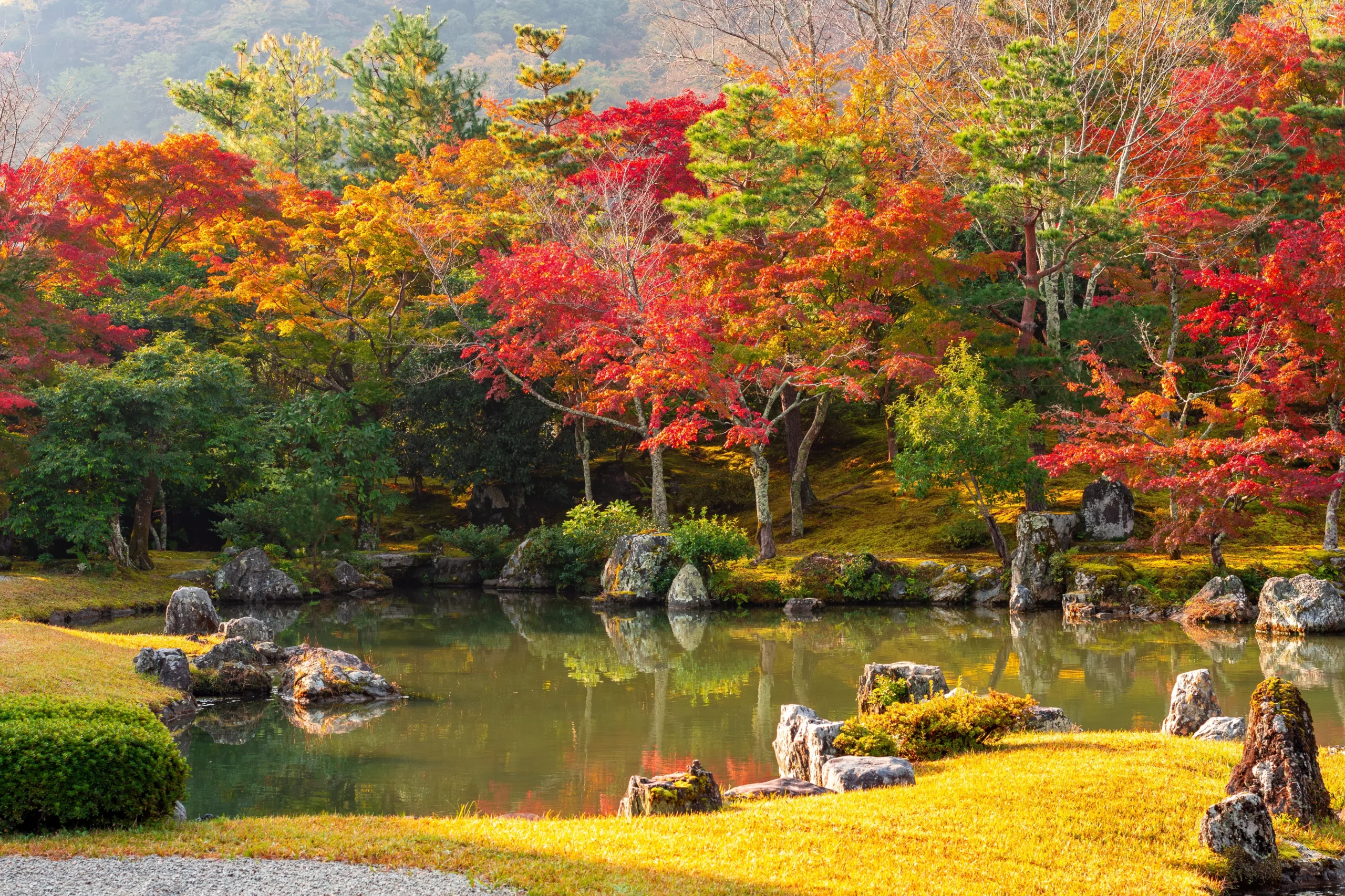
After the garden, stay in the Arashiyama and Saga area. Choose one further focus, such as the Oi River, the bamboo grove or another nearby temple. The bamboo grove is a green landscape rather than a maple attraction, so it works best as part of a mixed morning. Avoid building the day around a midday cross-city bus journey.
At Momiji Matsuri, the river programme is the main reason to attend. The decorated boats, traditional performances and riverbank setting offer a useful early-November experience even if maples have not reached their strongest colour.
Eastern Kyoto: Choose One Daytime Focus and One Evening Opening
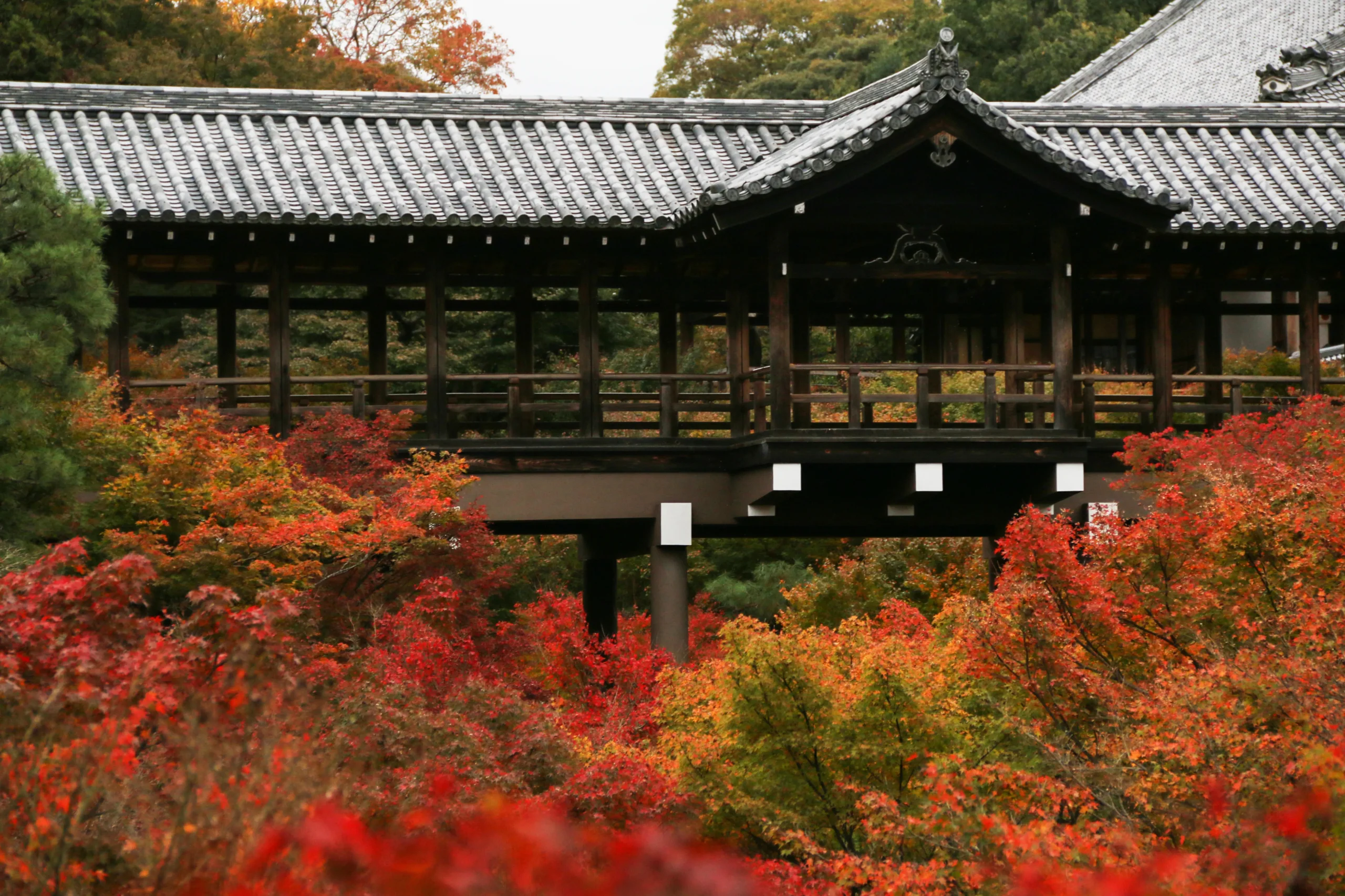
Tofuku-ji, Kiyomizu-dera and Eikando are all east of central Kyoto, but they are not a short walking circuit. Tofuku-ji is near JR and Keihan Tofukuji Station. Kiyomizu-dera rises above sloping streets in southern Higashiyama. Eikando is further north, near the Okazaki and Nanzen-ji area.
Tofuku-ji’s main autumn view comes from Tsutenkyo, a covered bridge crossing the valley below. Tripods are not permitted within the temple grounds. During the autumn period, the temple may also ask visitors not to take photographs from Tsutenkyo and Gaunkyo bridges, even with handheld cameras.
Kiyomizu-dera opens at 6 a.m., while its amulet and temple-seal counters open from around 8 a.m. Treat Eikando as a separate daytime or evening choice, because its autumn exhibition and night light-up have different entry conditions. One daytime temple and one evening programme will usually give you enough time to walk, rest and return safely.
Kitano, Yase and Rakuhoku: Check Booking and Return Transport First
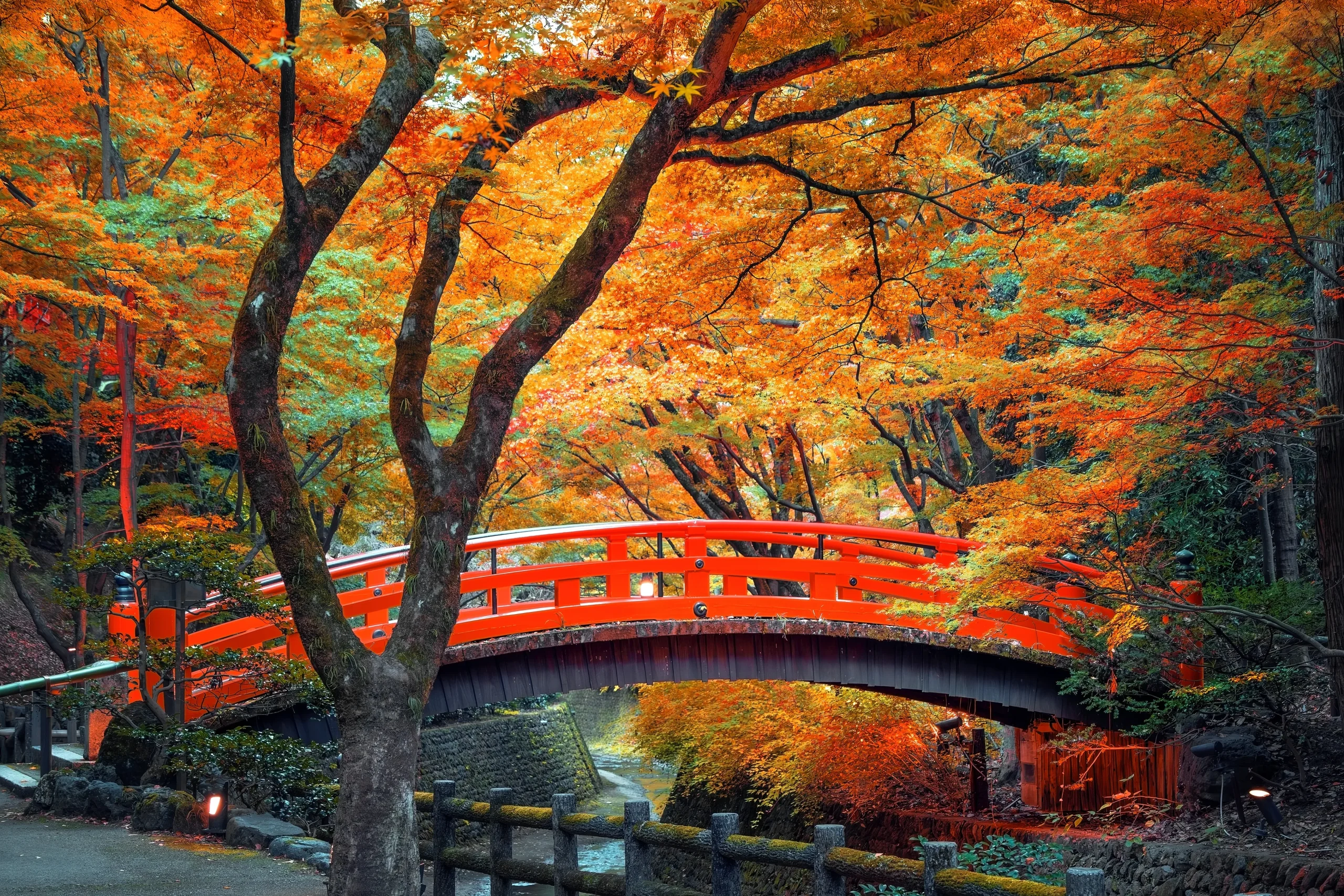
Kitano Tenmangu, Rurikoin and the Eizan Railway are not one walking route. Choose one according to your booking status, energy level and route home.
Kitano Tenmangu’s maple garden follows part of the Odoi, an earthwork built under Toyotomi Hideyoshi in 1591. Its paths change level, so visitors view maple branches from both above and below. The 2026 opening runs from 31 October to 6 December. The night light-up runs from 13 November to 6 December; check the last admission time before your visit.
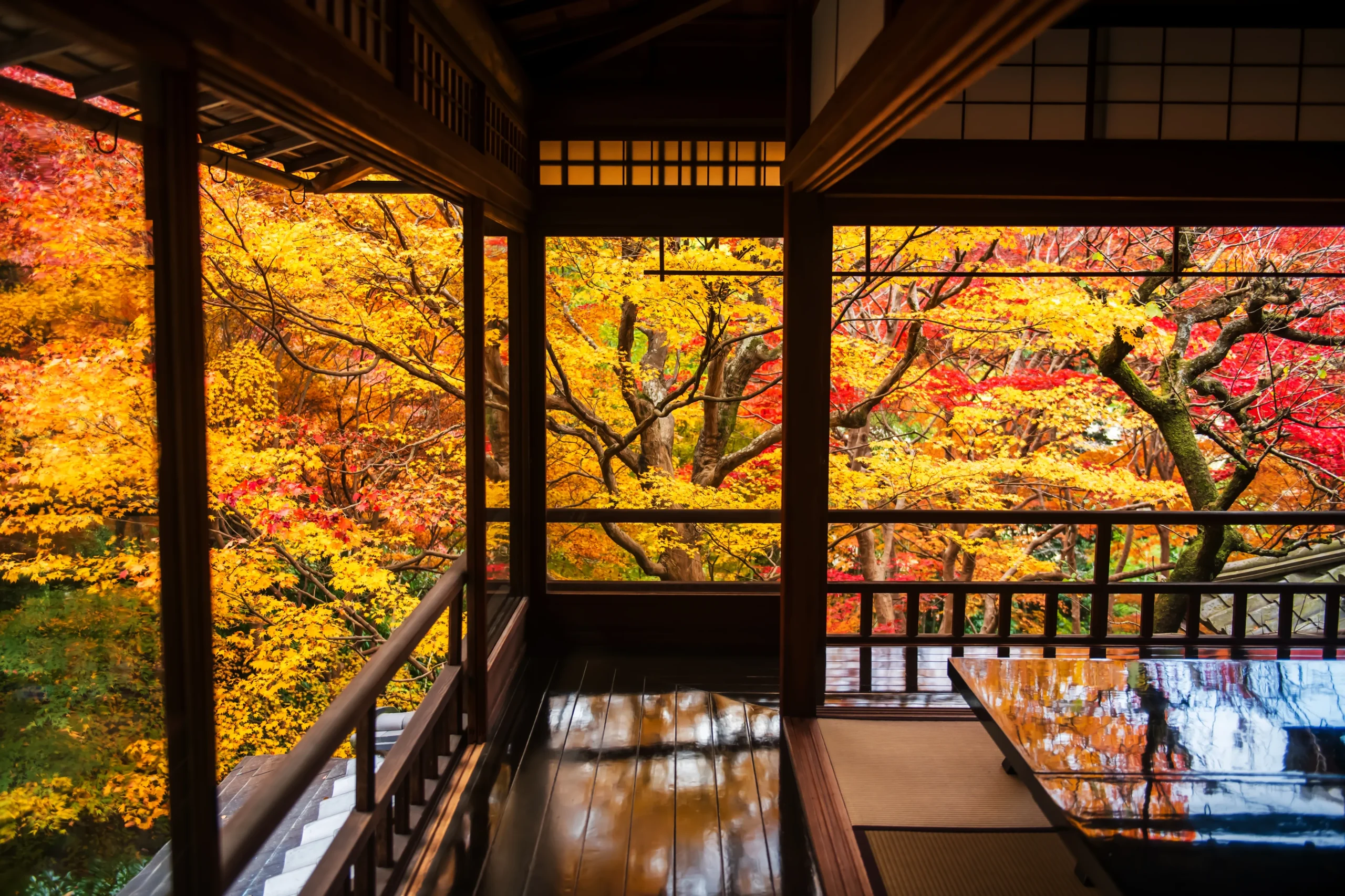
Rurikoin’s autumn special opening is a daytime visit. Check any separately organised evening programme with its operator. The temple is best known for its garden view from a shoin, a Japanese building with rooms traditionally used for study and reception. Advance admission for visits from 13 November to 6 December is allocated by lottery. Check the latest official notice for availability before arranging the rest of your day. The site has no visitor car park, and it does not permit tripods or monopods.
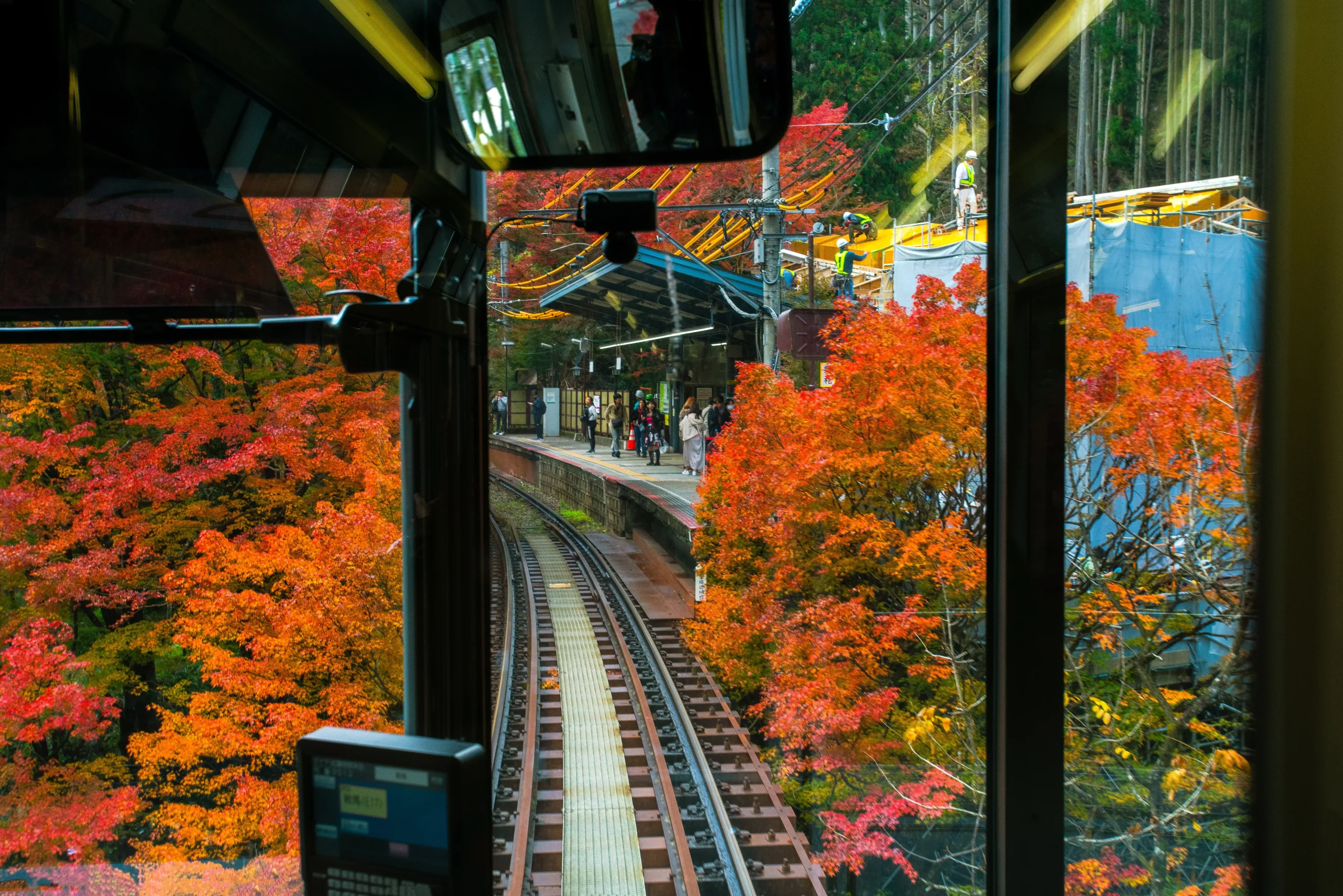
The Eizan Railway’s Momiji Tunnel lies between Ichihara and Ninose stations. The railway describes a 250-metre section surrounded by about 280 maples, viewed from the train rather than an outdoor path. A normal rail fare is required. The railway may announce special slow-running or cabin-lighting arrangements for autumn, but confirm the 2026 details before you go. Seats are not guaranteed when trains are busy.
How to Build a Kyoto Autumn Day
A good autumn day depends less on the number of temples you visit than on how you arrange the time between them. Begin with a simple structure, then allow for walking, meals and a change of plan.
|
One early start + one area + one evening experience |
Route A — Eastern Kyoto for First-Time Visitors
Start at Kiyomizu-dera at or soon after 6 a.m. if an early start suits your travel style. The approach includes slopes, stone paving and steps, so shoes with a secure grip are useful, especially after rain.
Keep the morning in southern or central Higashiyama. Leave time for older streets, a meal and a rest rather than planning several major temples. For the evening, choose Kiyomizu-dera or Eikando, not both. Returning to Kiyomizu-dera keeps the route simple. Eikando offers a different setting, but requires a move north.
The surrounding approach is hilly, but Kiyomizu-dera provides step-free routes within its public grounds. Wheelchair and pushchair users should check the temple’s accessibility information and plan the approach separately. A slower Higashiyama day usually gives a clearer understanding of the area than a long list of temple gates.
Route B — Arashiyama Without a Midday Rush
Begin with Tenryu-ji’s 7:30 a.m. garden reception, then keep the first part of the day within Arashiyama and Saga. Choose one further garden, a riverside walk or the bamboo grove, and allow time for lunch before deciding whether to travel elsewhere.
JR, Hankyu and the Keifuku Arashiyama Line, often called Randen, serve different parts of the district. Choose the station that works best for your hotel and your next stop. Do not assume that every station called “Arashiyama” stands beside the same sights.
By early afternoon, consider a proper break. Returning to your hotel, taking a short rail journey or staying in the district can make an evening plan easier to enjoy. The early garden entry protects your main visit; it does not make the whole district empty.
If Colour or Weather Changes — Plan B and Plan C
If central Kyoto remains green, compare current foliage reports for Yase, the Eizan Railway corridor and other hillside areas. Conditions may differ from the city centre, but do not assume that any area will always be further advanced.
If a reserved visit falls before the strongest colour, focus on what remains meaningful beyond the leaves. Temple architecture, moss gardens, covered halls and a seasonal exhibition can give the day a clear purpose.
In heavy rain or strong wind, reduce long outdoor transfers and unnecessary stone steps. Choose one garden with substantial covered space, then add a nearby museum, craft venue or meal after checking current opening information. If crowds become the problem, remove one destination rather than adding another.
Plan B is not a lesser Kyoto; it is a different way of paying attention.
Getting Around Kyoto in Autumn 2026
Kyoto’s city buses reach many temples, but relying on a crowded bus route for every part of the day can make an autumn plan fragile. Use railway and subway lines for longer journeys, then walk or use a short bus connection for the final section when practical.
Kyoto City Transportation Bureau began operating Pokeroke plus+ on 20 March 2026. The smartphone service shows city-bus positions and current crowding levels. Check it before joining a queue. It does not predict future crowding, but it can help you decide whether to wait, walk to another stop or choose a different route.
The official Subway & Bus 1-Day Pass costs ¥1,100 for adults. The Sightseeing Limited Express buses EX100 and EX101 operate on weekends and public holidays, and the pass can be used on them under the stated conditions. Check current ticket rules before travel because seasonal operations can change.
Avoid carrying large suitcases onto city buses during busy sightseeing hours. Consider hotel luggage storage, station lockers where available, or a delivery service arranged in advance. Use rail and the subway as the main structure of the day, then let buses complete the final connection.
Accommodation, Tax and Booking Priorities
Kyoto’s November accommodation market is busy enough that it is sensible to secure a suitable hotel before the foliage forecast reaches its final update. Kyoto City Tourism Association reported an 86.9% room occupancy rate across 110 major hotels in November 2025. Its reported average daily rate was ¥29,085 per sold room.
ADR is not the price every traveller will see on a booking site. It is average room revenue across rooms sold, and it does not represent one hotel, room type or number of guests. The figure is useful because it shows the strength of November demand.
Kyoto revised its accommodation tax from 1 March 2026. The tax applies per person per night and is based on the room-only accommodation price, excluding meals and consumption tax:
| Room-only rate per person, per night | Accommodation tax |
|
Under ¥6,000 |
¥200 |
|
¥6,000 – ¥19,999 |
¥400 |
|
¥20,000 – ¥49,999 |
¥1,000 |
|
¥50,000 – ¥99,999 |
¥4,000 |
| ¥100,000 or more |
¥10,000 |
Check whether the tax is included in your booking total or collected separately by the accommodation. A sensible booking order is:
- Accommodation
- Reservation-only autumn visits
- Evening openings
- Ordinary daytime admission
Book the parts of the trip that are hardest to move, then keep the rest adaptable.
Kyoto Autumn Foliage FAQs
Is Kyoto Still Green in October?
For travellers seeking deep red maples, October is usually early in central Kyoto. Conditions can differ in hillside areas, so check current reports. October remains worthwhile for Jidai Matsuri, temple visits and seasonal food, but foliage should be treated as an addition rather than the main certainty.
How Many Days Do I Need for Kyoto Autumn Foliage?
Two days let you separate eastern Kyoto and Arashiyama. Three days give more flexibility for Yase, northern Kyoto, weather changes or a reservation-based visit. There is no single correct number; your walking comfort, hotel location and interests should determine the pace.
What Is the Difference Between Kōyō and Momiji?
Kōyō means autumn colour more broadly, including leaves changing red or yellow. Momiji usually means maple leaves and can also refer to maple autumn colour in travel information. Momijigari means going out to appreciate autumn leaves. These are cultural terms rather than strict botanical categories.
Do Kyoto Autumn Light-Ups Require Reservations?
Rules differ by venue, date and event type. Some evening programmes allow same-day admission, while others use advance booking, timed entry or separate day and night tickets. Admission for Rurikoin visits from 13 November to 6 December is allocated through an advance lottery. Check the latest official notice for availability.
Can I See Autumn Leaves in Kyoto in Mid-December 2026?
Possibly. The first 2026 forecast places Kyoto’s maple viewing date on 11 December. Several autumn-only programmes end on 6 December, however. Use current reports to locate colour, then check whether your chosen temple remains open under ordinary or special admission.
Plan Your Kyoto Autumn Journey
Kyoto’s autumn becomes easier to enjoy when the itinerary does not depend on one forecast date or one famous view. Choose a travel window, secure reservation-only visits, and build each day around one area rather than crossing the city repeatedly. An early opening and one evening experience are usually enough to give the day shape while leaving room for changing colour, weather and energy levels.
If you would prefer help bringing those choices together, ENJYU JAPAN can shape confirmed temple dates, regional transport and a comfortable daily pace into a Tailor-Made Tour. The result need not include every celebrated garden. It should give the places you choose enough time to become part of the journey.
References
- Japan Meteorological Corporation – 2026 Autumn Foliage Forecast, First Release (2026)
- Japan Meteorological Agency – Maple Autumn Colour Dates, 2025–2026
- Arashiyama Hoshokai – Arashiyama Momiji Festival (2026)
- Tenryu-ji – Visiting Information and 2026 Early Garden Opening (2026)
- Tofuku-ji – Visiting Hours, Autumn Admission and Visitor Rules (2026)
- Kitano Tenmangu – Odoi Maple Garden and 2026 Autumn Opening (2026)
- Eikando Zenrin-ji – Autumnal Exhibition and Light-up (2026)
- Kiyomizu-dera – Special Night Viewing Schedule (2026)
- Rurikoin – Autumn Special Opening and Admission Information (2026)
- Kyoto City Transportation Bureau – Launch of Pokeroke plus+ (2026)
- Kyoto City Tourism Association – Monthly Data Report, November 2025 (2025)
- City of Kyoto – Accommodation Tax