Kyoto has a reputation as a city of steps and temple hills, and if you’re planning a trip for an elderly parent — or traveling slowly yourself — you may wonder whether it’s feasible at all. For elderly travelers it’s more manageable than it looks, but only if you pick the right sites and lean on the city’s own accessibility tools. A few of its famous places let you reach the signature view and then stop you cold; others are genuinely doable at a slow pace. Getting an older visitor through a Kyoto day comes down to knowing, before you set out, which sites are worth it and where each one’s manageable path ends. We’ve covered pacing a whole trip in our guide for older travelers in Japan; this is the Kyoto layer beneath it.
The ground decides it, not the stairs
Ask what actually stops an older visitor in Kyoto and the honest answer is rarely the stairs. It’s the ground underfoot and the point where the maintained path runs out. Nijo Castle is dead flat, yet the grounds are loose gravel. Kiyomizu-dera, the most vertical temple on every postcard, actually has a step-free route — “barrier-free,” the Japanese term for step-free accessible design — running immediately left of the main approach. Kinkaku-ji lets you roll up to the famous view, then steep steps block the loop behind it. Arashiyama, gentle-looking, hides a long, slow slope. So before any site goes on the itinerary, run it through three questions.
The Reach–Surface–Limit Check
- Reach — Can you get to the signature view step-free, and by which route? It’s often not the obvious one: at Kiyomizu-dera the accessible way is the left-hand route, not the front stairs.
- Surface — What’s underfoot? Loose gravel (Nijo Castle), stone-paved slope (the Higashiyama lanes), a flat maintained path (Sanjusangendo) each push very differently.
- Limit — Where does the maintained route end, and is the part beyond it worth pushing for? At Kinkaku-ji, no — the steps past the pavilion aren’t. At Fushimi Inari, the inner mountain, also no.
Site by site: which famous places elderly travelers can manage
Here’s how the marquee sites compare on accessibility. The table lines them up side by side; the notes below add what each one asks of you.
| Site | Step-free to the signature view? | Surface underfoot | The catch | Bring your own chair? |
| Kiyomizu-dera | Yes — via the left-hand route | Paved, maintained | No wheelchair loan; arrange the Chawan-zaka drop-off | Yes — the temple lends none |
| Nijo Castle | Yes — flat throughout | Loose gravel | Loaner chairs need a companion to push; Honmaru-goten is pre-book-only | Optional — chairs lent at the desk |
| Kinkaku-ji | Yes — to the Golden Pavilion view | Gravel | Steep steps block the rear garden loop | Yes — no confirmed loan |
| Fushimi Inari | Base precinct yes; upper unconfirmed | Flat at the base, then stone steps | Step-free upper route unconfirmed; upper mountain out of reach | Yes |
| Tenryu-ji | Yes — garden is wheelchair-doable | Paved paths, gentle slopes | Bamboo-grove path is a long, gentle climb | Accessible toilet inside the garden |
| Sanjusangendo | Yes — reliably flat | Flat | — | No — wheelchairs lent on site |
Kiyomizu-dera
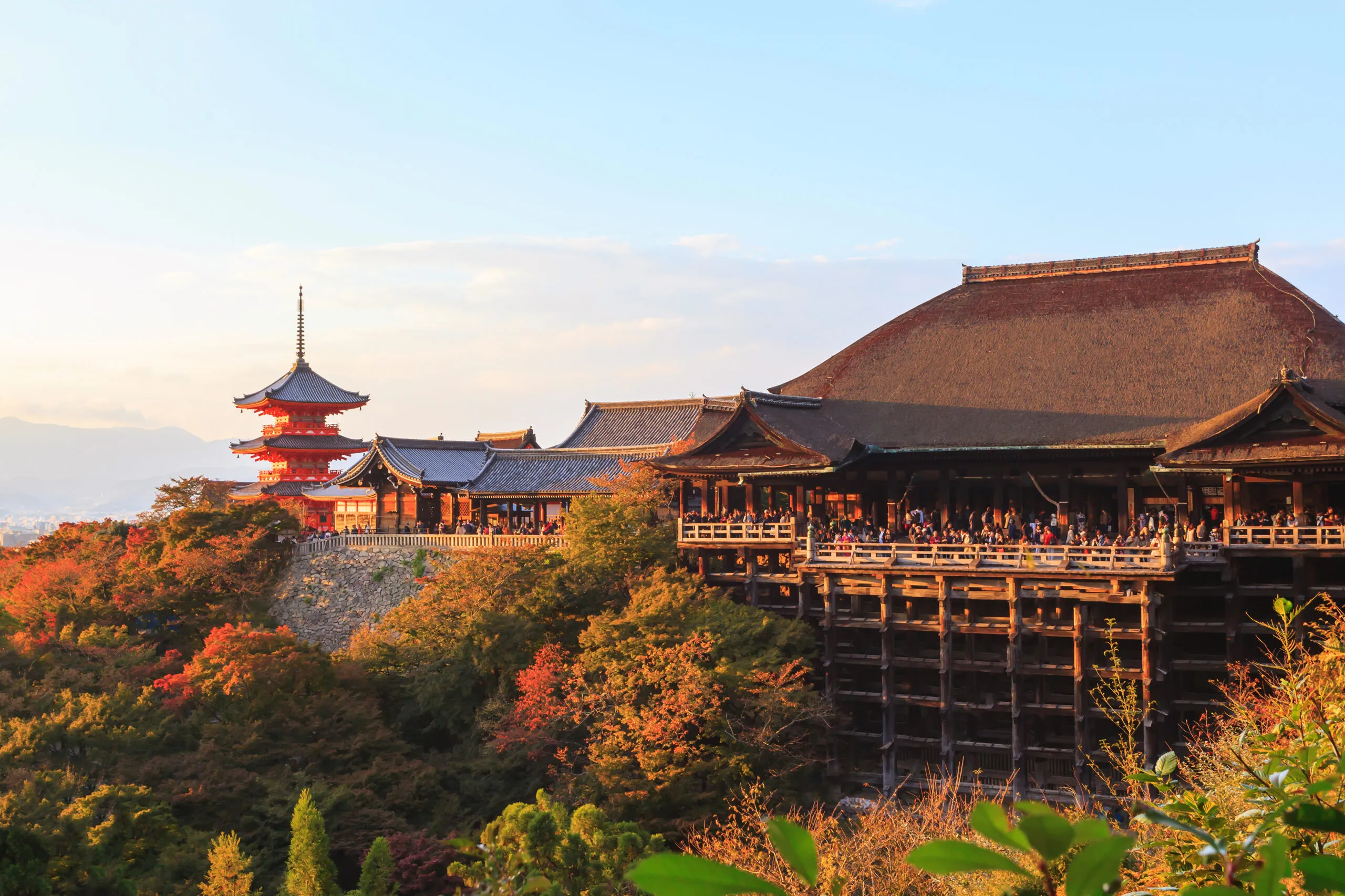
Kiyomizu-dera is the pleasant surprise, and among the best-solved: its step-free route runs immediately left of the regular approach and circles the whole grounds without a step. If pushing a chair uphill is too much, cars can enter from the top of Chawan-zaka — the “teapot lane” slope — along the temple’s own disaster-prevention road to a drop-off by the Main Hall. The temple lends no wheelchairs, though, so bring or rent one first; it opens at six, when Higashiyama is quietest.
Reference: Visitor FAQ – Kiyomizu-dera
Both Kiyomizu and Nijo waive admission for a disabled visitor and one carer, but a disability certificate issued outside Japan does not qualify for free admission here.
Nijo Castle
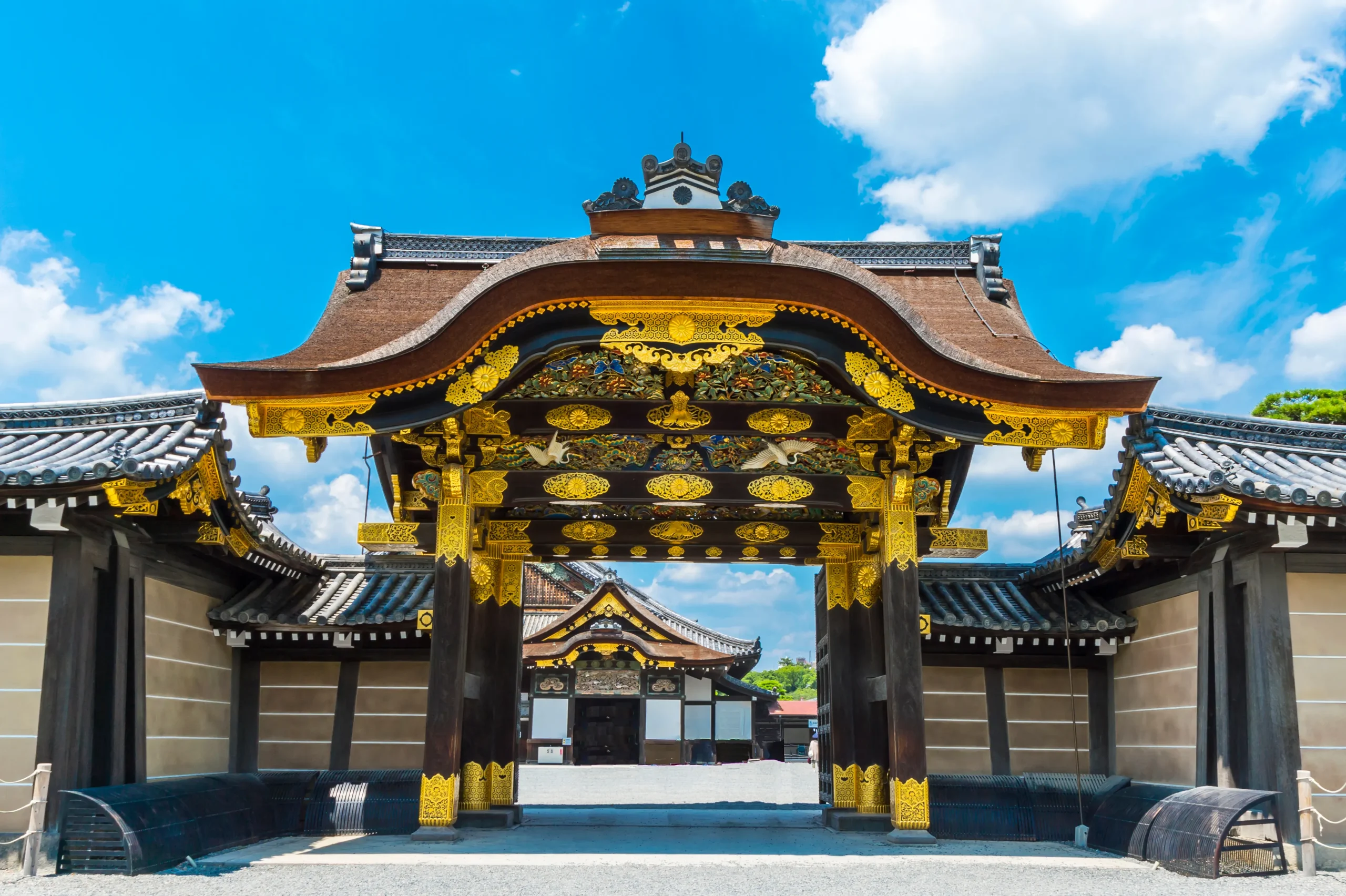
Nijo Castle is flat but gravelly. The castle lends electric wheelchairs free at the General Information Desk — but these are power-assist chairs: manual chairs with a motor that helps whoever is pushing, not a self-drive powerchair the occupant steers alone. Someone has to push. Separate indoor chairs are lent for the goten, the palace buildings — but the newest, Honmaru-goten, is advance-web-booking only, from thirty days out, and even fee-exempt visitors must reserve — so if the palace interiors matter to you, lock Nijo into the calendar before the rest of the trip firms up.
Reference: Services for Visitors – Nijo Castle, City of Kyoto (Official Website, Japanese)
Kinkaku-ji
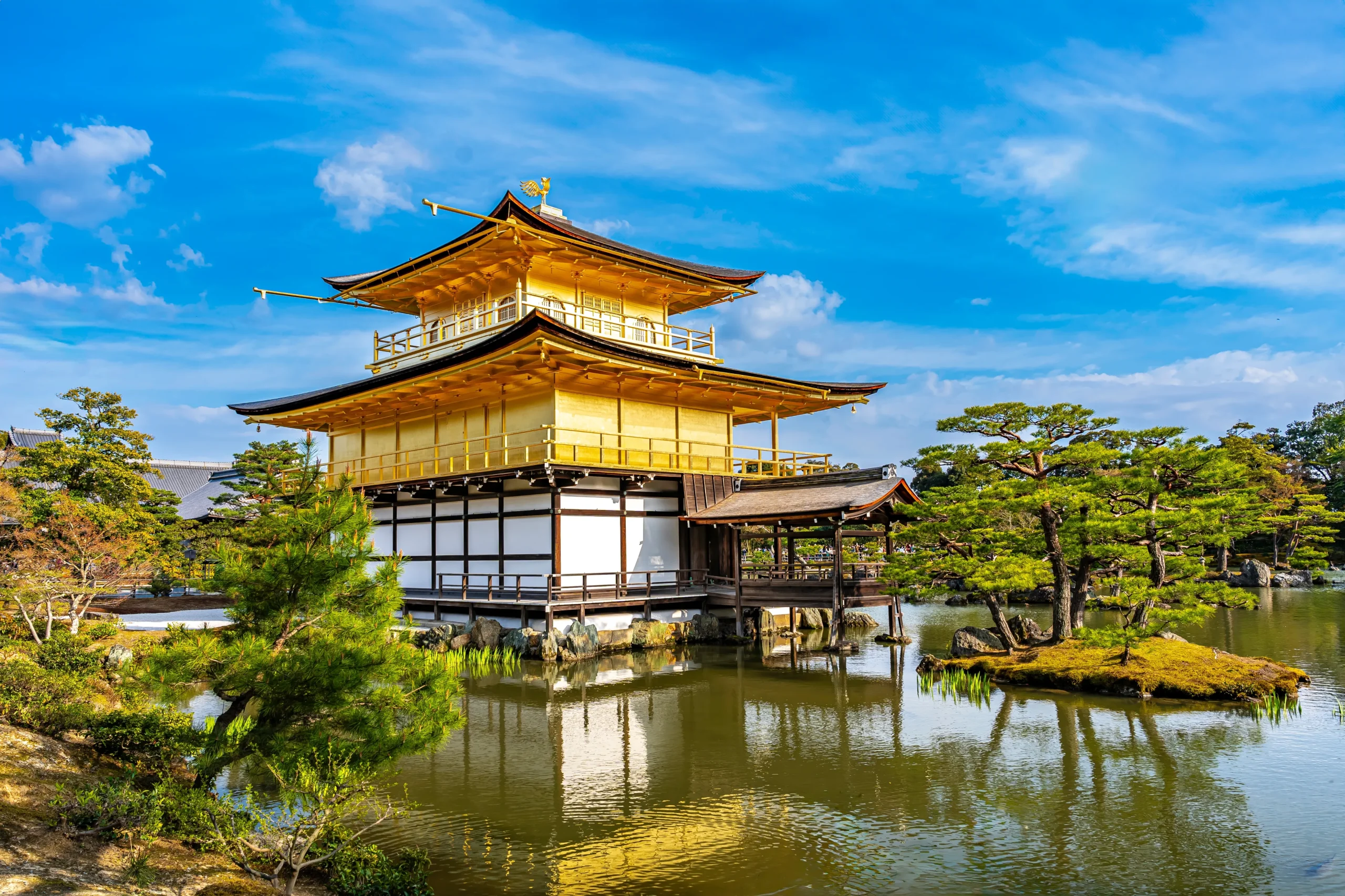
Kinkaku-ji — the Golden Pavilion, not the Silver, which is a separate temple people confuse it with — lets you reach the classic view across the pond, and that view is the whole reason to come. You get to it on the level, and it’s the one vantage every photograph is taken from. Beyond it the garden climbs on steep steps that may be difficult for anyone using a cane or unsteady on their feet, so take the postcard shot and don’t push for the rear loop.
Reference: Kyoto Attractions UD Map – Bukkyo University (Official Website, Japanese)
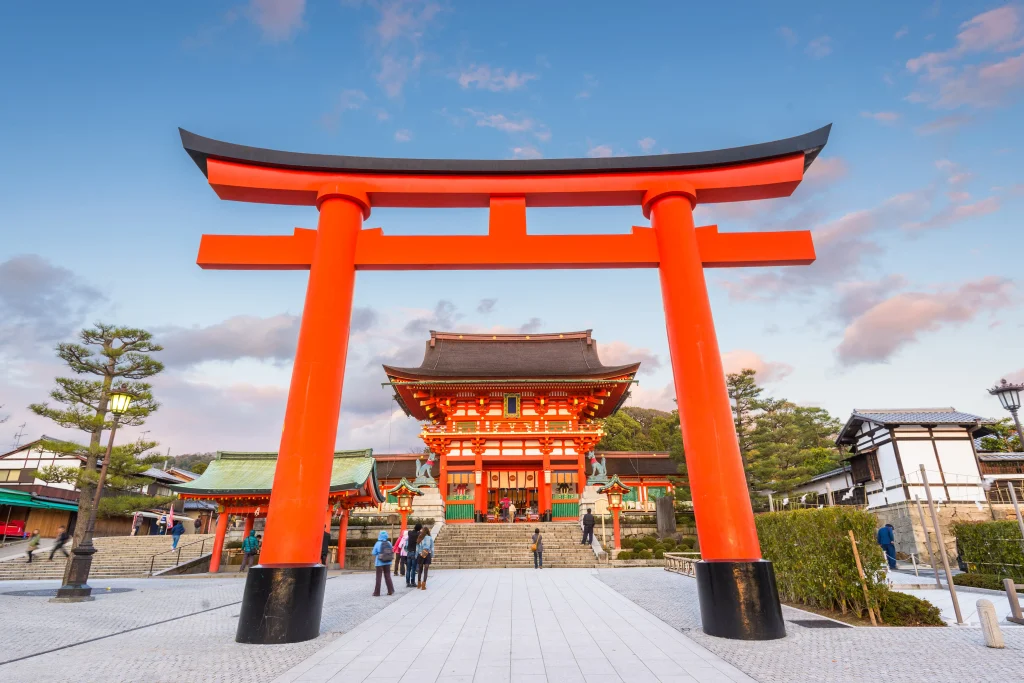
Fushimi Inari Taisha
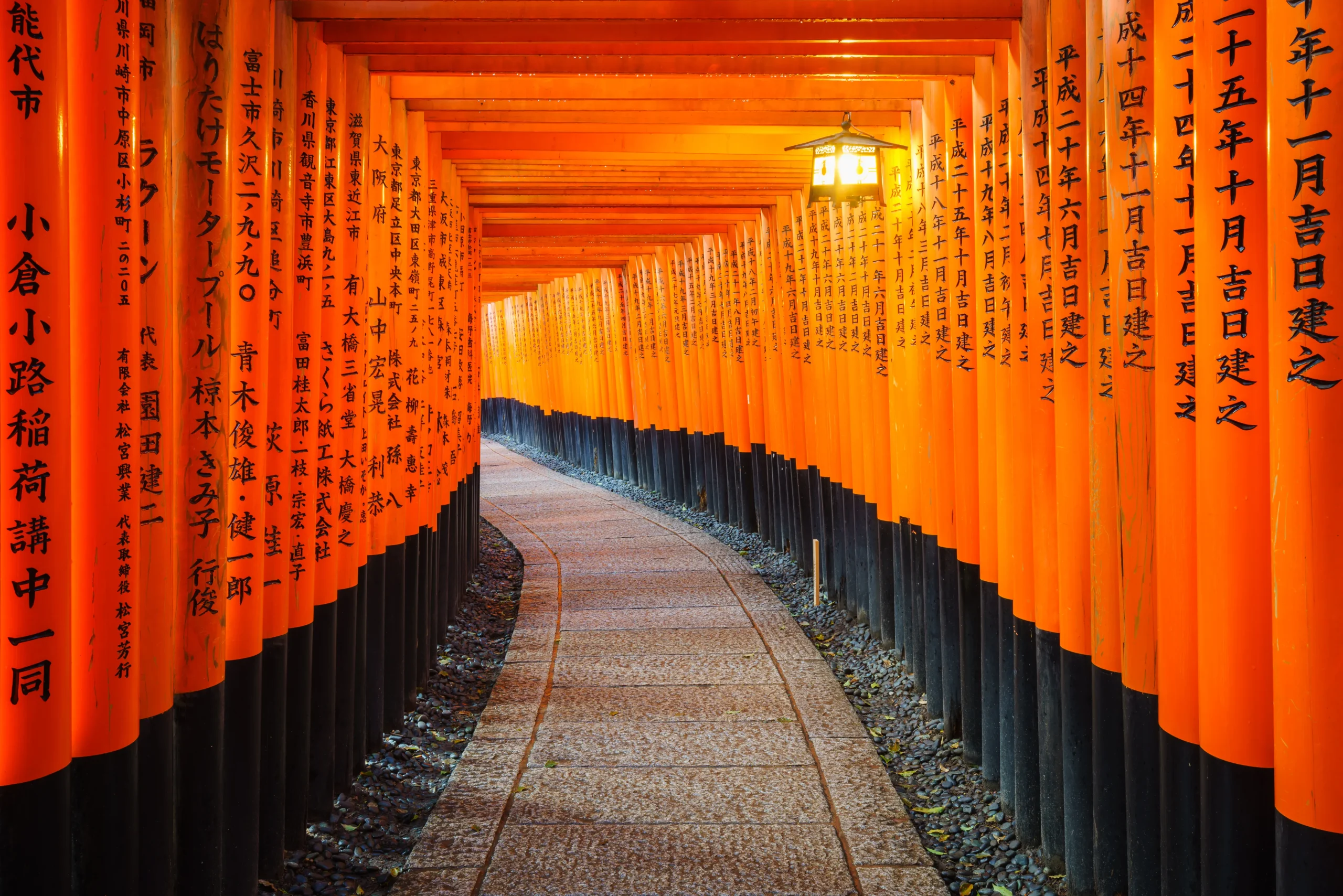
Fushimi Inari Taisha is the one to treat with care. The JR Nara Line’s “Inari” station sits right at the entrance, and the base precinct — around the great gate and the first of the vermilion torii, the shrine gates — is flat. Beyond the opening stretch of the Senbon Torii, the “thousand gates” path, the way climbs on stone steps. A step-free route toward the Okusha — the inner worship hall partway up — may exist, but it isn’t reliably confirmed, so ask staff on the day rather than counting on it. Plan on the base precinct, and treat the upper mountain as likely too much for anyone unsteady on their feet. That opening tunnel of gates is the image most people picture when they think of the shrine, so a flat visit still delivers its signature sight.
Reference: Access – Fushimi Inari Taisha (Official Website, Japanese)
Tenryu-ji
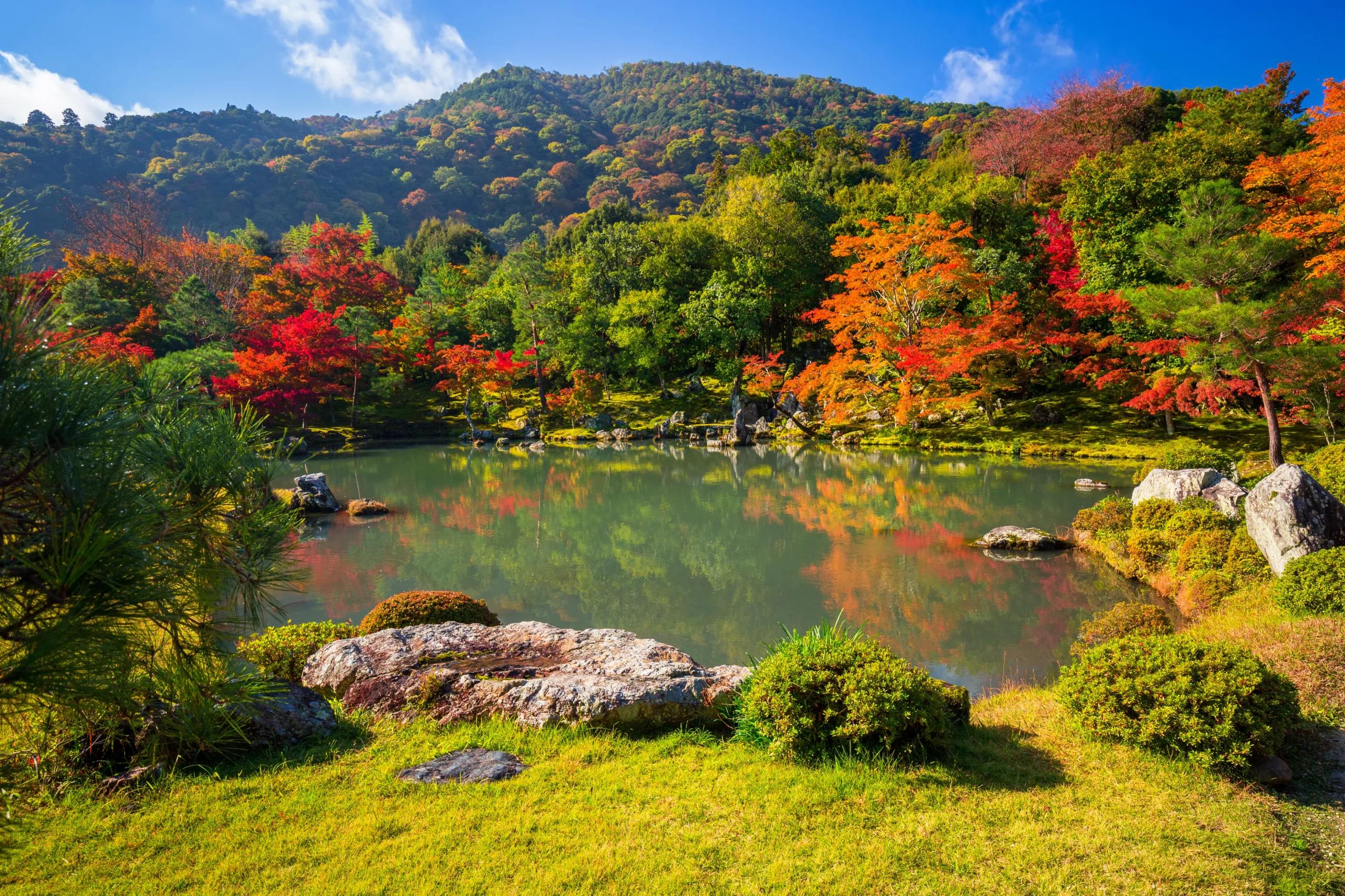
Tenryu-ji, in Arashiyama, is well set up. The Randen tram — the little Keifuku-line streetcar — stops right beside it, and the garden is wheelchair-doable, with an accessible toilet inside it. A Japanese disability certificate gets the holder and one carer ¥100 off. The bamboo grove alongside is a gentle but genuinely long slope — pace it.
Two more are safe when you want somewhere calm and level: Sanjusangendo, whose long hall of a thousand carved figures runs entirely flat and lends wheelchairs on site, and Toei Uzumasa, a flat film-set park with ramps at every step. One rule of thumb ties the list together: if someone can push a chair, Kiyomizu-dera’s step-free loop is the famous site that most repays the effort; if you’re on your own, Sanjusangendo and Tenryu-ji ask the least of anyone.
Getting between sites: the subway spine and the last hill
Move by subway wherever you can. Every station on both lines — Karasuma and Tozai — has an elevator from street to platform and a wheelchair-accessible toilet, which makes it the low-fatigue spine of a slow day. City buses help too — 789 of the fleet’s 810 vehicles, about 97 percent, are low-floor as of end-2025 — but Kyoto’s tourist routes run standing-room, a different problem from a step. For the genuine hills — up to Kinkaku-ji, which has no nearby station, or the top of the Higashiyama lanes — a taxi is the calmer spend.
Reference: Subway Station Facilities – City of Kyoto Transportation Bureau (Official Website, Japanese)
The one place “every station has an elevator” quietly breaks down isn’t a station: the underground passage linking the Karasuma-line Shijo station to the Hankyu railway uses a staff-operated stairlift over a roughly two-metre height gap, not an elevator. Ask staff there rather than assuming a lift. Around Higashiyama, do the reverse of the guidebooks and walk it top-down — start at Kiyomizu, and the city’s accessible route runs mostly downhill over the old stone-paved streets.
Renting a wheelchair, and planning the day around toilets
If you need a chair for the day, you don’t have to default to Kyoto Station. Free loaner wheelchairs are lent there — at Kyo Navi, the tourist information center on the second floor, on a refundable deposit, same-day, no reservations — but the city also lends them free at five scattered neighborhood points, each phone-listed, same-day-only, deposit returned when you bring the chair back. Collect one near where your day actually starts, not at the station.
| Pickup point | Area | Hours | Terms |
| Kyo Navi (Kyoto Station, 2F) | Kyoto Station | Check current hours | Refundable deposit · same-day · no booking |
| Cycle shop / tourist car park | Arashiyama | 9:00–17:00 | Free · same-day · no booking |
| Nishijin Textile Center | Nishijin | 10:00–16:00 | Free · same-day · no booking |
| A hotel front desk | Sanjo | 11:00–18:00 | Free · same-day · no booking |
| Incense culture museum | Oike | 10:00–17:00 | Free · same-day · no booking |
One point, the Nishijin Textile Center in Kyoto’s old weaving district, doubles as a place to see the craft. Read More: Nishijin-ori: Kyoto’s woven silk tradition
Reference: Free Wheelchair Rental Points – Kyoto Universal Tourism Navi, City of Kyoto (Official Website, Japanese)
Plan the day around toilets, not attractions. Specific accessible restrooms sit along the way — four on the Higashiyama walk down from Kiyomizu, one inside the Tenryu-ji garden — and every subway station toilet is a dependable fallback between them. And be realistic about how much fits: the terrain — Nijo’s gravel, Kiyomizu’s roundabout step-free route, the walk to Kinkaku-ji, that long Arashiyama slope — argues for one or two sites a day with a real seated rest, not the four to six a guidebook implies. Build one good day and repeat it.
Where to stay: Kyoto’s barrier-free lodging register
The single most useful pre-booking tool for this trip is the City of Kyoto’s barrier-free lodging register — 136 vetted properties, ninety-nine of them hotels and ryokan, the traditional Japanese inns, and thirty-seven simpler lodgings. Each carries an information card recording the real hardware — elevators, multipurpose toilets, roll-in showers, accessible rooms — and services like written communication for deaf or hard-of-hearing guests. You can filter it by tourism area — Gion and Kiyomizu, Arashiyama, around Kinkaku-ji — so you book near where you’ll spend your days. Book by the feature you need — a roll-in shower, a step-free room — not a booking-site photo, and stay in one base to cut transit.
Reference: People-Friendly Lodging Information – City of Kyoto (Official Website, Japanese)
When to go: fitting a slow day into a quiet window
A slow pace needs thin crowds, and Kyoto publishes an oddly precise tool for finding them. Its official Tourism Comfort Map forecasts how comfortable each of about seven areas — Arashiyama, Gion-Kiyomizu, Fushimi and others — will be hour by hour, from mobile-phone location data and weather, updated monthly and shown up to two months ahead. Run by the City and its tourism association, it lets you pick not just the day but the hour to land the quiet window a slow visit needs. The city also issues seasonal congestion advisories for the spring and Golden Week crushes to steer clear of. You don’t need exact foliage or blossom dates — the busiest stretches are the late-November colors and the cherry blossom in late March into April, and the map shows the calmer slots inside them.
Reference: Kyoto Tourism Comfort Map – City of Kyoto & Kyoto City Tourism Association (Official Website, Japanese)
Making it hold together
None of it is hard once assembled — the work is the assembling. The useful information is scattered across municipal databases, phone-only rental desks, and official pages, and pulling it into one reliable plan takes real legwork. Piecing the site sequence, the wheelchair pickup near your base, the vetted lodging and the quiet-window timing into a single itinerary is exactly the kind of detail a planning service earns its keep on. That’s what ENJYU JAPAN’s local-guide network does through a fully Tailor-Made Tour — confirming each site against what’s actually true on the ground, so a slow, unhurried Kyoto holds together in practice, not just on paper. If that sounds like the trip you’re weighing, it’s worth a conversation before you book.