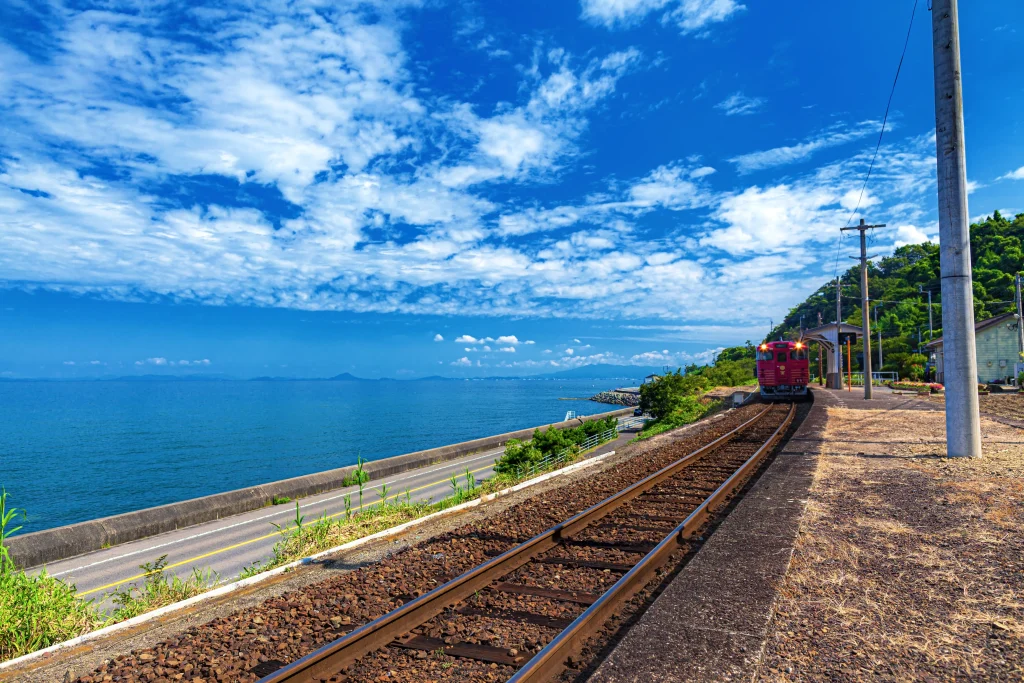
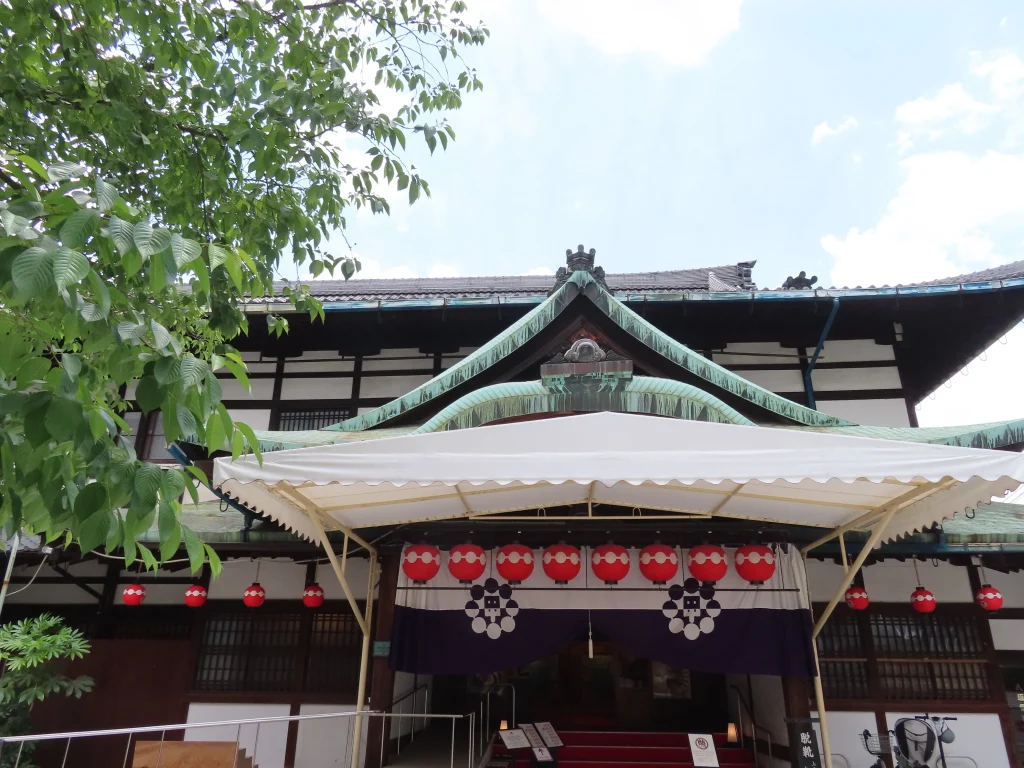
A river flashes turquoise below an open carriage. In Kyoto, maple leaves crowd the windows until the track almost disappears. Farther north, snow sweeps across fields while dried squid cooks over a coal stove inside an old wooden train.
Japan has dozens of rail journeys like these, and trying to fit all of them into one trip would be exhausting. The eight below offer very different experiences, from a 25-minute ride near Kyoto to a five-hour journey along the Sea of Japan.
The useful question is not simply, “Which train is the most beautiful?”
It is: “Which one makes sense for the route you are already planning?”
Eight Scenic Trains at a Glance
| Train | Region | What makes it stand out | Best time | Approx. ride | Booking |
|---|---|---|---|---|---|
| Sagano Romantic Train | Kyoto | Hozu Gorge and easy access from Arashiyama | Spring / autumn | 25 min | Book ahead in busy periods |
| Kurobe Gorge Railway | Toyama | Open carriages and steep mountain scenery | Summer / autumn | Varies in 2026 | Advance booking recommended |
| Panorama Train KIRARA | Kyoto | Large windows and the maple tunnel | Autumn | About 30 min | No reservation |
| Tsugaru Stove Train | Aomori | Coal stoves, snow and old railway cars | Winter | About 45–50 min | Check winter timetable |
| Resort Shirakami | Akita–Aomori | Sea of Japan coast and a long regional journey | Spring–autumn | About 5 hr | Reserved seats |
| 52 Seats of Happiness | Tokyo–Chichibu | Full-course dining without leaving the Tokyo area | Selected dates | About 2.5–3 hr | Reservation required |
| Iyonada Monogatari | Ehime | Seto Inland Sea views and regional food | Selected dates | About 2 hr | Advance booking |
| Koshino Shu*Kura | Niigata | Sake, food and Sea of Japan scenery | Selected dates | Several hours | Advance booking |
Some of these trains exist mainly for the view. Others combine the scenery with food, regional culture or unusual interiors. That is why a train that sounds less dramatic on paper may suit your trip much better than one that requires a two-day detour.
If You Are Choosing by Season
Four trains fit particularly well with a specific time of year.
Spring: Sagano Romantic Train for blossoms and fresh greenery around Kyoto.
Summer: Kurobe Gorge Railway for open carriages and deep green mountain valleys.
Autumn: KIRARA for the maple-lined Kurama route.
Winter: Tsugaru Stove Train for snow, coal heat and a railway experience that only really makes sense in the cold.
Read more: Best Season to Visit Japan
1. Sagano Romantic Train in Kyoto
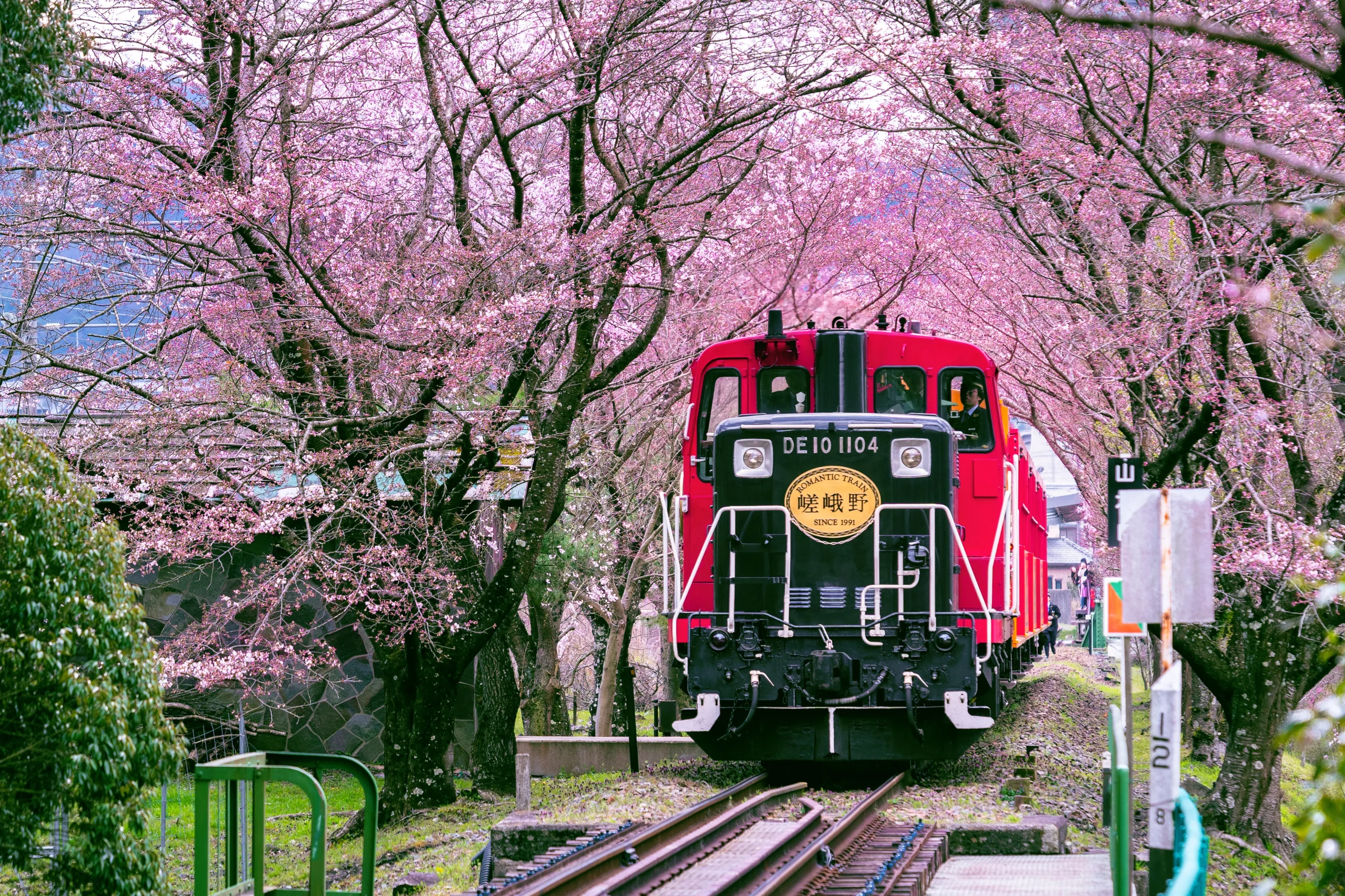
The train leaves Arashiyama and follows the Hozu River into a wooded gorge. The ride is short, but the scenery changes quickly. Spring brings fresh green slopes and blossoms; autumn covers the same valley in red and orange.
For most travelers, this is the simplest scenic train to add to an existing Japan itinerary.
The Sagano Romantic Train runs between Torokko Saga and Torokko Kameoka in about 25 minutes. If Arashiyama is already on your Kyoto plan, you can fit the ride into the same morning or afternoon rather than setting aside a separate travel day.
Car No. 5, called “The Rich,” is the most exposed to the scenery. It has an open design without conventional side windows, so you feel more of the air coming through the gorge. It also means you are more exposed to bad weather. Umbrellas cannot be used onboard, so a raincoat is the better choice when rain is likely.
Current adult fare is ¥880 one way, and the Japan Rail Pass does not cover the line. Online reservations open one month before travel, while same-day tickets are sold if seats remain.
One nice way to avoid simply retracing the route is to take the train in one direction and return through the gorge on the Hozugawa boat ride.
If you are already in Kyoto, Sagano is easy to recommend. Traveling across Japan specifically for a 25-minute ride would be harder to justify.
2. Kurobe Gorge Railway in Toyama
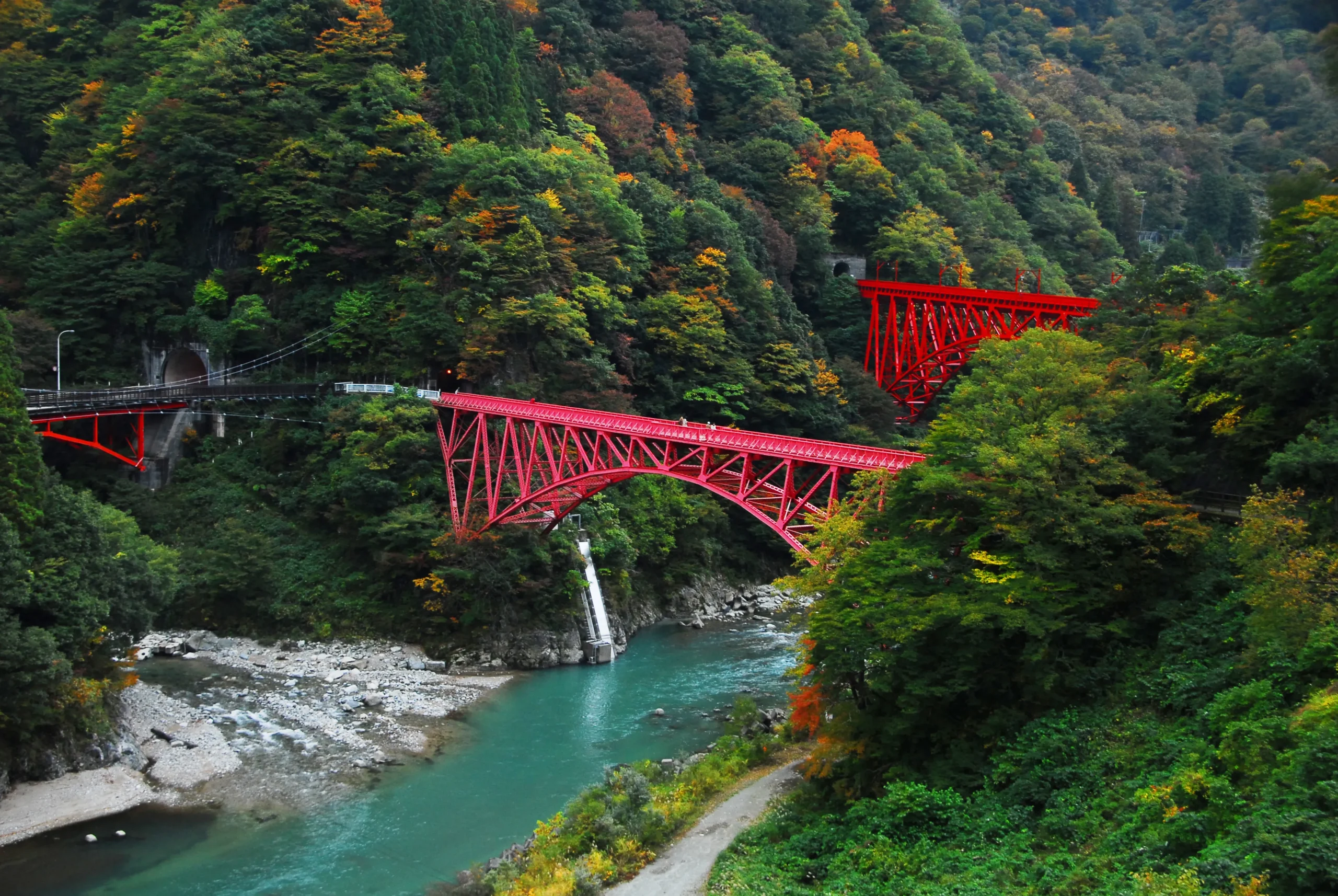
Kurobe feels very different.
The small orange carriages disappear into tunnels and then emerge above blue-green water, steep cliffs and thick mountain forest. On the open cars, there is very little separating you from the air outside.
The Kurobe Gorge Railway starts at Unazuki in Toyama Prefecture and normally runs deep into the Kurobe Gorge.
A temporary situation in 2026
Repairs are still continuing after damage connected with the 2024 Noto Peninsula earthquake.
Until September 30, 2026, trains run only between Unazuki and Nekomata. The shortened return journey takes roughly two hours.
Full service to Keyakidaira is scheduled to resume on October 1, 2026. Some parts of the sightseeing area around Keyakidaira will still have restricted access while restoration work continues.
For summer 2026, the adult return fare to Nekomata is ¥2,820. From October, the published fare between Unazuki and Keyakidaira is ¥2,480 one way.
There are no toilets onboard, which is worth knowing before boarding.
Getting there also takes more effort than Sagano. From the Hokuriku Shinkansen at Kurobe-Unazuki-Onsen, you transfer to the Toyama Chihō Railway and continue to Unazuki-Onsen. The gorge railway’s Unazuki Station is nearby.
This journey makes far more sense if Toyama or Hokuriku is already part of your trip. An overnight stay around Unazuki can also make the day much less rushed.
3. Panorama Train KIRARA in Kyoto
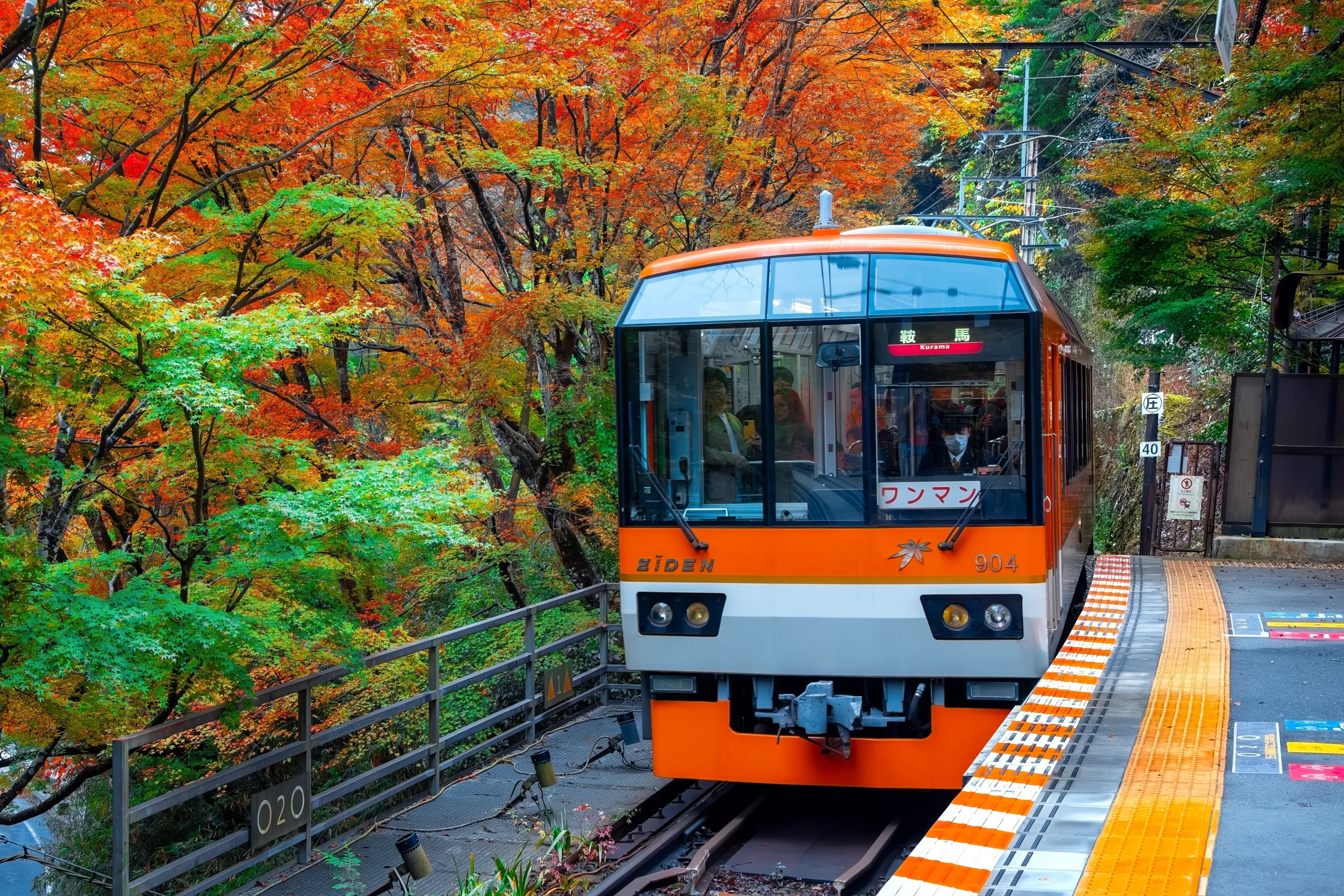
KIRARA begins as an ordinary-looking trip out of Kyoto. Gradually, the city falls away and the railway climbs toward Kurama.
Then the trees close in.
Between Ichihara and Ninose, the train passes through a roughly 250-meter stretch surrounded by around 280 maple trees. In autumn, the leaves fill much of the view from the windows.
KIRARA was designed with large windows and some seating positioned toward the scenery. No special ticket is needed: it runs on the normal Eizan Railway fare, and there is no reservation or surcharge.
The journey from Demachiyanagi to Kurama takes around 30 minutes.
The maple tunnel is best known for autumn, but the same stretch is green and dense in early summer. Ordinary Eizan trains use the same route too, so missing KIRARA itself does not mean missing the scenery completely.
The train works best as part of a day around Kurama or Kibune. Pairing it with temples, walking and time in the mountains gives the ride a reason to be there.
Read more: Japan in November
4. Tsugaru Stove Train in Aomori
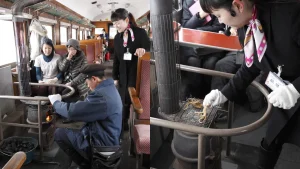
Here, the train would lose much of its appeal without winter.
Snow stretches across the Tsugaru plain while coal burns inside old passenger cars. Dried squid can be grilled over the stove, and the warmth inside feels very different from the landscape outside the window.
The Tsugaru Railway Stove Train runs between Tsugaru-Goshogawara and Tsugaru-Nakazato from December 1 to March 31.
A Stove Train ticket costs ¥1,000 one way in addition to the normal railway fare. The Tsugaru Free Pass cannot be used instead.
The line also offers a Stove Bento, currently ¥1,500. It needs to be ordered at least three days in advance, with a minimum order of two.
This is one train where the inconvenience is part of the decision. Aomori is far from the usual Tokyo–Kyoto–Osaka route, and the train itself is not enough reason for most first-time visitors to make the journey north.
But if you already want to experience winter in Tohoku, the Stove Train fits naturally into that trip.
5. Resort Shirakami between Akita and Aomori
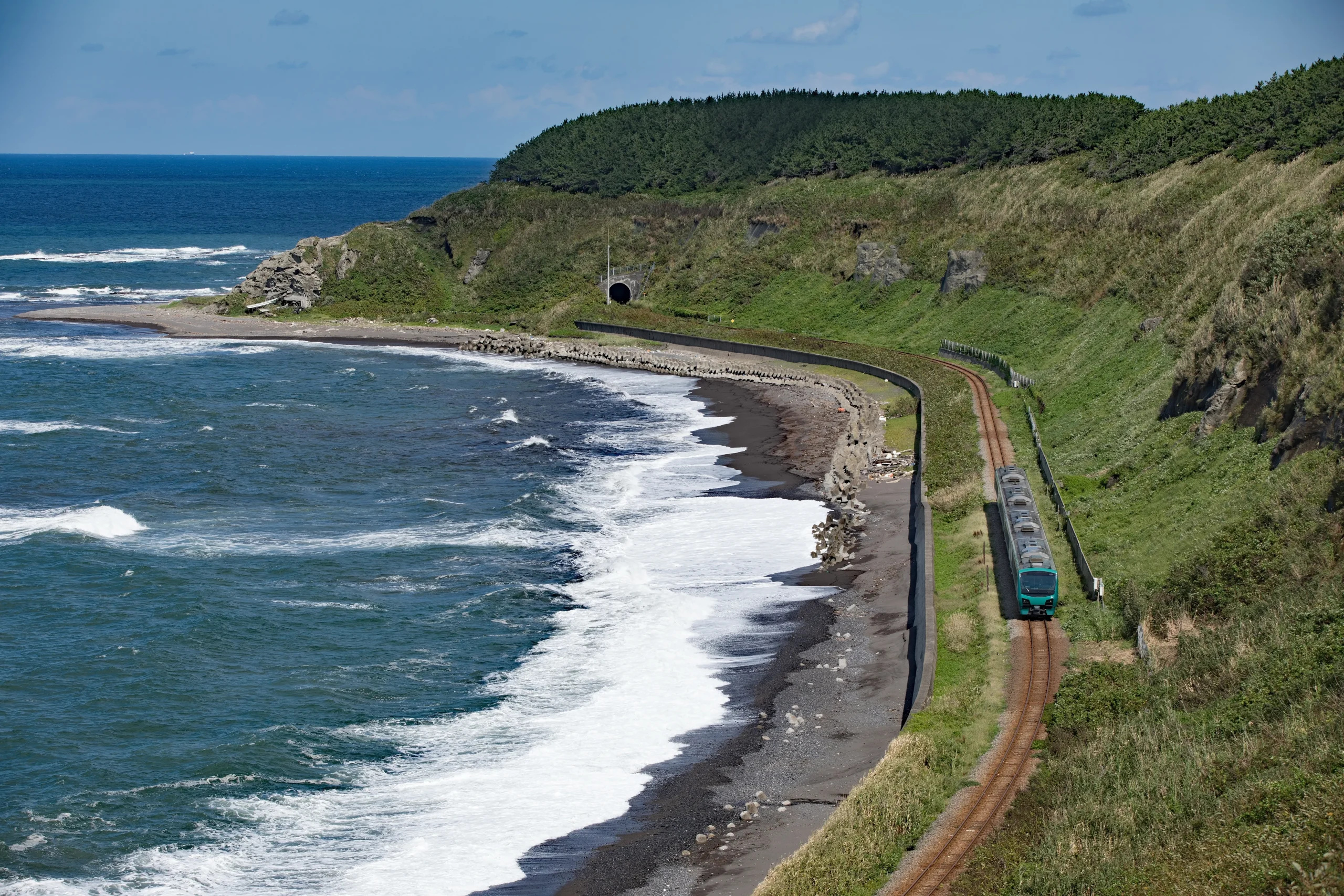
Resort Shirakami solves a different problem: it can turn a long transfer into a sightseeing day.
The train follows the Gonō Line along the Sea of Japan, passing stretches of coast, small towns and landscapes around the Shirakami region. A full journey between Akita and Aomori takes a little over five hours.
That sounds long if you compare it with a faster train connection. It sounds much more reasonable if you already need to travel through northern Honshu.
Three different train sets operate on the service: Buna, Aoike and Kumagera. Their interiors draw on scenery and materials associated with the region, and some services include regional performances onboard.
All seats are reserved. Reservations are available through JR East, including its English reservation system, and applicable JR passes can cover the journey within their valid areas. A seat reservation is still required.
Resort Shirakami is a good example of when slow travel works well. If you have five hours to get from Akita toward Hirosaki or Aomori anyway, the scenic route may be worth the extra time.
Taking a long round trip from Tokyo just to ride it is a much less convincing use of a limited itinerary.
6. 52 Seats of Happiness from Tokyo to Chichibu
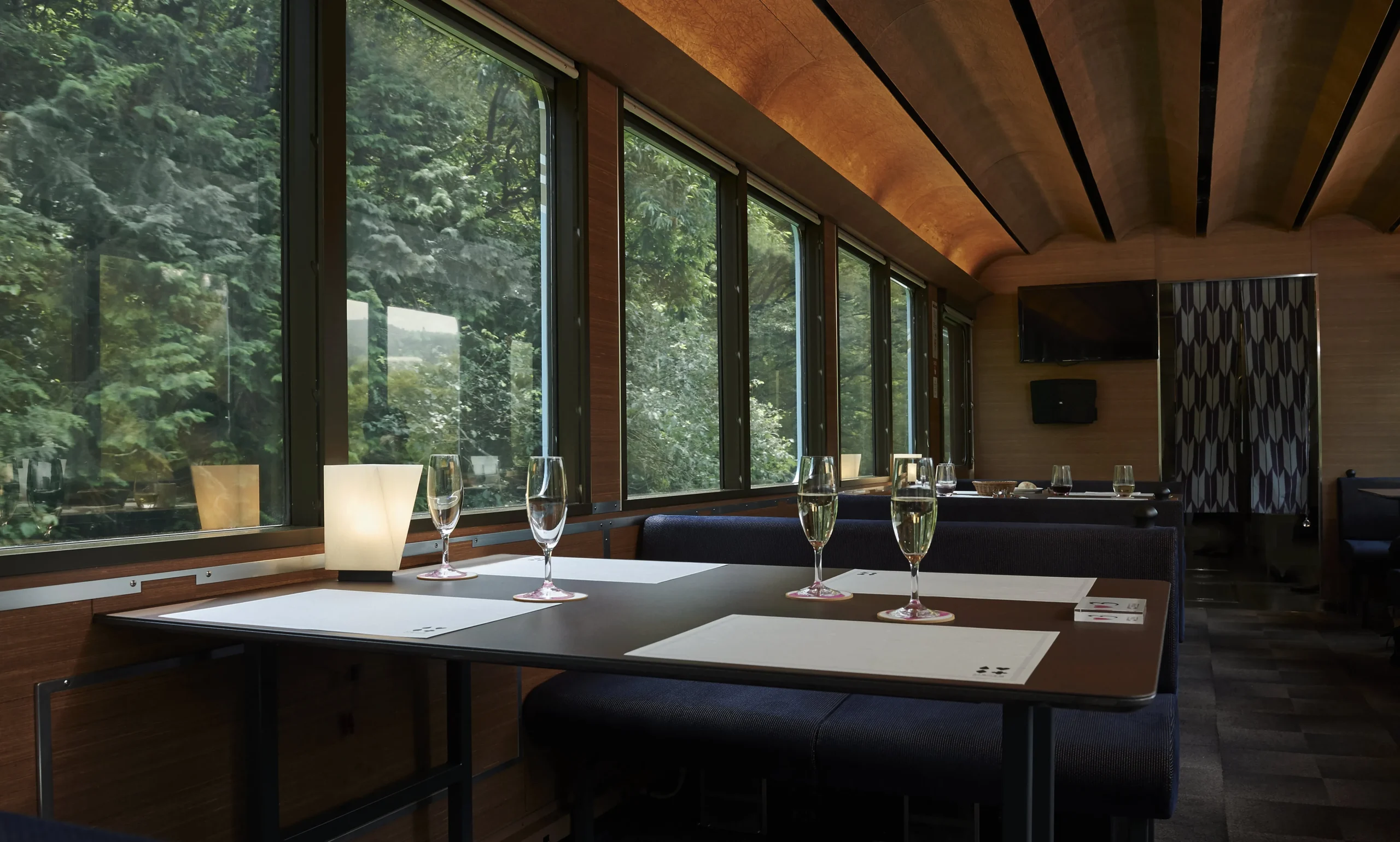
52 Seats of Happiness earns its place on this list for almost the opposite reason.
You do not need to travel far to reach it.
52 Seats of Happiness, the Seibu Railway restaurant train, leaves the Tokyo area and heads toward Chichibu while passengers eat a full-course meal onboard. The landscape becomes greener as the train moves away from the city, but the meal and the train interior are as important as the view.
The train carries just 52 passengers, which explains the name.
Brunch services generally travel from central Tokyo toward Seibu-Chichibu, while dinner services run back toward Tokyo. The journey takes roughly 2.5 to 3 hours.
For 2026, the official price is ¥16,000 for brunch and ¥19,000 for dinner. The price includes the course meal, a Seibu 1Day Pass, taxes and a souvenir.
Reservations are required, and sales open well before the travel date. Outside food and drinks cannot be brought onboard.
There is also one practical limitation for solo travelers: Seibu’s direct tour booking does not offer single-person seating, although some travel agencies may have separate plans.
For travelers staying mainly in Tokyo, this is one of the most convenient ways to try a special sightseeing train without reorganizing the rest of the trip. You can also spend time in Chichibu rather than treating the train as a return journey with no destination attached.
7. Iyonada Monogatari in Ehime
Iyonada Monogatari is built for taking your time.
The train runs along western Ehime with views across the Iyo Sea while regional food is served at the table. Small stations and coastal towns pass slowly outside.
Several services operate between Matsuyama, Iyo-Ozu and Yawatahama, with the route and meal changing depending on the time of day.
A typical journey lasts around two hours.
Booking takes more attention than with most trains on this list. The railway ticket and meal reservation are separate, and the meal has to be booked in advance. Travelers who want to eat onboard need tickets covering the full route of that particular service.
This is also not a train to squeeze into a rushed day. It makes much more sense if Matsuyama or western Shikoku is already part of your route.
The reliable attraction is the sea. Later services can also have lovely evening light, but sunset depends on the season and timetable, so it is better seen as a bonus than a promise.
8. Koshino Shu*Kura in Niigata

Koshino Shu*Kura is less about one spectacular view and more about where the train is traveling.
It runs through Niigata, a region closely associated with rice and sake. Inside, passengers can taste local sake while the train moves through countryside and along parts of the Sea of Japan coast.
There are three related services:
- Koshino Shu*Kura: Jōetsumyōkō to Tōkamachi
- Yuzawa Shu*Kura: Jōetsumyōkō to Echigo-Yuzawa
- Ryuto Shu*Kura: Jōetsumyōkō to Niigata
Operating dates vary, so this is a train to check before finalizing the surrounding itinerary.
Regular reserved seating can be booked through JR East, while some special seating and food packages use a separate reservation system.
There is also a tasting area onboard where additional Niigata sake can be sampled for a fee.
For someone interested in Japanese sake, Shu*Kura gives a regional trip a clear theme. For someone looking only for dramatic mountain or coastal scenery, several of the other trains in this guide would be stronger choices.
Read more: Things to Do in Niigata
Why Take a Slow Train When Japan Has the Shinkansen?
The shinkansen is good at making distance disappear.
Scenic trains make you notice it.
On a slower route, the city gradually becomes countryside. A coastline can stay beside the tracks for an hour. Mountains appear long before the train reaches them. Food served onboard often comes from the region outside the window.
That does not automatically make the slower route better.
On a seven-day trip, spending five hours aboard Resort Shirakami may be difficult to justify. On a two-week route that already takes you from Akita toward Aomori, the same train can replace an ordinary transfer and become one of the more memorable parts of the journey.
A Few Things to Check Before Booking
Scenic and sightseeing trains in Japan do not share one reservation system or one set of rules.
Before building your itinerary around a particular service, check these points.
Operating days
Some trains run daily during their season. Others operate only on selected weekends, holidays or published dates.
The Stove Train is a winter experience. Resort Shirakami, 52 Seats of Happiness, Iyonada Monogatari and Koshino Shu*Kura all require checking an operating calendar.
Reservation window
Sagano opens online bookings one month ahead. JR reserved seats generally open one month before departure. 52 Seats of Happiness opens reservations earlier.
If a particular train matters to your trip, secure it before filling the same day with smaller reservations.
Rail pass coverage
Do not assume a Japan Rail Pass covers every train in this article.
Sagano and Eizan Railway are not JR lines. Some JR sightseeing trains are covered by eligible passes but still require a seat reservation, and a few routes include sections operated by another railway company.
Meals
Dining trains handle meals differently.
The meal is included in the 52 Seats of Happiness package. Iyonada Monogatari requires a separate meal reservation. Shu*Kura offers both regular seats and special food-and-drink packages.
Check this before assuming the seat you booked includes the experience you saw in photographs.
Which Train Makes Sense for Your Route?
If you are already spending time in Kyoto, Sagano is the easiest addition. KIRARA works well for a trip north toward Kurama, especially in autumn.
For Toyama and Hokuriku, Kurobe Gorge offers the strongest mountain scenery of the eight.
In Tohoku, Resort Shirakami works well as part of a longer regional route, while the Tsugaru Stove Train is much more seasonal and makes most sense on a winter trip.
If you are staying mostly around Tokyo, 52 Seats of Happiness gives you a special train experience without requiring another hotel or a long-distance detour.
Travelers exploring Shikoku can build a slow afternoon around Iyonada Monogatari.
And if food, sake and regional culture interest you as much as the scenery, Shu*Kura gives Niigata a strong reason to become more than a place you simply pass through.
There is also nothing wrong with deciding that none of them fits.
A scenic train is much more enjoyable when it belongs naturally in the trip than when several days have to be rearranged just to reach it.
Fitting a Scenic Train Into a Wider Japan Trip
Timetables are often the easy part. The harder question is whether a limited operating day, regional hotel, onward connection or advance reservation makes sense once the rest of the itinerary is considered.
ENJYU can help incorporate journeys like these into a tailor-made Japan itinerary, including the transport and overnight stays around them.
The aim is not to collect as many special trains as possible. It is to choose the one that makes the journey you were already planning better.