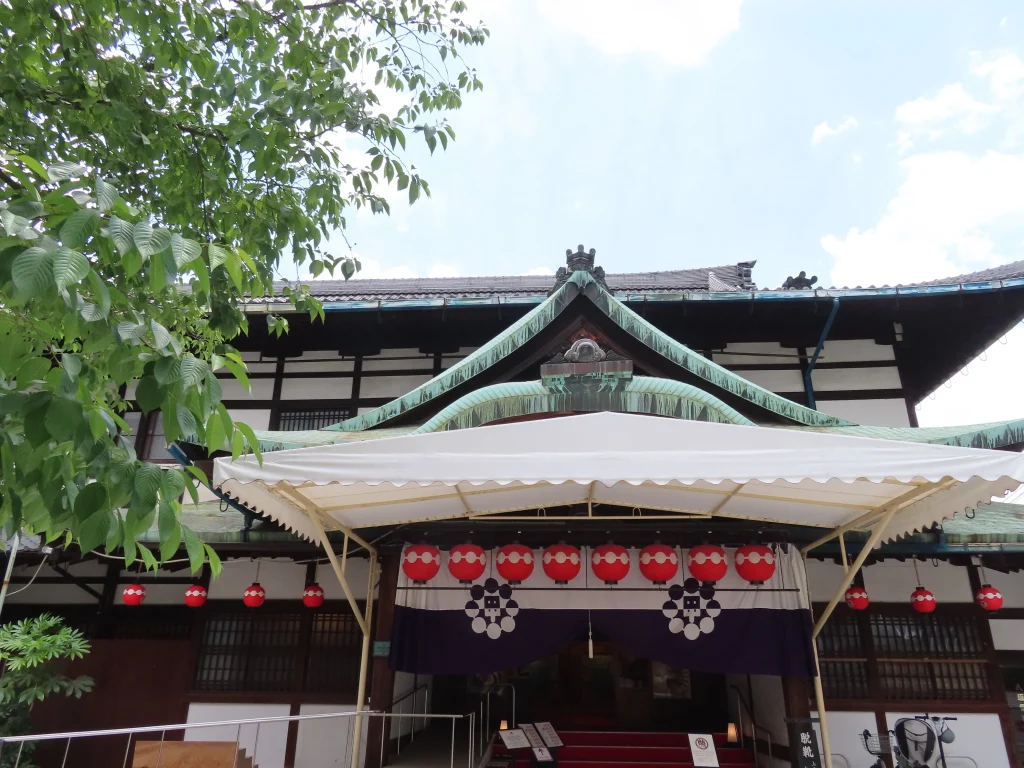
If you find yourself at a loss over which kabuki play to choose, let us begin with the story; a few details should make the choice clearer.
Famous kabuki plays include Kanjinchō, Shibaraku, Sukeroku and Kanadehon Chūshingura. Some centre on heroic entrances or a dangerous exchange of words. Others explore family loyalty, a thief’s disguise, dance or a ghost’s revenge. These ten representative works offer different ways into Japan’s theatre of acting, music and dance.
You do not need to learn the entire repertoire. Choose a story or stage expression that interests you, then match it to the programme for your travel dates. For longer works, the particular scene matters as much as the title.
Famous Kabuki Plays at a Glance
This selection shows the range of kabuki rather than a popularity ranking. Use it to identify what you would enjoy watching, then explore the relevant story below.
| Play | Main appeal | What to identify in the programme |
|---|---|---|
| Kanjinchō | A retainer’s skill under pressure | The checkpoint drama |
| Shibaraku | A hero’s entrance and bold acting | Shibaraku or a named variation |
| Sukeroku | Edo style, rivalry and character | The exact title and production version |
| Benten Kozō | Disguise and a thief’s changing manner | The shop scene, the five thieves or a longer selection |
| Kanadehon Chūshingura | Loyalty and its personal cost | Act numbers and scene names |
| Yoshitsune Senbon Zakura | Warriors, family sacrifice and a fox spirit | Sushiya, Shi no Kiri or other scenes |
| Sugawara Denju Tenarai Kagami | Duty, brothers and family conflict | Kurumabiki, Terakoya or other scenes |
| Renjishi | A parent-and-child lion dance | The title and performing arrangement |
| Kyōganoko Musume Dōjōji | Dance and changing costumes | The exact Dōjōji title and version |
| Tōkaidō Yotsuya Kaidan | Betrayal and supernatural revenge | The scenes included in the production |
Three useful terms may appear in descriptions. Jidaimono are historical plays, while sewamono concern lives closer to those of the original urban audience. Shosagoto refers to dance or dance drama. These describe kinds of performance, not levels of difficulty.
Heroic Entrances and Life in Edo
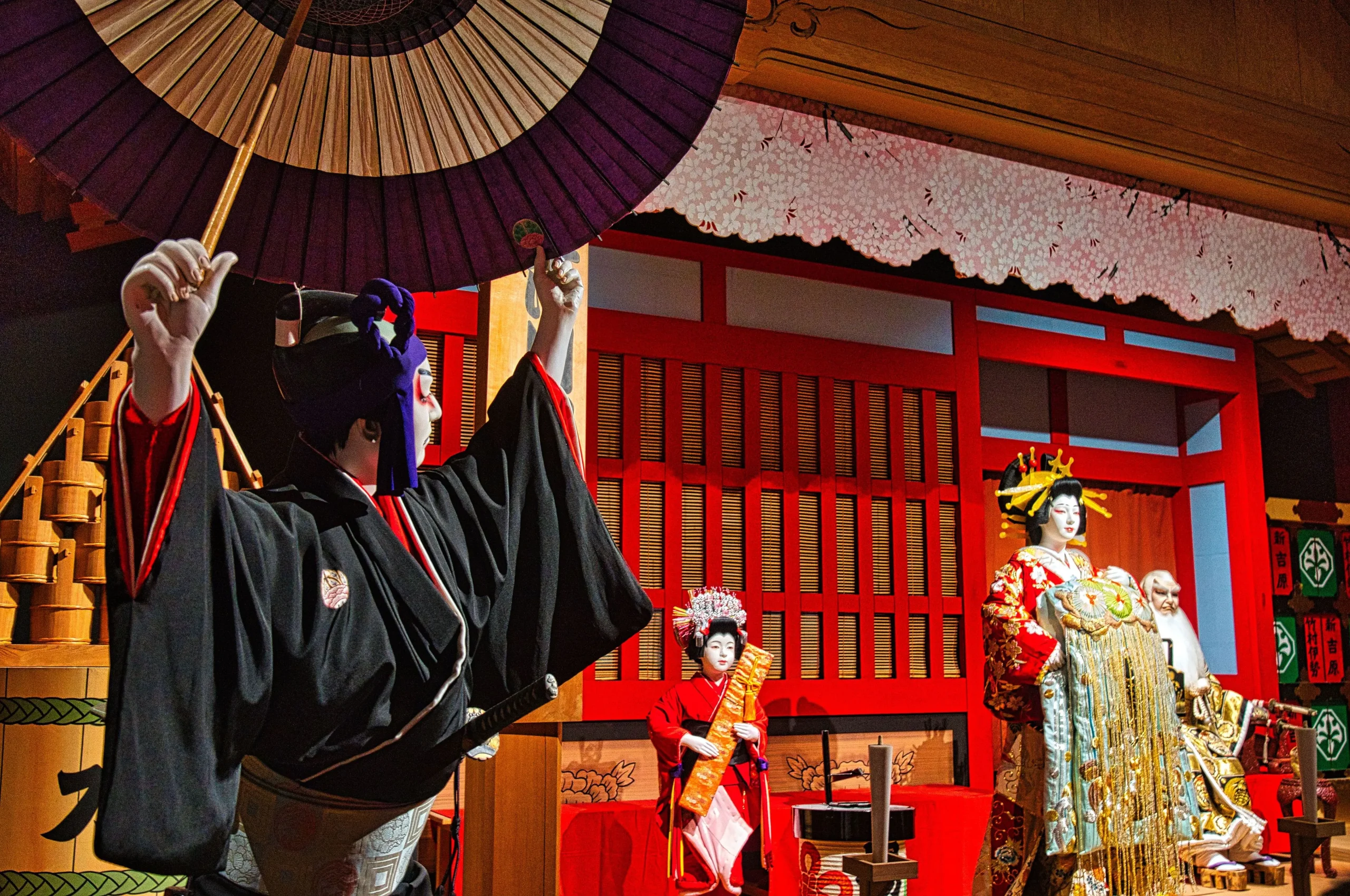
These four works reveal contrasting kinds of stage presence. Understanding what each character wants gives the performance a clearer shape.
Kanjinchō: Benkei at the Checkpoint
Kanjinchō follows the fugitive warrior Minamoto no Yoshitsune and his retainers. Disguised as mountain ascetics—religious practitioners associated with mountain training—they reach a guarded checkpoint.
Benkei claims that the party is collecting money to rebuild a temple. The guard Togashi demands proof, so Benkei improvises a reading from an empty scroll. A harder test follows when suspicion falls on Yoshitsune.
The decisive moment comes when Benkei strikes his own master to maintain their disguise. What appears to be disloyalty becomes an act of protection. Togashi’s response adds another layer: his orders conflict with his sympathy for Benkei. The tension rests on these three people and their difficult choices.
Benkei’s final movement along the hanamichi, the raised walkway through the audience, extends the performance beyond the main stage. If this is a particular attraction, consider the view from your seat.
Shibaraku: A Hero Interrupts the Villain
Shibaraku means “Wait a moment!” The cry announces a hero who intervenes as a villain prepares to execute those who oppose him. The situation is clear; much of the pleasure comes from how the actor makes that intervention command attention.
The scale of the costume, patterned facial makeup called kumadori, and forceful movements belong to aragoto, a bold, exaggerated acting style. A mie, a strongly held dramatic pose, concentrates an emotion into the actor’s body. Here, theatrical strength is made visible through posture and design.
Shibaraku belongs to the Kabuki Jūhachiban, eighteen signature works associated with the Ichikawa Danjūrō family’s inherited performing arts. This is a lineage repertoire, not a popularity chart. Related versions can change the central character, so recognise the title before choosing.
Sukeroku: Style and Rivalry in Edo
Sukeroku presents a stylish, confrontational figure closely associated with Edo, the city now called Tokyo. His provocative behaviour conceals a purpose: he is searching for a treasured sword.
The action takes place in Yoshiwara, Edo’s licensed prostitution district, where courtesans such as Agemaki worked. Her relationship with Sukeroku and his conflict with Ikyū shape the drama. Knowing this historical setting helps distinguish its theatrical splendour from ordinary modern nightlife.
Sukeroku’s umbrella, black costume and purple headband establish his appearance before the quarrel unfolds. Compare his bearing with Agemaki’s commanding presence: clothing and posture help define both characters.
A brief synopsis explains why he starts quarrels and why the sword matters. His entrance also uses the hanamichi, making sightlines relevant if that is the moment you most want to see.
Benten Kozō: Disguise and the Five Thieves
Benten Kozō offers a transformation of identity within a scene. In the clothing shop at Hamamatsuya, he appears as a young woman. He uses the disguise and a false accusation to demand money from the shop. Once exposed, his speech and manner reveal the thief beneath the disguise.
Notice how the same actor changes the impression created by clothing, posture and voice. That switch gives the encounter its force without requiring you to memorise every member of the gang.
The larger work is Aotozoshi Hana no Nishikie. You may also encounter Shiranami Gonin Otoko, often translated as The Five Thieves, or Benten Musume Meo no Shiranami for a familiar selection. Another scene brings the thieves together by the Inase River.
Some productions continue further into the pursuit. The contrast between concealment and self-revelation remains a useful thread through the selected scenes.
Three Great Classics—and the Scenes You May See
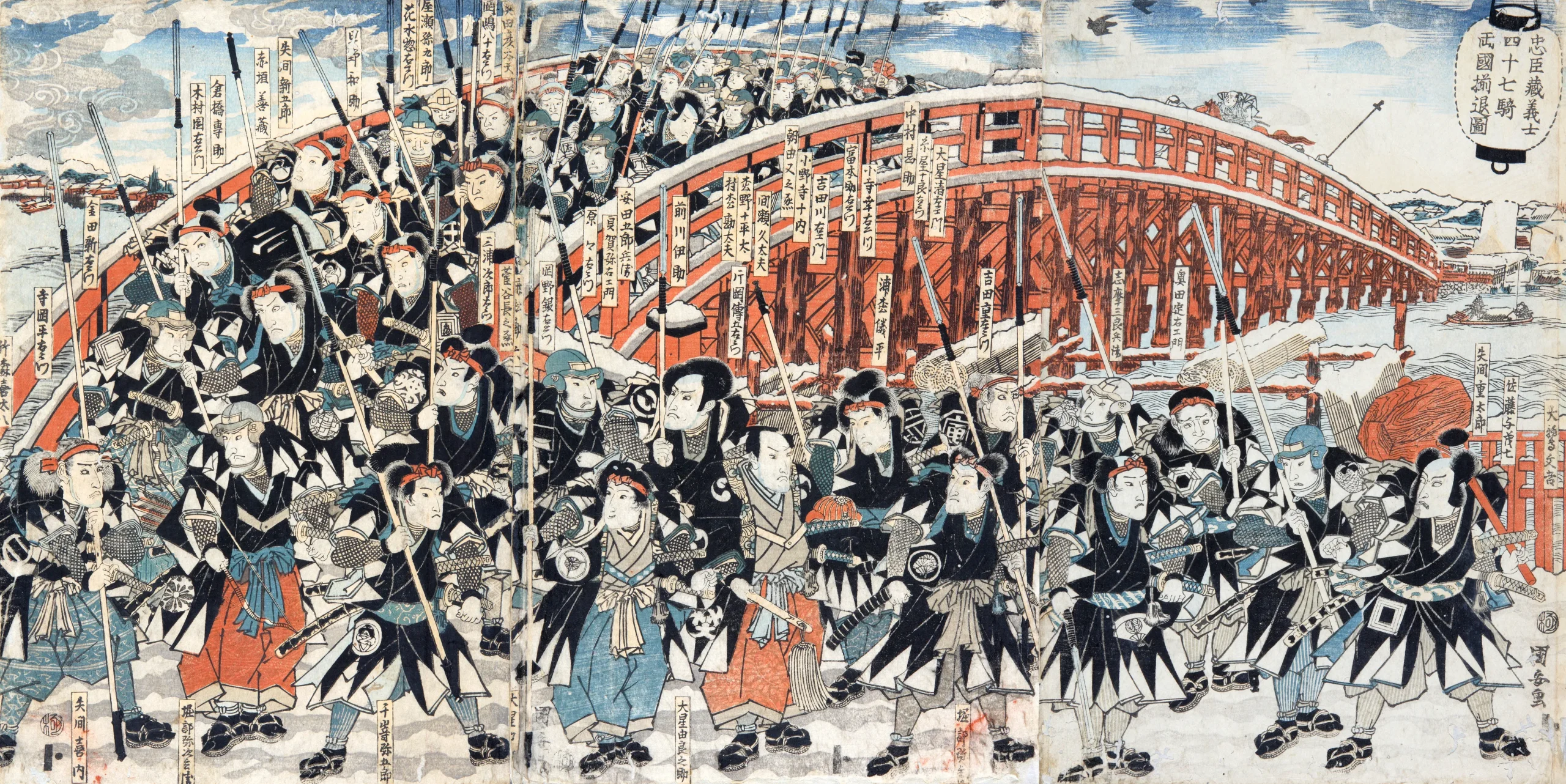
These three works are celebrated masterpieces of gidayū-kyōgen, kabuki adapted from puppet theatre and accompanied by musical narration. Each contains several strands of action. One selected scene can therefore offer a very different experience from another part of the same work.
Kanadehon Chūshingura: Loyalty and Its Human Cost
Kanadehon Chūshingura, commonly translated as The Treasury of Loyal Retainers, draws on the revenge of the forty-seven masterless samurai of Akō. A masterless samurai is known as a rōnin.
The drama changes the historical setting and character names. It is a theatrical interpretation of the incident, not a documentary account. After their lord’s death, the retainers prepare for revenge, but the work also follows people whose lives become entangled in that plan.
A selected act may focus on a family’s sacrifice rather than the final raid. The difference between public appearance and concealed loyalty provides a useful point of attention.
Read the act’s synopsis before assuming which part of the revenge story you will see. Suicide, death and violence belong to the work, making the selected scene particularly relevant when choosing with younger companions.
Yoshitsune Senbon Zakura: Warriors, Families and a Fox Spirit
Yoshitsune Senbon Zakura, or Yoshitsune and the Thousand Cherry Trees, combines the fate of defeated warriors with family stories and a fox spirit. Its scenes can feel like very different choices.
Tokaiya and Daimotsunoura concern the warrior Tomomori and his plans against Yoshitsune. Sushiya, “The Sushi Shop”, centres on Gonta, the shopkeeper’s son, and the fate of a family in hiding. His apparent wrongdoing becomes more complicated as his true intentions emerge.
Shi no Kiri, also listed as Kawatsura Hōgen Yakata, reveals the fox spirit’s attachment to a drum made from its parents’ skins. This bond gives its movement an emotional reason beyond visual surprise.
If that supernatural story attracts you, look specifically for its scene. Neither the fox nor a particular flying effect belongs to every production carrying the long title. Your choice of scene determines which strand of the story you encounter.
Sugawara Denju Tenarai Kagami: Duty and Family
Sugawara Denju Tenarai Kagami draws on the downfall of the statesman Sugawara no Michizane, represented as Kan Shōjō. Around him, three brothers serve different masters, bringing family ties into conflict with their obligations.
Two scene titles offer contrasting experiences. Kurumabiki, the confrontation around a carriage, presents the brothers’ division through forceful, stylised acting. Its large movements make opposing loyalties visible.
Terakoya, “The Village School”, turns towards a darker dilemma. A child is killed as a substitute to protect Kan Shōjō’s son. The identification of the victim creates tension through controlled reactions and concealed grief.
Despite its school setting, Terakoya is not a light story for children. Choose according to the experience you want: an overt confrontation or a tragic examination of duty and parental love.
Dance, Transformation and Ghost Stories
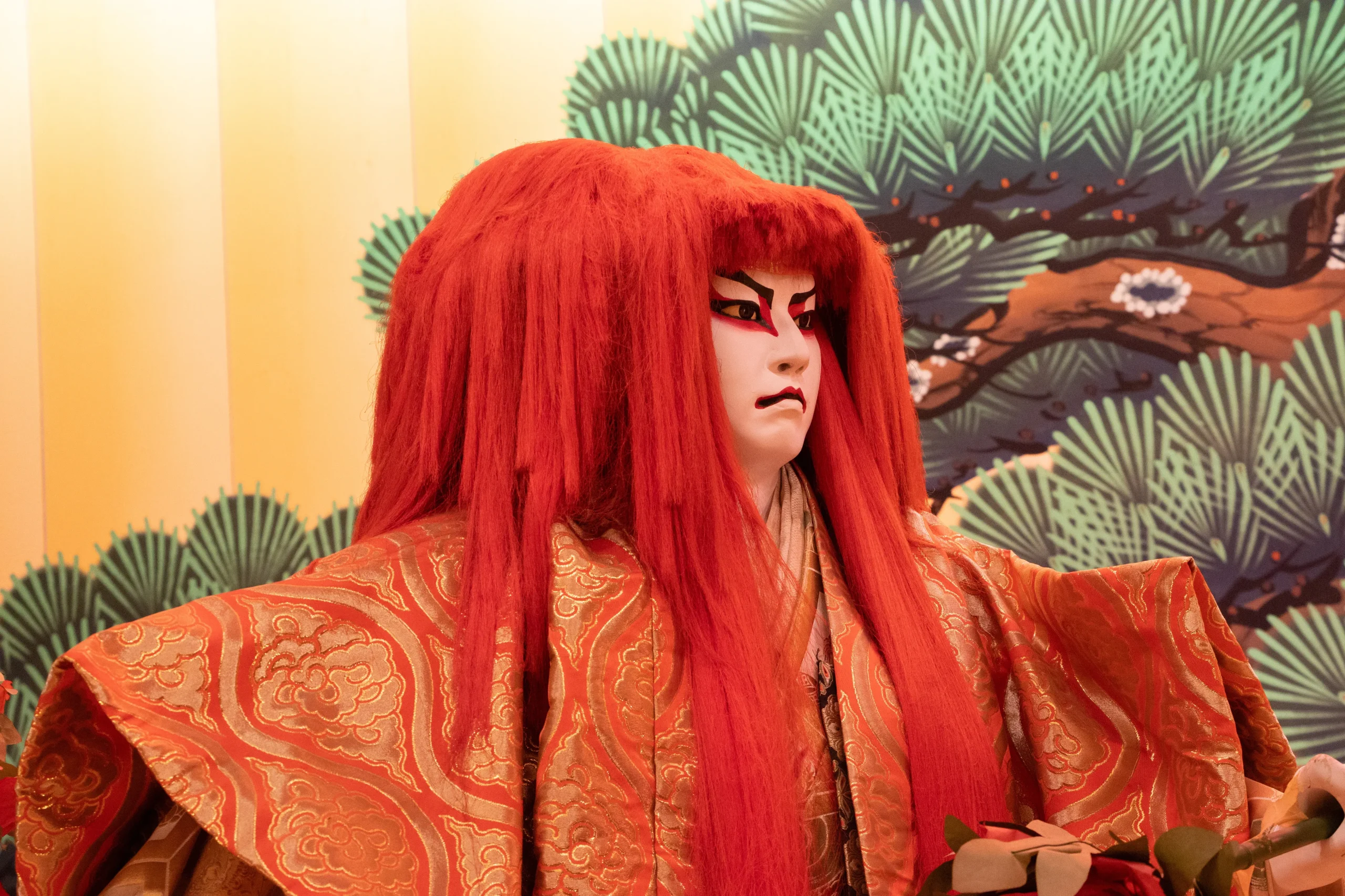
Kabuki also carries meaning through dance, changing costumes and supernatural effects. Movement provides an immediate attraction, while a little background explains why the transformation matters.
Renjishi: The Parent and Child Lion Dance
Renjishi draws on a legend about shishi, mythical lion-like beings. A parent tests its young by forcing them to overcome a steep cliff. This is a theatrical legend, not a description of how real lions raise their cubs.
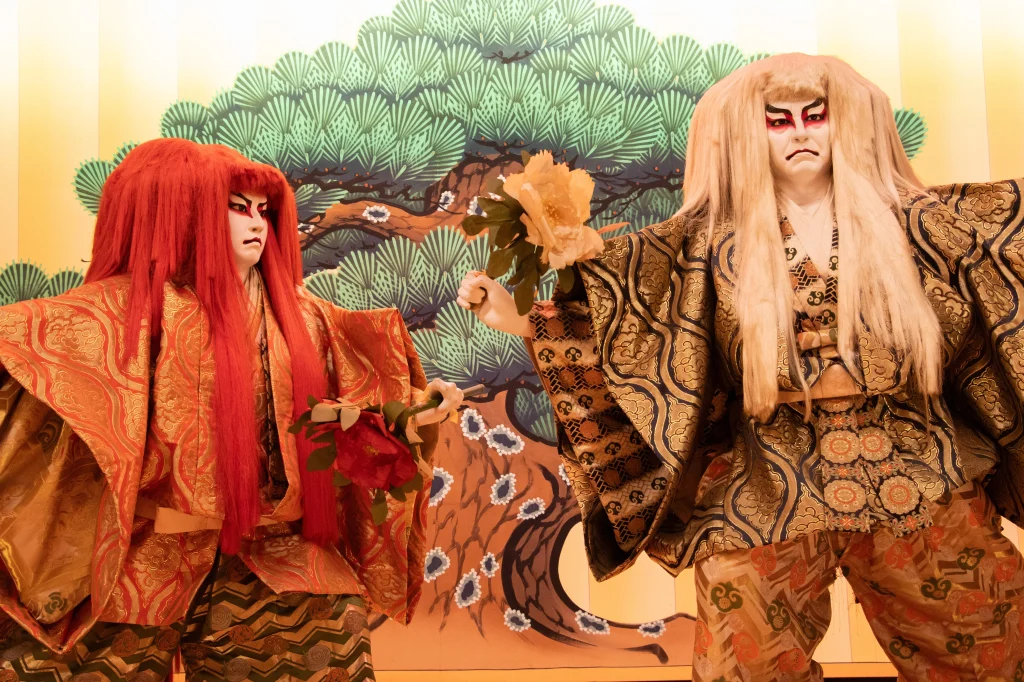
The opening dance presents the legend before the performers return as lion spirits. Watch the contrast between the parent’s white mane and the cub’s red mane, then the powerful hair-swinging movements that develop from their relationship.
Productions do not always feature exactly two performers. Shochiku’s October 2026 Heisei Nakamuraza programme, for example, lists a parent lion and two cubs.
If dance interests you more than a complex network of characters, Renjishi offers a focused starting point. The short explanation of the legend gives its physical energy a purpose.
Kyōganoko Musume Dōjōji: Dance and Costume Changes
Kyōganoko Musume Dōjōji centres on Hanako, a dancer visiting a temple for the dedication of a new bell. Her dances describe different aspects of a woman in love, while a serpent spirit and the bell give the work its supernatural background.
Hanako is an onnagata role: a female character performed through the specialised technique of a male actor. Follow how successive dances create changes in mood, rather than expecting a conventional sequence of spoken scenes.
Rapid costume changes depend on coordination between the performer and stage assistants. The handling of fabric and the timing of their assistance help the movement continue smoothly. The transformation reveals both the principal performer’s skill and the cooperation supporting it.
Related arrangements can involve more than one dancer; an official 2025 production used three. The shared temple story does not make every version identical.
Tōkaidō Yotsuya Kaidan: Betrayal and a Vengeful Ghost
Tōkaidō Yotsuya Kaidan, usually shortened to Yotsuya Kaidan, is a ghost story shaped by human cruelty. Oiwa suffers betrayal and poisoning, while her husband Iemon becomes tormented by her ghost.
The horror begins before the supernatural events. Ambition and deception give the haunting its cause, making the domestic relationships central to the drama.
The hair-combing scene shows the consequences of the poison through Oiwa’s altered appearance. Other effects depend on the scenes selected, so not every celebrated transformation appears in every production.
This work contains poisoning, cruelty, violence and death. If those subjects would spoil the evening for you or a companion, choose another story or a dance programme according to its synopsis. Avoiding horror need not mean giving up theatrical invention.
Turn a Favourite Play into a Theatre Visit
Once a story interests you, find the version you can attend. Time, language support and the view from your seat turn that interest into a comfortable plan.
Match the Scene to the Programme
Begin with your travel dates and city, then identify the work, scene and performance session. At Kabukiza Theatre, the official programme provides the titles and current details for that comparison.
A full programme may combine several works or selected scenes. It does not automatically mean a complete production of one play. Equally, full-length productions take place: Kabukiza presented the three great classics in separate months during 2025.
A single-act ticket describes what your ticket admits you to watch, not how the original work was written. Check the published running times, intervals and ticket conditions before adding another activity.
For dates and booking guidance, see our Kabuki Schedule in Tokyo.
Prepare for the Story and the Language Support
Before attending, learn three things: the central characters, where the scene takes place, and what puts them in conflict. This gives many gestures a purpose without requiring extensive study.
Kabukiza’s rental captioning service provides essential translations of dialogue and lyrics, plus explanations, in English or Simplified Chinese. When checked in October 2026, the listed charges were JPY 1,500 for a full show and JPY 1,000 for single-act use, payable in cash. Very short acts may not offer the service.
Read the current international visitor guidance before booking. Other venues have different support; subtitles, audio introductions and English synopses are not interchangeable.
Seat choice matters too. Kabukiza’s fourth-level single-act seats have limited space, no view of the hanamichi, and possible obstruction of part of the main stage. Consider this when an entrance or exit is your main interest.
Keep personal devices off during the performance, and avoid photography, recording and conversation. Use the theatre’s captioning device according to staff instructions.
If Your Dates or the Weather Change
If one title matters greatly, investigate its dates before fixing the surrounding itinerary. Otherwise, preserve your interest—dance, costume or dramatic conflict—when selecting an alternative.
| Situation | Plan A | Plan B | Plan C |
|---|---|---|---|
| Preferred play unavailable or sold out | Choose another scheduled work with the expression you wanted | Compare another session or date within your existing stay | Explore the original through official explanations or available recordings |
| Ordinary rain | Keep the visit if travel and the performance operate normally | Shorten outdoor sightseeing and allow an indoor break | Enjoy cultural material at your accommodation if you prefer to stay in |
| Severe weather, transport disruption or cancellation | Follow the organiser’s and transport operator’s notices | Consider another date under the applicable ticket conditions | Avoid unnecessary travel and change the day’s activity |
For a rainy-day theatre plan, take the Hibiya or Asakusa line to Higashi-Ginza Station and use Exit 3 for direct access to Kabukiza. Keep outdoor sightseeing optional and allow time for a meal before the performance. Fourth-level single-act seats use a separate entrance, so follow the directions for your ticket.
If severe weather disrupts travel, check official notices before leaving your accommodation. A covered route is useful in rain, but it does not guarantee that transport or the performance will operate.
Shochiku’s KABUKI ON DEMAND offers recorded performances, subject to regional and title availability. Check language support and viewing conditions rather than assuming your preferred work is included.
For a programme lasting several hours, leave room for a meal and rest around the visit. A shorter act may suit a busy day, but compare its story, view and support too.
Choose Your Story, Leave the Evening Open to Surprise
You need only one point of interest to begin: Benkei’s difficult decision, a thief revealing his identity, or a dancer’s change of costume.
Find it in the programme, check the scene and practical conditions, and give the visit time to unfold. If fitting theatre into a wider journey feels complicated, you can discuss your interests and preferred pace with ENJYU JAPAN, which offers tailor-made travel planning.
Choose the performance that draws you in, and leave a little room in your evening for Japan to surprise you.
References
- Shochiku / KABUKI WEB – Kabuki Categories: Historical Plays, Domestic Dramas and Dance
- Shochiku / KABUKI WEB – May 2025 Kabukiza Programme: Kanjinchō, Benten Musume Meo no Shiranami and Musume Dōjōji
- Shochiku / KABUKI WEB – June 2025 Kabukiza Programme: Shibaraku, Kurumabiki, Terakoya and Renjishi
- Japan Arts Council – Kanadehon Chushingura: Story, Historical Background and Stage Highlights
- Japan Arts Council – Yoshitsune Senbon Zakura: Main Scenes, Characters and the Fox Spirit
- Japan Arts Council – Aotozoshi Hana no Nishikie: Benten Kozō and the Five Thieves
- Kabuki Play Guide – Sukeroku Yukari no Edo Zakura: Story, Characters and Performance Highlights (in Japanese)
- Kabuki Play Guide – Tōkaidō Yotsuya Kaidan: Story and Stage Effects (in Japanese)
- Shochiku / KABUKI WEB – Service for International Visitors: Captioning, Rental Charges and English Synopses
- Shochiku / KABUKI WEB – Fourth-Level Single Act Tickets: Seating, Sightlines and Entry Conditions
- Shochiku / KABUKI WEB – Kabukiza Theatre Information: Station Access, Entrances and Seating Plans
- Shochiku / KABUKI WEB – KABUKI ON DEMAND: Official Recorded Performances and Viewing Information