There is no single best ryokan in Kyoto with a private onsen. The right choice depends on whether you value city sightseeing, natural hot-spring water, complete privacy, a family-friendly stay, or a special occasion.
A private bath can make one night in Kyoto feel distinctly different from an ordinary hotel stay. After a day among temples, gardens and restaurants, it gives couples, families and friends a calm space to slow down without sharing a bath with strangers. It can also be a practical option for travellers with tattoos or anyone who prefers greater privacy.
However, the phrase “private onsen” is not precise enough on its own. A bath may be private but use heated groundwater rather than natural hot-spring water. It may be inside your room, or it may be a shared facility reserved for your group for a limited time.
This guide explains those differences first. It then introduces carefully selected stays in Kyoto City, Arashiyama, Takao and Yunohana Onsen, helping you identify the option that best fits your route, companions and preferred pace.
What Does “Private Onsen” Mean in Kyoto?
A private bath is not automatically a private onsen. Before comparing ryokan, check two separate points: who can use the bath and what water it uses.
| Term used by hotels | What it usually means | What to confirm before booking |
| In-room private onsen | A bath inside the guest room using natural hot-spring water | Whether every room has one and whether the water is continuously supplied or reheated |
| In-room private bath | A private bath inside the room | Whether it uses hot-spring water, groundwater or ordinary heated water |
| In-room open-air bath | An outdoor or semi-outdoor bath attached to a room | “Open-air” describes the setting, not the source of the water |
| Reservable private bath / kashikiri-buro | A bath used by one group for a set period | Fee, time limit and reservation method |
| Family bath | A private-use bath for a couple or family group | Capacity, children’s rules and accessibility |
| Public bath | A shared bath, usually separated by gender | Tattoo policy and whether a private alternative is available |
An onsen is a natural hot spring. In practice, look for the words natural hot-spring water or onsen water in the official room description. Do not assume that a wooden bathtub, a garden view or an open-air setting means that the water comes from a hot spring.
A kashikiri-buro is a private bath reserved for one group. A session often lasts 45 to 60 minutes, but the length, fee and booking system vary by property. Some ryokan accept reservations in advance. Others ask guests to choose a time at check-in, while a few allow use only when a bath is vacant.
This distinction matters for tattooed travellers. A property may allow a tattooed guest to use a private bath but restrict access to a communal bath. Always ask about private and public bathing facilities separately.
A Private Bath Is Not Always a Natural Onsen
Hiiragiya illustrates why the wording matters. This historic central Kyoto ryokan has no natural hot spring. Instead, it uses mild groundwater drawn from beneath the property and offers two private baths that guests can reserve.
That may be ideal for travellers who want a quiet private soak after sightseeing. It is not, however, the right choice for someone whose main aim is mineral-rich hot-spring water. The quality of a ryokan and the source of its bath water are separate questions.
How Reservable Baths Work
A reservable bath can offer privacy without the cost of an in-room onsen. It gives a couple, family or small group an exclusive space, but it may not be available at every time you want.
If private bathing is essential, confirm four details before booking: whether the bath is included in the rate, how long each session lasts, whether you can reserve before arrival, and whether every member of your group can use it together.
How to Choose the Right Kyoto Ryokan
Begin with the experience you want rather than the most famous property. Your location and bath type will shape both your sightseeing day and your evening.
| Your priority | Start with | Main trade-off |
| Central Kyoto sightseeing | A central ryokan with an in-room or family bath | Easy access, but the water may not be natural hot-spring water |
| Complete privacy | An in-room private bath or in-room onsen | Often limited to higher-priced room categories |
| Natural hot-spring water | A property that clearly identifies its water as a natural hot spring | It may require more travel time from central Kyoto |
| Honeymoon or anniversary | A room with a private bath and a dinner plan | Higher rates during busy travel periods |
| Family travel | A ryokan with reservable family baths | Preferred sessions may need early booking |
| Better value | A private-use bath rather than an in-room onsen | Less freedom over when you can bathe |
Central Kyoto works best when temples, restaurants and short transfers are the centre of your itinerary. Arashiyama and Takao require more travel time, but they offer a clearer change of pace from the city.
Kameoka and Yunohana Onsen are better treated as overnight destinations. Choose them when bathing, dinner and time at the ryokan matter more than staying close to Gion or Kyoto Station.
Best Ryokan in Kyoto with Private Onsen or Private Baths
The following stays are not ranked from best to worst. Each one offers a different kind of private bathing experience, so the best choice depends on what you want your Kyoto night to make possible.
FUFU Kyoto — Best for In-Room Natural Onsen in Kyoto City
FUFU Kyoto is a strong option for couples who want natural hot-spring water without leaving Kyoto City. Near Nanzen-ji and the southern Higashiyama area, it suits travellers who want a refined overnight stay alongside temple visits, gardens and quieter eastern Kyoto streets.
Every guest room has a private bath using natural hot-spring water. Guests can bathe when they wish, without reserving a session or using a communal bath. This is especially useful for couples, honeymooners and travellers who want privacy to be built into the room itself.
The baths use hinoki, or Japanese cypress, a fragrant timber often used for Japanese baths. Its clean, woody scent becomes more noticeable as the bath warms and steam rises from the water. It is a restrained but memorable detail after a day in the city.
FUFU Kyoto is a luxury resort stay with ryokan-inspired hospitality rather than a conventional historic inn. Choose it if you want in-room natural hot-spring bathing and contemporary comfort. Confirm the room layout, dinner plan and arrangements for children before booking.
Hiiragiya — Best for Historic Ryokan Hospitality and Private Family Baths
Hiiragiya is best for travellers who value historic central Kyoto hospitality more than natural hot-spring water. Established in 1818, it offers a traditional setting shaped by tatami rooms, seasonal Kyoto cuisine and attentive service.
The ryokan has no onsen. Its baths use soft groundwater drawn from beneath the property, and larger family baths can be reserved for private use. Confirm the bath capacity and reservation conditions if you are travelling with children or more than two adults.
This arrangement can work well for couples who want to bathe together, as well as for guests who would rather not use a communal facility. Its location also makes it easier to combine a ryokan night with the city’s restaurants, galleries and major sights.
Hiiragiya is a choice for privacy, central location and traditional ryokan culture. It is not a choice for travellers whose main requirement is natural hot-spring water. Dinner is normally served at set times, and families should contact the ryokan directly about room suitability, meals and bathing arrangements before booking.
Kyoto Arashiyama Onsen Kadensho — Best for Flexible Private Baths
Kyoto Arashiyama Onsen Kadensho suits couples and families who want private bathing near Arashiyama. Its location makes it easier to visit the river, Tenryu-ji Temple and the bamboo grove while avoiding a long return journey to central Kyoto after dinner.
The property has five private baths for overnight guests, as well as a larger communal bath. This provides more flexibility than a ryokan with only one private family bath. However, the system for using the private baths may change, so check directly whether they are reservable, first-available, included in the rate, or subject to another arrangement.
Kadensho is useful if you want to bathe together but do not need a bath inside your room. Travellers with tattoos should ask whether private baths are available to them and confirm the separate policy for the communal bath.
An overnight stay also gives you a practical advantage in Arashiyama. You can explore early in the morning, when paths near the river are calmer, then return to the ryokan later for a private bath. Check children’s meals, bedding and bath rules for your exact plan before booking.
Momijiya — Best for a Private Open-Air Bath in Takao
Momijiya suits travellers who want to leave central Kyoto’s evening crowds behind for Takao’s mountain setting. The ryokan lies in a river valley, where wooded slopes and cooler air create a more secluded atmosphere.
Bathing arrangements differ between the main building and the annex. Several rooms in the annex have their own open-air baths, although facilities vary by room category. Check the individual room description rather than relying on the general annex overview.
An open-air bath does not automatically use natural hot-spring water. If this matters to you, ask the property to confirm the water source for the exact room you plan to book.
Takao takes more planning than a stay near Kyoto Station or Gion, but that is part of its appeal. In warmer months, Momijiya may offer kawadoko dining: outdoor dining platforms placed beside or over a river. Choose it if you want a private open-air bath, mountain air and an evening shaped by the sound of water rather than city traffic.
Yunohana Resort Suisen — Best for a Quiet Onsen Retreat in Kameoka
Yunohana Resort Suisen is for travellers who want the onsen itself to become the focus of the stay. Located in Yunohana Onsen in Kameoka, it works best as a destination for the night rather than a late check-in after a full day in central Kyoto.
The property uses natural hot-spring water and offers both rooms with open-air baths and a separately reservable private outdoor bath. Confirm the exact arrangement before paying, as facilities differ by room type.
Suisen has age restrictions. Its official information states that it does not accept children under the age of six. Families should still confirm eligibility for every member of their group before making a reservation, as room and plan conditions can differ. Families should therefore confirm eligibility for every member of their group before making a reservation.
This is a good choice for couples, anniversaries or travellers who want a deliberate pause during a busy Japan itinerary. The additional journey to Kameoka is rewarded with a slower evening of bathing, dinner and garden light fading outside a stone bath.
Sumiya Kiho-an — Best for a Classic Yunohana Onsen Stay
Sumiya Kiho-an is another strong option for travellers who want a traditional ryokan stay in the Yunohana Onsen area. It suits couples and families who want natural hot-spring bathing to be part of the overnight experience.
The ryokan has shared indoor and open-air baths, alongside a private open-air bath that guests can book for an additional fee. This is useful if you want to bathe together but do not need an in-room onsen available at any hour.
Private sessions operate for a fixed time. Confirm the latest fee, availability and reservation process before your stay. If private bathing is essential, ask whether a session can be arranged before arrival rather than waiting until check-in.
Sumiya Kiho-an works best when you build the evening around the ryokan. Arrive early enough to bathe before dinner, enjoy the meal without watching the clock, and leave time for another soak later. It is a better fit for a full ryokan night than for travellers arriving late from central Kyoto.
How to Plan a Ryokan Stay Around Kyoto Sightseeing
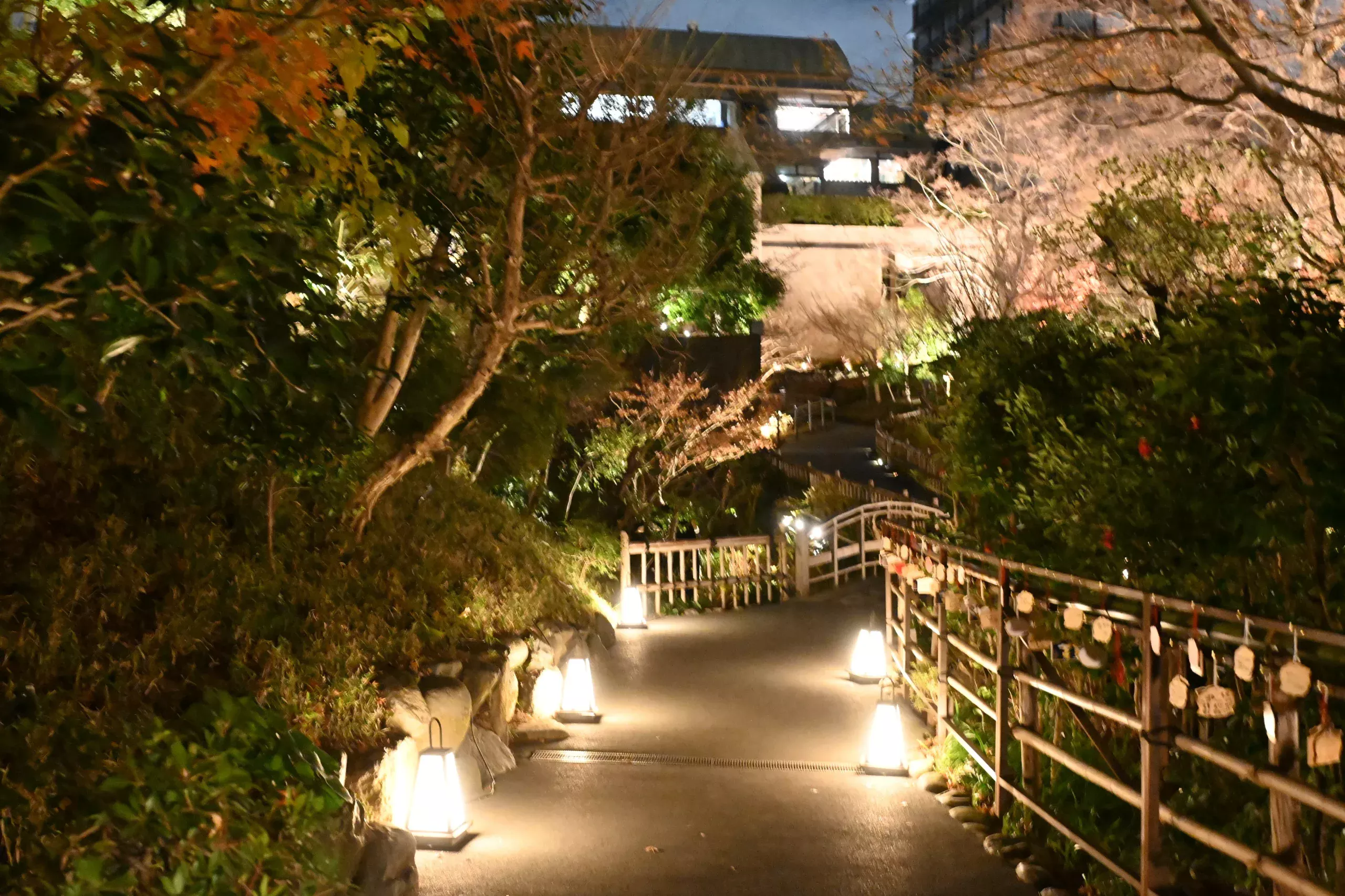
A ryokan stay works best when you protect time for it. Arriving late may mean missing part of dinner, losing your preferred private-bath session or spending too little time in the room you chose so carefully.
Arrive Before Dinner
Many ryokan serve kaiseki, a multi-course Japanese dinner based on seasonal ingredients, at fixed or pre-arranged times. The kitchen prepares each course for a particular point in the evening, so a late arrival can disrupt the meal.
Avoid placing your longest temple visit or shopping session immediately before check-in. This is particularly important in Takao and Kameoka, where evening transport can be less straightforward than in central Kyoto.
If dinner and private bathing are part of your stay, aim to arrive by about 15:00 or 16:00 whenever the property’s check-in rules allow it. This gives you time to settle in, bathe and enjoy the room before dinner begins.
Understand the Rhythm of a Ryokan Evening
A ryokan evening follows a calmer sequence than a standard hotel stay. After removing your shoes, you may enter a room with tatami, flooring made from woven rush. You can change into a yukata, a light robe worn within the inn, before bathing and dinner.
While you eat, staff may prepare a futon, traditional bedding laid on the tatami for the night. These are not decorative details. They shape how guests move through the evening, from arrival to sleep.
You do not need to follow a strict ritual. You only need to leave enough time for the stay to unfold. A warm bath before dinner, the softer feeling of tatami under bare feet, and a quiet room after the meal can make a single night feel more restorative than an overfilled sightseeing schedule.
Reserve Private Baths Early
A private bath does not always mean unlimited access. If your ryokan uses timed sessions, ask about availability before arrival or as soon as you check in.
Couples may prefer a session before dinner or later in the evening. Families with young children may find an earlier time easier. Morning bathing can be quieter, but it may conflict with breakfast or an early departure.
Choose your preferred time before arrival, then keep a second option in mind. This small step can prevent the bath from becoming another hurried appointment.
Booking Checklist for Couples, Families and Tattooed Travellers
Do not rely only on photographs. The most attractive bath on a booking page may belong to a premium suite rather than the room you are considering.
Before you pay, ask these questions:
- Is the bath inside the room, or shared on a private-use basis?
- Does it use natural hot-spring water?
- Is it available in every room or only selected room categories?
- Is a private-bath session included in the room rate?
- Can we reserve a preferred time before arrival?
- Can everyone in our group use the bath together?
- What is the current tattoo policy for private baths and communal baths?
A private bath can be a practical option for travellers with tattoos, but it does not automatically change a property’s wider rules. Ask separately about the private bath, communal bath and any other shared facilities.
Families should also confirm children’s meals, bedding, age limits and bath capacity. If someone in your group has limited mobility, ask about steps, handrails and changing-room access. A private bath is not automatically an accessible bath.
Basic bathing etiquette still applies. Wash your body before entering the water. Keep towels out of the bath. Do not use soap or shampoo in the tub. Avoid photography unless the property clearly permits it. Swimwear is not normally worn in Japanese baths unless the property states otherwise.
Plan a Private Ryokan Stay with ENJYU JAPAN
The right ryokan should fit the journey around it. A private bath in central Kyoto can preserve more time for temples and dining. A night in Yunohana Onsen can create a deliberate pause before you move on to the next city.
ENJYU JAPAN can help you compare room categories, bathing arrangements, dinner plans and travel times before you commit to a stay. A tailored itinerary can also account for station transfers, family requirements and the important difference between an in-room onsen and a reservable private bath.
The most expensive or widely photographed ryokan is not automatically the best choice. Choose the property that gives your group the privacy, pace and comfort it needs. With the right room and enough time to enjoy it, a private bath becomes more than an amenity: it becomes a quiet, carefully chosen evening in Kyoto, shaped around your own rhythm.
References
- FUFU Kyoto – FAQ: Natural Hot Springs in All Guest Rooms, No Communal Baths and Dining Arrangements
- HIIRAGIYA – FAQ: Natural Groundwater, Reservable Family-Size Baths and Meal Times
- Kyoto Arashiyama Onsen Kadensho – Official Website
- Momijiya – Official English Website
- Kyoto Yunohana Hot Spring Resort Suisen – Suisen Concept: Age Policy, Guest Rooms and Private Open-Air Bath
- Sumiya Kiho-an – Official English Website