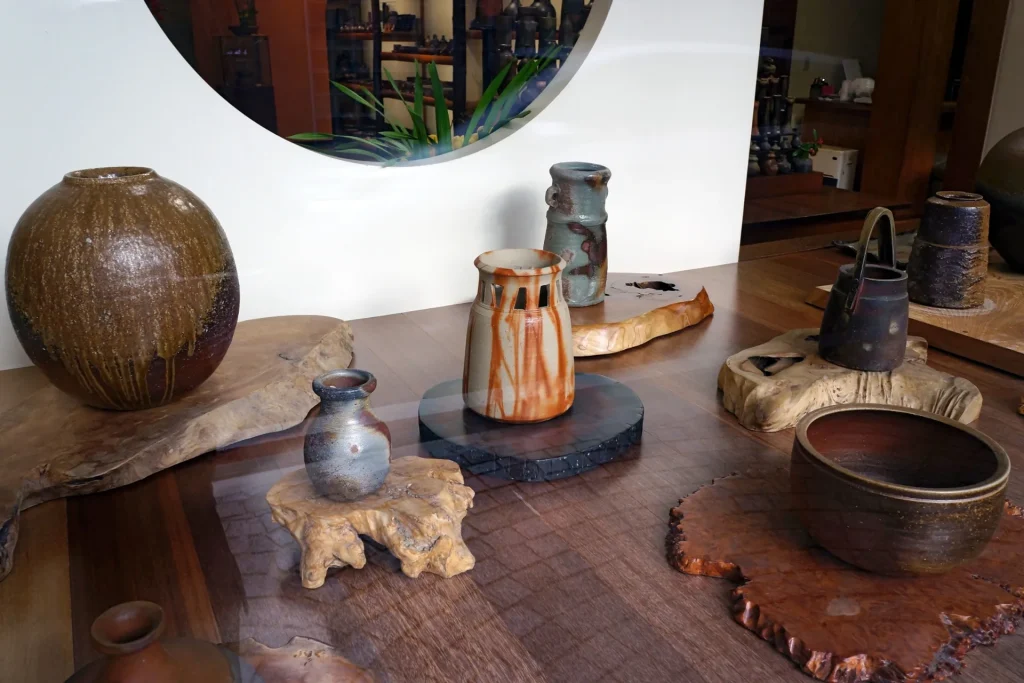
Bizen ware, or Bizen-yaki, is a ceramic tradition centered on Imbe in Bizen City, Okayama Prefecture. It is traditionally made without applied glaze or painted decoration, so much of the color and pattern you see comes from the firing itself. Straw can leave reddish lines, ash can melt onto the surface, and parts of a piece can turn gray, blue or almost black depending on where and how it was fired.
Once you know a few of these clues, Bizen becomes much easier to appreciate. A shelf of similar brown pots starts to reveal very different firing histories.
What Is Bizen Ware?
Bizen ware is one of Japan’s Six Ancient Kilns, pottery-producing regions with roots in medieval Japan. Its best-known production center is Imbe.
The clay is shaped, dried and fired at high temperatures without painted decoration or a conventional applied glaze. Official sources give firing temperatures of roughly 1,200 to 1,300°C.
That does not mean the surface stays plain. During firing, wood ash can land on the pottery and melt into a glaze-like layer. Straw, flame, ash, oxygen levels and the position of the piece in the kiln can all affect the finished color.
This is why “no applied glaze” is more accurate than simply saying Bizen has no glaze. Some of its most recognizable surfaces are created by ash melting naturally during firing.
Bizen ware was designated a Traditional Craft of Japan in 1982. It is also one of the pottery traditions included in the Six Ancient Kilns Japan Heritage story, recognized in 2017.
Reference: Bizen Pottery & Ware – Okayama Prefecture Official Tourism Guide
Four Kiln Marks to Look For
You do not need to learn a long list of ceramics terms before looking at Bizen ware. These four are enough to make the surface much easier to read.
| What you see | Name | What causes it |
|---|---|---|
| Red or orange lines across a pale or light-brown surface | Hidasuki | Straw placed between or around pieces reacts during firing |
| Speckles, patches or flows that resemble scattered sesame | Goma | Wood ash settles on the piece and melts under high heat |
| Gray, dark-gray, blue or almost black areas | Sangiri | Parts of the piece are covered by ash, shielded from direct flame and fired under reducing conditions |
| A round area with noticeably different reddish coloration | Botamochi | A small piece of clay or another object shields part of the surface during firing |
These are not painted patterns. They are traces of what happened around the piece inside the kiln.
The term yohen is also common when discussing Bizen. Broadly, it refers to changes produced during firing, but Bizen sources also use the term for a particular dark, glassy effect created under certain conditions. For a first-time viewer, it is more useful to focus on what you can actually see than to worry about fitting every surface into a strict category.
Look at more than the “front” of a piece. One side may be reddish and even, while another has ash deposits or a dark reduction area. Even pieces from the same firing can look very different because of their position and exposure to flame, ash and shielding.
From Everyday Pots to Tea Ware: A Short History of Bizen
The roots of pottery production in the Bizen area go back to Sue ware made in ancient Japan. Bizen City traces the development of more practical, durable everyday pottery to around the Heian and early Kamakura periods.
For much of its history, Bizen was useful ware. Its hard-fired vessels were made for storage and daily life rather than simply for display. Later, the restrained surfaces also attracted tea practitioners in places such as Sakai and Kyoto. By the Momoyama period, Bizen tea utensils had become highly regarded.
That history helps explain why Bizen still sits between craft and art. Cups, plates, sake ware and flower vases are made for everyday use, while other pieces are collected as art or valued as tea ceramics.
How to Appreciate Bizen Ware Without Knowing Ceramics
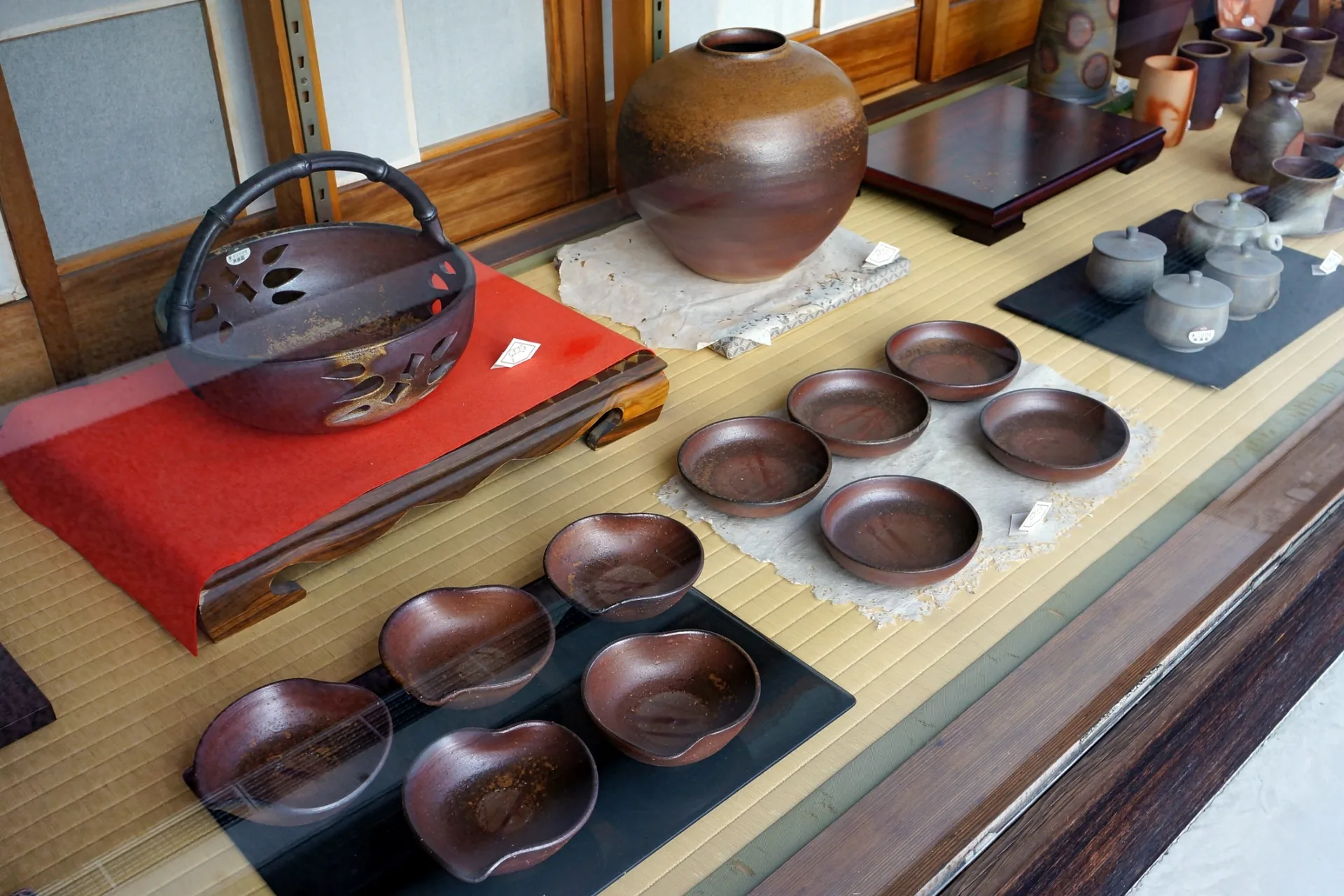
You do not need to know famous potters or the finer points of tea culture to enjoy Bizen ware. A simple way to look at a piece is to move from the overall form to the surface.
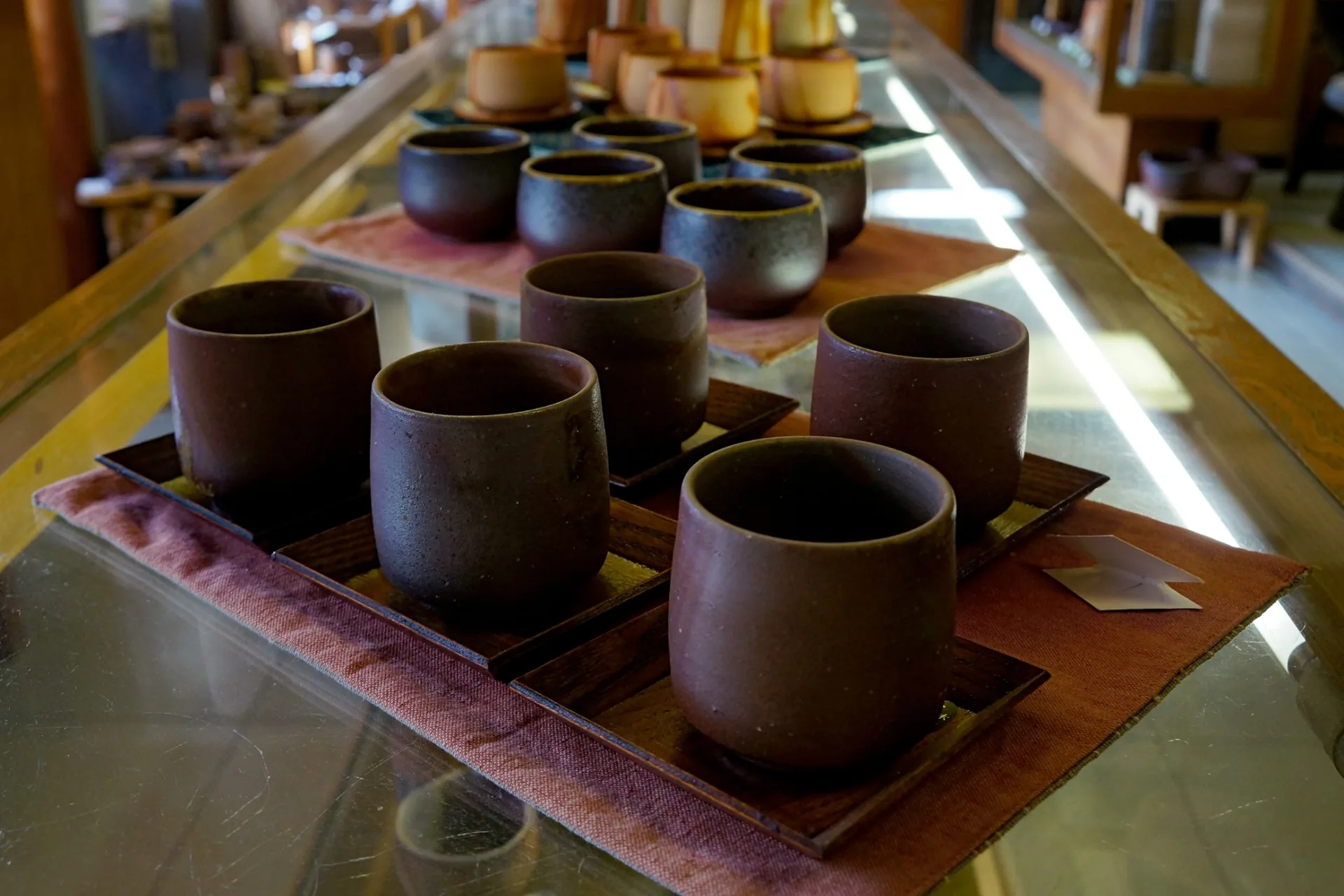
First, look at the shape. A cup may feel heavy and compact, while another piece is thin, tall or deliberately uneven. Then look around the whole object rather than judging it from one side.
Next, try to identify one firing clue. Are there reddish hidasuki lines? A patch of melted ash? A gray sangiri area? Once you find one, compare the piece with another object of the same type. Differences become much easier to see when two cups or bowls are next to each other.
This is also a useful reminder that Bizen is not limited to museum pieces. Much of it is made to be handled and used as tableware. At the same time, some pieces are collected as art or valued as tea utensils.
If you are more familiar with colorful Japanese ceramics, Kutani ware makes a useful contrast. With Kutani ware, much of the visual effect comes from painted decoration. With Bizen, the firing itself becomes part of the design.
Read more: Kutani Ware
Visiting Imbe: What You Can Actually See
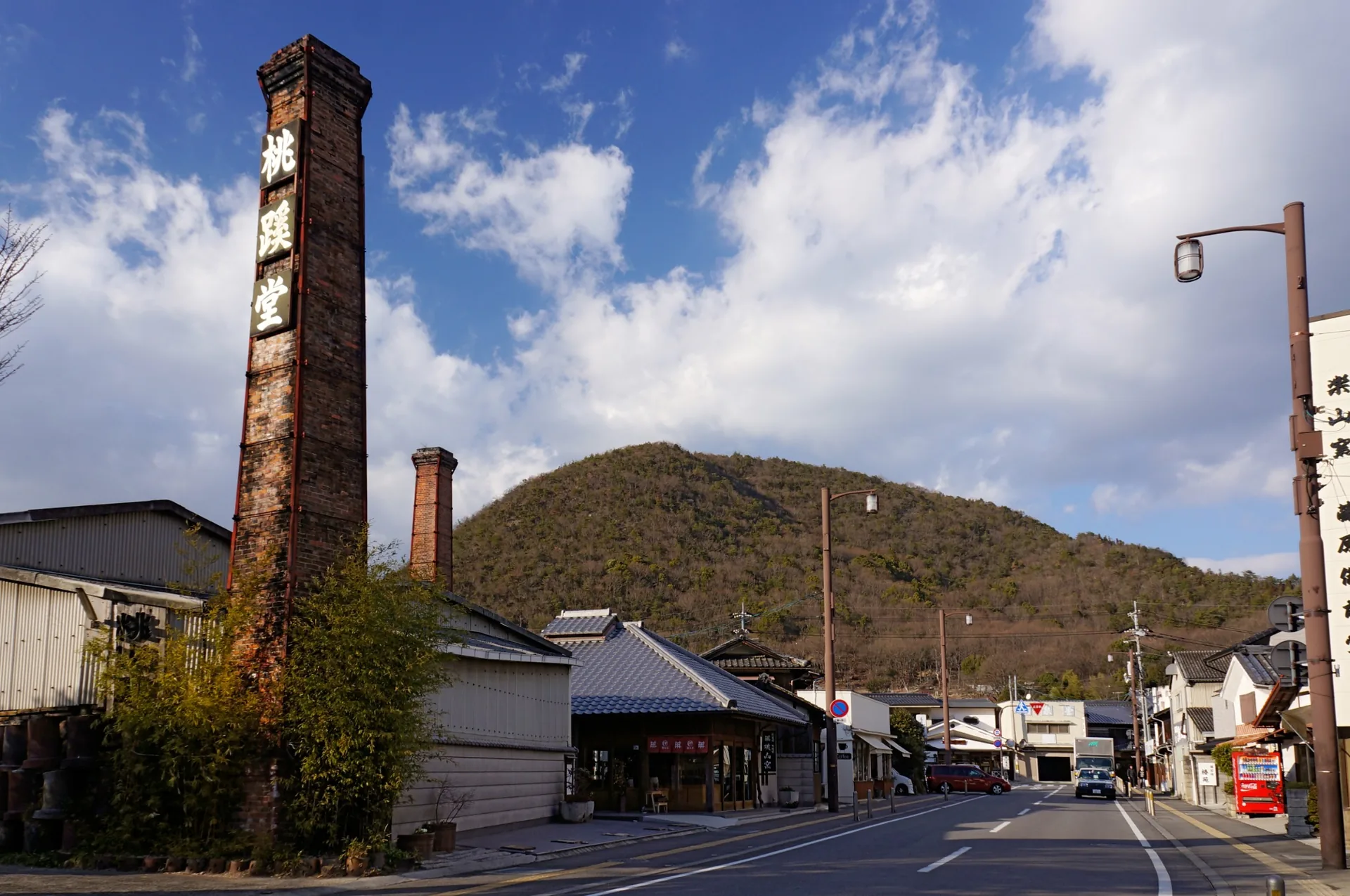
Imbe is the place where the relationship between the pottery and its surroundings becomes most obvious. The town is about 40 minutes from Okayama Station on the JR Ako Line, and many pottery-related sights are within walking distance of JR Imbe Station.
As you walk through the area, look for red-brick kiln chimneys rising among houses and workshops. Pottery studios and galleries remain concentrated around the station area, keeping the connection to present-day production visible.
Amatsu Shrine is a good example of how Bizen ware appears beyond bowls and vases. Bizen ceramics are used around the shrine for roof tiles, guardian figures, paving stones along the approach and ema plaques.
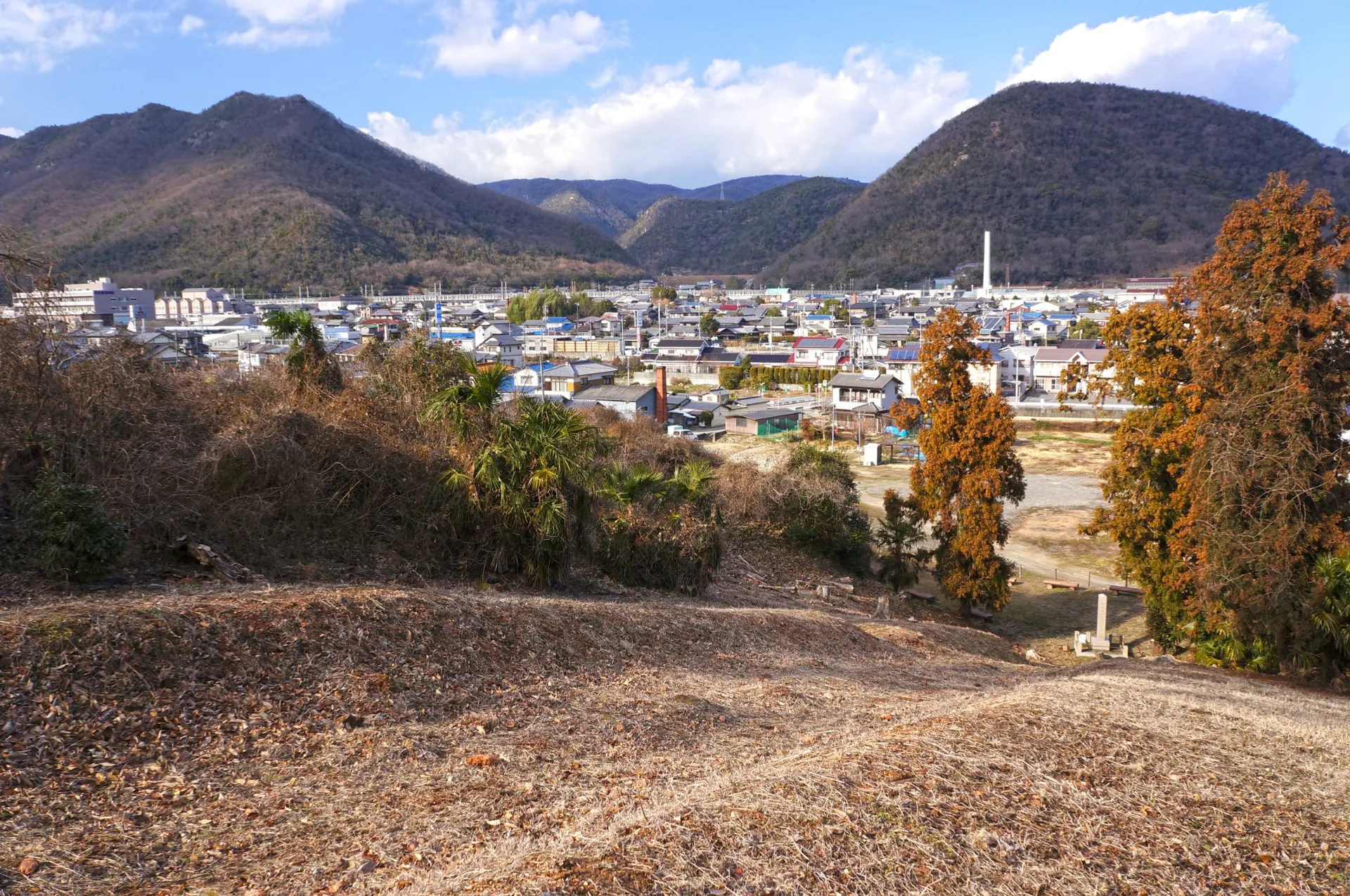
South of the station, the Imbe Minami Ogama kiln site preserves the remains of large historical kilns used for Bizen production. The largest extends for 53.8 meters, which gives a much clearer sense of the scale of historical production than the smaller kilns most visitors associate with pottery making.
The main public cultural stop is the Bizen City Museum of Art, which opened on July 12, 2025 beside Imbe Station. Its permanent History Exhibition Room covers Bizen ware through collection pieces and finds from kiln sites, while the larger galleries host changing exhibitions. Check the current schedule if you particularly want a Bizen-focused exhibition.
Reference: Bizen City Museum of Art
A Current Note for 2026–2027
The Bizen Ware Traditional Industry Hall at JR Imbe Station is currently undergoing renovation. Bizen City lists the restricted construction period as April 20, 2026 to February 26, 2027, although the end date is scheduled and could change.
The pottery association’s former sales area in the hall closed in March 2026 and has temporarily moved to the Furusato Koryu Center at the south exit of Imbe Station. Pedestrians using JR can still pass through the station area during the work.
Reference: Temporary Relocation Notice – Okayama Bizen Ware Cooperative Association (Official Website, Japanese)
After renovation, Bizen City plans to use the building as an annex of the Bizen City Museum of Art, with expanded space for displaying Bizen ware.
Does Imbe Fit Your Japan Trip?
If you are already spending time in Okayama, Kurashiki or the wider Setouchi region, Imbe can work well as a half-day craft-focused detour. The main sights are close enough together that you do not need to build an entire day around it.
Traveling to the area specifically for Bizen ware makes more sense if ceramics, traditional crafts or working craft towns are already among your stronger interests. If you are only mildly curious about pottery and have a tight first-time itinerary, learning to recognize Bizen ware and looking for examples elsewhere may be enough.
For travelers who want to try making pottery, the local pottery association lists workshops using different firing methods, including electric, gas and traditional climbing kilns. The finish, price, waiting time and collection or shipping arrangements vary by workshop, so check individual conditions before booking rather than assuming all Bizen pottery experiences work the same way.
Read more: Crafts to Do in Japan
Another reason to time a visit carefully is the Bizen Pottery Festival. In 2026 it will be held around JR Imbe Station on October 17 from 9:00 to 17:00 and October 18 from 9:00 to 16:00. This is the liveliest time to see the pottery town, but travelers who prefer a quieter walk may enjoy Imbe more on a normal day.
Imbe requires a local-train detour from the main route, and some visitor facilities are changing during the 2026–2027 renovation. If traditional crafts are an important part of your trip, ENJYU JAPAN can work Imbe into a Tailor-Made Tour alongside Okayama, Kurashiki or the wider Setouchi region without turning it into an awkward detour.
Featured image: 663highland / Wikimedia Commons / CC BY 2.5