Private Onsen in Hakone: How to Choose the Right Ryokan and Bath
Hakone is a good place to start if you want to add an onsen stay to a trip through Japan without traveling far from Tokyo. The Limited Express Romancecar runs directly from Shinjuku to Hakone-Yumoto in about 80 minutes, yet the setting changes quickly once you reach the mountains.
The difficult part is choosing where to stay. “Private onsen” can mean a hot-spring bath inside your room, an outdoor bath attached to your room, or a separate bath that you reserve for private use. Some Hakone properties offer a private onsen in every room. At others, only certain room categories have one.
So before comparing the ryokan themselves, it helps to decide what kind of privacy you actually want.
Why Hakone Is So Well Known for Onsen
Hakone has been a hot-spring destination for centuries. Today, its hot springs are traditionally grouped into 17 areas across the region. The water comes from Hakone’s volcanic environment, where underground water is heated by geothermal activity before returning toward the surface.
The official Hakone tourism association also records a large overall volume of hot-spring water and several different spring types across the area. This is one reason bathing is such a central part of staying here, rather than simply another hotel amenity.
Hakone also developed along the old Tokaido road between Edo, now Tokyo, and Kyoto. Travelers crossed the mountains here for centuries, and inns and hot-spring stays became part of that journey.
For a modern traveler, the appeal is much simpler: Hakone is close enough to fit naturally between larger destinations, but far enough from Tokyo to feel like a change of pace. If you have spent several days sightseeing in the city, an afternoon with nowhere urgent to be can be reason enough to come.
Read more: Best Onsen Towns in Japan
What Kind of Private Onsen Do You Want?
There are three common arrangements worth knowing before you book.
| Bath type | What you get | Works well if | What to check |
|---|---|---|---|
| In-room open-air onsen | A hot-spring bath attached to your room, usually outside or semi-outside | You want privacy whenever you like | Confirm the exact room category and that the bath uses hot-spring water |
| In-room indoor onsen | A private hot-spring bath inside the room | Privacy matters more than bathing outdoors | Do not assume “private onsen” means open-air |
| Separate private bath | A shared facility used privately by one party at a time | You only need one or two private bathing sessions | Check whether it is reservable, first-come, free, or charged |
You may also see the word rotenburo, which simply means an open-air bath. A rotenburo can be private or communal.
Another useful term is kashikiri, meaning a bath reserved for private use. It is usually outside your room and used for a limited period.
10 Private Onsen Ryokan and Hotels in Hakone
| Property | Area | Private bath setup | Why it stands out |
|---|---|---|---|
| Gora Kadan | Gora | Private open-air baths in selected room categories | Traditional high-end ryokan on former Imperial Family villa grounds |
| Mikawaya Ryokan | Kowakudani | Selected rooms have open-air or indoor onsen; separate private bath available | Historic ryokan with several ways to bathe privately |
| Hakone Kowakien Tenyu | Kowakudani | Every room has a private open-air onsen | Simple choice if you do not want to compare bath-equipped room categories |
| FUFU Hakone | Gora | Every room has a private hot-spring bath | Contemporary luxury and strong privacy |
| Hakone Suimeisou | Hakone-Yumoto | Selected rooms have private open-air onsen; separate private baths also available | About two minutes on foot from Hakone-Yumoto Station |
| Hoshi no Akari | Sengokuhara | Every room has a private open-air onsen | Quieter mountain setting |
| Hakone Nanase | Miyanoshita area | Selected suites have room onsen; three separate private baths | Good if a separate private bath is enough |
| Ryuguden | Lake Ashi | Three special rooms have private indoor onsen | Lake Ashi setting and views |
| Fujiya Hotel | Miyanoshita | All rooms have private baths supplied with hot-spring water | Historic Western-style resort hotel |
| Setsugetsuka Bettei Suiun | Gora | Every room has a private open-air onsen | Quiet adult-oriented stay near Gora |
1. Gora Kadan: For the Full Ryokan Experience
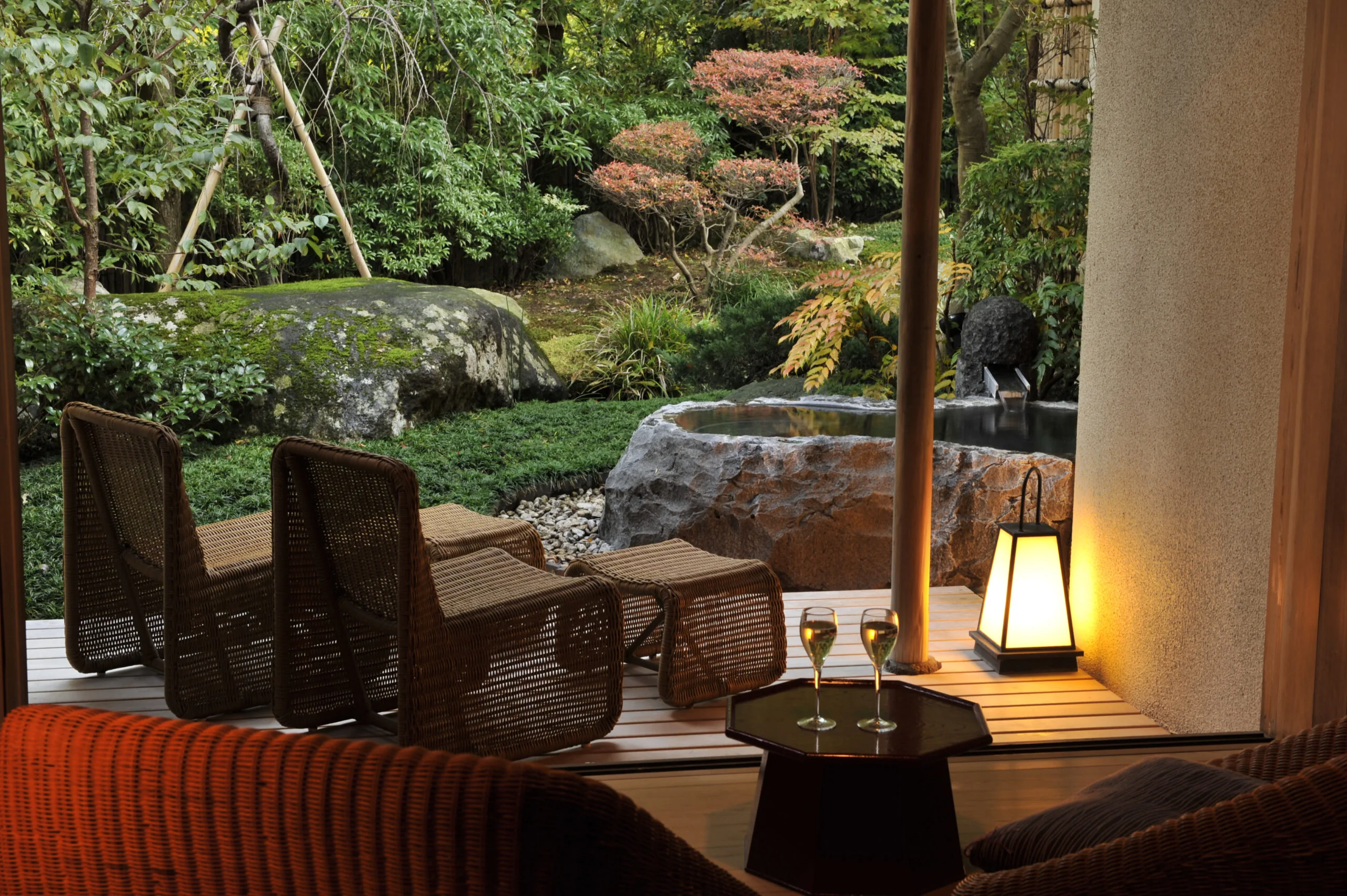
Gora Kadan occupies the grounds of the former Kan’in-no-miya Villa, once used as a summer residence by a member of Japan’s Imperial Family. That background gives the property a character quite different from a newer resort built around onsen facilities alone.
The important booking detail is that not every room has a private open-air bath. The official room list includes standard rooms alongside several suites and room categories with their own open-air baths.
That makes Gora Kadan more appealing if the overall ryokan experience matters to you. If your only priority is knowing that a private outdoor bath will definitely be waiting in the room, Tenyu, Hoshi no Akari, or Suiun make that part of the booking easier.
2. Hakone Kowakien Mikawaya Ryokan: History With More Flexible Bath Options
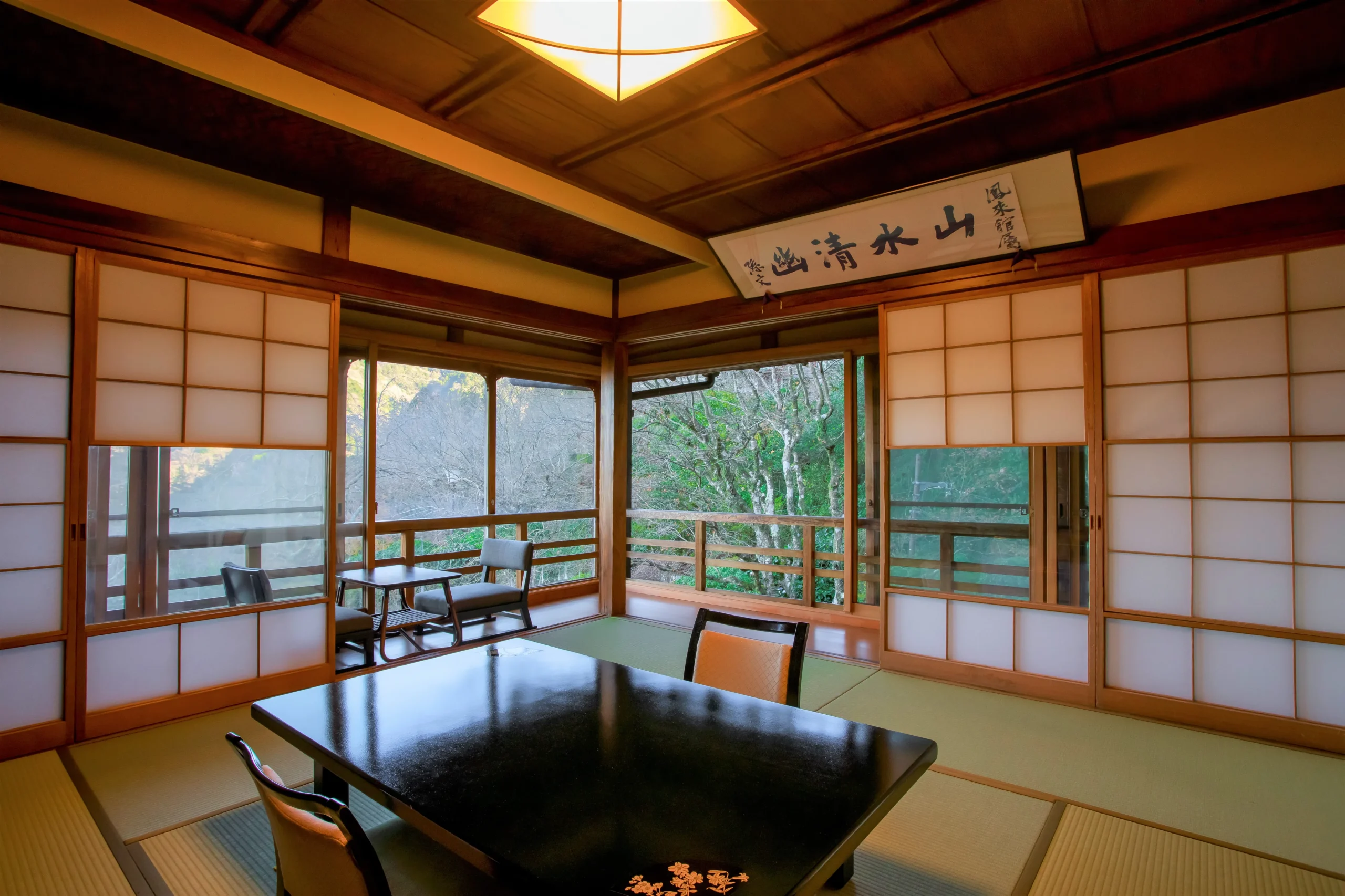
Mikawaya is one of the older ryokan in Kowakudani, with roots in the Meiji period. Its own English and Japanese pages currently disagree by one year on the exact founding date, so the useful point for travelers is simply that this is a long-established property rather than a modern onsen resort.
Its room categories vary. Some rooms in the main building and annex have open-air baths, detached villas have garden hot-spring baths, and several Japanese-Western suites have indoor onsen. Other rooms have no private bath.
There is also one separate private open-air bath. Guests can use it for up to 60 minutes when the key is available, so it does not require you to book one of the bath-equipped rooms.
Mikawaya therefore makes sense if you want the atmosphere of an older ryokan but are flexible about how the private bathing works.
3. Hakone Kowakien Tenyu: The Simplest Choice for an In-Room Open-Air Onsen
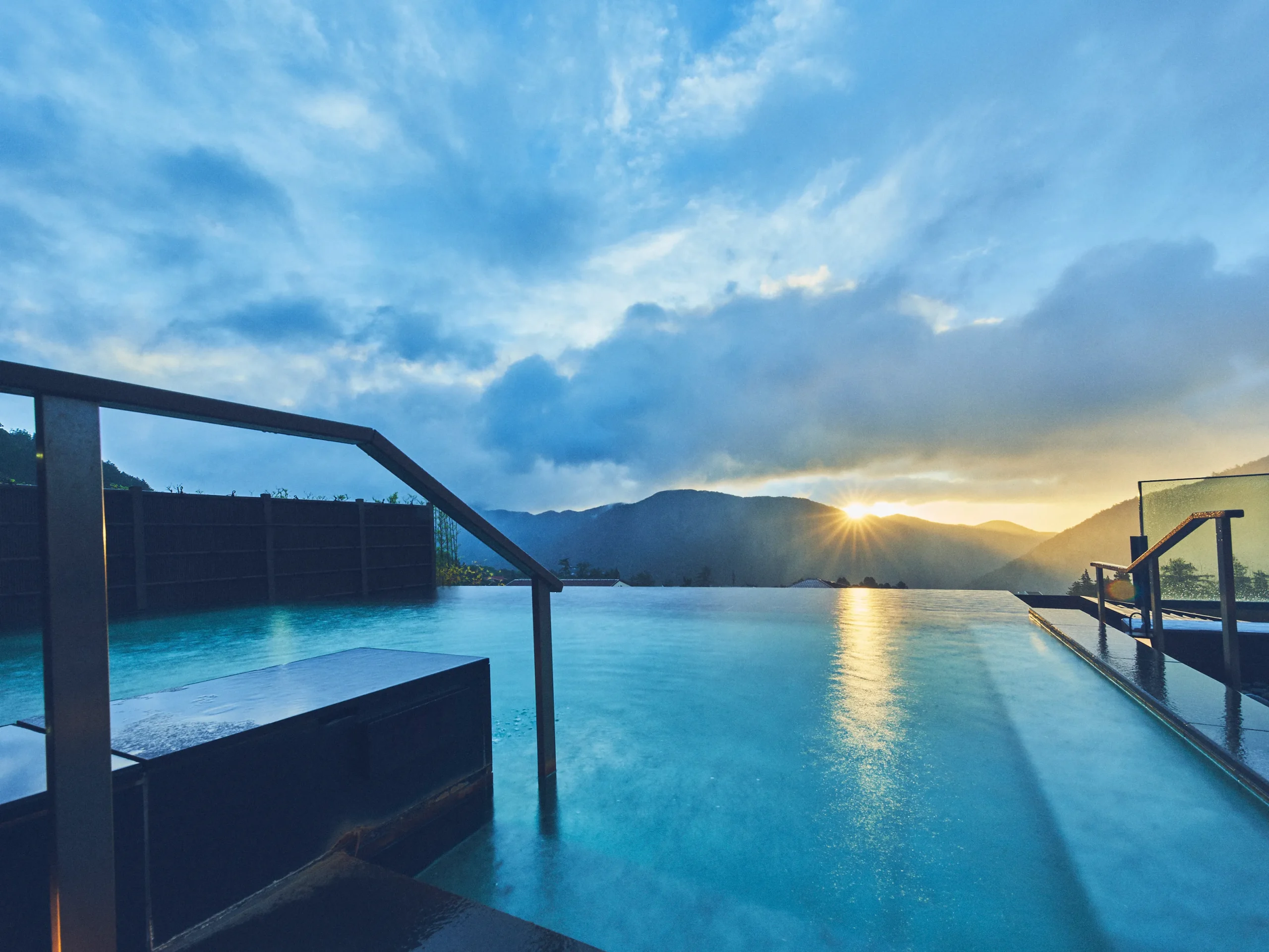
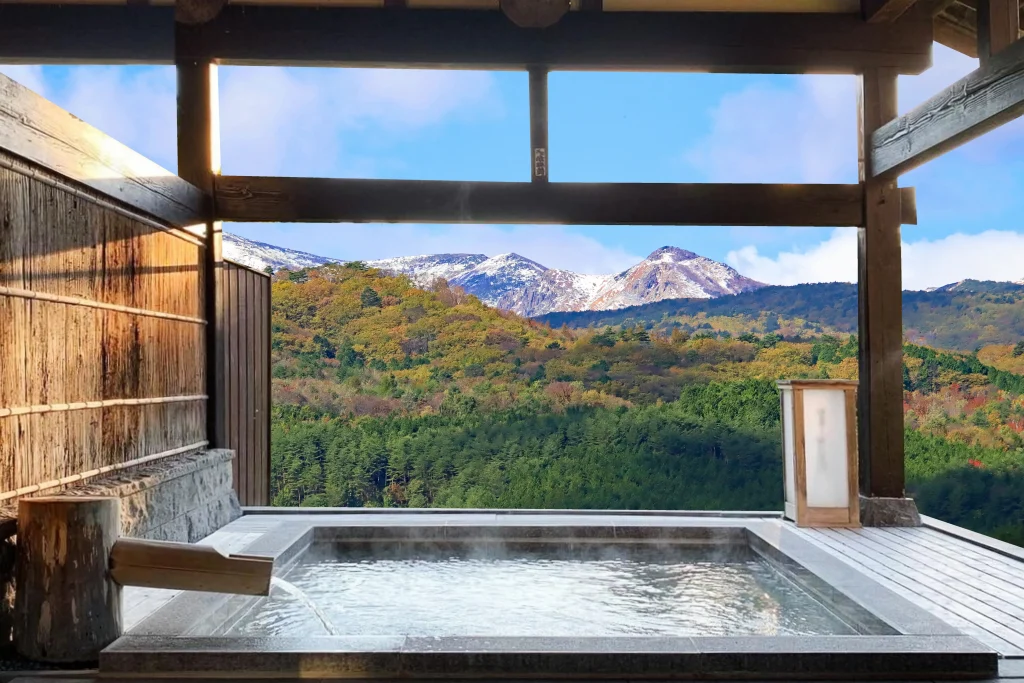
Tenyu removes one of the biggest sources of confusion in private-onsen bookings: all guest rooms have their own open-air hot-spring bath.
The property also has large communal onsen, so you can use your room bath when you want privacy and try the larger bathing areas if you feel comfortable doing so.
Tenyu is a sizeable resort rather than a small traditional inn. That can be helpful on a first onsen stay because the experience is easy to understand and the facilities are broad. If you want something more intimate, however, the scale may not be what you have in mind.
4. FUFU Hakone: Contemporary and Very Private
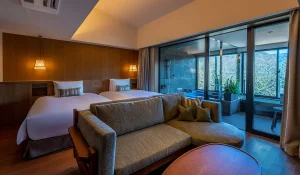
FUFU Hakone has 39 rooms, and every one has a private bath supplied with natural hot-spring water. The room baths and the large communal bath use different spring water.
The rooms are modern and spacious, with windows around the bath that can be opened toward the surrounding greenery. This is not the property I would choose purely to recreate the atmosphere of an old-fashioned ryokan. It makes more sense for couples or travelers who want privacy, space, and contemporary interiors.
A shuttle is available from Gora Station, with the local journey taking about five minutes.
5. Hakone Suimeisou: Hard to Beat for Convenience
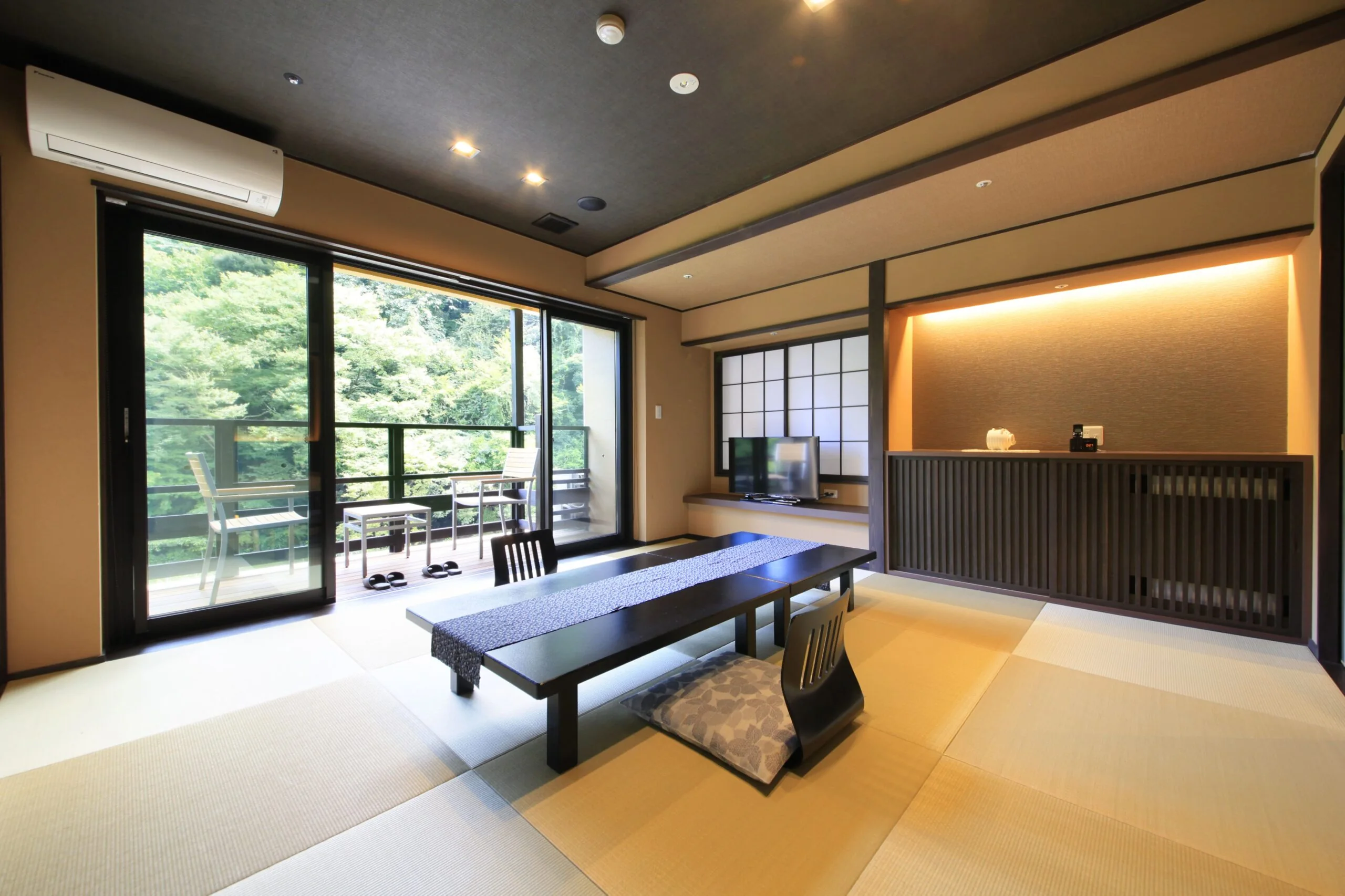
Suimeisou is about a two-minute walk from Hakone-Yumoto Station. If you are arriving directly from Tokyo with luggage, that convenience is easy to appreciate.
Private onsen are not included in every room. Its Japanese and Japanese-Western rooms with open-air baths have natural hot-spring water on the balcony, while the baths in standard rooms do not use onsen water.
The property also has separate private open-air baths. This makes Suimeisou flexible: you can pay for a room with its own onsen, or stay in another room category and still arrange some private bathing.
For a short Hakone stay, especially one night between Tokyo and another destination, the location is a genuine advantage.
6. Hoshi no Akari: A Quieter Stay in Sengokuhara
Hoshi no Akari sits in Sengokuhara rather than around Hakone-Yumoto or Gora. All of its guest rooms have private open-air hot-spring baths, using water from Gora Onsen. The communal bath uses Sengokuhara Onsen water.
That gives it a different feel from properties close to a major station. The setting is quieter and more spread out, which can be exactly what you want from a night in Hakone.
The trade-off is transport. If you want to arrive from Tokyo, check in with minimal effort, and leave early the next morning, Suimeisou is simpler. Hoshi no Akari makes more sense when the stay itself is an important part of the trip.
7. Hakone Nanase: Private Bathing Without Paying for It in the Room
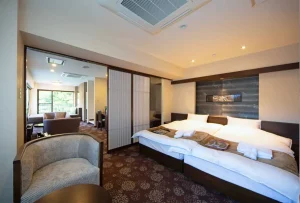
Hakone Nanase is useful if you like the idea of bathing privately but do not necessarily need the bath to be attached to your room.
Three separate semi-open-air private baths are available to staying guests. They use hot-spring water and do not require reservations.
Some suite rooms also have their own hot-spring baths, although a semi-open-air suite cannot always be guaranteed when booking certain suite categories.
If you plan to use a private bath once in the evening and perhaps again in the morning, this arrangement may be enough. An expensive room with its own bath is not automatically better if you will hardly use it.
8. Ryuguden: Choose It for Lake Ashi
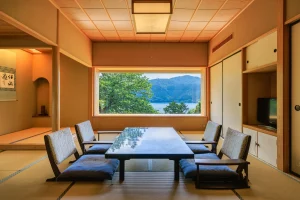
Ryuguden is on the shore of Lake Ashi, and its rooms face the lake. Mt. Fuji may also be visible on clear days.
This property needs especially careful booking if your priority is a private onsen. Only three special rooms have their own hot-spring baths, and these baths are indoors rather than open-air.
Staying guests can also use the Main Building’s hot-spring facilities, which include indoor and open-air communal baths overlooking Lake Ashi.
Ryuguden is therefore less compelling if your main goal is a private outdoor bath. Its stronger reason to stay is the lakeside setting.
9. Fujiya Hotel: Hot-Spring Water Without a Traditional Ryokan Stay
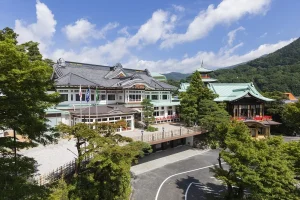
Fujiya Hotel opened in Miyanoshita in 1878 and developed as one of Japan’s early resort hotels. Its style is quite different from the ryokan elsewhere in this list.
All 120 guest rooms have private baths supplied with Miyanoshita hot-spring water. Most are normal indoor hotel bathrooms rather than outdoor rotenburo. One Premier Suite has a semi-open-air hot-spring bath.
That difference is exactly why Fujiya belongs here. Some travelers want natural hot-spring water but are less interested in futons, tatami rooms, or a traditional ryokan format. Fujiya gives you another way to experience Hakone’s onsen culture.
10. Setsugetsuka Bettei Suiun: Private Open-Air Baths in Every Room
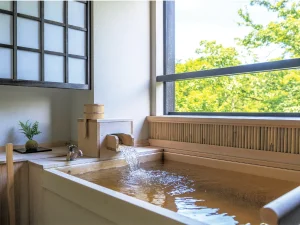
Suiun in Gora has 43 rooms, and every room has a private open-air bath supplied with natural hot-spring water. The baths are made from hinoki cypress.
The property also has communal bathing facilities and separate private baths, so having an in-room onsen does not limit you to one type of bathing experience.
Suiun only accepts guests of middle-school age or older. That makes it useful for couples and adult groups looking for a quieter stay, but it immediately rules it out for families with younger children.
Which Part of Hakone Should You Stay In?
The hotel itself is only part of the decision. Hakone spreads across a mountainous area, so location affects how the stay feels and how much time you spend moving around.
Hakone-Yumoto
Hakone-Yumoto is the easiest area if arrival and departure matter most. It is the end point of the direct Romancecar from Shinjuku and the gateway to the rest of Hakone.
Suimeisou is the clearest example in this list. You can be at the ryokan within a few minutes of leaving the station.
Gora
Gora works well if you plan to combine your ryokan stay with central Hakone sightseeing. Gora Kadan, FUFU Hakone, and Suiun are all based in or around this area.
It requires more travel after Hakone-Yumoto, but you are already farther into the mountains when you wake up the next morning.
Kowakudani
Tenyu and Mikawaya are both in Kowakudani. The area suits a stay where the accommodation itself is an important part of the trip and you do not mind continuing deeper into Hakone after arriving.
Sengokuhara
Sengokuhara feels more spread out and is less convenient by train. Hoshi no Akari makes more sense here if you value a quieter setting over being beside a station.
Miyanoshita
Miyanoshita has a long history as a hot-spring and resort area. Fujiya Hotel gives it a distinctive historical character, while Hakone Nanase offers a more onsen-focused stay nearby.
Lake Ashi
Lake Ashi is the strongest choice if the setting itself is a major reason for booking. Ryuguden is harder to reach than a property beside Hakone-Yumoto Station, although a guest shuttle operates from Odawara.
What About Ryokan Meals?
Food is part of the ryokan experience, but it should not decide the stay unless dining is particularly important to you.
Many ryokan offer a set multi-course dinner, often kaiseki, with breakfast the following morning. What matters when booking is less the promise of “seasonal ingredients” and more the practical details.
Check whether dinner is included in your plan, what time you need to arrive, where the meal is served, and whether the property can accommodate dietary restrictions. At some ryokan, arriving late can mean missing dinner.
If you plan to spend most of the evening at the property, a dinner-inclusive plan often makes sense. If you are staying near Hakone-Yumoto and want more flexibility, you have more options nearby.
Can You Try a Private Onsen Without Staying Overnight?
Yes. Hakone has day-use hot-spring facilities as well as ryokan.
Hakone Yuryo, near Hakone-Yumoto, is one example with reservable private open-air baths. It can work well if you are visiting Hakone for the day or already have accommodation elsewhere.
An overnight stay is different, though. Instead of making the bath one appointment in the day, you can use it in the evening, return after dinner, and bathe again in the morning.
If the main reason you are coming to Hakone is to slow down, staying one night usually fits that purpose better.
A Few Things Worth Checking Before You Book
Read the exact room name. A property can advertise private onsen prominently even when only a few room categories include one.
Check that the private bath actually uses hot-spring water. A wooden or stone bath can look like an onsen without being supplied by a natural spring.
Decide whether you really need the bath inside your room. A separate private bath may be enough, especially if you only plan to use it once or twice.
Check communal-bath policies separately if you have tattoos. An in-room bath gives you privacy, but rules for shared bathing facilities vary by property.
Think about location before choosing purely by room photographs. A two-minute walk from Hakone-Yumoto and a lakeside stay near Lake Ashi can both look appealing online, but they create very different itineraries.
One Night or Two?
For many first-time visitors, one night works well. You can arrive in the afternoon, spend time at the ryokan, have dinner, bathe again in the evening, and continue sightseeing the next morning.
Two nights are more comfortable if Hakone itself is a major part of your trip. It gives you more time for Lake Ashi, Owakudani, museums, and slower travel without turning your ryokan stay into something squeezed between transfers.
Read more: What to Do Around Mt. Fuji.
So Which Hakone Private Onsen Should You Choose?
Start with the bath rather than the hotel name.
If you want a private open-air onsen guaranteed in your room, Tenyu, Hoshi no Akari, and Suiun make that easy to understand.
If you prefer contemporary luxury and an in-room hot-spring bath, FUFU Hakone is a strong match.
If easy access from Tokyo matters, Suimeisou saves you another transfer after reaching Hakone.
Gora Kadan and Mikawaya make more sense when the character and history of the ryokan matter as much as the bath.
Hakone Nanase is worth considering if a separate private bath gives you enough privacy, while Fujiya Hotel suits travelers who would rather stay in a historic Western-style hotel.
Ryuguden is the outlier. Its private in-room onsen options are limited, but the Lake Ashi location can be the reason to choose it anyway.
The right property is not necessarily the most luxurious one. A convenient room with the bath setup you actually want will usually serve you better than a famous ryokan that does not fit the rest of your trip.
If you are combining Hakone with Tokyo, Mt. Fuji, or a longer journey through Japan, ENJYU JAPAN can also help match the accommodation to your route and pace. Its Hakone Luxury Onsen Retreat is one example of a trip that builds the ryokan stay into a wider Tokyo, Hakone, and Mt. Fuji itinerary.

7-Day Hakone Luxury Onsen Retreat Tour