Osaka does not have Kyoto’s concentration of famous temples, but there is still plenty worth seeing. Shitennoji is the obvious choice for history, Hozenji works well as a short stop near Dotonbori, Katsuoji is a half-day trip for its thousands of daruma dolls, and Sumiyoshi Taisha offers a completely different Shinto atmosphere.
This guide covers 12 temples and shrines in total, including places that fit easily into a normal Osaka itinerary. It also looks at experiences beyond simply walking around the grounds, from sutra copying at Isshin-ji to the lively temple days held at Shitennoji each month.
Temples and Shrines: The Quick Difference
Before you go, it helps to know what you are looking at because Osaka has both Buddhist temples and Shinto shrines.
Shrines usually have a torii gate marking the entrance. Temples more often have a large roofed gate, incense burners and Buddhist statues.
The way you pay respects is also different. At a shrine, the common pattern is to bow twice, clap twice, make your prayer, then bow once more. At a Buddhist temple, put your hands together quietly and bow without clapping.
You do not need to memorize everything before you visit. Following the signs, watching what other visitors do and keeping your voice down is usually enough.
7 Best Temples in Osaka
Shitennoji Temple
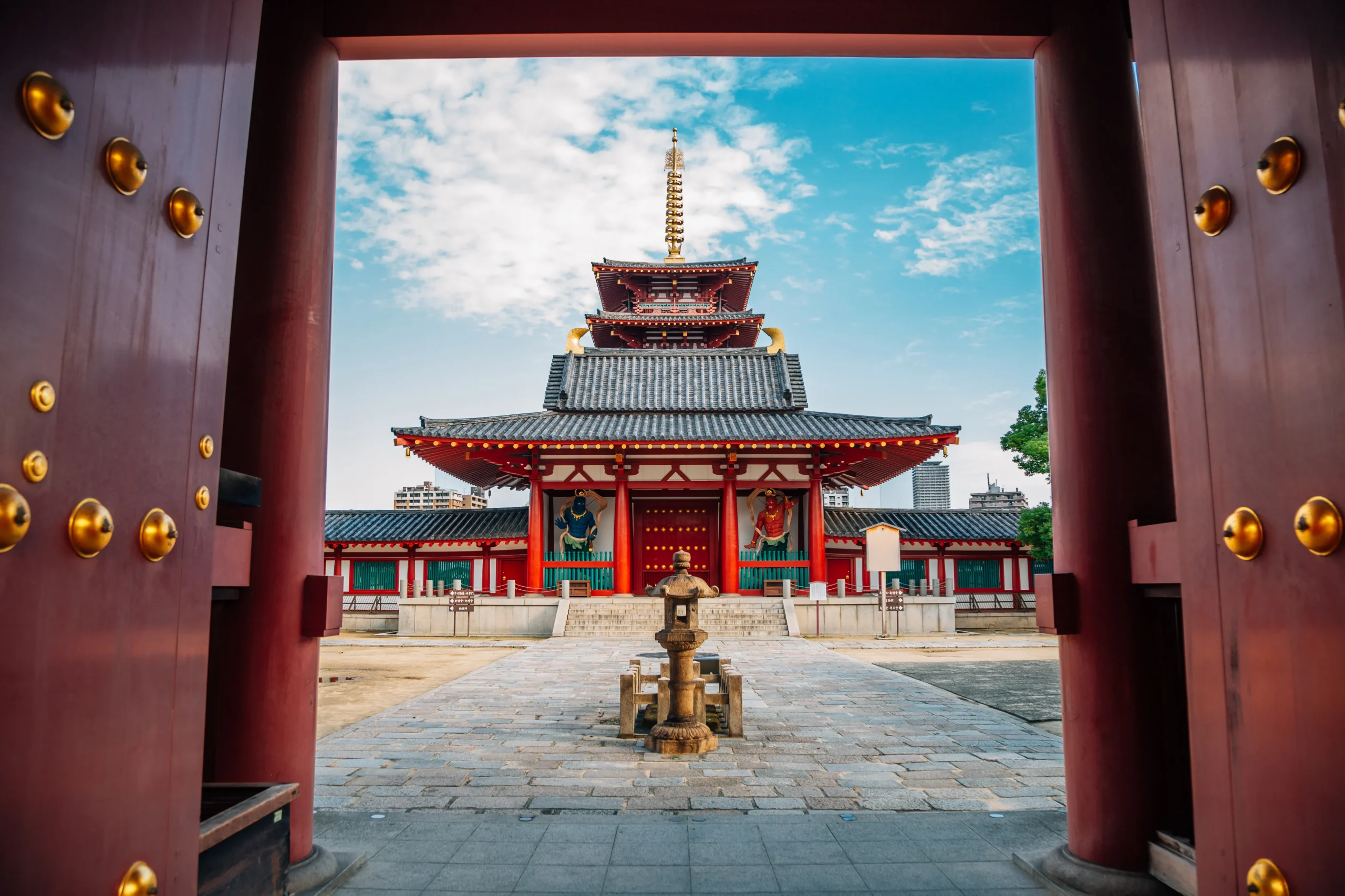
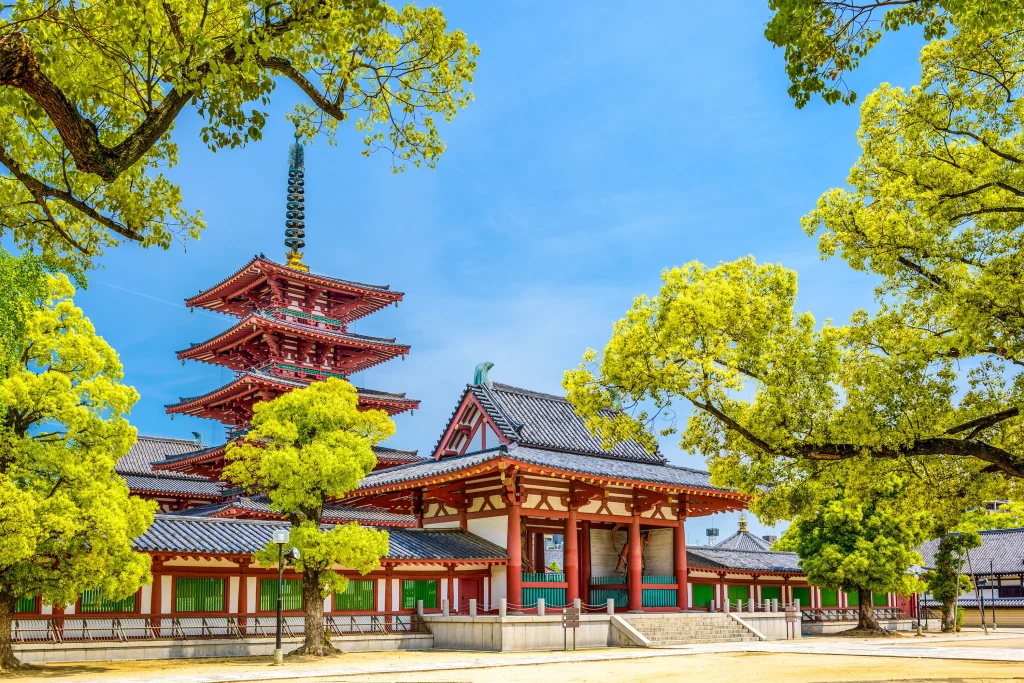
If you visit only one Buddhist temple in Osaka, Shitennoji is the strongest all-round choice. Founded in 593 by Prince Shotoku, it is generally regarded as Japan’s first officially established Buddhist temple.
The grounds are large enough to spend some time exploring. The central precinct contains the five-story pagoda and Kondo main hall, while the Gokuraku-jodo Garden offers a quieter change of pace. The Treasure House displays paintings, scriptures and other temple objects during scheduled exhibition periods.
Shitennoji is particularly interesting on the 21st and 22nd of each month. These are important temple days, and the central precinct is opened free of charge. Stalls selling antiques, food and everyday goods fill parts of the grounds.
On the 21st, visitors can also access the upper gallery of the five-story pagoda. On the 22nd, the E-do is specially opened as well.
That timing can change the whole feel of a visit. One of our editors first visited around the autumn Higan period in 2015. The weather was cloudy and a little rainy, but the grounds were busy with stalls, including flowers, and there was plenty to walk around and explore. The pagoda was under construction at the time, yet the visit still felt worthwhile because there were so many different buildings and sections to see.
A second visit in 2019 felt completely different. It was around sunset, with good weather, lights and lanterns around parts of the grounds and music in the background. Instead of feeling like a sightseeing checklist, it became the kind of place where you could simply walk slowly and enjoy the atmosphere. Special lighting and music should not be expected every evening, but the experience showed how much Shitennoji can change depending on when you go.
If you are choosing between Shitennoji and Sumiyoshi Taisha, Shitennoji is the better option when you want more to explore. Sumiyoshi Taisha, described later, can feel easier and more relaxed as a shorter daytime visit.
- Hours: 8:30 AM to 4:30 PM from April to September; until 4:00 PM from October to March
- Entry: Grounds free; central precinct 500 JPY; Gokuraku-jodo Garden 300 JPY; Treasure House 500 JPY when open
- Getting there: 5 minutes on foot from Shitennoji-mae Yuhigaoka Station; about 15 minutes from Tennoji Station
Aizen-do Shoman-in Temple
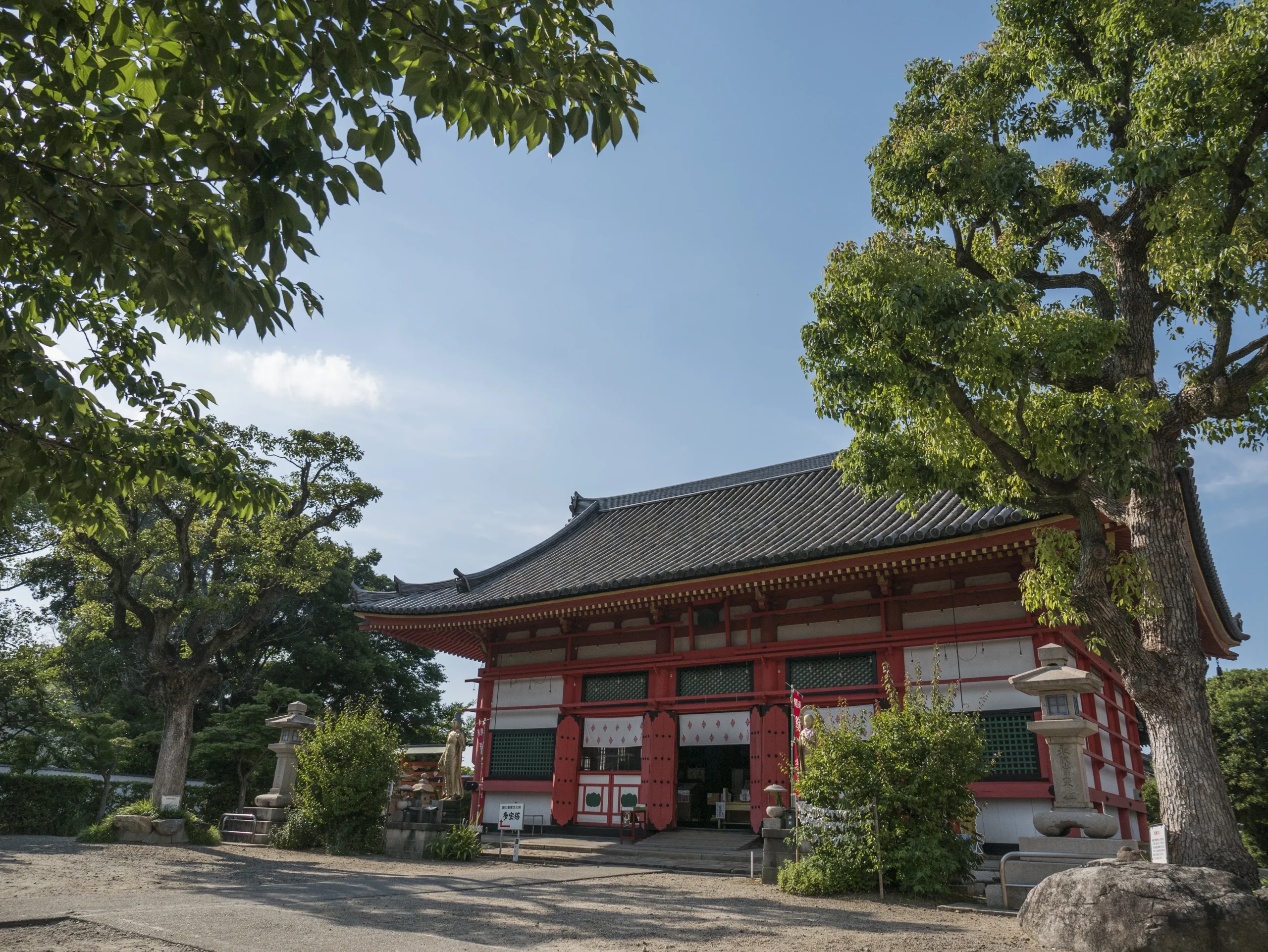
Aizen-do is easy to overlook beside the much larger Shitennoji, but that is also what makes it useful. It is only a couple of minutes from Shitennoji-mae Yuhigaoka Station and fits naturally into the same Tennoji temple walk.
The temple traces its history to 593 and Prince Shotoku. Its principal deity is Aizen Myoo, so the temple has long been associated with relationships and marital harmony. The most distinctive building is the Tahoto pagoda, rebuilt in the late 16th century and designated an Important Cultural Property.
If your visit falls around June 30 to July 2, Aizen-do also hosts the Aizen Festival, one of Osaka’s established summer festivals.
You do not need much time here. That is part of the appeal. It works well before continuing to Shitennoji rather than requiring a separate journey across the city.
- Hours: 9:00 AM to 4:30 PM
- Entry: Free
- Getting there: About 2 minutes from Shitennoji-mae Yuhigaoka Station
Isshin-ji Temple
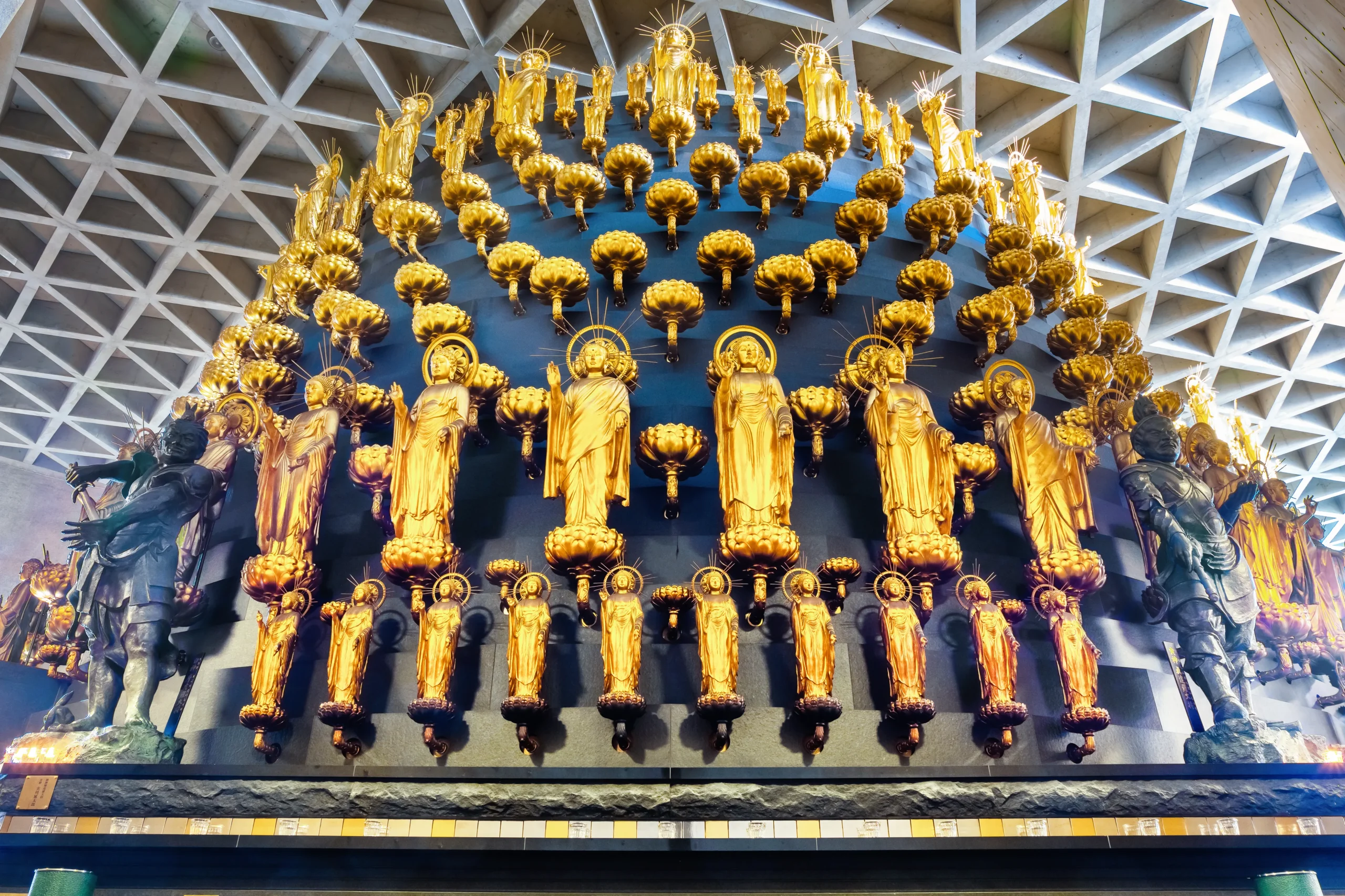
Isshin-ji looks very different from the traditional temple you may expect. Its steel, concrete and glass entrance has a distinctly modern appearance, including contemporary guardian figures at the gate.
Inside, the temple is known for the Okotsu Butsu, often called the “bone Buddhas.” These Buddhist statues are made using the cremated remains of devotees. The tradition began in the late 19th century and continues today, giving Isshin-ji a close connection with remembrance and memorial rites.
There is also something more participatory here. Across the road from the main temple is Isshin-ji’s sutra-copying hall, where visitors can copy Buddhist scripture by hand. Brushes, ink and the other necessary tools are provided, and staff explain the process to first-timers.
It is a simple way to experience a Buddhist practice rather than only looking at temple buildings. The walk-in sutra-copying session is normally available during daytime hours, except on certain closure days, but check the latest information if it is an important part of your plans.
- Hours: Main temple around 9:00 AM to 4:00 PM
- Entry: Free
- Getting there: Near Shitennoji in Tennoji Ward; easy to combine with the other temples in this area
Hozenji Temple
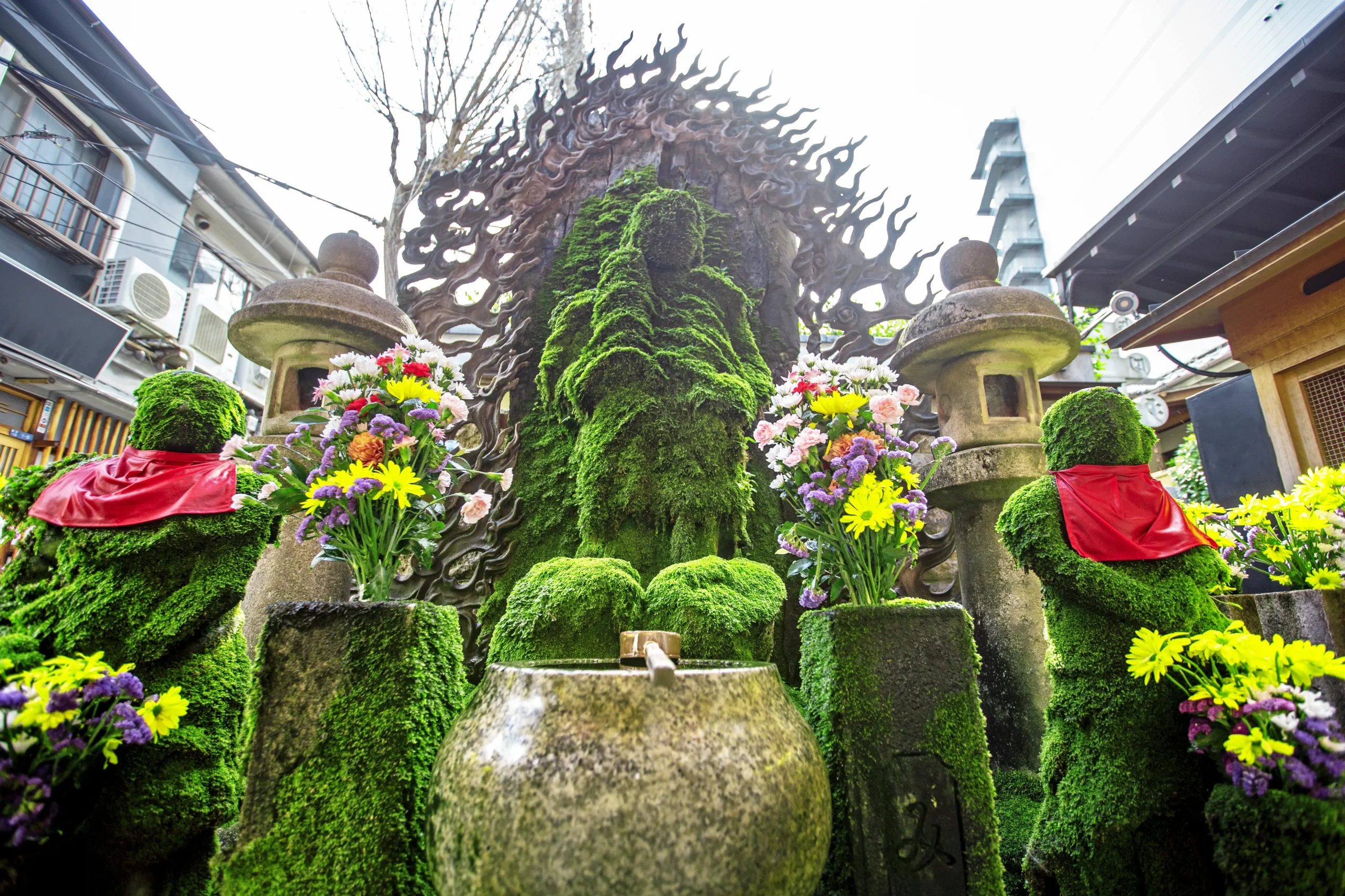
Hozenji is only a few minutes from Dotonbori, yet the small temple and surrounding alley feel quite different from the shopping streets nearby. The temple dates to the 17th century and is dedicated to Fudo Myoo.
The main reason travelers stop here is Mizukake Fudo. The stone figure is covered almost completely in green moss after years of visitors pouring water over it while making a prayer or wish.
Hozenji itself is a short visit, so it works best as part of an evening around Namba rather than as a destination for half a day. Hozenji Yokocho beside the temple is lined with small restaurants, making it easy to visit before or after dinner.
Evening is a particularly pleasant time to come, when the lanterns are lit and the surrounding streets are busy with people heading out to eat.
- Hours: Temple grounds accessible 24 hours
- Entry: Free
- Getting there: A few minutes’ walk from Namba Station and Dotonbori
Katsuoji Temple
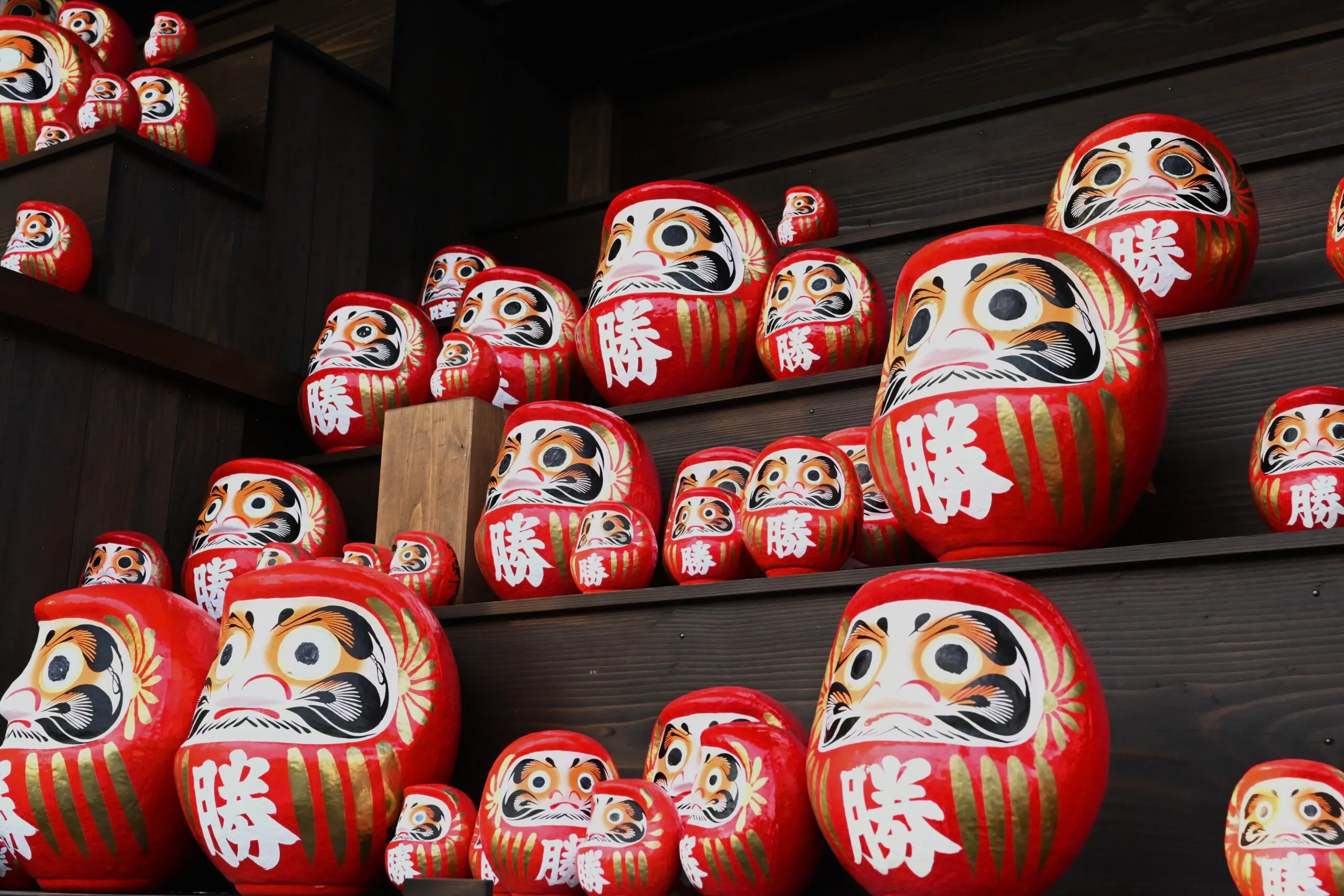
Katsuoji sits in the hills north of central Osaka and is best known for the countless daruma dolls placed throughout its grounds.
People traditionally come here to pray for success and perseverance. Some daruma are tiny enough to sit on stone walls and railings, while much larger examples appear around the main buildings.
The forested setting is another reason to make the trip. There is a pond near the entrance, landscaped gardens and seasonal foliage, with autumn being one of the most popular times to visit.
Access has improved considerably since the opening of Minoh-Kayano Station. Direct buses now run frequently from Minoh-Kayano to Katsuoji during the day, making the journey easier than older travel guides may suggest.
From central Osaka, however, you should still allow roughly half a day for the round trip and visit. Check the return bus schedule when you arrive, particularly if you visit later in the day or during a busy autumn period.
- Hours: 8:00 AM to 5:00 PM on weekdays, Sundays and public holidays; until 6:00 PM on Saturdays
- Entry: 500 JPY for adults; 400 JPY for elementary and junior-high students
- Getting there: Travel to Minoh-Kayano Station, then take a direct bus to Katsuoji
Taiyuji Temple
Taiyuji is a useful choice if you are staying around Umeda and do not want to cross the city just to visit a temple.
It sits within walking distance of the Osaka and Umeda station area, surrounded by busy streets, restaurants and shops. Once inside the temple grounds, the atmosphere is considerably calmer.
Taiyuji does not need a long visit. It works best as a short break during a day spent around Umeda.
- Hours: Around 8:30 AM to 4:30 PM
- Entry: Free
- Getting there: Short walk from Higashi-Umeda Station and within walking distance of JR Osaka Station
Senko-ji Temple

Senko-ji in Hirano takes a very different approach from Osaka’s better-known historic temples. Its Jigoku-do, or Hell Hall, uses sound, images and figures of Enma, the king of the underworld, to present Buddhist ideas about hell in a theatrical way.
Visitors buy a small “hell passport” and use it to enter the hall. Inside, a short audiovisual presentation begins after striking the gong.
Downstairs, Hotoke no Kuni provides the opposite atmosphere. The room is lined with stone Buddhas and stained-glass mandalas and is intended as a calmer space for reflection.
This is one of the more unusual temple visits in Osaka, particularly for people who have already seen plenty of traditional halls and pagodas. The Hell Hall may be intense for some younger children, so families should decide based on the child.
- Hours: Around 8:30 AM to 5:00 PM
- Entry: Temple grounds free; small fee for the Hell Hall
- Getting there: Short walk from JR Hirano Station or Osaka Metro Hirano Station
5 Best Shrines in Osaka
Sumiyoshi Taisha
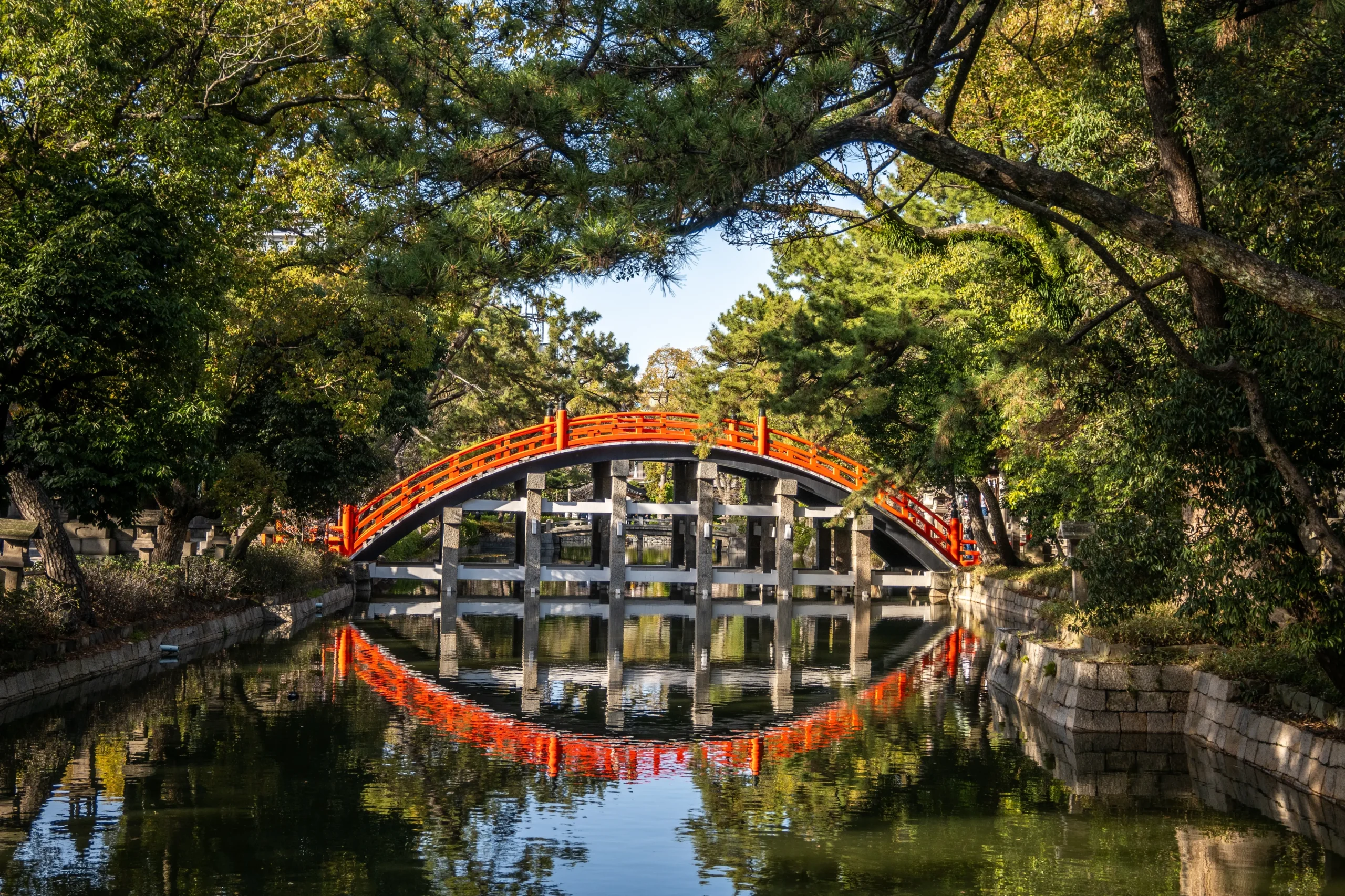
Sumiyoshi Taisha is one of Osaka’s most important shrines, with origins traditionally traced to the 3rd century. Its four main shrine buildings use the distinctive Sumiyoshi-zukuri architectural style, which developed before the strong influence of continental Buddhist architecture.
The first thing many visitors notice is Sorihashi, the steep red arched bridge near the entrance. Crossing the bridge is traditionally associated with purification.
One of our editors visited Sumiyoshi Taisha on a sunny day in 2015 and remembers it as one of the most pleasant shrine visits in Osaka. The main route felt manageable and easy to explore without rushing. Pine trees, stone lanterns, vermilion shrine buildings and the red bridge all sit quite close together, so there is plenty to look at without having to walk across a huge complex.
Small details also make the visit memorable. Look for the rabbit-shaped purification fountain, one of the details that particularly stood out during that visit.
If you want to do more than simply walk around, visit Goshogozen. Among the pebbles are stones marked with the characters for “five,” “large” and “power.” Finding one of each creates a small set called Godairiki that can be taken home as a charm.
There are also Omokaru fortune-telling stones elsewhere in the grounds. Visitors lift one of the stones, make a wish and lift the same stone again. Traditionally, if it feels lighter the second time, the wish is considered more likely to come true.
For a relaxed daytime visit, Sumiyoshi Taisha can be a particularly good choice. It offers plenty of small things to notice without requiring the time commitment of Shitennoji or Katsuoji.
- Hours: 6:00 AM to 5:00 PM from April to September; 6:30 AM to 5:00 PM from October to March
- Entry: Free
- Getting there: About 3 minutes from Sumiyoshi Taisha Station on the Nankai line; also served by the Hankai tram
Osaka Tenmangu Shrine
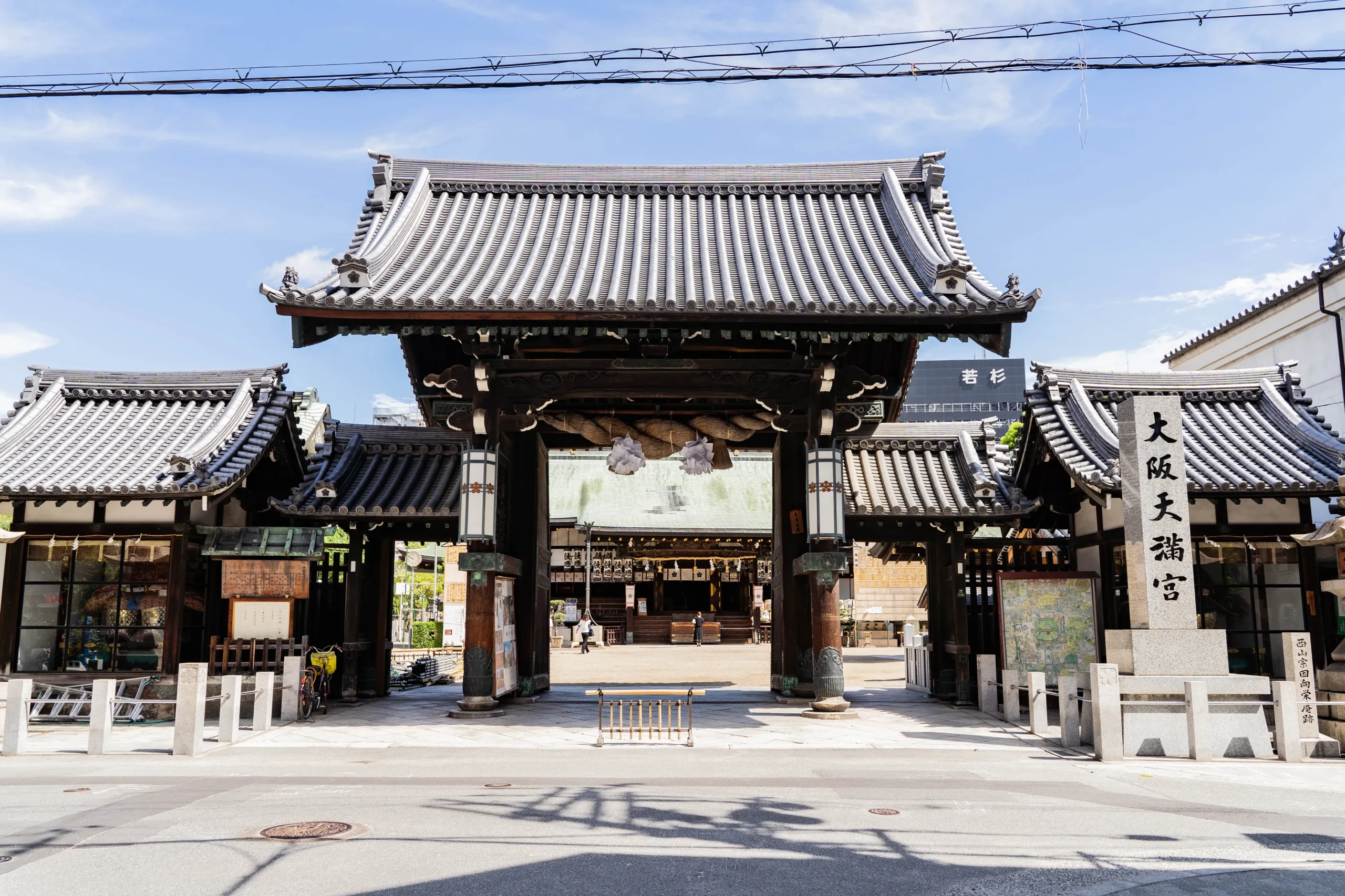
Osaka Tenmangu is dedicated to Sugawara no Michizane, a scholar and poet who came to be worshipped as Tenjin, the deity of learning. Students still visit to pray for success in school and entrance examinations.
The shrine is also closely associated with the Tenjin Matsuri each July. The festival includes a large procession through the city and a river procession in the evening.
For most travelers, the location is as useful as the shrine itself. Osaka Tenmangu sits beside Tenjinbashi-suji shopping street, so you can combine a shrine visit with shopping, cafes and local food without building a separate itinerary around it.
- Hours: Around 5:30 AM to 5:30 PM
- Entry: Free
- Getting there: Near Osaka Tenmangu Station and Minami-morimachi Station
Namba Yasaka Shrine
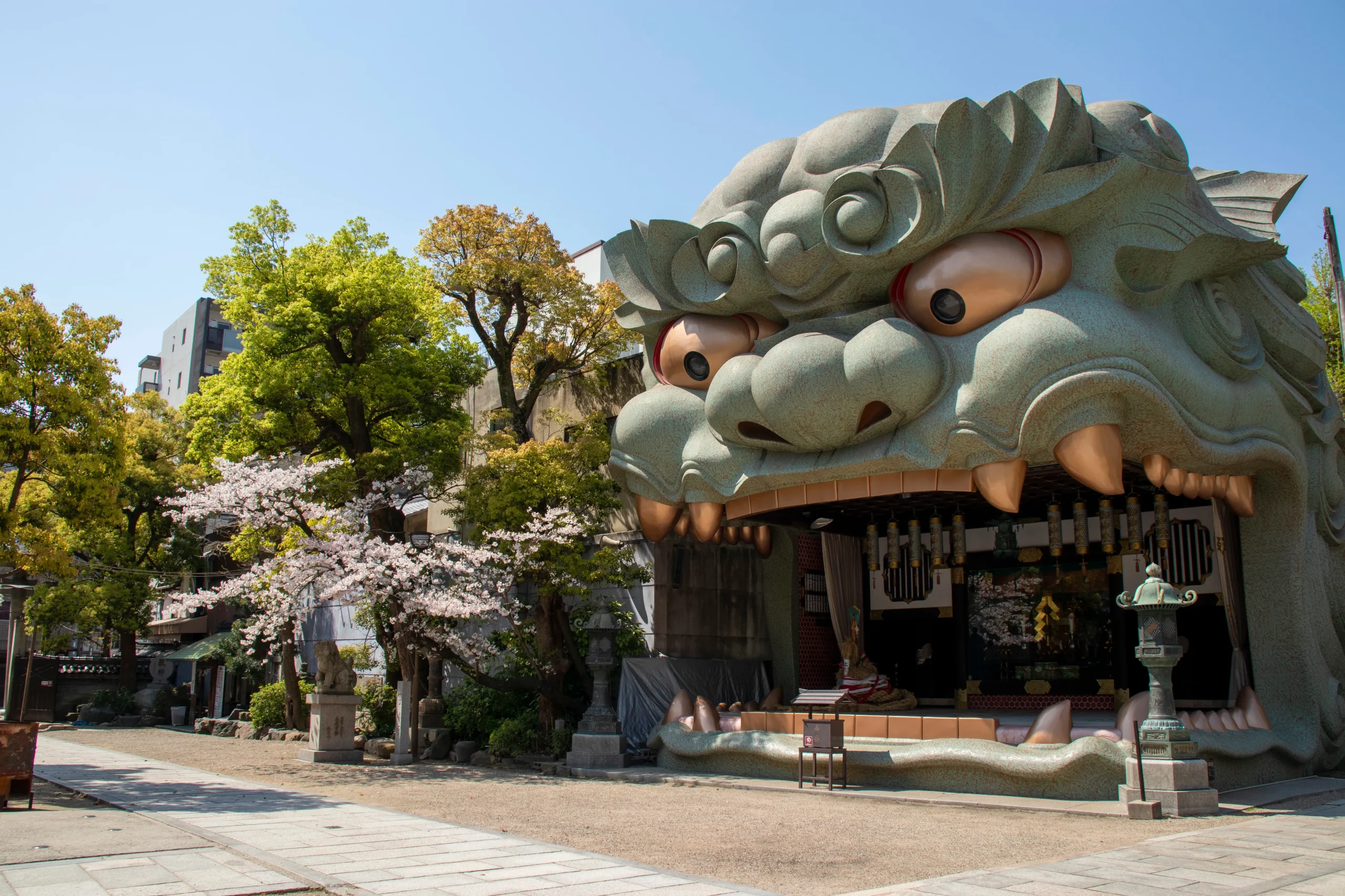
Namba Yasaka is best known for one feature: its enormous lion-head stage.
The structure is roughly 12 meters high, with a huge open mouth facing the shrine grounds. The lion is associated with swallowing misfortune and attracting good luck, particularly in studies and business.
The shrine is within walking distance of central Namba, so it is easy to combine with Hozenji, Dotonbori or the surrounding shopping streets. You do not need long here unless a ceremony or event is taking place.
- Hours: Grounds generally open during the day
- Entry: Free
- Getting there: Short walk from Namba Station
Tsuyunoten Shrine (Ohatsu Tenjin)
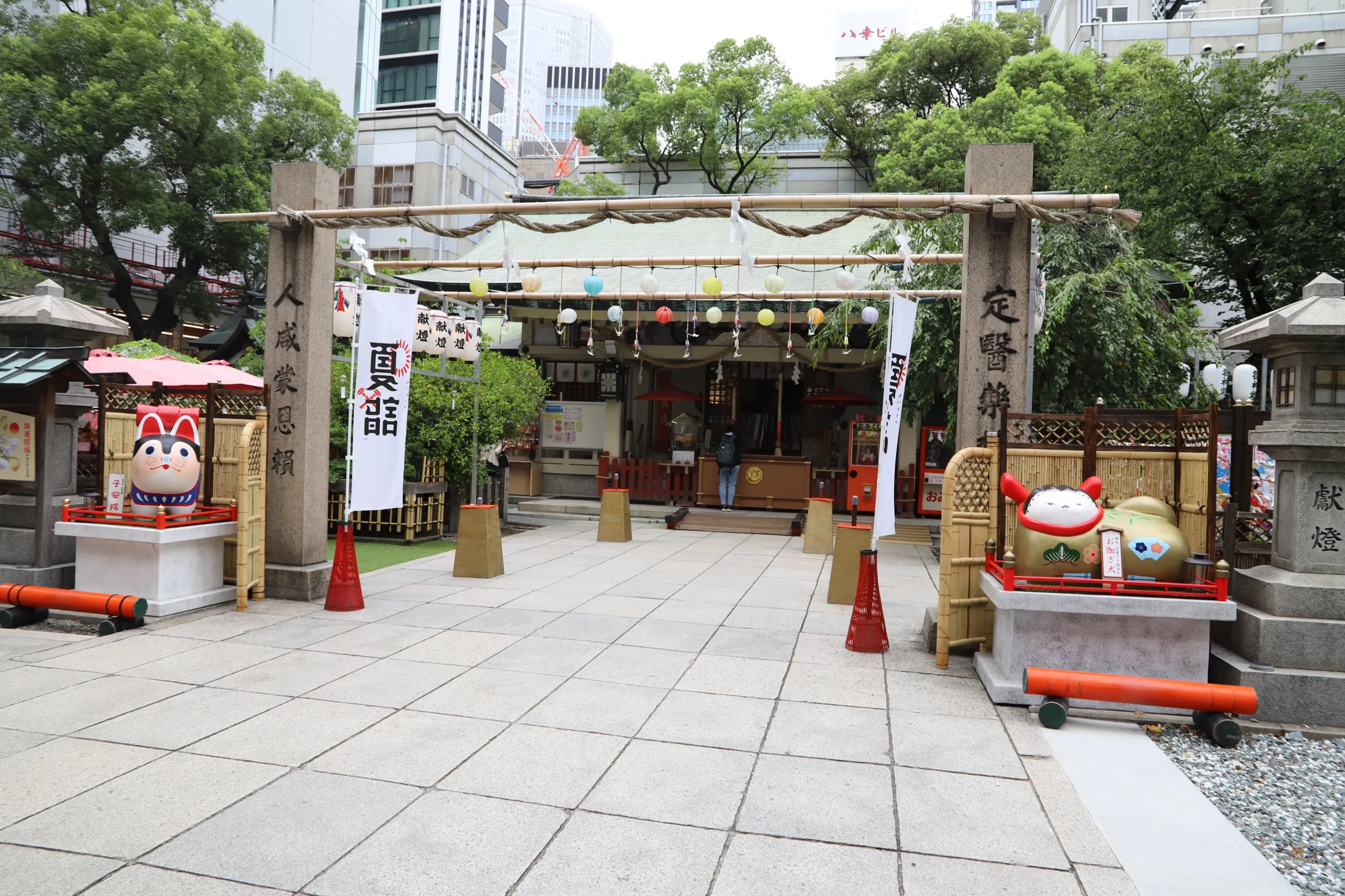
Tsuyunoten Shrine sits among the restaurants and nightlife streets of Umeda and is better known locally as Ohatsu Tenjin.
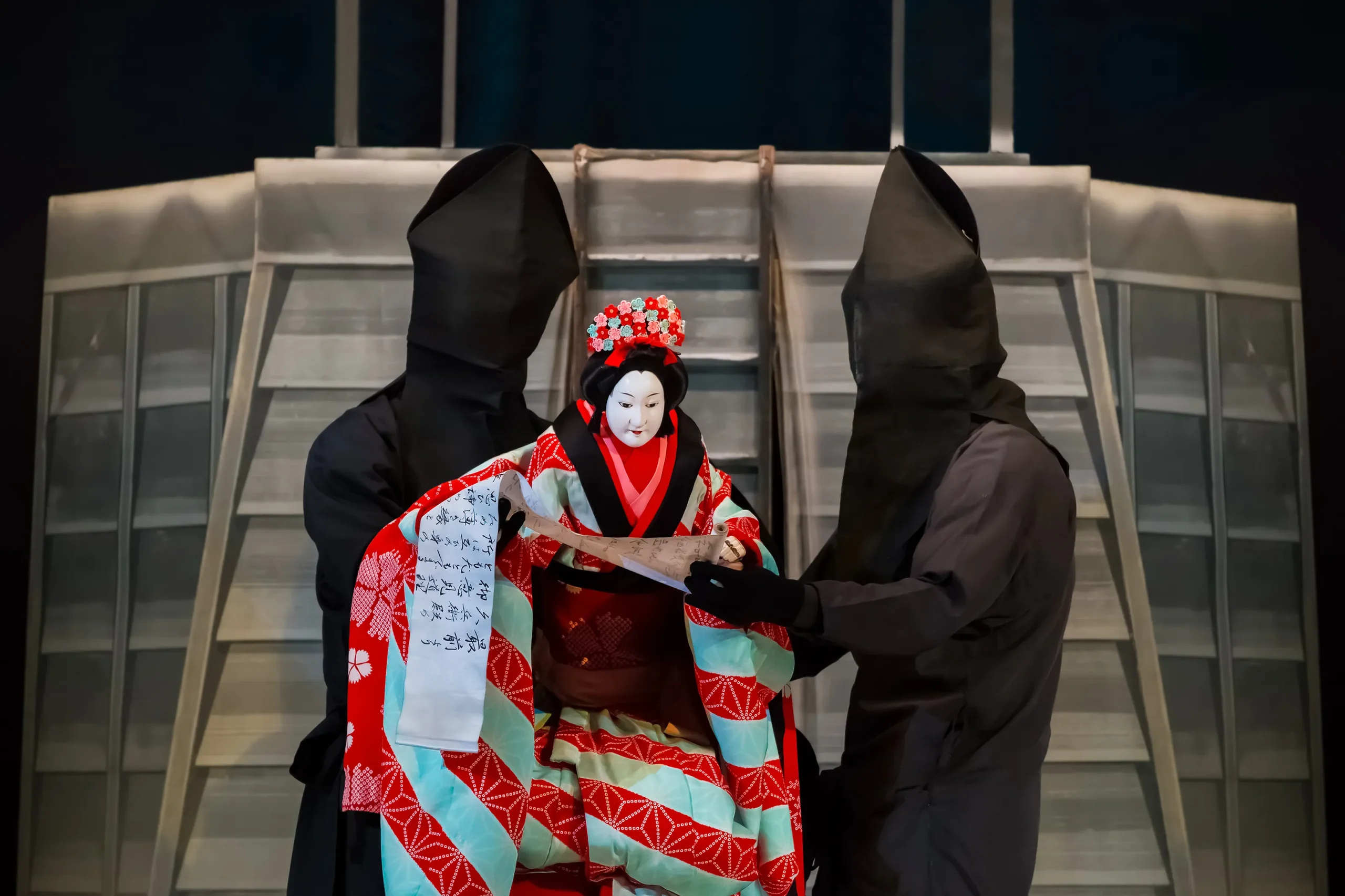
The nickname comes from the story of Ohatsu and Tokubei, two lovers whose deaths in the early 18th century became the basis for Chikamatsu Monzaemon’s famous puppet play The Love Suicides at Sonezaki. The connection remains visible around the shrine today, and many couples come here to pray for relationships.
Unlike many shrines that close relatively early, Tsuyunoten can be visited until midnight. That makes it particularly easy to add after dinner around Umeda rather than using daytime sightseeing hours.
- Hours: Shrine grounds 6:00 AM to midnight; shrine office 9:00 AM to 6:00 PM
- Entry: Free
- Getting there: Walking distance from Umeda and Osaka Station
Horikoshi Shrine
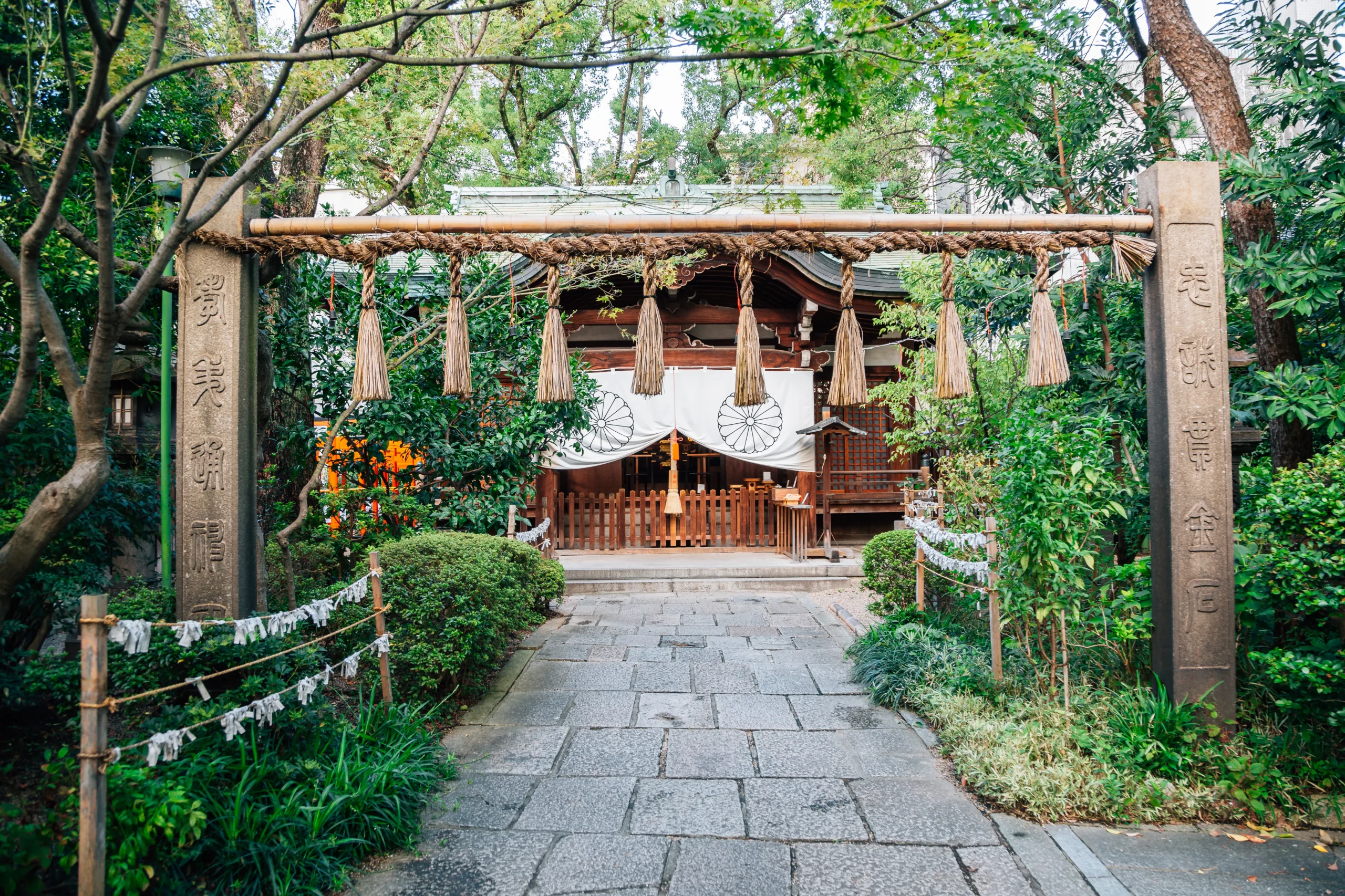
Horikoshi Shrine is a small shrine in the Tennoji area that fits naturally between Shitennoji, Isshin-ji and Tennoji Station.
According to shrine tradition, Prince Shotoku founded it around the same period as Shitennoji. Today it is particularly known for the saying that Horikoshi will listen to “one wish in a lifetime.”
The shrine offers a special Hitoyume Kigan prayer for this purpose. You write one wish on a strip of paper, which is placed inside an amulet after a formal prayer. This particular prayer requires advance reservation by telephone, so it is less straightforward for overseas visitors than simply turning up at the shrine. Ordinary shrine visits do not require a reservation.
Horikoshi is not a destination that needs an hour or two by itself. Its value is location. It gives you another interesting stop while walking through the Tennoji temple district.
- Entry: Free for an ordinary visit; special prayers require a separate offering
- Getting there: Around 10 to 15 minutes on foot from Tennoji Station
Collecting Goshuin at Osaka’s Temples and Shrines
If you visit several temples and shrines, you may want to collect goshuin. These are calligraphic temple or shrine seals, usually written or stamped into a dedicated goshuincho book.
Most of the major places in this guide offer them, including Shitennoji, Isshin-ji and Sumiyoshi Taisha.
A few practical points:
- Buy or bring a goshuincho. Larger temples and shrines usually sell their own designs.
- Goshuin are normally available from a temple reception counter or shrine office rather than from the main worship hall.
- A small fee is charged.
- Designs, prices and availability can change, particularly for seasonal goshuin.
- The goshuin counter may close earlier than the grounds themselves. If you are visiting late in the afternoon or evening, collect your goshuin before the counter closes.
At a large complex such as Shitennoji, check the map or ask staff where the relevant reception desk is rather than assuming it will be beside the main entrance.
Temple and Shrine Etiquette Every Visitor Should Know
You do not need to be religious to visit, and visitors are not expected to know every detail of Japanese worship etiquette.
At a shrine
- Bow once at the torii gate before entering.
- At the purification fountain, rinse your hands before approaching the main shrine.
- At the offering hall, put a coin in the box, bow twice, clap twice, make your prayer, then bow once more.
At a Buddhist temple
- Bow lightly at the entrance.
- If there is incense, you can make an offering and gently waft some of the smoke toward yourself.
- At the main hall, offer a coin if you wish, put your hands together quietly and bow. Do not clap.
At either type of site, keep your voice down around worshippers, follow signs about photography, and remove your shoes where requested.
How to Plan Your Temple-and-Shrine Day in Osaka
You can visit almost every place in this guide by public transport. The easiest approach is to group them by area rather than trying to cross Osaka repeatedly.
Namba and Dotonbori: Visit Hozenji, then walk through the Namba area to Namba Yasaka Shrine. Both are relatively short visits and fit easily around shopping and food.
Tennoji: This is the best area if temples are a priority. Start around Shitennoji-mae Yuhigaoka with Aizen-do, continue to Shitennoji, then walk south toward Isshin-ji and Horikoshi Shrine. From there, Tennoji and Shinsekai are close enough to finish the day with dinner.
This route also shows how different Osaka’s religious sites can be. Shitennoji has large grounds and many buildings to explore. Isshin-ji adds the unusual bone Buddhas and the option of sutra copying. Horikoshi is much smaller and feels more like a local shrine stop.
Umeda and Kita: Combine Osaka Tenmangu with Tenjinbashi-suji, then visit Tsuyunoten later in the day when you return toward Umeda.
Further south: Sumiyoshi Taisha deserves its own short trip. From our experience, it works especially well as an unhurried daytime visit. The main shrine area is easy to walk around, but there are enough subsidiary shrines and small details to keep exploring if you have time.
Further north: Katsuoji requires the biggest time commitment. Allow roughly half a day once transport is included. It is a good choice when the temple itself is a priority rather than something to squeeze between two central Osaka activities.
If Kyoto is also on your itinerary, you do not need to choose one city over the other. Kyoto has a much larger concentration of famous temple complexes. Osaka’s advantage is that places such as Hozenji, Isshin-ji and Shitennoji can be fitted naturally around neighborhoods you may already be visiting.
Frequently Asked Questions
What Is the Most Famous Temple in Osaka?
Shitennoji is generally the strongest answer. It was founded in 593 and is one of the most historically important Buddhist sites in Japan.
If you are looking for something more visually unusual, Katsuoji is famous for the thousands of daruma dolls found throughout its grounds.
What Is the Oldest Shrine in Osaka?
Sumiyoshi Taisha is one of Japan’s oldest Shinto shrines, with traditional origins dating to the 3rd century.
Is Osaka Worth Visiting for Temples if I Am Also Going to Kyoto?
Yes, but you probably do not need to devote the same amount of time to temple sightseeing in both cities.
In Osaka, a half-day around Tennoji or a few individual stops in Namba and Umeda may be enough for many travelers. Add Katsuoji or Sumiyoshi Taisha if those places specifically interest you.
What Is the Shrine for Love in Osaka?
Tsuyunoten, also known as Ohatsu Tenjin, is strongly associated with love because of the story of Ohatsu and Tokubei.
Aizen-do is a Buddhist temple rather than a shrine, but it is also closely associated with relationships and marital harmony.
Can I Do a Buddhist Experience at a Temple in Osaka?
Yes. Isshin-ji has a dedicated sutra-copying hall where beginners can copy Buddhist scripture by hand. Tools are provided, and staff can explain the process.
Check current availability before planning your day around the experience.
Can I Collect Goshuin in Osaka?
Yes. Many temples and shrines in Osaka offer goshuin. Bring a goshuincho or buy one at a larger site, and look for the reception desk or shrine office before it closes.
See It for Yourself: The 2-Day Osaka Temple Tour
You can visit many of these places independently, but traveling with a guide makes it easier to understand what you are seeing and to include activities that require a little more planning.
Our 2-Day Osaka Temple Tour visits Katsuoji, Hozenji, Shitennoji and Isshin-ji with an English-speaking guide. It also includes experiences such as sutra copying at Isshin-ji, subject to availability.
If you would like help fitting Osaka’s temples into a wider Japan itinerary, ENJYU JAPAN can also plan the route around your interests and pace.