For a few weeks each spring, cherry blossoms spread across Japan from south to north. Parks fill with picnics, castle moats turn pink with fallen petals, and places that look ordinary for much of the year suddenly become the focus of an entire trip.
The difficult part is timing. In one city, full bloom may last only about a week, and rain or strong wind can shorten it further.
This guide covers both sides of the problem: when cherry blossoms usually bloom across Japan and where to see them. It also includes early and late-season alternatives, so you have options if your travel dates fall outside the usual Tokyo and Kyoto peak.
When Do Cherry Blossoms Bloom in Japan?
Cherry blossoms do not bloom everywhere at once. Each spring, forecasters track the cherry blossom front as it moves from southern Japan through the main islands and eventually reaches Hokkaido.
For Tokyo, Kyoto and Osaka, the main season usually falls around late March and early April. Earlier varieties appear well before that in places such as Okinawa and Kawazu, while northern Japan can still have blossoms in late April or May.
The 2027 cherry blossom forecast has not been released yet, so broad seasonal windows are more useful for planning than exact future dates.
Cherry Blossom Season by Region
Use this table as a general starting point. Actual flowering dates can shift each year depending on winter temperatures and spring weather.
| Travel period | Areas to consider | What to expect |
|---|---|---|
| January–February | Okinawa, Kawazu | Early-blooming varieties before the main Honshu season |
| Late March–early April | Kyushu, Hiroshima, Tokyo, Nagoya, Kyoto, Osaka | Main Somei Yoshino season in many major cities |
| Early–mid April | Mt. Fuji area, Nagano, Kanazawa and Hokuriku | Useful slightly later or higher-elevation options |
| Late April–May | Tohoku, Hokkaido | The season continues after central Japan has turned green |
Once 2027 forecasts begin to appear, use them to narrow down the best dates for the places on your itinerary.
How Long Do the Blossoms Last and How Do You Time It?
Once a city reaches full bloom, there is usually only a short window before the petals begin to fall. A spell of warm weather can speed things up, while heavy rain or wind can end the best viewing period surprisingly quickly.
Two simple strategies can improve your chances:
- Follow the front. If you are traveling for several weeks, you can move north as the season progresses. Tokyo or Kyoto may be near peak in early April while Tohoku and Hokkaido are still waiting for spring.
- Build in a buffer. If your dates are fixed, combine a major city with somewhere that blooms later. Higher-elevation areas around Mt. Fuji or Nagano can be useful backups if Tokyo finishes early.
When Will the 2027 Cherry Blossom Forecast Be Released?
The first detailed 2027 forecasts have not been published yet.
For the 2026 season, Japan Meteorological Corporation released its first forecast in mid-December 2025 and continued updating it through spring. The 2027 schedule has not yet been announced, but late 2026 is a sensible time to start checking.
Forecasts become much more useful once winter temperatures are known, so check again closer to departure rather than planning your entire trip around an estimate made many months ahead.
When to Book a 2027 Cherry Blossom Trip
Cherry blossom season is one of Japan’s busiest travel periods, particularly in Tokyo and Kyoto. If your dates are fixed, booking accommodation with flexible cancellation conditions early gives you more choice while leaving some room to adjust the route later.
Flights, popular hotels and guided experiences can also become harder to arrange around the main spring travel period. It is usually better to secure the parts of the trip that matter most, then refine individual blossom stops once forecasts become clearer.
Early and Late Blooms
Traveling outside the standard late-March and early-April window does not mean missing cherry blossoms entirely.
- Early bloom: Okinawa begins much earlier than the rest of Japan, while Kawazu on the Izu Peninsula is known for its deep-pink Kawazu-zakura in February.
- Late bloom: Higher-elevation areas, Tohoku and Hokkaido continue well after the main season has finished in Tokyo and Kyoto.
A practical way to plan is to match the places to your dates. February travelers can look toward Kawazu. Late March and early April suit the major cities. Early and mid-April open up Mt. Fuji, Nagano and Kanazawa, while late April and May bring Tohoku and Hokkaido into season.
Cherry Blossom Spots in Tokyo
Chidorigafuchi
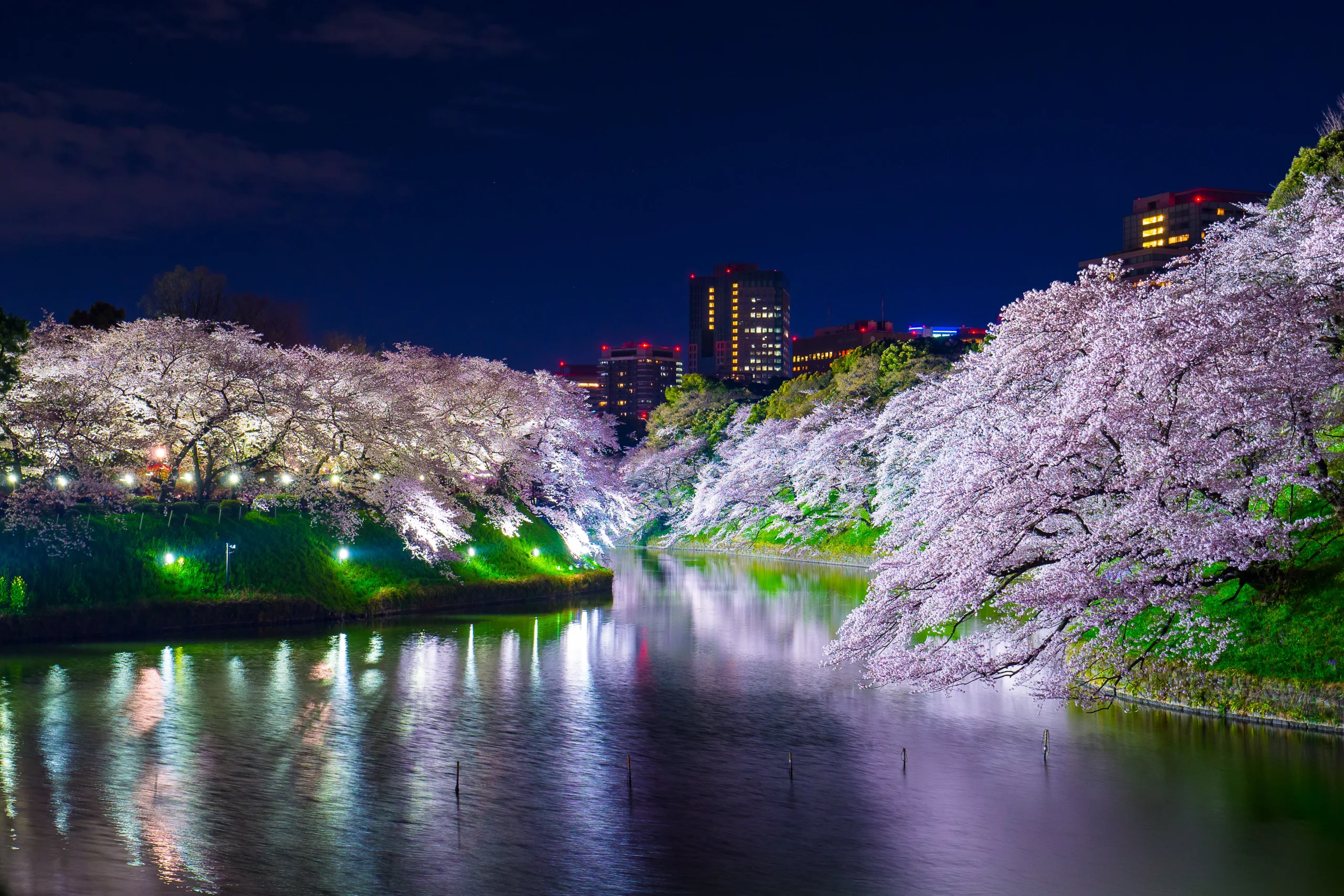
Chidorigafuchi follows the moat on the northwestern side of the Imperial Palace. About 230 cherry trees line the roughly 700-meter greenway, with the main bloom usually arriving from late March into early April.
The moat is what makes this spot different from many Tokyo parks. Blossoms lean over the water, and rental boats give you a view from below the branches when conditions allow.
Evening illumination is sometimes held during the blossom period, while daytime visits give you a clearer view of the Imperial Palace stone walls and moat. The path gets busy at peak, so an earlier visit is usually easier.
Meguro River
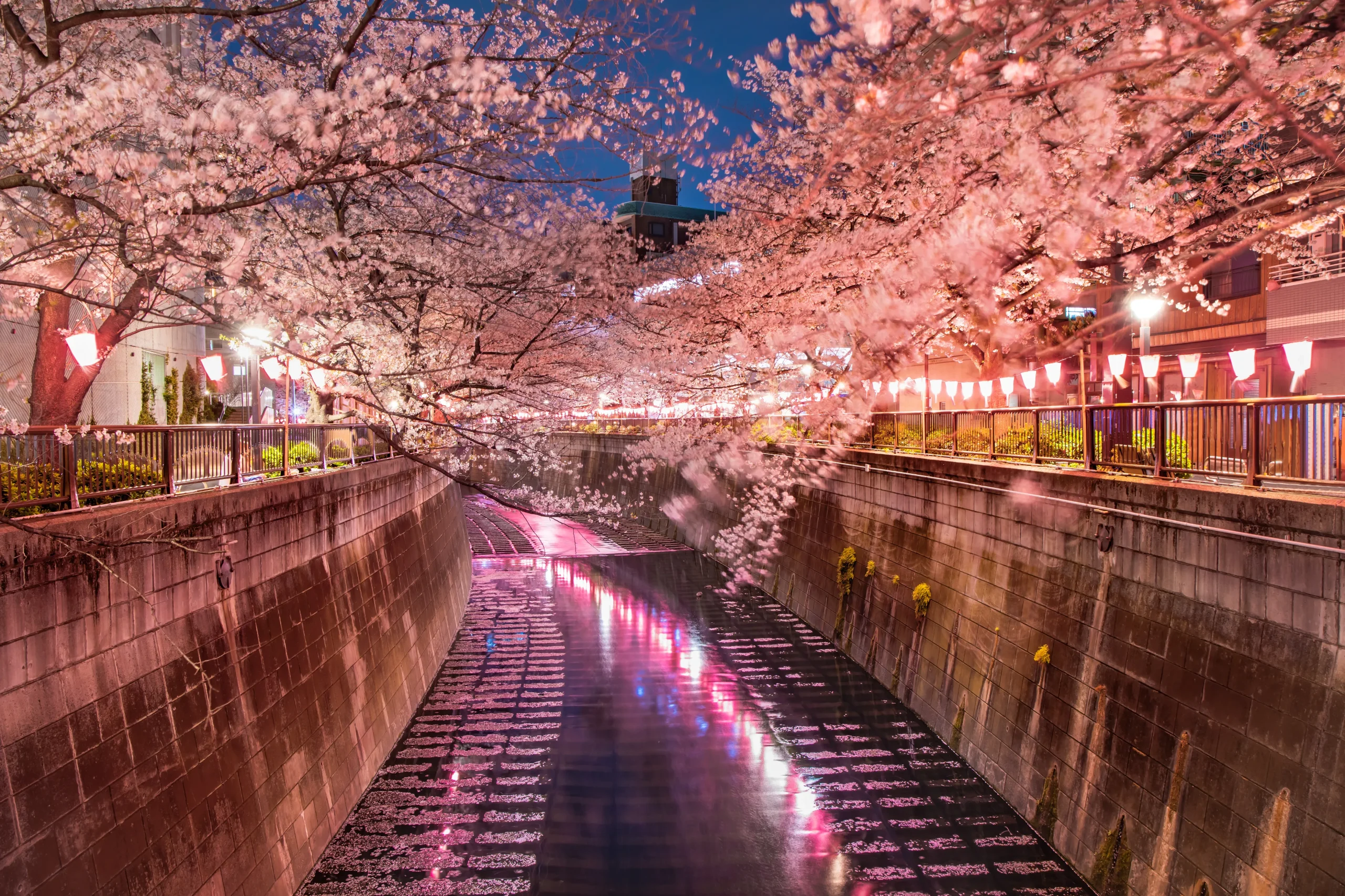
Cherry trees line more than a kilometer of the Meguro River through Nakameguro, with branches growing toward each other over the narrow waterway.
Cafes, restaurants and small shops sit close to the route, so this works well if you want to combine hanami with an afternoon or evening around Nakameguro rather than spend several hours inside a large park.
Lanterns and seasonal events are often part of the spring atmosphere, although details vary each year. Peak periods can become extremely crowded, particularly around Nakameguro Station.
Ueno Park
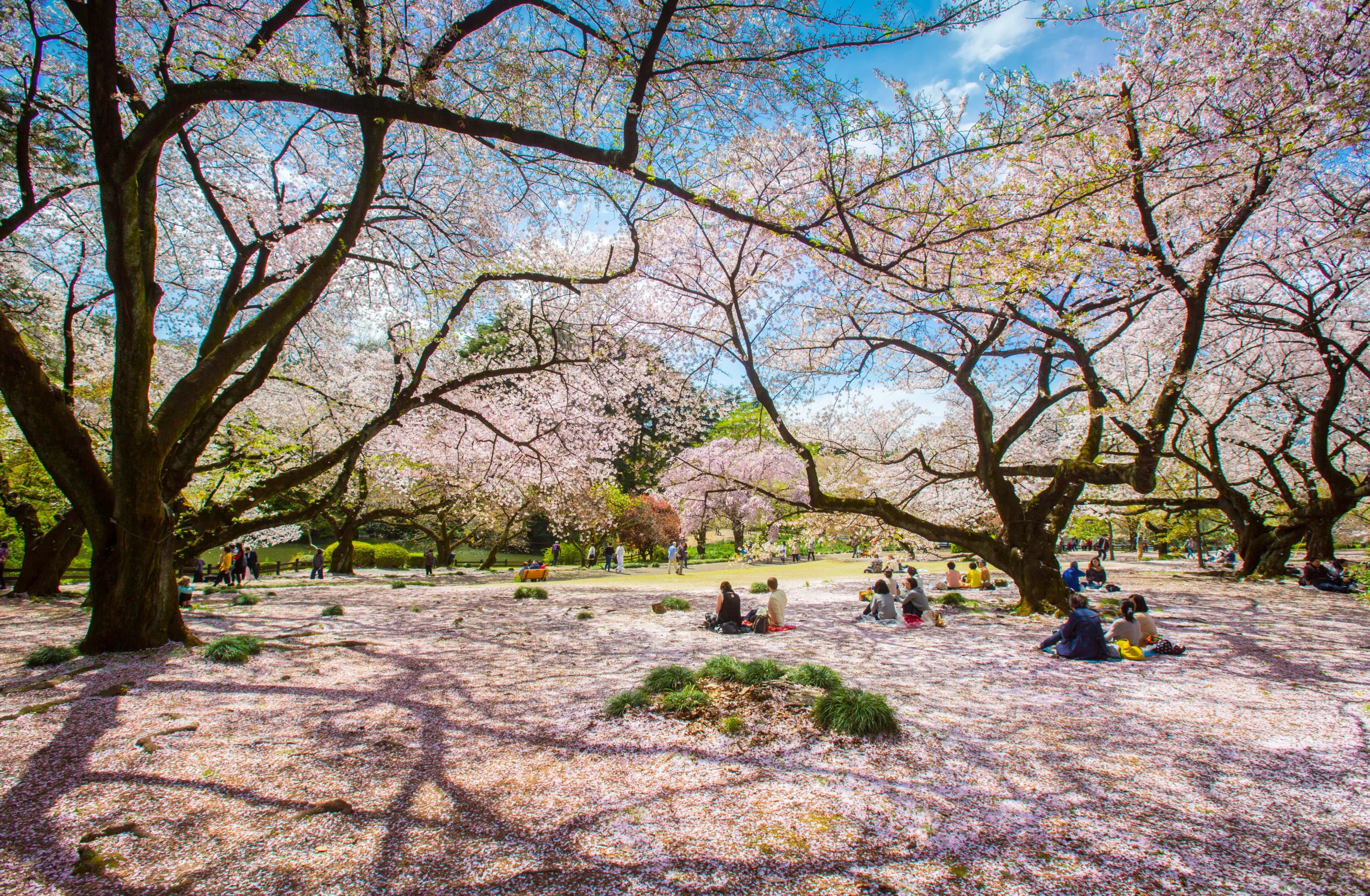
Ueno Park has a long connection with hanami. The grounds once formed part of Kan’ei-ji Temple, and cherry blossom viewing here has been popular for centuries.
Today about 800 Somei Yoshino line the main park area. The atmosphere is social and busy, with groups gathering beneath the trees and seasonal lanterns appearing during the festival period.
Mornings are a better choice if you want to walk before the largest crowds arrive. Ueno also works well on a mixed sightseeing day because the Tokyo National Museum, National Museum of Nature and Science, Ueno Zoo and Shinobazu Pond are all nearby.
Read more: Tokyo Cherry Blossom 2027: When to Go, 7 Best Spots & 5 Festivals
Cherry Blossom Spots Around Mt. Fuji and Central Japan
Kawazu Cherry Blossoms | Shizuoka
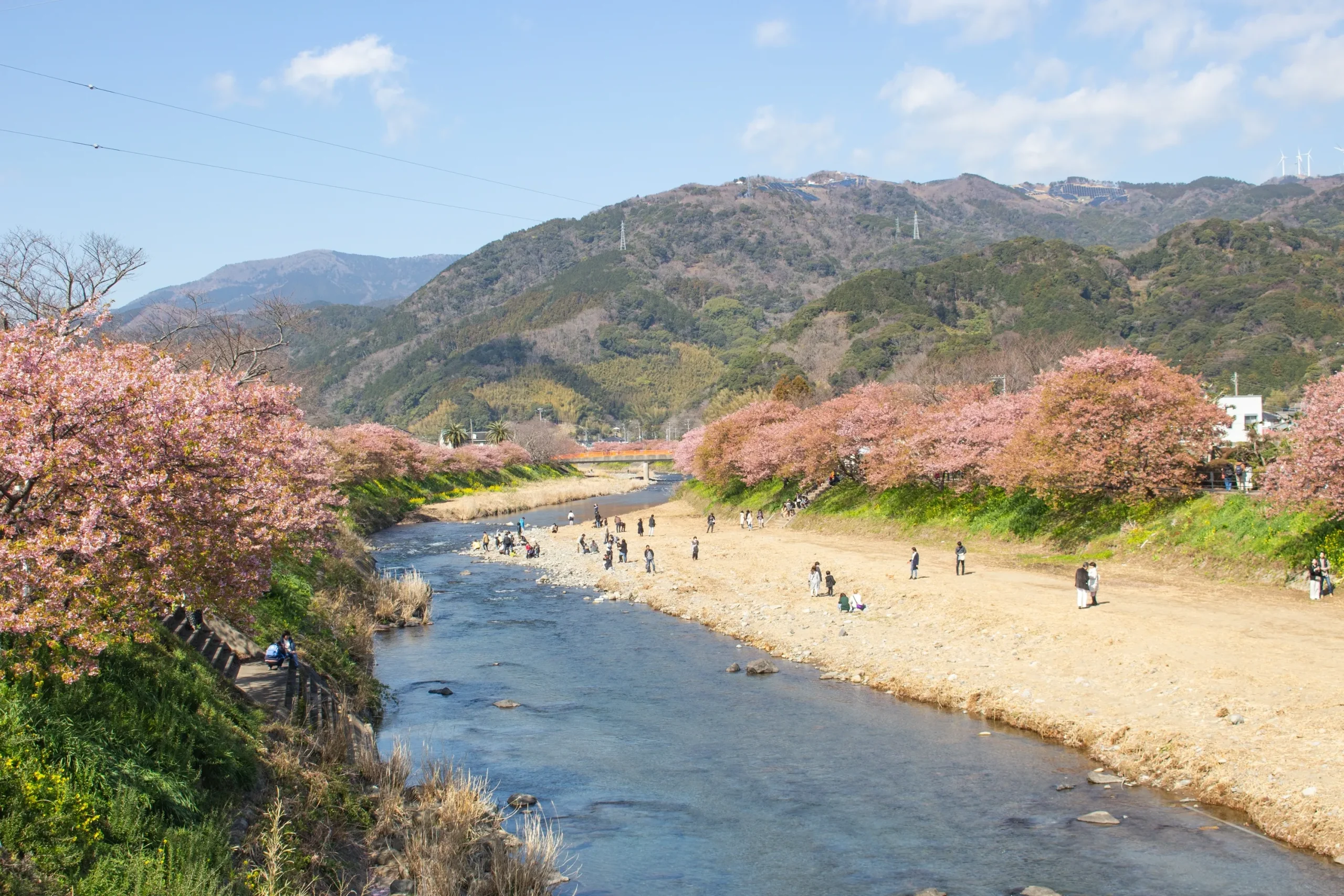
Kawazu on the Izu Peninsula is one of the best-known places to see cherry blossoms well before the usual Tokyo season. Kawazu-zakura normally begins flowering in early February and has noticeably deeper pink flowers than the pale Somei Yoshino seen across much of Japan later in spring.
Around 850 trees line the Kawazu River, with roughly 8,000 across the town. During the blossom period, stalls and seasonal events turn the riverside into a large spring gathering.
This is a useful option for travelers visiting Japan too early for the main season, but early does not mean quiet. Kawazu attracts many visitors when the trees are at their best. Check the latest flowering and festival information before making a special trip.
Arakurayama Sengen Park and Chureito Pagoda | Yamanashi
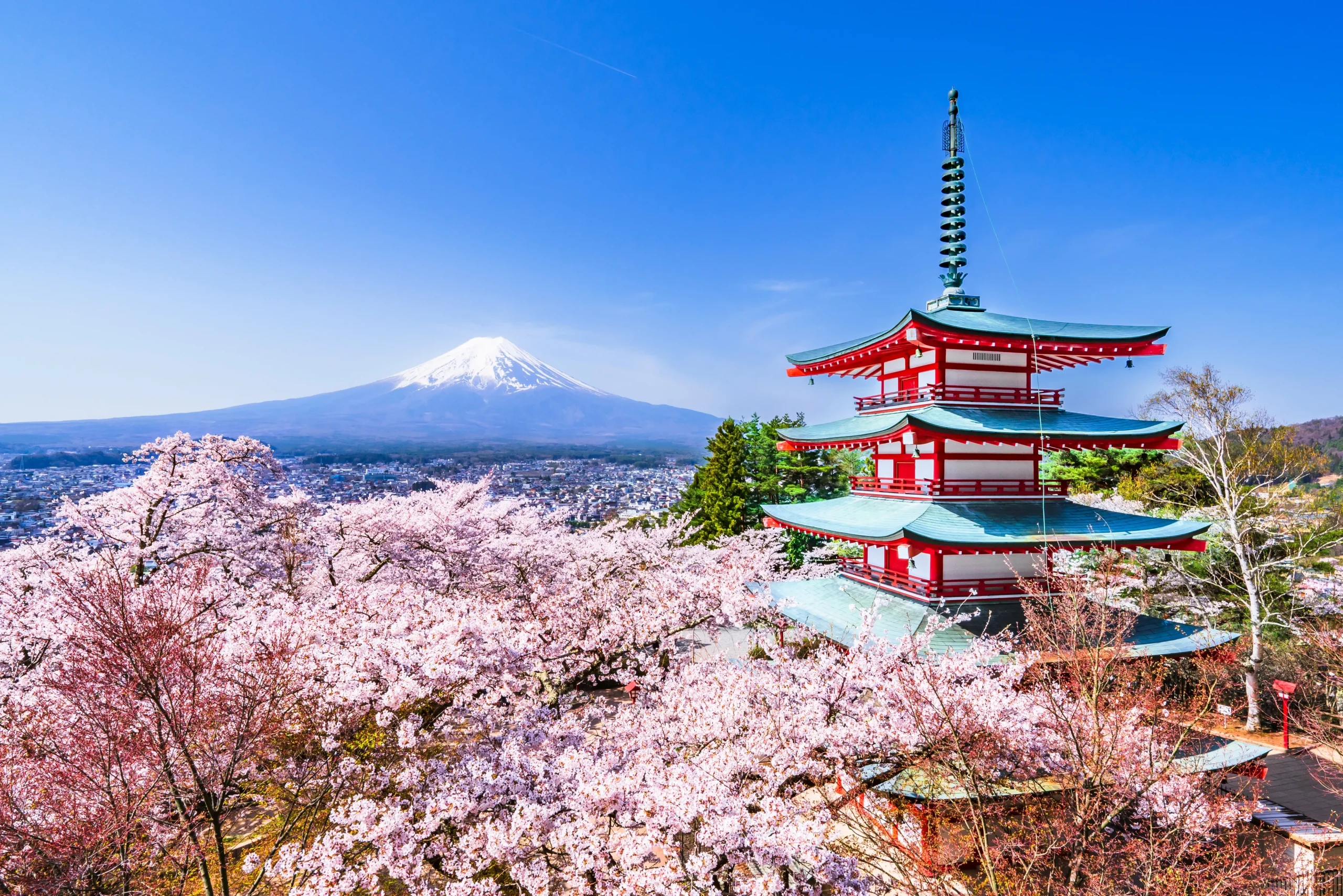
Arakurayama Sengen Park is known for the view that brings together Chureito Pagoda, cherry blossoms and Mt. Fuji. Full bloom here is usually later than central Tokyo, often around mid-April.
The park is close to Shimoyoshida Station, but reaching the main viewpoint requires a steep climb. The Sakuya-hime staircase has 398 steps between the shrine grounds and Chureito Pagoda.
This has also become one of the busiest spring viewpoints in the Fuji area. Fujiyoshida cancelled its 2026 cherry blossom festival because of overtourism and problems affecting nearby residential streets. During the busiest 2026 period, the city warned that waits for the observation deck could reach one to three hours.
For 2027, check the latest access and crowd-control information before visiting. Public transport and an early weekday visit are usually the more practical choices.
Read more: Things to Do in Kawaguchiko
Takato Castle Site Park | Nagano
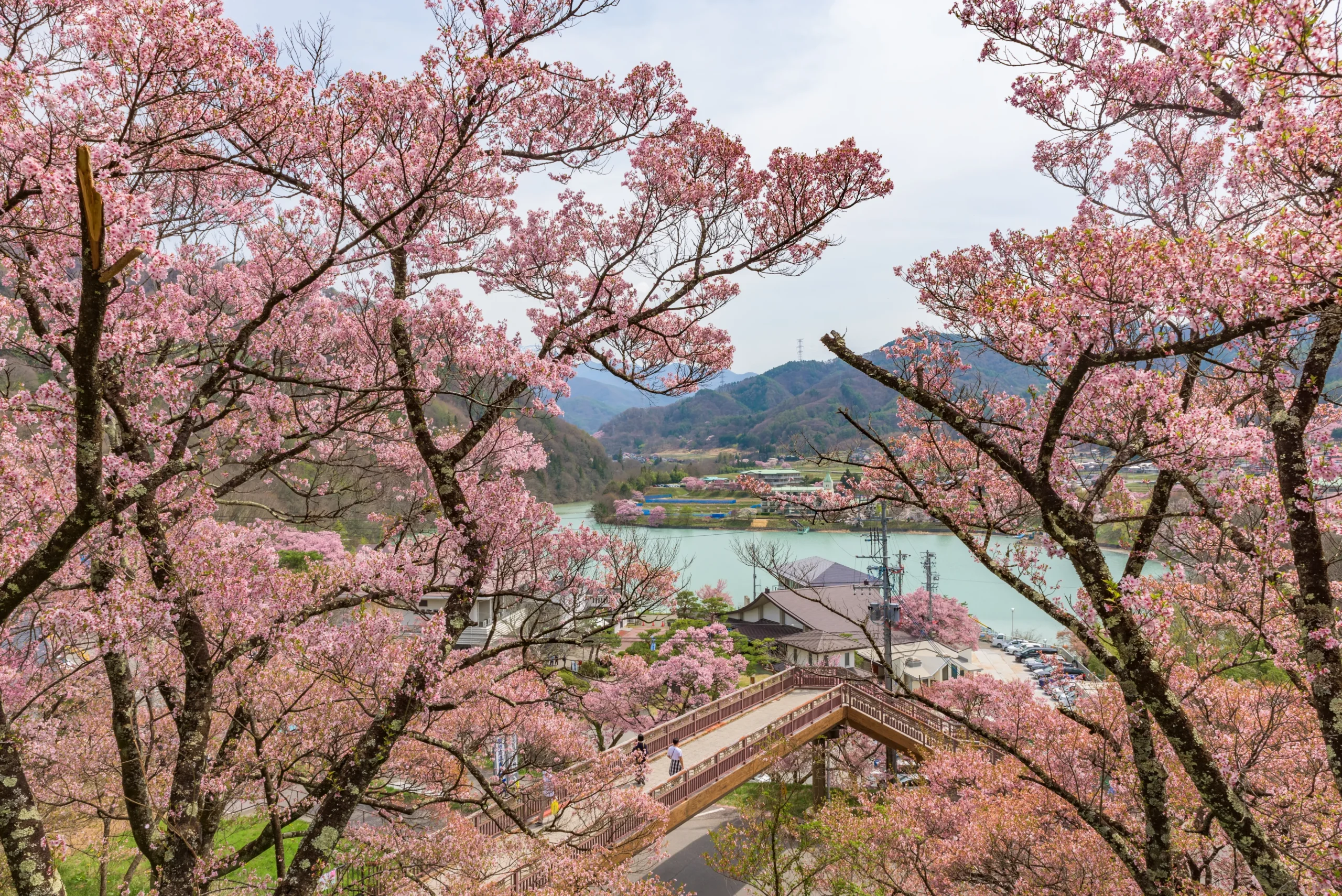
Takato Castle Site Park in Ina is known for roughly 1,500 Takato-kohigan cherry trees. Their flowers are smaller and deeper pink than standard Somei Yoshino, giving the park a noticeably different look from many city blossom spots.
The season generally arrives around mid-April, making Takato useful for travelers whose trip falls just after the usual Tokyo peak. The Ina Valley and surrounding mountains also give the setting a very different character from an urban park.
Takato takes more effort to reach than the major city spots. Public transport involves traveling into the Ina area and continuing by bus, so it works better as a planned outing than as a quick stop between Tokyo and Kyoto.
Kenrokuen and Kanazawa Castle Park | Ishikawa
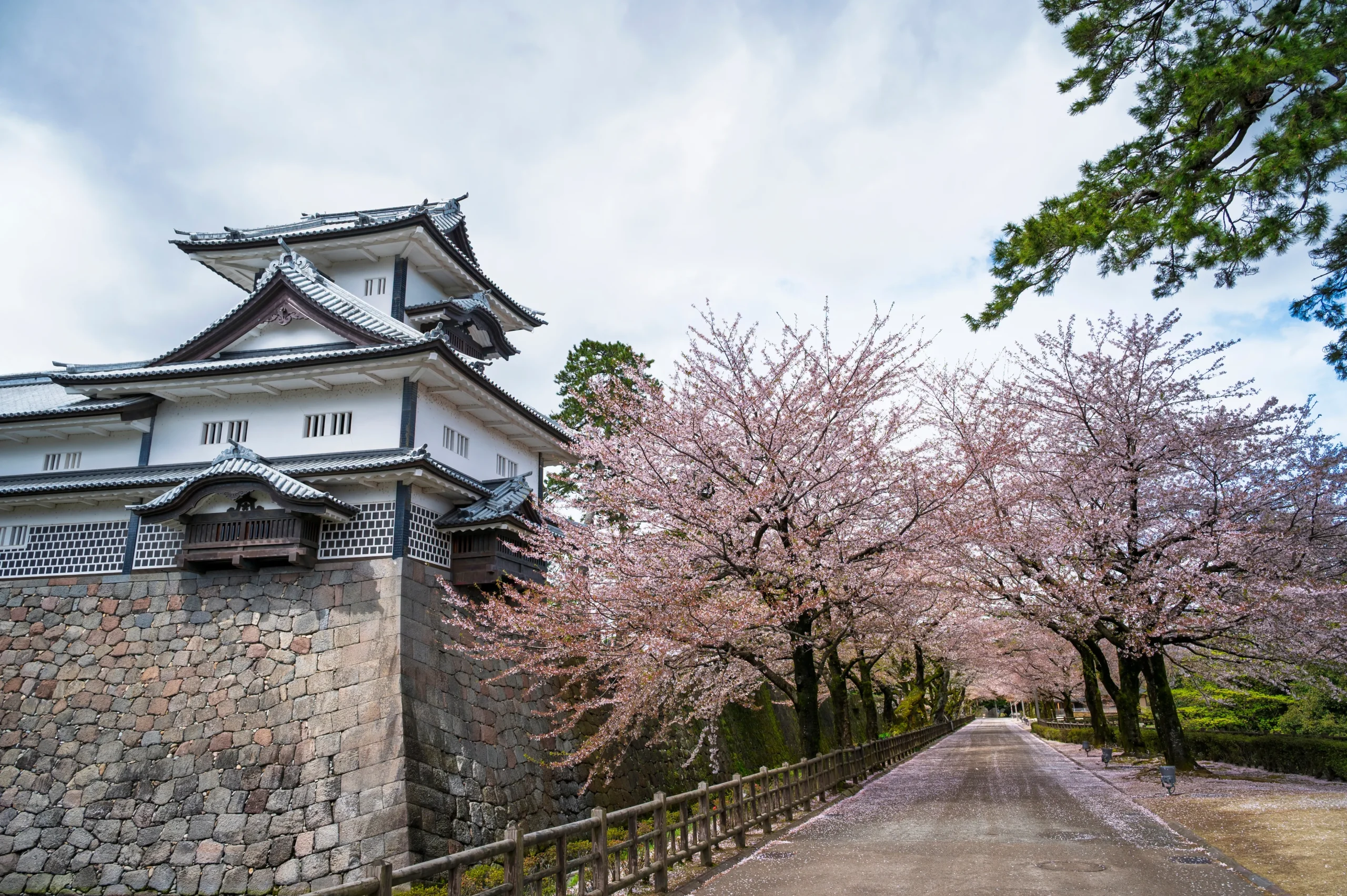
Kenrokuen and the adjoining Kanazawa Castle Park are useful for travelers who want to include cherry blossoms without building their entire route around them. Kanazawa fits naturally into many Hokuriku itineraries and often blooms slightly later than Tokyo.
Kenrokuen combines its spring trees with ponds, streams and a carefully maintained landscape, while Kanazawa Castle Park adds larger open areas, stone walls and castle gates.
Around peak bloom, Kenrokuen traditionally has a temporary free-entry period and evening illumination. The dates are announced after Kanazawa’s flowering declaration, so check current information rather than planning around the previous year’s schedule.
Outdoor eating and drinking are not permitted inside Kenrokuen. If you want a picnic-style hanami, designated areas in neighboring Kanazawa Castle Park are more suitable.
Cherry Blossom Spots in Kyoto and Kansai
Philosopher’s Path | Kyoto
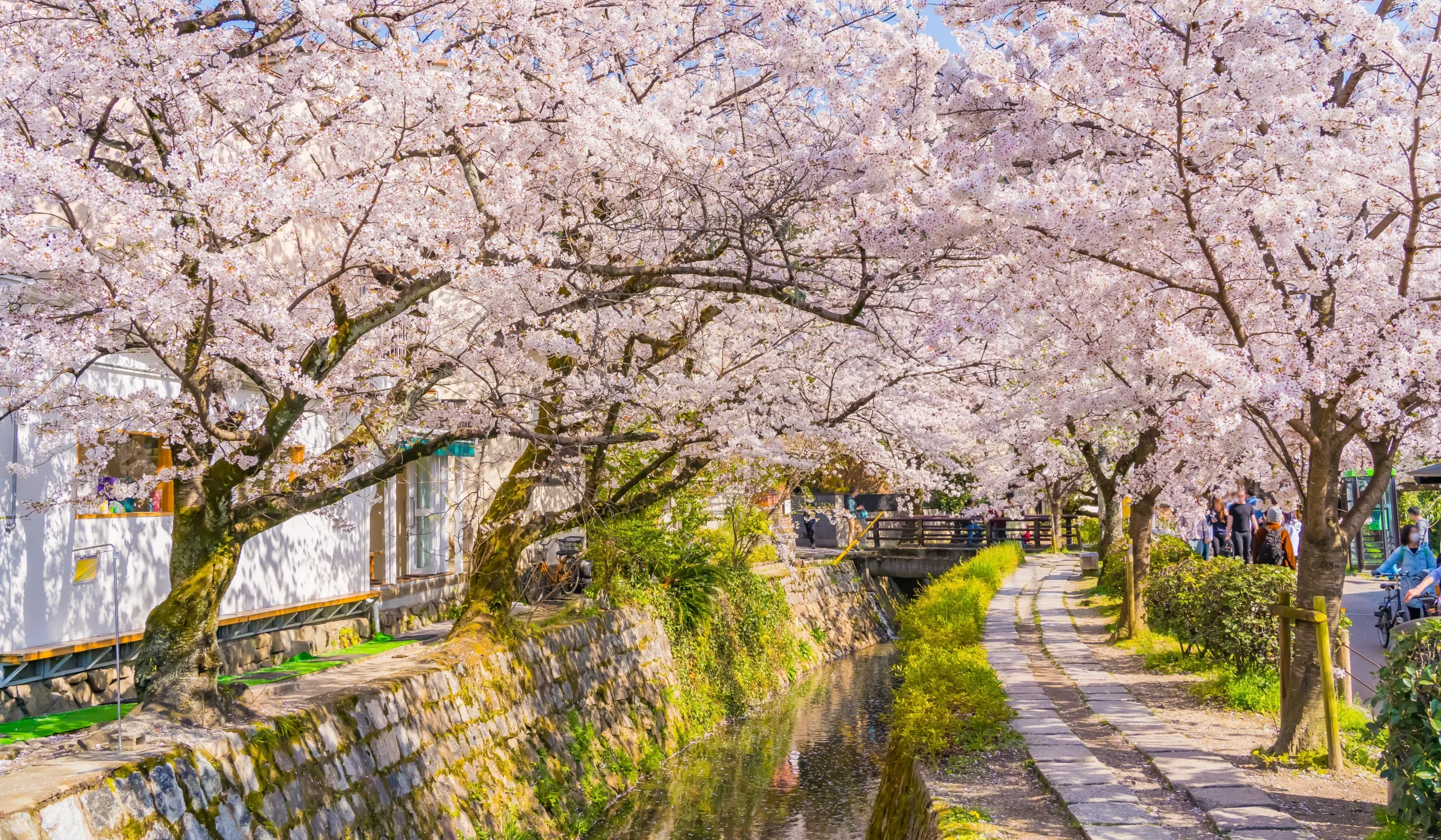
Philosopher’s Path is a roughly two-kilometer walkway beside a canal in eastern Kyoto. Around 400 cherry trees line the route, usually reaching their best around early April.
The walk connects naturally with Ginkaku-ji, and Nanzen-ji is also nearby, so it works well as part of a half-day around northern Higashiyama rather than a separate cherry blossom excursion.
Cafes and small shops appear along and around the route, but the path itself can become very crowded when bloom and good weather coincide. Early morning is the easiest time to see the canal before the largest groups arrive.
Maruyama Park | Kyoto
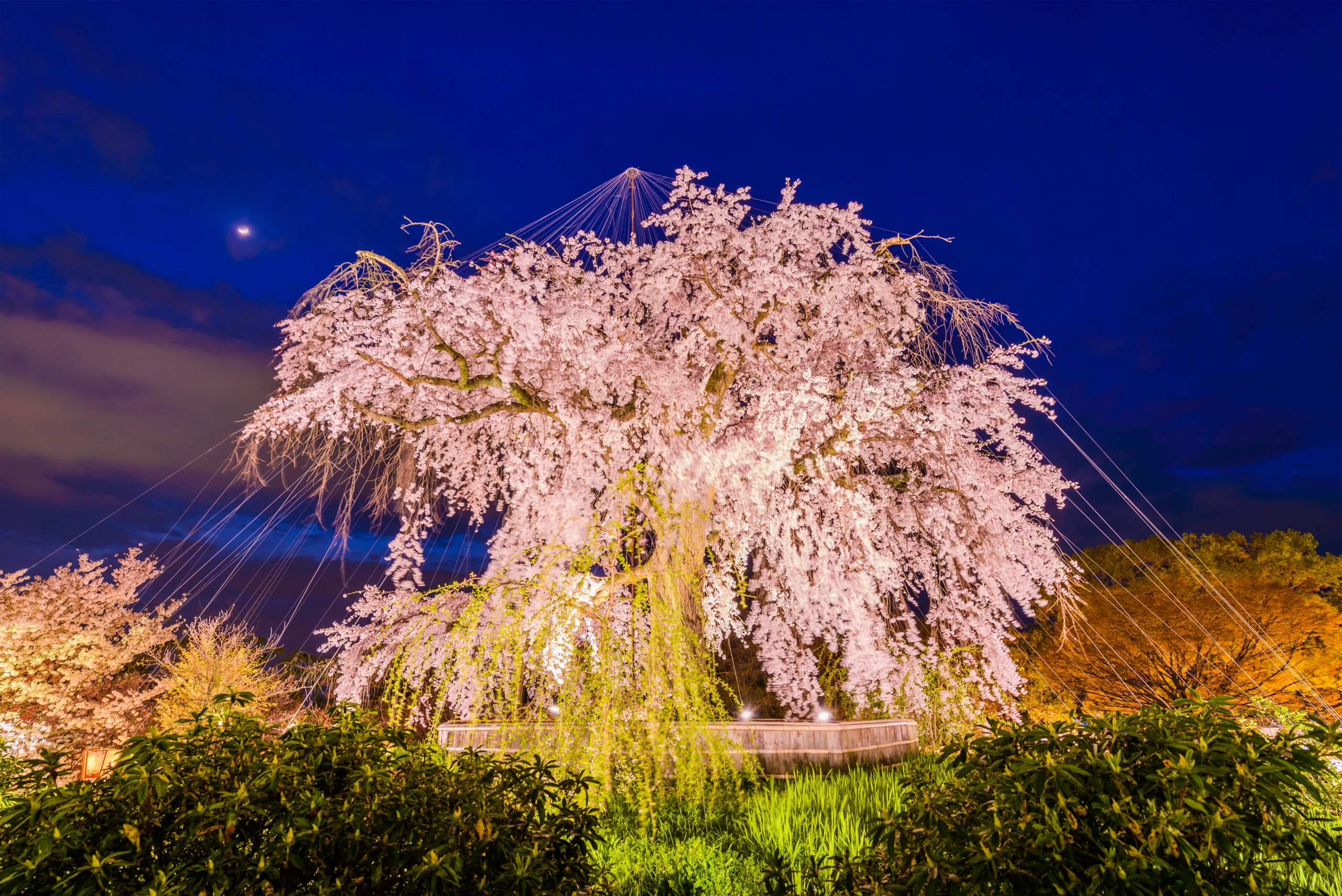
Maruyama Park is Kyoto’s oldest public park and sits directly behind Yasaka Shrine in Gion. Its centerpiece is the large weeping cherry known for evening illumination during the blossom season.
Its location makes the park especially easy to incorporate into a Higashiyama walk. Enter from Yasaka Shrine, continue through Maruyama Park and then head toward Chion-in or south toward the streets leading to Kiyomizu-dera.
The park is usually at its best around late March and early April, although exact illumination arrangements change each year.
Osaka Castle Park | Osaka
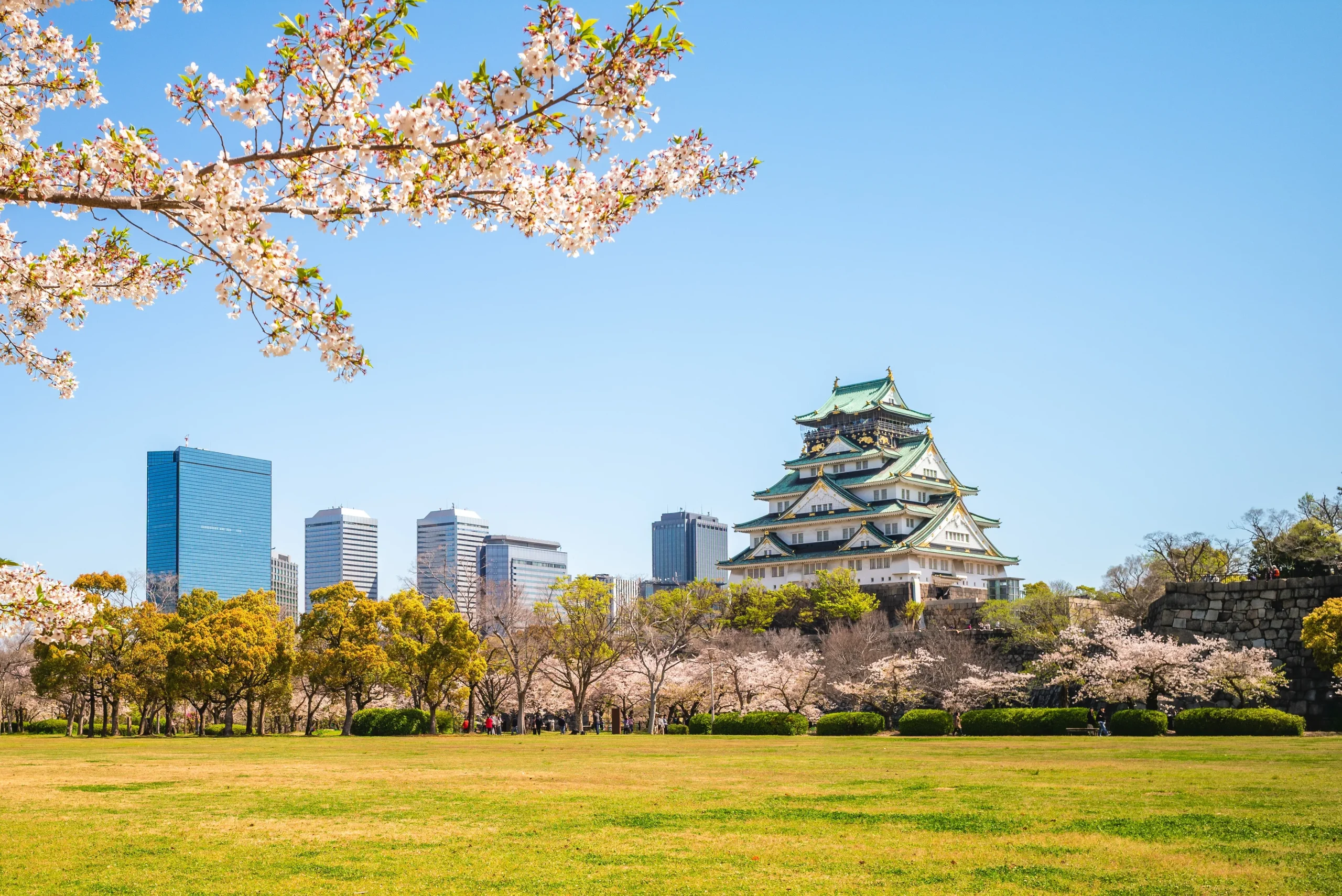
Cherry trees are spread throughout the large Osaka Castle grounds, but Nishinomaru Garden on the western side is the most useful area to know about for hanami. It contains around 300 trees, mostly Somei Yoshino, with an open view toward the castle keep.
The general park grounds are free, while Nishinomaru Garden has separate admission and usually extends its hours during the blossom period.
The Japan Mint, a short distance north of the castle area, provides another late-season option with many later-blooming varieties. Recent editions of its Sakura no Toorinuke have required advance reservation, so check the current application procedure rather than expecting walk-in entry.
Mt. Yoshino | Nara
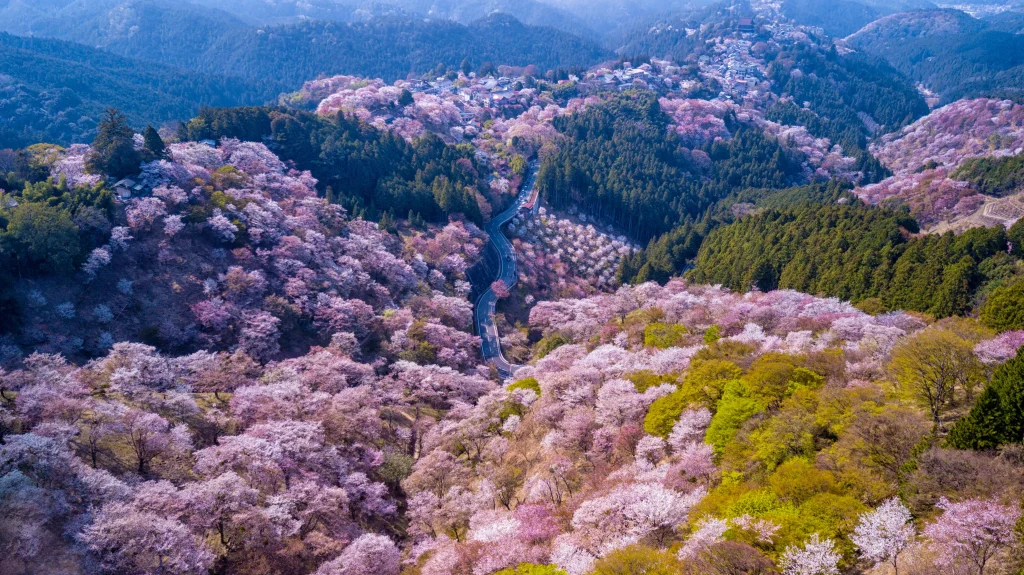
Mt. Yoshino has around 30,000 cherry trees spread across the mountain. Because the trees grow at different elevations, the bloom moves upward in stages from Shimo Senbon through Naka Senbon and Kami Senbon to Oku Senbon.
This progression gives Yoshino a longer season than a single flat city park. Lower areas usually begin first, followed by the higher slopes.
The mountain also contains important temples and shrines, including Kinpusen-ji. Expect slopes and considerable walking if you explore beyond the lower areas, and allow more time than you would for a typical city park.
Cherry Blossom Spots in Tohoku and Hokkaido
If your trip falls in late April or early May, northern Japan becomes increasingly useful. This is where the blossom season continues after much of central Japan has already turned green.
Hirosaki Park | Aomori
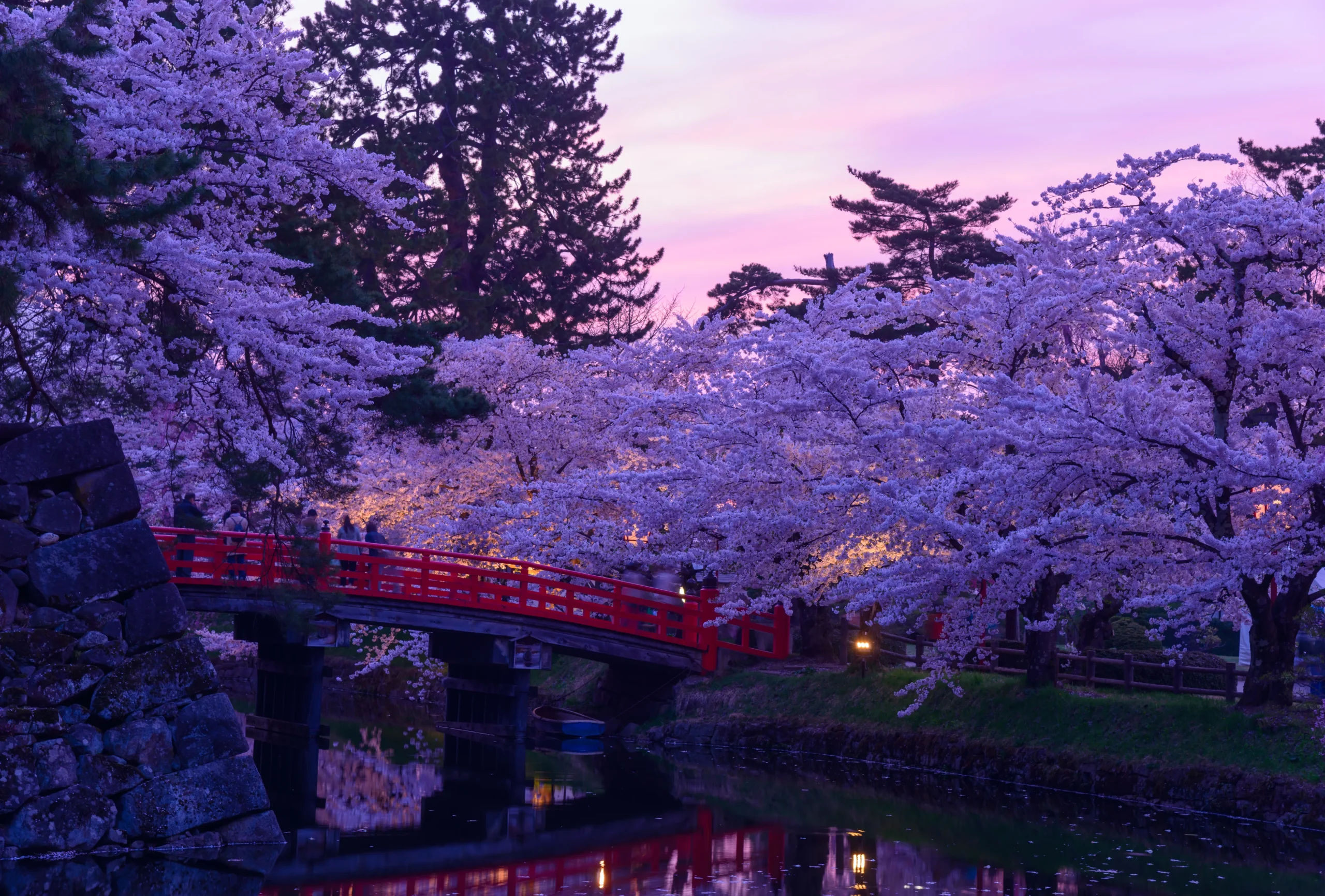
Hirosaki Park contains around 2,600 cherry trees across more than 50 varieties, with the main season generally falling from mid to late April and sometimes continuing into early May.
The castle, moats and bridges give the park several different viewing areas. One of the best-known sights comes after peak bloom, when fallen petals collect on the moat and form a pink layer known as hanaikada, or a flower raft.
Evening illumination is usually part of the seasonal festival period. Because the park is large, it is worth allowing enough time to walk beyond the busiest areas around the castle.
Takada Castle Site Park | Niigata
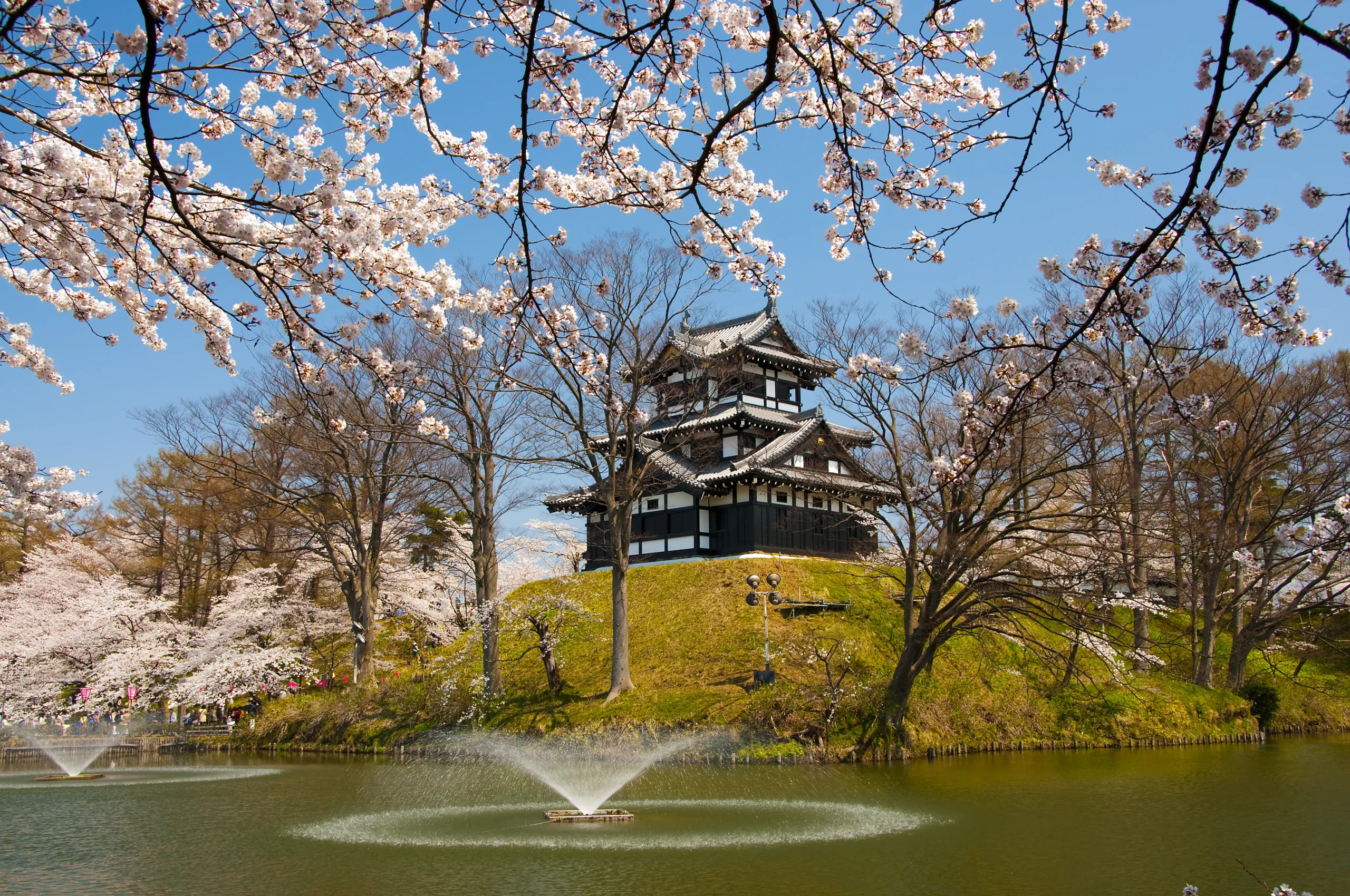
Takada Castle Site Park and its surroundings have around 4,000 cherry trees and are particularly known for evening viewing. Lanterns illuminate paths around the three-story turret and moat during the seasonal blossom festival.
The main bloom generally falls in early to mid-April, although exact festival timing changes with the season.
Takada works particularly well for travelers moving through Niigata or the Hokuriku region who want a night-viewing alternative to Tokyo and Kyoto.
Kakunodate | Akita
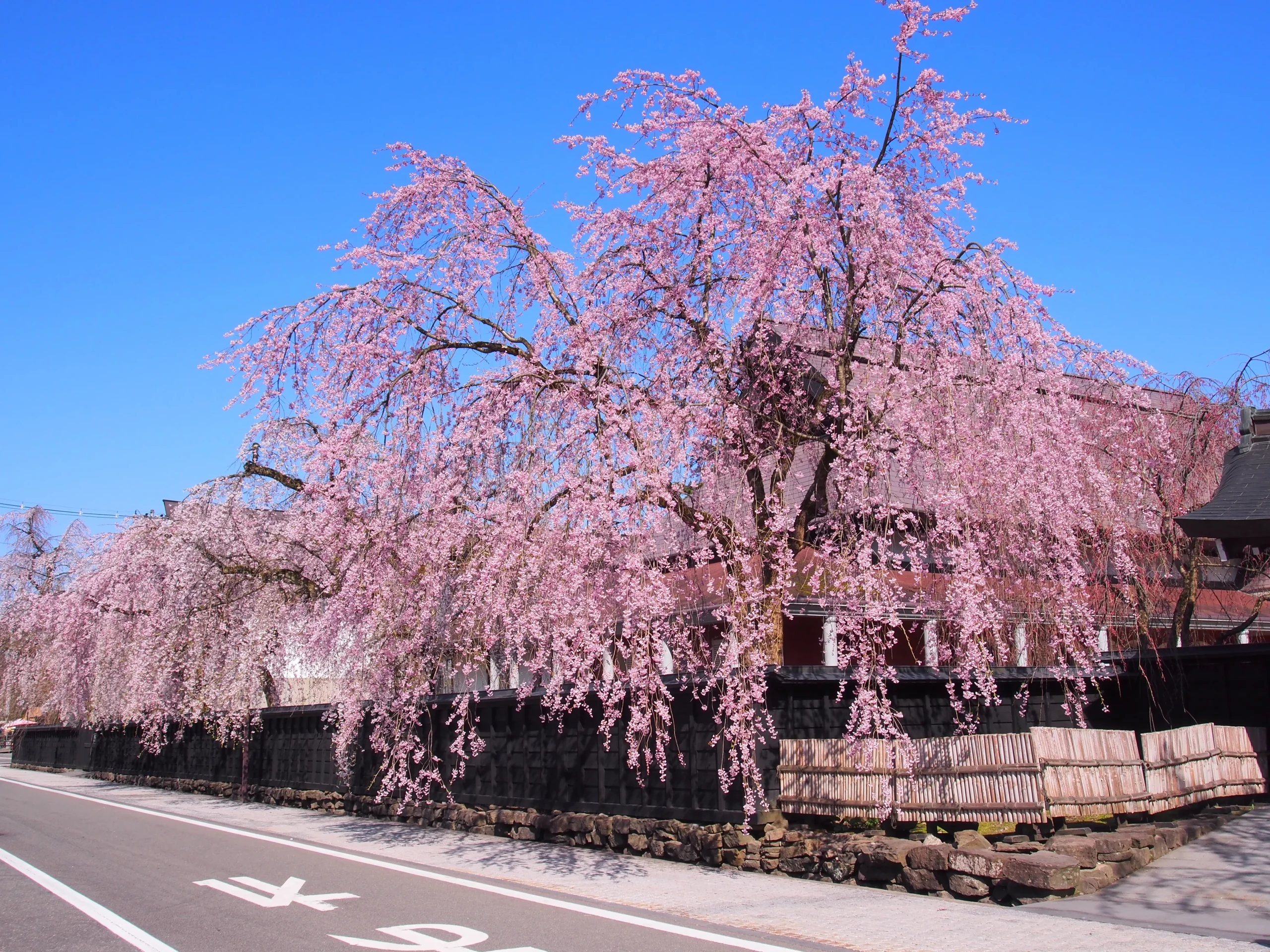
Kakunodate combines two different blossom settings within walking distance of each other.
Weeping cherry trees grow throughout the former samurai district, where dark wooden fences and preserved residences create a setting very different from a city park.
Nearby, more than 400 Somei Yoshino line the Hinokinai River for roughly two kilometers. The area usually blooms later than Tokyo and Kyoto, making it a good option for a late-April Tohoku itinerary.
Asahiyama Park | Hokkaido
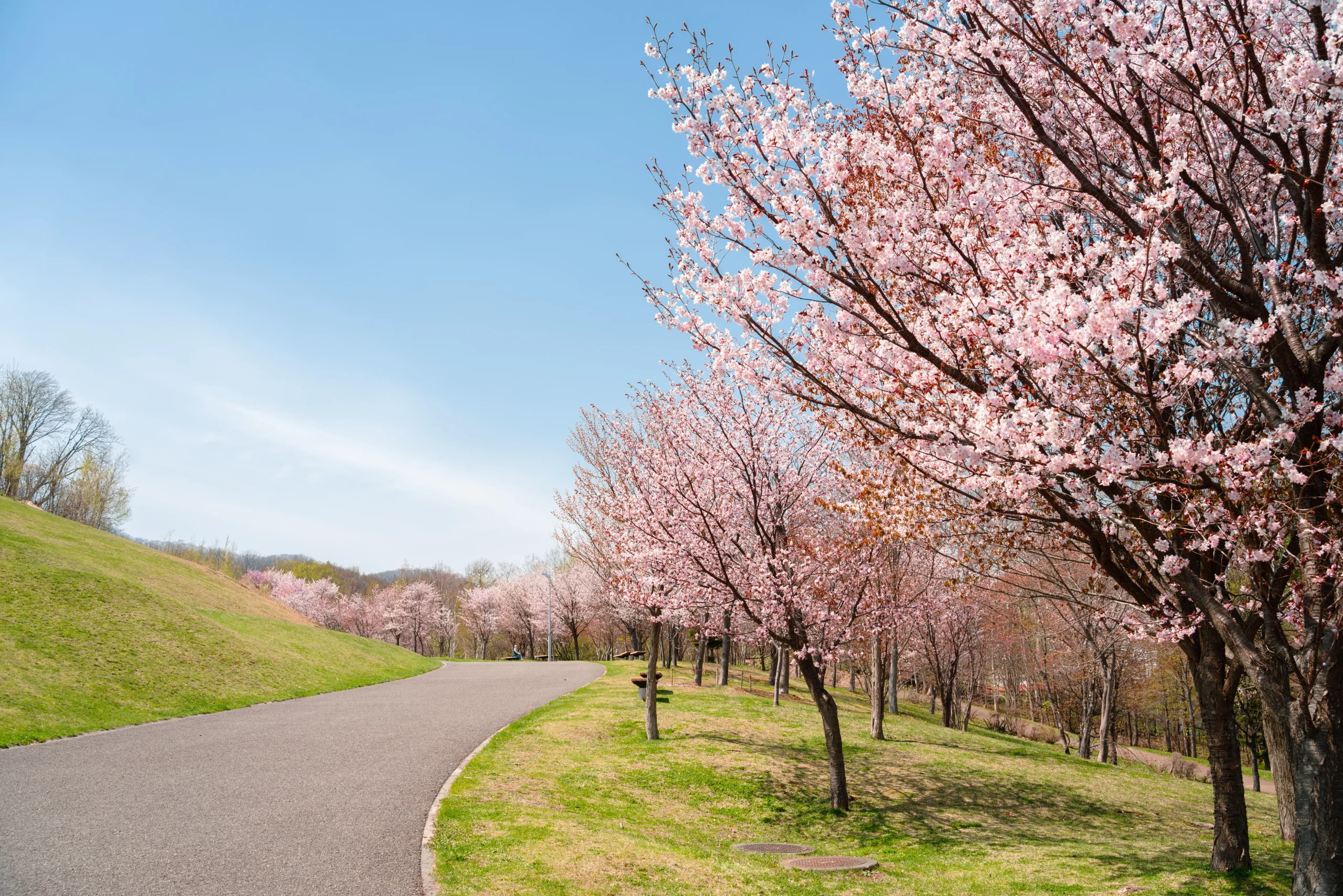
Asahiyama Park in Asahikawa has about 1,000 cherry trees along its paths. Spring arrives later here than in central Japan, generally around late April and May.
The park sits beside Asahiyama Zoo, making it easy to combine the two on the same day. This is especially practical for families or travelers who do not want to build an entire day around flower viewing alone.
Matsumae Park | Hokkaido
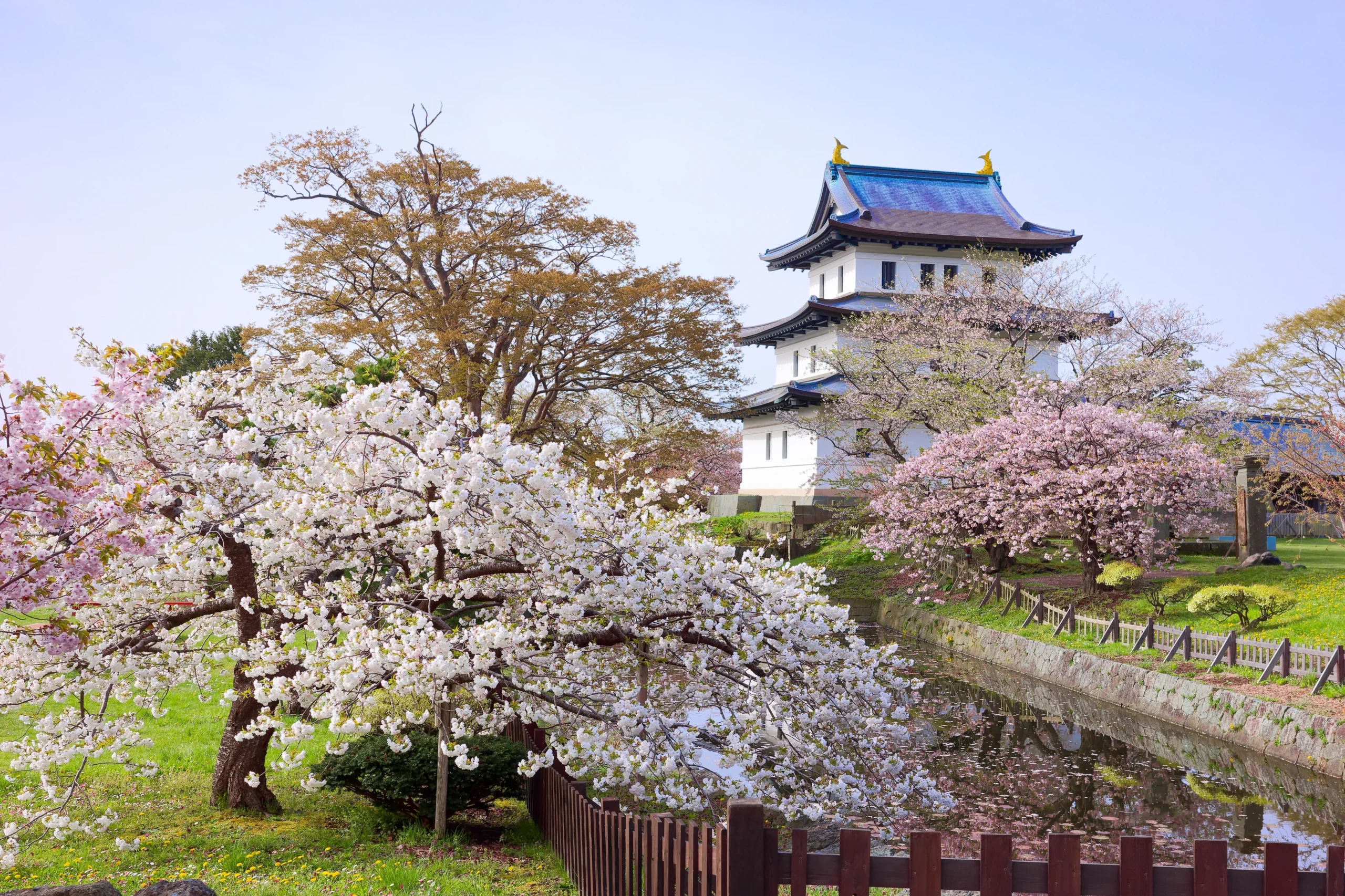
Matsumae Park contains around 10,000 cherry trees across roughly 250 varieties. The range of early, middle and late-blooming trees stretches the viewing period from around mid-April toward late May.
That makes Matsumae one of the more forgiving options for late-season planning. Even if one group of trees has finished, another may still be flowering.
Matsumae Castle and the nearby temple district give the park a historical setting, although reaching the town takes more planning than visiting a major-city park.
Cherry Blossom Spots in Shikoku and Kyushu
Maizuru Park | Fukuoka
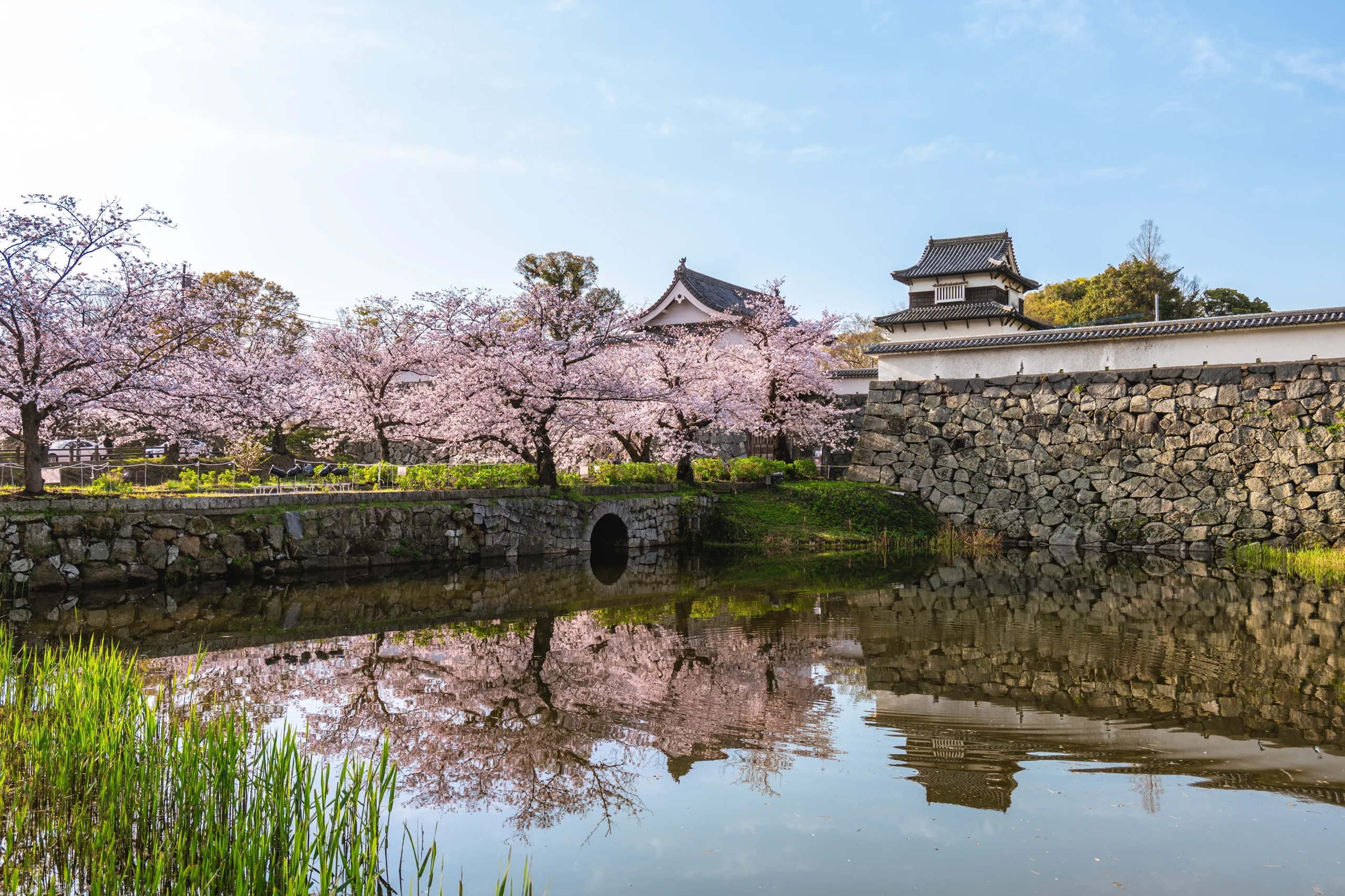
Maizuru Park occupies the former grounds of Fukuoka Castle and has around 1,000 cherry trees. The main viewing period generally falls around late March and early April.
Stone walls, former castle structures and moats remain throughout the grounds, giving the blossom walk some historical context rather than making it purely a flower-viewing stop.
Its central location also makes it straightforward to add to a Fukuoka itinerary without setting aside an entire day.
Shiudeyama | Kagawa
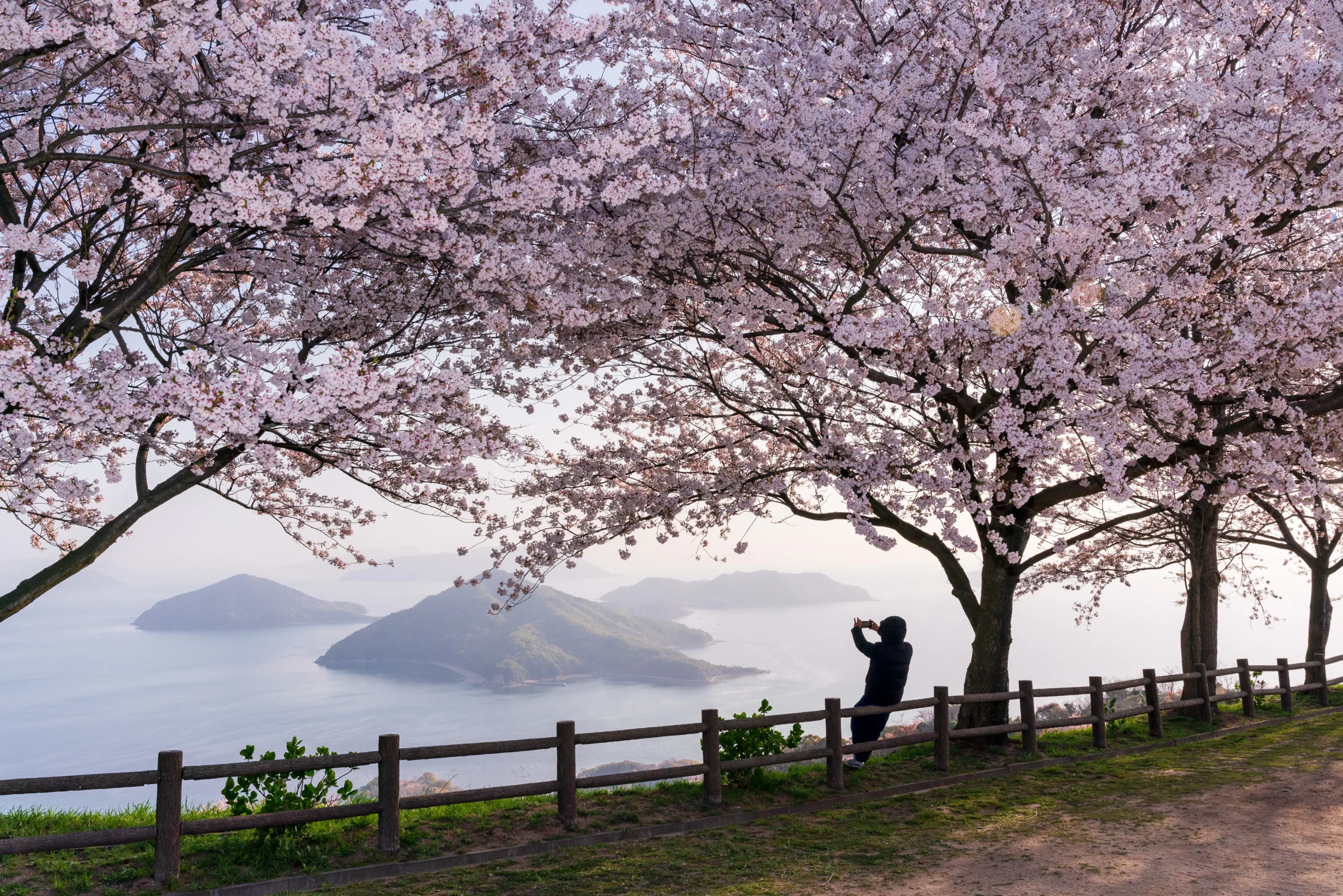
Shiudeyama rises above the Shonai Peninsula in Kagawa Prefecture. Around 1,000 cherry trees cover the mountaintop, with views across the islands of the Seto Inland Sea.
The combination of blossoms, mountain and sea is the main reason to come here. It is quite different from the castle parks and urban riversides elsewhere in this guide.
Access arrangements can change during the busiest blossom period, including restrictions on private vehicles, so check current Mitoyo tourism information before planning the final approach to the summit.
Planning Your Cherry Blossom Trip
Book Early, Then Keep Some Flexibility
Spring is busy in the major cities. If your dates are fixed, secure accommodation and the experiences that matter most while there is still a good choice, preferably with cancellation conditions that leave you some room to adjust.
You can then refine individual blossom stops once the forecasts become clearer.
Plan Around Crowds as Well as Bloom
The most famous spots can become extremely busy at peak.
Weekday mornings are usually the easiest time to visit popular parks and promenades. For places such as Arakurayama Sengen Park, crowd management can affect access itself, so checking current local information is just as important as checking the bloom forecast.
Have a Backup if the Forecast Moves
A small shift in flowering dates does not have to ruin a spring trip.
If Tokyo finishes earlier than expected, Mt. Fuji, Nagano or Kanazawa may still have blossoms. Later in April, Tohoku and then Hokkaido extend the season further north.
It is useful to keep one later-blooming place in mind before you travel rather than trying to redesign the route after arriving.
Look Beyond Tokyo and Kyoto
Tokyo and Kyoto have many excellent blossom spots, but they are only part of Japan’s spring season.
Kawazu gives February travelers an early option. Mt. Fuji, Takato and Kanazawa extend the choices into April, while Tohoku and Hokkaido become increasingly useful later in the month and into May.
Choosing places according to your actual travel dates usually works better than trying to force your dates around one famous park.
Plan Your Sakura Trip
Cherry blossom travel involves an awkward bit of timing: accommodation and flights often need to be arranged well before the year’s bloom pattern becomes clear.
Building some flexibility into the route can help. ENJYU JAPAN’s tailor-made tours can be planned around your travel dates, pace and the regions you want to visit, with later-blooming alternatives considered where they make sense.
If you prefer a ready-made spring route, the Authentic Sakura Trail is a private 14-day tour through Osaka, Kyoto, Nara, the Mt. Fuji area and Tokyo during March and April 2027.