Planning to see Tokyo’s cherry blossoms in 2027? Starting early is sensible. For a few short weeks each spring, parks, riversides, temple grounds, and neighborhood streets across the city turn pale pink, while locals gather for hanami picnics and seasonal events.
This guide covers the three things that make or break a cherry blossom trip: when Tokyo’s blossoms are likely to bloom in 2027, where to see them, and how to enjoy them without spending your whole day in a crowd. Alongside the classic viewing spots, we have included several alternatives that are useful if you want more flexibility with location, atmosphere, or bloom timing.
When Will Cherry Blossoms Bloom in Tokyo in 2027?
Tokyo’s long-term normal is around March 24 for first bloom and March 31 for full bloom, based on Japan Meteorological Agency observations from 1991–2020.
These dates are useful for planning, but they are not a 2027 forecast. Winter and early-spring temperatures can move the season earlier or later, sometimes noticeably.
- Normal first bloom (kaika): around March 24
- Normal full bloom (mankai): around March 31
- Later viewing: late-blooming varieties and some suburban parks can extend the season into April
A reliable 2027 forecast is not available yet. Seasonal forecasts are published closer to spring and updated as weather conditions become clearer, so check again before your trip.
How the 2027 Forecast Works
Cherry blossom forecasts usually distinguish between first bloom and full bloom. First bloom marks the start of flowering on the benchmark tree used for local observations. Full bloom follows later and generally gives you the densest display.
For a trip planned many months in advance, it is better to build in some flexibility than to rely on one predicted date. Different varieties and locations also bloom at slightly different times, which is why choosing more than one viewing option can help.
Read more: Cherry Blossom Spots in Japan
How Long Will the 2027 Bloom Last?
Peak viewing is brief, often around a week once the trees reach full bloom. Rain or strong wind can shorten it by bringing petals down early.
That does not necessarily mean the experience is over. Falling petals, known as hanafubuki, can be beautiful in their own way, and later-blooming varieties give travelers arriving after the main Somei Yoshino peak another chance.
11 Cherry Blossom Spots in Tokyo in 2027
Tokyo has dozens of hanami spots, from formal gardens to neighborhood riversides. The places below offer different reasons to visit, so you do not need to chase the same famous park as everyone else.
Chidorigafuchi Green Way
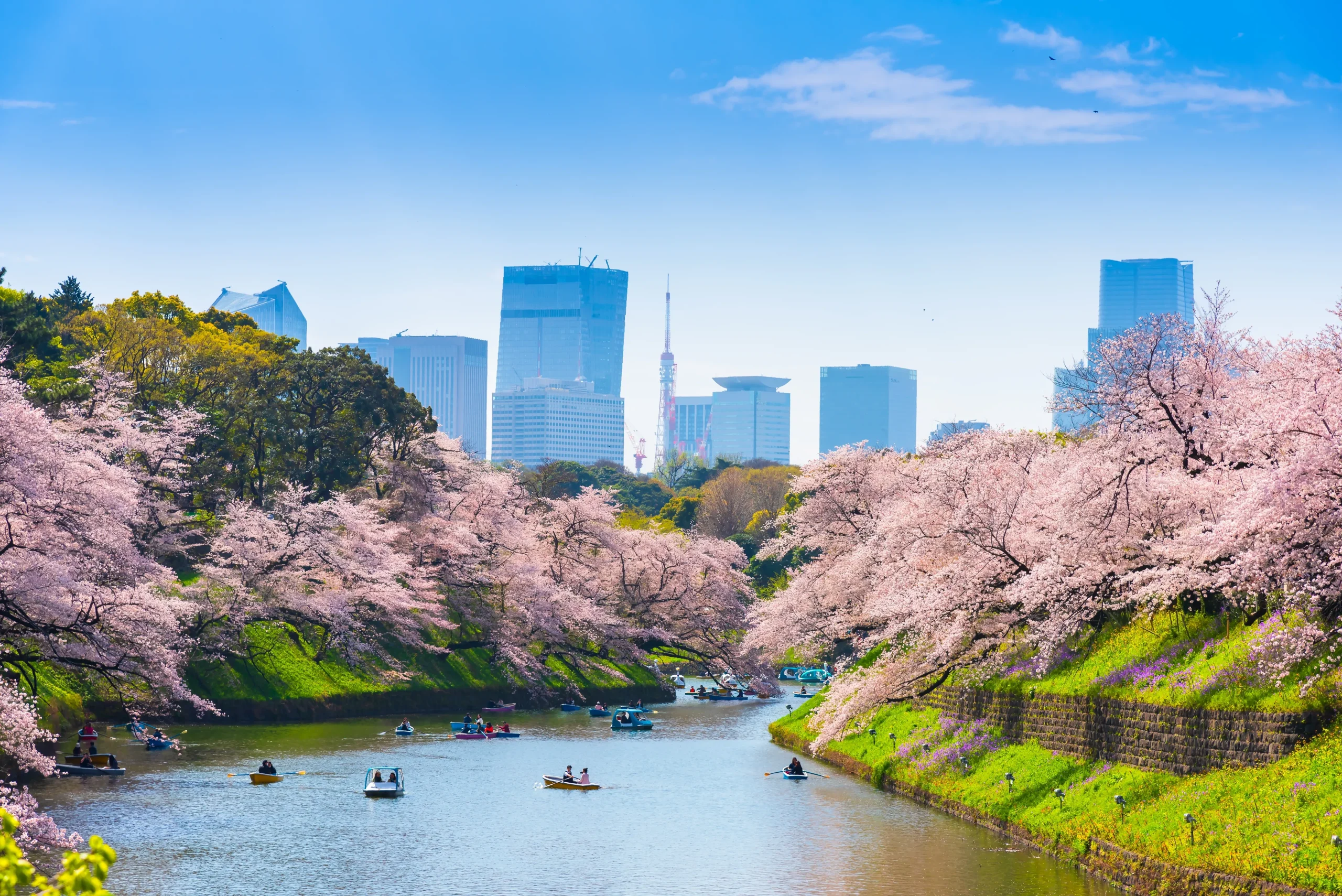
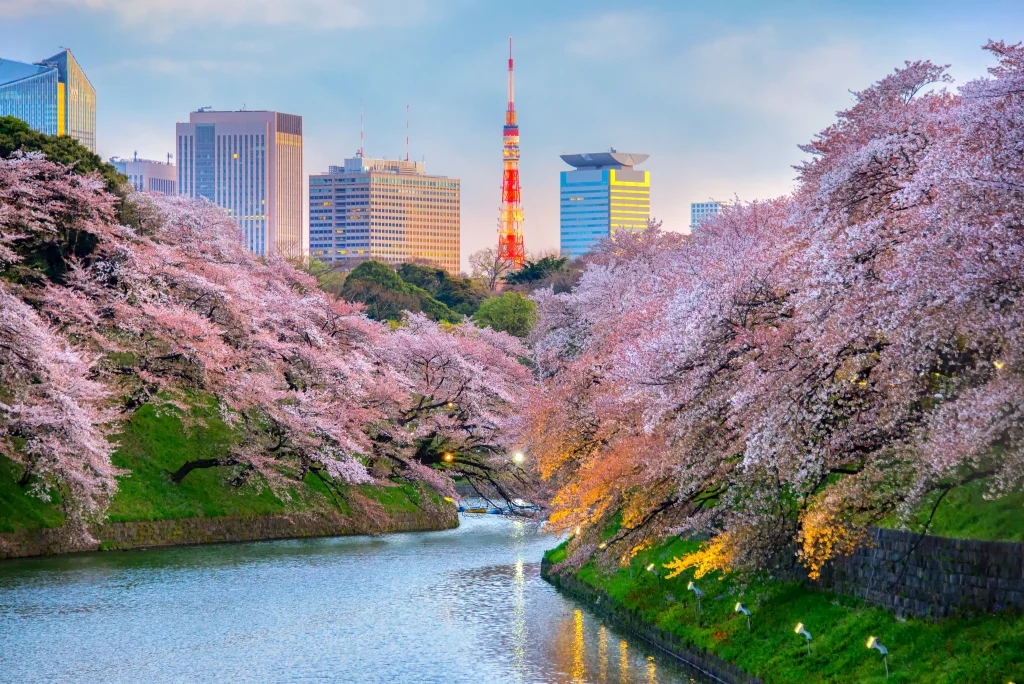
Just west of the Imperial Palace, the Chidorigafuchi Green Way is one of Tokyo’s best-known cherry blossom walks. The roughly 700-meter path follows the palace moat and is lined with about 230 cherry trees, including Somei Yoshino and Oshima varieties.
The view from the water is a major part of its appeal. Rowboats operate on the moat, allowing you to see the blossoms from below as branches extend over the water. Boats are extremely popular at peak bloom, however, so check the current operating arrangements and allow extra time if boating is important to you.
Seasonal illumination is often held as part of the Chiyoda Sakura Festival, but exact dates and boat arrangements change each year.
If the promenade becomes uncomfortably busy, nearby Kitanomaru Park can be a useful place to continue walking without having to cross the city. It should not be treated as a guaranteed crowd-free alternative, but its larger park setting gives you another option in the same area.
Edogawa Park and the Kanda River
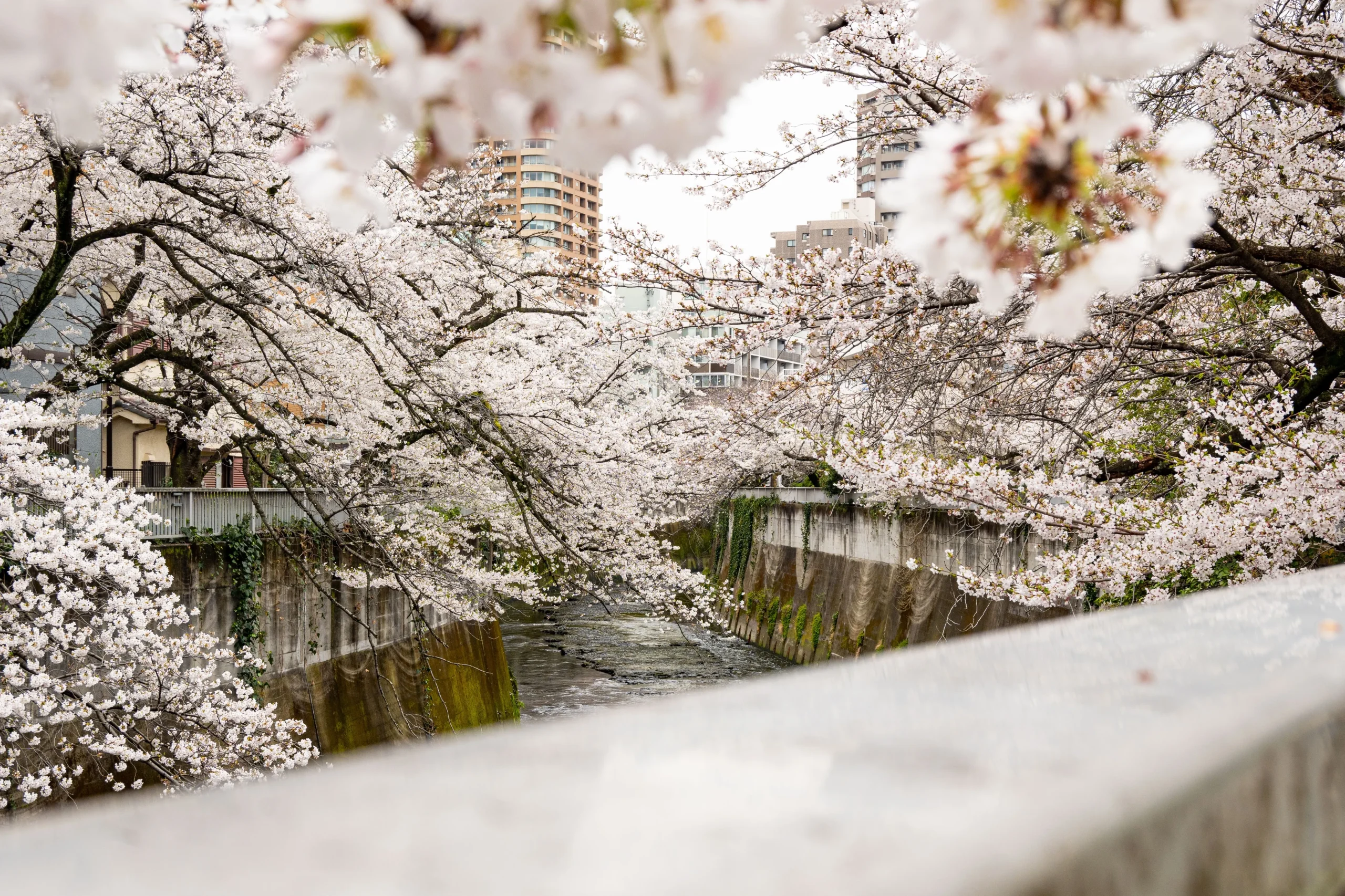
For a smaller riverside experience, Edogawa Park in Bunkyo Ward is worth considering. Around 120 cherry trees follow the Kanda River, with branches extending over the water and the narrow riverside paths.
The park is only a few minutes from Edogawabashi Station and is free to enter. Its appeal is quite different from Nakameguro. You will not find the same scale of festival atmosphere, but that is exactly why it can work well for travelers who simply want a pleasant riverside sakura walk.
This is a good alternative if the idea of blossoms beside the water appeals to you but the crowds around Meguro River do not.
Rikugien
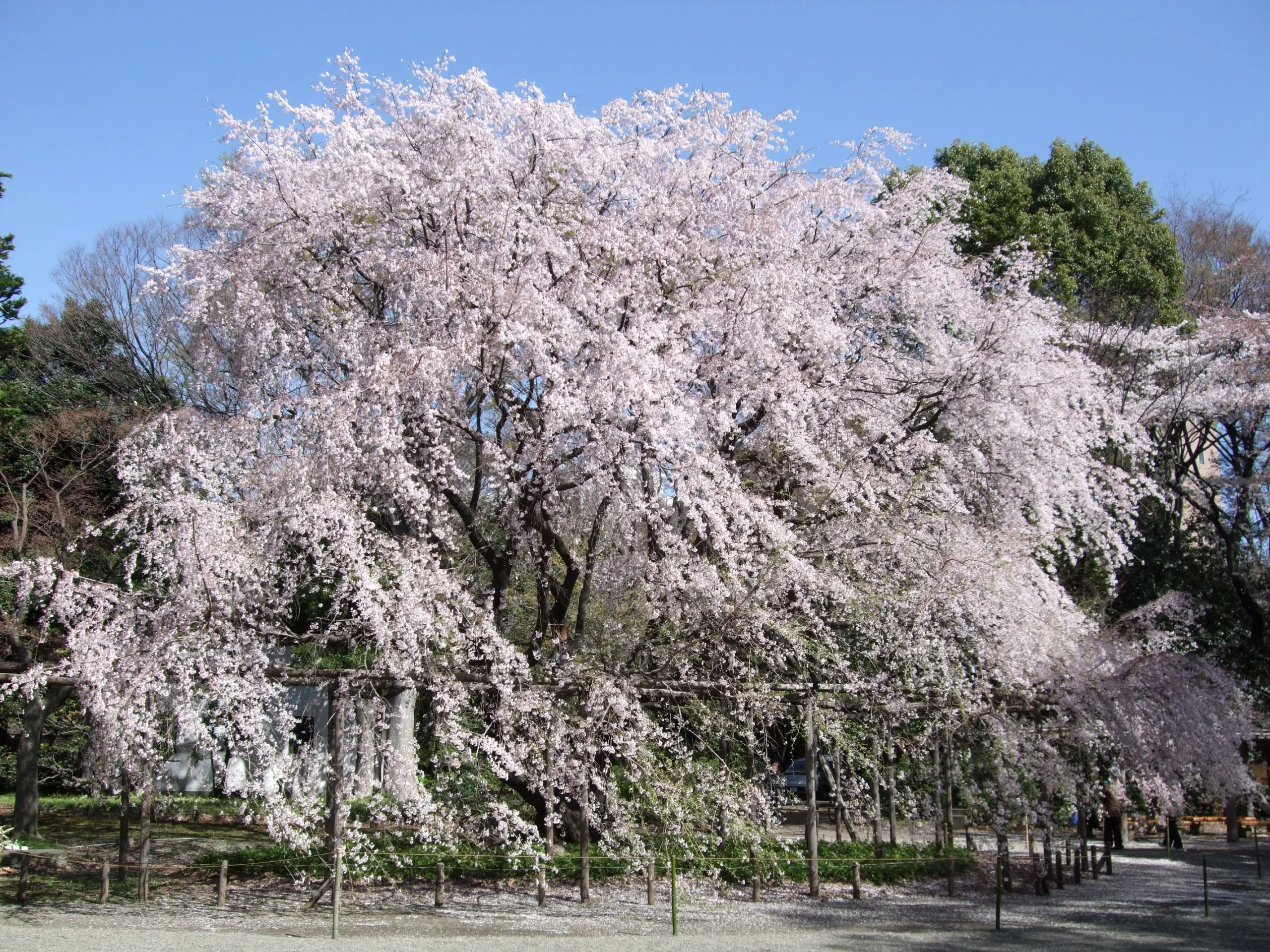
Rikugien is a traditional Japanese landscape garden in Bunkyo Ward, built in the Edo period. Its winding paths, ponds, and carefully arranged scenery make it a very different experience from Tokyo’s large picnic parks.
The best-known spring feature is its large weeping cherry tree near the entrance. Its long branches descend toward the ground when covered in blossoms, making it one of the garden’s main seasonal attractions.
Seasonal night viewing has been held during recent cherry blossom periods, but illumination arrangements can change from year to year. Check the garden’s current information if evening viewing is part of your plan.
Rikugien was created by Yanagisawa Yoshiyasu, a close retainer of shogun Tokugawa Tsunayoshi. That historical setting remains an important part of the garden’s appeal today.
Asukayama Park
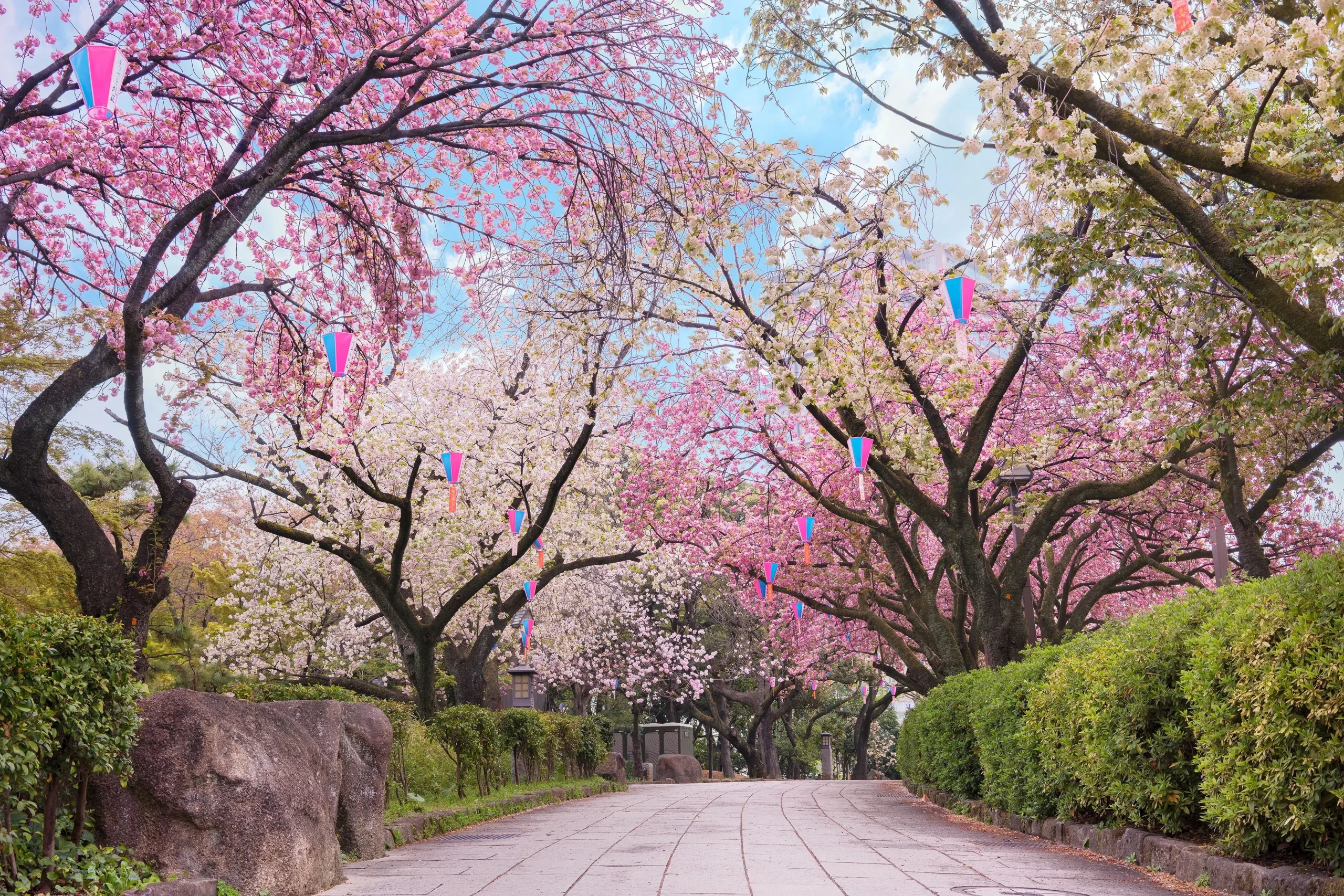
Asukayama Park is one of the easiest local hanami parks to reach. It sits immediately beside Oji Station in northern Tokyo and has roughly 650 cherry trees.
Its cherry blossom history stretches back to the Edo period, when shogun Tokugawa Yoshimune had cherry trees planted here as a place where ordinary people could enjoy spring scenery. That gives Asukayama a different character from Tokyo’s formal gardens and newer urban developments.
The park also contains museums and play areas, making it useful for families or anyone who wants to spend longer than an hour simply taking photographs.
It can still become busy during peak bloom, so think of it as an accessible local hanami option rather than a hidden spot.
Zojoji Temple
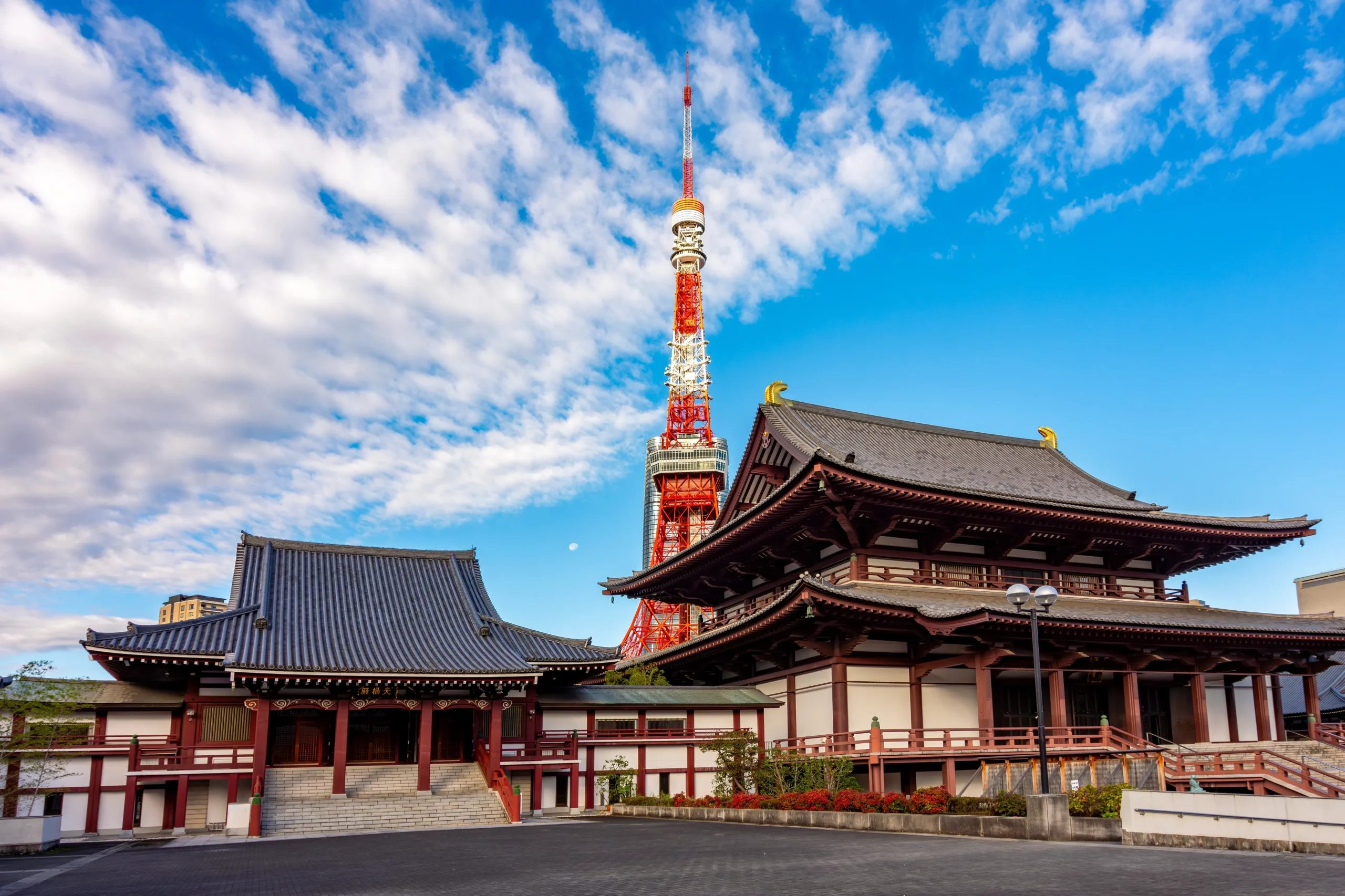
Few Tokyo cherry blossom views are as immediately recognizable as Zojoji Temple with Tokyo Tower behind it. Cherry trees across the temple grounds give visitors a chance to photograph traditional temple architecture and one of the city’s most familiar modern landmarks in the same frame.
Zojoji also has an important connection to the Tokugawa family. The temple served as one of the family temples of the Tokugawa shoguns, and its Sangedatsumon Gate, rebuilt in 1622, is designated an Important Cultural Property.
The grounds are easy to combine with Tokyo Tower and nearby Shiba Park, so this works especially well when you want sakura to fit naturally into a wider sightseeing day.
Tokyo Midtown
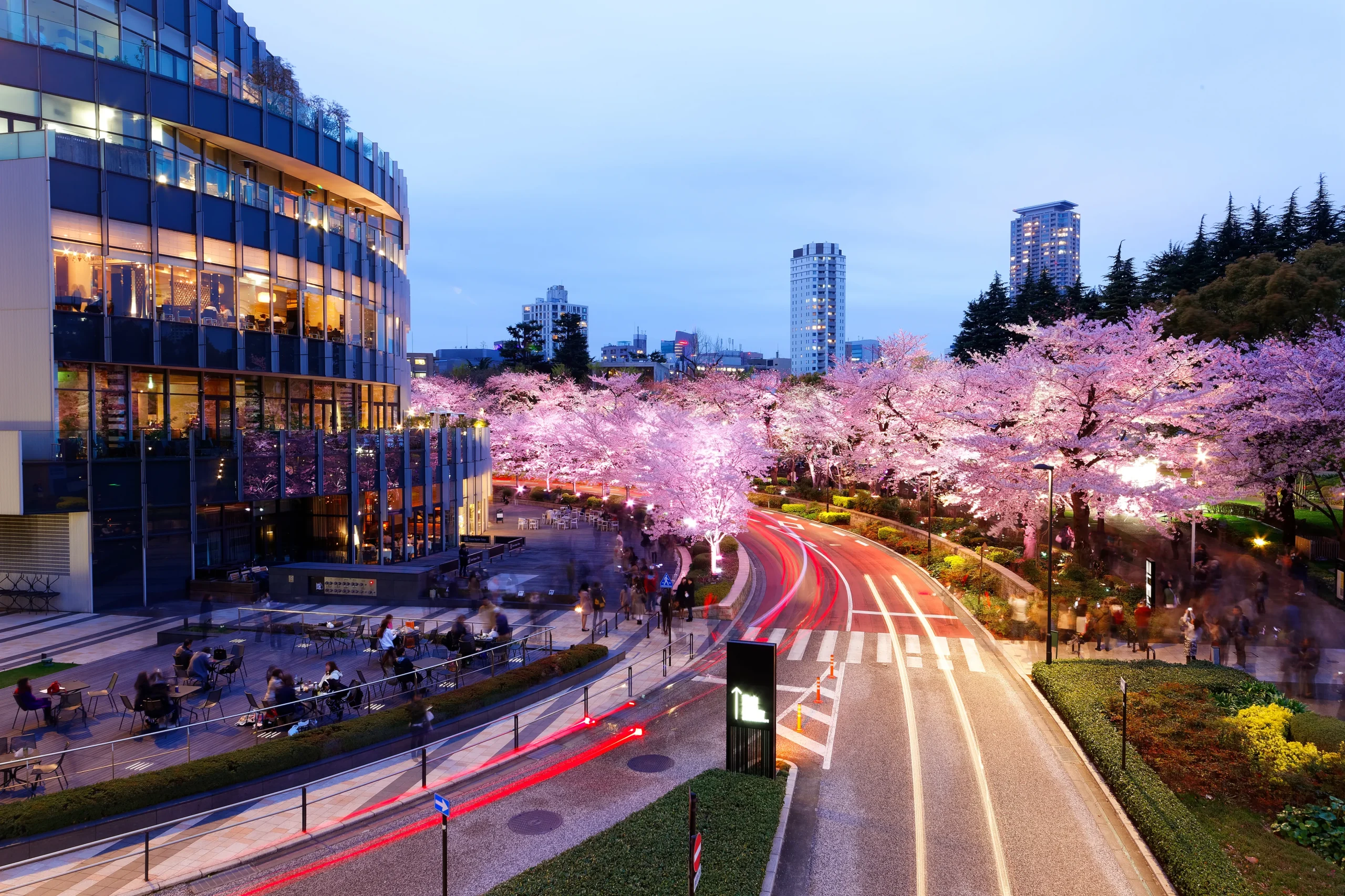
In Roppongi, Tokyo Midtown offers a more urban way to enjoy cherry blossoms. Around 100 cherry trees line the area around Midtown Garden and Sakura-dori, with modern architecture rising behind them.
When the site was redeveloped from the former Defense Agency grounds, existing cherry trees and other mature trees were preserved and incorporated into the new development.
The result is a convenient place for an evening stroll, particularly when seasonal illumination is held. Restaurants, cafés, and indoor facilities are also close by, which makes Tokyo Midtown useful when the weather is uncertain or you do not want to build an entire day around hanami.
Shinjuku Gyoen National Garden
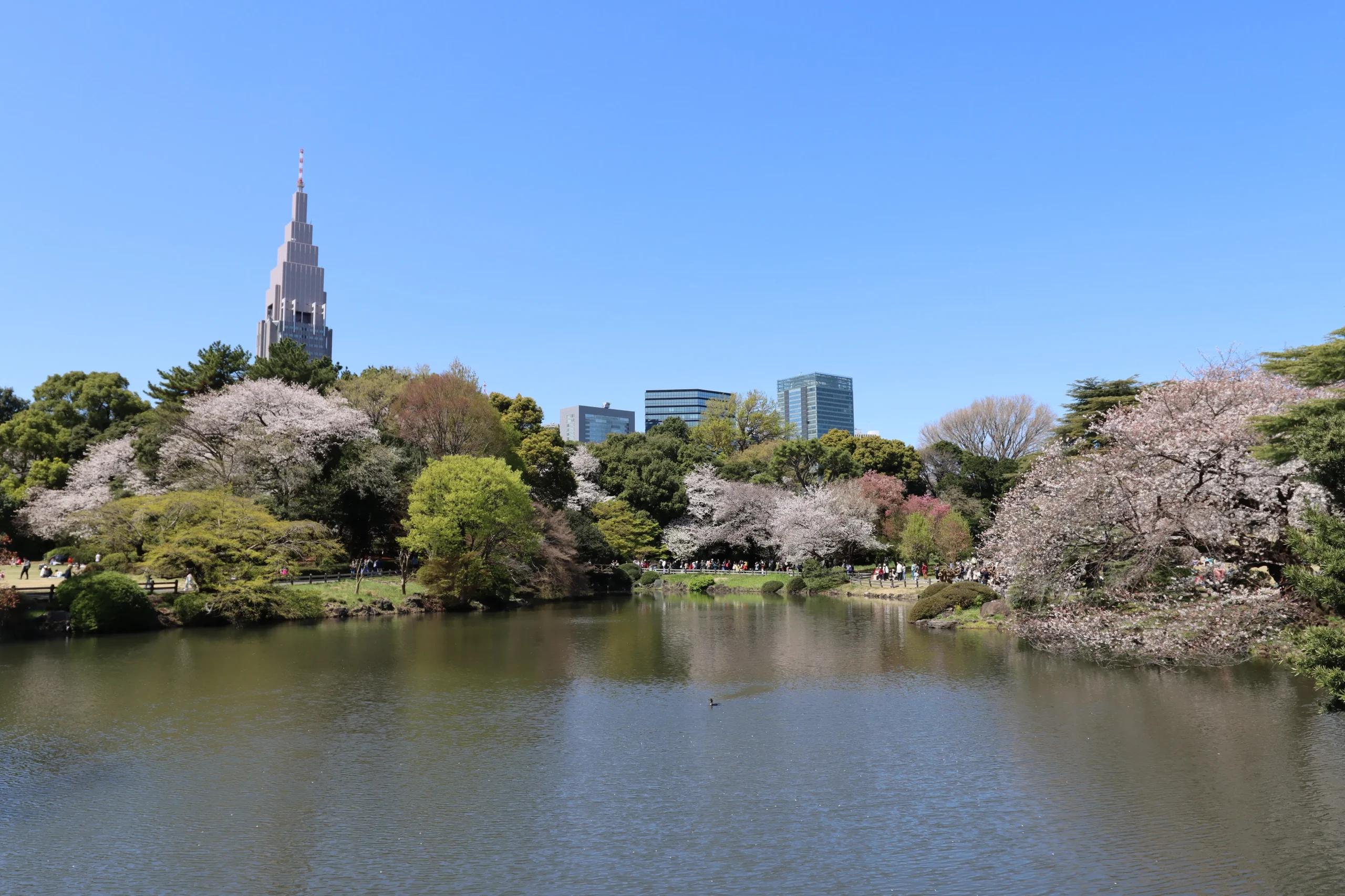
If you want a landscaped garden and a relatively long cherry blossom season, Shinjuku Gyoen remains one of Tokyo’s strongest options.
The garden contains hundreds of cherry trees across many varieties, from earlier bloomers to later Yaezakura. That wider range means you may still find blossoms here after Somei Yoshino trees elsewhere in central Tokyo have started to lose their petals.
The garden has paid entry and alcohol is not permitted. During recent peak blossom periods, advance reservations have also been introduced for selected weekends and holidays to manage congestion.
The exact 2027 reservation dates and rules are not confirmed yet, so check the official Shinjuku Gyoen information before visiting, particularly if you plan to go at the weekend.
Yoyogi Park
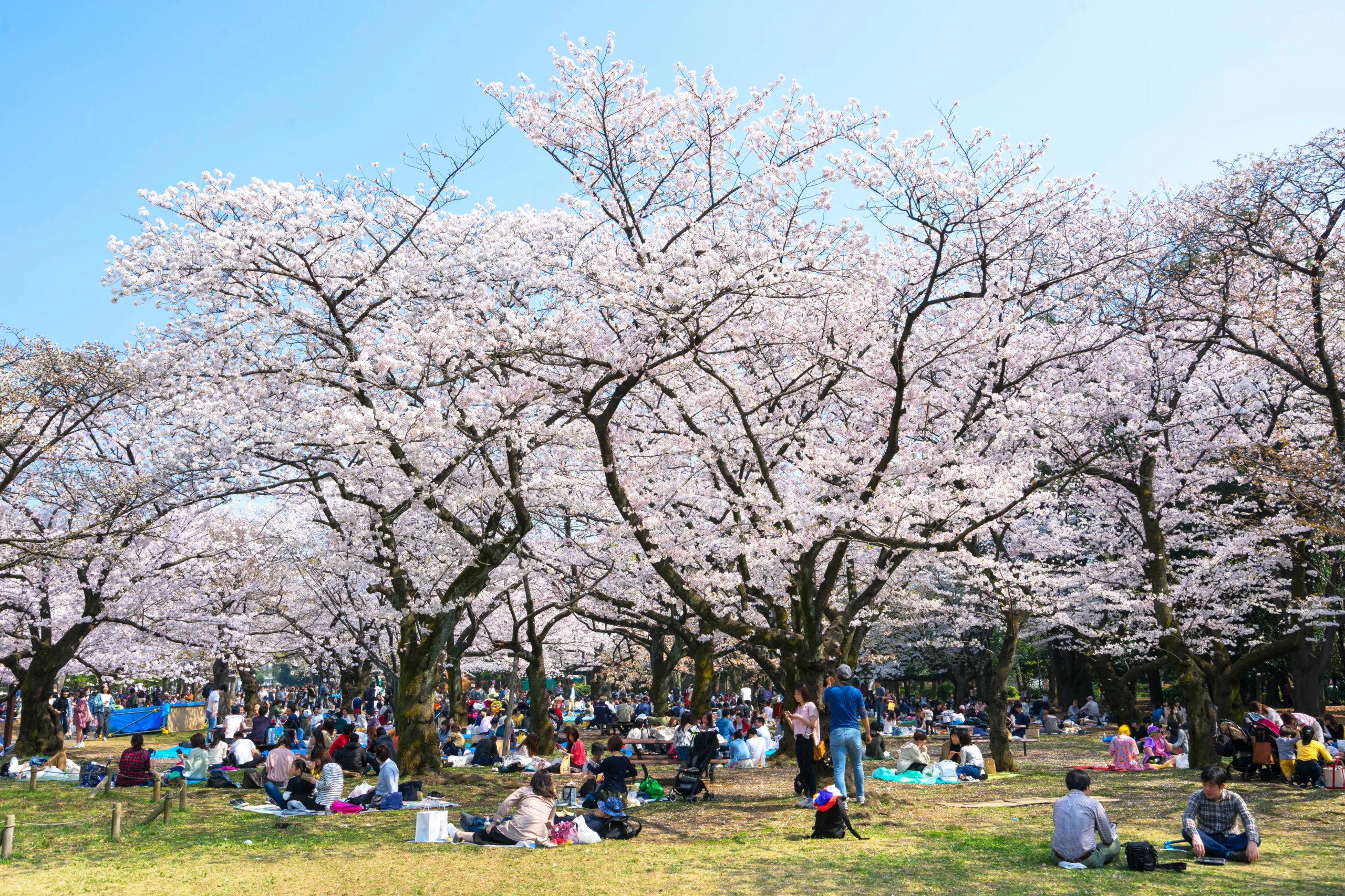
For a casual hanami near Harajuku and Meiji Shrine, Yoyogi Park is an easy option. The large lawns and open park layout attract groups of friends and families once the blossoms arrive.
The atmosphere is livelier than Shinjuku Gyoen or Rikugien and works well if you want a social picnic rather than a quiet garden walk.
Seasonal rules concerning large picnics, alcohol, equipment, and place-holding can change, so check the current park notice rather than assuming previous-year rules still apply.
Pairing Yoyogi Park with Meiji Shrine or Harajuku also makes it one of the easiest cherry blossom stops to fit into a normal Tokyo sightseeing day.
Inokashira Park
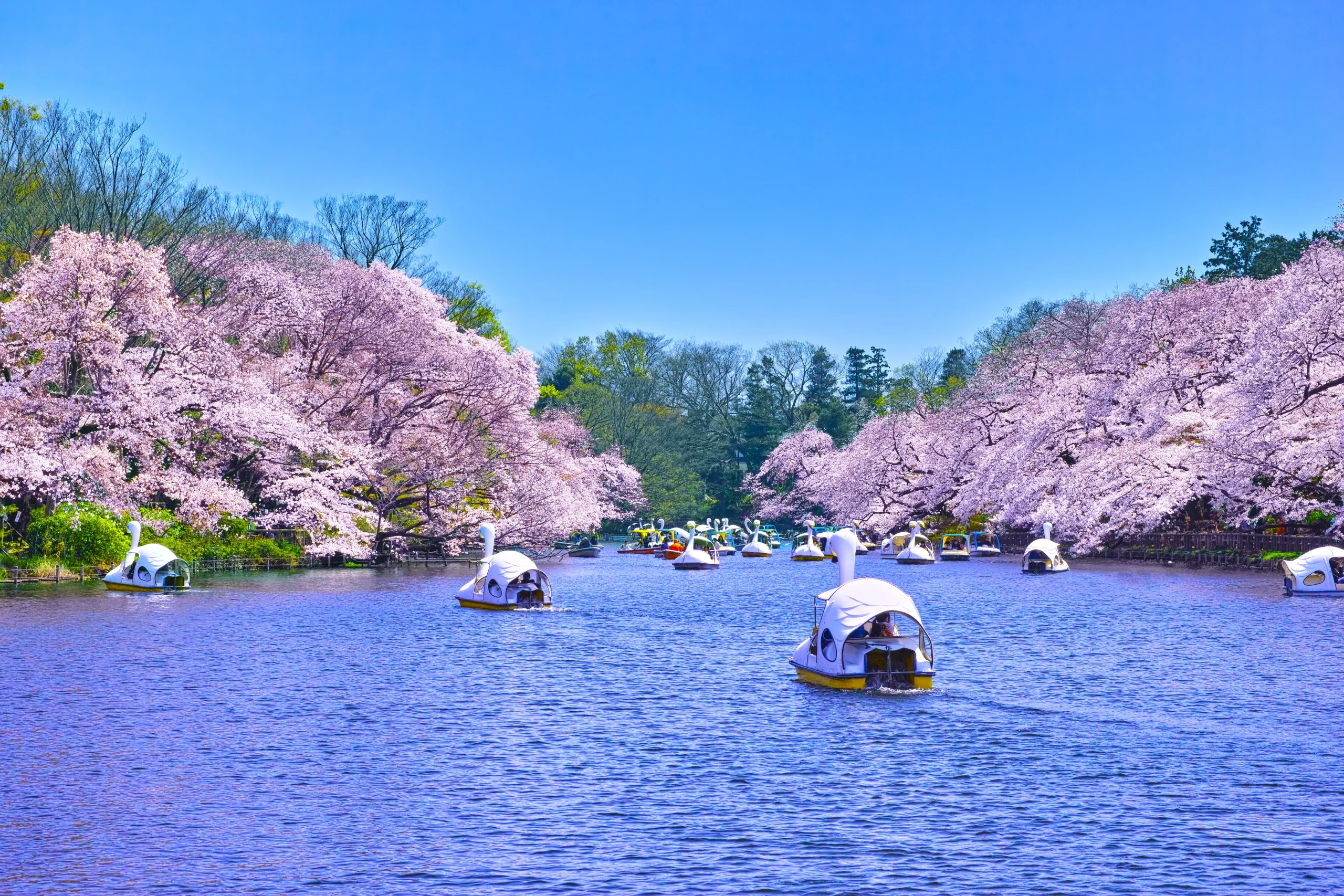
Inokashira Park gives you another waterside cherry blossom experience, this time in Kichijoji in western Tokyo.
Around 500 cherry trees grow in and around the park, with many concentrated near Inokashira Pond. Rental boats allow you to see the blossoms from the water when conditions and operating schedules allow.
The park can become crowded during peak bloom, so it is not a quiet alternative to central Tokyo. Its advantage is the combination of the pond, park, and Kichijoji itself. You can spend the morning or afternoon under the blossoms and continue into the neighborhood for cafés, restaurants, and shops.
It is a good choice for travelers who want hanami to feel like part of a half-day neighborhood visit rather than a single sightseeing stop.
Showa Kinen Park
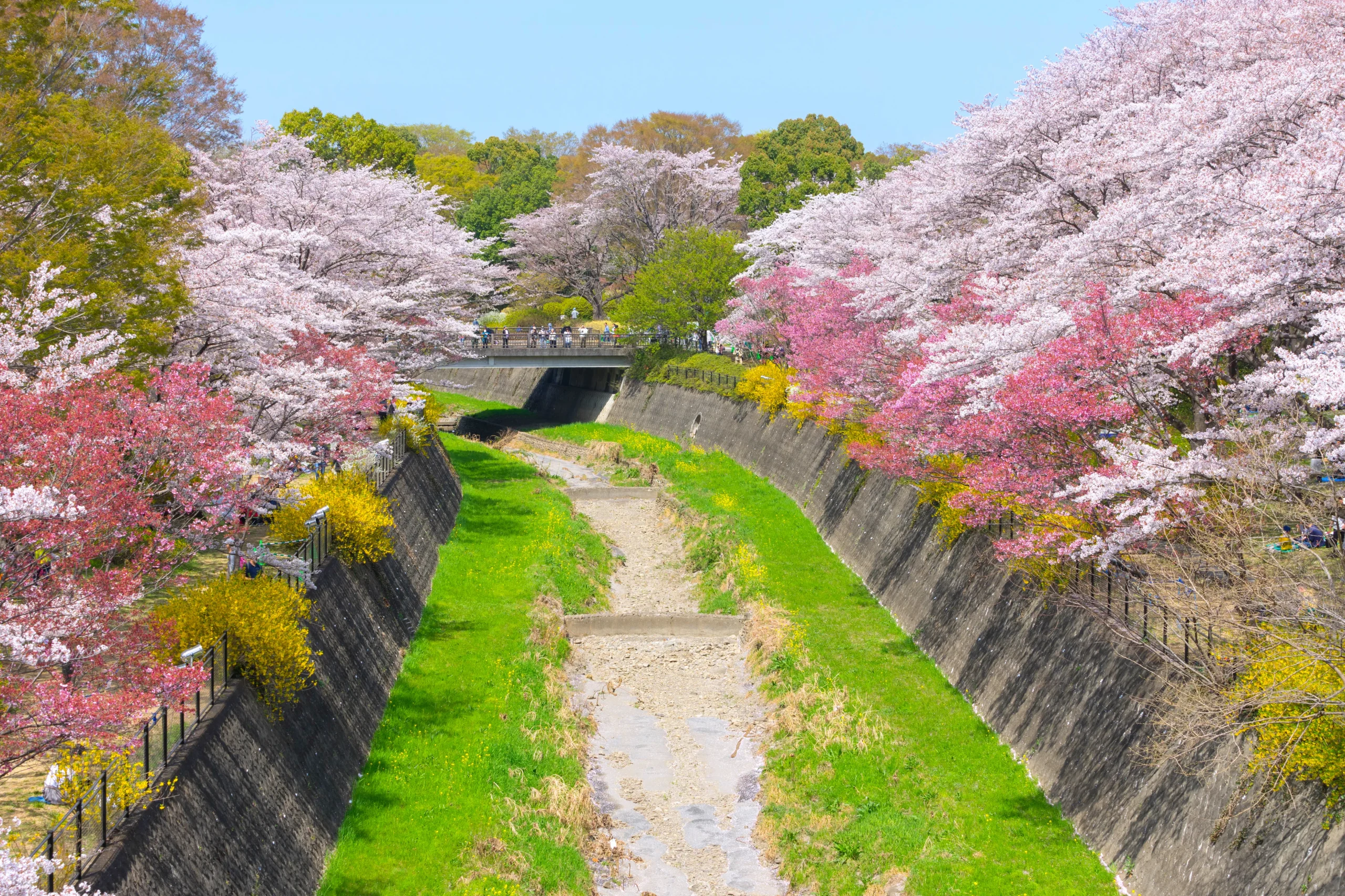
Showa Kinen Park is one of the largest green spaces in the Tokyo area, with around 1,500 cherry trees spread across its extensive grounds.
Its size is the main advantage. Rather than following one short sakura avenue, you can combine cherry blossoms with lawns, seasonal flower displays, cycling, and a longer day outdoors.
The Cherry Blossom Garden has mature trees with branches low enough to make sitting beneath them particularly pleasant. Other sections of the park combine pale cherry blossoms with yellow spring flowers and other seasonal colors.
Because the park is outside central Tokyo, allow more travel time. It works particularly well for families or travelers who want a slower park day rather than squeezing several city attractions together.
Koganei Park
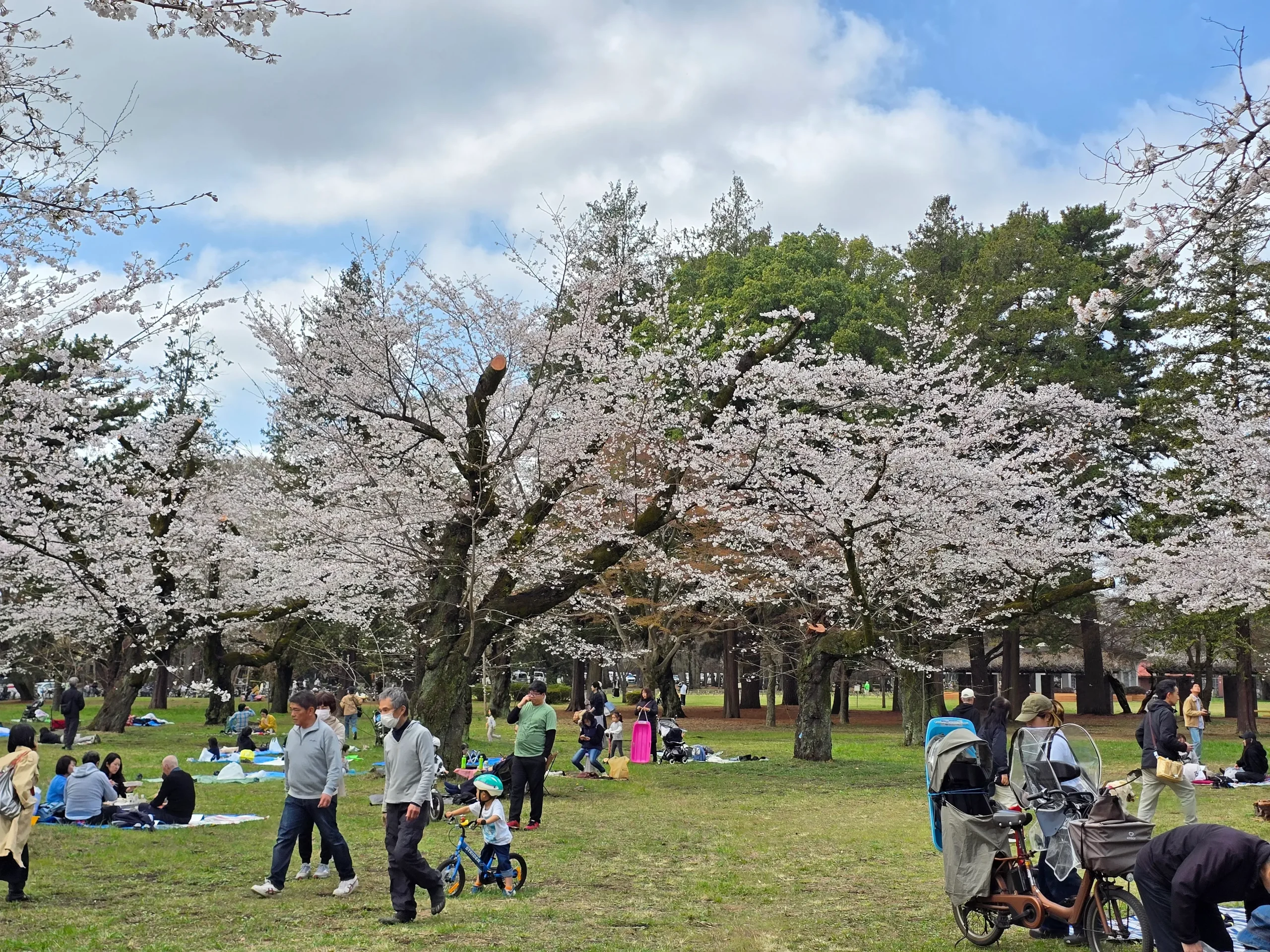
Koganei Park is another western Tokyo option, but it earns its place for a different reason. The park has around 1,400 cherry trees representing roughly 50 varieties.
Because those varieties do not all bloom at exactly the same time, the overall cherry blossom period is longer than at places dominated by Somei Yoshino. That can make Koganei useful if your Tokyo dates fall slightly before or after the main central-city peak.
The park is spacious and family-friendly, and the Edo-Tokyo Open Air Architectural Museum is located within the grounds, giving you another reason to make the trip west.
It does take more time to reach than central Tokyo spots and becomes busy during the season, so it makes most sense when you want a longer park visit rather than a quick stop between city attractions.
Which Cherry Blossom Spot Fits Your Day?
This quick selector includes both the main viewing spots above and several festival areas covered in the next section.
| Spot | Best for | Vibe |
| Chidorigafuchi | Photography, boat rides | Iconic, waterside |
| Meguro River | Evening walks, cafés | Urban, lantern-lit |
| Ueno Park | Picnics, social hanami | Lively, busy |
| Shinjuku Gyoen | Longer season, gardens | Calm, landscaped |
| Sumida Park | Skytree views, Asakusa | Riverside, classic Tokyo |
| Yoyogi Park | Easy central picnic | Casual, social |
| Rikugien | Garden scenery, seasonal night viewing | Elegant, traditional |
| Inokashira Park | Pond, boats, Kichijoji | Relaxed neighborhood day |
| Asukayama Park | Families, easy access | Local, historic |
| Edogawa Park | Smaller riverside walk | Low-key, residential |
| Koganei Park | Wider bloom window, families | Spacious, suburban |
5 Cherry Blossom Festivals in Tokyo in 2027
Festivals add another layer to hanami with lanterns, food, seasonal events, and evening viewing. Exact 2027 dates are not confirmed yet and usually depend on blossom conditions, so use the descriptions below to decide which areas interest you and check the official schedule closer to spring.
Sumida Park Cherry Blossom Festival
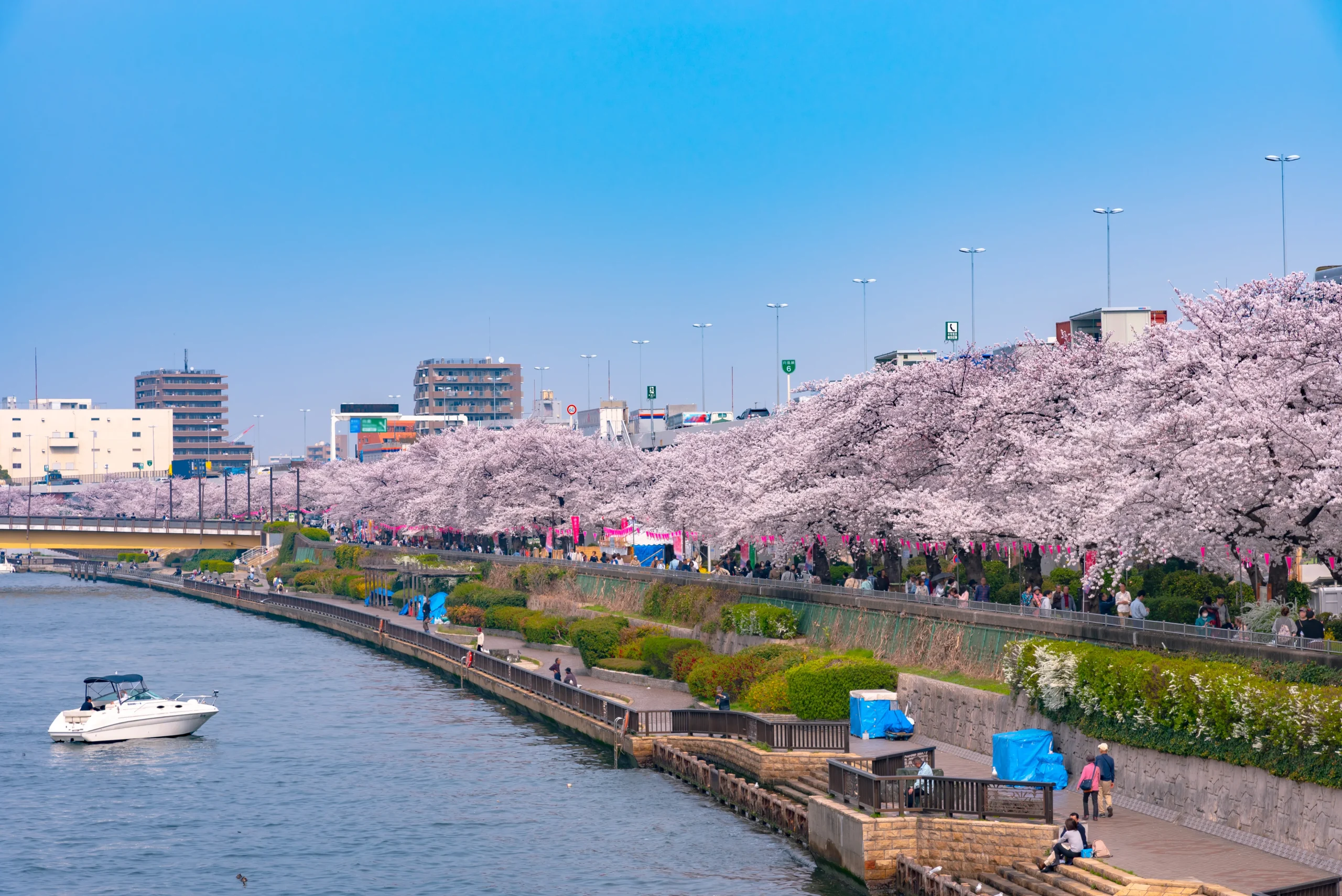
Sumida Park stretches along the Sumida River near Asakusa, with cherry trees on both sides of the water and Tokyo Skytree visible from many viewpoints.
The Taito/Asakusa side has around 510 cherry trees, while more continue along the opposite bank. Walking across the river gives you different combinations of blossoms, water, city skyline, and Skytree.
During the seasonal festival period, illumination and other events add to the atmosphere. Traditional yakatabune boats and the Tokyo Water Bus can also offer another perspective on the blossoms, although routes and schedules vary.
The location is particularly convenient if Asakusa is already part of your itinerary.
Nakameguro Cherry Blossom Festival
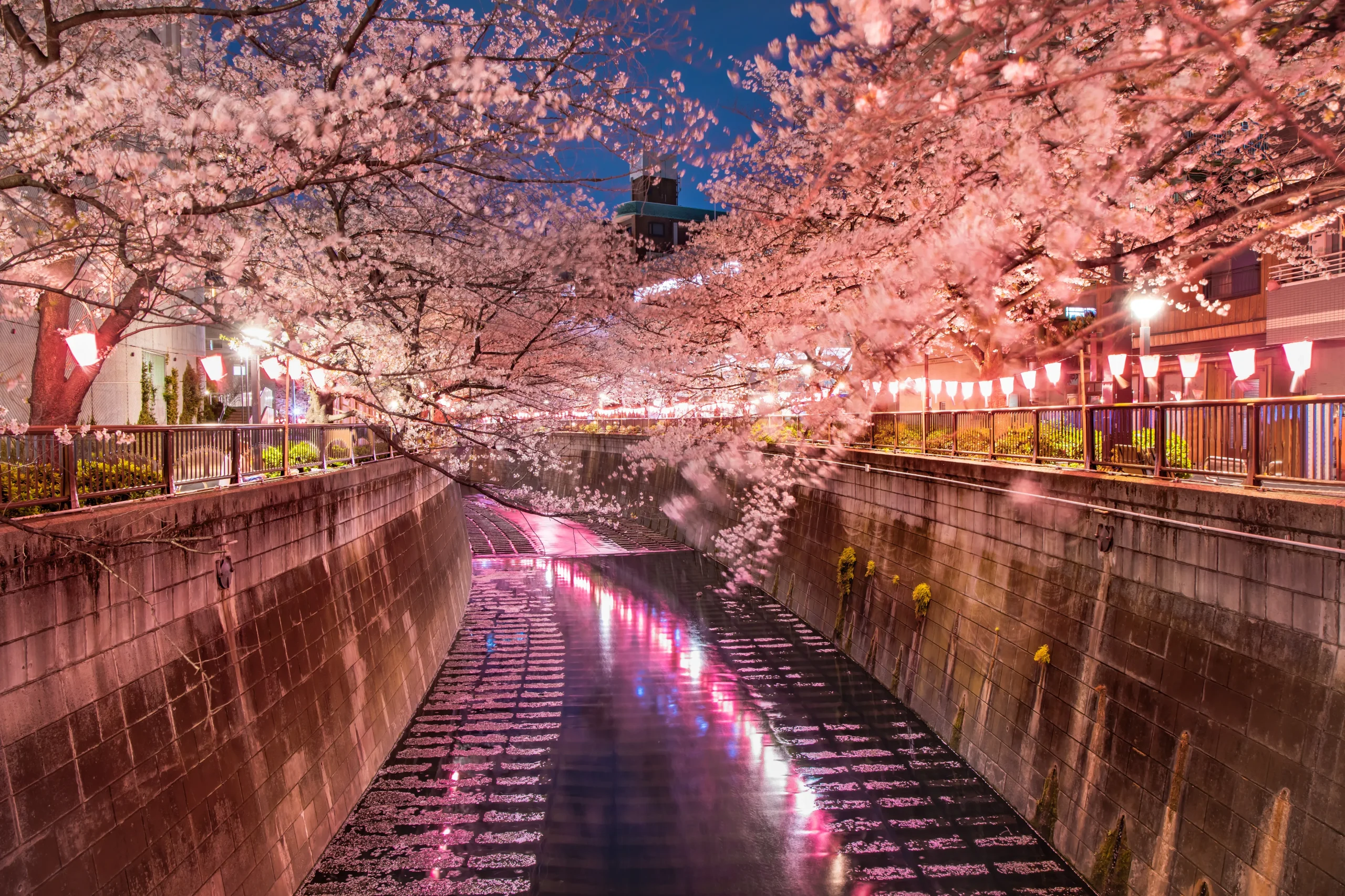
Each spring, the Meguro River becomes one of Tokyo’s busiest sakura areas. Around 800 cherry trees line approximately 3.8 kilometers of the river, with branches reaching over the water.
Nakameguro is especially popular in the evening, when seasonal lanterns and illumination create a very different atmosphere from daytime park hanami.
That popularity is also its main disadvantage. Expect heavy pedestrian traffic near Nakameguro Station at peak bloom, particularly on weekends.
If you want the riverside experience without staying in the busiest central stretch, walking farther along the river can make the visit easier.
Festival dates, illumination periods, and related events change each year, so check the confirmed 2027 program before planning around a specific evening.
Ueno Cherry Blossom Festival
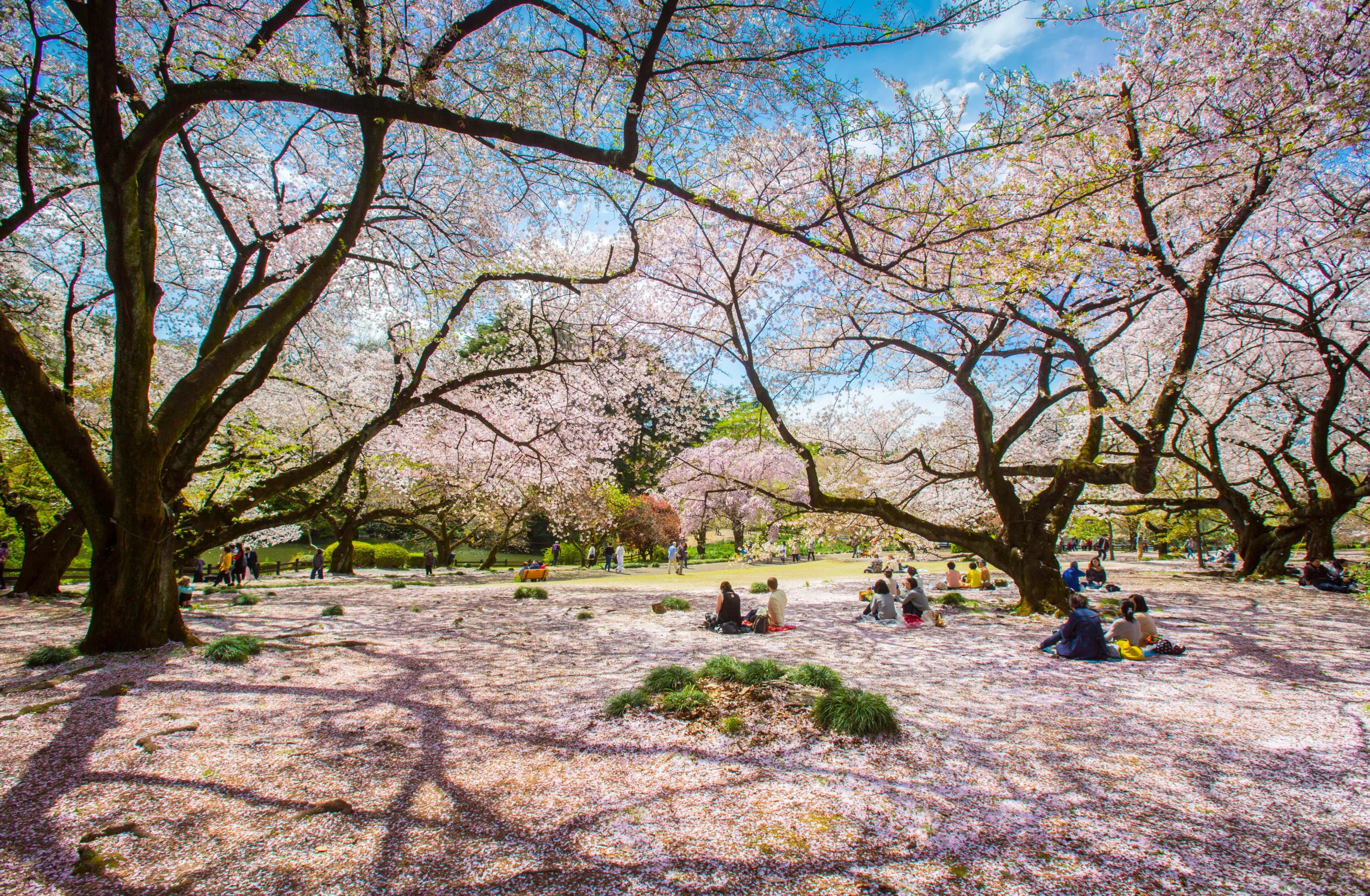
Ueno Park offers one of Tokyo’s liveliest hanami experiences. Cherry trees line the main park avenues and continue around Shinobazu Pond, creating a large viewing area close to museums, temples, and Ueno Station.
During the festival period, groups gather for picnics beneath the trees and seasonal lanterns illuminate parts of the park after dark.
Ueno is a good choice if you actively want to see the social side of hanami rather than avoid it. The trade-off is straightforward: peak days can be extremely busy.
The park’s cherry blossom history dates back centuries, with trees historically brought from the Yoshino area of Nara.
More Festivals to Time Your Trip Around
Beyond the big three, a few more celebrations are worth keeping in mind for 2027:
- Sakura Festival in Chiyoda (Chidorigafuchi)
A seasonal program around the Imperial Palace moat, usually including evening illumination and extended boat operations. Exact dates and arrangements vary each year. - Sakura Fes Nihonbashi
A more urban spring event, with participating shops, restaurants, seasonal menus, and sakura-themed displays around the Nihonbashi district.
The Different Varieties of Cherry Blossoms in Tokyo
Somei Yoshino
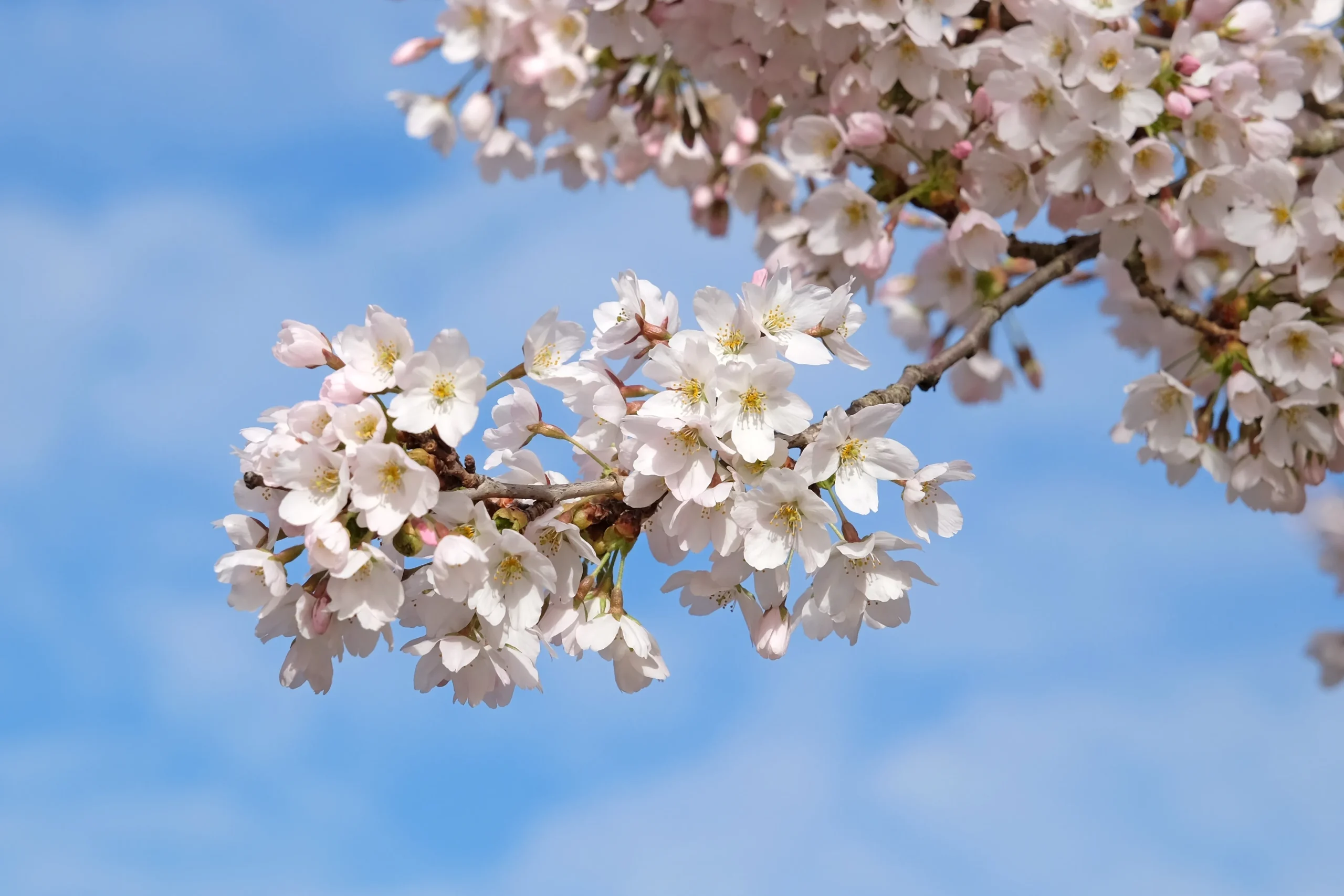
Somei Yoshino is Japan’s most widely recognized cherry blossom variety and dominates many of Tokyo’s famous viewing spots.
The flowers have five petals and usually open pale pink before fading toward white as they reach full bloom. Because large numbers of Somei Yoshino trees bloom at almost the same time, they create the dense, uniform displays associated with Tokyo’s peak sakura season.
Their synchronized flowering is also why the main season feels so short.
Where to See Somei Yoshino in Tokyo
- Yoyogi Park
- Shinjuku Gyoen National Garden
- Chidorigafuchi Green Way
- Zojoji Temple
- Asukayama Park
- Edogawa Park
Shidarezakura
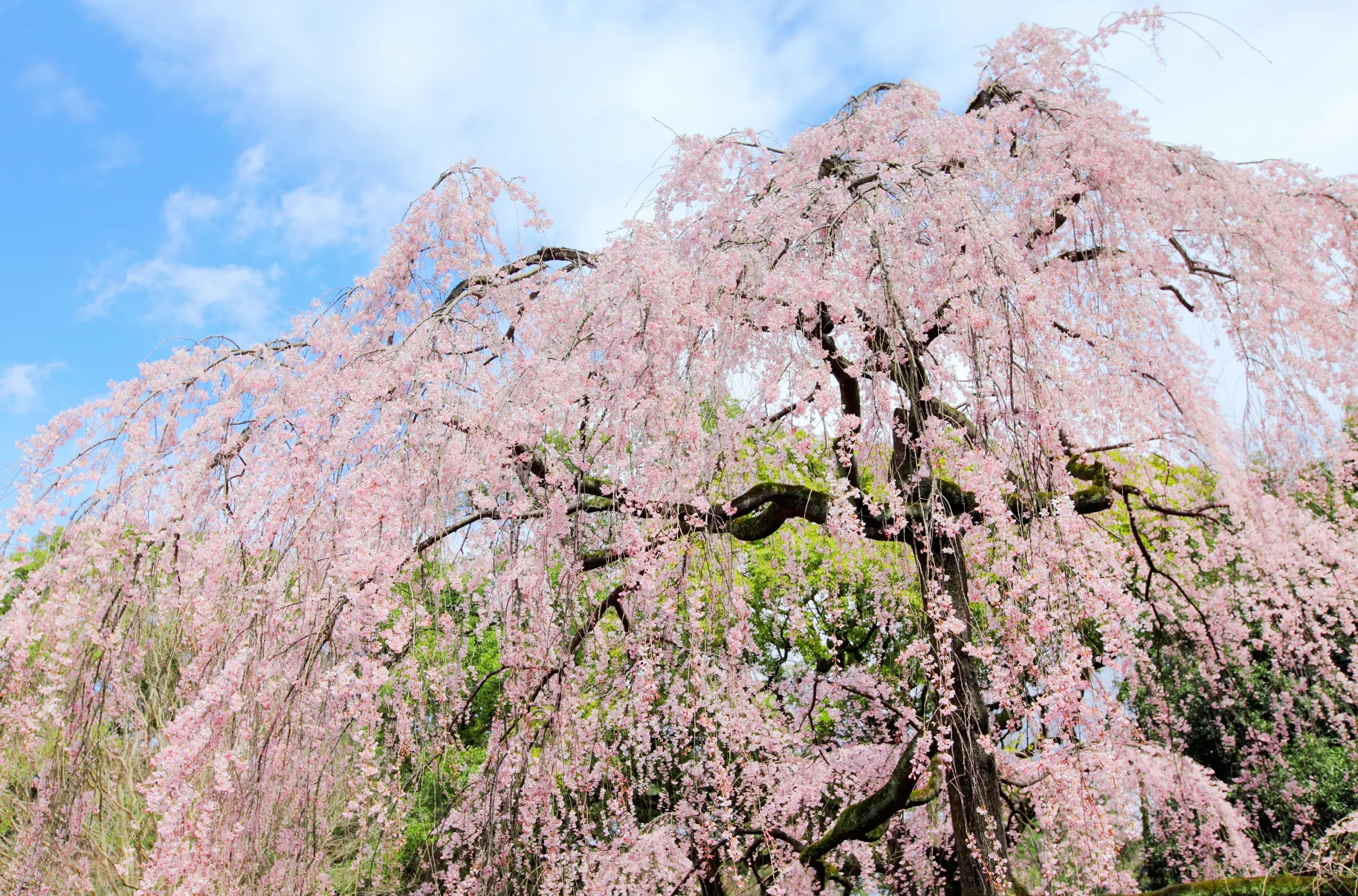
Shidarezakura, or weeping cherry, refers to cherry trees with long branches that cascade downward.
Many bloom earlier than Somei Yoshino, which makes them useful if you arrive before Tokyo’s main peak. Their shape also creates a very different visual effect from the broad clouds of blossoms formed by Somei Yoshino.
Where to See Shidarezakura in Tokyo
- Rikugien
- Nishi-Arai Daishi Temple
- Koishikawa Korakuen Gardens
- Ogugunohara Park
Yaezakura
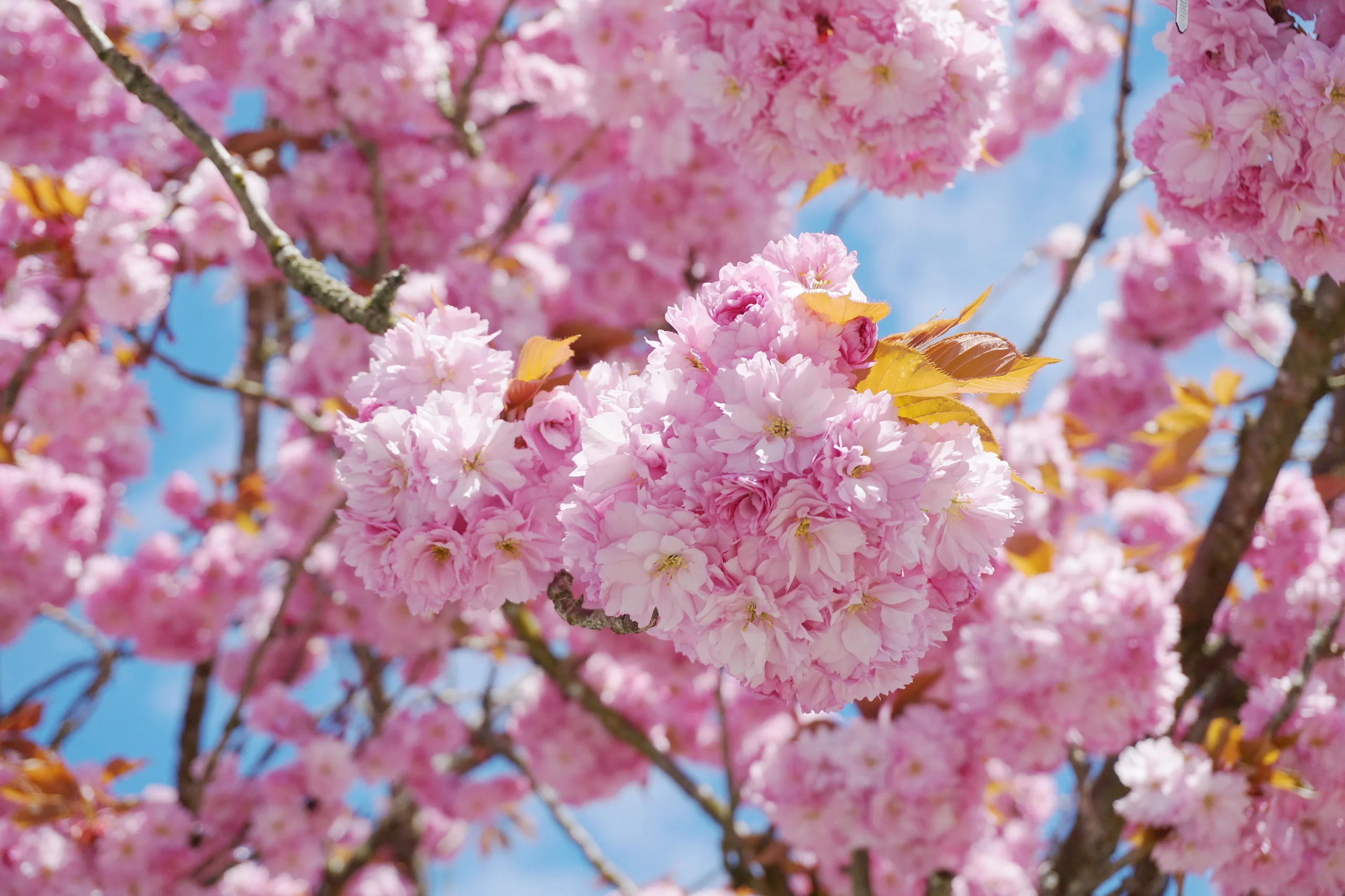
Yaezakura are double-flowered cherry blossoms with more petals than the standard five-petaled varieties. Their flowers tend to look fuller and are often deeper pink.
Most importantly for travelers, many Yaezakura bloom later than Somei Yoshino.
That makes them a useful second chance if you reach Tokyo after the main peak. Shinjuku Gyoen is particularly helpful in this situation because its many varieties extend the garden’s overall blossom season.
Where to See Yaezakura in Tokyo
- Hama-rikyu Gardens
- Shinjuku Gyoen National Garden
- Ueno Park
- East Gardens of the Imperial Palace
- Koganei Park
How to Beat the Crowds in 2027
Sakura season is one of Tokyo’s busiest travel periods, and the famous spots can become genuinely crowded. A few simple choices make a noticeable difference:
- Go earlier or later in the day. Morning is usually easier than midday at major parks and riversides. Evening viewing can also work well when illumination is available.
- Choose weekdays where possible. Weekend crowds are especially noticeable at places such as Ueno Park, Chidorigafuchi, and Nakameguro.
- Keep a nearby alternative in mind. If Chidorigafuchi is overwhelming, continue toward Kitanomaru Park. If you want riverside blossoms without the scale of Nakameguro, consider Edogawa Park.
- Use different bloom periods to your advantage. Shinjuku Gyoen and Koganei Park contain enough varieties to give you more flexibility than a Somei Yoshino-only location.
- Watch the weather. Rain and strong wind can accelerate petal fall, so be prepared to change the order of your plans once you are in Tokyo.
- Do not underestimate distances. The Meguro River and Sumida River areas stretch farther than they look on a map. Comfortable shoes and a sensible stopping point make a difference.
Hanami Etiquette: The Rules Tourists Miss
Hanami is a relaxed tradition, but individual parks have their own rules.
- Check current alcohol rules. Shinjuku Gyoen does not permit alcohol, while rules elsewhere can change during peak season.
- Do not touch the trees. Avoid pulling branches down or picking blossoms for photographs.
- Take your trash with you. Temporary bins may be provided in some areas, but you should be prepared to carry rubbish away.
- Share the space. Avoid reserving unnecessarily large areas and keep noise at a reasonable level.
- Check picnic restrictions. Chidorigafuchi Green Way, for example, prohibits picnicking during the Sakura Festival and is primarily a walking route.
Read more: What is Hanami?
Start Planning Your 2027 Trip Now
Tokyo’s cherry blossom season is short, and exact timing will remain uncertain until much closer to spring. Instead of trying to predict one perfect day months in advance, give yourself several chances to see blossoms.
If 2027 is your year:
- Book accommodation early if your dates are fixed. A base with good train access to several different viewing areas gives you more flexibility than choosing a hotel for one specific park.
- Use late March and early April as a planning reference, not a guarantee. Check updated forecasts once they become available.
- Build in buffer days. A flexible two or three-day window gives you more room to respond if the bloom shifts.
- Keep early and late varieties in mind. Places such as Shinjuku Gyoen and Koganei Park can help if your trip does not line up perfectly with the main Somei Yoshino peak.
- Check reservations and seasonal rules before visiting. This is particularly important for Shinjuku Gyoen and any activity involving boats, special illumination, or festival programs.
Want to Experience Cherry Blossoms in Japan?
Cherry blossoms move across Japan at different times, and planning a trip around several regions can give you more opportunities than relying on one city and one predicted date.
If you want help building a spring route without planning every reservation and transfer yourself, consider the Authentic Sakura Trail Private Tour.
Why Join Our Spring Private Tour?
- Visit several major destinations across Japan during the spring blossom period
- Enjoy cultural experiences that can be difficult to arrange independently
- Travel with an English-speaking guide and a pre-planned route
- Reduce the pressure of coordinating every transport connection, reservation, and sightseeing day yourself
Exact cherry blossom conditions can never be guaranteed, but a well-planned spring itinerary gives you more flexibility when nature does not follow the calendar.