Tachikawa rarely appears on a first-time visitor’s Tokyo itinerary, yet it holds the capital’s largest park, one of Japan’s most extensive public art collections, and a shopping district built without the crowds or inflated prices of Shibuya or Shinjuku. Thirty minutes west of central Tokyo by train, Tachikawa is less a single attraction than a genuinely livable slice of the city, which is exactly why growing numbers of long-stay visitors and residents are drawn to it. This guide covers what to do in Tachikawa, how to get there, and whether it works better as a day trip or a base.
What Is Tachikawa? A Suburb Built Around a Park and a Former Air Base
Tachikawa’s modern character was shaped by a single historical turn: for decades the area hosted a US military air base, which was fully returned to Japan in 1977 and redeveloped over the following two decades into the park, shopping district, and public art zone that define the city today. Rather than erasing that history, Tachikawa’s planners built directly on top of it, turning a former runway-adjacent base town into what city planning circles now cite internationally as a model of art-integrated urban redevelopment.
That redevelopment gives Tachikawa a genuinely different feel from Tokyo’s more famous shopping districts: wide, purpose-built pedestrian streets, department stores clustered conveniently around the station rather than sprawled across a dense downtown, and a scale that favors walking and lingering over the fast-paced transit of central Tokyo.
Getting to Tachikawa from Central Tokyo
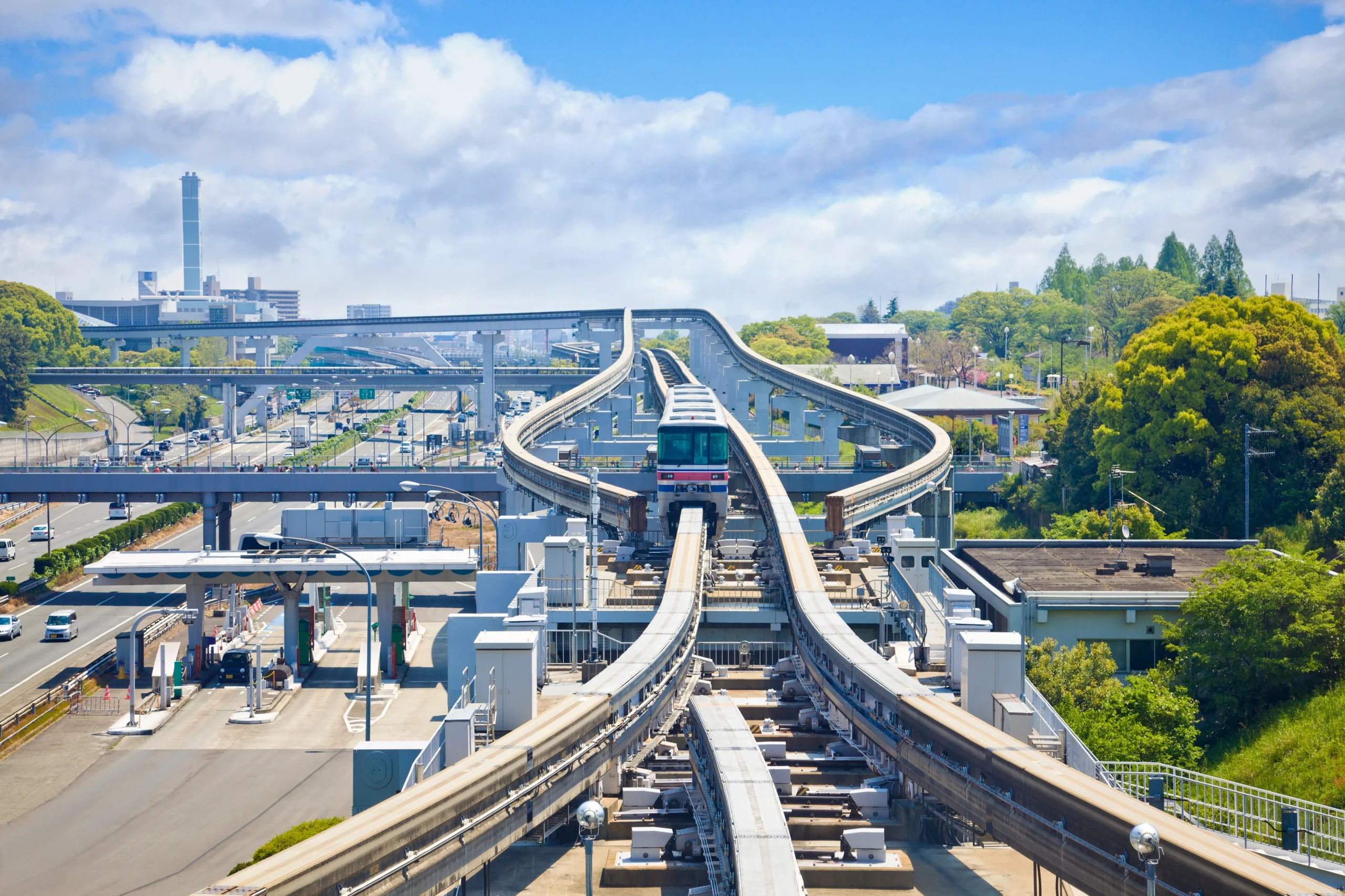
Tachikawa Station sits on the JR Chuo Line, roughly 30 minutes from Shinjuku Station and about 40 minutes from Tokyo Station by rapid or special rapid service, making it one of the more straightforward suburban destinations to reach without transfers. The station is also served by the JR Ome Line, JR Nanbu Line, and the Tama Monorail, a north-south line opened in 1998 that connects Tachikawa to other towns across the wider Tama region, a detail that matters for travelers weighing whether to combine a Tachikawa visit with a trip further west.
From the airports, Tachikawa takes about one hour twenty-five minutes by train from Haneda and roughly two hours by train from Narita, comparable to reaching central Tokyo directly, which makes Tachikawa a realistic first or last stop on a Tokyo itinerary rather than a detour requiring a separate trip into the city first.
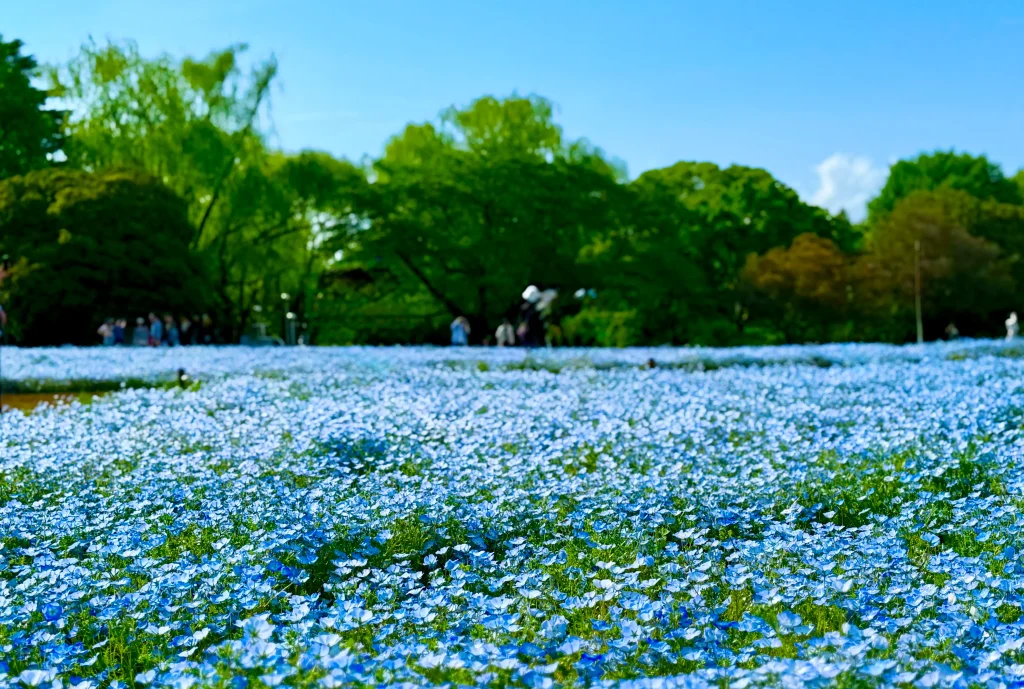
Showa Kinen Park: Tokyo’s Largest Park
Because the park is genuinely large enough to require a full day to see completely, renting one of the on-site bicycles or a rowboat on the park’s lake (700 yen for up to 30 minutes) is worth considering for visitors who want to cover more ground than walking allows. The park’s two main gates, at Tachikawa Station (a 10-minute walk) and Nishi-Tachikawa Station (a 2-minute walk), give visitors a choice of entry point depending on which side of the park they want to see first.
GREEN SPRINGS and Sun Sun Road: Shopping and Dining Without the Crowds
GREEN SPRINGS, a mixed-use complex at Tachikawa Station’s north exit, combines hotels, restaurants, shops, and a roughly 120-meter cascading water feature into a single walkable green space, connected to Faret Tachikawa and Showa Kinen Park by the wide, tree-lined Sun Sun Road. Department stores including Lumine, Isetan, and Takashimaya cluster directly around the station, giving visitors the retail range of a Shinjuku shopping trip without Shinjuku’s density of people or the inbound-tourist pricing that has crept into parts of central Tokyo.
The width of Sun Sun Road itself is a deliberate design choice rather than an accident of space: the pedestrian and cycling path measures roughly 40 meters across at points, comfortably accommodating strollers, wheelchairs, and groups walking side by side in a way few streets in central Tokyo can match.
Faret Tachikawa: An Open-Air Museum Hidden in Plain Sight
Faret Tachikawa, a five-minute walk from the station’s north exit, is one of the most extensive public art projects in Tokyo: 109 works by 92 artists from 36 countries, installed directly into the functional fabric of the district as benches, ventilation shafts, streetlights, and bollards rather than displayed on pedestals. Curated in 1994 by art director Fram Kitagawa, whose later projects include the internationally known Echigo-Tsumari Art Triennale, Faret Tachikawa predates both of those larger festivals and is credited as an early model for “art-based” urban redevelopment now replicated in other Japanese regions.
Because many works are disguised as ordinary street furniture, exploring Faret Tachikawa rewards deliberately slow walking over a planned route; visitors who prefer structure can download the multilingual FARET TACHIKAWA ART NAVI app, while those who enjoy discovery can simply wander the district’s streets and notice which “bench” or “vent” turns out to be a work by an internationally recognized artist.
Tachikawa for Families: Strollers, Space, and Everyday Life
Much of what makes Tachikawa appealing to first-time visitors is precisely what makes it functional for families and longer-stay residents: wide, flat pedestrian streets, a park large enough to spend an entire day without repeating the same path, and shopping and dining options concentrated within easy walking distance of the station rather than scattered across a sprawling downtown. Showa Kinen Park in particular includes dedicated children’s playgrounds, a water play area open in summer, and large open lawns suited to unstructured play, none of which require navigating stairs, narrow aisles, or the elevator queues common in central Tokyo’s more compact attractions.
For travelers weighing whether Tachikawa suits a family day out specifically, the combination of low admission costs, stroller-friendly infrastructure, and a genuinely large park make it a stronger fit than most single-attraction destinations closer to central Tokyo.
Tachikawa as a Base: Why Long-Stay Visitors and Locals Choose It
Beyond its attractions, Tachikawa functions as a practical residential and transit hub for the wider Tama region, and this is part of its appeal for visitors researching longer stays rather than a single day trip. As the second-busiest station on the JR Chuo Line after Shinjuku, Tachikawa offers direct rail access into central Tokyo alongside connections to Okutama, Mount Takao, and other western Tokyo destinations via the Ome Line, all without the rental costs or crowding pressure that come with basing a stay in Shibuya or Shinjuku. For a traveler who wants to experience Tokyo at a pace closer to how residents actually live, rather than through the lens of its most internationally marketed districts, Tachikawa’s everyday rhythm of commuters, families, and local shoppers offers exactly that.
Museums and Rainy-Day Options
Tachikawa’s museum offerings are modest in number but well matched to families and travelers looking for an indoor alternative on a wet day. The Polar Science Museum, run by Japan’s National Institute of Polar Research, covers Antarctic and Arctic research through equipment, specimens, and displays drawn from Japan’s own polar expeditions, a specific niche unlikely to be found elsewhere in the city. PLAY!, located within the GREEN SPRINGS complex, combines a picture-book and illustration museum with an indoor play area designed for parents and young children together, making it one of the more genuinely toddler-friendly museum spaces in the greater Tokyo area.
Showa Kinen Park itself also holds an indoor option: the Emperor Showa Memorial Museum, displaying items connected to the reign for which the park is named, useful for visitors who want a change of pace partway through a full day outdoors.
Seasonal Events Worth Timing a Visit Around
Showa Kinen Park hosts a summer fireworks festival and seasonal illumination events that draw a different, more local crowd than Tokyo’s larger fireworks displays over the Sumida River, while the Tachikawa-Rakuichi citizen festival brings food stalls, performances, and local vendors into the streets around the station on select dates through the year. In autumn, an approximately 200-meter ginkgo-lined path within the park turns a deep gold, drawing photographers to the same stretch that stays quiet and empty for most of the rest of the year.
Because these events are tied to the local calendar rather than international tourist demand, checking current dates before a visit is worthwhile, but arriving on an off date still leaves Tachikawa’s core attractions fully intact, unlike destinations built primarily around a single annual event.
Is a Day in Tachikawa Enough, or Should You Combine It With Somewhere Else?
A single day comfortably covers Showa Kinen Park, Faret Tachikawa, and GREEN SPRINGS without rushing any of the three, since all three sit within a short walk of each other around the station’s north exit. Travelers with more time, however, can use Tachikawa’s position on the Ome Line as a launching point for a further trip into Okutama or Mount Takao, both reachable directly from Tachikawa Station without doubling back through central Tokyo first.
Because Tachikawa rewards unhurried exploration rather than a checklist of sights, it suits travelers looking for a lower-key, half-day or full-day addition to a longer Tokyo stay more than it suits a rushed stopover between more famous destinations.
Add Tachikawa to an open day in your Tokyo itinerary, and you will find a version of the city built for people who actually live there, which, for a growing number of visitors, turns out to be exactly what they were looking for.