Why November Sumo in Fukuoka Is Worth the Journey
Fukuoka’s November tournament sits right at the turn from autumn to winter, and it is the final grand sumo tournament of the year. Afternoon temperatures can still reach around 20°C in early November, but by the last days of the basho, evenings often drop towards 8°C and the air turns crisp and dry. The city’s ginkgo trees follow the same shift, from pale yellow at the start of the month to brilliant gold and then a soft carpet of fallen leaves. For a short time, you may see people in light shirts walking beside others in thick coats, a small, everyday sign of how quickly the season changes.
This article follows that change in mood, from the sacred clay of the dohyo — the raised clay ring used for every bout — to the food stalls by the river. Watching sumo in Fukuoka offers a calmer pace than many standard Tokyo-based tours, with an arena that feels close to the action and a city where the tournament blends naturally into daily life. For exact dates, ticket types and access routes, see the Practical Planner section at the end of this article.
New to Grand Sumo?
Our guide to the sumo season explains the yearly schedule, seating types and viewing etiquette before you go: Sumo season in Japan: when and how to watch – ENJYU JAPAN.
Beyond the Ring: When Fukuoka Becomes a Sumo Village
During the tournament, the streets around Fukuoka Kokusai Centre quietly become a living sumo village, and the wrestlers show two very different sides of themselves depending on where you meet them. Near the arena during morning and evening commutes, you may walk past wrestlers dressed formally in yukata (a casual, single-layer cotton kimono) with their hair tied in a neat mage, the traditional sumo topknot. The dry, rhythmic click of their wooden sandals on the pavement gives this scene a calm, disciplined atmosphere.
In residential neighbourhoods away from the arena, the atmosphere turns softer and more relaxed. Some stables — the training and living quarters where wrestlers live and practise together — use local community halls as temporary bases during the Kyushu Basho. In these backstreets you may notice young wrestlers cycling past in plain T-shirts, laughing with friends on their way to do everyday shopping. Seen like this, they feel less like distant athletes and more like gentle, familiar neighbours you happen to share a city with.
On days when you are not watching inside the arena, you can still enjoy the atmosphere around the tournament. The plaza outside Fukuoka Kokusai Centre fills with food trucks, and at sunset, as wrestlers walk to nearby bus stops, you may even catch a faint, waxy trace of bintsuke-abura — the traditional hair pomade they use — drifting in the cold evening air.
The Sacred Clay: How Yobidashi Build a Shinto Stage
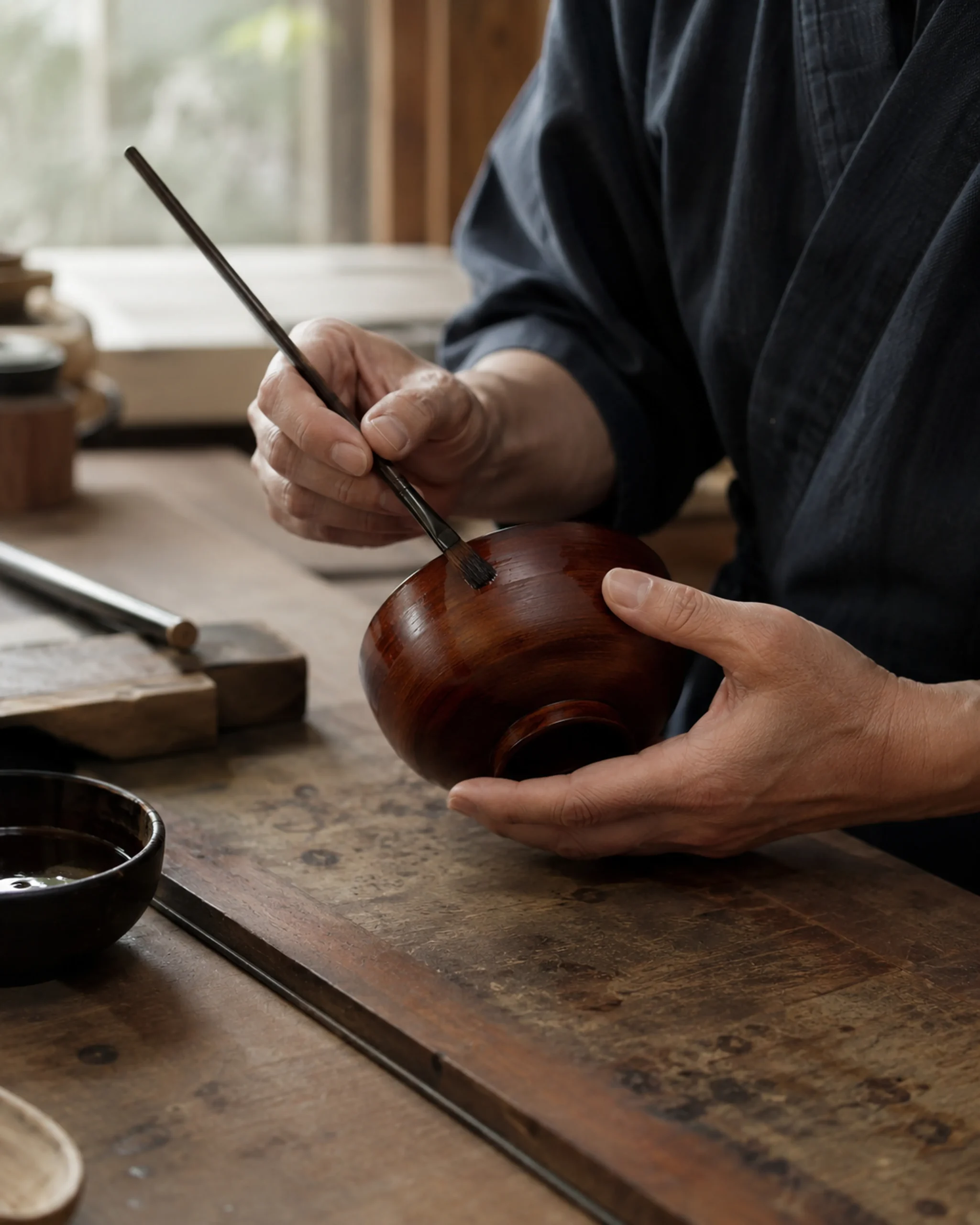
The sumo ring is not a modern sports platform but a sacred earthen stage shaped entirely by hand, without a single nail.Before each tournament, craftsmen called yobidashi — sumo callers who also work as arena builders — spend several days forming the dohyo from clay, wooden hammers and tawara, heavy straw bales packed with earth that mark the ring’s border. The dry, rhythmic thud of hammer on clay and the cool, damp smell of wet earth turn this practical task into something closer to sculpture, transforming a simple ring of soil into a masterpiece of traditional craftsmanship.
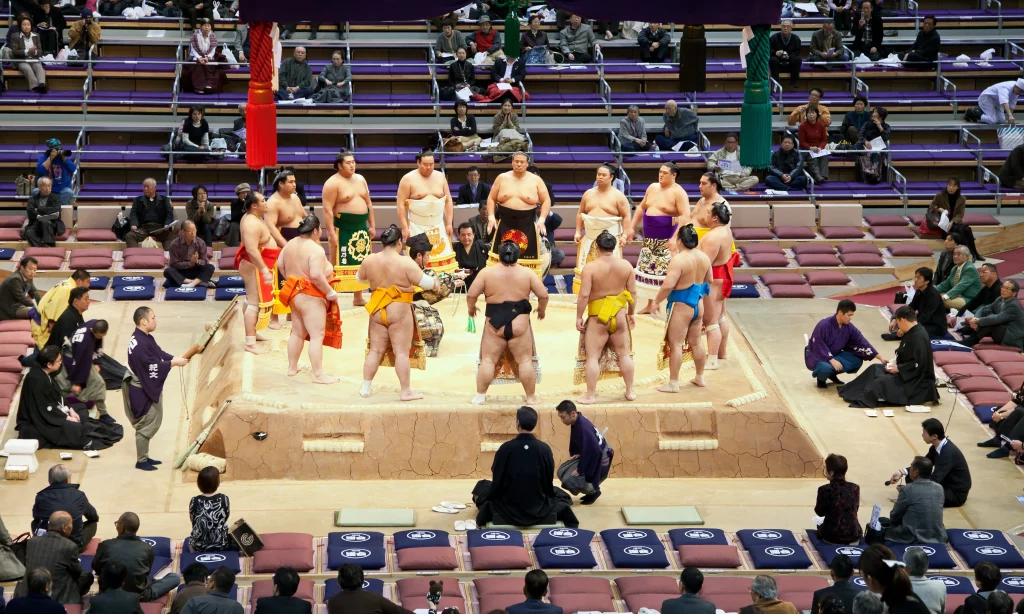
Before any wrestler steps onto the clay, the ring must be consecrated as a Shinto space. This happens during the dohyo-matsuri, a ring-blessing ceremony held the day before the tournament begins. Three gyoji — traditional sumo referees, dressed in robes resembling those of Shinto priests — offer prayers for safety and a good harvest, then bury sacred offerings of rice, kelp, dried squid, chestnuts, kaya-tree nuts and salt at the centre of the ring. Through this quiet ritual, the dohyo changes from a sports arena into a holy stage watched over by the gods.
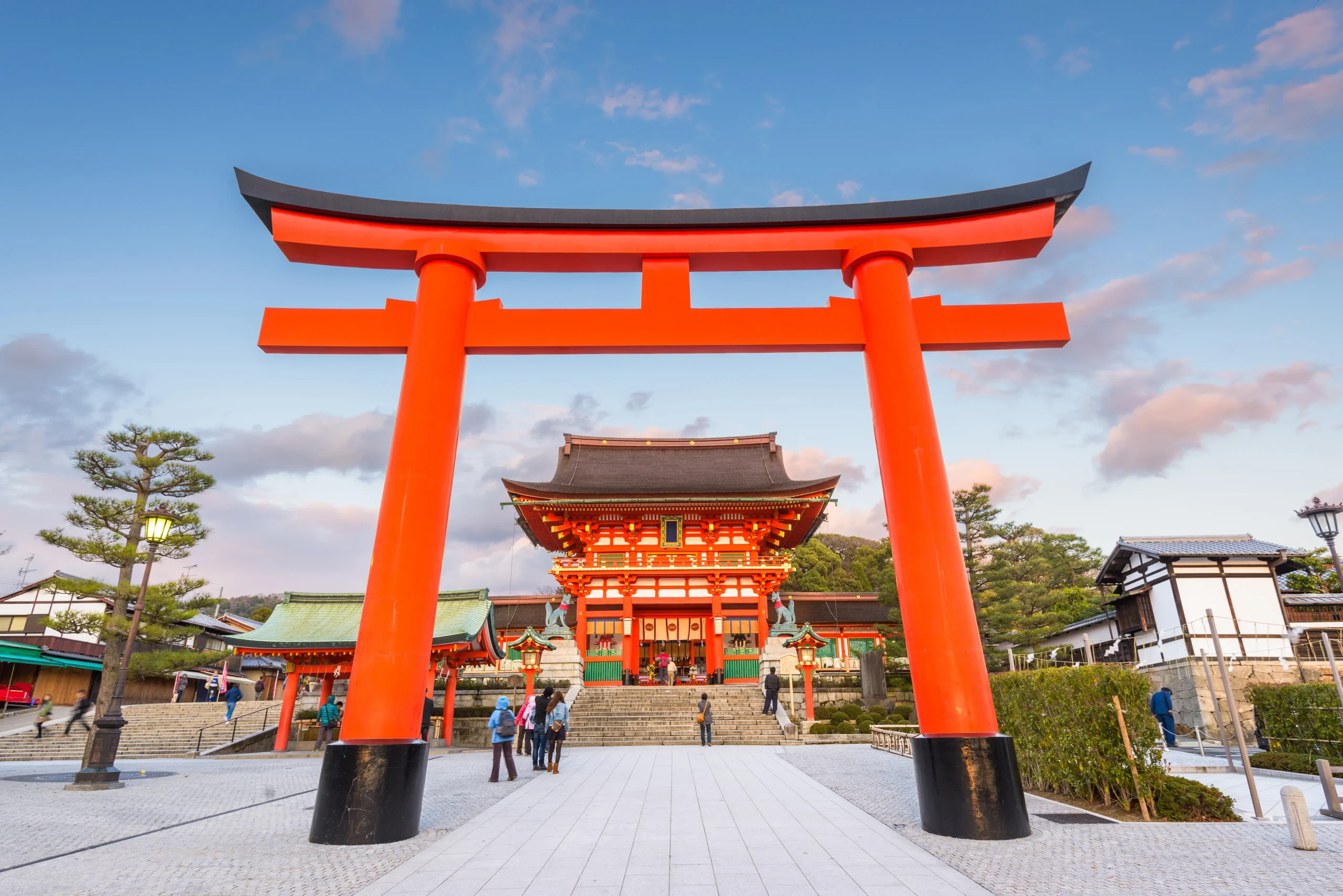
In Fukuoka, this link between sumo and Shinto feels especially close, as several stables spend the whole tournament inside shrine grounds such as Sumiyoshi Shrine.
Inside the Arena: How to Watch and Enjoy a Day of Sumo
A day at the Kyushu Basho moves from quiet effort to full-crowd spectacle, and understanding that arc makes the day far more rewarding. Matches begin early with the youngest, lowest-ranked wrestlers, whose bouts show raw power and constant trial and error in a still half-empty arena. As the afternoon progresses, the crowd grows and sekitori — professional wrestlers in the top two divisions, juryo and makuuchi, who receive a monthly salary — take the ring in colourful ceremonial robes, and the same arena fills with loud cheers and real tension.
Fukuoka Kokusai Centre suits this experience well because every seat, even the cheaper balcony seats, offers a relatively close view and lets you hear the heavy slap of colliding bodies. It is also generally easier to secure tickets here than to face Tokyo’s intense ticket race, giving visitors a closer, calmer experience without the stress of Tokyo’s crowds.
A few points of etiquette help first-time visitors settle in. You may choose a masu-seki, a traditional tatami box seat for two to four people (remove your shoes before stepping onto the mats), or a standard Western-style chair seat. Eating, drinking and photography from your seat are generally fine as long as you do not disturb those around you, and clapping along when the referee directs a bout is the simplest way to feel part of the ritual rather than a silent observer.
From the Arena to the Pot: Eating Like a Sumo Fan in Fukuoka
Fukuoka’s hotpot culture is a natural way to warm up after a day of sumo in the cold November air. Wrestlers themselves build strength on chanko-nabe, a hearty hotpot of meat, fish, tofu and vegetables, and Fukuoka offers two close local cousins: motsunabe, a tripe hotpot with cabbage and garlic chives in a savoury broth, and ara-nabe, a simple fish hotpot of ara (longtooth grouper) in clear kelp stock. Sharing one of these bubbling pots, with steam carrying the scent of garlic and fresh fish through the room, gives you some sense of the warmth wrestlers enjoy after their bouts.
For something more casual, try menchanko at Menchankotei, a long-running local chain where noodles made for simmering stay pleasantly chewy in a cast-iron pot, or Fukuoka-style udon at shops such as Maki no Udon, where very soft noodles slowly soak up kelp and bonito stock. Both make a quick, unpretentious taste of everyday Fukuoka before or after the tournament.
To end the night, duck into a yatai — a small open-air food stall that appears at sunset along the rivers — and sit shoulder to shoulder with strangers over a bowl of tonkotsu ramen, Fukuoka’s signature dish of thin noodles in a rich pork-bone broth. You may well find yourself beside off-duty tournament staff or fans talking over the day’s best bout, letting sumo, food and the city settle into a single, vivid memory.
Grand Sumo in Fukuoka: 2026 Schedule, Tickets, and Access Guide
Watching sumo in Fukuoka is easiest once you have the basic facts to hand. The November tournament, the Kyushu Basho, runs for 15 days from the second Sunday of November and is always held at Fukuoka Kokusai Centre, a compact arena by Hakata Bay. The tables below set out the key dates, ticket types, and access routes for planning a visit.
Tournament Schedule in 2026
| Year | Tournament Period | Venue | Notes |
| 2026 | 8-22 November | Fukuoka Kokusai Centre | Official 15-day schedule announced by the Japan Sumo Association |
For exact daily match times and any changes, always check the Japan Sumo Association’s official English website before booking.
Ticket Types and Price Range (overview)
| Ticket Type | Location / Style | Typical Use |
| Masu-seki | Tatami-mat box seats (for 2–4 people), closer to the ring | Traditional group or family seating |
| Chair seats | Western-style seats in the stands and balcony | Most common for first-time visitors |
| Tamari-seki | Front-row “ringside” cushions very close to the dohyo | For experienced fans; strict rules |
Tamari-seki carry strict rules — no eating, drinking, or photography — and suit experienced fans rather than first-time visitors. For current prices and seating diagrams, check the official ticket pages published each year.
How to Buy Tickets
| Step | What to Do | Notes |
| 1 | Check official schedule and ticket release dates | On Japan Sumo Association and main ticket agencies |
| 2 | Enter the advance lottery (if available) | Best chance for popular dates |
| 3 | Use general sale or travel packages | Online ticket sites and tour operators |
| 4 | Consider weekday tickets | Often easier to obtain than weekends |
Weekday tickets are usually easier to secure than weekend or final-day tickets, especially for box seats.
The Fukuoka Arena —Size and Atmosphere
| Item | Detail |
| Floor area | About 5,000 m² |
| Maximum capacity | Up to 10,000 people |
| Venue type | Flat exhibition hall with temporary seating |
| Feel | Compact arena where all seats feel relatively close |
The arena stands near Hakata Bay, beside other event halls such as Marine Messe and Fukuoka Sunpalace.
Access to Fukuoka Kokusai Centre
| From | Route | Approx. Time |
| Hakata Station | Nishitetsu bus from “Hakata Station – Nishinippon City Bank Mae F” to “Kokusai Center / Sunpalace Mae” | 10–15 |
| Tenjin Station | Nishitetsu bus from “Solaria Stage Mae” to “Kokusai Center / Sunpalace Mae” | 8–15 |
| On foot (Hakata) | Walk via Hakata Bayfront area | About 30 min |
| By car | From Fukuoka Urban Expressway “Chikko” or “Tenjin-kita” exits | 2–5 |
Walking from Hakata Station takes about 30 minutes, which feels pleasant in the cool November air. After a full day at the tournament, though, it can feel like a long way home.
Prefer a Fully Guided Sumo Day?
Fukuoka’s November basho is easy to enjoy on your own, but if your trip also passes through Tokyo, ENJYU JAPAN runs a fully arranged, English-guided sumo experience during the September Grand Tournament in Ryogoku. Please note this is a separate Tokyo tournament, not the Fukuoka Kyushu Basho covered above.
1-Day Grand Sumo Tournament & Ryogoku Walking Tour — Tokyo (Ryogoku) · 15 September 2026 only · from JPY 69,000 per person. A single day combining a morning sumo-stable practice visit, sumo history sites, and a live tournament, with a reserved ticket and an English-speaking guide.
Step into the Sacred Ring of November
Visiting the Kyushu Basho lets you experience grand sumo at a more relaxed pace, in an arena where the ring never feels far away. Fukuoka deepens that experience with shrines such as Sumiyoshi and Dazaifu Tenmangu, and with warming November hotpots that turn the season itself into part of your memory of the tournament. If the November dates don’t line up with your trip, the regional jungyo exhibition tours are a closer, more flexible way to see the same top wrestlers between tournaments: The 2026 Sumo Jungyo Schedule – ENJYU JAPAN.
If you would like to experience powerful bouts in a calmer setting at the edge of winter, planning a November journey to Fukuoka and booking Kyushu Basho tickets is a thoughtful next step.