Walking the Kumano Kodo requires no serious mountaineering, but isn’t a casual stroll. Key decisions include choosing your route, managing energy, and securing accommodation in villages where last-minute plans often fail. This guide focuses on the Nakahechi route, helping you decide if a short highlight walk, multi-day trek, or a softer itinerary fits your trip.
What Walking the Kumano Kodo Actually Means
The Kumano Kodo is a network of pilgrimage routes crossing the Kii Peninsula, forming part of the UNESCO ‘Sacred Sites and Pilgrimage Routes in the Kii Mountain Range.’ These routes lead to the three grand Kumano Sanzan shrines and other sacred areas, including Koyasan.
Read more: Japan’s Pilgrimage Trails
Route Options: Highlight Walks vs. Multi-Day Treks
Before comparing routes, decide how much walking your trip can realistically absorb. The Kumano Kodo can be experienced in very different ways.
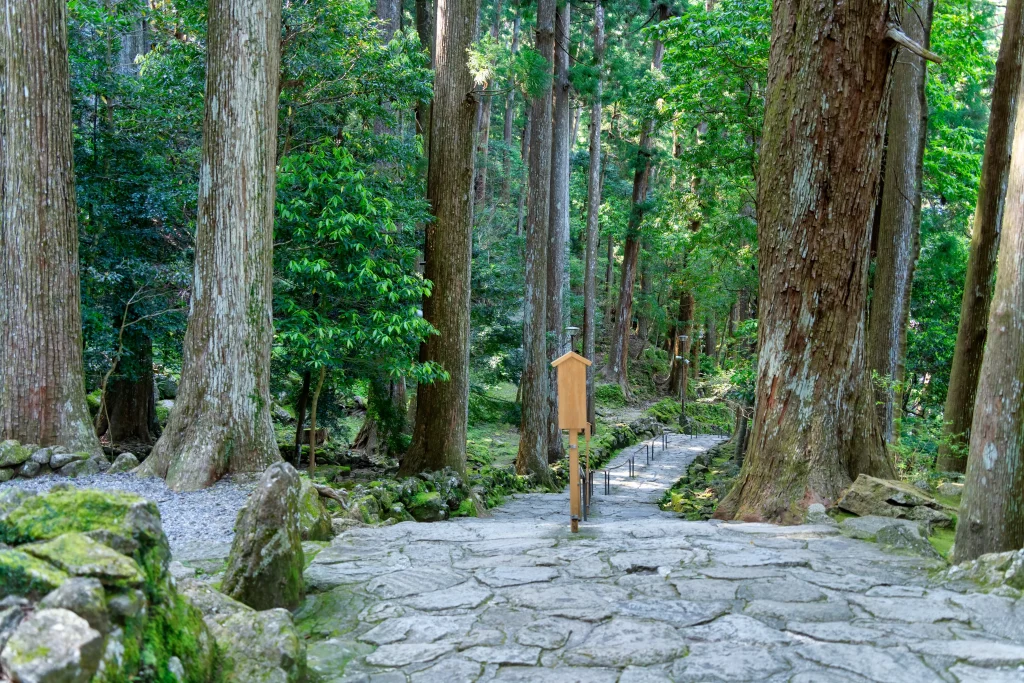
At one end is a short option: the roughly 7.5 km stretch from Hosshinmon-oji, one of the small roadside shrine sites along the old route, to Kumano Hongu Taisha. This section is generally gentler than the main mountain stages and gives you a real taste of the trail without committing several days to hiking.
At the other end is the classic walk from Takijiri-oji to Hongu, about 38 km of mountain trail usually spread over several days. This is one of the main sections travelers often have in mind when planning a Kumano Kodo walk, and it can also count toward Dual Pilgrim status if that is part of your goal.
Reference: Nakahechi – Tanabe City Kumano Tourism Bureau
Why Nakahechi Is the Ideal First-Time Route
For a first Kumano walk, the Nakahechi is usually the most sensible place to start. It is the core trail of the network and has some of the clearest support for visitors planning on foot: bus access, English route information, signage, accommodation options, and detailed walking guidance from the local tourism bureau in Tanabe.
Other routes require more time or independent planning; Kohechi is remote, while Iseji and Ohechi better suit travelers with specific coastal or regional interests. For most first-time walkers, Nakahechi is where the logistics and the experience line up most naturally.
How Hard Is the Kumano Kodo Really?
The Nakahechi is not technical mountaineering. There are no ropes, no scrambling, and no exposed ridge walks. But it is a real mountain trail, with unpaved paths, uneven ground, old cobblestones that can turn slick in rain, long stair sections, and stretches of paved village road in between. The climbs are often steep and direct, and switchbacks are not common on these old routes.
The official route estimates are worth taking seriously. Takijiri-oji to Tsugizakura-oji is about 17 km and typically takes 7 to 10 hours; the tourism bureau rates it difficulty 4 out of 5. The next major stage, Tsugizakura-oji to Kumano Hongu Taisha, is about 21 km and takes 8 to 11 hours, also rated difficulty 4. Some difficulty tables show shorter times, but those assume no breaks, no pack, and good weather.
Reference: Takijiri-oji to Tsugizakura-oji – Tanabe City Kumano Tourism Bureau
Rain, a heavy pack, and accumulated fatigue all change the feel of the route. Reasonably fit travelers of many ages walk it happily, but day one can be a shock if you expect a gentle cultural path. The useful question is not only whether you can finish it, but which version you would actually enjoy.
Getting There and Moving Between Villages
The main western gateway is Kii-Tanabe. The JR Kuroshio limited express connects Shin-Osaka (2 hours) and Kyoto (2 hours 35 minutes, though direct departures are less frequent).
From Kii-Tanabe, local buses run inland to Takijiri-oji and onward toward Hongu, Yunomine Onsen, and Kawayu Onsen. These are rural bus routes, so the timetable should shape the day. Fares and schedules can change, so confirm them close to your travel dates.
A simple planning rule helps: give the arrival day its own space. Traveling from Osaka or Kyoto, transferring to a local bus, and starting a long mountain stage on the same afternoon is not a good way to begin. Staying near Kii-Tanabe or the trailhead also gives you time to buy food, confirm the next morning’s bus, and reorganize your luggage. Starting rested is especially useful on the climb from Takijiri-oji, where the trail becomes steep almost immediately.
Managing Logistics: Accommodation, Food, and Luggage
The villages along the Nakahechi are small, and so is their lodging supply. Many places are family-run minshuku or small ryokan with only a handful of rooms. They can fill up, some close on irregular days, and most need advance notice to prepare dinner. Turning up without a booking is a real problem, partly because evening buses back toward the coast are limited.
Two logistics can make the walk much easier. A luggage shuttle service lets you walk with a daypack, and food needs planning. The official route page for Tsugizakura-oji to Hongu notes that there is nowhere to buy lunch along the way, so you carry it. Your lodging may be able to prepare a boxed lunch if you ask in advance. Aim to reach your accommodation before dark, especially because dinner is often prepared around a set time.
When to Walk and What to Prepare For
The Nakahechi is open year-round. Spring and autumn are generally the most comfortable and popular; summer is hot, humid, and wet; winter is usually mild at lower elevations, though freezing temperatures and occasional snow are possible higher up.
Bring broken-in footwear with good grip, proper rainwear, water, cash for the villages, and a headlamp in case a stage runs longer than planned. If a typhoon or severe weather is forecast, adjust the day rather than turning bad weather into a safety problem.
Shrines, Onsen, and the Camino Connection
The Kumano Kodo’s satisfaction comes from its rhythm: forest trails, small settlements, shrines, evening meals, and hot spring baths. Kumano Hongu Taisha gives the walk a clear destination, and arriving on foot feels different from stepping off a bus.
The onsen villages are natural overnight bases near Hongu. Yunomine is a small hot spring hamlet set in a valley, while Kawayu has hot spring water rising through the riverbed itself, with baths made at the water’s edge in certain conditions and seasons. Spending the night here also keeps the walk from feeling like a race to the next transport connection. You can arrive, eat, bathe, and let tired legs recover before deciding how much walking makes sense the following day.
If you have walked the Camino de Santiago, the Dual Pilgrim program adds another layer. Started in 2015, it recognizes people who have completed both the Camino and Kumano Kodo. As of June 30, 2026, 17,214 people from 84 countries had registered.
Reference: Dual Pilgrim – Tanabe City Kumano Tourism Bureau
Frequently Asked Questions
Which route is best for first-time walkers?
Nakahechi is usually the easiest route to plan, with English information, bus access, accommodation, and both short and multi-day options.
How difficult is the Kumano Kodo?
It is not climbing, but some stages involve steep ascents, uneven paths, slippery stones, and seven to eleven hours of walking.
How many days do you need?
Hosshinmon-oji to Hongu takes about half a day. The 38 km route from Takijiri-oji to Hongu is divided across several days.
When is the best time to walk?
Spring and autumn are generally the most comfortable seasons. The trail is open year-round, but summer is hot and wet, while winter can bring freezing conditions.
What should you bring?
Bring broken-in footwear, rainwear, water, cash, a small daypack, and a headlamp. A luggage shuttle can carry your main bag between accommodations.
Where does the walk usually begin?
Kii-Tanabe is the common western gateway. Local buses connect from there with Takijiri-oji, Hongu, Hosshinmon-oji, and nearby onsen villages.
Do you need to book accommodation?
Yes. Mountain lodging is limited, and many places need advance notice for dinner and packed lunches.
Planning It Without the Guesswork
You can plan a Kumano walk yourself. The official resources are good, and this article covers the main decisions. What trips people up is rarely one detail; it is the way the pieces connect: walking days, accommodation, buses, luggage, weather, and the rest of the Japan itinerary.
If you would rather talk that through with someone who plans these connections regularly, ENJYU JAPAN can help shape the route around your pace and interests. That might mean a short highlight walk, a full multi-day Nakahechi trek, or a gentler Kumano-inspired route woven into a wider Japan journey. A Tailor-Made Tour can start with your comfort level, your travel style, and the kind of Japan trip you actually want to take.