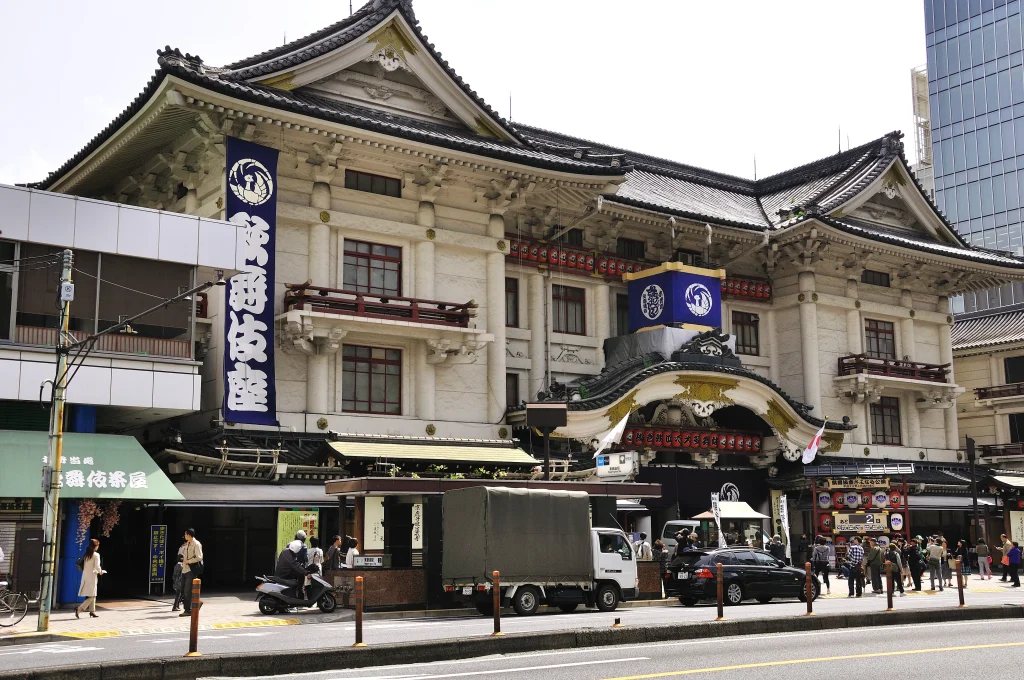
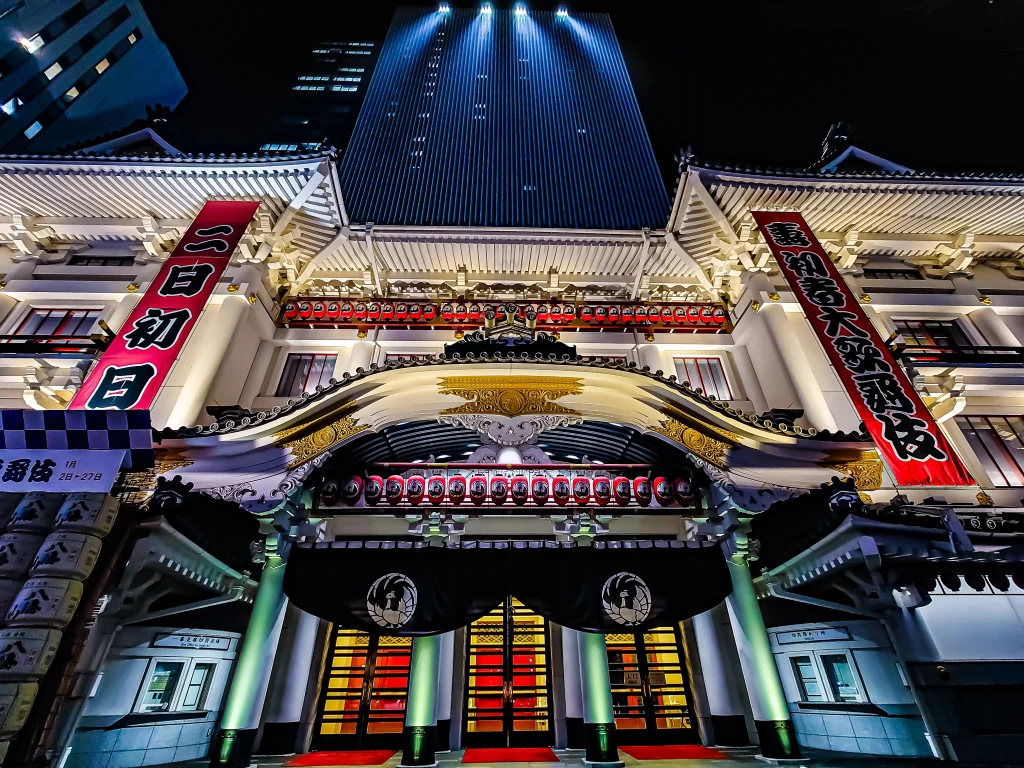
You need not master every convention of kabuki to choose your first performance; a few well-established facts will serve you rather well.
For 2026, Tokyo’s Kabukiza Theatre presents Kanadehon Chūshingura, or The Treasury of Loyal Retainers, from 1 to 25 November, with no performances on 9 or 17 November. English captions help you follow the drama, while full programmes and single-act tickets offer different ways to fit the theatre into your journey.
Kyoto follows a different calendar: the Kaomise production at Minamiza Theatre begins on 1 December. Start with your dates, then choose the scenes, seat and language support that suit your time. A considered choice leaves more room to enjoy the performance itself.
Information checked on 10 October 2026.
Check Your November Dates First
Begin with your actual days in each city. A monthly theatre programme does not necessarily cover every day of the month.
Tokyo: The Kabukiza November Programme
Kabukiza’s November production has two separately ticketed performances: a matinee and an evening show. Each presents different scenes from the same work, so your ticket covers the selected programme rather than the whole day.
| Planning detail | November 2026 |
| Performance dates | 1–25 November |
| No performances | 9 and 17 November |
| Matinee starts | 11:00 |
| Evening show starts | 16:30 |
| General online and telephone sales open | 14 October, 10:00 JST |
| Regular box-office sales and collection begin | 16 October, 10:00 JST |
| Finishing times | Not yet announced as of 10 October |
These dates and sales arrangements are listed on the official English and Japanese programme pages.
The matinee on 14 November and evening show on 22 November are private bookings, unavailable for ordinary reserved-seat purchases. Fourth-floor single-act seats will operate separately, under their own sales arrangements. This is a separate purchasing opportunity, not confirmation that tickets are already on sale.
If you arrive on 26 November or later, this production will have finished. Check the next programme rather than relying on a general “November kabuki” listing. Until finishing times are published, keep dinner and onward travel flexible.
Kyoto: Kaomise Starts in December
Kaomise means “face-showing”: a traditional theatre production that historically introduced the actors appearing during the coming year. Minamiza’s 2026 year-end Kaomise runs from 1 to 24 December, excluding 9 and 17 December. The matinee starts at 10:30 and the evening show at 16:00. Tickets go on sale on 9 November at 10:00 JST, so November is the sale month, not the performance month.
If your journey continues into December, compare these dates with your planned Kyoto stay. For a November-only visit, the cultural alternatives below offer options that fit your travel dates. Choose according to when you will be in the city.
Understand Kaomise—and the November 2026 Story
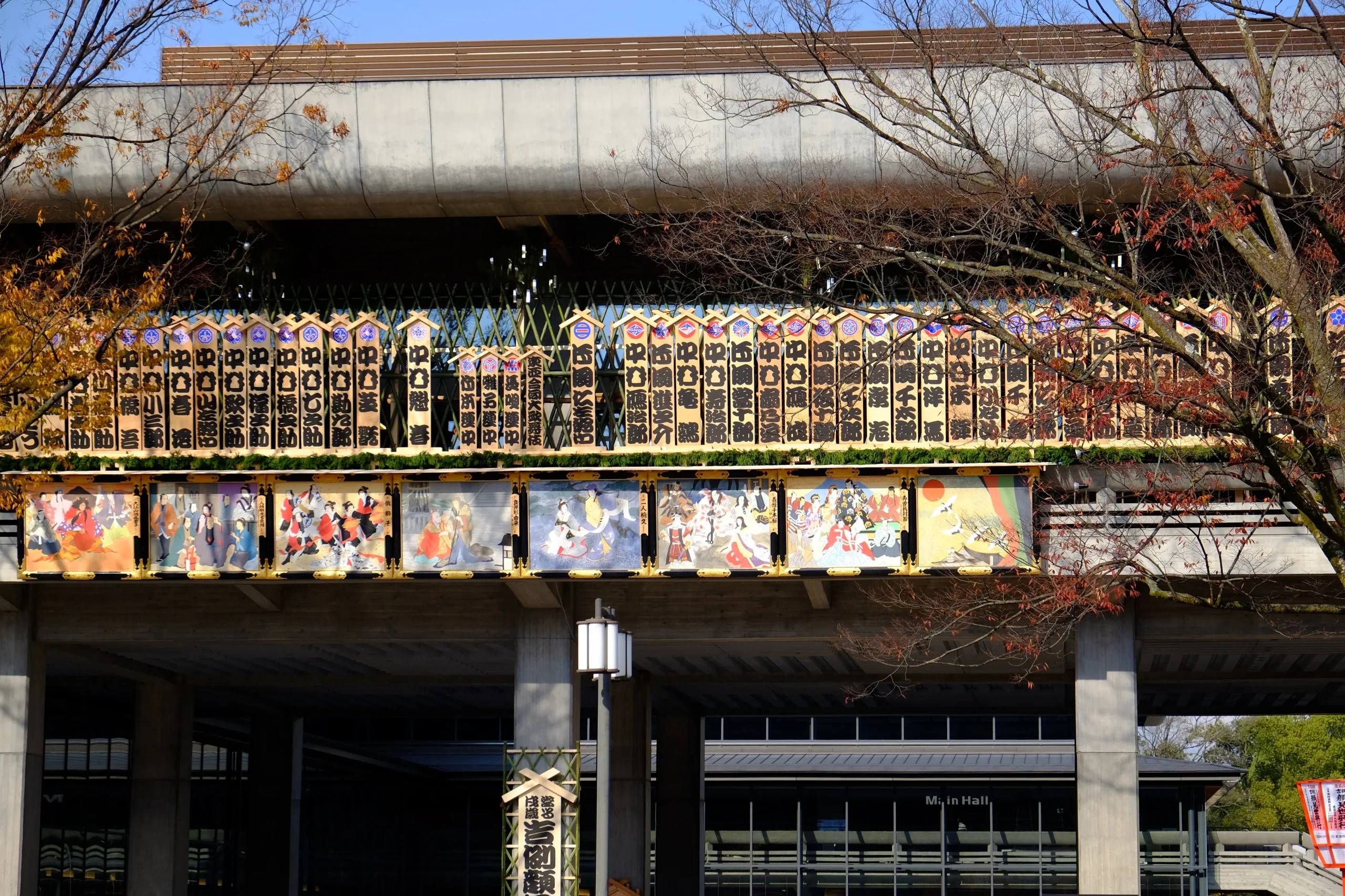
November’s place in kabuki history comes from an older theatre calendar. Understanding that background gives the season meaning before you turn to the story on stage.
The Theatre’s New Year in Edo
Kaomise marked the beginning, rather than the end, of the theatre year in Edo, the city now called Tokyo. Actors, playwrights and other theatre workers signed annual contracts beginning in the eleventh month of the old lunar calendar. This was not the same calendar as the one used today: the occasion was known as “Kabuki’s New Year”.
Printed cast lists recorded the new company, arranging actors’ names and portraits according to their rank. These sheets showed audiences who would shape the coming season. Kaomise therefore belonged to the working life of the theatre, as well as its performances—a useful background to the drama you will watch today.
Chushingura: Loyalty and Its Human Cost
Kanadehon Chūshingura draws on the vendetta of the forty-seven masterless samurai of Akō. A masterless samurai is a warrior who has lost the lord he served. The play transforms that historical subject into a drama about revenge, duty and the people caught between them.
Three relationships help orient a newcomer. Yuranosuke leads the retainers after their lord’s death. Kanpei struggles with guilt and hopes to join their cause. Okaru, his partner, becomes caught in the effort to raise money for his involvement in the revenge plan. Their experiences show what loyalty costs families and individuals.
The production includes ritual suicide, violence and scenes involving courtesans. Consider those themes when attending with children or someone who prefers lighter material. You need not learn the full cast: begin with who holds power, who needs help and what each person risks.
Matinee or Evening: Choose the Scenes You Want to Follow
The matinee introduces the conflict and its consequences; the evening follows the revenge plan towards its conclusion.
| Programme | Main scenes |
| Matinee | The dispute leading to the lord’s punishment; his ritual suicide; Kanpei and Okaru’s journey |
| Evening | Kanpei’s tragedy; the Ichiriki Teahouse; the attack on Moronō’s mansion |
Choose the matinee for the story’s beginnings, or the evening for its later consequences and revenge. Either can be your first encounter with the work. Seeing both requires separate tickets, and the production does not present all eleven numbered acts without omissions.
The A/B labels indicate casting variations, not different stories. If a particular actor matters to you, consult the official date-by-date casting table, published in Japanese, before choosing your date.
Alongside the plot, attend to the music. Kabuki uses live instruments and narration to support dramatic action. Listen for how sound accompanies a gesture or changes the pace; this gives you another way into the performance beyond the translated words.
Choose Your Tickets by Time, View and Comfort
A shorter visit and a full programme offer different ways to watch. Your available time matters, but so do the view and the space around your seat.
A Full Programme or a Single Act?
A full-programme ticket covers the selected matinee or evening show. A single-act ticket covers a specified act offered under that month’s arrangements. Choose according to the scenes you want to see, not simply the lowest price.
| Consideration | Full programme | Fourth-floor single act |
| Story coverage | Several connected scenes | The selected act |
| Time | Reserve a substantial part of the day | Depends on the chosen act |
| Price | JPY 5,000–20,000 | Not yet announced; published in the monthly single-act notice |
| Stage view | Depends on the reserved seat | Distant view; parts of the stage may be obscured |
| Hanamichi | Check the seating plan | Not visible |
| Seating space | Depends on the seat | More limited than on the first and second floors |
| Theatre facilities | Facilities serving regular seating areas | No access to floors 1–3 |
The regular prices include tax. Special and box seats are not available through the advertised multilingual online route and require separate arrangements. Fourth-floor viewing and access restrictions are explained in the official single-act guide.
The hanamichi is the runway extending through the audience, used for entrances, exits and acting. If seeing these movements is important to you, compare the regular seating plan rather than choosing the fourth floor.
Match the Seat to the Experience You Want
If following relationships across several scenes appeals to you, choose a matinee or evening programme. If your schedule allows only one scene, compare the eligible single acts and read the relevant synopsis beforehand. A brief visit works best when you know what you have chosen.
For companions, discuss the view and seating comfort before purchasing. One person may welcome the smaller commitment, while another values seeing more of the staging. There is no single best seat for every first-time visitor.
Upgraded second-floor single-act seats are a separate category, but their November availability requires the monthly announcement. If you need wheelchair seating or a step-free route, confirm the specific seat and entrance with the theatre before booking.
Book Officially and Follow the Performance in English
Once you have chosen the date and format, keep the booking process simple. Use the current official programme and follow its ticket links.
Use the Official English Booking Route
For a regular programme:
- Open the official November 2026 programme.
- Select your date and matinee or evening performance.
- Compare available seats and the caption-inclusive option.
- Read the payment, collection and cancellation conditions.
- Save your confirmation and arrival instructions.
Online and telephone sales begin on 14 October at 10:00 JST. Regular box-office sales and collection begin on 16 October at 10:00. Follow your booking’s collection instructions rather than assuming every ticket uses the same method.
Under current fourth-floor arrangements, online single-act reservations open at noon JST on the day before the performance. Same-day sales begin at 10:00 at the dedicated single-act counter. November’s monthly notice will provide the programme-specific prices and times.
Single-act online tickets use QR codes. Keep the code ready, and arrange ticket information beforehand if companions will enter separately. For a broader explanation of the monthly system, see ENJYU JAPAN’s Kabuki Schedule in Tokyo.
Use Captions—and Read a Short Synopsis First
Kabukiza offers English or simplified Chinese captions containing essential dialogue, lyrics and explanatory notes. They guide you through the work rather than translating every spoken word.
| On-site caption-device rental | Price |
| Full programme | JPY 1,500 |
| Single act | JPY 1,000 |
On-site rental is cash-only. November full-programme tickets can also be purchased online with captions included for an additional JPY 1,500. Bring yen if you plan to rent at the theatre.
Very short acts may not offer captions. If you book consecutive acts, confirm the rental conditions rather than calculating a total yourself. The service permits consecutive use within the specified programme under its published conditions.
Read the official English synopsis before arriving. Printed Japanese programmes sold at the theatre also include English synopses at the back. Knowing the outline lets you return your attention to the actors instead of solving every relationship during the scene.
If the Website Shows “Sold Out”
For regular Kabukiza performances, the multilingual online service becomes unavailable one day before the performance. A “Sold Out” message may therefore reflect the booking deadline rather than a complete sell-out. The service also sells only an allocated share of tickets.
Try another date, programme or seat category, then contact Shochiku on +81 3 6745 0888 between 10:00 and 17:00 JST. English-speaking staff are available. Same-day tickets cannot be reserved by phone, so ask about the appropriate box-office option.
Arrive Ready for the Performance
Good preparation leaves you free to watch. Before travelling, check your entrance, ticket instructions and any performance-specific arrival notice.
Find the Right Entrance and Leave Time for Setup
Higashi-ginza Station serves the Hibiya and Asakusa lines. Exit 3 connects directly to the Kabukiza complex at 4-12-15 Ginza, Chuo-ku, Tokyo. The ordinary box office is on basement level two.
Fourth-floor single-act visitors use the dedicated entrance to the left of the main entrance. Follow the ground-level single-act signs rather than searching for an entrance upstairs.
Doors generally open around thirty minutes before a full programme. Allow time for collection, captions and finding your seat. Keep your saved confirmation ready to show staff if explaining the booking in Japanese would be difficult.
Arrive Early for the Puppet Announcement
The November matinee has a particular reason to be seated before 11:00. Around 10:50, a kōjō ningyō—a puppet used for a formal announcement—reads out that day’s cast before the curtain. Leave enough time to settle before it begins.
Act Four of the play, depicting the lord’s ritual suicide, has traditional restrictions on audience movement for staging reasons. The theatre calls this a tōsanba. Be seated early and follow staff guidance if you need to leave or arrive after the scene has started.
Food, Phones and Theatre Etiquette
There is no formal dress code. Comfortable clothing is suitable, while hats or high hairstyles should not obstruct people behind you. Switch off personal phones and smartwatches, avoid conversation and noisy packaging, and sit back rather than leaning into another person’s view.
Do not photograph or record the performance. Use the theatre’s captioning device as instructed. Food and drink belong in the intervals, not during the acts.
Regular-programme visitors can buy boxed meals or use theatre restaurants, subject to availability. Fourth-floor single-act visitors cannot enter the restaurants or shops on floors 1–3, so arrange your meal before or after the act. If you feel unwell, speak to staff and follow their guidance on leaving and returning.
Fit Kabuki into Your November Trip
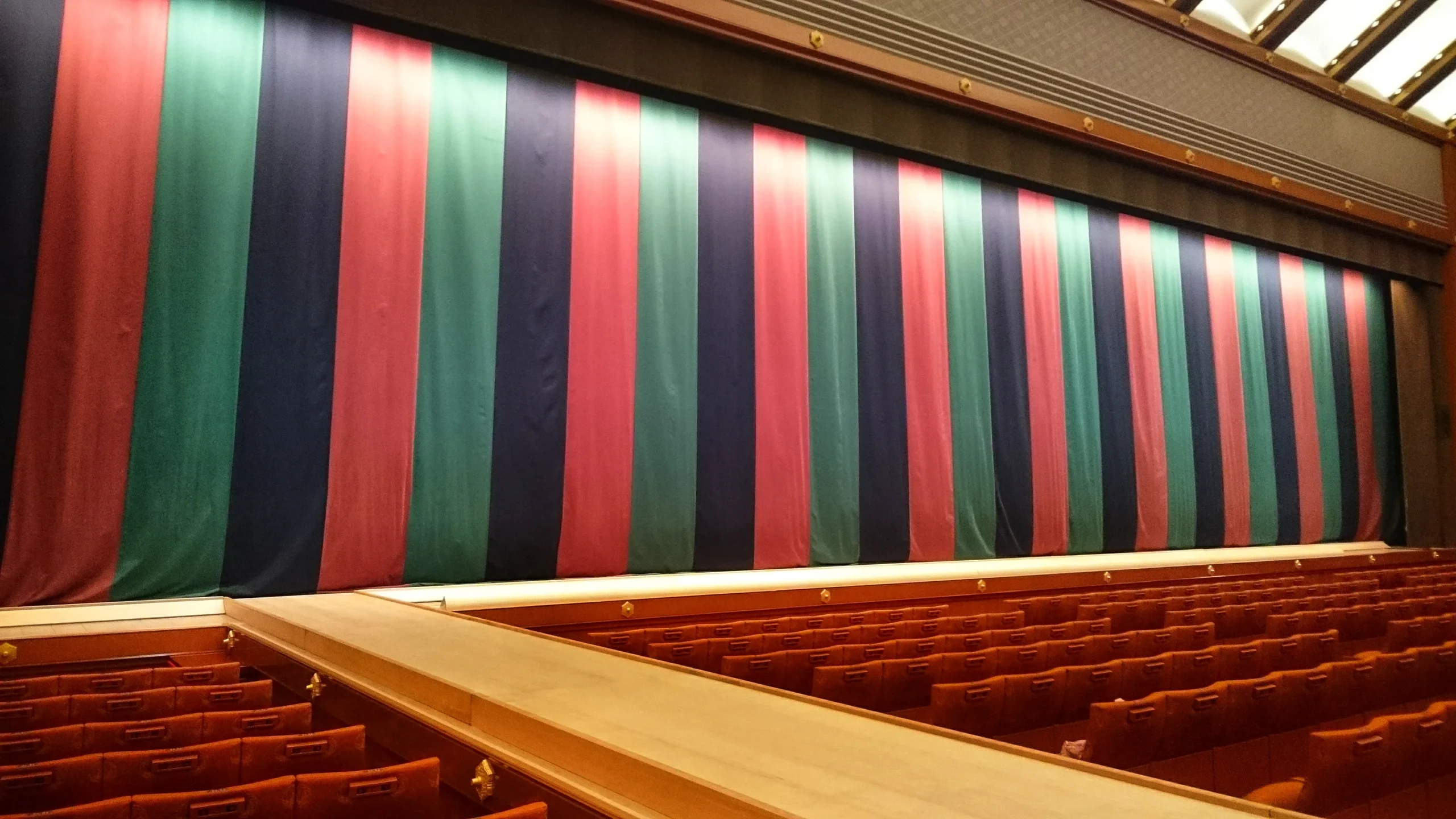
If the prospect of booking tickets, arranging logistics, and navigating performance details feels overwhelming, consider a guided experience. Our 1-Day Tokyo Kabuki Theatre Experience Tour removes the uncertainty—a dedicated English-speaking guide meets you at the theatre, handles all logistics, and reveals the cultural layers you might otherwise miss. Rather than simply watching a performance, you’ll understand why each moment matters: the significance of the 47 Ronin story, the artistry in the actors’ movements, the traditions embedded in every custom. This transforms November’s performances from a tourist checklist into a genuine encounter with centuries-old culture.
Treat the performance as your fixed appointment and keep surrounding activities flexible. These plans adapt to your available time, energy and weather.
Tokyo with Limited Time
Plan A: choose a single act whose published timing fits your day. Add a meal or a short Ginza walk before or afterwards. Wait for the act schedule before reserving another closely timed activity.
Plan B—rain: replace the walk with Kobikichō Square, on basement level two. Beneath its large suspended lantern are shops and a café, accessible without a theatre ticket and directly connected to Higashi-ginza Station.
Plan C—your preferred act is unavailable: check another act or date using the booking steps above. If none fits, enjoy the square as a separate refreshments-and-shopping stop. It offers time around the theatre, not a substitute stage performance.
Tokyo with Half a Day for Theatre
Plan A: reserve the matinee or evening programme and plan food around it. Keep outdoor sightseeing modest, and wait for the finishing time before making a tight onward reservation.
Plan B—rain or fatigue: retain the performance, shorten outdoor plans and allow a hotel break beforehand. Reading the synopsis over a quiet meal can be a useful part of the visit.
Plan C—a non-performance day: consider Artizon Museum in Kyobashi if its calendar and admission slot fit. WHOSE LIGHT?, involving artist Fujii Hikaru and the Ishibashi Foundation Collection, runs from 24 October 2026 to 31 January 2027. Online general admission is JPY 1,200.
The museum closes on Mondays except 23 November, and also closes on Tuesday 24 November. It therefore does not provide an alternative on Kabukiza’s Monday 9 November rest day.
For 9 November, keep Kobikichō Square as a shorter theatre-related stop. The official visitor guide lists opening hours of 10:00–18:00 on non-performance days. Plan the rest of the day around your other Tokyo interests rather than trying to replace a whole programme with shopping.
Kyoto-Only Trips and Journeys Continuing into December
Plan A: book Gion Corner if its programme and seat options suit you. Regular performances last about fifty minutes and start at 18:00 and 19:00.
Rather than kabuki, it offers a compact introduction to several traditional arts, including Kyoto-style dance, music and kyōgen, a traditional form of comic theatre. Adult admission is JPY 5,500; premium seats cost JPY 6,600 and include an explanatory translation tablet. Choose the seat that provides the support you want.
Plan B—rain: make the booked indoor performance your main outing and shorten the surrounding walk.
Plan C—no suitable booking: try another evening or retain your planned rest. If your journey continues into December, compare Minamiza’s dates with your existing Kyoto stay rather than adding an intercity detour solely to rescue one missed booking.
For severe weather or transport disruption, follow theatre and transport announcements before setting out. Indoor performances simplify ordinary rainy days, but they do not remove every travel risk.
November Kabuki FAQs
These short answers clarify the final details before you book.
Can I see kabuki at Kabukiza throughout November?
Not throughout the month. This production ends on 25 November and has no performances on 9 or 17 November. Use the date table rather than assuming daily shows.
Is Kyoto’s Kaomise held in November?
The announced 2026 Minamiza production is in December. Its tickets go on sale during November; the sale month and performance month are different.
Can I follow the performance without Japanese?
English captions and synopses help. Preparing with the main characters gives you more time to watch the actors rather than read continuously.
What if tickets show as sold out?
Check other dates and seats, then the official English-speaking booking service. Single-act tickets follow separate sales arrangements, so compare those too.
Make Room for a November Performance
Choose your date, then the scenes, seat and language support that suit your journey. That sequence gives a first visit a clear shape without asking you to master the repertoire. Leave enough room around the booking to arrive calmly and watch attentively.
For a wider journey centred on the performing arts, explore ENJYU JAPAN’s 7-Day Noh and Kabuki Theatre Tour, which combines Tokyo and Kyoto. Ask the team about available departures and current language support.
Tokyo will keep you busy; make one appointment with kabuki, and give the stage—not the city—the next move.
1-Day Option: Our Tokyo Kabuki Theatre Experience Tour
For travelers seeking more than surface-level tourism, Our 1-Day Tokyo Kabuki Theatre Experience Tour offers something deeper: a bridge between observation and understanding. A knowledgeable guide doesn’t just tell you what’s happening on stage—they help you see what makes this particular art form irreplaceable in Japanese culture.
In November’s festive season, when kabuki celebrates its own renewal, having someone who understands both the tradition and your perspective as a visitor transforms the experience entirely.
References
- Shochiku / KABUKI WEB – November 2026 at Kabukiza: Performance Dates, Prices, Booking and English Synopses
- Shochiku / Kabuki-bito – November 2026 at Kabukiza: Daily Casting, Puppet Announcement and Entry Restrictions
- Shochiku / KABUKI WEB – How to Buy Tickets: Official Online Booking, Sales Deadlines and English Telephone Service
- Shochiku / KABUKI WEB – Fourth-Level Single-Act Tickets: Reservations, Seating Views and Theatre Access
- Shochiku / KABUKI WEB – Service for International Visitors: English Captions, Rental Charges and Synopses
- Shochiku / KABUKI WEB – Kabukiza Theatre Information: Directions, Ticket Offices and Dining
- Shochiku / KABUKI WEB – Minamiza Theatre: December 2026 Kaomise Dates and Ticket Release
- Shochiku / KABUKI WEB – November 2025 Programme: The History and Meaning of Kaomise
- Shochiku / KABUKI WEB – Enjoy Your Theatregoing: Arrival, Intervals and Kobikichō Square Opening Hours
- Artizon Museum – WHOSE LIGHT?: Exhibition Dates, Admission and Museum Closures
- Kyoto Traditional Musical Art Foundation – Gion Corner: Performing Arts, Showtimes, Ticket Prices and Translation Tablets