If Kyoto’s long history seems difficult to untangle, allow one well-chosen afternoon to make the introductions.
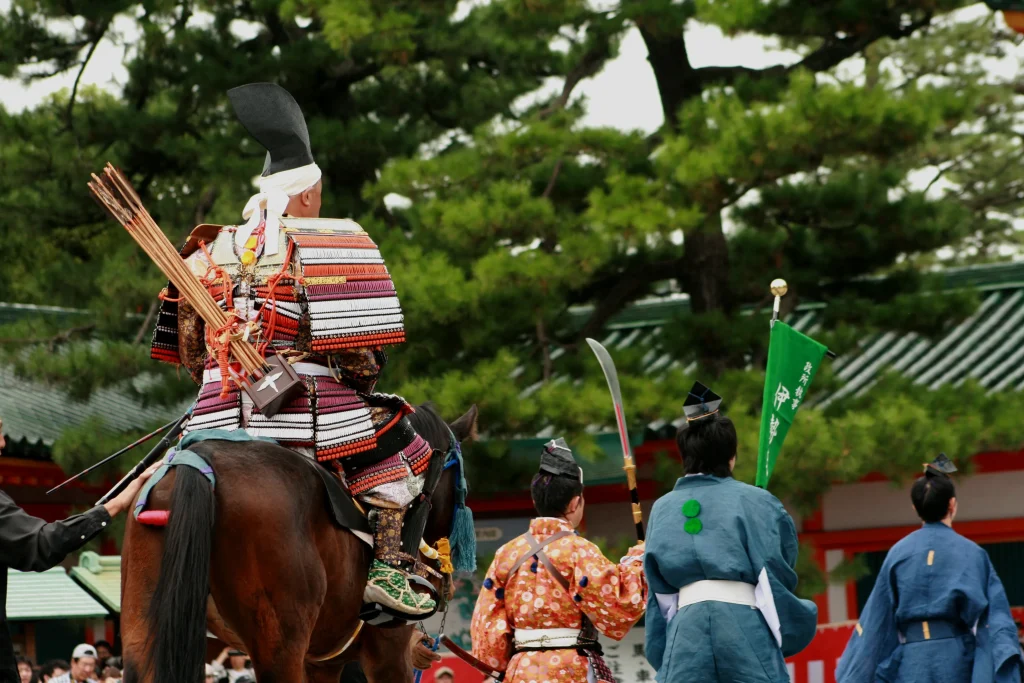
Jidai Matsuri, the Festival of the Ages, takes place on 22 October. Around 2,000 people in historical dress travel from the Kyoto Imperial Palace area to Heian Jingu Shrine. Free roadside viewing and reserved seats offer different ways to experience the procession.
You do not need to recognise every historical figure. A few clues about the clothing, the order of the groups and the shrine ceremony will help you understand what passes before you. Choose your viewing area first, then build a day with time to arrive, watch and leave comfortably.
Festival and visitor information rechecked on 16 October 2026. Prices and ticket arrangements below apply to 2026 and should not be assumed for later years.
Jidai Matsuri at a Glance: Date, Route and Time
The procession begins at noon, but your viewing session starts when its first group reaches your location. Published arrival times are not finishing times.
The Festival Date and Key Times
The procession departs near Kenreimon Gate at Kyoto Imperial Palace, within Kyoto Gyoen National Garden. It continues through central Kyoto towards Heian Jingu.
| Event or viewing area | 2026 date or first-group arrival |
|---|---|
| Festival day | Thursday, 22 October |
| Kyoto Gyoen: procession departure | 12:00 |
| Oike-dori reserved seating | Around 13:20 |
| Jingu-michi reserved seating | Around 14:20 |
| Rain postponement date | Friday, 23 October |
These are the organiser’s scheduled times for the paid viewing areas. Use the official route and seating maps rather than treating a street name as one exact destination.
Kyoto Gyoen is the extensive park surrounding the palace. Directions for entering palace buildings are different from directions to your festival seat, so save the correct entrance before travelling.
How Much Time Should You Allow?
Watching the complete procession pass one position takes approximately two hours. Reserved-seat visitors should enter at least 30 minutes before the first group’s scheduled arrival.
Allow additional time for the walk from the station and your departure afterwards. A restaurant booking immediately after the published arrival time would interrupt most of your viewing. Treat the full procession as the main event of the afternoon, with other visits arranged around it.
What the Festival Celebrates—and What to Look For
Jidai Matsuri brings historical reconstruction and shrine ritual together. Its clothing introduces Kyoto’s past, while its organisation and ceremony connect that past with the present community.
A Civic Tradition Founded in 1895
The festival began in 1895, alongside Heian Jingu’s foundation, to commemorate 1,100 years since the establishment of Heian-kyo, present-day Kyoto. It also formed part of the city’s renewal after the imperial court moved to Tokyo.
Heian Kosha, a citizens’ organisation drawn from districts across Kyoto, manages the historical procession. Local groups share responsibility for its sections, with women’s organisations and traditional entertainment districts also contributing. The festival’s continuity depends on people maintaining those responsibilities.
The centuries represented are much older than the event itself. Jidai Matsuri is a nineteenth-century tradition created to interpret and preserve an earlier history, rather than an unchanged procession surviving from ancient Kyoto.
Three Ways to Read the Procession
First: Follow the Direction of Time
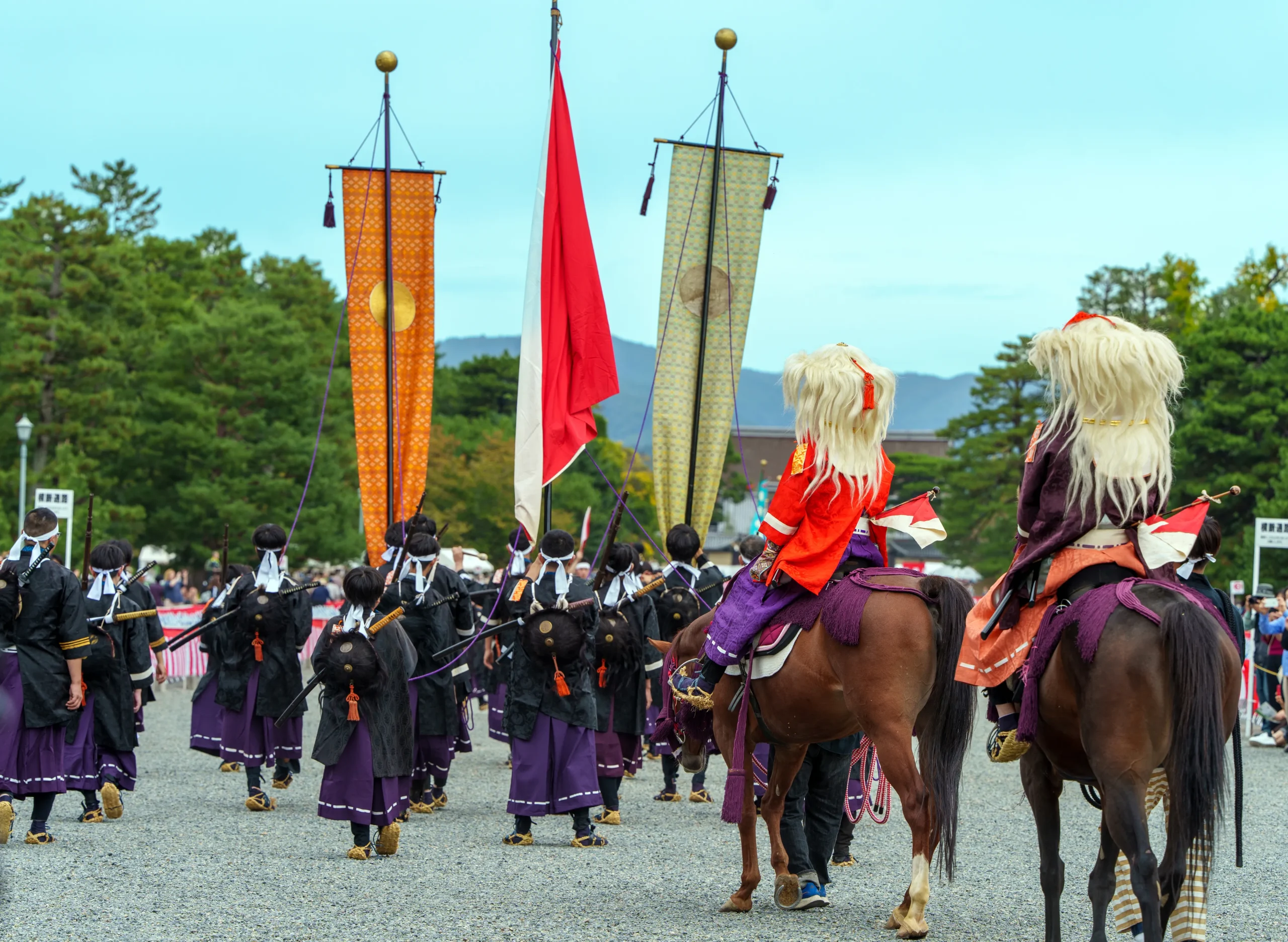
The historical groups move backwards from the Meiji Restoration towards the period when Heian-kyo was established. Eight periods appear through 20 groups, with military clothing, court dress and ceremonial objects providing clues to each setting.
Flutes and drums accompany the leading Ishin Kinnotai group. Listen for them, then watch how clothing and equipment change as later sections pass. These differences offer a way into the history without a list of names to memorise.
Second: Connect Clothing with a Role
Warriors are only part of the story. Court officials, women from different periods and people associated with local livelihoods also appear.
The figures representing Sei Shonagon and Murasaki Shikibu wear different court outfits: formal court dress for Sei Shonagon and a less formal outfit for Murasaki Shikibu. These writers are associated with The Pillow Book and The Tale of Genji, respectively. Their clothing reveals distinctions within court life, not simply a change between centuries.
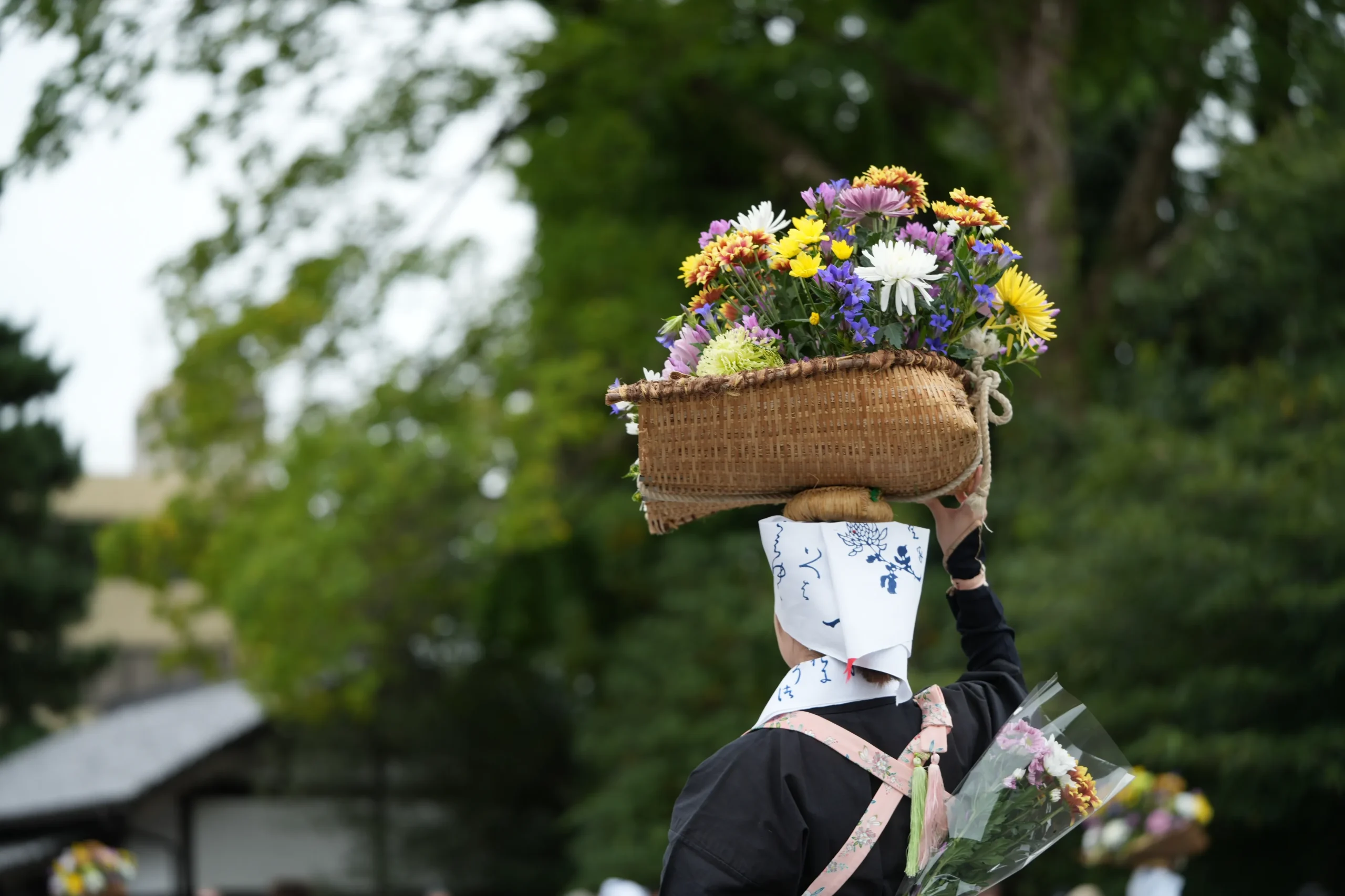
The Shirakawa-me group represents women who sold seasonal flowers in Kyoto. They carry flowers on their heads as offerings, linking the group’s appearance with both work and ritual.
Third: Recognise the Sacred Carriages
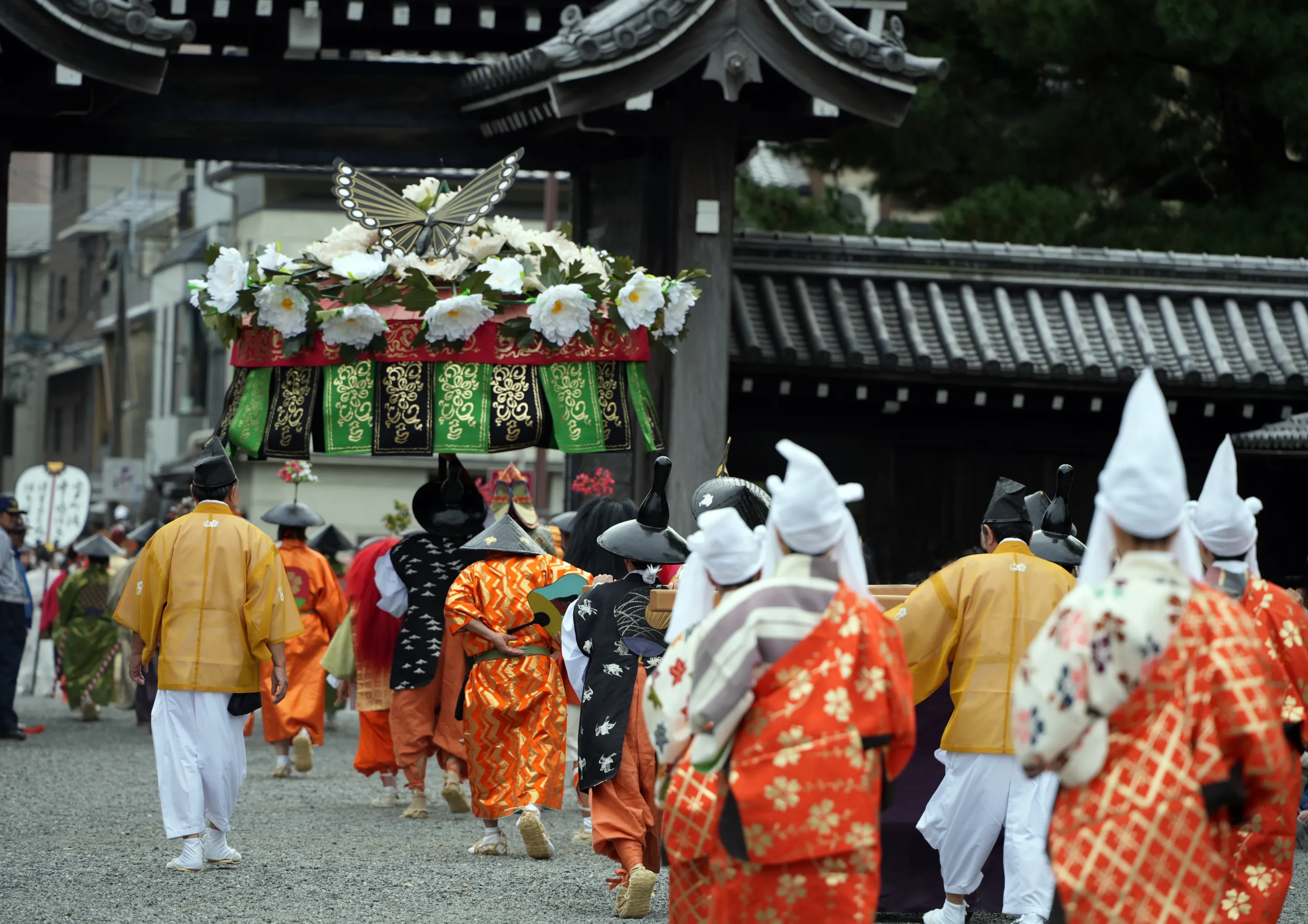
Called gohoren, these ceremonial palanquins carry the spirits of Emperors Kanmu and Komei, the shrine’s deities. The historical groups accompany their journey through the city, making the display part of a religious ceremony.
Approximately 12,000 furnishings, costumes and ritual items have been reconstructed through historical research and Kyoto’s craft techniques. They are not surviving garments from the periods they portray. Their significance lies in the research and skilled work that make the past visible.
Choose a Viewing Area That Fits Your Day
Choose your location by its timing, walking requirements and connection with the rest of your day. One viewing area is usually a simpler plan than repeatedly moving along the route.
Kyoto Gyoen: Watch the Procession Set Off
Kyoto Gyoen suits visitors who prefer the earliest session. Marutamachi Station on the Karasuma Subway Line is a useful starting point for the park’s southern side. The Ministry of the Environment gives a normal walk of approximately five minutes from the station to the garden.
That is not the walking time to your seat. The grounds are extensive, and gravel can make wheelchair movement difficult. Check the designated entrance and route within the park, not just the nearest station.
Oike-dori: Stay in Central Kyoto
Oike-dori suits an afternoon organised around central Kyoto, with lunch before viewing and a break afterwards. The reserved seating area expects the first group around 13:20.
Match your station and exit to the actual seating block. A general map pin for Oike-dori may bring you to a different part of the street. Keep any later cultural visit flexible until the procession and your departure are complete.
Jingu-michi: Focus on the Shrine Approach
Jingu-michi suits visitors combining the festival with Okazaki’s cultural facilities. Heian Jingu’s normal access information gives approximately ten minutes on foot from Higashiyama Station on the Tozai Subway Line.
General seats along Jingu-michi and special seats in front of Outenmon Gate are different products. Both belong to the later part of the day, so avoid placing a tight reservation after the viewing session.
| Area | Best fit for your schedule | Main consideration |
|---|---|---|
| Kyoto Gyoen | Earlier viewing | Walking within the grounds and gravel |
| Oike-dori | A city-centre afternoon | Exact seating block and exit route |
| Jingu-michi | An Okazaki cultural visit | A later start and finish |
Free Viewing or a Reserved Seat?
A reserved seat provides a defined place to sit. Free viewing offers flexibility, but not a reserved sightline or a place to rest. Comfort, commentary and your next day’s commitments are the useful comparison points.
Watching from Public Areas
Free roadside viewing is an alternative to the reserved seating areas. Follow police and event staff instructions when choosing a position, keeping entrances, crossings and pedestrian routes clear. Do not assume every pavement is available for standing or placing a chair.
A shorter visit can work well if your time or energy is limited. The groups arrive in sequence, so you will see the sections passing during your visit, not necessarily every period or the sacred carriages. Decide how long you wish to stay with that order in mind.
Compare the Seat Types
These are individual ticket prices for 2026, including tax. Additional ticketing or payment charges may apply.
| Ticket type | Front row | Second row onwards | Commentary |
|---|---|---|---|
| General seats: Kyoto Gyoen, Oike-dori and Jingu-michi | JPY 7,500 | JPY 5,000 | English and Chinese confirmed for Kyoto Gyoen |
| Kyoto Gyoen manabi learning seats | JPY 10,500 | JPY 8,500 | Specialist commentary in Japanese |
| Outenmon Gate special seats | JPY 15,500 | JPY 13,500 | Japanese or English; supplied equipment, with a preparation note below |
For English commentary, compare Kyoto Gyoen general seats with Outenmon special seats. Do not assume every general seating area offers the same language service.
Reserved seats include an official guidebook and commemorative card. The organiser also states that part of the proceeds supports festival preservation, so the ticket contributes to the event’s continuation as well as your comfort.
English Commentary and Booking
Kyoto Gyoen general-seat commentary requires your own internet-connected smartphone or tablet and headphones. It runs through a browser without an app download. Arrange mobile data and charge your device beforehand.
The official English guide says listening equipment is supplied at reception for Outenmon special seats. The Japanese guidance also asks these visitors to bring an internet-connected device and headphones. Bring your own device and headphones as a precaution, and follow the instructions issued with your booking.
Sales opened on 8 September 2026. Begin with the official English ticket information, which specifies Google Pay for online payment. Check the collection instructions and additional fees before completing the purchase.
Confirm your viewing area, seat type and ticket quantity before paying. The organiser’s FAQ states that purchases cannot be changed or cancelled after payment. Also check whether you could remain in Kyoto on 23 October; if not, weigh the postponement risk before booking.
Arrive, Watch and Leave Without Rushing
Complete the tasks that might interrupt your viewing before taking your place. A saved entrance, a charged phone and a clear return plan are more useful than an ambitious list of extra stops.
Before You Take Your Place
Save your ticket, seating entrance, official map and return station. Keep screenshots of essential details in case your connection becomes unreliable. If travelling with companions, agree on a specific meeting point rather than a broad area.
| Name to save | Japanese |
|---|---|
| Kyoto Gyoen | 京都御苑 |
| Oike-dori | 御池通 |
| Jingu-michi | 神宮道 |
| Heian Jingu | 平安神宮 |
Eat and use the toilet before entering; the organiser notes that toilet provision is limited. Bring water, a light extra layer and a raincoat, plus headphones and charging equipment if your commentary requires them.
Leave large luggage at your accommodation or a suitable storage point. Consider rail and subway journeys first, checking current transport notices before relying on buses or taxis affected by street controls.
Comfort, Photography and Courtesy
Umbrellas, parasols and tripods are prohibited in paid viewing areas because they obstruct other spectators. Flash photography and pets are also prohibited there because they may disturb horses and cattle. A raincoat is the practical choice if showers begin.
Dedicated wheelchair seats are listed at Kyoto Gyoen and Oike-dori, with companion tickets available. Their locations are near multipurpose toilets; the Oike-dori allocation is also near the underground shopping area’s lift. Check the complete route to the allocated space, as a seat alone does not resolve every movement requirement.
If fatigue develops, shorten the visit and leave by a route staff indicate is suitable. Watching comfortably is more important than completing every section.
If Rain Changes Your Plans
Understand the ticket conditions before purchase, then use the organiser’s morning announcement to decide how to spend the day.
Postponement, Cancellation and Your Ticket
If rain or severe weather prevents the procession on 22 October, it moves to 23 October. Reserved tickets remain valid for the following day, but postponement alone does not qualify for a refund.
If the procession cannot take place on either day, follow the refund instructions from your purchase point. Ticket-issuing and delivery fees are excluded. Keep your ticket and confirmation until the situation is resolved.
Check the Morning Announcement
The official FAQ schedules information for around 07:00 on the event morning, including 23 October if the procession has been postponed. Check Heian Jingu and Kyoto City Tourism Association updates before travelling.
If a Japanese notice is difficult to understand, ask your accommodation to help confirm whether the procession is proceeding, postponed or cancelled. The forecast helps you prepare; the official announcement determines the festival plan.
Two Routes, with a Plan for Changing Conditions
These are suggested routes, not official tours. Plan A is for the procession, Plan B for changed plans when travel remains practical, and Plan C for conditions that require less movement.
Route 1: Earlier Viewing and Central Kyoto
Plan A: Have an early lunch and aim to be seated at Kyoto Gyoen by 11:30 for the noon departure. Allow extra time to reach the entrance and find your seat. For Oike-dori, aim to be seated by 12:50 for the expected 13:20 arrival. Take a break afterwards before deciding on another visit.
Plan B: Visit The Museum of Kyoto for another approach to the city’s history and culture, then have a meal and return to your accommodation.
General exhibitions normally open from 10:00 to 19:30, with last admission at 19:00; adult entry is JPY 600. Special exhibitions have separate prices and normally close at 18:00, or 19:30 on Fridays. The museum lists a three-minute walk from Karasuma Oike Station, although festival controls may affect your route. Check its opening calendar and exhibitions before setting out.
Plan C: If warnings or disrupted transport make movement difficult, stay at your accommodation or keep activities nearby. An indoor destination is only useful when the journey there is safe.
Route 2: Crafts in Okazaki and Later Viewing
Plan A: Visit the Kyoto Museum of Crafts and Design in the morning, have lunch, then aim to be seated at Jingu-michi by 13:50 for the expected 14:20 arrival. Leave time between lunch and seating to reach the correct entrance.
The museum presents Kyoto’s traditional industries through craft objects and displays. It provides useful background to the festival’s emphasis on researched reconstruction, without requiring prior knowledge of individual techniques.
The museum is on the basement level of Miyakomesse, about ten minutes’ walk north from Exit 1 of Higashiyama Station. Normal hours are 10:00–18:00, with last admission at 17:30; adult entry is JPY 500. Check the museum’s calendar before visiting.
Plan B: Make the museum your main visit and leave time for a break. Craft demonstrations depend on the daily schedule, so check the programme before planning around a particular technique.
Plan C: Postpone the outing if conditions make travel difficult. If already in Okazaki, follow facility and transport advice to organise your return rather than adding another stop.
If you also hope to visit Heian Jingu, note its special festival-day hours. The shrine closes at noon, and worship visits are suspended from 08:00 to 09:30. The gardens open at 09:30, with last admission at 11:30 and closure at noon. If the procession is postponed to 23 October, these special hours apply on that day instead. Plan any shrine or garden visit around these restrictions.
For the wider season, see Japan in October. If autumn leaves are also a priority, use the separate Kyoto Autumn Foliage guide: the festival date should not be treated as Kyoto’s foliage peak.
Jidai Matsuri: Quick Questions Before You Go
These final questions help match the event to the time and interest you have available.
Is Jidai Matsuri Free to Watch?
Roadside viewing does not require a reserved-seat ticket. Choose a position permitted by event staff and keep pedestrian routes clear.
How Long Should I Allow?
Allow approximately two hours for the full procession, plus admission, walking and departure time. A half-day is a sensible framework for a complete session.
Which Seats Offer English Commentary?
For 2026, English is confirmed for Kyoto Gyoen general seats and Outenmon Gate special seats. Their equipment arrangements differ, so prepare for the option you book.
Do I Need to Watch the Whole Procession?
No. A shorter visit can suit limited time or energy, provided you are comfortable seeing only the groups passing during that period.
Your Invitation to Kyoto’s Festival of the Ages
Choose your viewing area before filling the rest of the day. A place to sit if you need one, commentary you can follow and time to leave comfortably create space for closer observation. The clothing, craft and ceremony become easier to appreciate when you are not watching the clock.
For help fitting cultural visits into a wider journey, ENJYU JAPAN’s Tailor-Made Tour service offers a starting point for planning around your interests and pace.
Leave a little freedom in your plans; Kyoto may have something else in mind.
References
- Heian Jingu Shrine – Jidai Matsuri: Festival History, Civic Organisation and Shrine Ceremonies
- Heian Jingu Shrine – Jidai Matsuri Procession Guide: Historical Groups, Costumes and Ceremonial Roles
- Kyoto City Tourism Association – Jidai Matsuri 2026 Paid Viewing Seats: English Commentary, Equipment and Booking
- Kyoto City Tourism Association – Jidai Matsuri 2026 Seating Information: Ticket Categories, Wheelchair Seats and Refund Conditions
- Kyoto City Tourism Association – Jidai Matsuri FAQ: Viewing Duration, Admission Times and Morning Weather Announcements
- Heian Jingu Shrine – Gardens: Opening Hours and Special Arrangements for 22 October
- The Museum of Kyoto – Admission & Hours: General and Special Exhibition Fees and Visiting Times
- Kyoto Museum of Crafts and Design – Plan Your Visit: Access, Opening Hours and Admission
- Heian Jingu Shrine – Special Opening Hours for Jidai Matsuri: Shrine and Garden Access (2026)