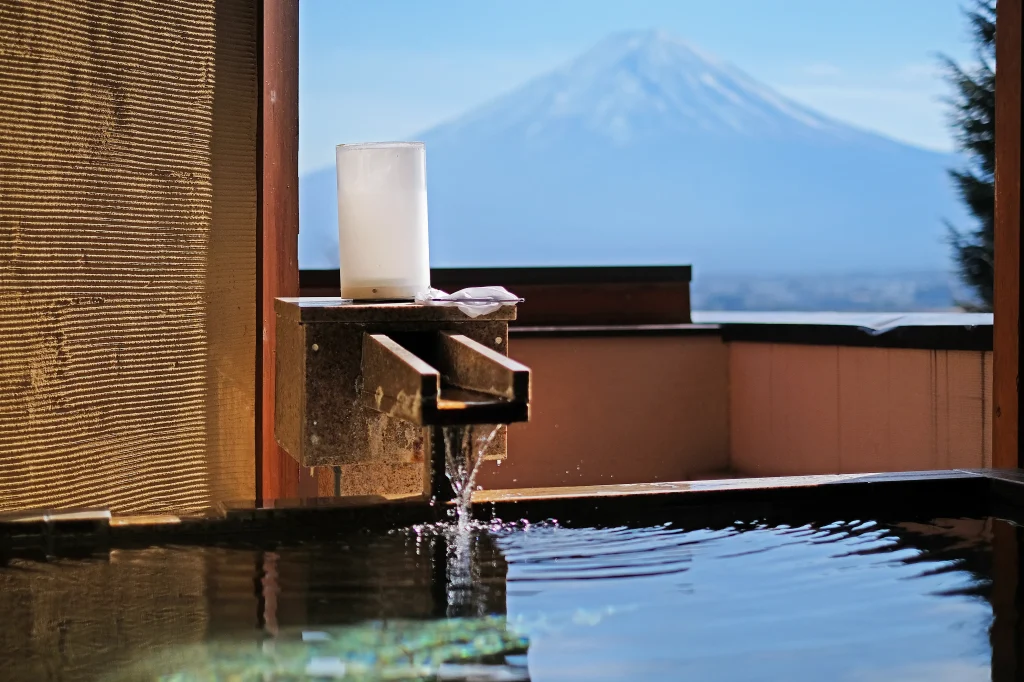
A night at a ryokan with Mount Fuji in view can bring a quiet sense of occasion to a journey through Japan. On a clear morning, the mountain may rise above Lake Kawaguchiko or appear beyond Hakone’s wooded slopes, its summit catching the first pale light. Yet a Fuji view is never something that a ryokan can guarantee. Cloud, rain, haze and the time of day decide what you see.
The right choice is therefore not simply the property with the most striking photograph. It is the ryokan that fits your route, your comfort with shared bathing and the kind of stay you will enjoy if Mount Fuji remains behind the clouds. Kawaguchiko is usually the better choice when the mountain is the main purpose. Hakone can be more suitable when hot springs, culture and an easy onward journey towards Kyoto matter just as much.
This guide explains what a “Fuji view” really means and introduces four ryokan for different priorities. Each offers a manageable connection from a major station, but room types, bath access, meal plans and shuttle arrangements should always be checked before booking.
Before You Book: What a Fuji View Can—and Cannot—Promise
A view of Mount Fuji is not a hotel facility that any ryokan can guarantee. Visibility changes with cloud cover, rain, humidity, wind and the time of day. Clear winter days often offer sharper long-distance views, while early morning is often the better time around the Fuji Five Lakes. As the day warms, cloud and haze may build around the mountain.
These patterns are useful, but they are not promises. A clear forecast does not always mean that the summit will be visible. Equally, a cloudy day may still include a short clear interval. The best way to improve your chances is to stay overnight and create two viewing windows: one after arrival and another early the following morning.
You should also check exactly what a ryokan means by “Fuji view”. The mountain may be visible from every room, selected room categories, a shared outdoor bath, a reservable private bath, a rooftop terrace or the grounds. A room with an open-air bath does not necessarily use natural hot-spring water. A Fuji-view room may also face the mountain while the bath itself faces a wall, garden or another direction.
Before paying, check three points against the exact room category:
- Where can you see Mount Fuji? From the room, bathtub, public bath, terrace or grounds?
- Is the bath private? Is it in your room, or a reservable bath used by one group at a time?
- Does it use natural onsen water? Do not assume that every private outdoor bath is a hot spring.
A Fuji view can be the highlight of the stay. Your booking, however, should be based on the confirmed room and bath conditions, not on a single promotional image.
Kawaguchiko or Hakone? Choose the Area Before the Ryokan
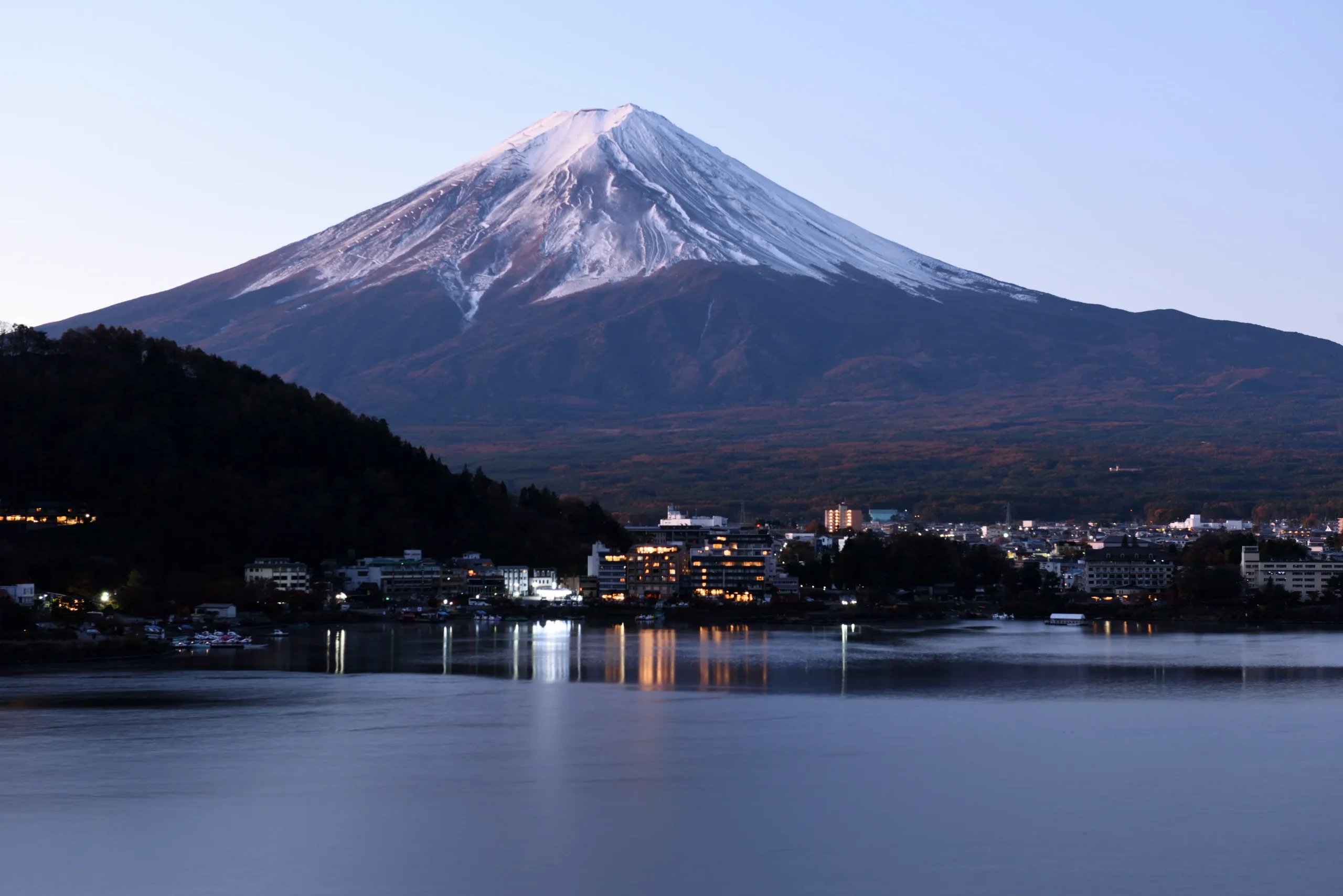
Choose Kawaguchiko when Mount Fuji is the main reason for staying overnight. Several ryokan on the northern shore of Lake Kawaguchiko face south across the water towards the mountain. This creates the well-known composition of Fuji rising beyond the lake, with the chance of a reflection on still water in the morning.
Kawaguchiko is easy to reach from Tokyo by highway bus or by train via Otsuki. Continuing westwards requires more planning. Travellers going to Nagoya, Kyoto or Osaka may need a bus or rail connection through Mishima, Gotemba or another transfer point before joining the Shinkansen network. This route is entirely possible, but it is less simple than a direct Tokyo-to-Kyoto journey, especially with large suitcases.
Choose Hakone when you want Mount Fuji to be one part of a wider hot-spring stay. Hakone includes Lake Ashi, volcanic terrain, woodland walks, museums and several onsen districts. Fuji is not visible from every town in the region. Clear-day views are most often sought around Lake Ashi, the Hakone Ropeway and selected higher viewpoints.
Hakone has a practical advantage for travellers moving west. After your stay, you can travel to Odawara Station and join the Tokaido Shinkansen towards Nagoya, Kyoto or Osaka. In simple terms, Kawaguchiko suits a mountain-centred visit. Hakone suits travellers who want hot springs, cultural stops and a smoother connection towards their next city.
The Best Ryokan with a Fuji View for Different Priorities
The three properties below are not a strict ranking. Each suits a different priority. Availability, room facilities, meal plans, shuttle services and bathing arrangements can change, so confirm every important condition with the property before booking.
Shuhokaku Kogetsu: Best for a Classic Lake Kawaguchiko View
Shuhokaku Kogetsu is a strong choice when the classic composition of Lake Kawaguchiko and Mount Fuji is your main priority. The ryokan stands on the northern shore of the lake, and all guest rooms face both Lake Kawaguchiko and Mount Fuji. On a clear morning, the scene is direct and uncluttered: water in the foreground and the mountain beyond it.
The ryokan also has shared indoor and outdoor hot-spring baths facing the same landscape. Room types differ, however. Some combine tatami, the woven floor mats used in Japanese rooms, with Western beds. Others include open-air baths or footbaths. Check the individual room description rather than treating all bathing facilities as identical.
Its northern-lake location is valuable even when Fuji is hidden. You remain beside the water, with the lake shore available for a slow walk when the weather allows. Back at the ryokan, hot-spring bathing and a seasonal Japanese meal give the evening its own rhythm. The setting is quiet, but it is not beside the station, so confirm the shuttle or taxi arrangement from Kawaguchiko Station before travelling.
Choose Shuhokaku Kogetsu when you want the lake-and-mountain view to define the stay, and you are happy to plan your local transport around that priority.
Konansou: Best for Private Hot-spring Baths with a Fuji View
Konansou is a practical choice for travellers who want private bathing with Mount Fuji views on clear days. Its three reservable private baths use natural hot-spring water and face the mountain. The ryokan also has a named Fuji-view room category with an in-room natural hot-spring open-air bath. These options suit couples, families and first-time onsen visitors who prefer not to use a shared bath.
The reservable private baths cost 3,300 yen per 50-minute session and are booked at the front desk on the day of arrival. At the time of writing, sessions begin hourly from 15:00 to 23:00 and from 7:00 to 9:00. Request a preferred slot as soon as you check in, particularly during weekends, holidays and the busy autumn and winter periods.
Room selection still matters. Konansou has Lake Kawaguchiko-facing rooms and Mount Fuji-facing rooms. Its Fuji-side rooms with private open-air baths must be booked by their named room category. Do not assume that a lake-view room provides the same angle or that every private bath faces the mountain. Japanese-Western rooms with twin beds are available for guests who want a tatami area but prefer not to sleep entirely on a futon.
Konansou also has shared hot-spring baths, a rooftop footbath and meal plans that may include dinner served in the room. These details give the stay value when the mountain disappears behind cloud. It is close to Kawaguchiko Station and provides a shuttle during specified hours, making it one of the easier choices for travellers who value private bathing, clear booking information and convenient local access.
Ryuguden: Best for Adding Hakone to the Golden Route
Ryuguden is a strong Hakone option when you want a Lake Ashi setting, traditional Japanese-style accommodation and a chance to see Mount Fuji on clear days. The ryokan has 24 guest rooms, all facing Lake Ashi and Mount Fuji. The mountain is more distant than at Kawaguchiko, and Hakone weather can be changeable, but the view is clearly part of the property’s setting when conditions allow.
Guests can also use the adjacent Ryuguden Main Building day-use onsen without charge. Its indoor and roofed open-air baths look across Lake Ashi towards Mount Fuji on clear days. Ryuguden therefore gives you two clear places to look for the mountain: your room and the shared bathing facility. Only three special rooms have private indoor hot-spring baths, so private bathing is not included in a standard booking.
Ryuguden is a good choice for travellers who want Hakone to function as a complete destination. Lake Ashi, Hakone Shrine, the sightseeing cruise, the volcanic area around Owakudani and several art museums offer alternatives when Fuji is hidden. The ryokan’s historic Japanese-style architecture also gives the stay a clear sense of place, without requiring every moment to depend on the weather.
For transport, the Hakone area connects with Odawara Station, where you can join the Tokaido Shinkansen towards Nagoya, Kyoto and Osaka. Choose Ryuguden if you want a traditional lakeside stay in Hakone, with Mount Fuji visible from every room when weather allows. Choose Kawaguchiko instead if your non-negotiable priority is a closer, larger view of the mountain.
If Clouds Cover Mt Fuji: Plan for Two Viewing Windows
The most practical way to improve your chance of seeing Mount Fuji is to create two viewing windows: one after arrival and another early the following morning. Avoid filling both periods with fixed restaurant bookings, transfers or timed attractions. If the summit becomes visible for only 20 minutes, it helps to be near your room, a bath, the lakeside or a confirmed viewpoint.
Check the forecast shortly before travelling, then use a local live camera on the day. A general weather symbol may tell you that the sky is cloudy, but it cannot show whether the summit is visible at that moment. Keep two viewing places in mind, such as your room and a public terrace, but do not spend the whole stay chasing every break in the cloud.
If Mount Fuji never appears, disappointment is understandable. You do not need to pretend that grey weather offers the same experience. Instead, choose a ryokan with value beyond the view. Hot-spring bathing, a seasonal dinner, garden paths, local museums and a quiet room can make the night feel complete for different reasons.
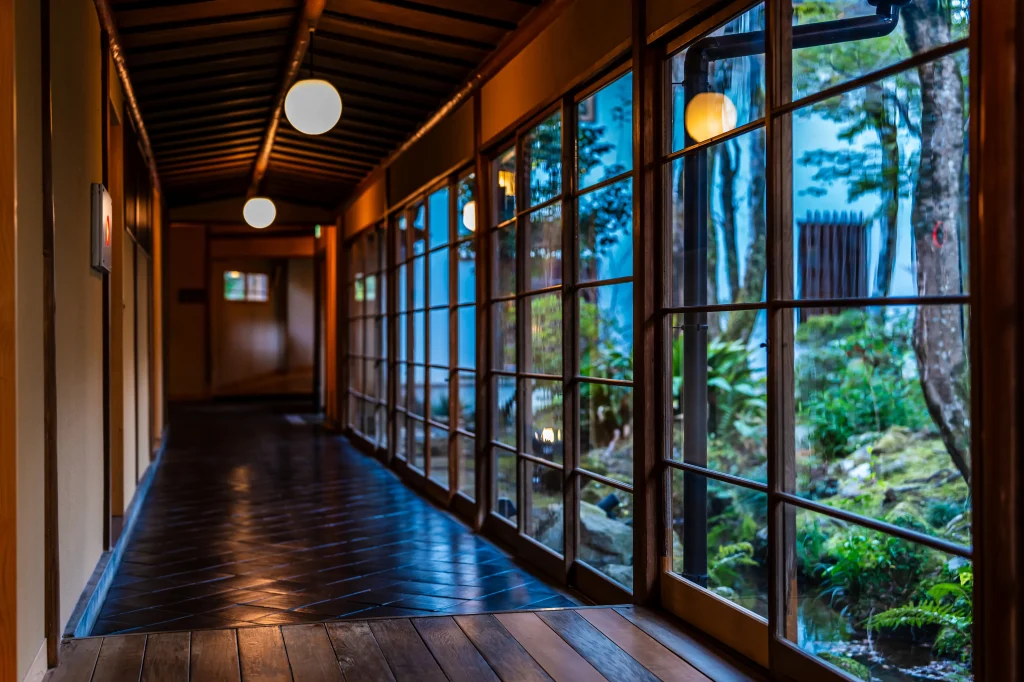
Rain can also draw attention to the building itself. Damp air deepens the colour of timber, while smooth, carefully prepared wooden corridors feel different underfoot. Shōji are sliding screens made from a wooden frame and translucent paper; they soften grey daylight rather than blocking it completely. These details do not replace the mountain. They reveal another layer of a ryokan stay: the careful way materials, light and weather are allowed to meet.
Private Onsen, Yukata and Other Ryokan Tips
A private onsen is not simply any bath inside a guest room. It should mean a bath used privately by one guest or group and supplied with natural hot-spring water. Before booking, check whether the property describes the facility as a private bath, open-air bath, semi-open-air bath, scenic bath or hot spring. These terms can overlap, but they do not always mean the same thing.
Ask whether the bath is included in the room rate, whether it needs a reservation, whether you can book before arrival or only at check-in, and how long each session lasts. Also check whether Mount Fuji is visible from the tub itself. A room may face Fuji while the bath faces a wall, a garden or another direction.
In a shared onsen, follow these simple rules:
- Remove shoes at the entrance or at the door to your guest room.
- Do not wear slippers on tatami mats.
- Wash and rinse your body before entering the bath.
- Keep your small towel and long hair out of the bathwater.
- Speak quietly in shared bathing areas.
- Do not wear swimwear unless the property specifically permits it.
- Check tattoo rules before booking, as each ryokan sets its own policy.
Outside the bath, a yukata is a light, informal robe provided by many ryokan. You can usually wear it in your room and, where the property permits, in dining and shared areas. Staff may lay a futon—traditional bedding placed directly on tatami—in your room while you are at dinner.
Dinner is often kaiseki, a multi-course meal based on seasonal ingredients and careful preparation. Ask about allergies, vegan or vegetarian diets, gluten-free needs and other dietary requirements before booking. Fish stock, known as dashi, may be used in soups, sauces and vegetable dishes. Some ryokan cannot redesign a full meal at short notice. If dinner is included in your rate, arrive by the stated check-in time so the kitchen and serving staff can provide the meal as planned.
A Stay Shaped by More Than the Weather
Mount Fuji may appear in the first light above Lake Kawaguchiko, or remain hidden behind a wall of cloud. That uncertainty is part of travelling beside a mountain rather than visiting a fixed attraction. Choose Kawaguchiko when the view itself is your main purpose. Choose Hakone when you also want hot springs, cultural stops and a simpler route west towards Kyoto.
Then look beyond the forecast. A well-chosen ryokan can offer hot-spring bathing, carefully prepared seasonal food and rooms shaped by Japanese craft. Leave enough time for the weather to change, select the exact room and bath type that suits you, and let ENJYU JAPAN help you build a considered route from Tokyo through Fuji or Hakone and onwards to Kyoto.
References
- Japan National Tourism Organization – The Top 30 Spots for Viewing Mt. Fuji
- Fujikawaguchiko Town Tourism Information – Kawaguchiko Station
- Konansou – Official Website: Mount Fuji-view Guest Room with an Open-air Natural Hot-spring Bath
- Hotel Kaneyamaen & Bessho SASA – Official Website: Guest Rooms with Open-air Baths and Mount Fuji Views
- Ryuguden – Prince Hotels: Guest Rooms with Lake Ashi and Mount Fuji Views