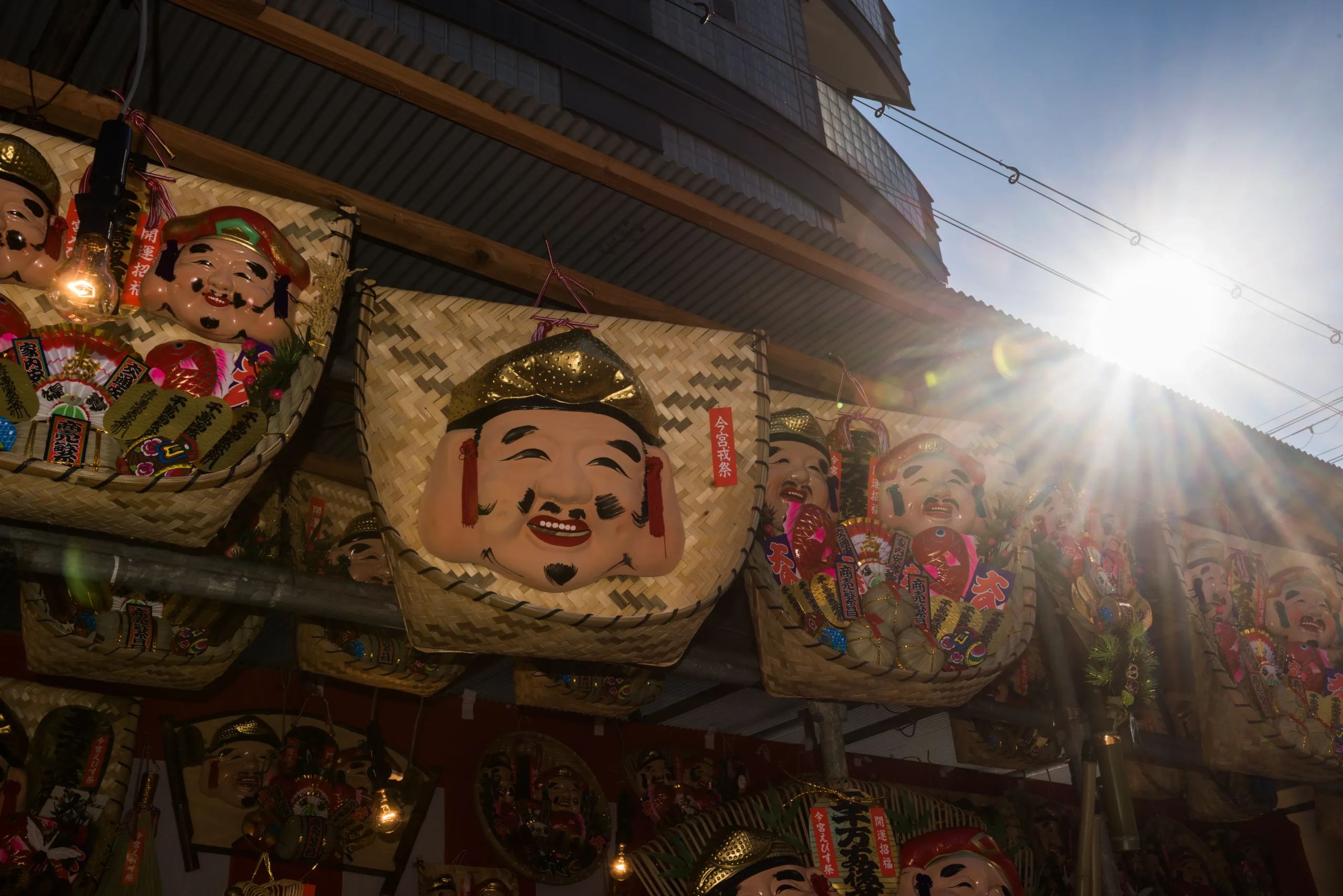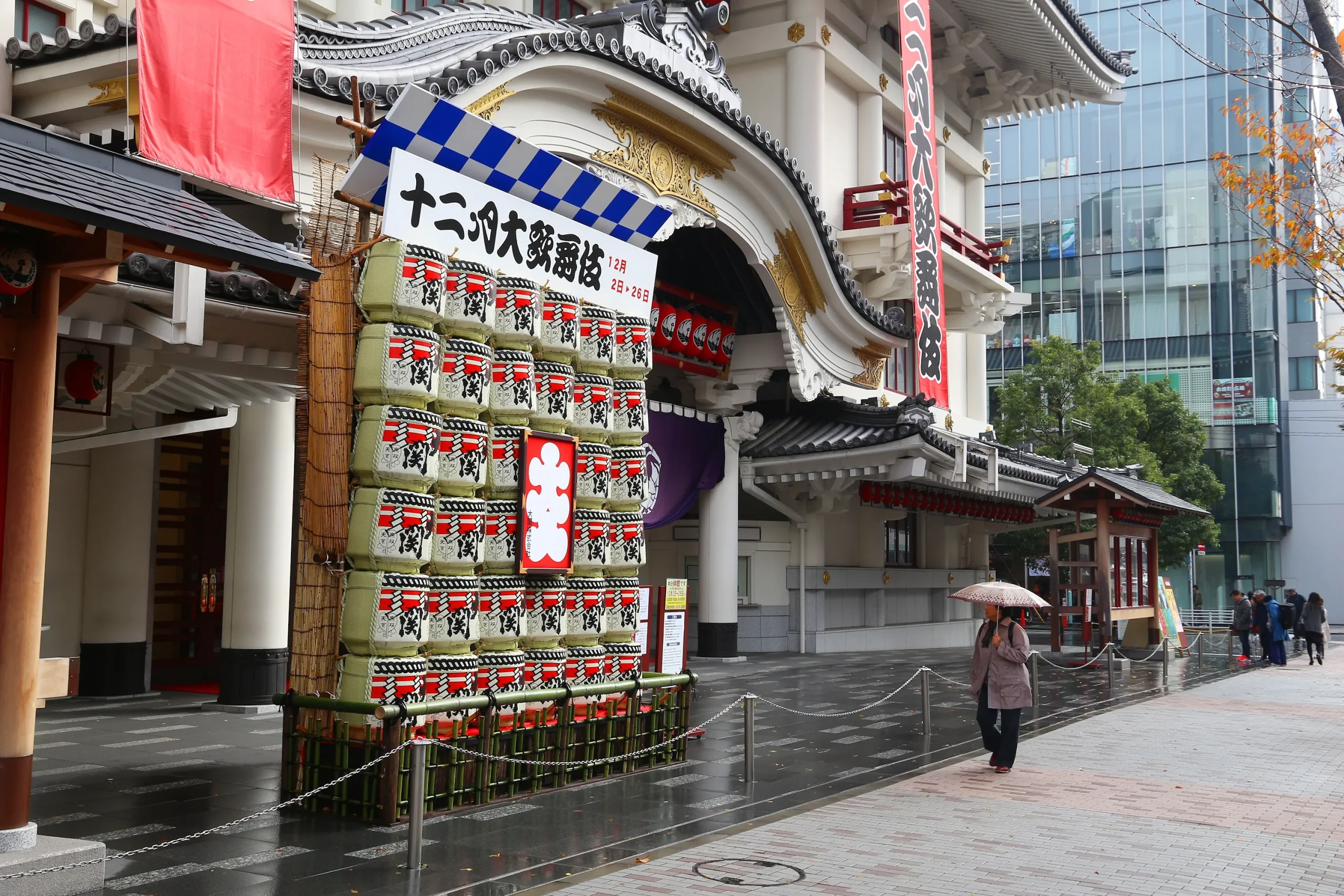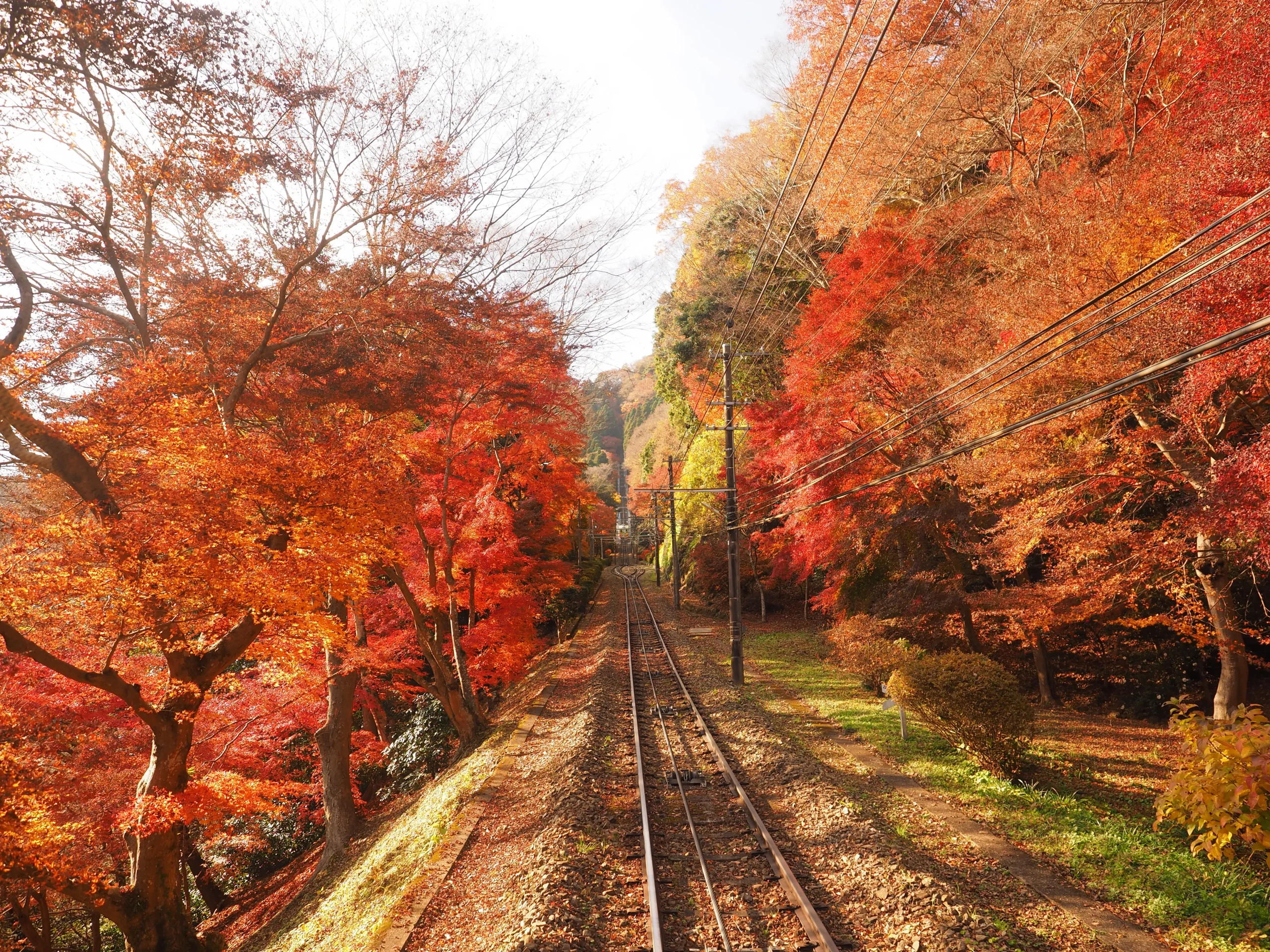
March is when Japan’s cherry blossoms begin — not when they peak. That single distinction shapes a March trip more than anything else, and it’s where most planning quietly comes unstuck. Tokyo’s trees open around March 24 in an average year and reach full bloom about a week after that. Kyoto and Osaka usually don’t peak until the first days of April. So the useful question isn’t whether to come to Japan in March 2027. It’s which week — because early, middle, and late March are three genuinely different trips, and the 2027 calendar stacks them in a way that doesn’t come around often.
The Blossom Question, Answered Honestly
Nearly every bloom forecast you’ll read is tracking one variety: Somei-Yoshino, propagated so widely by cutting that trees across a whole city open within days of each other. The Japan Meteorological Agency watches designated reference trees and records two separate dates — Kaika, when the first few blossoms open, and Mankai, full bloom, when roughly eighty percent are out. Most travel writing blurs the two. The gap between them runs about seven to nine days, and it decides everything.
The thirty-year averages (1991–2020):
| City | Flowering | Full bloom |
| Fukuoka | Mar 22 | Mar 31 |
| Tokyo | Mar 24 | Mar 31 |
| Nagoya | Mar 24 | Apr 2 |
| Hiroshima | Mar 25 | Apr 3 |
| Kyoto | Mar 26 | Apr 4 |
| Osaka | Mar 27 | Apr 4 |
| Sendai | Apr 8 | Apr 13 |
| Sapporo | May 1 | May 6 |
Read the Kyoto line again. In an average year, Kyoto’s peak falls in April — not March. A Kansai-centred trip in March catches the opening, not the crescendo. And any itinerary that wraps up before about March 20 will see essentially no Somei-Yoshino anywhere on Honshu(Main island). Okinawa runs on a different tree and a different clock; its Hikanzakura open in mid-January and are finished long before March.
One more thing worth saying plainly: there is no 2027 forecast yet. Private forecasters publish their first estimates in January. Until then, averages are the best instrument anyone has — us included.
What the Last Six Years Actually Did
Averages hide the thing you most want to know, which is how wrong they can be.
Tokyo’s flowering date over the last six years ran March 14, March 20, March 14, March 29, March 24, and March 19. That’s a fifteen-day spread. The same calendar date has produced full bloom in one year and bare branches in another.
2024 is the cautionary case. Tokyo didn’t open until March 29 and didn’t peak until April 4 — anyone who flew home on the 31st saw buds. 2026 went the other way, about five days early across much of the country, and even in that year Osaka and Fukuoka both peaked on April 3.
So, honestly: Tokyo has reached full bloom within March in five of the last six years. Kyoto and Osaka are closer to a coin flip. If blossoms are your reason for coming, a trip that straddles late March into early April is the version that’s hardest to get wrong.
Three Different Marches
Below is the logic for choosing a week. The events themselves — dates, times, whether you can actually watch — are set out in the calendar that follows.
March 1–13: No Blossoms, And That’s Rather the Point
Accept the trade and this is a strong fortnight. There will be no Somei-Yoshino anywhere on Honshu, and no amount of hoping changes that. What you get instead is Japan’s ritual calendar at its densest, plum gardens still going, and the lowest visitor numbers of the month. The cost is weather: early March in Tokyo is statistically still late February, and it’s one of the wetter stretches of the month.
This suits travellers who want substance over spectacle, and anyone who has been to Japan before and doesn’t need the postcard. It is the wrong fortnight if blossoms are your reason for coming — book a different month rather than a different week.
March 14–22: The Hinge
The hedge position. Tokyo’s first blossoms become possible from about the 19th onward but are not reliable, and Kansai almost certainly hasn’t started. In exchange you get the driest ten-day stretch of the month and a calendar that has begun to fill up.
The complication is domestic. The equinox weekend turns March 20–22 into a three-day holiday, and Japanese families travel — trains and hotels tighten for those three days specifically, then loosen again. Book around that, not into it. This window suits people who’d like a chance at early blossoms without paying peak prices for the certainty.
March 23–31: Everything at Once
Tokyo peaks around the 31st. Kansai opens. And in 2027 the back end of the month is unusually loaded, with a fifteen-day sumo tournament running to the 28th and the country’s biggest anime event landing in Osaka on the same weekend, all while the Kansai trees start to go.
This is the expensive, crowded, and frankly the best version — with one caveat that matters. If blossoms are the point, don’t stop on the 31st. The itinerary that works runs late March into the first days of April, which is when Kyoto and Osaka actually deliver.
What’s On in March 2027
| Dates | Event | City |
| mid-Feb – Mar 22 (typical) | Mito Plum Festival | Mito |
| Mar 12 | Omizutori (Shuni-e), Tōdai-ji | Nara |
| Mar 3 | Hinamatsuri | Nationwide |
| Mar 7 | Tokyo Marathon 2027 | Tokyo |
| Mar 13 | Kasuga Matsuri | Nara |
| Mar 14–28 | Grand Sumo March Tournament | Osaka |
| Mar 15 | Kasuga Otaue Shinji | Nara |
| Mar 20 – early Apr (typical) | Kitano Odori | Kyoto |
| Mar 21–22 | Vernal Equinox Day + substitute holiday | Nationwide |
| Mar 27–28 | AnimeJapan 2027 | Osaka |
Dates marked typical hadn’t been published when this was written; both are usually confirmed in January. Everything else is already fixed.
Mito Plum Festival | Mito
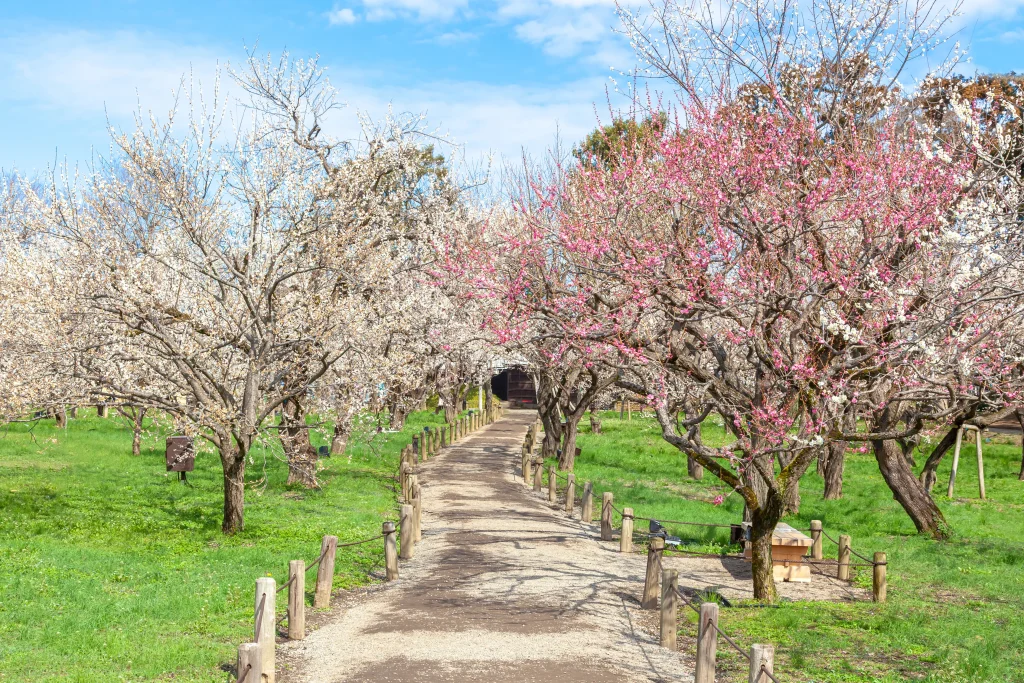
Kairakuen holds around 3,000 plum trees across a hundred-odd varieties, with another 800 at the Kōdōkan, the domain school next door. The varieties are deliberately staggered — early, mid, late — so the late bloomers carry from early March to the end of the month. Two hours from Tokyo, and a genuinely different flower: plum is sparser and more sculptural than cherry, and it smells of something.
Reference:Mito Plum Festival
Omizutori (Shuni-e) | Nara
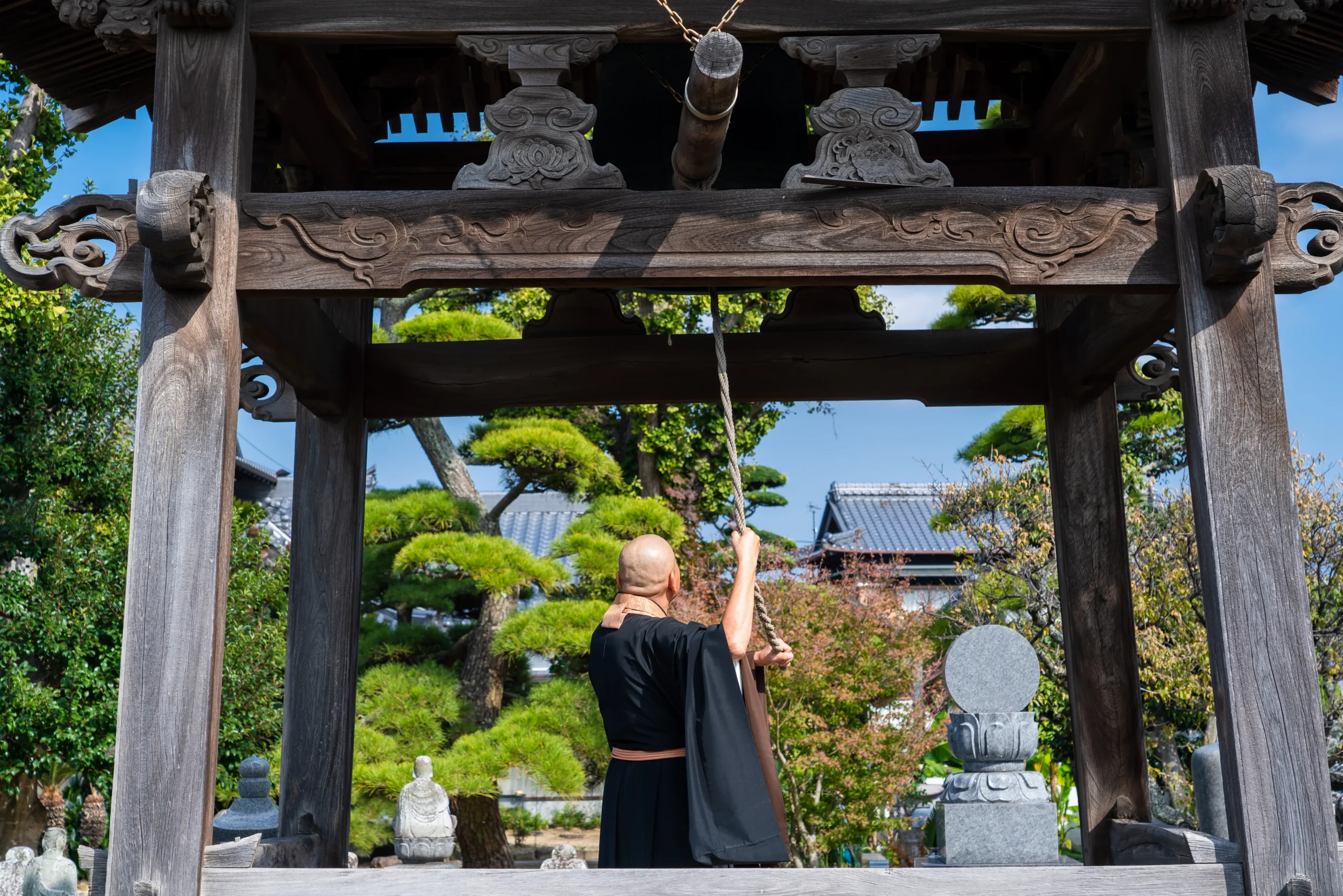
The centrepiece of early March — 2027 will be the 1,276th time it has run without a break. The torches are what people come for, but they’re incidental: monks spend the fortnight inside the Nigatsudō repenting on everyone’s behalf and praying for the country, and the six-metre torches exist to light their way up the stairs. Most evenings at 19:00, attendants haul them along the balcony and shower sparks over the crowd below. The 12th is the biggest night and the most restricted — bigger torches, a 19:30 start, and viewing areas that close once they fill, so another evening is usually the better call. The 14th starts early, at 18:30.
Reference:Todai-ji Omizutori
Hinamatsuri | Nationwide
March 3, fixed. Families with daughters set out tiered displays of court dolls, and museums, old merchant houses and shopping streets do the same at a scale you can walk into. There’s no parade — nothing to turn up at. Timing is the thing to know: displays go up weeks ahead but come down within days, since a superstition holds that leaving them out delays a daughter’s marriage. Arrive by the 3rd and they’re everywhere. Arrive on the 10th and you’ve missed them.
Tokyo Marathon 2027 | Tokyo
Sunday March 7 — the twentieth running, with the field raised to 40,000. The expo runs at Tokyo Big Sight from the 4th. For everyone not running, this is a logistics fact rather than an attraction: central Tokyo closes a lot of road, and moving across the city that morning is slow. Either build the day around watching it, or spend it somewhere the course isn’t.
Reference:Tokyo Marathon
Kasuga Matsuri | Nara
March 13, fixed since 1886, and one of Japan’s three imperial rites — an envoy comes from the palace to pray for the state. Here’s the part other guides leave out: the shrine marks it not viewable. The rites happen inside the cloister and you cannot watch them. What’s open to you is the approach from the second torii, where the procession passes in Heian-period dress around ten in the morning. Worth knowing before you build a day around it.
Reference:Kasuga Matsuri
Grand Sumo March Tournament | Osaka
Fifteen days at Edion Arena Osaka, March 14–28 — about six days later than usual, against 2026’s March 8–22. That shift drops the closing week directly onto the Kansai bloom window, which is not a combination most years hand you. It’s also the only tournament held outside Tokyo until July, so if sumo matters to you and Kansai is already on your route, this is the year the calendar cooperates. The day builds upward from the lowest divisions, so an afternoon arrival costs you little. Rankings are published March 1; advance tickets open February 6 and the good ones move. The final day, the 28th, shares its weekend with AnimeJapan across town.
Reference:Grand Sumo March Tournament
Kasuga Otaue Shinji | Nara
March 15, and the one to choose if you’re in Nara mid-month. Where the imperial rite two days earlier is closed, this is open. Shrine maidens perform a rice-planting dance at three points in the grounds — using pine seedlings in place of rice — accompanied by planting songs, a man in an ox mask dragging a harrow, and clappers. It has run since 1163. It is small, strange, and almost entirely unattended by visitors from abroad.
Reference:Kasuga Matsuri
Kitano Odori | Kyoto
The first of Kyoto’s spring geisha dances, staged by Kamishichiken — the oldest of the five districts, out by Kitano Tenmangū and away from the Gion crowds. It matters for a March trip because the famous one, Miyako Odori, doesn’t start until April. Kitano Odori typically opens around March 20 and runs into early April, twice daily, about ninety minutes. Tickets go on sale in mid-January, which is also when 2027’s dates firm up.
Vernal Equinox Day | Nationwide
March 21 falls on a Sunday in 2027, so Monday the 22nd becomes a substitute holiday — the only one in the entire year. That makes March 20–22 a three-day weekend, and it’s a grave-visiting holiday, so families move. Expect full trains and firmer hotel rates across those three days, then a noticeable drop afterwards. It’s the single most useful date on this list for anyone booking.
AnimeJapan 2027 | Osaka
March 27–28 at Intex Osaka — and this is news. After thirteen straight years at Tokyo Big Sight, the country’s largest anime event moves to Osaka for the first time. Public days are the 27th and 28th; the trade days follow. If you have a teenager, or you’re one at heart, it now collides with sumo’s final weekend and the opening of the Kansai blossoms in a single city.
Reference: AnimeJapan 2027 – AnimeJapan
What the Weather Actually Does
March isn’t one climate. On the same morning, Sapporo’s normal high is 4.5°C and Naha’s is 21.9°C — seventeen degrees apart, in the same country.
How Cold It Gets
The thirty-year averages for March:
| City | Night | Day |
| Sapporo | −2.4°C | 4.5°C |
| Kyoto | 4.3°C | 14.1°C |
| Tokyo | 5.0°C | 14.2°C |
| Naha | 16.7°C | 21.9°C |
Two things that table hides. The first is that the month moves. Early March in Tokyo runs 3.8–12.7°C, which is statistically still late February. Late March reaches 6.2–15.4°C. Three weeks apart, two different jackets — so the week you pick changes what you carry.
The second is that Kyoto and Tokyo look identical by day and aren’t by night. Kyoto sits in a basin, and the gap shows up at dawn, in a temple garden, before the sun clears the hills.
What to Pack
Start with the thing nobody mentions: March is wet. Tokyo’s normal March rainfall is 116mm against February’s 56.5mm — roughly double. Kyoto is much the same at 106mm. If you’ve built a picture of March as a crisp, bright shoulder month, adjust it. Mid-March is the one dry window, at 26.3mm across ten days.
So: layers, not a winter coat. A light shell over a mid-layer covers a Kyoto dawn and a Tokyo afternoon both, and the shell doubles as the rain gear you will need.
Hay fever is the other thing to plan for. March is cedar season at full volume, with cypress following late in the month. It’s an ordinary fact of Japanese life rather than a warning — a very large share of the population deals with it, which means masks and antihistamines are in every pharmacy and you needn’t pack them from home. The Ministry of the Environment runs a live monitoring system if you want to see what you’re walking into.
If the Blossoms Aren’t the Point
Then March gets a lot more attractive.
Hokkaidō is still winter in any meaningful sense: Sapporo’s normal March snowfall is 74cm, spread over about 24 snow days, with a normal maximum depth of 82cm. Spring skiing there isn’t scraping the leftovers — it’s the season, with longer daylight and none of January’s brutality.
Kyoto and Nara before the front arrives are noticeably quieter than they are two weeks later. The same temples, a different experience, and you can hear yourself think in them.
Plum also has one quiet advantage over cherry, and it’s this whole article in miniature: because the varieties are staggered rather than synchronised, there is no single peak to miss. A plum garden is very hard to mistime. Nobody can say that about Somei-Yoshino.
And Okinawa at a 21.9°C high is worth being straight about: it’s a fine month for walking a coastline in a shirt, not a swimming holiday.
Booking and Timing
The awkward truth is that the forecast arrives too late to book on. Waiting until January for bloom estimates before buying flights isn’t realistic, so the sensible order is reversed: fix a window that straddles late March into early April, then decide the regional balance once you know more. In practice that means booking the flights and the two or three fixed things you actually care about, and leaving the middle of the trip loose.
A short list of dates that genuinely constrain you: March 7 makes central Tokyo awkward; sumo tickets open February 6; March 20–22 lifts domestic demand; and the last weekend puts sumo, AnimeJapan and the first Kansai blossoms into Osaka at once. Everything else can wait.
Planning a March Trip with Room to Move
Everything above points the same direction. In March, your dates are a probability rather than a fact, and the trips that work are the ones with some give built into them — a shape locked in early, the detail settled later, once January’s forecast lands and the trees have made up their own minds.
That flexibility is the part we enjoy building. An ENJYU JAPAN Tailor-Made Tour is designed to be adjusted: if the front runs early, we move you north; if it stalls, we hold you in Kansai a few days longer and let the rest of the itinerary follow. Our regional guides tend to know what’s actually happening before the forecasts catch up. If you’re weighing up March 2027, we’d be glad to think it through with you.