Count two hundred and ten days forward from the first day of spring and you land on 1 September in 2026. The old farming almanac marked that number because it was when the storms arrived while the rice was still in flower — the worst possible timing, every year, reliably enough to be worth naming.
Three centuries later, a festival that began as a rite to quiet the wind still opens on that date. So does Japan’s national disaster-drill week.
Whatever else September is here, nobody has ever treated it as a quiet month. It carries the year’s highest chance of a typhoon actually reaching Japan, a country measurably emptier than the October everyone books, and a run of festivals and moon nights that exist in no other month.
This guide goes through September 2026 in date order — every festival and rite worth planning around, then the two things that close, then what the weather and the typhoon season genuinely do, and finally how September compares with the October most people book instead.
If you are still choosing between months, our overview of Japan’s seasons is the wider frame.
September 2026 in Japan at a Glance
| Dates | What happens | Where | How busy |
|---|---|---|---|
| 1–3 Sept | Owara Kaze no Bon, street dancing after dark | Yatsuo, Toyama | Town at capacity; weekdays in 2026 |
| Around 10 Sept | All four Mt Fuji climbing routes close | Mt Fuji | — |
| 13–27 Sept | Grand Sumo September Tournament | Ryogoku, Tokyo | Tickets on sale since early August |
| 14–16 Sept | Tsurugaoka Hachimangu autumn rites; horseback archery on the 16th | Kamakura | Heavy day-trip crowds |
| 15 Sept | Iwashimizu-sai, beginning at 2 a.m. | Yawata, south of Kyoto | Small, overnight |
| 19–20 Sept | Kishiwada Danjiri Festival | Osaka | Very busy |
| 19–23 Sept | Five-day national break | Nationwide | Fullest stretch of the month |
| 20 Sept | Autumn equinox week opens | Nationwide | — |
| 24–27 Sept | Harvest-moon evenings at temples and gardens | Kyoto, Nara, Tokyo | The quietest week |
Owara Kaze no Bon, 1–3 September: Yatsuo, Toyama
Yatsuo is a hillside town about twenty-five minutes from Toyama by train. For three evenings its streets close to traffic and fill with dancers in woven straw hats pulled so low that you cannot see a face, moving very slowly to shamisen and the kokyu — a small bowed fiddle with a thin, carrying tone that does not sound like a festival instrument at all.
The festival is roughly three hundred years old and began as a rite to quell wind damage and pray for the harvest, which is why it opens on that two hundred and tenth day. Eleven town districts each keep their own song, dance and costume, so walking from one district to the next changes what you are watching. It is not a parade. It is eleven neighbourhoods doing their own version of the same thing at the same time, in the dark.
Standing in the streets costs nothing. Two things to build into your plan. First, the festival is suspended in rain as a matter of policy, districts can finish earlier than scheduled, and the dancing pauses when the crowd builds — so treat the three evenings as three chances rather than one guaranteed performance, and stay overnight in the area if you possibly can. Second, all three days fall midweek in 2026, which is the version worth travelling for; the local association points to the weekday run as the year to come if you want room to stand.
The Grand Sumo September Tournament, 13–27 September: Tokyo
Fifteen days at the Kokugikan in Ryogoku, and one quirk in the sequence worth knowing: advance tickets went on sale in early August, and the rankings that decide who fights whom were not published until the end of the month. You buy your day before anyone knows the card.
So choose by the date that fits your route rather than by matchup. If you want a quieter house, take a weekday in the first week rather than either Sunday — the final Sunday, when the championship is usually settled, is the hardest ticket of the fifteen. Our guide to sumo season covers how a tournament day is structured and which hours are worth being in your seat for.
Tsurugaoka Hachimangu Autumn Festival, 14–16 September: Kamakura
The shrine holds its heaviest rites of the year on the same three dates annually, an hour from Tokyo.
The 15th sends three portable shrines down the main avenue in a procession several hundred metres long. The 16th is yabusame — mounted archers in Kamakura-period hunting dress shooting three targets at a full gallop, run by the Ogasawara school, and traced by the shrine to a ceremony first held in 1187.
There is no admission charge and the gates open at six in the morning all year, which matters on the 16th: the track runs a long way and the standing space along it goes to whoever is there first. Take an early train from Tokyo, not a mid-morning one.
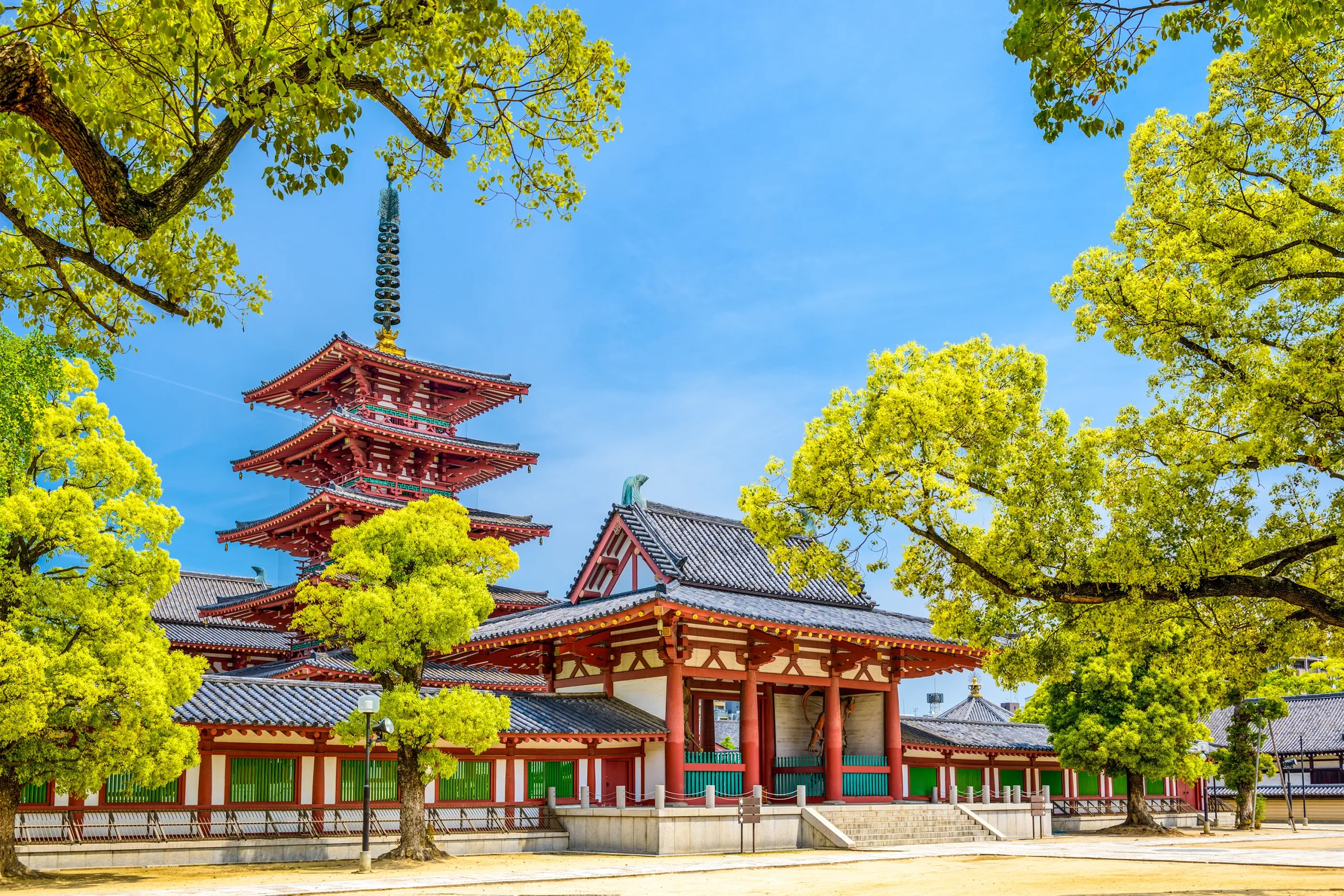
Iwashimizu-sai, 15 September: Yawata, near Kyoto
One of the three great imperial-messenger festivals begins at two in the morning, and almost nobody from outside Japan is there for it.
The rite starts at the mountaintop main hall, and at three a procession of some five hundred attendants carries it down the mountain in the dark to the hall at the foot, where fish and birds are released into the river at dawn. It has been done this way since 863 — twelve centuries of people walking down a hill at three in the morning
To sit inside the ceremony rather than watch from outside, you apply to the shrine office weeks ahead with an offering. Which means this is a decision you make before you land, not on the day.
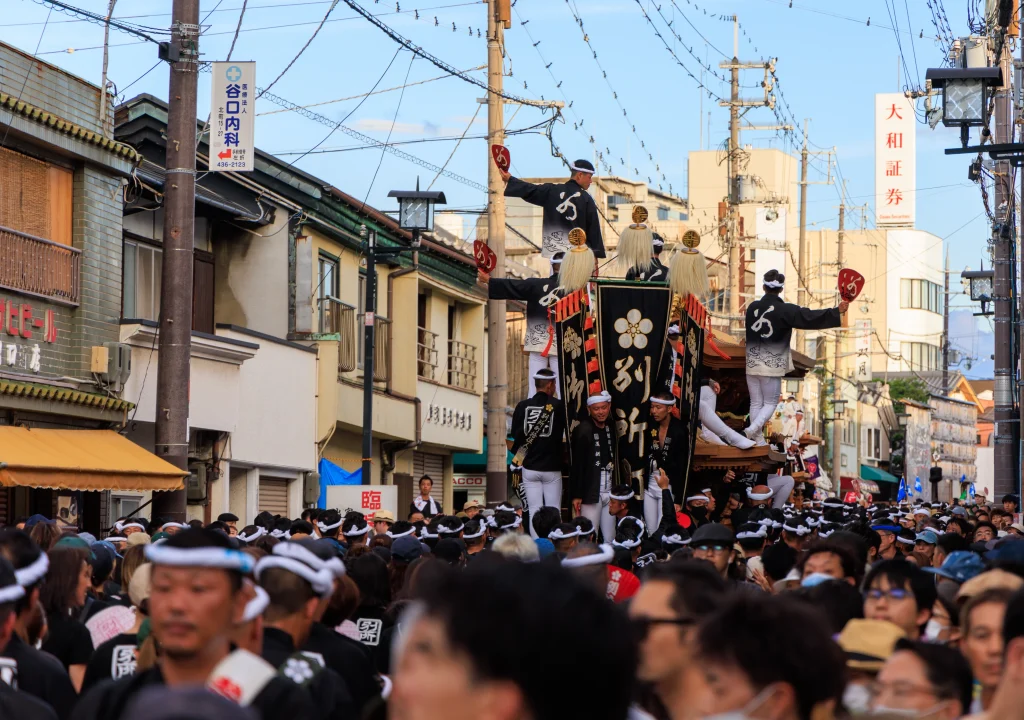
Kishiwada Danjiri Festival, 19–20 September: Osaka
Teams sprint through the streets south of Osaka hauling danjiri — large wooden floats with carved roofs and a man dancing on top of each one — and take the corners at speed without slowing down. That is the entire point, and also the reason people line up to watch. Street viewing is free.
The better-value option is the trial pulls held earlier in the month: the same floats, the same teams, a fraction of the crowd, and the only realistic chance to see how the thing is actually steered.
One planning note. Kishiwada holds a second, separate danjiri festival in October, in different districts of the same city. If a page tells you the festival is in October, it is not wrong — it is describing other neighbourhoods.
Silver Week, 19–23 September: The One Block to Plan Around
September is measurably the emptier month, and the mechanism is one line in the school calendar: Japanese summer holidays end on 31 August, and domestic family travel stops almost overnight on 1 September. Then, for five days, all of that reverses.
Respect for the Aged Day falls on Monday 21 September in 2026, and the Autumnal Equinox — a national holiday whose date is set by astronomy rather than by statute — on Wednesday the 23rd. Japanese law turns any ordinary weekday trapped between two holidays into a holiday of its own, so the Tuesday becomes a nameless bridging day and Saturday the 19th through Wednesday the 23rd becomes one continuous national break. It is the first five-day September run since 2015. The media call it Silver Week, by analogy with the spring Golden Week, though it is a nickname rather than an official designation.
Line that block against the festival calendar and the month sorts itself out. Kishiwada sits inside the break, which is part of why it is so crowded and a reason to accept that day as a crowd day rather than fight it. The harvest-moon evenings sit just outside it, in the emptiest week of an already quiet month. That is the single most useful shape in September 2026: put your Kyoto nights, your must-book restaurants and your long train legs after the 23rd, not during it.
Trains change during the break as well. For those six days the Nozomi, the fastest service on the Tokaido and Sanyo shinkansen, runs with every car reserved — the two non-reserved cars convert for the duration. The habit that works the rest of the year, turning up at the station and boarding the next departure, does not work here. Reserved seats open exactly one month ahead at ten in the morning Japan time.
The Harvest Moon, 25 September
The mid-autumn moon in 2026 falls on Friday 25 September. The astronomical full moon is nearly two days later — a gap that wide is unusual, the last one was in 2017 and the next is in 2043.
Every temple and garden event follows the calendar date rather than the astronomy, so the moon over the ceremonies is short of full. If you want both, the 25th is for the ceremonies and the following night is for the moon.
| Where | When | Cost | What happens |
|---|---|---|---|
| Daikaku-ji, Kyoto | 25–27 Sept, evening | ¥700 | Moon rite; the moon doubles on Osawa Pond |
| Shimogamo Shrine, Kyoto | Night of the 25th | — | Court music, bamboo flute and koto played over the stream in an old-growth grove |
| Sarusawa Pond, Nara | 24–25 Sept | Free to watch | Two music boats circle the pond among floating lanterns |
| Mukojima Hyakkaen, Tokyo | 24–26 Sept, open late | ¥150 | Garden lit by paper lanterns; bush-clover tunnel alongside |
Daikaku-ji, Kyoto
The old Saga imperial villa in western Kyoto, and the reason to go is the pond: monks make offerings of dumplings, vegetables and flowers, and the moon appears twice, once above and once on the water.
Evening admission is separate from a daytime ticket, so a day visit does not carry you into the night session. The boat ride on Osawa Pond with matcha at the moon-viewing hall is by application only, and the 2026 window closed in July — which is generally true of the seats that make these evenings famous. They are gone months before the moon rises.
Shimogamo Shrine, Kyoto
The opposite of a ticketed event: pampas plumes set out, bonfires lit, and music played on the bridge-hall over the stream inside Tadasu no Mori, the old-growth grove the shrine sits in.
It happens on the mid-autumn moon date each year rather than across a published range of days, so it is one night only.
Sarusawa Pond, Nara
The one to choose if you have children or simply want something free and easy to stand at. A procession leaves JR Nara Station in Nara-period court dress carrying a flower fan over two metres across; two dragon-headed boats push off in the evening.
And on that night, in front of the shrine, threading a red thread through a needle by the light of the harvest moon is said to make a wish come true — a small piece of folk business that has survived by being exactly difficult enough.
Mukojima Hyakkaen, Tokyo
The cheapest good evening in the city that week. The garden was laid out in the early 1800s as a privately run flower garden and is still one of the places to see the seven flowers of autumn. It stays open into the evening for three nights on an admission of a few coins, and its bush-clover tunnel — thirty metres of the stuff, arched overhead — runs from mid-September into October.
Red Spider Lilies and the Autumn Equinox Week
The equinox week opens on 20 September, and the flower that belongs to it comes up along riverbanks and the edges of rice fields — deep red, leafless, on bare stems, in bands you can see from a train window.
Its Japanese name is built on the equinox itself, because that is when it appears and it is not much interested in being early or late. Festival dates at the well-known riverside groves are confirmed only a few weeks ahead, so this is something to check once you are close rather than plan around.
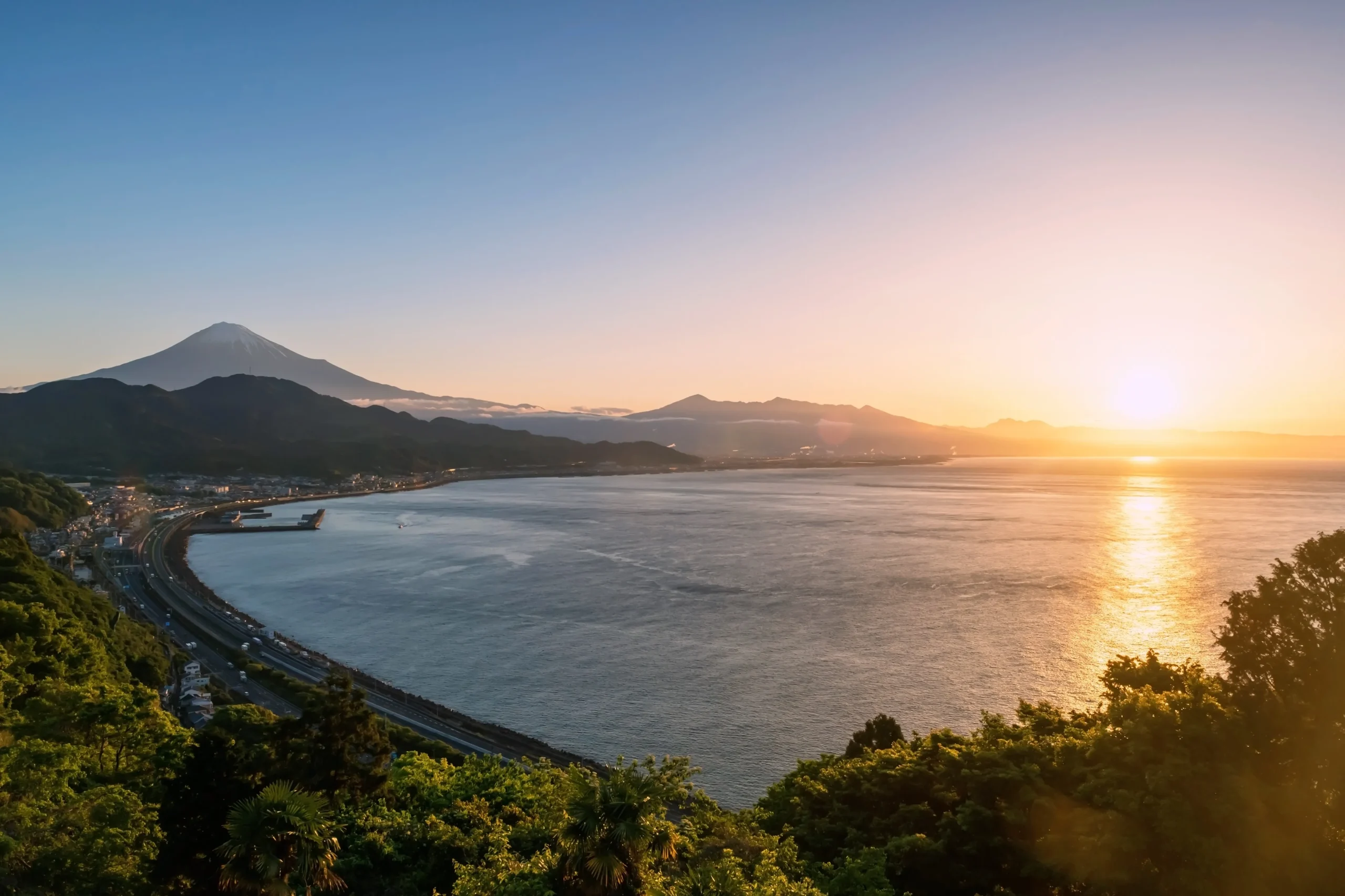
Mt Fuji: The Climbing Season Ends Around 10 September
All four climbing routes shut around the 10th, and the private-car bans on the mountain roads lift the same evening.
The season ends because winter starts up there — snow normally begins falling on the summit in the second half of the month — not because summer has ended at the bottom. If climbing it is on your list, that is a mid-September trip at the latest. After the 10th, Fuji is a mountain you look at.
Kamakura’s Beaches: Closed From 1 September
The three beaches at Kamakura were open in July and August only.
The sea is still warm in September, but the supervised season is a fixed window, and when it ends the lifeguards, the drone patrols and the cameras that watch for rip currents come down with it. Swim in early September and you are swimming unwatched.
The Weather in Japan in September
The correction that matters most: September takes the edge off the heat without taking away the humidity. Tokyo drops a few degrees from August, which sounds like autumn — but rainfall climbs by nearly half while relative humidity does not move at all. Cooler, wetter, and just as sticky. People pack for autumn and spend the first afternoon looking for somewhere air-conditioned.
The one real exception is north. Sapporo in September sits at about what Tokyo reaches in October, so going to Hokkaido now buys you a month of calendar.
| City | Mean °C | Daily max °C | Humidity | Rainfall |
|---|---|---|---|---|
| Tokyo | 23.3 | 27.5 | 75% | 224.9 mm |
| Kyoto | 24.4 | 29.2 | 67% | 178.5 mm |
| Osaka | 25.2 | 29.5 | 67% | 152.8 mm |
| Kanazawa | 23.2 | 27.2 | 73% | 231.9 mm |
| Sapporo | 18.6 | 22.8 | 71% | 142.2 mm |
| Naha | 27.9 | 30.6 | 75% | 275.2 mm |
September climate normals, 1991–2020 averages.
None of this is guesswork about whether it is still hot. Japan’s national heatstroke alert, tied to a combined heat-and-humidity index, runs through the whole of September and does not stand down until late October.
What to pack for September:
- A proper rain shell — typhoon rain outruns an umbrella
- Breathable, quick-dry layers, because the air stays humid
- Sun and heat cover, still needed through the month
- One warm layer only if Hokkaido or the mountains are on your route
Typhoon Season in September: What the Numbers Say
Fewer typhoons form in September than in August — and slightly more of them arrive. It is the statistical peak for storms that reach Japan, even though it is not the peak for storms being born. Our October guide covers how the season builds and fades; this reads the same data from the arriving end.
Hokkaido sees the fewest September approaches of any region, and it is the only one that does not climb from August to September — storms track further north and east as the month runs on, and Hokkaido is already about as far as they get. Weighting the back half of a trip toward the north is a hedge the data supports, and it happens to be where the autumn colour is anyway.
If a Typhoon Reaches You
The honest answer to “what happens to week two if a storm hits” is almost never danger. It is transport.
When a large typhoon is forecast, railways use planned suspension: a deliberate, pre-announced shutdown rather than a breakdown you discover on the platform. The possibility is flagged roughly two days out, the specific day’s plan lands about twenty-four hours out, and a same-day notice names the last train before service stops. The line worth hunting for on the board is whether transfer transport is offered — permission to ride a competing operator’s line on the ticket you already hold.
The forecast map is easy to misread, and the misreading always runs the same direction. That dashed circle around a storm is where the centre has a seventy percent chance of being. It is not the size of the storm, and a city inside it is not necessarily in for anything at all. The product that answers a traveller’s actual question is a separate one: the probability of entering the storm-force wind area, published locality by locality out to five days. Check the places on your route, not the circle.
Two more things soften the blow. 2026 is the first typhoon season under Japan’s restructured warning names, which now carry the alert level in the title, so a screen may read “Level 4 Urgent Warning (Heavy rain)”. And a cancelled train means a full fare refund, while a limited express running two or more hours late gets its surcharge back, by published rule rather than goodwill.
That keeps a storm to a re-routing problem instead of a lost week, which is exactly what a spare day in the back half of an itinerary is for; our August guide sets out how to build one.
Autumn Colour in September: Daisetsuzan, and Nowhere Else
In the cities, September is far too early, and it is worth being straight about that. Japan’s own long-term records put the Kanto maples at the very end of November and Kyoto’s into December — two to three months after the September you are booking.
The real September colour is at altitude, above all in Daisetsuzan, the large national park in central Hokkaido where the turn starts from late August and works its way down the mountain rather than across the map. Kurodake is the accessible one — ropeway, then a lift, then about an hour on foot. Asahidake is the bigger day, roughly two and a half hours up from the top of the ropeway.
The Kogen Onsen pond circuit, the walk most people are actually picturing, comes with rules worth knowing before you build a day around it. You sign the register and sit through a briefing on current brown-bear sightings at the information centre; entry is from seven in the morning and no earlier; and everyone must be off the course by three in the afternoon. That is a morning start from Sounkyo, not a leisurely one.
During peak colour the access roads close to private cars and everyone takes a shuttle, on dates that shift each year — so plan around the mechanism, not a date. A hot late summer can also push the colour back a week or two. Our Hokkaido guide goes deeper on the region.
September or October in Japan — and How to Decide
The reflex is to call October the better-weather month. Half true: it is cooler and much calmer for storms. But October is not drier — Tokyo gets marginally more rain than in September. What you are choosing between is a calmer, cooler, busier month and a stickier, stormier, emptier one that happens to hold the harvest moon and four festivals October does not have.
| September | October | |
|---|---|---|
| Tokyo mean / max | 23.3 / 27.5°C | 18.0 / 22.0°C |
| Tokyo rainfall | 224.9 mm | 234.8 mm |
| Tokyo humidity | 75% | 71% |
| Typhoon approaches | 3.3 | 1.7 |
| Typhoon landfalls | 1.0 | 0.3 |
| Room occupancy (2025) | 63.2% | 67.4% |
| Guest-nights (2025) | 53.1 m | 60.3 m |
| Kanto maple colour | None | None until about 30 Nov |
The September 2026 shape — three moves
- Front-load the festivals, back-load the north. Owara at the start of the month, the mid-month rites, then Hokkaido as September runs on, where the storm numbers are lowest and the colour has already begun.
- Treat 19–23 September as a fixed obstacle. Go to Kishiwada inside it if you want the danjiri, but keep your Kyoto nights, big bookings and long train legs on the far side of the 23rd.
- Keep one movable day in the back half. It is what turns a typhoon from a lost week into a rearranged afternoon.
Decide on the axis that is actually yours. If crowds weigh most and your plans can bend, September’s emptier country is the prize and the storm risk is something you manage by routing and by leaving slack. If you want cooler air and calmer skies above all, October is the safer call — you will simply pay for it in company at every major site.
Which brings it back to where the month started. Early September holds a three-hundred-year-old festival born out of wind damage and a week of national drills, and nobody here treats that as a reason to stay indoors. A September trip works the same way: not by hoping the weather behaves, but by having a plan that can move — reroute north, shift a booking clear of a storm, step around the five-day break without the rest unravelling. Building that flexibility, with people in each region who know when to move a day and where to send you instead, is what a Tailor-Made Tour with ENJYU JAPAN is for. If this version of September sounds like yours, it is a good place to start the conversation.