Osaka has excellent mid-range hotels, so spending heavily on accommodation only makes sense when the hotel actually changes your trip. That could mean stepping straight from your room into JR Osaka Station, having enough space to relax rather than just sleep, waking up high above the skyline, or deliberately setting aside time for a spa and slow morning.
This guide compares 12 luxury hotels by area and the reason you might choose them, rather than pretending there is one universally best property. Start with the table below. If two or three hotels clearly fit your trip, you can jump straight to those sections.
Osaka luxury hotels at a glance
| Hotel | Area | Why choose it? | Particularly suits | Main trade-off |
|---|---|---|---|---|
| Waldorf Astoria Osaka | Umeda / Umekita | Contemporary top-end luxury beside Osaka Station | Special occasions, Umeda convenience | Not integrated into JR Osaka Station itself |
| THE OSAKA STATION HOTEL | Osaka Station | Direct station access | Rail-heavy itineraries, luggage, day trips | OFURO access is limited to selected premium rooms |
| The Ritz-Carlton, Osaka | Umeda | Classic atmosphere and strong Club-level experience | Formal service, quieter luxury | Deliberately European rather than Japanese in style |
| InterContinental Osaka | Umeda | Multi-bedroom residences with kitchens | Families, groups, longer stays | Its residences are more distinctive than its standard rooms |
| Four Seasons Hotel Osaka | Dojima | GENSUI modern ryokan floor and extensive wellness facilities | Japanese-inspired luxury, couples | GENSUI is only 21 rooms and suites |
| Hilton Osaka | Umeda | Straightforward station convenience and full-service facilities | Travelers who value reliability and location | Less distinctive than Osaka’s newer luxury openings |
| Conrad Osaka | Nakanoshima | High-floor rooms with broad city views | Views, couples, quieter evenings | Less walk-out nightlife than Namba |
| The St. Regis Osaka | Honmachi | Butler Service and central subway access | Personalized service, Osaka sightseeing | Less convenient for repeated JR day trips |
| W Osaka | Shinsaibashi | Bold design in the heart of Minami | Design, nightlife, shopping | A poor fit for restrained or traditional luxury |
| Swissôtel Nankai Osaka | Namba | Direct Nankai Namba and KIX access | Airport convenience, Dotonbori, short stays | Older than the newest luxury openings |
| Patina Osaka | Osaka Castle | Castle views and a serious wellness focus | Slow travel, spa time, scenery | An 8–9 minute walk from the nearest stations |
| Osaka Marriott Miyako Hotel | Abeno / Tennoji | Very high-floor rooms in Abeno Harukas | Views, Tennoji, southern Osaka and Nara routes | Farther from Umeda and the Minami nightlife core |
Is a luxury hotel in Osaka actually worth it?
Not automatically.
If you are staying two nights, leaving after breakfast and returning late every evening, a well-located mid-range hotel may be the smarter choice. Osaka gives you plenty of other places to spend the difference, particularly at restaurants.
Luxury becomes easier to justify when you will genuinely use what you are paying for.
When space matters
A larger room changes a longer city stay more than an impressive lobby does. This matters especially for couples traveling with large suitcases, families, or anyone who wants to spend an evening relaxing in the room rather than treating it purely as somewhere to sleep.
InterContinental goes further by offering one-, two- and three-bedroom residences with full kitchens, which makes it a very different proposition from a conventional hotel room.
When location removes daily friction
There is real value in not dragging luggage across Umeda, transferring repeatedly in bad weather, or adding unnecessary transport to every day trip.
THE OSAKA STATION HOTEL has direct access from JR Osaka Station’s West Gate. Swissôtel sits above Nankai Namba Station, with direct airport trains to Kansai International Airport. Hilton is across from JR Osaka Station and connected to the surrounding area by underground passages.
When the hotel itself is part of the holiday
Patina’s large wellness area, Four Seasons’ GENSUI floor, St. Regis Butler Service and the views from hotels such as Conrad and Osaka Marriott Miyako all give you something beyond a more expensive bed.
If those things are central to the stay, the premium has a purpose. If you will barely use them, it probably does not.
Read more: Luxury Hotels and Ryokan in Kyoto
Choose your area before choosing the hotel
Umeda and Osaka Station
Umeda is the easiest place to recommend when rail travel shapes the itinerary.
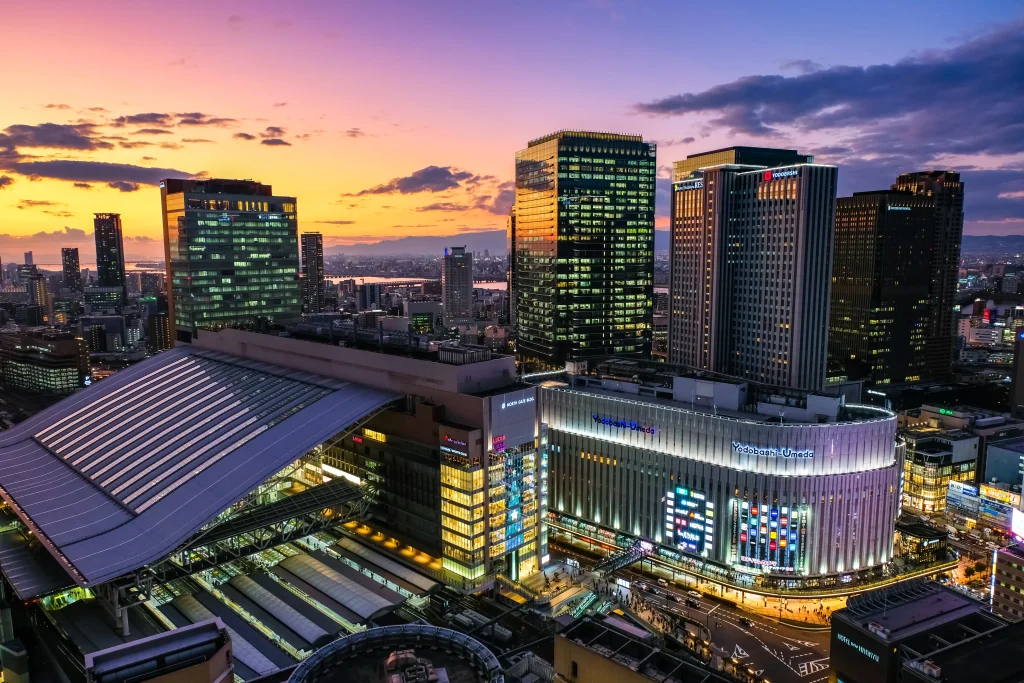
It works especially well when Osaka is also your base for Kyoto, Kobe or other Kansai trips. The area has an unusually dense concentration of luxury hotels, ranging from the direct station convenience of THE OSAKA STATION HOTEL to the more destination-like experience of Waldorf Astoria or Ritz-Carlton.
Read more: Japan’s Golden Route
Nakanoshima and Honmachi
This central corridor is calmer.
Conrad gives you elevated river and skyline views, while St. Regis puts several Osaka Metro lines directly underneath you at Hommachi. These locations work particularly well if you are exploring Osaka itself rather than starting every morning on a JR train.
Namba and Shinsaibashi
Stay in Minami when you want restaurants, shopping and evenings out to be part of everyday life.
W Osaka puts you close to Shinsaibashi, while Swissôtel sits above Nankai Namba. If Dotonbori is somewhere you expect to visit repeatedly rather than once, this part of the city makes sense.
Osaka Castle
Patina offers almost the opposite experience.
The attraction is space, greenery and Osaka Castle Park rather than nightlife outside the door. It is a strong choice when you want the hotel to be somewhere you spend time, not simply your base.
Tennoji and Abeno
Osaka Marriott Miyako gives this guide a useful southern option.
Tennoji connects easily to several parts of Osaka and works well for travelers whose itinerary leans toward southern Osaka or Nara. The high-rise setting is also the main reason to choose the hotel rather than treating it as another Marriott property.
Luxury hotels in Umeda and around Osaka Station
Waldorf Astoria Osaka

Waldorf Astoria Osaka occupies the upper floors of Grand Green Osaka beside the Osaka Station area. Rooms are on the 31st floor and above, and the hotel has a 20-metre indoor pool as part of its wellness facilities.
Its strongest argument is the combination: this feels like a hotel chosen for a special stay, but you are still in Umeda rather than retreating to a quieter part of Osaka.
Choose it over Four Seasons if being close to Osaka Station and staying in contemporary international luxury matter more than the ryokan-inspired GENSUI experience.
Do not confuse “beside Osaka Station” with “inside Osaka Station,” however. If eliminating every possible transfer and walk matters more than the hotel experience itself, THE OSAKA STATION HOTEL has the stronger practical case.
THE OSAKA STATION HOTEL, Autograph Collection
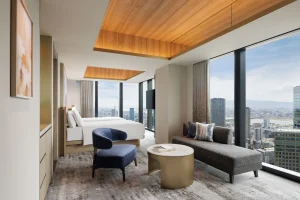
THE OSAKA STATION HOTEL is perfect for a rail-heavy trip.
The hotel has direct access from JR Osaka Station’s West Gate, and Shin-Osaka is only a short train ride away.
That matters when you arrive with luggage or use Osaka as a base for several day trips. The premium buys time and simplicity every day rather than an abstract sense of luxury.
One detail deserves attention before you book. The hotel’s large OFURO bath, dry sauna and cold bath are available only to guests in specified Specialty and Suite categories. A standard stay does not automatically include them.
If you mostly sleep at the hotel and spend your days elsewhere, this is one of the few properties where the location alone can still make the higher price easier to justify.
The Ritz-Carlton, Osaka
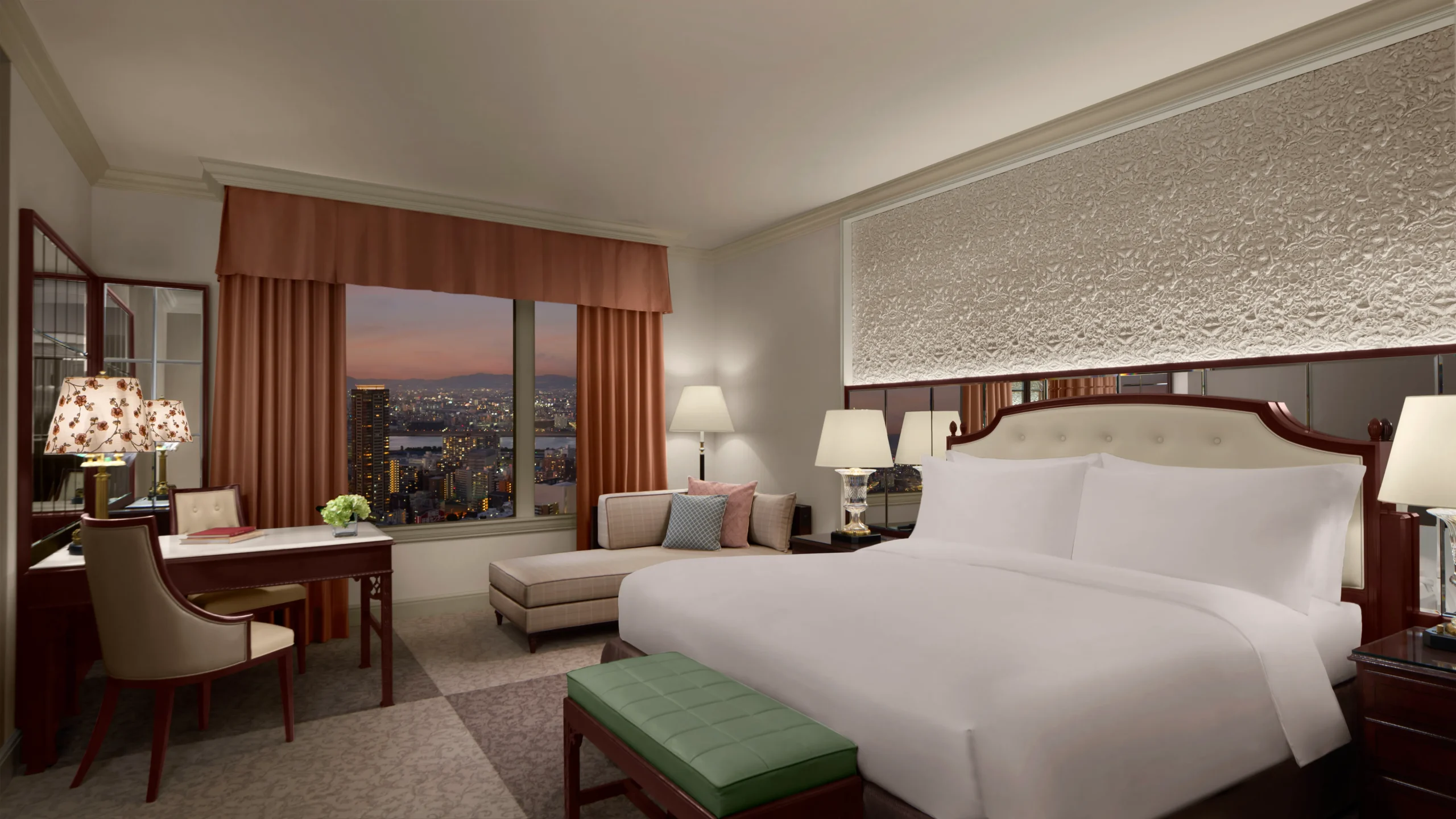
The Ritz-Carlton suits travelers who prefer classic hotel luxury to the more contemporary direction of Osaka’s newest properties.
One of its strongest upgrades is the Club Lounge. Guests with Club access can use a dedicated 34th-floor lounge with five culinary presentations during the day.
That makes the hotel more appealing when you intend to spend time there rather than simply pass through the lobby.
The European-inspired atmosphere is also an important part of the decision. Someone specifically looking for Japanese interior design may find Four Seasons or Patina more interesting. Someone who likes traditional grand-hotel service may prefer Ritz-Carlton precisely because it does not chase that style.
If you are comparing it with St. Regis, think first about location and service style: Ritz-Carlton gives you Umeda and a strong Club experience, while St. Regis gives you Hommachi and its signature Butler Service.
InterContinental Osaka
InterContinental becomes especially interesting when a standard room is not enough.
Its one-, two- and three-bedroom residences include fully equipped kitchens, while hotel guests can also use the 20-metre indoor pool without an additional daily pool fee.
For families, groups or longer stays, that practical flexibility can justify paying more much more convincingly than another list of restaurants and marble finishes.
Couples staying only a night or two may find a stronger sense of occasion elsewhere. For someone effectively wanting a serviced apartment without giving up hotel facilities, InterContinental has a clear role.
Four Seasons Hotel Osaka
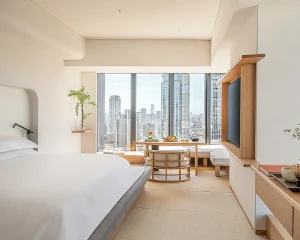
The reason to pay particular attention to Four Seasons Hotel Osaka is the GENSUI floor.
GENSUI consists of only 21 tatami-floored rooms and suites on the 28th floor, with sliding doors, futon bedding and access to the dedicated SABO tea lounge.
It gives travelers a ryokan-inspired room without leaving central Osaka.
The wording matters here: these are not private-onsen rooms. Four Seasons’ dedicated spa floor has Japanese ofuro bathing, a sauna, a 16-metre pool and treatment rooms, including a couples’ treatment suite with a private bath. That is different from natural hot-spring water in your guest room.
Osaka Station is about a ten-minute walk according to the hotel.
Choose Four Seasons if GENSUI or its wellness floor is genuinely part of what you want to experience. If you primarily want the shortest possible route to trains, there are better-positioned Umeda options.
Hilton Osaka

Hilton Osaka is less novel than the other Umeda hotels, which is not necessarily a disadvantage.
It sits across from JR Osaka Station with underground connections to surrounding shopping and subway lines, and the hotel has an indoor pool and fitness centre.
Its reason for staying on this list is straightforward reliability. You get a full-service international hotel in one of Osaka’s easiest locations without needing the hotel itself to be the main attraction.
That makes Hilton especially useful for travelers who value predictability, convenient transport and a familiar hotel format.
If you are comparing Hilton with Osaka Marriott Miyako, location is the bigger distinction than brand. Hilton makes more sense for Umeda and JR-based Kansai travel; Marriott Miyako is more interesting when high-floor views and Tennoji fit the route better.
Nakanoshima and Honmachi
Conrad Osaka
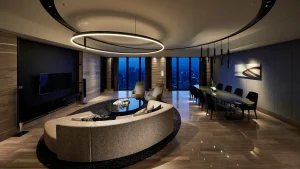
Conrad is one of the strongest choices when the view is part of why you are booking a luxury hotel.
The hotel occupies the upper floors of Nakanoshima Festival West Tower, has 164 rooms and suites, and its guestrooms use floor-to-ceiling windows. It is also connected to Higobashi and Watanabebashi stations.
Nakanoshima is calmer than Namba. You trade immediate nightlife for a quieter return at the end of the day.
That suits travelers who want an elegant city stay with views and good transport, but who do not need Dotonbori outside the door.
The St. Regis Osaka
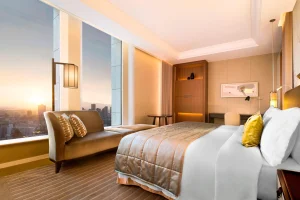
St. Regis sits at Hommachi with direct underground access and is only about a minute from Exit 7 of the station.
Its clearest luxury distinction is the Butler Service. Services can include unpacking and packing, garment pressing and help with arrangements during the stay.
That is a concrete reason to choose the hotel rather than simply saying its service is excellent.
Hommachi is also useful for exploring Osaka on the subway. The trade-off appears if you intend to depart from JR Osaka Station almost every morning. In that case, Umeda saves you an extra local journey each way.
So for Ritz-Carlton versus St. Regis, the question is less “which is better?” and more:
Do you want Umeda and a classic Club-hotel experience, or central subway access and Butler Service?
Namba and Shinsaibashi
W Osaka
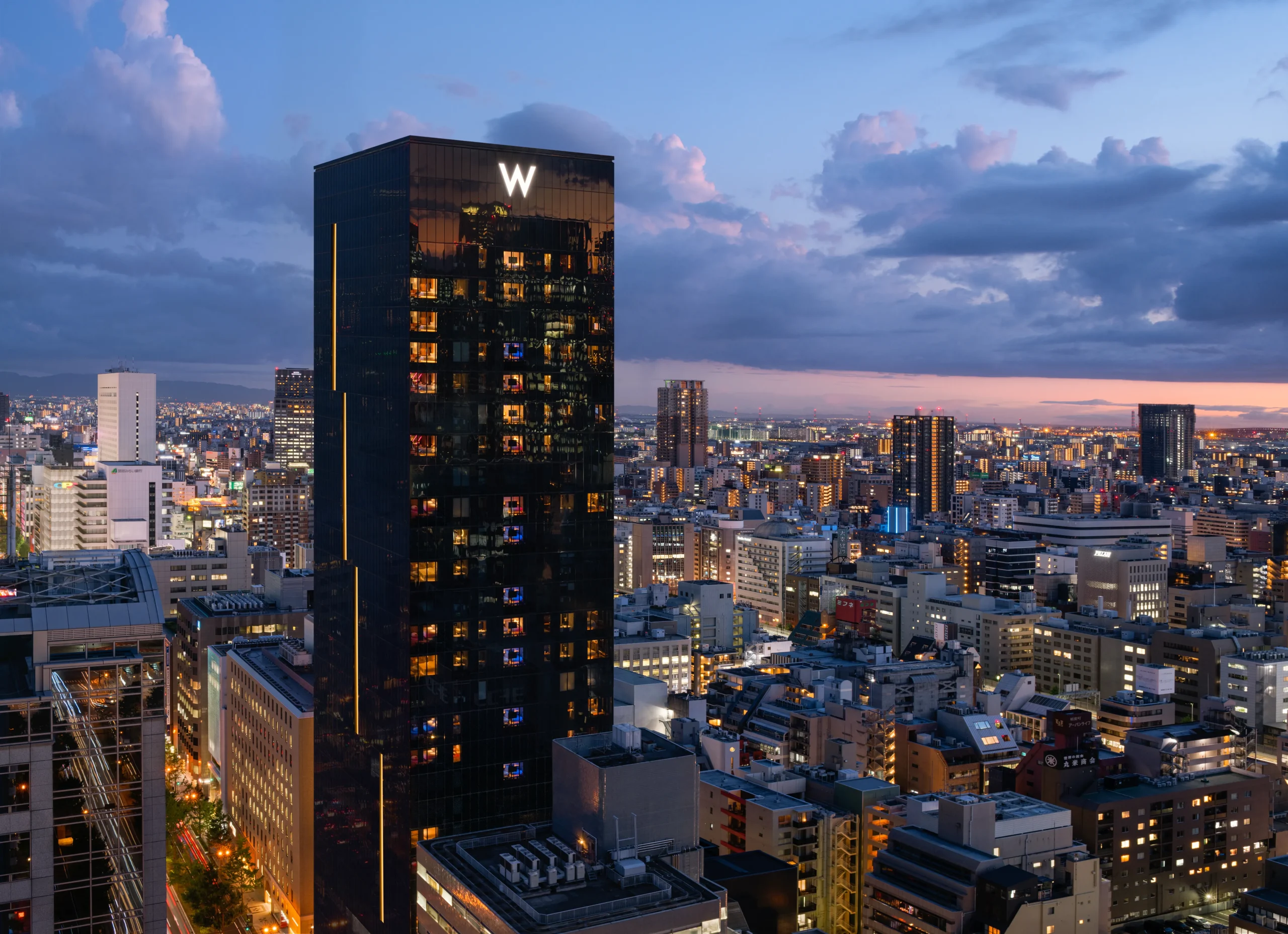
W Osaka is the easiest property here to recommend, or reject, based on personal taste.
The hotel is in Shinsaibashi and has AWAY Spa, an indoor WET pool and a fully equipped fitness facility.
But those facilities are not the main reason to stay.
The point is the bold contemporary design and Minami location. If shopping, bars and late dinners are a major part of your Osaka plans, the hotel fits naturally into the trip.
If you want restrained interiors, traditional Japanese atmosphere or somewhere that feels calm as soon as you enter, there are much better matches elsewhere on this list.
Swissôtel Nankai Osaka
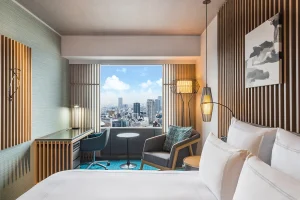
Swissôtel‘s position above Nankai Namba Station is difficult to beat for a particular kind of trip.
Nankai’s Rapi service links Kansai International Airport with Namba in roughly 35 minutes, and the hotel can be reached from the station without going outside.
This is also an excellent base if evenings around Dotonbori and Minami are important.
The wellness details need a little care. The hotel’s current guest information states that the gym and swimming pool are free for hotel guests, while use of some spa facilities varies by room type.
Swissôtel is not the newest hotel on this list. Its strongest reason to pay more is not novelty; it is the combination of airport access, Namba location and full-service hotel facilities.
Osaka Castle
Patina Osaka
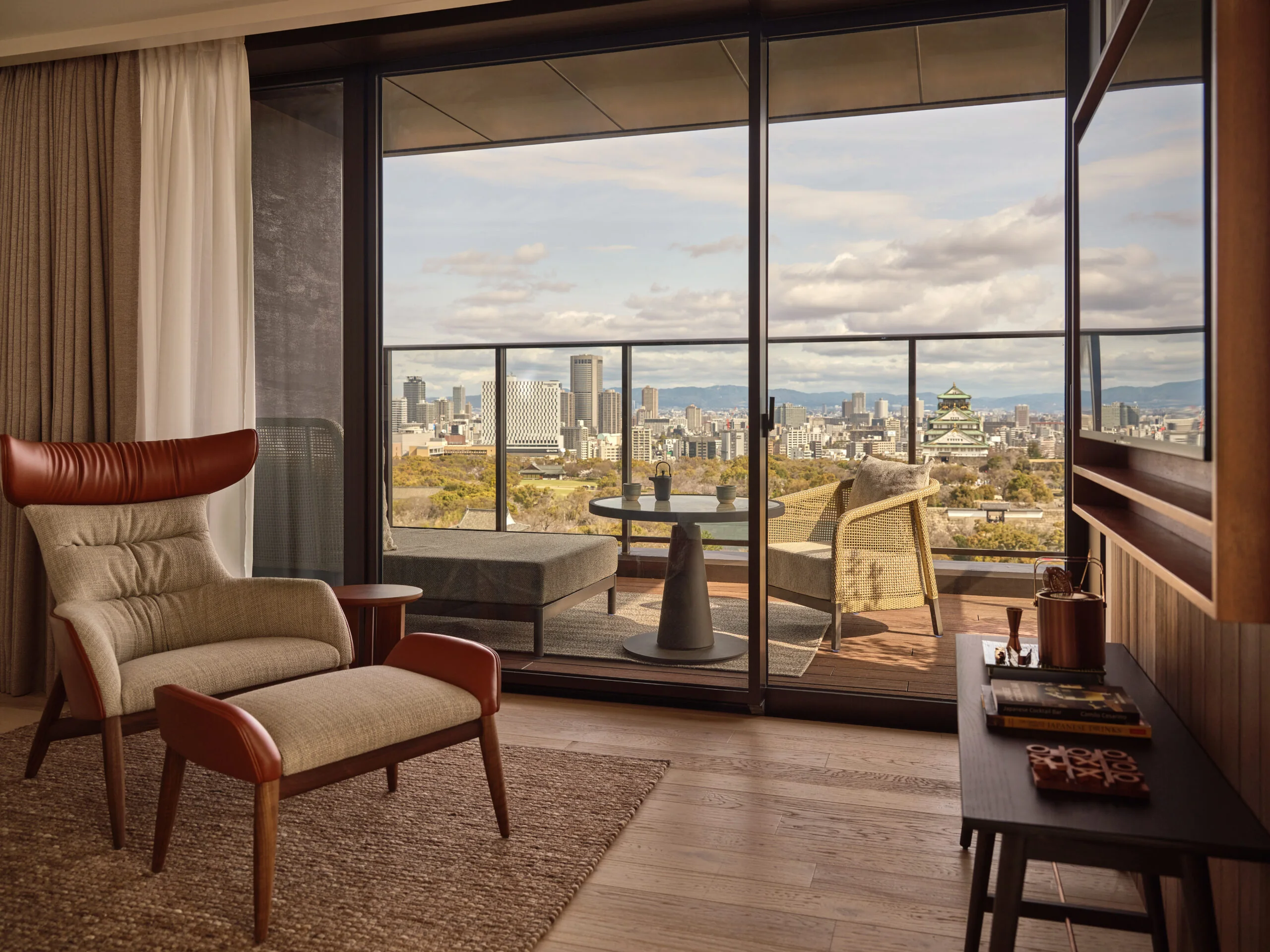
Patina is one of the best examples of a luxury hotel making sense because you intend to use the hotel itself.
It is one minute from the edge of Osaka Castle Park, and its 1,400-square-metre wellness area includes an indoor pool with views toward Osaka Castle.
That changes the pace of the stay. A slow morning, spa time or an afternoon around the park makes much more sense here than rushing back and forth from Dotonbori.
The transport trade-off is real. Tanimachi 4-chome is about an eight-minute walk and Morinomiya about nine minutes.
The hotel’s former complimentary shuttle should no longer be factored into your plans; Patina states that the service was discontinued after January 31, 2026.
Choose Patina when the castle setting, views and wellness time are part of what you want from Osaka. If the hotel is just somewhere you return to after midnight, much of its appeal goes unused.
Tennoji and Abeno
Osaka Marriott Miyako Hotel
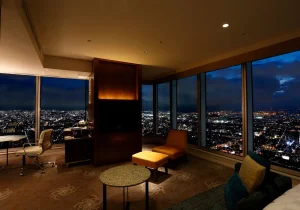
Osaka Marriott Miyako occupies floors 38 to 57 of Abeno Harukas. High-floor city views are central to the experience, and the hotel also offers a Club Lounge to qualifying guests.
This hotel deserved to remain in the guide because it solves a different location question from almost every other property here.
Tennoji is well placed for southern Osaka and can suit itineraries that include places such as Nara. It also lets you stay somewhere outside the Umeda-versus-Namba decision that dominates most Osaka hotel guides.
The strongest reason to pay more is still simple: the view.
If you want Minami nightlife outside the door or expect to make repeated departures from Osaka Station, another area will be easier. If Abeno Harukas and the southern side of the city fit your plans, Marriott Miyako becomes much more logical.
Which Osaka luxury hotel fits your trip?
For a rail-heavy Kansai itinerary, start with THE OSAKA STATION HOTEL. Waldorf Astoria, Ritz-Carlton and Hilton are also strong Umeda choices.
For a special stay near Osaka Station, Waldorf Astoria offers the stronger hotel-as-an-experience proposition.
For classic service and Club-level luxury, look at The Ritz-Carlton.
For families or longer stays, InterContinental‘s residences deserve particular attention.
For a Japanese-inspired room within a city hotel, Four Seasons GENSUI is the most distinctive option.
For skyline views in a quieter central setting, Conrad is one of the strongest matches.
For personalized service, St. Regis stands apart through its Butler Service.
For design and Minami nightlife, W Osaka makes the most sense.
For Kansai Airport plus Namba, Swissôtel is exceptionally practical.
For wellness and Osaka Castle, Patina gives you the clearest reason to slow the trip down.
For very high-floor views and Tennoji, Osaka Marriott Miyako fills a niche none of the Umeda hotels do.
For reliable Umeda convenience without needing the newest hotel, Hilton remains a sensible option.
Couples planning a honeymoon or anniversary should think less about the brand name and more about how they want to spend their evenings and mornings. A quiet Patina or Four Seasons stay creates a very different trip from nights around W Osaka and Shinsaibashi.
Read more: Planning a Honeymoon in Japan
Practical things to check before booking
Hotel facilities may depend on your room category
Do not assume that every facility pictured on a hotel website is included with every room.
THE OSAKA STATION HOTEL’s OFURO is restricted to specified Specialty and Suite categories. Club lounges are usually tied to particular room types or status. Spa-area conditions can differ even within the same hotel.
If one feature is the main reason you are choosing the property, check that your specific room includes it.
A Japanese bath is not necessarily an onsen
An ofuro is a bath. An onsen uses naturally occurring hot-spring water.
Four Seasons can give you Japanese-style bathing in an impressive city-hotel setting, but that is not the same experience as staying at a hot-spring ryokan.
If natural hot springs are one of the priorities of your Japan trip, it may be better to spend your luxury budget on an actual onsen stay elsewhere rather than trying to recreate it in Osaka.
Remember Osaka’s accommodation tax
Osaka Prefecture calculates accommodation tax per person, per night according to the room charge.
Since September 2025, the current brackets are ¥200 for a room charge of ¥5,000 to under ¥15,000 per person, ¥400 from ¥15,000 to under ¥20,000, and ¥500 from ¥20,000 upward.
This means you should not simply assume that every room at every hotel carries the maximum charge. It depends on the taxable room rate per person.
Where should you spend the luxury budget?
Osaka is not automatically the place in Japan where you should splurge.
If your hotel is only somewhere to sleep between long days outside, there is little reason to pay for facilities you will never use.
But there are cases where the premium buys something useful rather than decorative:
- direct access to a station you will use every day;
- a much more comfortable room for a longer stay;
- a view you actually want to spend time enjoying;
- a Club Lounge, residence or Butler Service you value;
- a wellness-focused day built into the itinerary.
The best luxury hotel is therefore not necessarily the most expensive one or the hotel with the most awards. It is the property whose main advantage matches the way you are actually traveling.
If you are still deciding whether your premium stay belongs in Osaka, Kyoto or another part of Japan, ENJYU can help build accommodation choices around the wider itinerary rather than treating the hotel as a separate decision.