10 Best Luxury Hotels and Ryokan in Kyoto: How to Choose the Right Stay
In Kyoto, where you stay can change the feel of the trip. A hotel in Higashiyama puts temples and old streets within walking distance. A central hotel makes restaurants, shopping and transport easier. Stay in the northern hills or Arashiyama, and you trade some convenience for forest, gardens and more time away from the city crowds.
There is also the choice between a luxury hotel and a ryokan, a traditional Japanese inn. A hotel gives you more freedom to spend the whole day out. At a ryokan, the room, dinner and service are often part of the experience, so it makes sense to leave more time for the stay itself.
The ten places below each have their own pros and cons. Some are best used as a base for exploring Kyoto. Others are worth choosing because you actually want to spend time there.
Kyoto luxury hotels and ryokan at a glance
| Stay | Area | A good choice for | Main consideration |
|---|---|---|---|
| Park Hyatt Kyoto | Higashiyama | Old streets and temple sightseeing | One of Kyoto’s busiest visitor areas |
| Four Seasons Hotel Kyoto | Higashiyama | Gardens, spa and a slower hotel stay | Best if you plan to use the hotel facilities |
| The Ritz-Carlton, Kyoto | Kamo River / Nakagyo | Central dining and sightseeing | More international in style than a ryokan |
| HOTEL THE MITSUI KYOTO | Nijo | Central Kyoto with natural onsen | Quieter setting than Gion |
| Ace Hotel Kyoto | Karasuma Oike | Design and easy transport | A lifestyle hotel rather than formal five-star luxury |
| Aman Kyoto | Takagamine | Forest, onsen and quiet | Around 30 minutes by car from Kyoto Station |
| Imperial Hotel, Kyoto | Gion | Staying within Kyoto’s traditional performing-arts district | A new hotel in a historic building |
| Hiiragiya | Central Kyoto | A classic Kyoto ryokan stay | Meals and the rhythm of the stay matter |
| Sumiya Ryokan | Central Kyoto | Tea culture and traditional dining | Reservations need more planning |
| HOSHINOYA Kyoto | Arashiyama | River scenery and retreat time | Less practical as a base for central Kyoto |
First decide which part of Kyoto you want around you
For many first-time visitors, Higashiyama is the easiest area to picture when thinking of Kyoto. Kiyomizu-dera, old lanes, wooden buildings and several major temples are nearby. Staying here is particularly pleasant if you like walking and want to see the streets early in the morning, before daytime sightseeing gets busy.
Central Kyoto, including Nakagyo and Karasuma Oike, is less postcard-like but easier for everyday travel. Restaurants, shops and public transport are close at hand, and you can move between different parts of Kyoto without starting every journey from the eastern temple districts.
Gion suits travelers who are especially interested in Kyoto’s traditional performing arts and evening atmosphere. It is still central, but the character of the neighborhood is quite different from the commercial streets around Karasuma and Kawaramachi.
The more secluded options require a different approach. Northern Kyoto is greener and quieter, while Arashiyama puts the river and mountains much closer. Both can be rewarding, but the journey back and forth to central Kyoto takes time. They make more sense when that slower setting is one of the reasons you chose the hotel.
1. Park Hyatt Kyoto
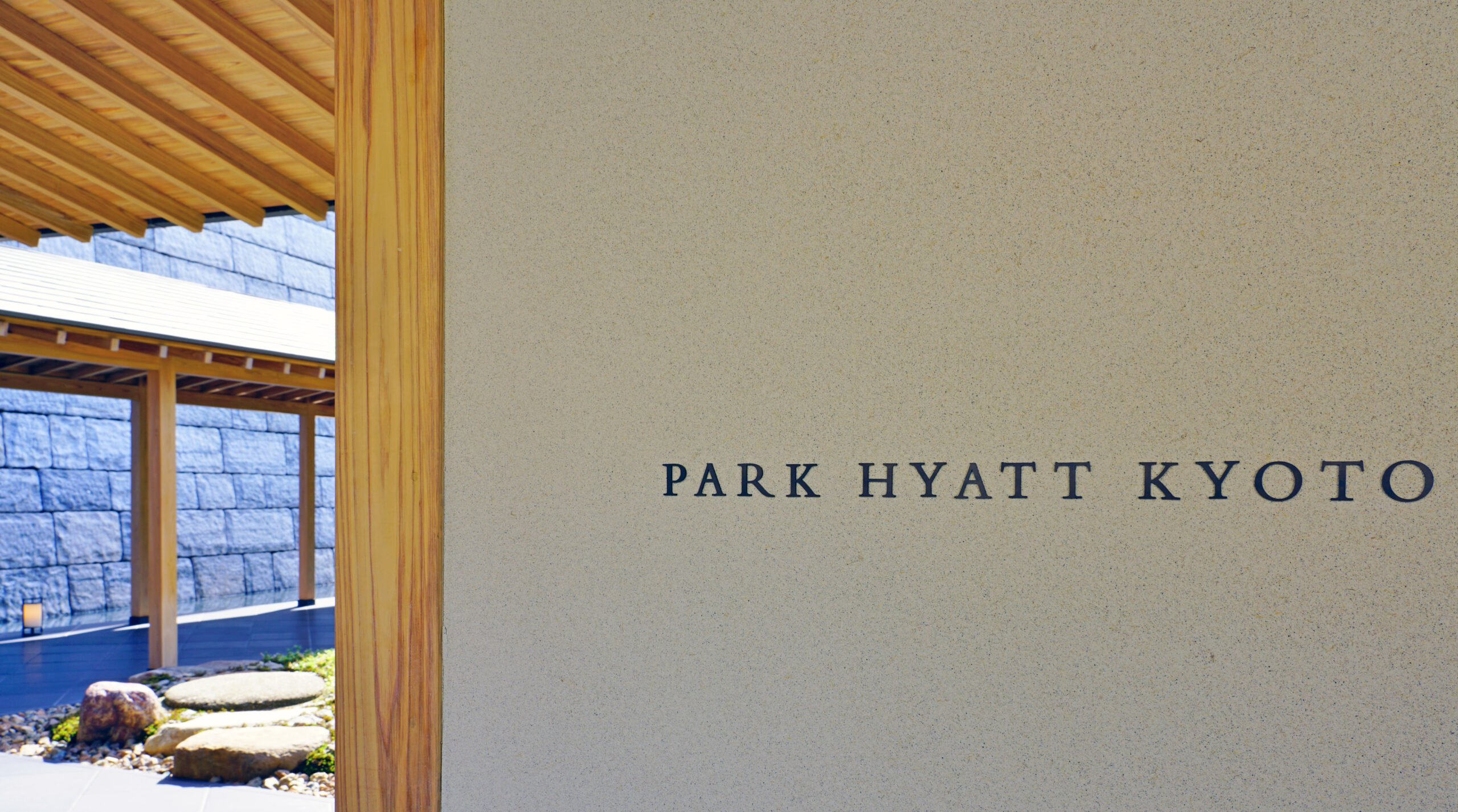
Park Hyatt Kyoto sits directly on Ninenzaka, one of the best-known historic streets in Higashiyama. It has 70 rooms, including nine suites, with some rooms looking across the tiled rooftops toward Yasaka Pagoda.
The location is the main reason to stay here. You do not have to plan a separate journey to experience old Higashiyama. Step outside and you are already there, with Kodaiji, Kiyomizu-dera and the surrounding lanes nearby.
That also means accepting a popular sightseeing area. Ninenzaka can be crowded during the day. For travelers who enjoy an early walk, however, staying nearby gives you a chance to see a quieter side of the neighborhood before many visitors arrive.
Park Hyatt is a particularly good fit for a first Kyoto visit where temples and historic streets are high on the list.
2. Four Seasons Hotel Kyoto
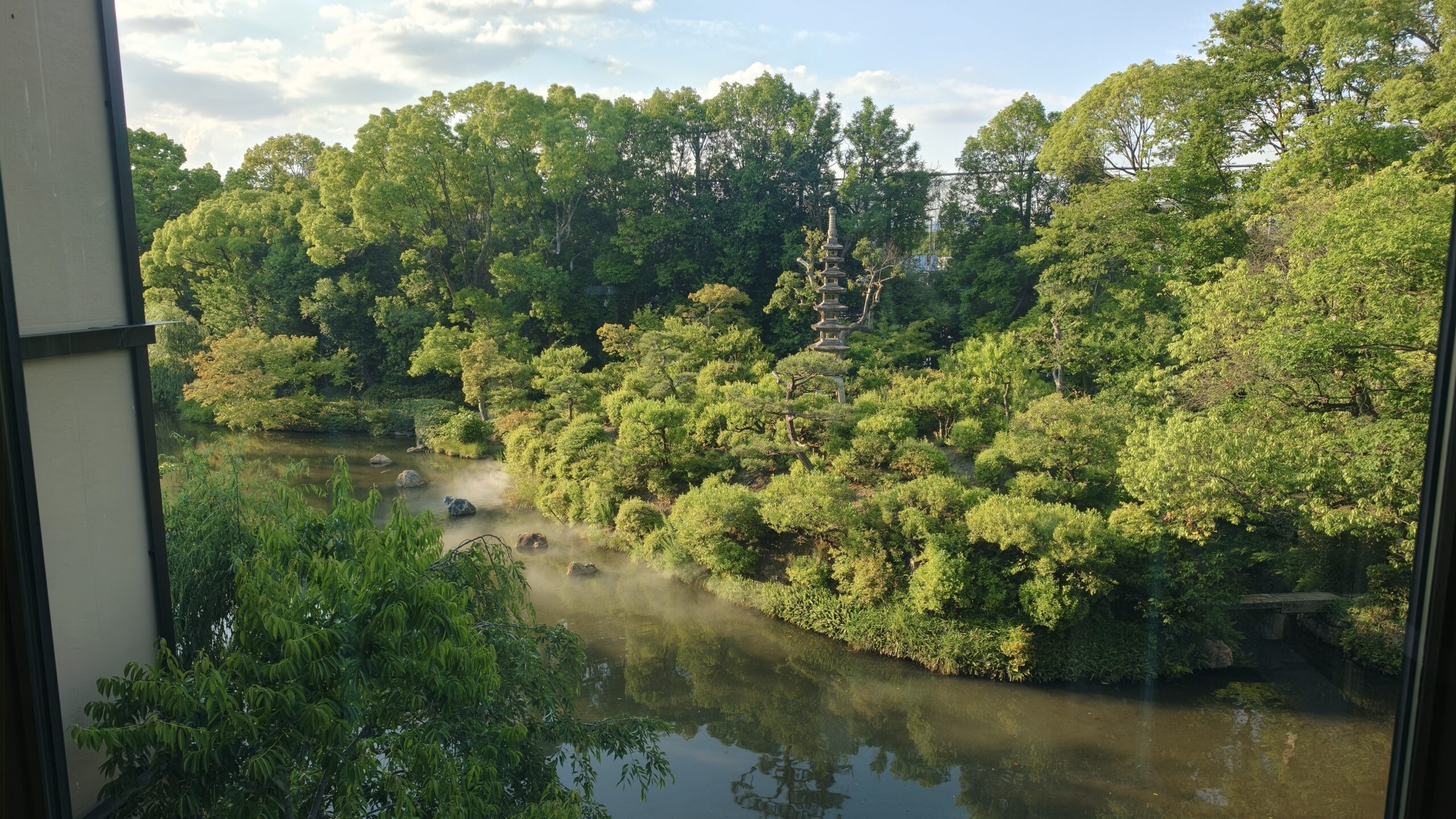
Four Seasons Hotel Kyoto is also in Higashiyama, but it offers a different kind of stay.
The hotel is built around Shakusui-en, a pond garden with a history of around 800 years. Rather than treating Kyoto’s garden culture as decoration, the property has a substantial historic garden at its center.
This matters if you want time at the hotel to be part of the trip. You can spend part of the morning around the garden, use the spa or pool, and still be close enough to continue into Higashiyama afterwards.
If your Kyoto schedule is packed from breakfast until late evening, you may not get much value from those facilities. Park Hyatt has the stronger old-street location; Four Seasons makes more sense if you also want space to slow down.
3. The Ritz-Carlton, Kyoto
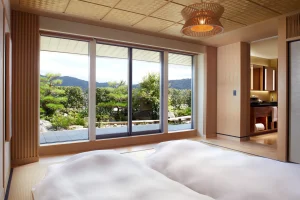
The Ritz-Carlton is on the Kamo River in Nakagyo, with 134 rooms and suites and views toward the river or Higashiyama mountains.
Its setting works well for travelers who want a high-end hotel without giving up easy access to central Kyoto. Gion, Pontocho, Teramachi and the main downtown dining areas are within reach, while the riverside location gives the hotel some distance from the busiest commercial streets.
Inside, Japanese materials and design details are used throughout, but this is still an international luxury hotel. It is a good choice if you value familiar five-star service and central access. If your main reason for paying more is to experience a traditional style of accommodation, Hiiragiya or Sumiya would give you something much more distinct.
4. HOTEL THE MITSUI KYOTO
HOTEL THE MITSUI KYOTO sits beside Nijo Castle in central Kyoto. One feature sets it apart from most city hotels: it has its own natural hot-spring source around 1,000 meters below the property.
The main Thermal Spring is a swimsuit bathing area, and private onsen are also available. Some suites have their own outdoor natural hot-spring baths.
This makes the hotel useful for travelers who want an onsen experience without adding a separate hot-spring town to the itinerary. You can spend the day sightseeing in Kyoto and still return to natural hot-spring bathing in the evening.
The area around Nijo is calmer than Gion or southern Higashiyama, but it remains central enough for sightseeing. That combination of location and onsen is the strongest reason to choose it.
Read more: Choosing an Onsen Town in Japan
5. Ace Hotel Kyoto
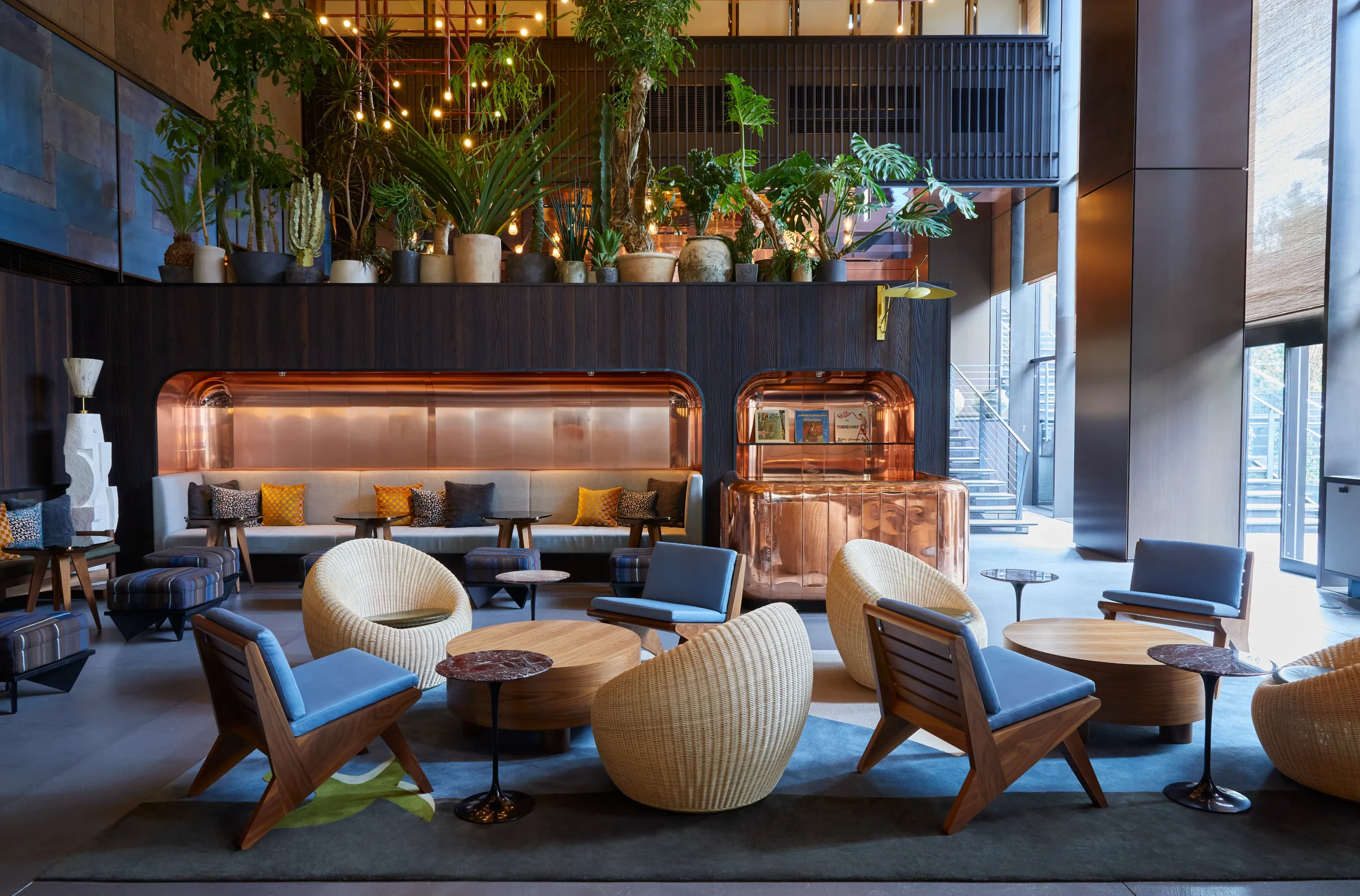
Ace Hotel Kyoto is the outlier on this list, which is also why it is useful to include.
It is in central Kyoto and connects directly to Karasuma Oike Station. Kyoto Station is roughly ten minutes away by car. The hotel occupies part of the Shinpuhkan complex, combining an older building with newer architecture and a more relaxed, design-focused atmosphere.
This is not the place to choose because you want formal five-star service. It works better for travelers who care about architecture, music, restaurants and being able to move around the city easily.
If the large international luxury hotels feel a little too formal for your taste, Ace gives you a comfortable central base with much more personality.
6. Aman Kyoto
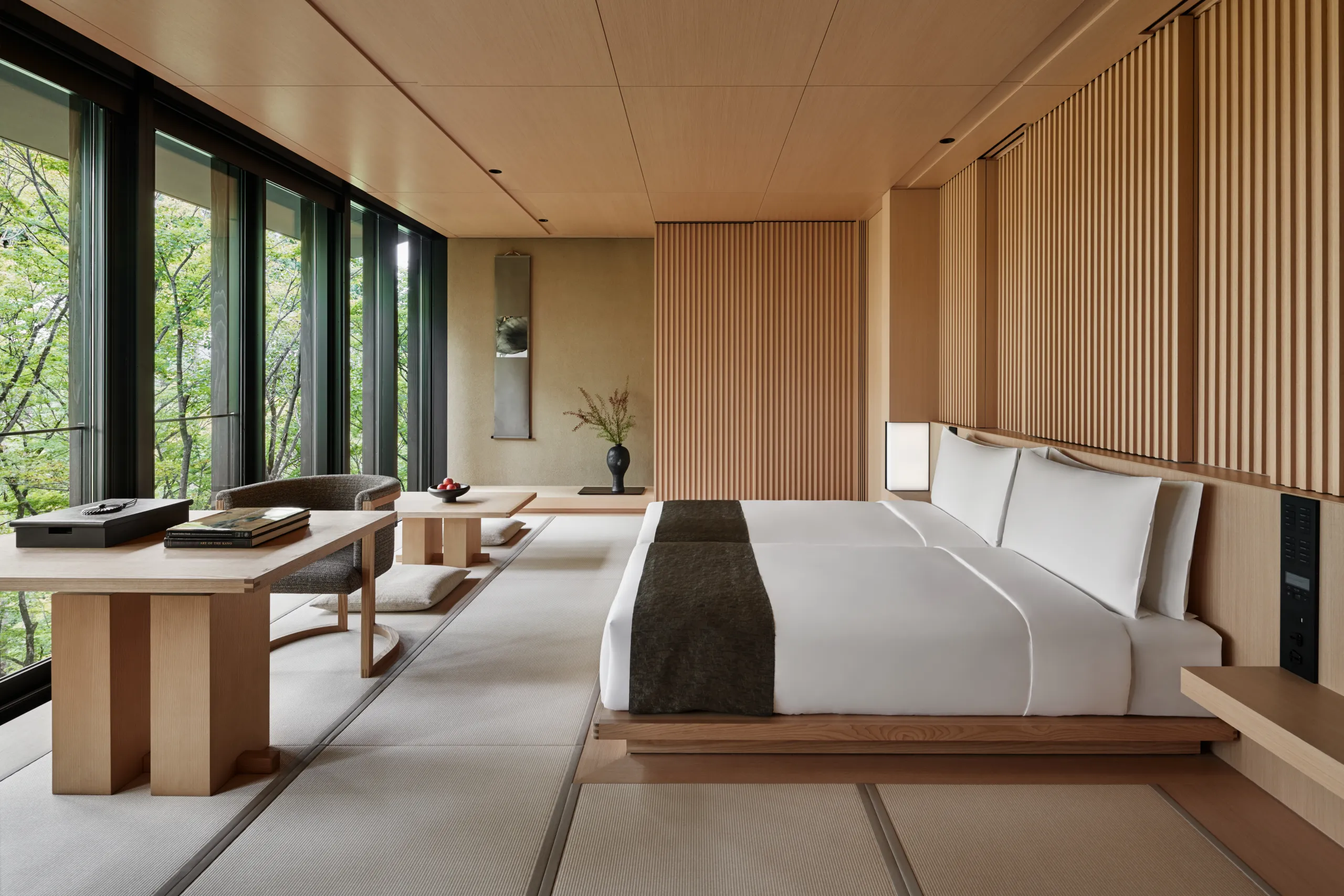
Aman Kyoto is in Takagamine, in the forested north of the city. Its 26 rooms, suites and pavilions use a contemporary interpretation of traditional ryokan design, and natural mineral hot springs are part of the spa.
The setting is very different from central Kyoto. The resort is about 30 minutes by car from Kyoto Station, so staying here means using taxis or hotel transport more often.
That is not necessarily a disadvantage. It depends on the trip. If you have several days in Kyoto and want one of them to be slow, Aman gives you forest, onsen and much more space than a central hotel. If you only have two days and a long temple list, the travel time becomes harder to justify.
Aman’s value is in giving part of the Kyoto stay over to the property itself.
7. Imperial Hotel, Kyoto
Imperial Hotel, Kyoto opened on March 5, 2026, in Gion Kobu. It incorporates the former Yasaka Kaikan, a nationally registered Tangible Cultural Property on the grounds of the Gion Kobu Kaburenjo theater.
The location is what makes this new hotel particularly interesting. Gion Kobu is one of Kyoto’s traditional entertainment districts, associated with geiko and maiko performers and the annual Miyako Odori dance performances.
The hotel therefore suits travelers who want to stay close to this side of Kyoto rather than simply visit Gion for an hour in the afternoon.
Because the property itself is new, it does not yet have the long hotel history of places such as the Ritz-Carlton or Kyoto’s old ryokan. What it does have is a location and building that are difficult to reproduce elsewhere.
Read more: Geisha Experiences in Japan
8. Hiiragiya
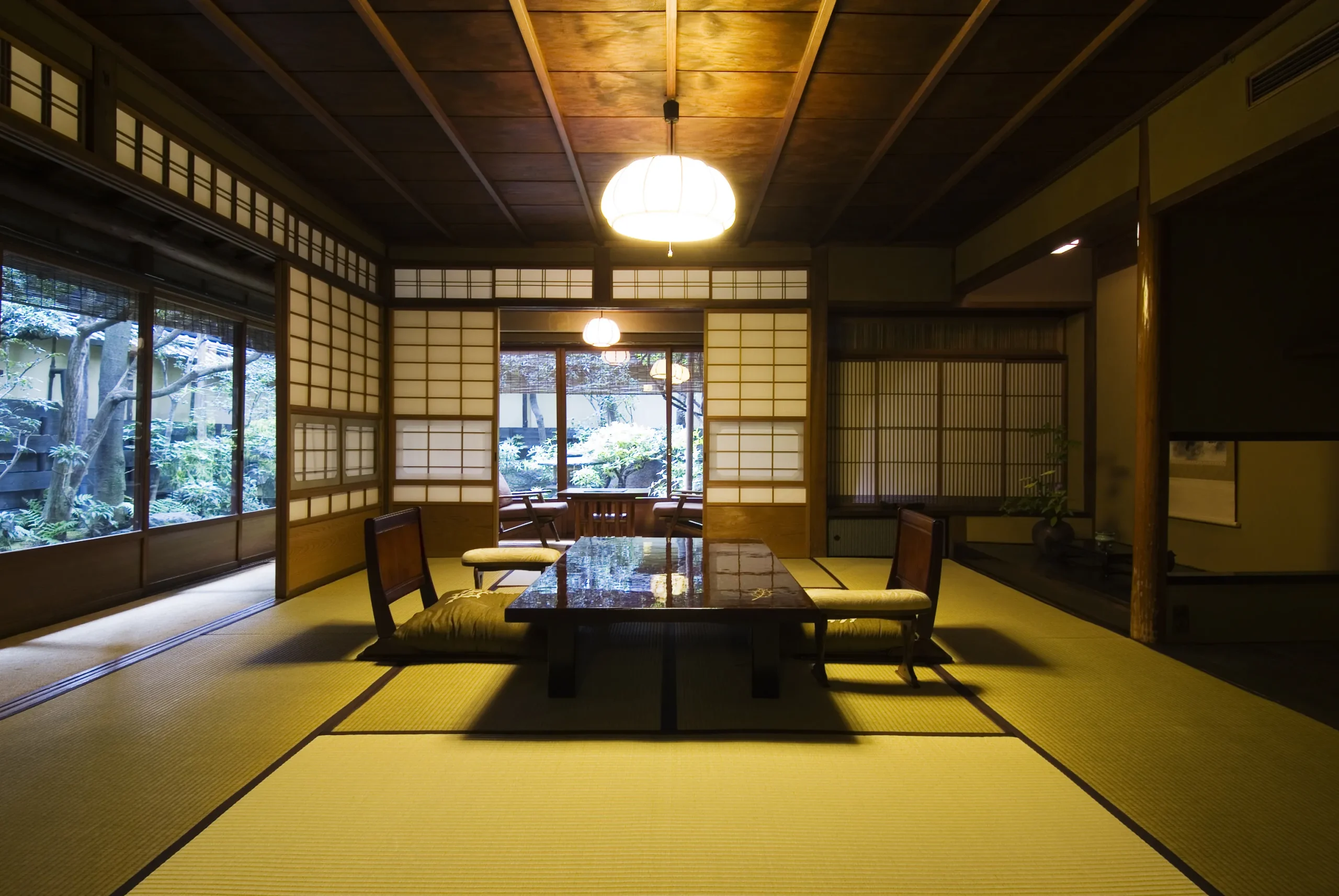
Hiiragiya was established in 1818 and remains one of Kyoto’s long-established ryokan.
The main building has 17 rooms in traditional sukiya-style architecture, while the newer wing has seven rooms with a more contemporary Japanese design. Dinner and breakfast are normally included in the stay.
The difference from a large luxury hotel becomes clear once you arrive. A ryokan stay is built around the room, meals, bathing and service rather than a long list of public facilities.
That makes Hiiragiya a good choice when staying in a traditional Kyoto inn is one of the reasons for the trip. It is less suitable if you intend to arrive late every night after dinner elsewhere. In that case, you would be paying for an experience without leaving much time to enjoy it.
9. Sumiya Ryokan
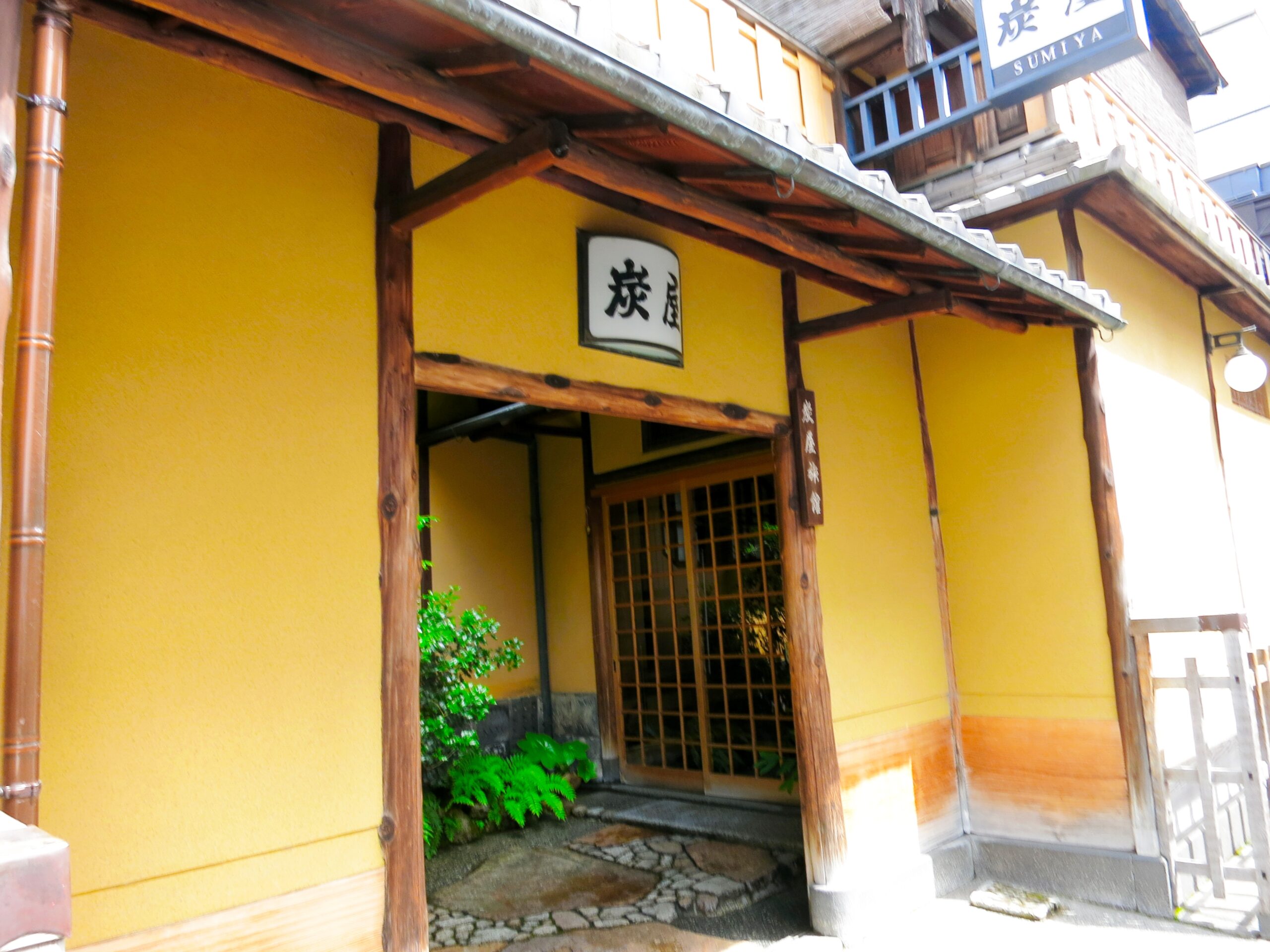
Sumiya Ryokan is another traditional ryokan in central Kyoto, only a short distance from Hiiragiya.
Tea culture is especially important here. Dinner is Kyoto-style kaiseki, a seasonal multi-course meal, served dish by dish in the guest room. On the 7th and 17th of each month, guests can also arrange an after-dinner tea experience in the ryokan’s tea room.
The booking process is more traditional too. A reservation request can be sent by phone or email form, but the reservation is only complete after Sumiya replies. Guests arriving after 6:00 PM are asked to contact the ryokan in advance because dinner preparation is already underway.
These details are not reasons to avoid Sumiya. They simply show why a ryokan is different from booking an international hotel. The evening needs to be planned around the stay.
Read more: Tea Ceremony in Japan
10. HOSHINOYA Kyoto
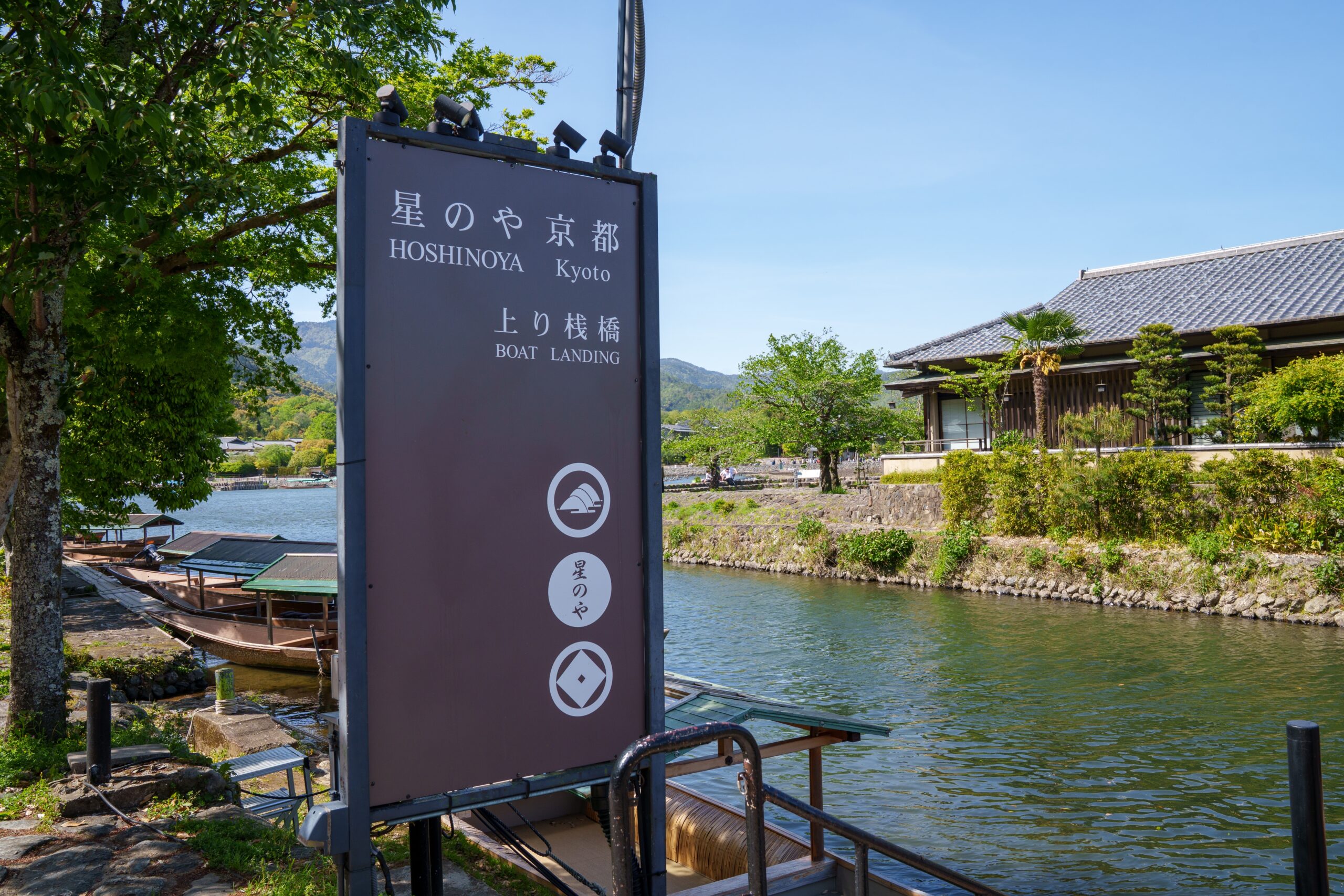
HOSHINOYA Kyoto is in Arashiyama, beside the river and away from the central sightseeing districts. Its 25 rooms look toward the surrounding gorge.
Guests normally travel from the boat waiting area near Togetsukyo Bridge to the property by private boat. Advance reservation is required, and boat transfers can be cancelled when weather or river conditions make them unsuitable. In that case, the hotel uses private cars instead.
The boat is a nice arrival, but it also tells you something practical about the property. HOSHINOYA is not designed as the easiest possible base for crossing Kyoto from morning to night.
It works better when you actually want to stay in Arashiyama, spend time by the river and allow part of the itinerary to slow down. If most of your plans are in central and eastern Kyoto, a more central hotel will save time.
Read more: River Cruises and Traditional Boat Rides in Japan
Hotel or ryokan: do you have to choose?
Not necessarily.
A hotel works well on busy sightseeing days because there is usually little reason to organize the rest of the day around it. You can leave early, eat wherever you want and return late.
A traditional ryokan is different. Dinner may be served at a set time, breakfast is often part of the stay, and the room and bathing experience are part of what you are paying for.
For a first visit, combining the two can make sense. You might use a central hotel for most of the stay, then spend one or two nights at a ryokan or nature retreat when you can arrive earlier and enjoy it properly.
There is little advantage in paying for a traditional dinner and carefully prepared room if your plan is to arrive just before bed.
Kyoto’s accommodation tax changed in 2026
Kyoto City changed its accommodation tax on March 1, 2026. It is charged per person, per night, based on the accommodation fee for each guest.
| Accommodation fee per person, per night | Tax |
|---|---|
| Under ¥6,000 | ¥200 |
| ¥6,000 to ¥19,999 | ¥400 |
| ¥20,000 to ¥49,999 | ¥1,000 |
| ¥50,000 to ¥99,999 | ¥4,000 |
| ¥100,000 or more | ¥10,000 |
The upper bands are relevant when booking expensive hotels and ryokan. If each person’s accommodation fee falls into the ¥100,000-or-more bracket, a couple would pay ¥20,000 in accommodation tax for that night.
Check the final booking conditions rather than assuming the price shown on the first booking screen includes the tax. This is particularly important because hotel websites do not all present the charge in the same way.
Exact room prices are harder to compare in an evergreen guide. Kyoto rates can change considerably by room type and travel date, especially during popular spring and autumn periods.
A few things to know before booking a Kyoto ryokan
Ryokan are generally easiest to enjoy when you know what the stay involves before arriving.
Dinner and breakfast may be included, and dinner can be served at a fixed time. Traditional rooms usually use tatami flooring and may use futon bedding, although the exact setup differs by property. Bathing arrangements also vary. Some places have private baths, while others offer shared bathing.
Pricing can also be different from a standard hotel. Hiiragiya, for example, quotes its standard accommodation rates per person and includes dinner and breakfast.
If any of these things matter to you, check them before booking instead of assuming all ryokan work the same way.
Kyoto’s official tourism guide also recommends reserving accommodation as early as possible for popular periods such as cherry blossom season, autumn foliage and Gion Matsuri.
So which luxury stay should you choose?
If your priority is walking through old Higashiyama and visiting temples, Park Hyatt Kyoto has one of the strongest locations.
If you want Higashiyama but also expect to spend time in the hotel, Four Seasons adds its historic pond garden and larger resort facilities.
For a central luxury hotel, The Ritz-Carlton gives you good access to downtown Kyoto and the Kamo River. HOTEL THE MITSUI is the stronger choice if natural onsen are important.
Ace Hotel suits travelers who prefer contemporary design and an easy central location to formal luxury.
If quiet is part of the plan, Aman Kyoto offers a very different experience in the northern forest. HOSHINOYA Kyoto does something similar in Arashiyama, with the river and surrounding landscape shaping the stay.
For traditional accommodation, Hiiragiya and Sumiya deserve to be considered separately from the hotels. They are not trying to provide the same experience.
And for travelers drawn specifically to Gion and Kyoto’s performing-arts culture, the newly opened Imperial Hotel, Kyoto adds an interesting option in a historic building.
The best choice is not necessarily the hotel with the longest list of facilities. In Kyoto, location and the style of stay can matter just as much.
Read more: Luxury Hotels in Japan
Planning the hotel around the rest of your trip
A secluded resort, a traditional ryokan and a central Kyoto hotel can all work well, but they produce very different itineraries. The decision gets harder when you want to combine two accommodation styles or fit Kyoto between other parts of Japan.
ENJYU’s tailor-made tours can arrange reservations, transportation, guides and the wider itinerary around the pace and experiences you want. That can be particularly useful if you want a ryokan night without making the rest of the Kyoto schedule unnecessarily complicated.