Why December Works and Who It’s For
December is a good time to visit Japan if you like a trip with some texture to it. The month has winter lights, hot springs, clear evenings, and the slow turn toward the New Year, but it usually still feels easier than peak cherry blossom or late-autumn travel. That mix suits travelers who want more than a checklist of sights and do not mind planning around a few seasonal quirks.
It also helps that December does not feel the same everywhere. Tokyo can feel polished and lively after dark. A cold onsen town in Tohoku can feel quiet in the best possible way. Hokkaido is leaning fully into winter. Even for first-time visitors to Japan, that range gives you room to shape the trip around the mood you actually want rather than forcing the country into one seasonal stereotype.
What December in Japan Actually Feels Like
A lot of travelers picture December in Japan as one continuous snow scene. That is not really how it works. In many big cities on the Pacific side, including Tokyo, Nagoya, Kyoto, and Osaka, you are more likely to get crisp air, dry days, and cold evenings instead of snow. If snow is the main goal, you need to choose the right region.
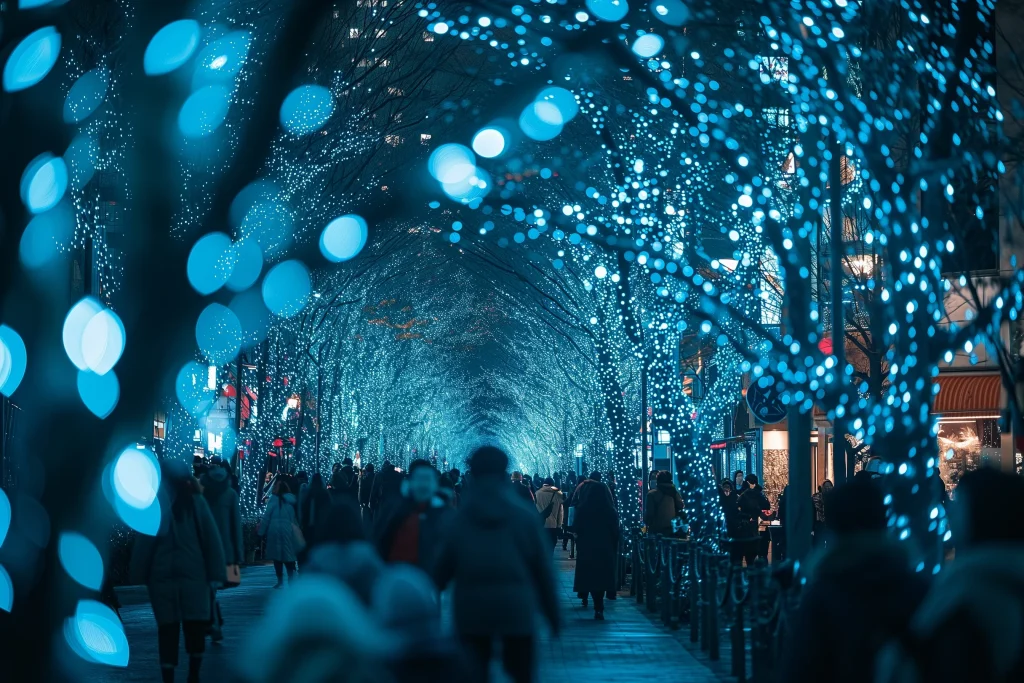
What you do get almost everywhere is a stronger sense of the year winding down. Streets are lit up, seasonal food starts to shift, and daily life gradually turns toward preparations for Shōgatsu, the New Year period. Christmas is visible, especially in shopping districts and public illuminations, but it does not lead into the same kind of public holiday stretch many visitors from overseas expect. The bigger current is year-end movement: people booking trains home, businesses preparing to close, and cities changing mood by the week.
That change is part of what makes the month interesting. One night may be all winter lights and busy department stores. A few days later, you will see yuzu (a citrus fruit) everywhere to be used in baths near the winter solstice, end-of-year gatherings, and families starting to make preparations for osechi (beautifully crafted New Year dishes).
What to Pack: Dressing for a Month That Changes by Region
December’s range — crisp Pacific-side cities, proper Alpine cold, Hokkaido’s full winter, Okinawa’s mild warmth — makes packing genuinely dependent on where the itinerary actually goes, more so than almost any other month on the calendar.
For Tokyo, Osaka, and Kyoto, daytime highs typically sit in the upper single digits to low teens Celsius (mid-40s to low-50s Fahrenheit), with sharper evenings once the sun goes down. A warm coat, a scarf, and layers underneath cover most days comfortably; heavy snow gear is unnecessary here, since snow itself is rare on the Pacific side.
For Nagano’s Alps or Tohoku’s onsen towns, the temperature drop is real rather than cosmetic. Thermal base layers, waterproof boots, gloves, and a proper insulated coat matter here, particularly for evening walks between a ryokan and a bathhouse in falling snow.
For Hokkaido, treat it as full winter gear: insulated waterproof boots with real tread, thermal layers, a windproof outer shell, and hand warmers if you’ll be outdoors for extended periods. Daytime highs regularly sit below freezing.
For Okinawa, the packing list flips entirely — light layers and a light jacket for evenings are usually enough, since daytime temperatures commonly stay in the high teens to low twenties Celsius (mid-60s to low-70s Fahrenheit) even in December.
The practical takeaway: a single December packing list rarely works if the itinerary spans more than one of these zones. Building the wardrobe around the coldest and mildest stops on the actual route — rather than “December in Japan” as a single climate — avoids both overpacking and being caught out.
Seasonal Food Worth Seeking Out
December’s food shifts alongside everything else. Nabe (hot pot) becomes the default way to eat out or at home, with regional variations worth trying beyond the standard version — Hokkaido’s ishikari nabe (salmon and miso) and Kyushu’s motsunabe (offal hot pot) are two well-known examples that rarely turn up on menus outside their home regions. Oden, the simmered dashi-based dish sold everywhere from convenience stores to dedicated stalls, becomes a genuine cold-weather staple rather than an occasional snack.
Toward the very end of the month, the osechi preparations mentioned above move from a background detail to something visible everywhere — depachika (department store basement food halls) shift their entire displays over to pre-order osechi sets in the final week of the year, and it becomes one of the clearest visual signs that the country has turned its attention to the New Year. In colder northern regions, this same stretch is also peak season for fresh seafood — Hokkaido’s crab season and the smelt-fishing culture in several inland lake towns are both genuinely tied to December and January rather than available year-round.
Where December Makes the Most Sense in Japan
Tokyo | City Experiences and Winter Lights

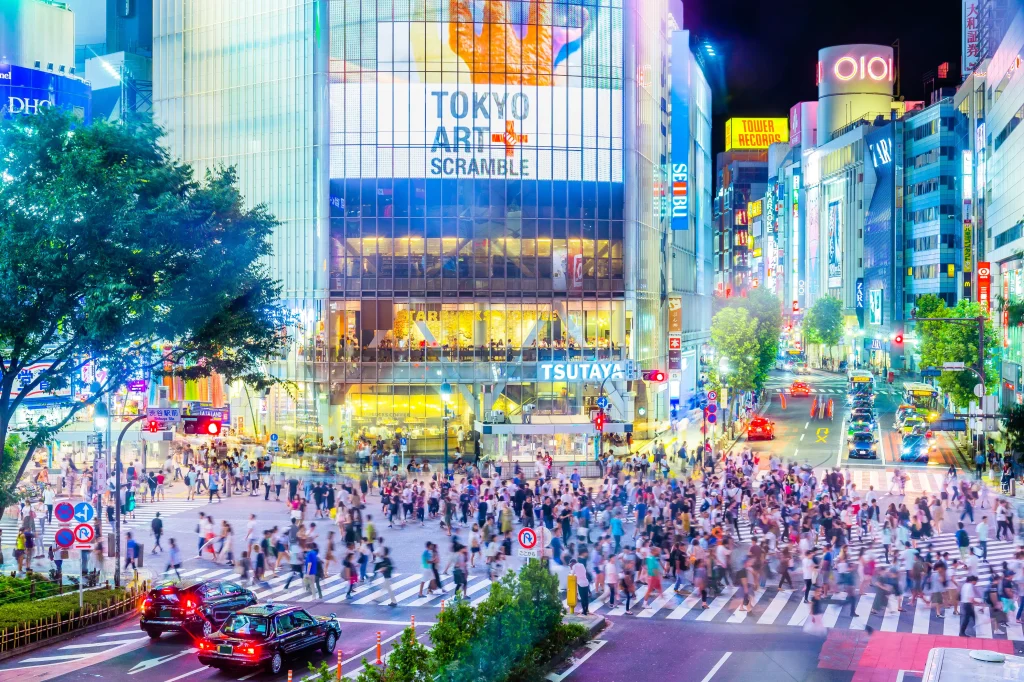
If you want December to feel lively, Tokyo is an easy choice. The city does winter evenings well. Marunouchi, Omotesando, and other central areas take on a cleaner, sharper look at night, and the cold air makes walking more comfortable than it is in the humid months. You can spend the day in neighborhoods, gardens, or museums, then let the evening carry the seasonal mood.
This is also where December works well for first-time visitors to Japan. You do not need to chase one major event. The city itself gives you enough winter atmosphere through its illuminated streets, public spaces, and the rhythm of the streets.
Kanazawa | Historic Streets with a Winter Edge

Kanazawa makes sense for travelers who want a historic city with a little more bite in the air. It is not just about hoping for snow at Kenrokuen garden. The appeal is the way winter sharpens the city’s districts. Higashi Chaya neighbourhood feels quieter, gardens look more stripped back and graphic, and seafood season is stronger. December works well here for people who want a cultural stop that feels grounded rather than overpacked.
It also works as a smart detour. If Kyoto is already on your radar, Kanazawa offers a different kind of historic city experience, a touch less crowded and a little more northern in temperament.
Tohoku | Onsen Towns and Quiet Winter Retreats

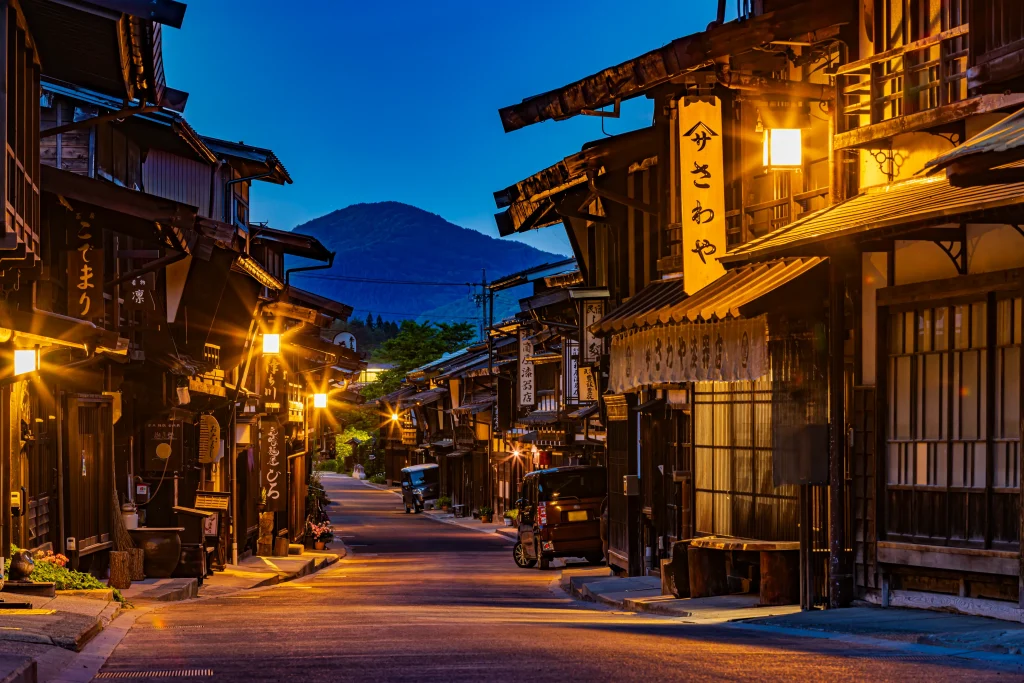
December is when onsen country starts to make obvious sense. In places like Ginzan Onsen or around Aomori’s Sukayu area, the cold stops being a problem and turns into part of the reason to go. Steam against winter air, an early dark evening, a hot bath, dinner at the ryokan, then a slow morning walk. That rhythm is hard to beat if you want the trip to settle for a day or two.
This is where Japan in December feels least like a generic city break. You are choosing a place where winter can feel relaxing and recharge you. For a longer trip, adding even one onsen stop can completely change the pace.
Nagano & the Japanese Alps | Skiing Without Committing to Hokkaido
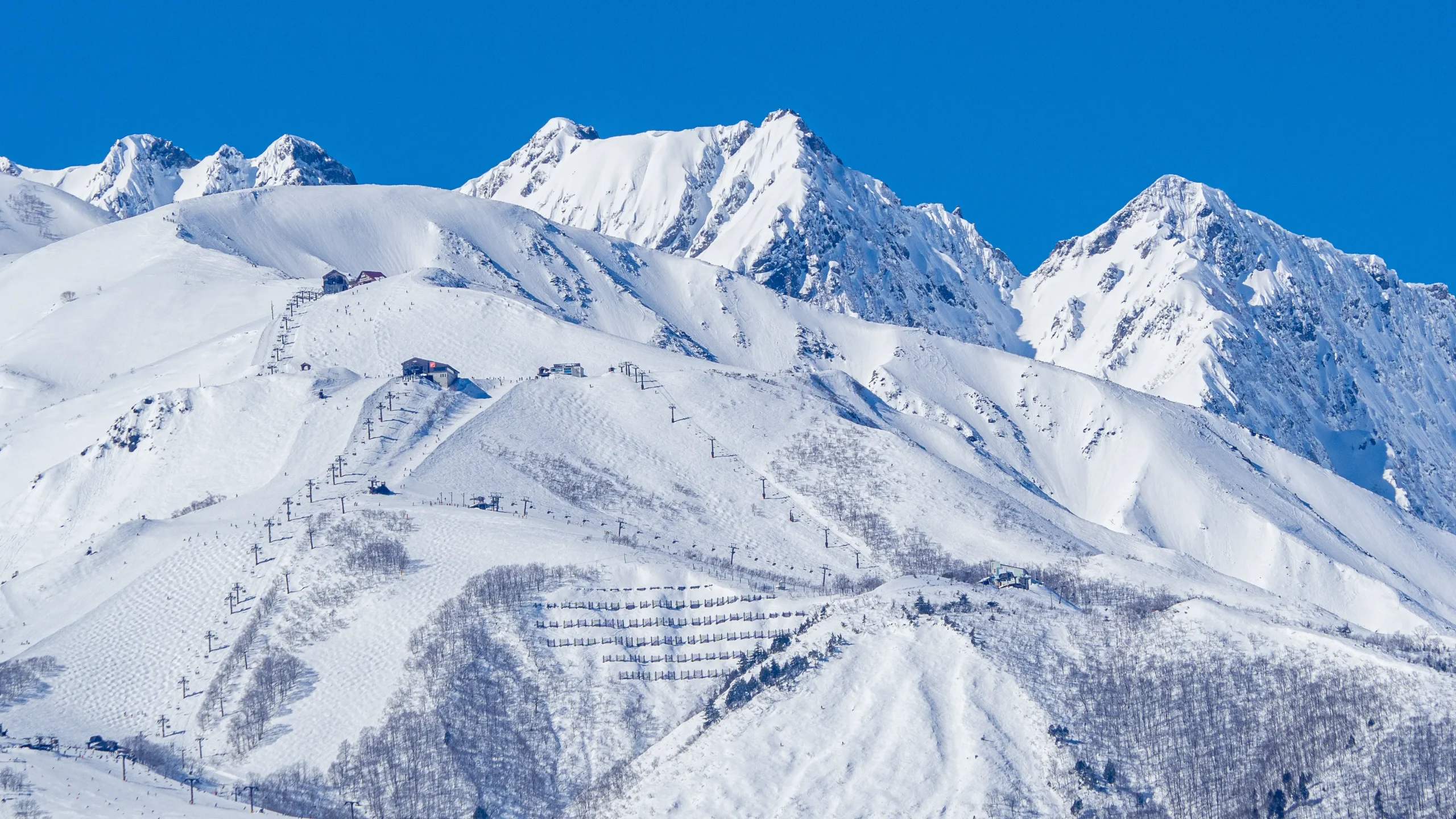
If snow is the priority, most guides jump straight to Hokkaido — but that skips over a genuinely useful middle option. The Japanese Alps in Nagano and Gifu, anchored by Hakuba Valley’s ten interconnected ski areas, start building solid snow cover through December, with reliable coverage for skiing and snow play typically established by the time the Christmas season arrives.
What makes this region different from Hokkaido isn’t the snow quality — Niseko’s powder reputation is well earned — but the logistics. Hakuba sits close enough to Tokyo (roughly three hours by train and bus) that it works as an add-on to a Tokyo-based itinerary rather than a trip of its own, in the way Hokkaido genuinely deserves to be treated as its own trip. For travelers who want snow and skiing without restructuring the whole itinerary around a second major region, the Alps are the more realistic fit.
Read More: Things to Do in Nagano: Mountains, Castle Towns, and More
Hokkaido | Snow, Skiing, and Northern Landscapes

If you really do want snow in December, Hokkaido is the clearest answer. Resorts such as Niseko and Tomamu are the obvious names, but even outside ski plans, the appeal is simple: winter arrives here properly. Landscapes look different, daylight feels different, and the whole trip leans into that northern climate instead of just a colder version of autumn.
It is better to treat Hokkaido as its own trip logic. Trying to squeeze it into a short Golden Route itinerary usually creates more transit than pleasure. If snow is the point, it’s best to commit to it.
Read More: Things to Do in Hokkaido in Winter: Snow Festivals, Onsen, Drift Ice, and More
Okinawa | A Warm-Weather Alternative and Whale Season
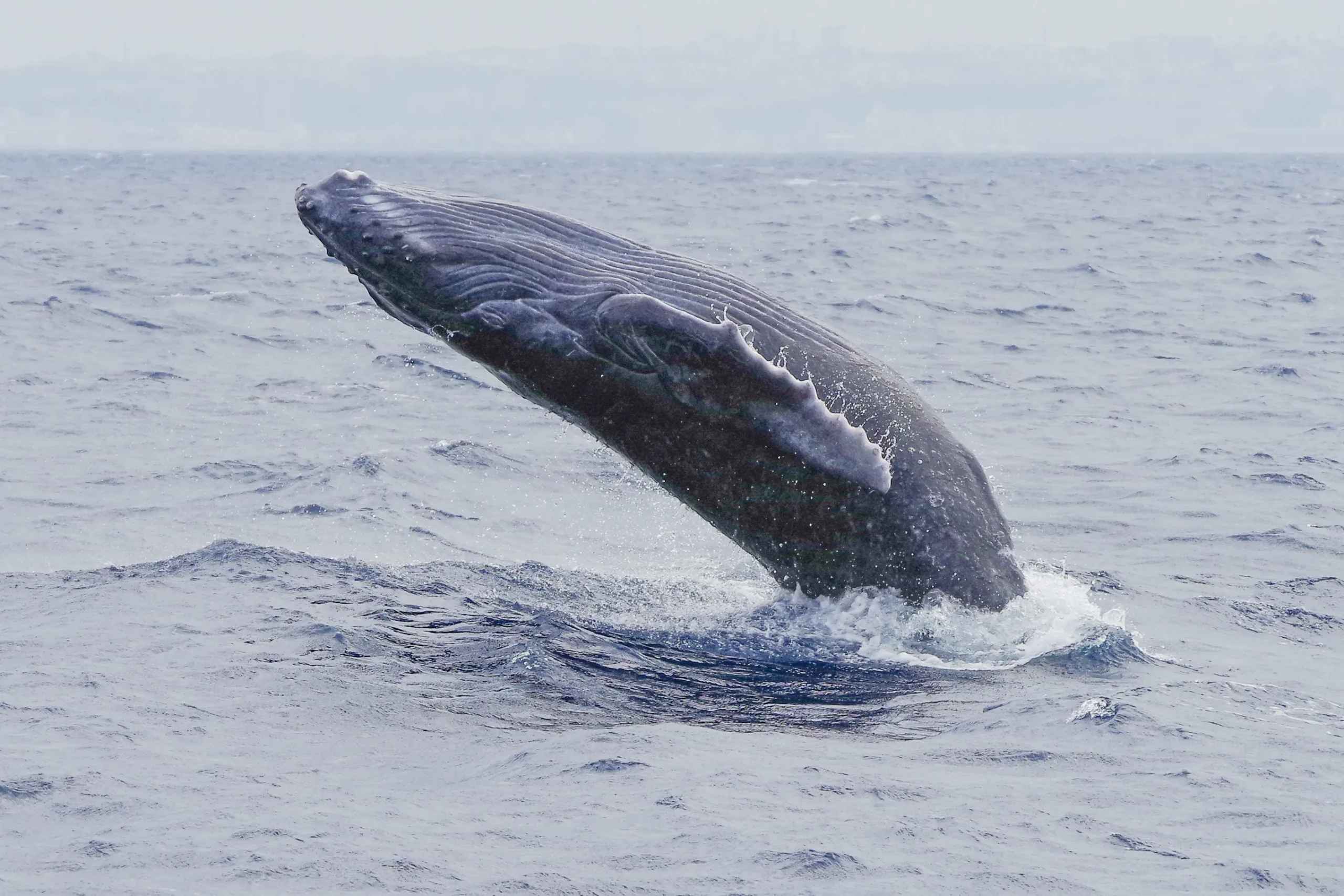
Not every December trip has to lean into the cold. If the appeal of winter illuminations and onsen towns is real but the appeal of freezing evenings is not, Okinawa is the counter-argument built into the same month. While Honshu and Hokkaido are turning toward winter, Okinawa is just starting its whale-watching season — humpback whales migrate south from Siberian waters to breed and calve in the warmer seas around the Kerama Islands, typically from late December through early April, with sightings becoming more reliable through January and February.
The trade-off is honest: you are choosing distance from the winter-city mood this article is mostly built around. But for a traveler who wants to end a Japan trip somewhere genuinely warm, or who is bringing family members who would rather not stand in freezing temple courtyards at midnight, Okinawa in December is a legitimate answer rather than a compromise. It also tends to be less crowded and less expensive than Okinawa’s peak summer season, since most visitors still think of it as a beach destination for warmer months.
Matching the Month to the Trip: A Quick Comparison
With six regional options now on the table, it helps to see them side by side rather than as a long list to read through in order:
| Region | What You’re Choosing | Best Fit For |
| Tokyo | City energy, illuminations, easy logistics | First-time visitors, travelers who don’t want to chase one specific event |
| Kanazawa | Historic streets with a sharper winter edge | Travelers who want a Kyoto-adjacent cultural stop with fewer crowds |
| Tohoku (onsen towns) | Slow, quiet recovery days | Anyone adding one deliberately restful stop to a busier itinerary |
| Nagano Alps (Hakuba) | Reliable snow and skiing near Tokyo | Travelers who want snow without committing to Hokkaido as its own trip |
| Hokkaido | Full winter commitment | Travelers for whom snow and skiing are the actual point of the trip |
| Okinawa | Warmth and whale season | Travelers ending a trip somewhere mild, or families avoiding deep winter cold |
None of these cancel each other out. Each fits a different version of “why December” — the sections below add festivals, timing, and practical logistics into the mix, but choosing a regional focus is the first decision worth making.
Illuminations Worth Planning Around
December’s winter-lights mood, mentioned earlier for Tokyo, is not limited to one city or one evening. A handful of illuminations are large or distinctive enough to actually plan a stop around, rather than stumbling into by accident:
| City | Illumination | What Makes It Worth a Stop |
| Tokyo (Ebisu) | Yebisu Garden Place’s Baccarat chandelier display | A genuinely massive Baccarat crystal chandelier — one of the largest of its kind — combined with a champagne-gold light display across the whole complex |
| Osaka | Midosuji Illumination (part of Festival of the Light in Osaka) | Roughly four kilometers of Osaka’s central boulevard lit end to end — one of the longest illuminated streets in the country |
| Sapporo | Sapporo White Illumination | Japan’s first-ever illumination event, running since 1981, spread across multiple sites in central Sapporo including Odori Park |
| Hirosaki | Winter Cherry Blossom Illumination | A genuinely unusual effect: snow settled on Hirosaki Castle Park’s bare cherry branches is lit pink from below, making the trees look like they’re blooming in the dead of winter |
That last one deserves a second look if it’s new to you: it started in 2017 as a crowdfunded local project by residents who wanted to see cherry blossoms even in winter, and it has since become one of Aomori’s signature seasonal sights — a reminder that Tohoku’s appeal in December goes beyond onsen towns alone.
December Festivals Across Japan
December also has more festival life than people sometimes expect.
Chichibu Night Festival, held in early December in Saitama, mixes ornate floats, winter air, and fireworks in a way that feels very different from summer festivals.
In Nara, Kasuga Wakamiya Onmatsuri brings processions and performing arts into the last stretch of the year with a much older rhythm.
And in Kyoto, Okera Mairi at Yasaka Shrine carries you right to the edge of the New Year, with people taking home sacred fire to light the first fire of the year.
You would not build an entire first trip around one of these unless the timing really lined up. Still, if your dates do match, a December festival can give the month some depth that a standard winter-event list never quite reaches.
Read More: Chichibu Night Festival: Dates, Schedule, Fireworks, and How to Visit
Sumo Jungyo: Watching Wrestlers Prepare
| Tour | Date | Venue | Price | Details |
|---|---|---|---|---|
| 1-Day Katano (Osaka) Sumo Jungyo Tour | December 9, 2026 | Ikiiki Land Katano | JPY 25,000 | |
| 1-Day Hiratsuka (Kanagawa) Sumo Jungyo Tour | December 15, 2026 | Hiratsuka General Gymnasium | JPY 25,000 |
For travelers whose dates fall in early-to-mid December, another kind of seasonal gathering worth considering is a sumo jungyo — a training tour where professional wrestlers prepare away from the grand tournament venues. Jungyo sessions are smaller and more accessible than the formal basho tournaments held in Tokyo, Osaka, Nagoya, and Fukuoka.
Two English-guided jungyo experiences are available in December: one in Katano, Osaka (December 9), and another in Hiratsuka, Kanagawa (December 15). There is a chance to see the wrestlers’ daily preparation up close rather than the polished tournament atmosphere. This works especially well for travelers whose itineraries do not align with the official tournament calendar, or who prefer the quieter, less-crowded setting of a training session.
Ringing in the New Year: Where to Experience Joya-no-kane
One exception to “timing has to line up” is New Year’s Eve itself. Okera Mairi is part of a broader tradition worth understanding on its own: Joya-no-kane, the ringing of a temple bell 108 times at midnight on December 31st, once for each of the worldly desires said to trouble the human mind in Buddhist teaching. Unlike the festivals above, it happens the same night every year, so it doesn’t require the same kind of date-matching — only being in Japan on New Year’s Eve.
You don’t need to be in Kyoto to experience it. In Tokyo, Meiji Jingu is the country’s most visited hatsumōde (first shrine visit) destination, drawing enormous crowds through the earliest days of January — arriving right around midnight puts you in the middle of that shift from one year to the next. Zōjō-ji Temple, near Tokyo Tower, offers its own version of Joya-no-kane along with a striking view of the tower itself lit up behind the temple grounds, making it a quieter but still atmospheric alternative for travelers who want the tradition without Meiji Jingu’s scale. Neither requires advance booking — you simply show up.
Early December vs Late December
This matters more than people think. Early and mid-December are usually the easier part of the month for travelers. Seasonal events are running, cities still feel open for normal sightseeing, and you get the winter mood without as much year-end pressure. If you want the sweet spot between atmosphere and convenience, this is often it.
Late December is a different kind of trip. After Christmas, the tone changes fast. Decorations start to come down, New Year preparations become more visible, and attention shifts toward family time, shrine visits, and year-end logistics. That can be rewarding if you want to see Japan at a moment that feels local and real, but it is less forgiving if you were hoping for a simple sightseeing week with everything running as usual.
Is December Actually Quiet? What the Data Says
Much of the case for December made above rests on it feeling easier than peak cherry blossom or autumn travel — and that holds up. But it’s worth being precise about what “easier” means, because December is not actually a quiet month by international arrival numbers. According to Japan’s tourism data, December has become one of the busier months for inbound visitors in recent years, driven heavily by travelers from other parts of Asia moving around their own year-end and New Year holidays. The early-vs-late timing advice above still applies — early-to-mid December is genuinely the calmer window within the month — but “quieter than spring” and “quiet” are not quite the same claim.
There’s a cost angle worth adding to the picture, too. Outside the final week or two of the year, December can actually be one of the more reasonably priced months to visit Japan — flights and hotel rates outside the year-end surge are often lower than during cherry blossom season or Golden Week, since December sits outside Japan’s biggest domestic travel windows apart from the New Year period itself.
Practical Trade-Offs: Closures, Crowds, and Booking Timing
The main practical point is not the cold. It is timing.
As the New Year period approaches, some museums, smaller attractions, and businesses close for several days, while trains and hotels can get busier around domestic holiday movement. You do not need to be anxious about this, but you do need to check.
December rewards a trip with intention, but it is not the month to leave every key booking to chance, especially if you want a ryokan stay, a ski area, or intercity travel near the end of the month. In return, you get a version of Japan that feels seasonal without needing to fight peak spring or autumn crowds.
Who December Is Best For
December works especially well for travelers who like winter cities, hot springs, evening walks, and a trip that feels shaped by the season rather than dominated by one headline attraction. It is also a good fit for people who are happy to combine a classic route with one or two colder, quieter stops.
It is less ideal if you want guaranteed snow everywhere, or if you strongly dislike changing business hours and holiday closures. In that case, February for snow or another month for easier cross-country travel may suit you better. December is not difficult, but it does respond well to a little judgment.
A Smarter December Itinerary: A Few Good Detours
The easiest way to improve a December trip is not to add more cities. It is to add one seasonal layer. A Tokyo stay paired with a winter-lit evening district works better than overloading the schedule. Kyoto and Osaka start to feel richer if you add Nara at the right moment. A busy city run becomes much more memorable with one night in an onsen town.
That is really the month in miniature. December rewards editing. Instead of trying to see all of Japan in winter, choose the version of winter you actually want: city light, historic streets, hot water and cold air, or proper snow – or, if winter itself isn’t the point, Okinawa’s warmth instead.
December Is Not Peak Season, but It Can Be the Right Season
December is not Japan’s most famous travel month, and that is part of the appeal. It asks for a little more thought than a simple blossom-season trip, but it gives a lot back: quieter winter atmosphere, better evenings, stronger seasonal food, and a clearer sense that the country is moving through a real moment in the year, not putting on a show for visitors.
A December Itinerary That Already Does the Editing for You
If the idea of pairing a winter city with one quieter, colder stop appeals to you, ENJYU JAPAN’s 7-Day Japan in December Tour is built around exactly that logic. It opens in Tokyo with the season’s evening atmosphere — including the Marunouchi Illumination near Tokyo Station — then heads north to Sendai for the Pageant of Starlight and on to Ginzan Onsen, the Taishō-era hot-spring town mentioned earlier, for a night in a traditional ryokan with a kaiseki dinner. A snow-clad visit to the cliffside temple of Yamadera and a hands-on sushi-making experience back in Tokyo round out the route.
It is a good match for the kind of traveler this month rewards: someone who wants winter cities, hot springs, and seasonal illuminations without overloading the schedule. A dedicated English-speaking guide and shinkansen transfers take care of the trickier winter logistics — the closures, booking timing, and intercity travel flagged above — so the trip keeps the relaxed, well-edited rhythm December does best. (As a winter itinerary, a few elements such as the onsen bath, the upper climb at Yamadera, and the illuminations depend on weather and seasonal availability.)
Pricing starts from USD 1,863 per person (based on a group of six), with smaller groups priced accordingly. Full itinerary and details: 7-Day Japan in December Tour
If that sounds like your kind of trip, ENJYU JAPAN can help shape it without forcing it into a generic template. A good Tailor-Made Tour in December is not about cramming in more stops. It is about choosing the right rhythm, the right regional contrast, and the right timing so the month actually works in your favor.
And if a different regional combination appeals to you more — pairing Tokyo with a few days of skiing in the Nagano Alps, or ending the trip somewhere warm in Okinawa — the same tailor-made approach applies just as well.