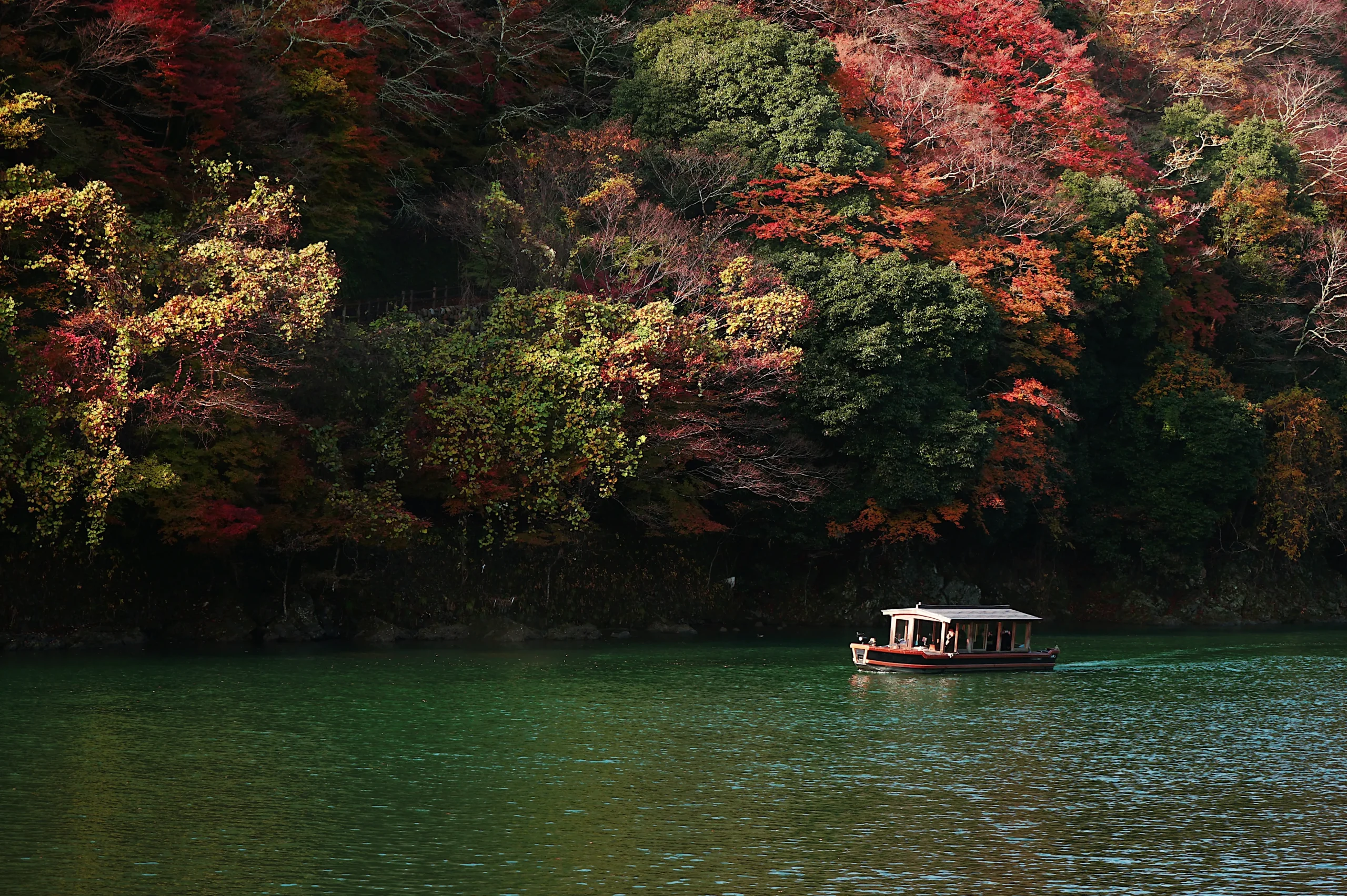
Gion Matsuri is often described as Kyoto’s biggest summer festival, but that still makes it sound smaller than it is. This is not one parade or one crowded weekend. It is a month-long festival cycle tied to Yasaka Shrine, spreading through central Kyoto during July and building toward several moments that are worth visiting for travelers.
What stays with people is not just the scale. It is the way an ordinary city changes around the festival. Streets shift rhythm, neighborhood pride becomes visible, music drifts out from the floats, and familiar blocks start to feel charged. Even if you only catch one evening or one procession day, Gion Matsuri makes more sense when seen as part of a larger July cycle rather than as a single attraction.
What Gion Matsuri Actually Is
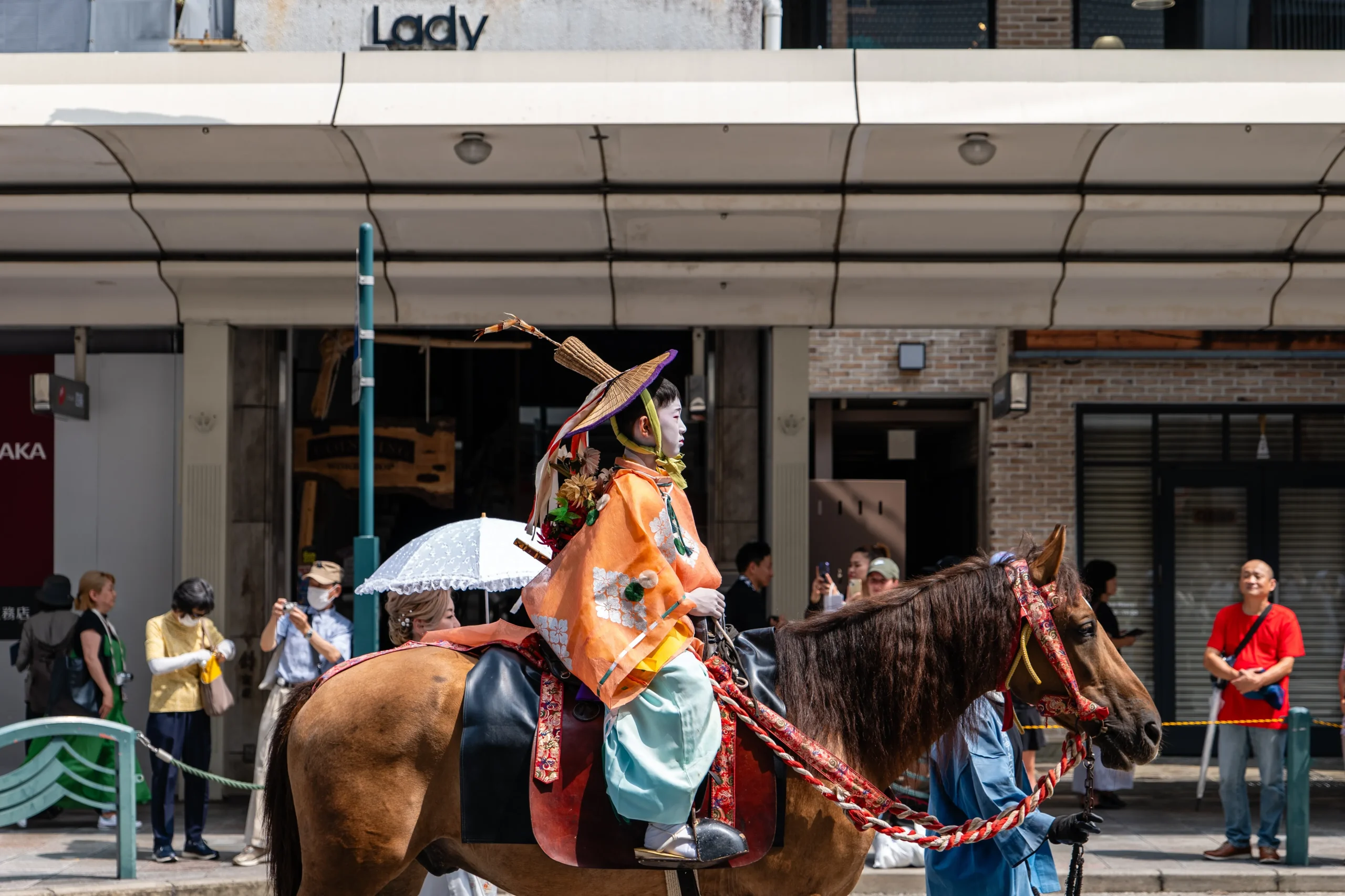
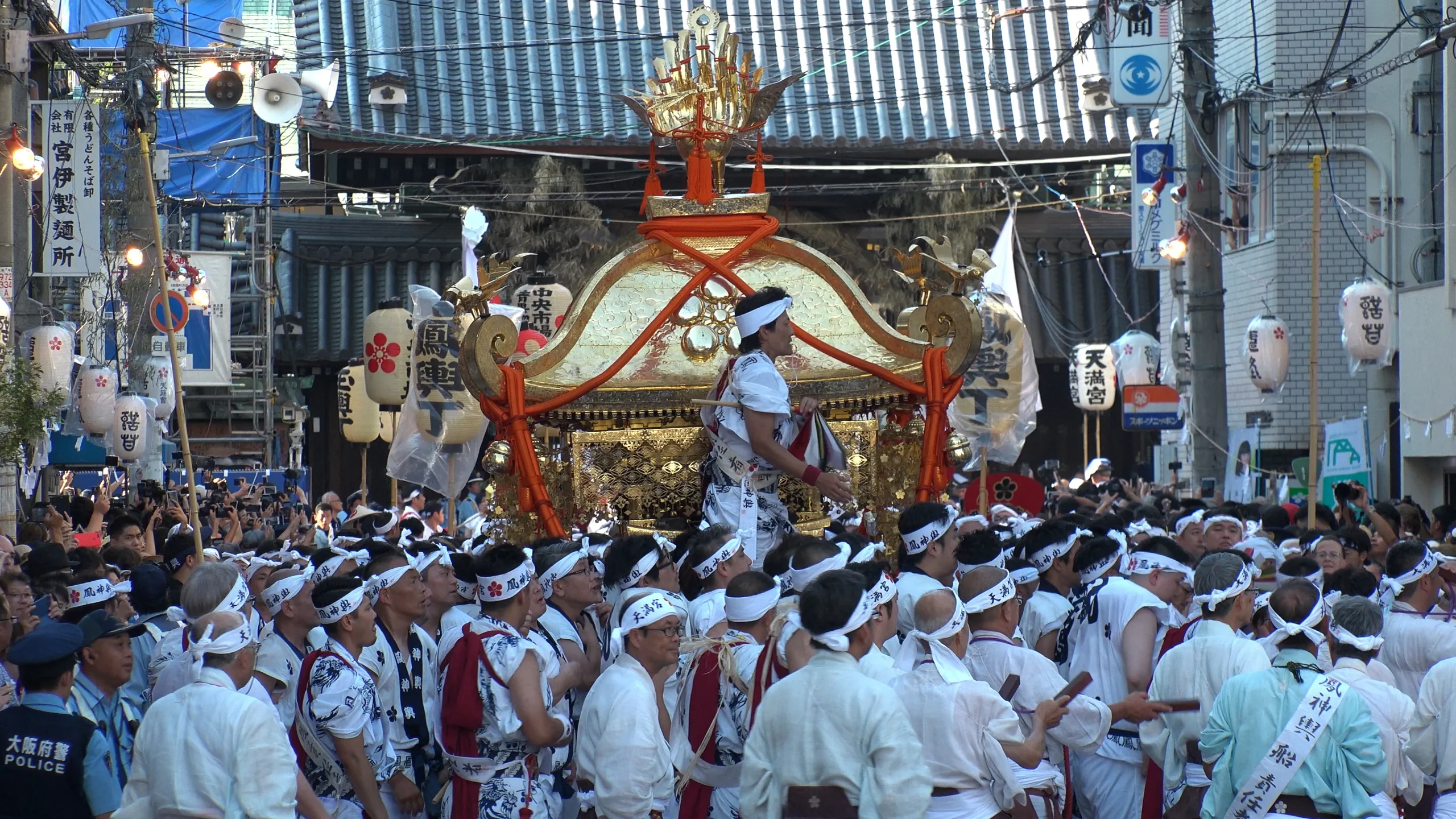
At its core, Gion Matsuri is a shrine festival with old religious roots. Its origin is traced to 869, when a ritual was held in response to an epidemic. Over time, that act of prayer developed into a major annual festival shaped by faith, neighborhood culture, craftsmanship, and public celebration. Today, the most photographed parts are the huge floats and the night atmosphere, but the religious structure is still there, which is why mikoshi, portable shrines that carry the deity through the city, remain central.
You do not need a long history lesson for that background to matter. A little context is enough. Once you know the festival began as an act of protection and prayer, the mood changes. The floats stop feeling like stage props, and the crowded streets start to read as part of something carried by the city rather than staged for it. Gion Matsuri feels rich because it never becomes only one thing.
Reference: Gion Festival – Yasaka Shrine
Gion Matsuri 2027 Schedule at a Glance
For 2027, the broad structure is easy to follow even if practical details are usually updated closer to July. The easiest way to read the schedule is to separate the full festival period from the nights before the processions and the procession days themselves.
| Date | Event | Why it matters for travelers |
| July 1–31, 2027 | Gion Matsuri festival period | The festival lasts throughout July, not just on parade days. |
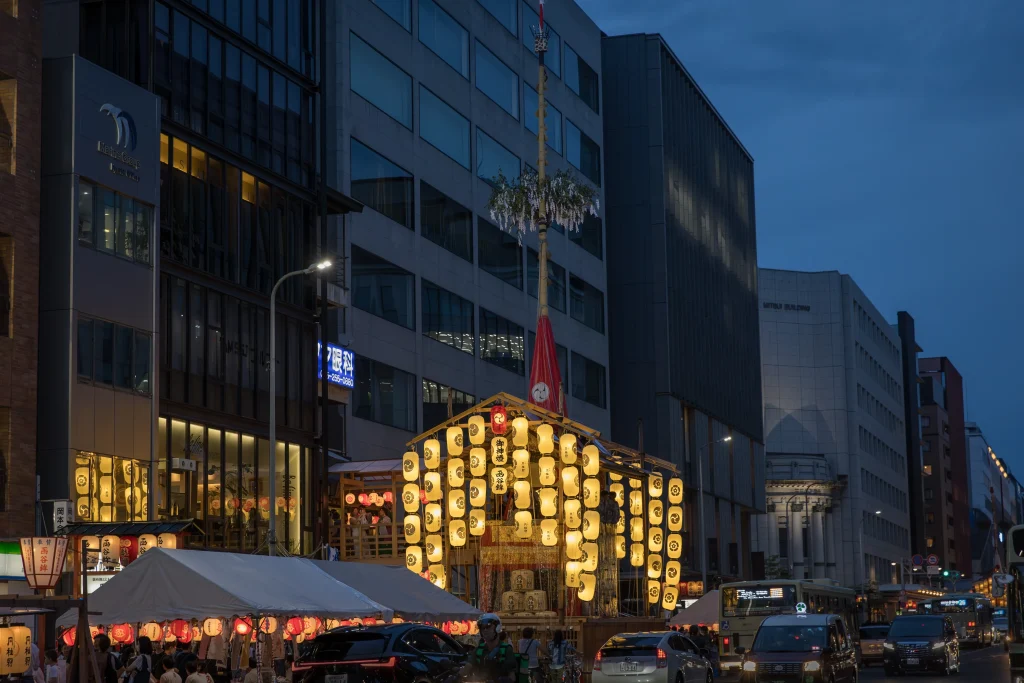
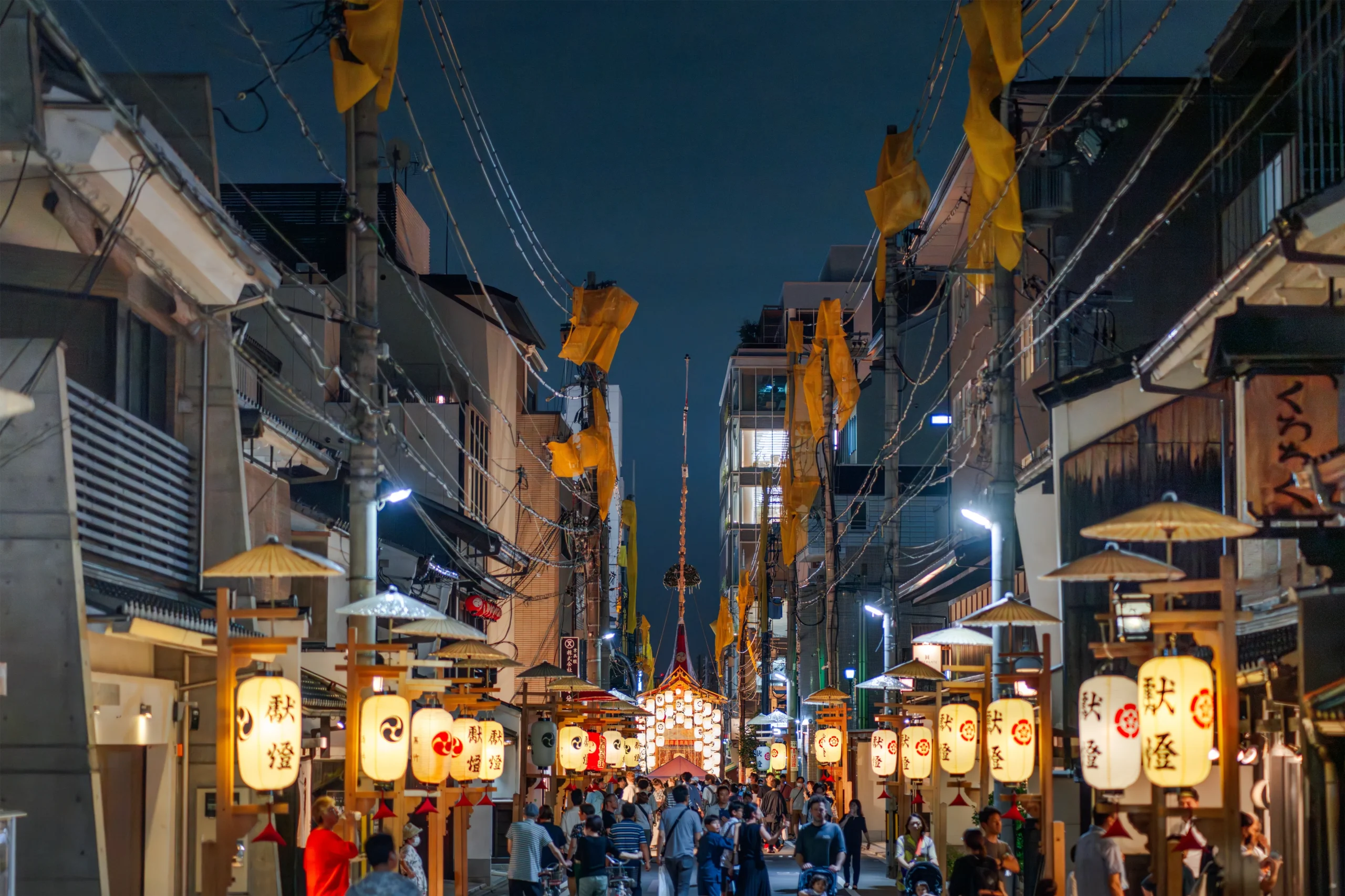
| July 14–16, 2027 | Saki Matsuri Yoiyama | Best for evening atmosphere, close-up float viewing, and walking the decorated streets. |
| July 17, 2027 | Saki Matsuri Yamahoko Junko | The best-known float procession and the biggest visual highlight for many visitors. |
| July 21–23, 2027 | Ato Matsuri Yoiyama | A later, usually calmer festival atmosphere that can feel easier to enjoy. |
| July 24, 2027 | Ato Matsuri Yamahoko Junko | The later procession, smaller in scale but still important and memorable. |
| July 31, 2027 | Closing rites | A reminder that Gion Matsuri is a full ritual cycle, not a one-day event. |
If you only choose one part, Yoiyama is best for atmosphere, while the procession is best for the classic image of the floats moving through Kyoto. If you can manage both, one Yoiyama night and one procession day give you a fuller sense of the festival.
Planning Around the Festival: Three Ways to Fit Gion Matsuri Into Your Trip
Because Gion Matsuri spreads across the whole of July, the question is not whether to go but how much of Kyoto and Japan you want to build around it. All three of ENJYU JAPAN’s Gion Matsuri tours are dated so that 17 July — the Saki Matsuri Yamaboko Junko — falls inside them, each with reserved grandstand seats and an English audio guide for the procession itself. What differs is how far the trip reaches beyond that morning.
— 16–19 July 2027, Kyoto only. You arrive on the last Yoiyama evening and watch the procession the following morning, which is exactly the pairing suggested above. The remaining day covers Arashiyama, Tenryu-ji, Kinkaku-ji and a hands-on matcha and wagashi session in Gion.
— 15–20 July 2027. Adds Nara for the Great Buddha and the deer park, then Osaka for the castle, an Aqua-Liner river cruise and Dotonbori. A balanced Kansai loop.
— 13–20 July 2027. The fullest version: two days in Tokyo, a day in Hakone with Lake Ashi and Mt. Fuji, then the shinkansen to Kyoto for the procession, with Nara and Osaka after it. Suited to a first, wide-ranging trip across Japan.
Where Gion Matsuri Takes Place in Kyoto
One useful thing to understand early is that Gion Matsuri does not happen inside one enclosed festival site. Yasaka Shrine is the ritual center, but many of the scenes travelers picture are spread through central Kyoto, especially around Shijo, Karasuma, Kawaramachi, and Oike. That matters because your experience depends partly on how you move. You are not entering a venue. You are crossing through parts of the city that temporarily become festival space.
Kyoto’s Gion Matsuri unfolds within the city’s genuine structure; it doesn’t interrupt daily life. Suddenly, a typical street might be transformed, alive with lanterns, music, and crowds pausing to admire a passing float. The festival succeeds precisely because it integrates with the existing urban environment.
The Main Highlights of Gion Matsuri
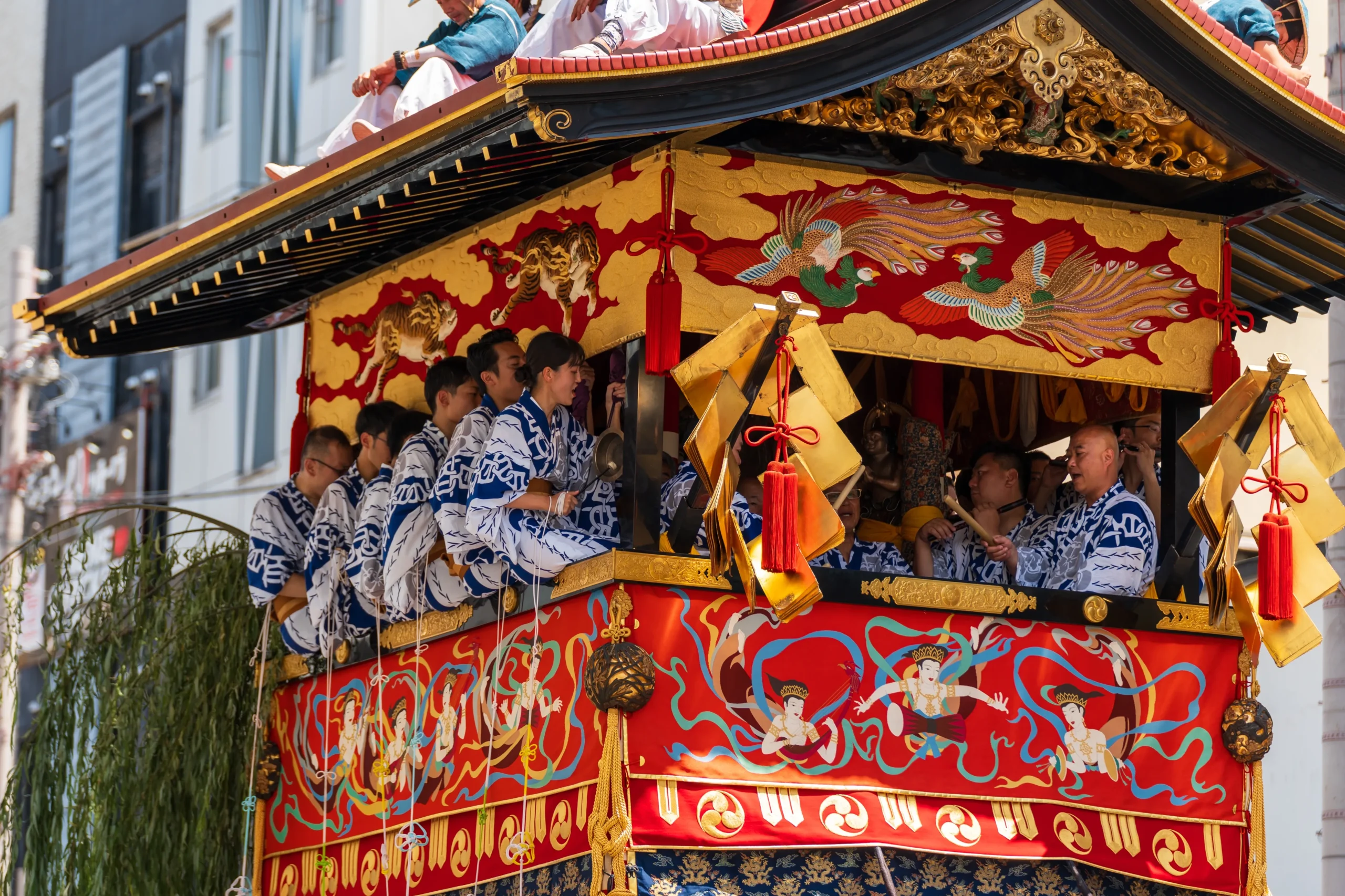
The floats are the obvious place to begin. The yamaboko are striking from a distance, but they are even better up close. What stays with you is not only height or scale. It is the density of detail: woodwork, woven surfaces, metal fittings, hanging ornaments, embroidered textiles, and the quiet sense that each float has a distinct identity.
Then there is the sound. Gion-bayashi, the festival music associated with the floats, changes the mood of the streets more than many first-time visitors expect. You hear it before you locate it. It gives the festival a pulse and makes even a short walk feel shaped by something older and more deliberate than ordinary crowd noise.
Another highlight that deserves more attention is the way neighborhood culture remains visible inside the larger event. The Byobu Matsuri tradition, in which screens and treasured objects may be displayed, hints at how the festival is tied to town life rather than floating above it. So do the ritual elements around the mikoshi. Gion Matsuri is impressive because it holds spectacle and local meaning together.
How to Experience Yoiyama Without Making It the Whole Story
Yoiyama is often the part people imagine most vividly, and for good reason. The floats are lit, the streets are fuller, and walking becomes part of the event rather than just a way of getting between highlights. For first-time visitors to Japan, it can feel more open than the procession days because you are free to drift, pause, and pay attention to details.
Still, it helps not to let Yoiyama swallow the whole festival. The night atmosphere is one of Gion Matsuri’s strongest faces, but it is still one face. Yoiyama gives you the city at festival temperature, while the procession gives you the festival in motion. Seeing it as one key experience within Gion Matsuri, rather than as a separate attraction, keeps the festival itself in focus.
What the Float Processions Are Like
The Yamahoko Junko processions on July 17 and July 24 are the most recognizable parts of Gion Matsuri for a reason. Watching the floats move through the city changes your sense of them immediately. Their size becomes physical rather than abstract, and moments like the famous tsuji-mawashi, when a float is carefully turned at an intersection, make the engineering and coordination feel real rather than ceremonial.
The early procession on July 17 gets most of the attention, and it is usually the one people mean when they picture Gion Matsuri. But the later procession on July 24 has its own value. It is smaller, often easier to follow, and can suit travelers who want clarity without quite so much pressure. It is better to think of it as a different register within the same festival.
Worth knowing if your dates are already fixed: all three tours above are built around 17 July. The Ato Matsuri procession on 24 July is not in any of them. If that is the week you can travel, it becomes a Tailor-Made Tour instead — the same festival, thinner crowds, and the rest of the route built to suit you.
Food, Festive Streets, and the Social Side of the Festival
Gion Matsuri, with its summer crowd, yukata, and laughter, is certainly engaging, and the street food scene offers a delightful supplementary experience. The food and social energy contribute wonderfully to the overall mood, making the snacking a nice accompaniment to the festival’s true essence.
How to Enjoy Gion Matsuri as a First-Time Visitor
The most useful advice is also the least glamorous: do less than you think you should. Kyoto in July can be hot, and festival crowds magnify that. Pick a priority before you arrive. That may be one Yoiyama evening, one procession viewing plan, or one focused walk through a festival area. A restrained plan is often more rewarding than trying to squeeze every major scene into one day.
It also helps to remember that this is a real city operating under festival pressure, not a self-contained entertainment zone. Use public transport when you can, carry water, expect your pace to slow, and pay attention to official route guidance if it is posted for that year. Even a little preparation makes a big difference on crowded days, especially if temporary traffic or pedestrian controls are in place.
Why Gion Matsuri Feels Bigger Than a Festival Checklist
What makes Gion Matsuri stay with people is not that every part is unique on its own. It is that the parts hold together so well. Ritual history, neighborhood involvement, music that reshapes the street, floats that are both artworks and working festival structures, and the pressure of Kyoto summer all meet in one event without becoming artificial. You do not need to master every term or catch every rite for the festival to land. You only need enough time and attention to let it register.
If that is the kind of experience you want from Japan, the practical question turns out to be a narrow one: where you are standing on the morning of 17 July, and what the rest of the trip looks like around it.
ENJYU JAPAN runs three versions — in Kyoto alone, through Nara and Osaka, beginning in Tokyo — all with reserved grandstand seats and an English audio guide for the procession. The seat matters more here than at most events. The Junko runs for hours, Kyoto in July is as hot as this guide has said, and the alternative is standing in it.
If none of the three fits your dates, or if the quieter Ato Matsuri on 24 July suits you better, send us your travel window and we will build around it.