Most travellers decide what they wish to see before considering when it can be seen. In Japan’s winter festival season, the calendar is often the wiser place to begin.
Japan’s best-known winter event is the Sapporo Snow Festival, scheduled for 4 to 11 February 2027. Yet the most useful dates are 6 to 11 February, when festivals in Sapporo, Asahikawa and Otaru overlap and can form one well-paced Hokkaido trip.
This guide covers the 2026–27 winter season, from Chichibu in December 2026 to the snow, ice and fire events of January and February 2027. It compares dates, access, admission and practical routes, while leaving room for winter weather to have its say.
Winter Festival Calendar at a Glance: Dates, Cost and Access
Winter festivals in Japan run mainly from December to February. The strongest group of snow, ice and light events appears in Hokkaido in early February, while Chichibu and Nozawa Onsen offer distinct options in December and January.
|
Festival |
Dates | Best base / access | Experience |
Admission |
|
Sapporo Snow Festival |
4–11 Feb 2027 |
Central Sapporo; about 40 minutes by JR from New Chitose Airport | Large snow and ice sculptures | Free entry; some activities may cost extra |
|
Asahikawa Winter Festival |
6–11 Feb 2027 |
About 1 hour 25 minutes by limited express from Sapporo | Large snow sculptures and ice carving | Generally free; some activities may charge |
|
Otaru Snow Light Path |
6–13 Feb 2027 |
About 30–45 minutes by JR from Sapporo | Snow and evening illumination; 2027 details to follow | Free |
|
Lake Shikotsu Ice Festival |
30 Jan–23 Feb 2027 |
About 60 minutes by bus from JR Chitose Station; check airport departures separately | Ice structures and illumination | ¥1,000 on weekdays; ¥3,000 on weekends and public holidays for junior high school students and older |
|
Yokote Kamakura Festival |
12–13 Feb 2027 |
Akita Prefecture; roughly four hours from Tokyo with rail connections | Snow huts and Little New Year traditions | Free to view |
|
Chichibu Night Festival |
2–3 Dec 2026 |
Around 80 minutes by limited express from Ikebukuro, Tokyo | Festival floats and winter fireworks | Free to view; paid seating may be offered |
|
Nozawa Onsen Dōsojin Festival |
Traditionally 15 Jan; check the 2027 announcement |
Shinkansen to Iiyama, then bus to Nozawa Onsen | Fire ritual in a hot-spring village | Entry arrangements may apply; confirm with accommodation before booking |
Travel times are approximate: use Sapporo or New Chitose Airport as your Hokkaido starting point, and Tokyo for the Honshu festivals. Before booking, check the latest timetables and any festival details that affect entry or your visit.
From 6 to 11 February 2027, you can see Sapporo, Asahikawa and Otaru while staying in one city. Book your Sapporo base first, then choose separate days for the two rail excursions. Lake Shikotsu runs from late January to late February, so it can fit around those dates; remember that a free festival can still mean a costly hotel stay.
Hokkaido’s Snow-and-Ice Cluster: Four Festivals in One Week
For travellers visiting in early February, Hokkaido offers the most practical way to combine several major winter festivals without changing hotels every night. Stay in Sapporo from 6 to 11 February 2027, then choose day trips to Asahikawa, Otaru and Lake Shikotsu according to the forecast, service notices and your preferred pace.
Sapporo Snow Festival: Start with Japan’s Best-Known Winter Event
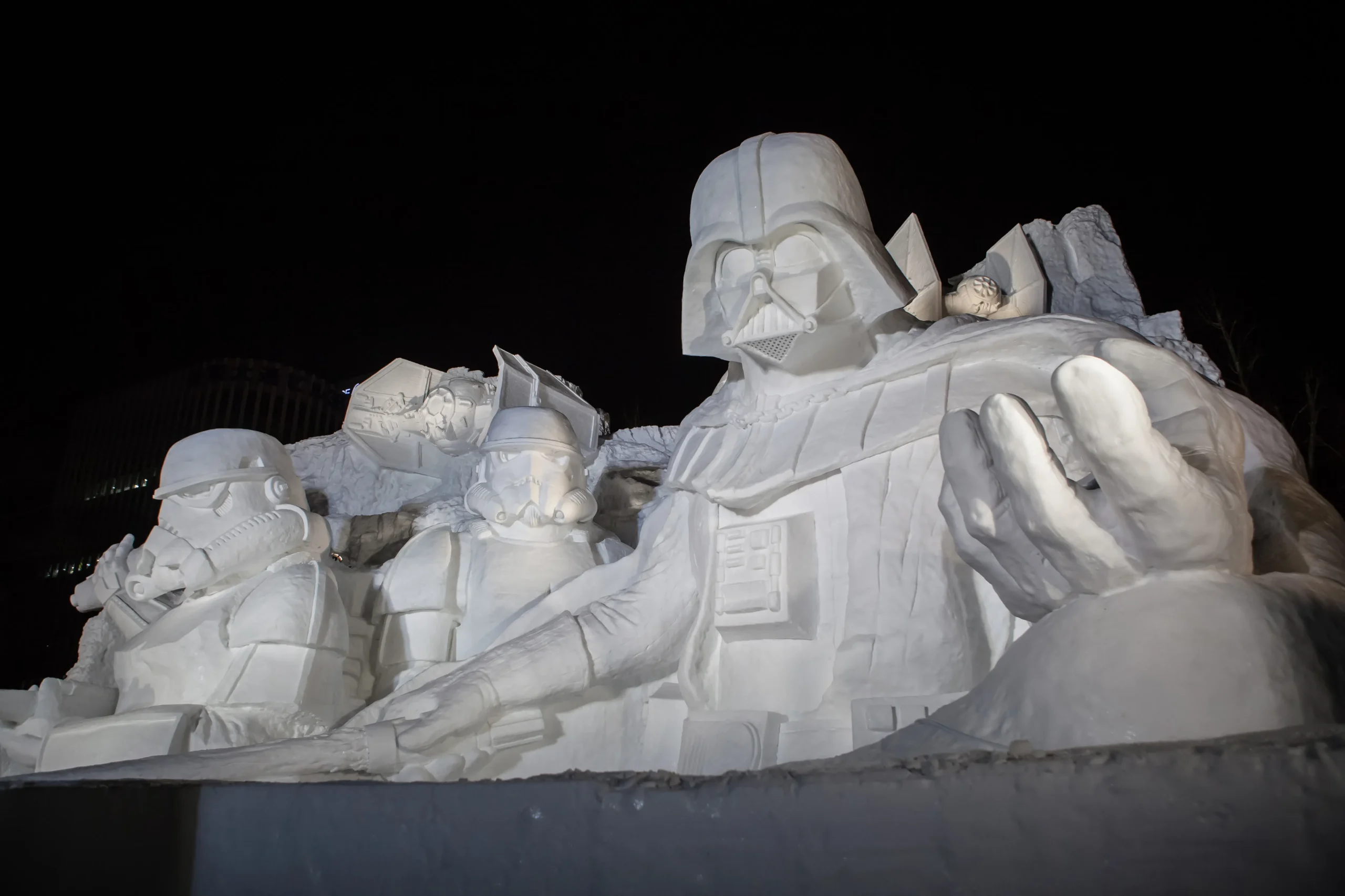
The Sapporo Snow Festival is the natural anchor of this route. It is scheduled from 4 to 11 February 2027 across three main sites: Odori, Susukino and Tsudome. Each site serves a different type of visitor, so it is useful to plan them separately rather than trying to see everything in one long day.
Odori is the central site. It runs through Odori Park from Nishi 1-chome to Nishi 11-chome, covering about 1.1 km. Five large snow sculptures are planned for 2027, with smaller works and winter attractions placed along the route. The structures appear bright and almost architectural in daylight; after dark, lighting brings out the carved lines and changing shadows.
Susukino brings ice sculptures into one of Sapporo’s main evening districts, making it a natural stop after dinner. Tsudome offers a family-focused day with snow play and indoor places to rest and eat; its 2027 opening hours are 10:00 to 16:00. The precise activities will be announced closer to the festival.
Entry to all three sites is free, although some activities may cost extra. Accommodation can be a greater expense, particularly around the central Odori and Susukino areas. Book a hotel early once your dates are fixed. If central rooms are already expensive, staying near another JR or subway station can still work well, but check the final return connection before making late-evening plans.
Sapporo also gives the itinerary resilience. If heavy snowfall or transport disruption makes a distant excursion unattractive, the main festival sites still offer a complete day within the city.
Asahikawa Winter Festival: Choose a Stable Rail Day

Asahikawa is the longest rail excursion in this Hokkaido route, so it is best saved for a day when weather and services look stable. The 68th Asahikawa Winter Festival is scheduled for 6 to 11 February 2027.
Asahikawa offers a closer look at ice carving alongside a large central snow sculpture. Recent editions have featured an international ice-carving competition, where individual cuts and clear surfaces reward a slower look. The 2027 programme is still being finalised, so choose Asahikawa for its distinctive craft rather than a particular performance.
Limited express services from Sapporo take about 1 hour 25 minutes, making a day trip realistic but not casual. Check the final train before leaving Sapporo, and do not schedule a non-refundable evening plan immediately after your return. Snow can affect services, particularly when conditions change late in the day.
If the forecast turns poor, stay in Sapporo rather than forcing the excursion. A delayed or cancelled journey is not a reason to spend the evening worrying about a long return trip. Odori and Susukino remain available, and Asahikawa can be reconsidered on the following day if your schedule allows.
Otaru Snow Light Path: Save the Canal for the Evening
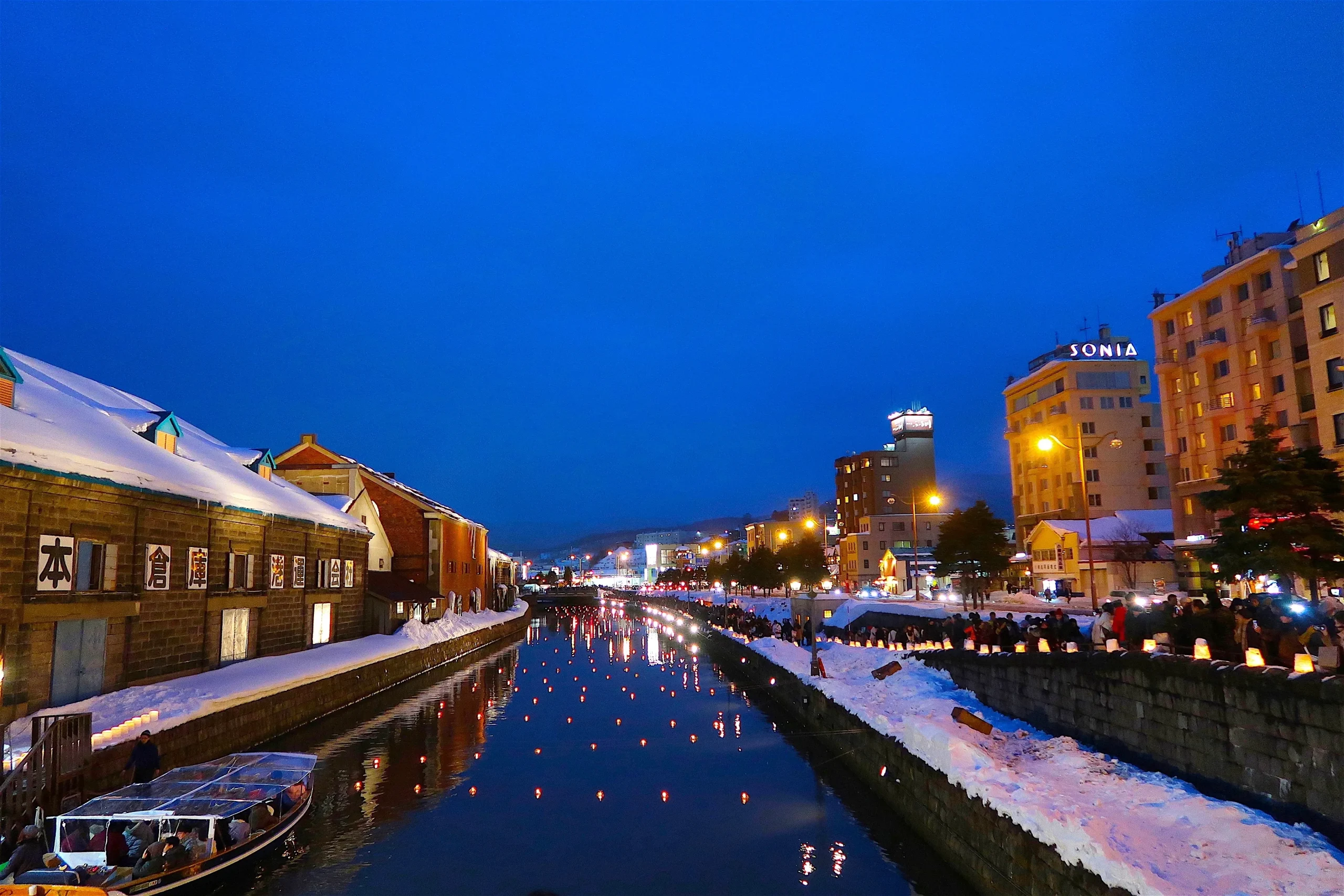
Otaru offers a change of scale from Sapporo’s large sculptures. The Snow Light Path is confirmed for 6 to 13 February 2027. In previous editions, small lights along the canal and former railway line have drawn attention to dark water and old stone warehouses. The 2027 lighting details have yet to be announced, so plan for an evening in Otaru rather than one particular display.
Otaru is around 30 to 45 minutes from Sapporo by JR. The canal area is within walking distance of Otaru Station, which makes the town manageable as an afternoon-and-evening trip. Arrive before sunset if possible. You can see the canal and warehouse district in daylight, pause for an early meal, then return to the water once the illumination begins.
If wind or snowfall makes a long evening walk uncomfortable, spend more time around the canal and warehouse district before dark. You can still enjoy Otaru’s old port streets, then return to Sapporo earlier.
Otaru works best when the return journey is decided before the lights come on. If you do not want to watch the clock, consider staying overnight instead.
Lake Shikotsu Ice Festival: Keep This as Your Flexible Day
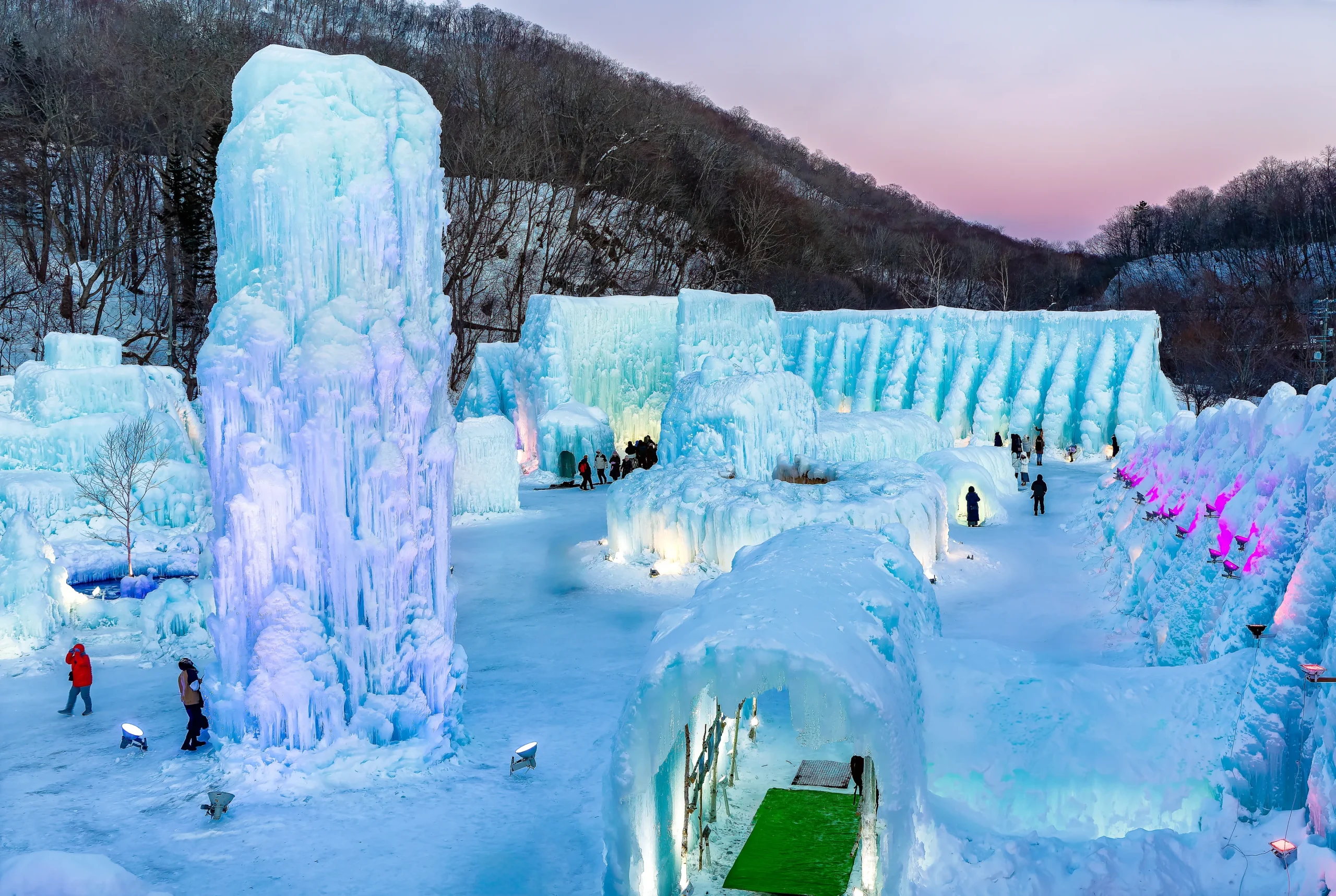
Lake Shikotsu gives the Hokkaido route its most flexible date window: the 2027 festival runs from 30 January to 23 February at Lake Shikotsu Onsen. It opens from 10:00 to 20:00, with illuminated ice from 16:30. This gives you a choice between seeing the ice’s natural blue in daylight and its changing colours after dark.
The ice structures use water from Lake Shikotsu, whose clear water gives the frozen surfaces a pale blue appearance in daylight. At night, coloured illumination changes the texture again. The experience feels distinct from a city sculpture park because the setting includes a caldera lake, wooded slopes and a hot-spring area beside the site.
Lake Shikotsu is reached mainly by road transport. The official tourism listing gives about 60 minutes by bus from JR Chitose Station to the Shikotsuko stop. Check current departures if you plan to travel from New Chitose Airport. Road conditions matter more here than for an urban festival, so avoid fixing this excursion to a single day if your schedule allows.
Admission in 2027 is ¥1,000 on weekdays and ¥3,000 on weekends and public holidays for junior high school students and older. A weekday visit saves ¥2,000 per eligible visitor. Keep this excursion movable so you can choose a suitable day for both the bus journey and the lakeside conditions.
Three Ways to Build Your Hokkaido Festival Route
Winter makes rigid itineraries fragile. The aim is not to see every event on a fixed timetable, but to keep enough choice that a change in snow or transport does not weaken the trip.
Plan A: Clear Weather and Steady Transport
Use Sapporo as a base for four or five nights. Begin with the Sapporo Snow Festival on arrival day or your first full day, when you may prefer to avoid inter-city travel. Put Asahikawa on the clearest day with stable railway services, then plan Otaru for a separate afternoon and evening.
Keep Lake Shikotsu for a weekday where possible: the published 2027 admission is ¥2,000 lower than on weekends and public holidays for junior high school students and older. Keeping this road-based trip movable also protects the rest of your itinerary if bus services change. Each destination then offers a distinct experience rather than another version of the same festival.
Plan B: Snow or Wind Disrupts a Day Trip
When wind or heavy snow affects a longer journey, do not force it. Stay in central Sapporo and treat the day as a closer look at the city rather than a diminished version of the original plan.
The Sapporo Ekimae-dori Underground Walkway, commonly called Chi-Ka-Ho, provides a sheltered link between Sapporo Station and the Odori area. To reach the festival displays themselves, you will still need to go outdoors. Continue to Susukino by subway or on foot according to the weather, and allow extra time in heavy snowfall.
If conditions remain difficult, make this an indoor Sapporo day: choose a museum, gallery, café or department-store food floor after checking its opening hours. When the weather improves, visit Odori or Susukino for a shorter outdoor walk. You have changed the order of the day, not lost the day itself.
Plan C: Keep One Day Uncommitted
Leave one day in your Hokkaido stay without a fixed long-distance plan. Once the short-range forecast and service information are clearer, choose between Asahikawa, Otaru and Lake Shikotsu.
Choose Asahikawa for a stable rail day. Choose Otaru if an afternoon and evening forecast looks manageable. Choose Lake Shikotsu when the roads are clear and a weekday fits your stay. This gives you time to select the destination that best matches the weather, transport situation and your own energy that day.
Yokote’s Kamakura Snow Huts: A 2027 Date Change to Watch

Japan’s best-known snow-hut festival is Yokote Kamakura in Akita Prefecture. It is not simply a display of snow structures. The event belongs to a Little New Year tradition centred on a water deity, local hospitality and the winter customs of a snow-country town.
A kamakura is a compact snow hut built around a small altar. The tradition is around 450 years old and is connected with Koshōgatsu, the Little New Year period after the main New Year celebrations. Children traditionally invite visitors inside some huts and serve amazake, a gently sweet rice drink that is often served warm, as well as mochi, rice cakes.
Along the riverbank, many smaller kamakura hold individual candles. The effect is quieter than Sapporo’s large snow sculptures. Each flame sits inside a small snow opening, and the broad riverbank becomes a field of low, steady light.
Yokote City lists the 2027 festival dates as 12 and 13 February. The dates matter because older guides may still show the former 15–16 February schedule. The festival is free to view, but it should not be described as an easy overnight addition to a Sapporo stay.
From Tokyo, Yokote is roughly four hours away with rail connections. From Hokkaido, the journey requires either a flight or a long rail day. Treat Yokote as a separate Tohoku extension with a travel day and an overnight stay. If conditions make the southbound journey uncertain, staying longer in Hokkaido is a sensible alternative. Yokote’s value lies in experiencing a different winter tradition, not in collecting one more festival.
Visiting in December or January? Two Different Winter Festivals
Not every winter festival belongs in a February Hokkaido route. If your trip falls in December, Chichibu offers a lantern-lit shrine festival within reach of Tokyo. If your dates fall in mid-January, Nozawa Onsen offers a fire ritual that is best approached as an overnight stay in a mountain hot-spring village.
Chichibu Night Festival: Lantern-Lit Floats in December

The Chichibu Night Festival takes place every year on 2 and 3 December. It is the annual festival of Chichibu Shrine in Saitama Prefecture, and its 2026 dates therefore fall on 2–3 December. The 2nd is the eve festival, while the 3rd is the main day.
The festival centres on six elaborate floats: two kasaboko and four yatai. A yatai is a large, decorated festival float pulled through the streets by local residents. At night, lanterns light the floats as drum and flute music moves through the town. On 3 December, the floats are hauled up Dango-zaka, a steep slope that forms one of the event’s defining scenes.
The festival is included in UNESCO’s intangible cultural heritage listing for Japanese float festivals and is counted among Japan’s three major float festivals. Fireworks add to the evening programme, but they should not be the only reason to visit. Wind and weather can affect fireworks, while the floats, music and shrine ritual remain the heart of the event.
Watching from public areas is generally free. Check Chichibu City’s 2026 guidance for any paid viewing seats, crowd controls and festival-day transport arrangements. Seibu Railway lists a journey of about 77 minutes from Ikebukuro to Seibu-Chichibu by limited express; the train requires a regular ticket and a separate limited-express ticket. If you plan to stay for the main evening, consider accommodation in Chichibu or allow extra time for the return journey.
Nozawa Onsen Dōsojin Festival: A Winter Night That Requires Planning

The Nozawa Onsen Dōsojin Festival is traditionally held on 15 January. It takes place in Nozawa Onsen, a mountain hot-spring village in Nagano Prefecture. Before making plans for January 2027, check the organiser’s latest notice for the confirmed programme and visitor arrangements.
Dōsojin are local guardian deities associated with roads, village boundaries and protection from misfortune. In Nozawa, the festival is a Little New Year observance, not a performance created for visitors. Residents build a large wooden shrine structure over several days. During the ritual, villagers defend it before it is set alight, and sparks rise above the snow as wood burns through the night.
The festival is designated an Important Intangible Folk Cultural Property of Japan. Its cultural weight is part of the reason to approach it respectfully: follow staff instructions, remain in authorised viewing areas and do not assume that every visitor can enter the same space.
If seeing the fire ritual is central to your trip, choose accommodation in Nozawa Onsen and ask the property about viewing tickets before booking transport. In 2026, the festival issued tickets to village residents and overnight guests who wished to attend; staying in the village alone did not guarantee entry. The 2027 viewing arrangements have not yet been announced.
If viewing access is unavailable, Nozawa Onsen still works as a winter stay. The village’s hot springs, snow-covered lanes and mountain setting do not depend on one evening’s ceremony. That is not a lesser plan; it is a different reason to spend the night.
Winter Travel Without Japanese: What to Prepare
You do not need fluent Japanese to travel to these festivals, but a few simple preparations make regional journeys much easier. They matter most after dark, during heavy snow and when you are relying on the last bus or train of the day.
Before leaving your hotel, save three things in both English and Japanese: your destination, the station or bus stop you will use, and the name of your accommodation. The English name helps with maps and timetables; the Japanese name gives station, bus or hotel staff an exact place to read on your screen.
|
Journey or festival |
Save this in English | Save this in Japanese | What it is |
When to show it |
|
Sapporo Snow Festival |
Odori Park |
大通公園 |
Main festival site | When walking from Sapporo Station or asking for the central snow-sculpture area |
|
Sapporo Snow Festival |
Susukino |
すすきの |
Ice-sculpture and evening district | When travelling by subway or returning after dark |
|
Asahikawa Winter Festival |
Asahikawa Station |
旭川駅 |
Main rail arrival and departure point | Before boarding the return train to Sapporo |
|
Otaru Snow Light Path |
Otaru Station |
小樽駅 |
Main rail arrival and departure point | When checking the evening return journey |
|
Lake Shikotsu Ice Festival |
Lake Shikotsu Onsen |
支笏湖温泉 |
Festival area and lake-side hot-spring district | When taking a bus from Chitose or New Chitose Airport |
|
Yokote Kamakura Festival |
Yokote Station |
横手駅 |
Main rail arrival point | When changing to local transport or arranging a taxi |
|
Nozawa Onsen Dōsojin Festival |
Iiyama Station |
飯山駅 |
Shinkansen transfer point for buses to Nozawa Onsen | When changing from rail to the village bus |
|
Nozawa Onsen Dōsojin Festival |
Nozawa Onsen |
野沢温泉 |
Village and accommodation area | When confirming buses, your hotel or festival entry arrangements |
Check your return journey before setting out. This matters especially for evening visits to Otaru, buses to Lake Shikotsu, connections to Yokote and transfers between Iiyama and Nozawa Onsen. IC cards such as Kitaca and Suica are useful on many urban services, but they do not cover every journey or reservation in this guide. Check the relevant operator before travelling.
Winter footwear matters as much as warm clothing. Choose waterproof outer layers, gloves, a hat and shoes with soles designed to grip snow or ice. Removable ice grips can also help on frozen pavements, particularly after dark.
For festivals with special admission arrangements, confirm the rules before you travel. This is particularly important in Nozawa Onsen, where accommodation and festival entry have been closely connected in recent editions. If an official page is difficult to interpret, ask your hotel or ryokan to help confirm the venue, departure time and return journey.
A few minutes of preparation can remove much of the uncertainty without removing the freedom to explore.
Quick Answers About Winter Festivals in Japan
These short answers cover the questions worth settling before you choose dates and accommodation.
What is the most famous winter festival in Japan?
The Sapporo Snow Festival is Japan’s best-known winter festival. In 2027, it is scheduled to run from 4 to 11 February at Odori, Susukino and Tsudome in Sapporo.
When are winter festivals held in Japan?
Winter festivals take place mainly from December to February. Major snow and ice festivals concentrate in early to mid-February, especially in Hokkaido and northern Honshu.
What is Japan’s snow-hut festival called?
Japan’s best-known snow-hut festival is Yokote Kamakura in Akita Prefecture. Yokote City lists the 2027 dates as 12 and 13 February.
Can you visit several winter festivals on one trip?
Yes. Sapporo, Asahikawa and Otaru overlap from 6 to 11 February 2027. Lake Shikotsu can also be added during that period if road and bus conditions allow.
Planning a Winter Festival Journey with ENJYU JAPAN
Japan’s winter festivals reward careful timing, but they also reward travellers who leave room to change. Confirm the fixed elements first—festival dates, accommodation and any entry requirements—then allow enough time to respond sensibly to snow, wind and transport.
If you would like support in aligning several regions, travel days and winter experiences at a pace that suits you, ENJYU JAPAN’s Tailor-Made Tours can help shape the route around your own priorities. If the snow chooses to edit a page of your plans, let it—a well-made winter journey can still look, afterwards, as if it had meant to.
References
- Sapporo Snow Festival Organising Committee – 2027 Sapporo Snow Festival: Event Outline (2026)snowfes
- Asahikawa Winter Festival Organising Committee – 68th Asahikawa Winter Festival: 2027 Dates (2026)asahikawa-winterfes
- Otaru Tourism Association – 2027 Otaru Snow Light Path: Festival Dates (2026)otaru.gr
- Chitose Tourism Federation – 2027 Chitose–Lake Shikotsu Ice Festival: Dates, Hours and Admission1000sai-chitose.or
- Yokote City – Yokote Kamakura: 2027 Dates and Festival Traditionscity.yokote.lg
- Chichibu City – Chichibu Night Festival: Dates, Floats and Historynavi.city.chichibu.lg
- Nozawa Onsen Tourism Association – Nozawa Onsen Dōsojin Festival: Tradition and 2026 Visitor Rules