Japanese New Year 2027 falls on Friday, January 1.
The part that trips people up is what comes after: January 2 and 3 aren’t public holidays at all, yet most of the country is still shut, and the closures actually begin on December 29 — a stretch of six days that has little to do with the holiday calendar and everything to do with a law about when government offices stop working.
If you’re weighing a trip across that window, the date is the easy question. What’s open is the one worth reading on.
The Date, the Day, and the Real Shutdown Window
Ganjitsu — January 1 — is one of Japan’s sixteen national holidays, defined in the Holiday Act with admirable brevity as the day “to celebrate the beginning of the year.” When a holiday lands on a Sunday, the next free weekday gets promoted to a holiday in its place; in 2027 that rule never fires in January, because January 1 is a Friday. The Cabinet Office has already published the full 2027 list.
So why is everything still closed on January 3? A separate law — the Act on Holidays of Administrative Organs — designates December 29 through January 3 as non-working days for government offices, on top of weekends and public holidays. Private companies aren’t bound by it. Most fall in step anyway, and the rhythm long ago spread past city hall. That’s the whole mechanism: one public holiday, six days of stoppage, two unrelated legal sources.
| Date | Day | Status |
| Dec 29–31, 2026 | Tue–Thu | Offices closed (not a public holiday) |
| Jan 1, 2027 | Friday | Ganjitsu — National public holiday |
| Jan 2–3, 2027 | Sat–Sun | Offices closed, plus the weekend |
| Jan 4, 2027 | Monday | Most offices reopen |
| Jan 9–11, 2027 | Sat–Mon | Coming-of-Age Day weekend |
One more date worth pinning down: Coming-of-Age Day is Monday, January 11, 2027, making a three-day weekend just as the country gets back to normal. Domestic travel picks up again.
Omisoka: What the Last Night Looks Like
The Bell That Counts to 108
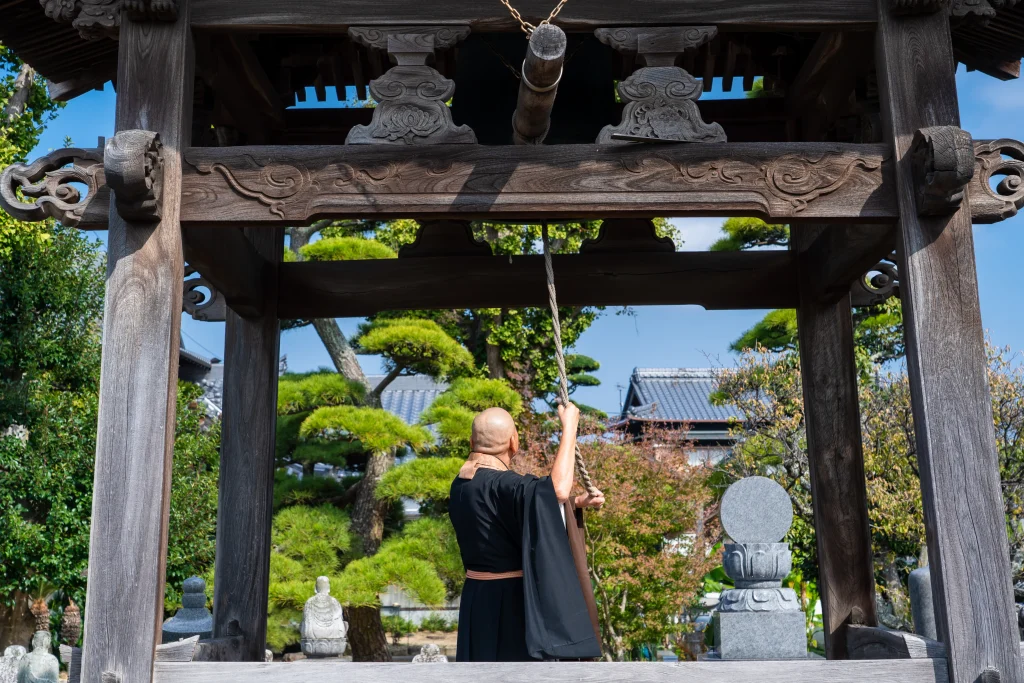
The bell counts. At Chion-in in Kyoto, the temple bell is struck 108 times on New Year’s Eve — 108 being, in the temple’s own explanation, the number of worldly desires we carry around. The thing is heavy enough that it takes seventeen monks to move it, one on the main rope and sixteen on the smaller ones, shouting to each other between strikes to stay in time. Visitors watch. They don’t ring it, whatever some guides imply.
The Fire People Carry Home from Yasaka Shrine
Ten minutes’ walk away, Yasaka Shrine burns a flame it started days earlier — drilled from wood on December 28, the old way — and keeps it going in lanterns from around 7:30 p.m. until dawn. People take it home on a rope wick, spinning it so the wind doesn’t kill it, and you will genuinely see someone doing this at a pedestrian crossing at two in the morning. The associated rite follows on January 1, and a ceremonial karuta match on January 3.
Hatsumode: When the Crowds Peak
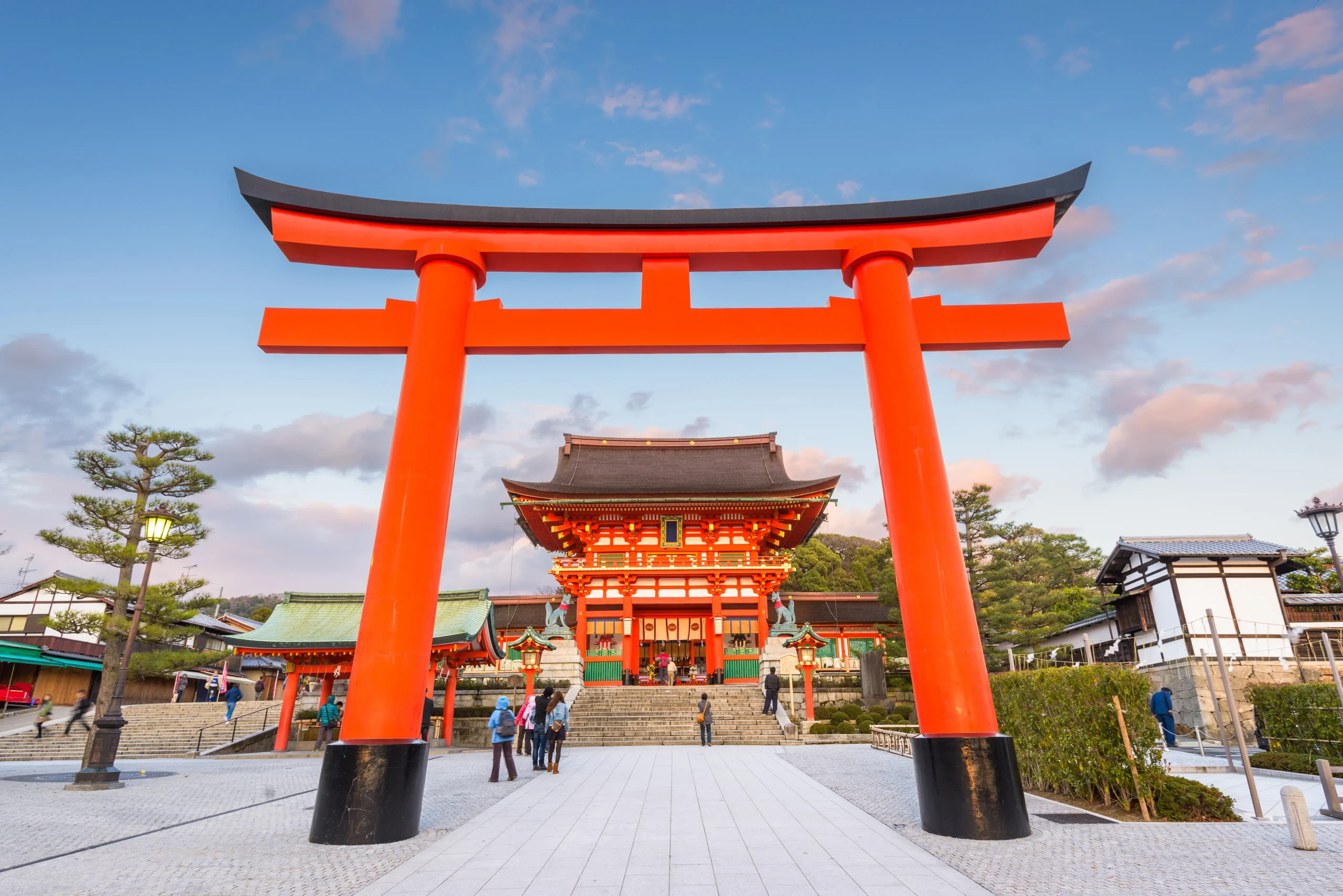
Then hatsumode, the year’s first shrine visit, which is where the crowds actually are. Meiji Jingu publishes its own crush hours: 10 p.m. on the 31st through 3 a.m. on the 1st, then anything after 10 a.m. on January 1–3. The shrine asks people to spread out, shifts its amulet counters away from the main hall, holds its gates open well past the usual winter closing time, and the roads around Harajuku close to cars.
Osechi and Zoni: One Holiday, a Hundred Recipes
Osechi: A Box Built Out of Puns
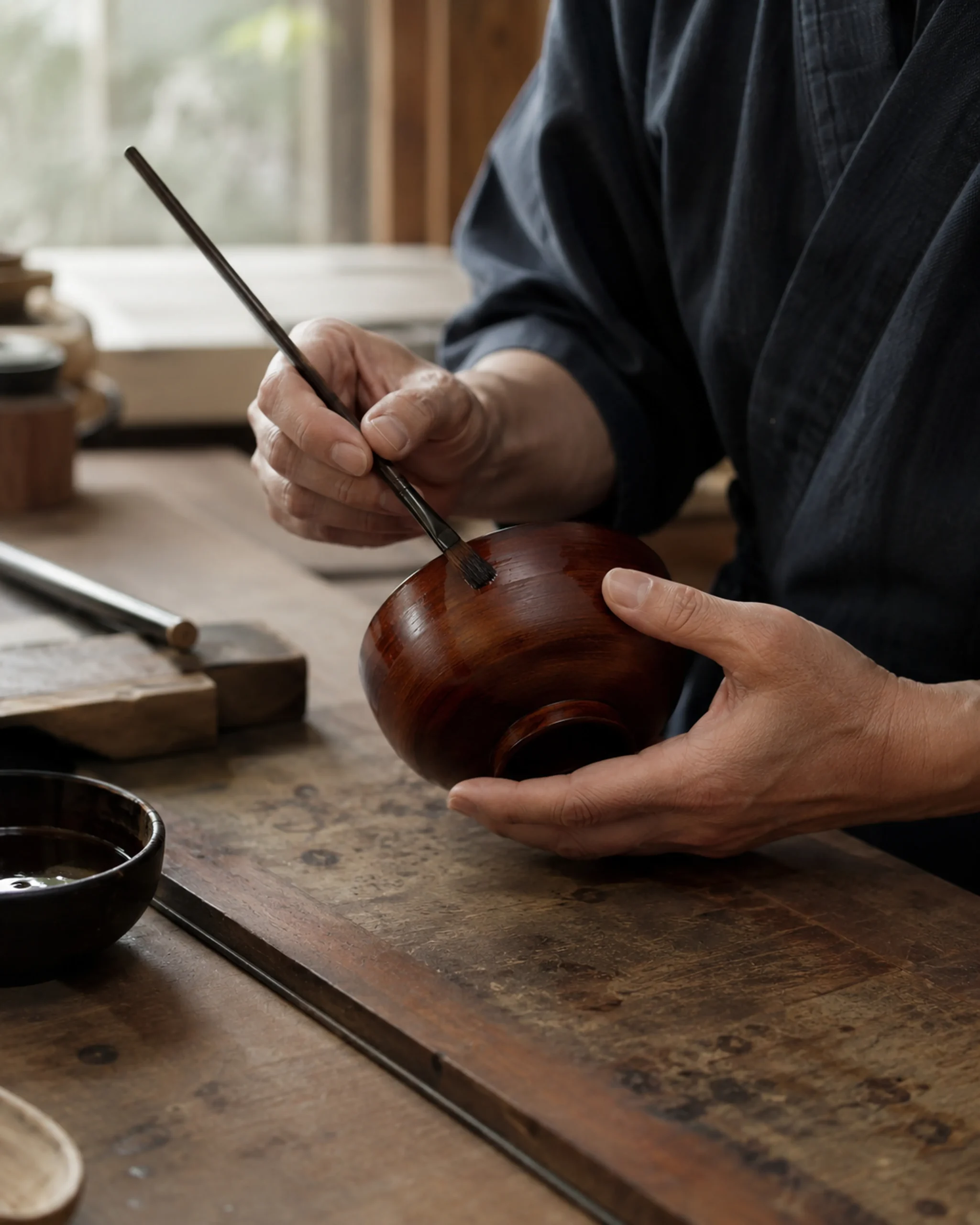
Osechi, the lacquered box of New Year food, started out as a broader idea — the word covered offerings for all five seasonal festivals before it narrowed down to just the January ones. The version people recognise took shape in the late Edo period, and a surprising amount of it is wordplay: kelp rolls because kobu sounds like yorokobu, to be glad; herring roe for a house full of children. Three items anchor the box more or less everywhere — black beans, candied sardines, that herring roe — and the rest is negotiable.
Zoni: Round Mochi West, Square Mochi East
Zoni, the New Year soup, is where the country stops agreeing with itself. Over a hundred versions are documented. The mochi alone splits the map — round in the west, squared off in the east — while Tokyo’s is a clear dashi broth with a grilled square cake dropped in. Okinawa historically didn’t eat zoni at all.
Ask someone what zoni tastes like and you’ll get their mother’s answer, not a national one.
10 Things to Do Over New Year 2027
If you’re actually here in Japan for the turn of the year, this is what fills the days. None of it runs on a ticket bought months ahead, and most repeats on the same calendar every year, so the 2027 versions are safe to plan around — exact times and details firm up from around October 2026.
1.Eat toshikoshi soba on New Year’s Eve
The year’s last meal is a bowl of buckwheat noodles — long ones for a long life, buckwheat because it cuts cleanly, a clean break with the old year. Every soba shop is packed on December 31.
2.Hear the bells at midnight (joya no kane)
Temples ring 108 times as the year turns, once for each worldly desire. Chion-in in Kyoto is the spectacle — seventeen monks working a single enormous bell — but almost any temple near you does the same, more quietly.
3.Carry fire home from Yasaka Shrine (okera mairi)
Kyoto’s own New Year’s Eve rite: a sacred flame taken home on a rope wick, spun to keep it lit, to light the year’s first stove.
4.Catch the first sunrise (hatsuhinode)
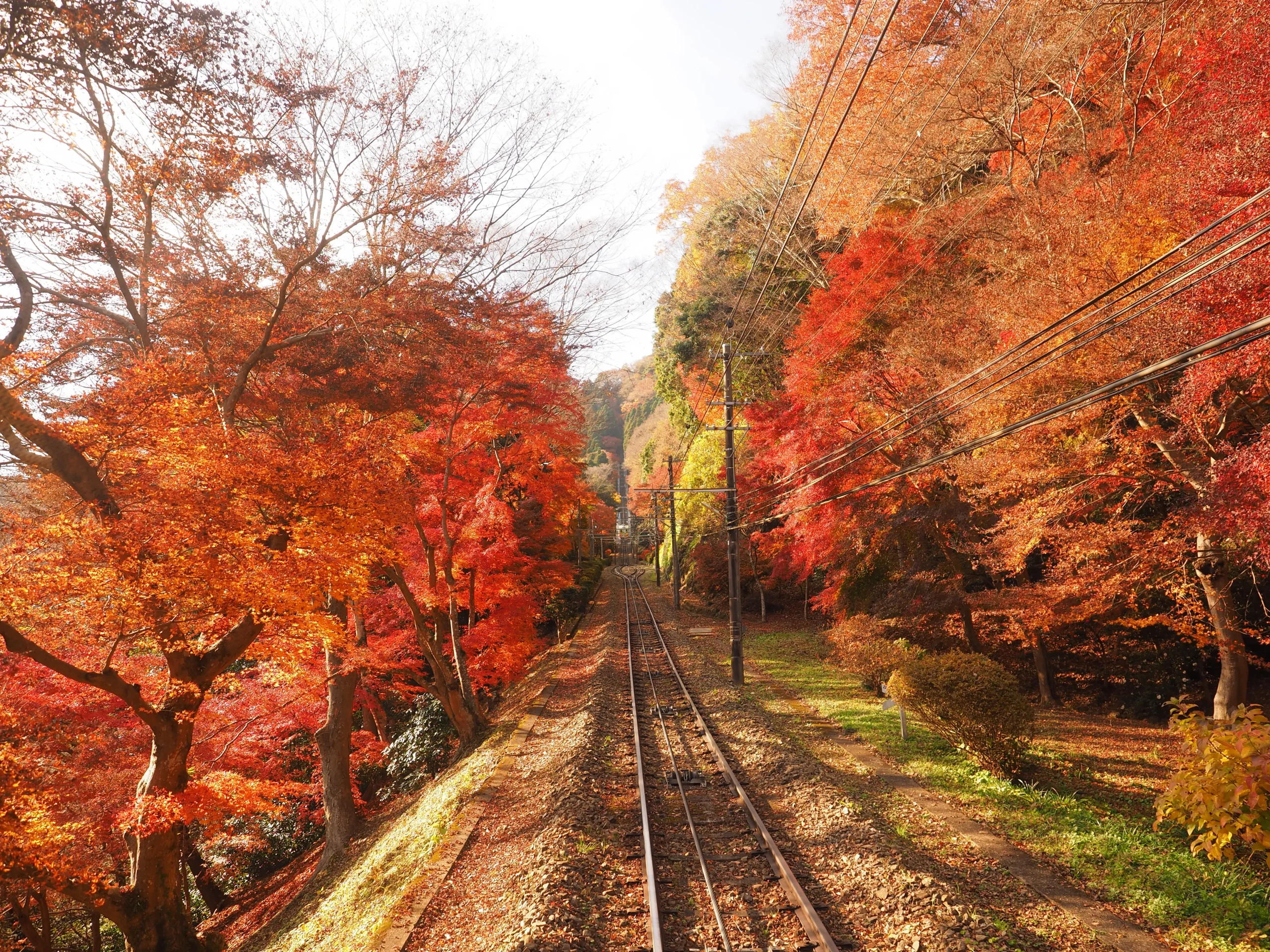
Watching the year’s first sunrise is a real national habit, not a tourist invention — people climb hills and line east-facing beaches before dawn. Mount Takao outside Tokyo runs its cable car through the night for it.
5.Make a first shrine visit (hatsumode)
The year’s first visit, January 1–3, and the biggest movement of people all year. Meiji Jingu in Tokyo asks visitors to spread out across the three days rather than pile into the midnight hours.
6.See a national museum in festive mode
The Tokyo National Museum opens on New Year’s Day with a programme themed to the zodiac animal, plus taiko and lion dancing out front for the first three days — a rare chance to catch a major museum celebrating rather than hushed.
7.Watch the Tamaseseri ball-wrestling in Fukuoka (January 3)
At Hakozaki-gu in Hakata, men in loincloths wrestle over a sacred wooden ball under cold water; which side carries it in sets the year’s omen — good harvest or good catch. Documented back to the Muromachi period, five centuries ago.
8.Line up for a lucky bag (fukubukuro)
New Year sales open January 1–2, and their signature is the fukubukuro: a sealed bag sold at a fixed price with the contents hidden until you open it. Department stores build queues around them.
9.Watch the first tuna auction at Toyosu (January 5)
The year’s first auction at Tokyo’s main fish market is public theatre — a single prize bluefin has gone for hundreds of millions of yen. Morning auction viewing runs by advance application.
10.See a mountain set on fire in Nara (January 23, 2027)
On the fourth Saturday of January, the grass slope of Mount Wakakusa is lit after a fireworks display — a whole hillside burning above the old capital, visible across the city. In 2027 that’s January 23.
What’s Actually Open — and What Isn’t
The blanket claim that Japan shuts down is half right, and the wrong half will cost you a day.
What Closes
Government offices and banks stop on schedule, per the law above. Smaller restaurants and family-run shops often take the whole week, and there’s no dependable way to find out which ones from abroad.
What Stays Open
Shrines and temples run the other direction entirely — this is their peak. Museums vary but lean open: the Tokyo National Museum opens on January 1 each year with a New Year programme built around the zodiac animal, plus taiko and lion dancing out front for the first three days.
Trains: All-Night Service Isn’t What It Was
Trains are where a lot of English-language advice has quietly gone stale. All-night New Year’s Eve service has shrunk hard. Over the 2025–26 turnover, JR East ran six Tokyo-area lines through the night; Tokyo Metro, Toei, Odakyu, Tobu and Seibu ran nothing. Assuming any line will carry you home at 2 a.m. is how people end up walking to Shinjuku.
Why the 2027 Details Don’t Exist Yet
None of the 2027 specifics exist yet, incidentally. Train plans, shrine hours, museum dates — all of it lands from around October 2026. Anything you read today describing New Year 2027 in operational detail is describing last year with the numbers changed.
Is New Year a Good Time to Visit Japan?
The argument for going is that you see things that don’t occur the rest of the year, and the texture of the place shifts in ways you can’t miss — pine at doorways, shuttered arcades, families in formal dress at seven in the morning. Golden Week in spring and Obon in summer are different creatures: those are travel holidays, so the sights fill up. New Year sends people home instead, which is why central Tokyo can feel oddly provincial on January 2.
The argument against is that the closures are patchy rather than clean, which is harder to plan around than a total shutdown would be. Shrines are at maximum load. Flights and hotels price accordingly, and December 28 and January 3 are the two worst days of the year to move between cities.
So the split is by purpose, not by taste. First trip, classic route, want it done properly? Arriving on December 29 works against you. Been before, and you want to watch a country change gears? Nothing else on the calendar is comparable.
The Overlooked Answer: Arrive January 4
If you want the season without the friction, land after it. From January 4 the offices reopen, the shrine queues dissolve, the restaurants that closed for the week come back, and prices ease — while the decorations are still up and the year still feels new. It’s one of the better-kept stretches of the Japanese winter, and almost nobody plans for it.
One caveat: the Coming-of-Age weekend on January 9–11 puts the country back on the move. A trip that starts January 4 and treats that weekend as a stay-put stretch gets the best of both.
Planning a Trip Across the New Year Window
This window rewards specificity. Which museum, which day, which line, which afternoon — and almost none of it confirmed until autumn. That’s an uncomfortable shape for a trip you’re deciding on now.
It’s the sort of problem ENJYU JAPAN’s Tailor-Made Tour exists for: holding the moving pieces, confirming them as operators publish, and routing around what’s genuinely open rather than what usually is. If the turn of 2027 is on your mind, we’re glad to think it through with you.