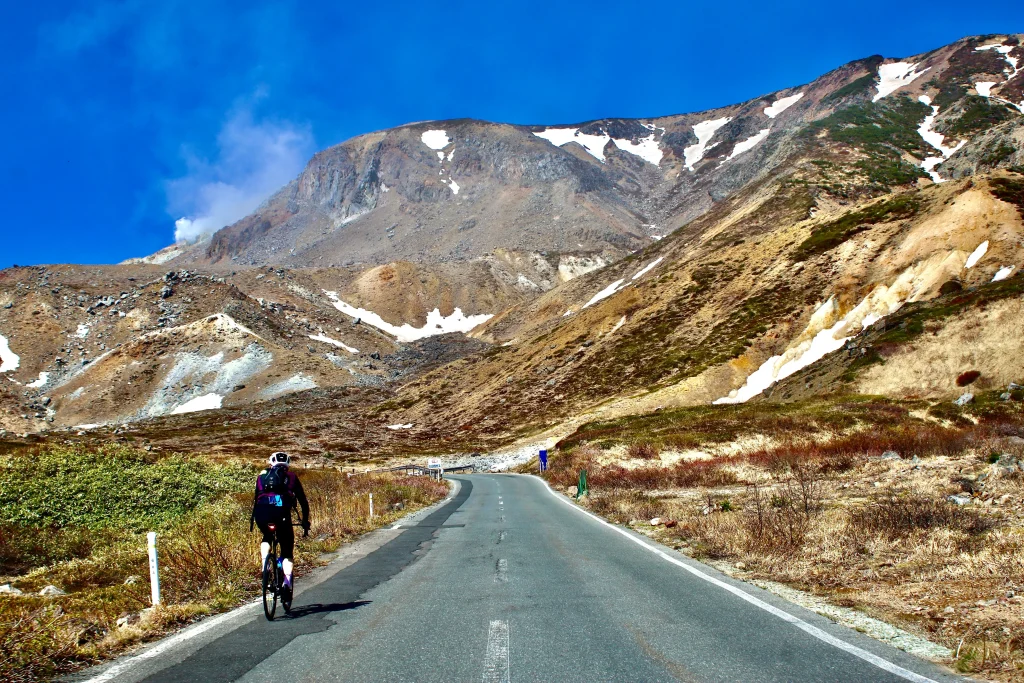
Japan may be the most underrated cycling destination in the world. More than three-quarters of the country is mountainous, which means the cities are dense — but it also means the countryside is laced with quiet backroads, river paths, and coastlines that were practically made for two wheels. In recent years the country has invested heavily in cyclist infrastructure, from blue-lined national routes to rental hubs with showers and lockers, so it’s easier than ever to just show up and ride.
The hard part isn’t finding a good route. It’s choosing between them.
Below are 9 of the best cycling routes in Japan, from the world-famous island crossing that belongs on every rider’s list to a big-sky loop in Hokkaido that most visitors never hear about. For each one you’ll find the distance, the difficulty, and who it’s best for — plus, at the end, the practical stuff (rules, rentals, and getting to the start) that turns a daydream into a trip you can actually book.
4 Popular Cycling Routes in Western Japan
1.Shimanami Kaido
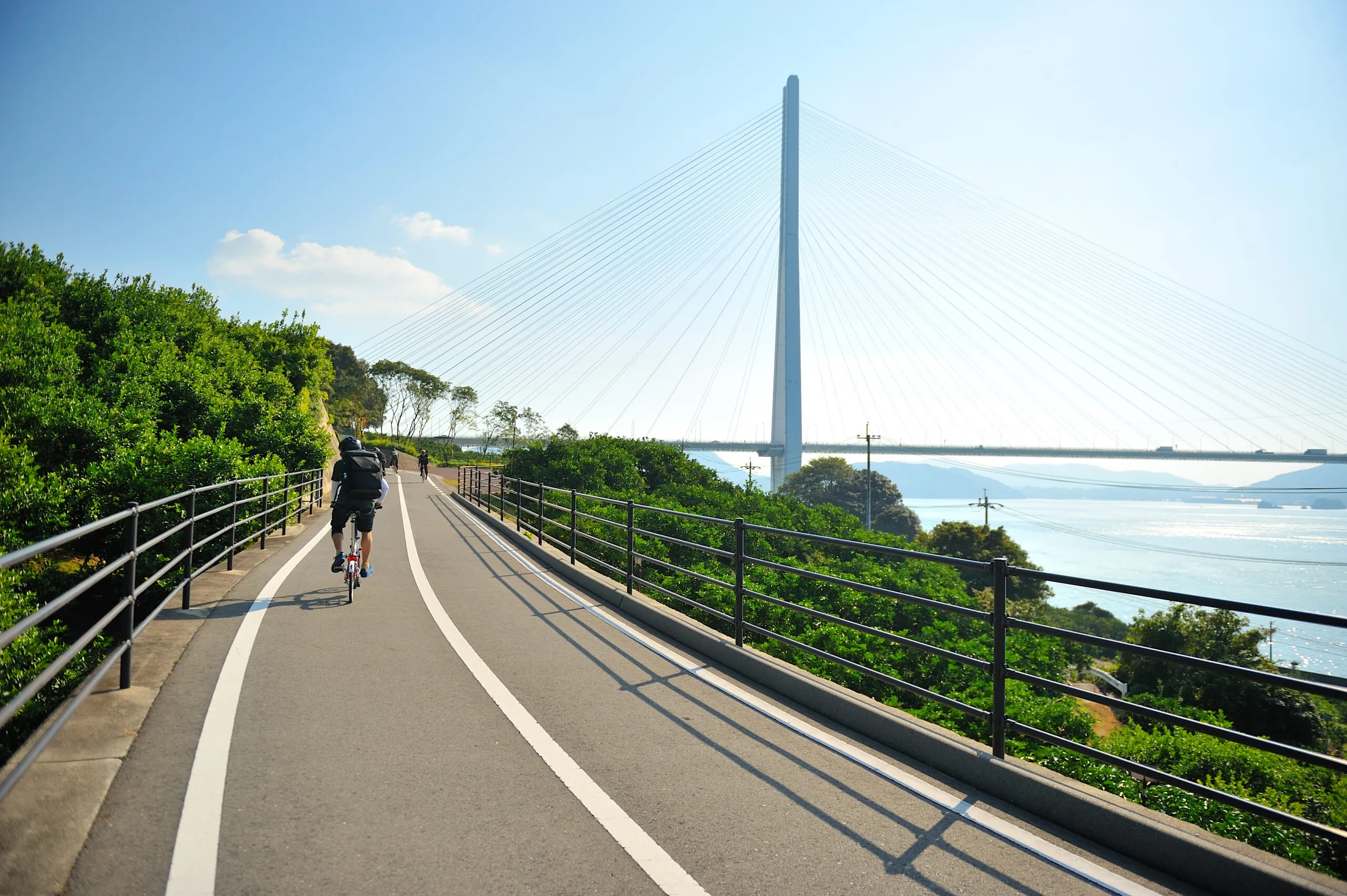
If you only ride one route in Japan, make it this one. The Shimanami Kaido runs roughly 70 kilometers across the Seto Inland Sea, linking Onomichi on Honshu with Imabari on Shikoku by hopping six islands and a series of dramatic bridges — including the Kurushima-Kaikyo, one of the longest suspension-bridge structures of its kind in the world. It was famously called one of the planet’s best cycling routes by international media, and the reputation is earned.
The scenery is the reason why. Sheltered by mountains on both sides, the Seto Inland Sea stays mild and rideable year-round, and its waters are calm enough that the islands — dozens of them, large and small — sit scattered across the surface like something arranged on purpose. You spend the day riding above that view, then dropping down into it.
What makes it beginner-friendly is the design: a painted blue line guides you the entire way, the gradients are gentle apart from the ramps up onto each bridge, and rental hubs at both ends let you pick up a bike on one side and drop it on the other. You can knock it out in a single long day, but staying a night on one of the islands — for the sea-facing sunsets alone — is the move most riders wish they’d made.
And the islands are the point, not the scenery you pass through. Ōmishima is the one to get off for. It holds Oyamazumi Shrine, whose main hall and worship hall are both designated Important Cultural Properties, and the grounds are ringed by camphor trees — the oldest of them reckoned at more than 2,600 years. Walking in off the bike, sweaty and squinting, into that quiet is a strange and good feeling. Most people budget twenty minutes and stay an hour.
- Distance: ~70 km
- Difficulty: Easy–moderate
- Best for: first-timers and anyone who wants the signature ride.
- Tip: riders often start in Imabari for gentler climbs and more favorable winds, though both ends work.
2.Biwa-ichi
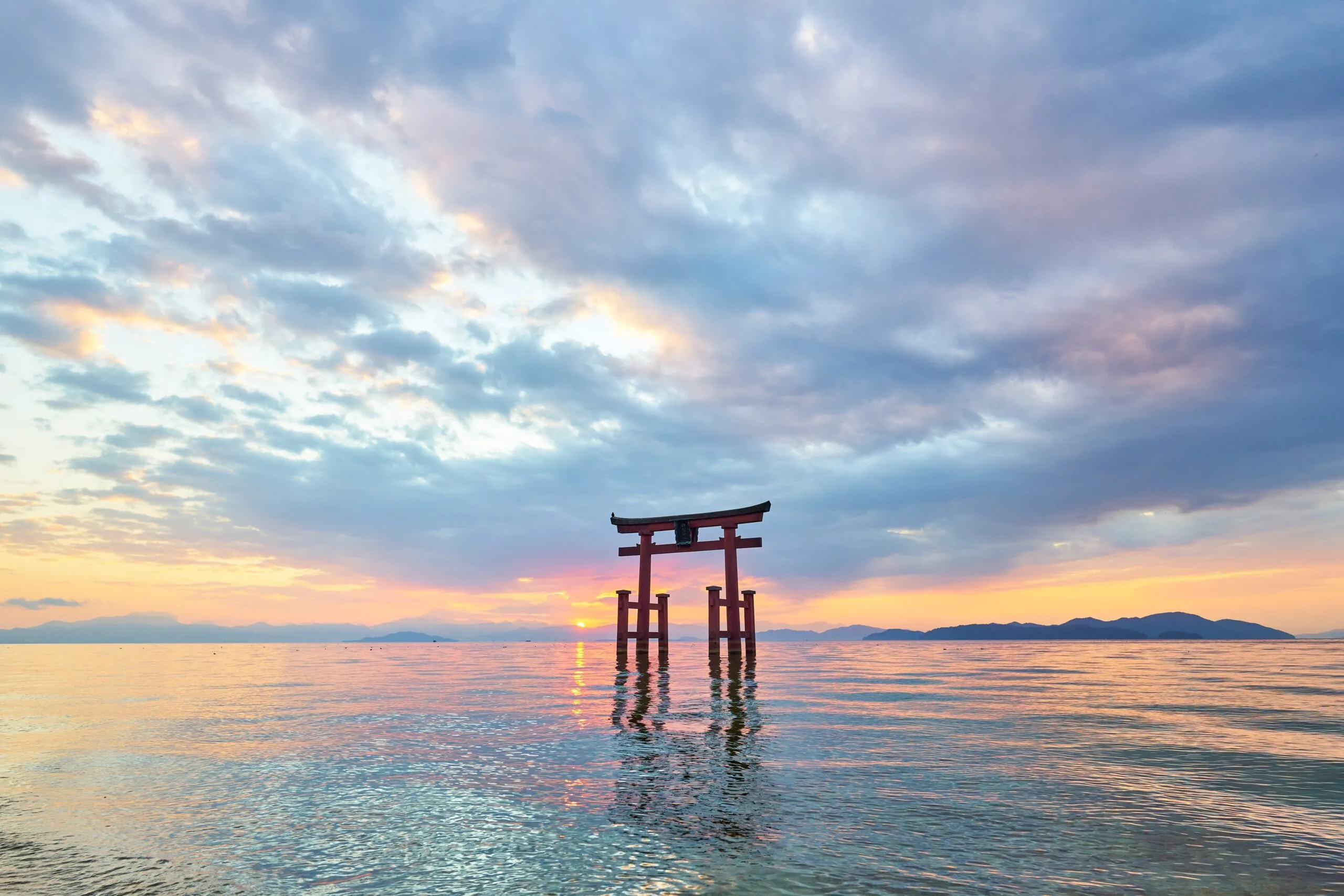
Biwaichi — literally “once around Biwa” — is the full loop of Lake Biwa, Japan’s largest lake, and it’s the ride most cyclists in Japan get around to eventually. The circuit is around 200 kilometers, typically spread over two or three days, with well-marked blue lines, roadside rest stations, and public restrooms the whole way. The terrain is mostly flat, so what tests you is distance and wind, not climbing — which is what makes it approachable for anyone reasonably fit, without being a soft ride.
It has also quietly gotten better. New bike paths and rest areas have gone in over the past few years, and the route is now built for cyclists rather than merely tolerating them.
The best trick in the area is the Ohmi Railway’s “Cycle Train“: you can roll your bike straight onto the carriage — no bag, no disassembly. That turns a fixed 200 km loop into something you shape yourself. Skip a stretch, bail out when the wind turns against you, or head inland to the mountains and towns away from the shore. It also puts the region’s landmarks within easy reach: the Azuchi Castle Ruins, where Oda Nobunaga’s great keep once stood, and Hikone Castle, one of the few original keeps still standing in Japan. Ride, train, castle, ride — it’s a good rhythm, and it means you see the region rather than just circle it.
The reward is variety: castle towns and lakeside shrines, cherry blossoms in spring, and long open stretches with the water on one side and mountains on the other. If 200 km is more than you want, you can cut across the Biwako-Ohashi Bridge to skip the smaller southern basin and ride the ~150 km northern loop instead — or simply rent a bike near Maibara Station and spend an afternoon on a scenic section.
- Distance: ~200 km (150 km / 50 km variants)
- Difficulty: Moderate (distance-driven)
- Best for: long-distance riders wanting one iconic loop.
3.Yamanami Highway
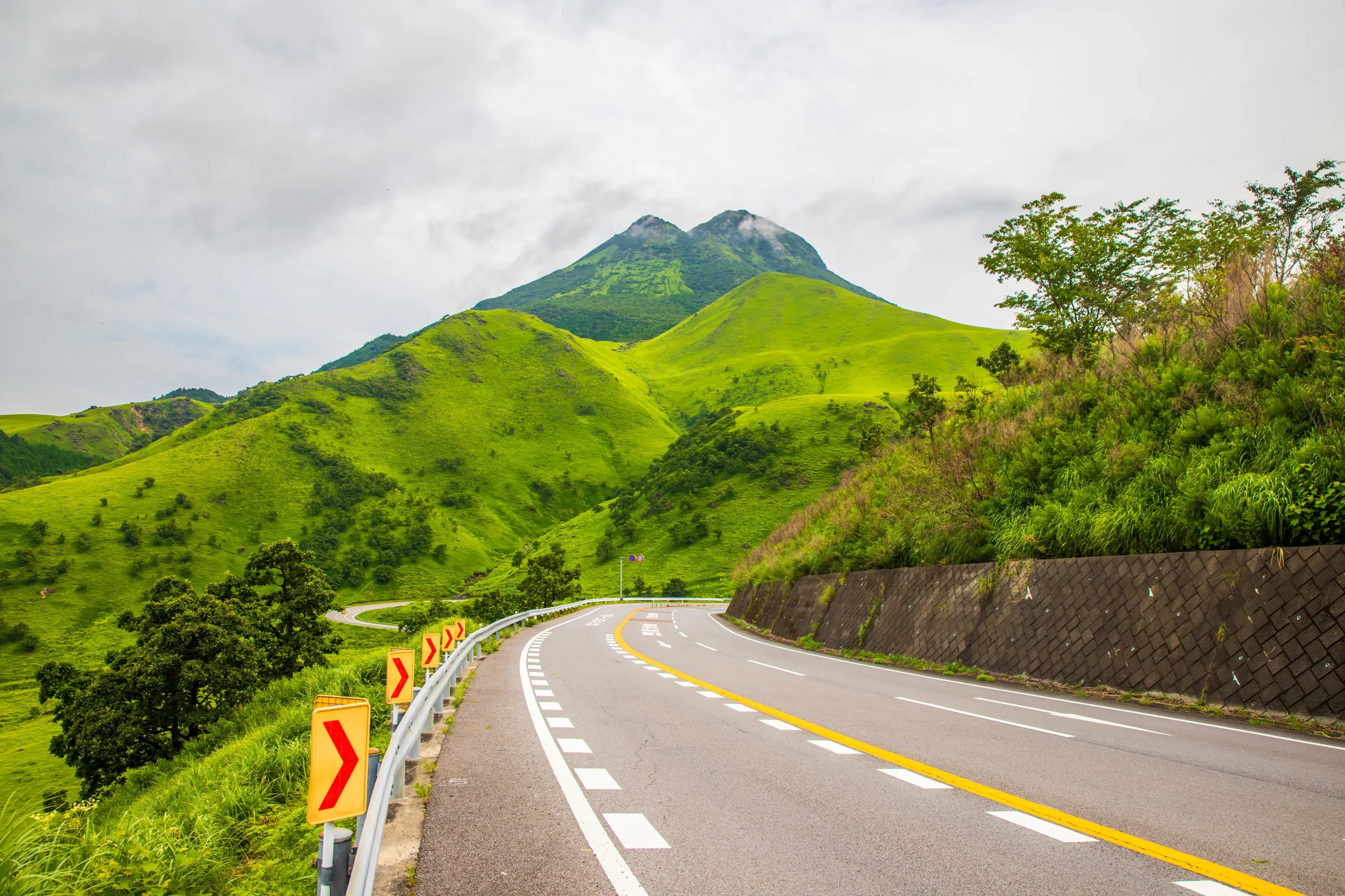
For riders who came to climb, the Yamanami Highway is Japan’s answer to a great alpine road — except the peaks are volcanoes. It runs between Oita and Kumamoto through the highlands of central Kyushu, past grassy caldera plateaus and steaming valleys, and it’s listed among Japan’s 100 Famous Roads. This is the least beginner-friendly ride here: real climbing, real descents, and high exposed sections where the weather turns without asking.The high point is Makinoto Pass. From there the Kuju range stands on one side and the Aso Five Peaks on the other, and the scale of the volcanic country opens up in a way that photographs consistently fail to carry. The ascents are steep and the descents are fast. Nobody rides this route by accident, and nobody regrets it either.Then you come down, and the road delivers what no alpine pass in Europe can: hot springs, historic ones, all along the way. The main event is the Kusu “Yume” Hot Spring Village in Kokonoe, ranked among the best onsen destinations in the country — twelve distinct springs in the town alone, including Sujiyu, known for its pounding overhead cascade, and Hōsenji on the river. You climb a volcano in the morning and sit in its water in the evening. That’s the ride.
- Distance: ~100 km
- Difficulty: Hard
- Best for: confident climbers chasing dramatic, uncrowded scenery.
4.Kyoto-Tamba Round Long Ride
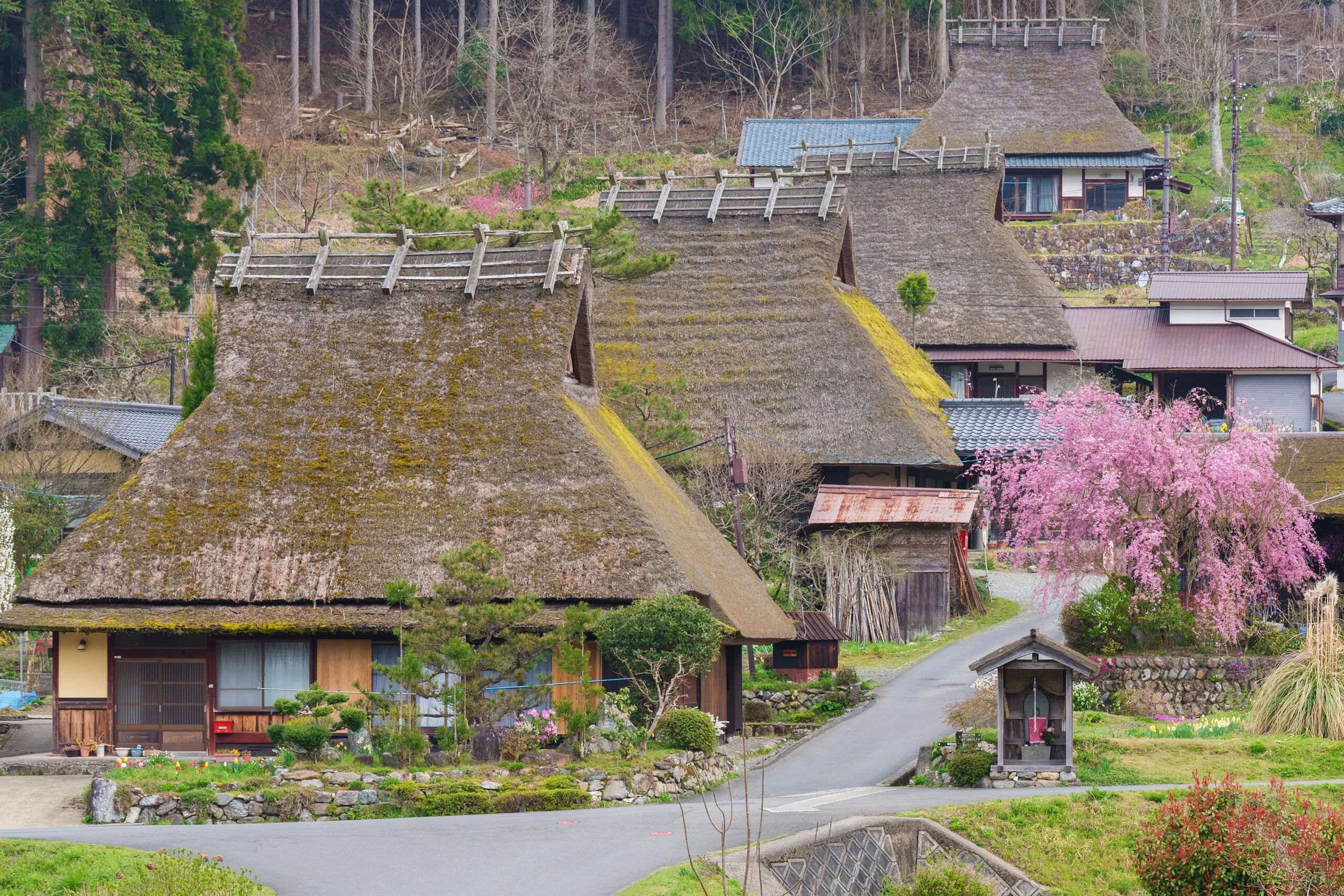
Just beyond Kyoto’s crowds, the Tamba countryside is a different Japan: river valleys, terraced fields, and villages that time seems to have skipped. The Kyoto-Tamba Round Long Ride is an immersive course that takes you through the serene Kyoto-Tamba area, far from the hustle and bustle of the city. A highlight of the course is the Miyama area, known for its traditional thatched-roof houses. The local community has worked diligently to preserve these houses as part of maintaining the old village charm.
The North Village, located on the northern side of the Yura River, features 39 of these beautifully preserved thatched-roof houses. The village also has cozy cafes and souvenir shops, making it a great spot for a refreshing break during the ride.
Another notable spot is Oono Dam Park, located upstream of the Yura River. The park hosts seasonal festivals, including the “Sakura Festival” in spring and the “Momiji Festival” in autumn.
This course offers gorgeous views throughout the year, but with an elevation gain of 2,000 meters, it’s best suited for advanced riders with experience in long-distance cycling.
- Distance: ~90–100 km · Difficulty: Moderate · Best for: riders who want countryside culture, not just scenery.
5 Popular Cycling Routes in Eastern Japan
1.Tsukuba-Kasumigaura Ring-Ring Road
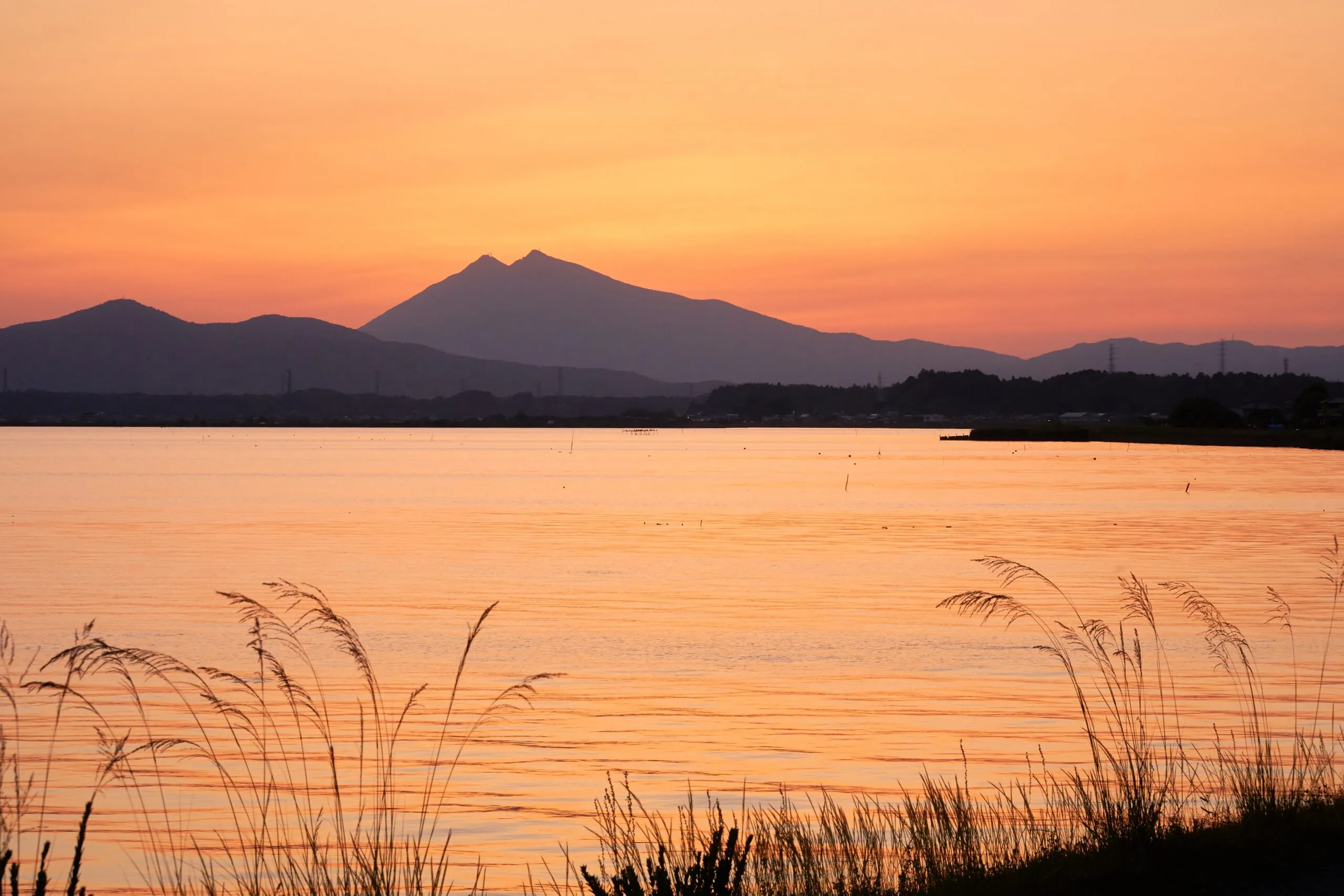
The Tsukuba-Kasumigaura Ring-Ring Road is about an hour from central Tokyo, which is most of its appeal right there — you can leave the city in the morning and be riding by mid-morning. What you get is a converted former railway line (flat, smooth, largely traffic-free) joined to a loop around Lake Kasumigaura, Japan’s second-largest lake, all of it under the twin peaks of Mount Tsukuba, one of Japan’s 100 Famous Mountains.
The clever part is that it isn’t one ride, it’s two. The rail-trail section is as gentle as cycling gets: no cars, no gradient, no decisions. The Mt. Tsukuba climbing course is the opposite — pitches over 10% and a proper reason to be out of the saddle. Same day, same base, entirely different rides. Take the easy one, take the hard one, or take the easy one and then find out how you feel.
Ring-Ring Square Tsuchiura, right at Tsuchiura Station, is where you start: rental bikes, coin lockers, showers at the end. Turn up with nothing and leave clean.
If you’re anywhere near Kasumigaura in the late afternoon, ride to Tennozaki Park. On a clear evening the whole surface of the lake goes crimson under the setting sun, and it’s worth timing your day around. Link the sections together and the full course runs to around 180 km; ride one piece and you have a half-day out. Either way you’re back in Tokyo by evening — which is why this one works as a weekend ride in a way the others don’t.
- Distance: ~90–180 km depending on variant
- Difficulty: Easy
- Best for: a flat, relaxed weekend from Tokyo, mixed-ability groups.
2.Mount Fuji & the Fuji Five Lakes (Fujiichi)
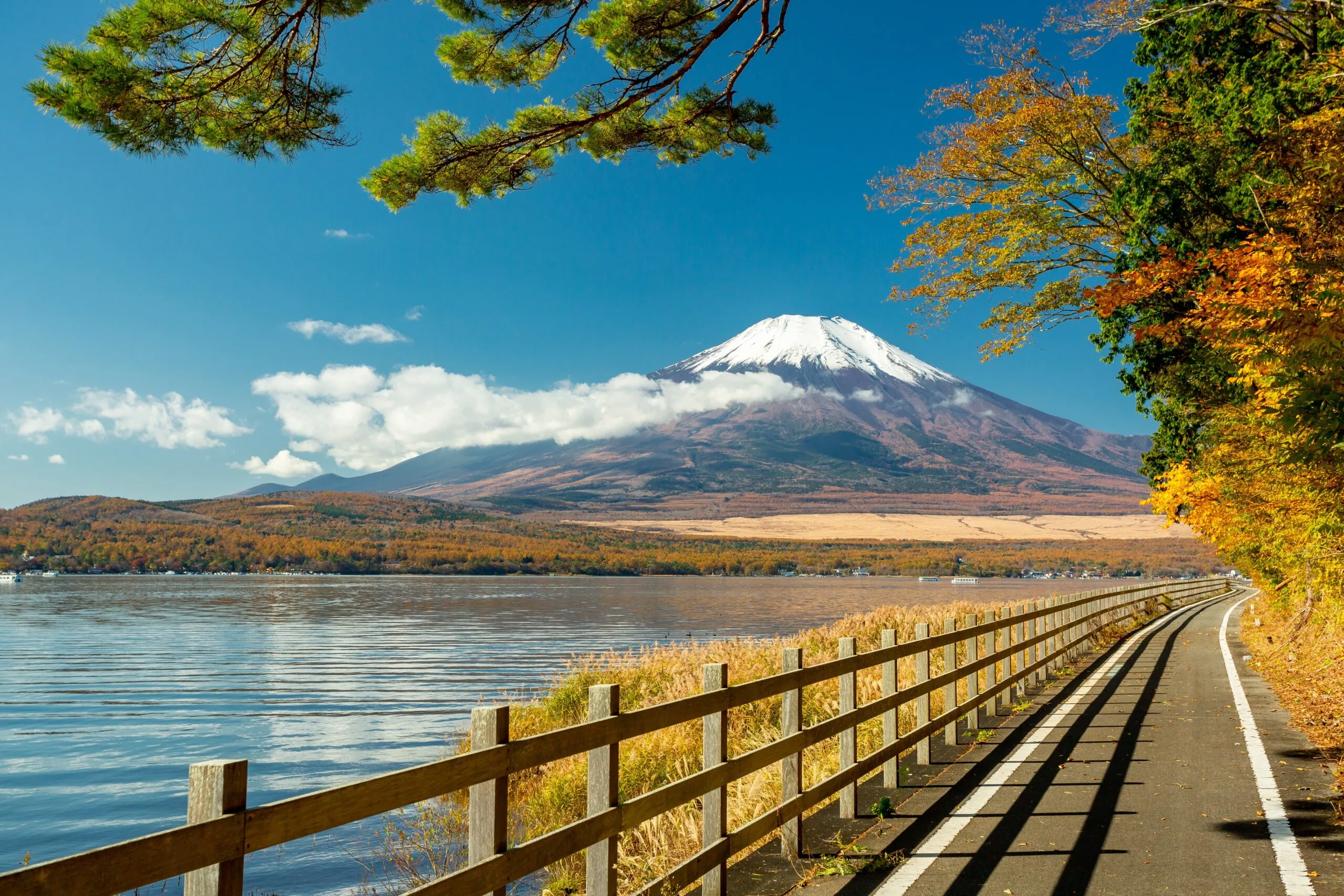
You don’t have to climb Mount Fuji to ride around it. The Fuji Five Lakes region on the mountain’s northern side offers loops that serve up postcard views from nearly every angle — most famously from Lake Kawaguchi and Lake Motosu, whose mirror-still water reflecting Fuji is the scene printed on the 1,000-yen note. Distances here are manageable (a Lake Kawaguchi loop is under 20 km), with rolling terrain and a few steady climbs.
It’s the rare route where the payoff-to-effort ratio is enormous: a moderate half-day of riding for some of the most recognizable views on earth. Spring and autumn are especially good, when the air is clearest and the summit most likely to be out.
- Distance: ~100 km
- Difficulty: Moderate
- Best for: iconic Fuji photos without a huge day in the saddle.
3.Toyama Bay Coastal Cycling Course
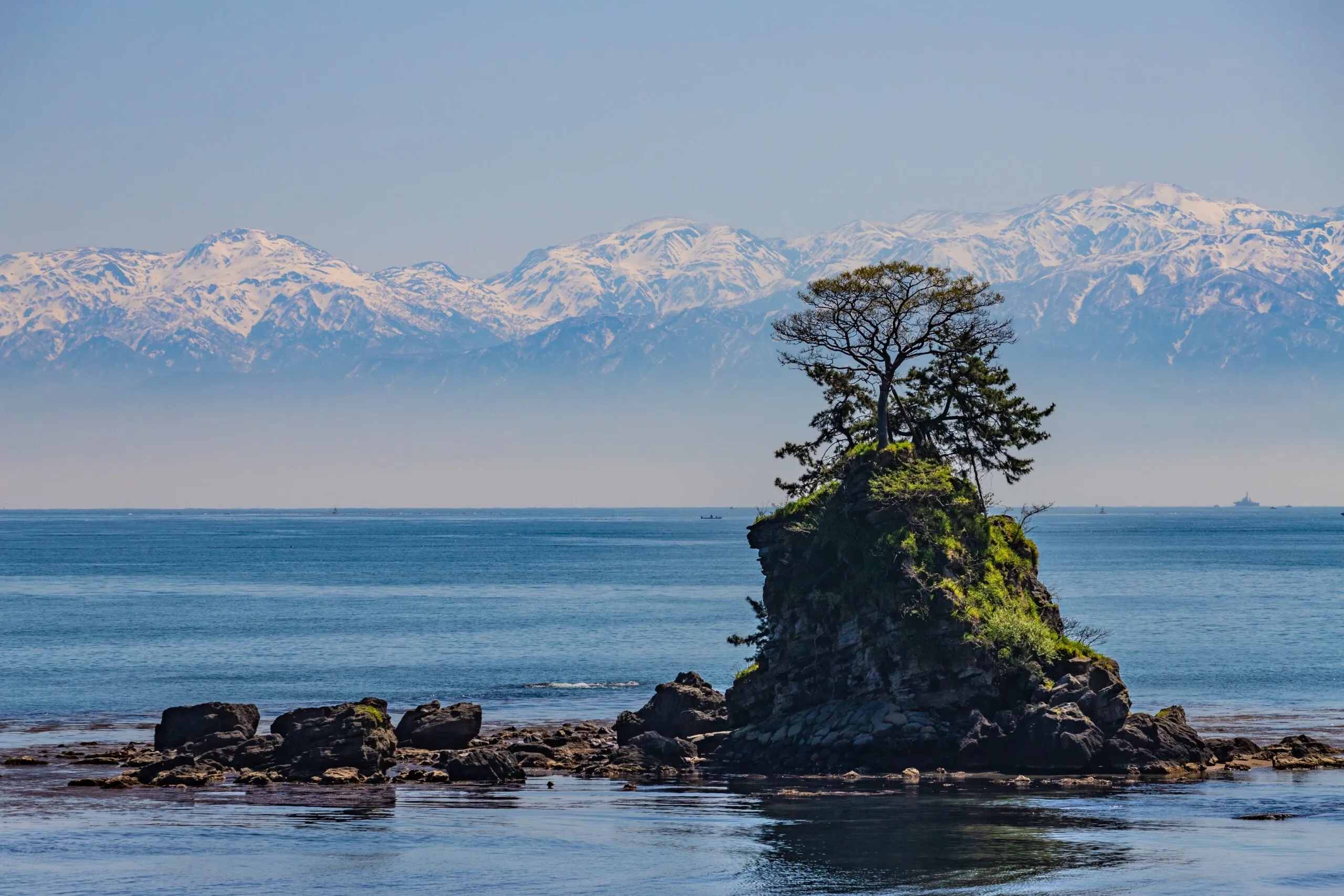
On the country’s less-touristed western coast, the Toyama bay coastal cycling course along Toyama Bay and toward the Noto Peninsula trades big-name landmarks for something quieter: fishing towns, well-maintained coastal cycling roads, and — on clear days — the startling sight of the snow-capped Northern Alps rising straight out of the sea. Cycle stations, cafés with bike racks, and rental pumps make it an easy region to ride as a visitor.
The other draw is the food. Throughout the course, there are various spots to savor fresh Toyama seafood, perfect for a mid-ride break. In spring, delicacies like firefly squid and white shrimp are at their peak, while autumn brings the rich flavors of yellowtail (Buri). Timing your visit to enjoy these seasonal specialties can make your journey even more memorable.
- Distance: ~100 km
- Difficulty: Easy–moderate
- Best for: coastline, seafood, and dramatic mountain-meets-sea views.
4.Tokapuchi 400
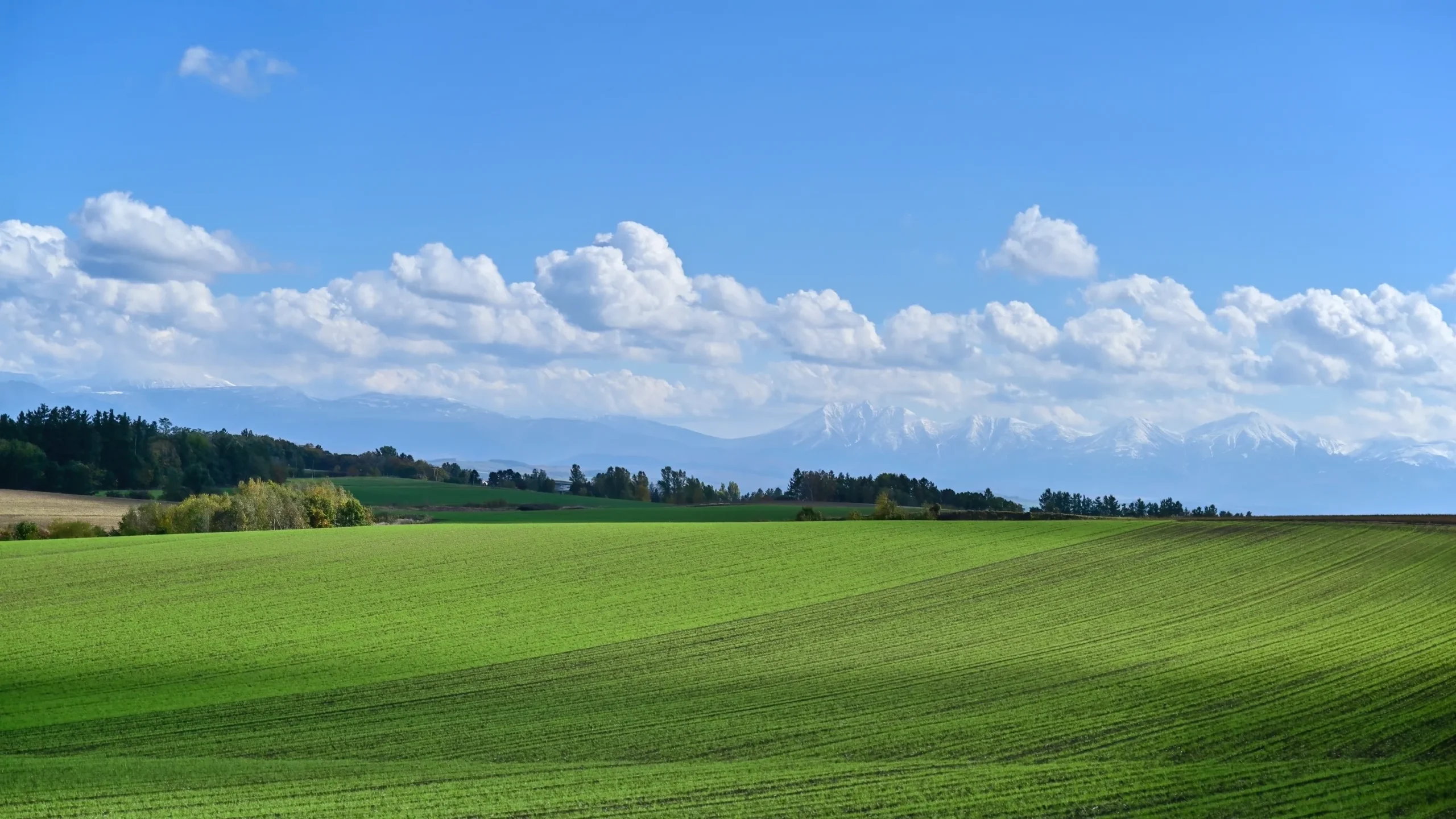
For the long-haul rider, Hokkaido is the dream — and the Tokapuchi 400 is its showcase. Certified as a national cycle route, this roughly 400-kilometer figure-eight loops the Tokachi Plain in eastern Hokkaido, threading vast farmland, low mountains, and the kind of empty, well-paved roads that barely exist elsewhere in Japan. Riders describe hawks overhead and foxes trotting the roadside; the sense of scale is unlike anywhere else in the country.
It’s a multi-day undertaking (four to five days for the full loop) best ridden in summer, when the rest of Japan is sweltering but Hokkaido stays comfortable. The regional food — seafood, soup curry, dairy, ramen — is a reason to ride it all on its own.
- Distance: ~400 km
- Difficulty: Hard (distance)
- Best for: experienced tourers who want big nature and quiet roads.
5.Oarai-Hitachi Seaside Route
The Oarai-Hitachi Seaside Route presents a delightful mix of Ibaraki Prefecture’s attractions, offering a versatile and engaging journey for cyclists.
Along the route, riders can choose between two distinct paths: an inland course rich in historical landmarks or a coastal route that features stunning seaside scenery and local flavors. The inland route is ideal for those interested in sightseeing, with many historical buildings like Mito Castle and Kōdōkan. The coastal route, on the other hand, showcases the beauty of the Pacific Ocean with picturesque views, while also offering opportunities to savor fresh seaside cuisine.
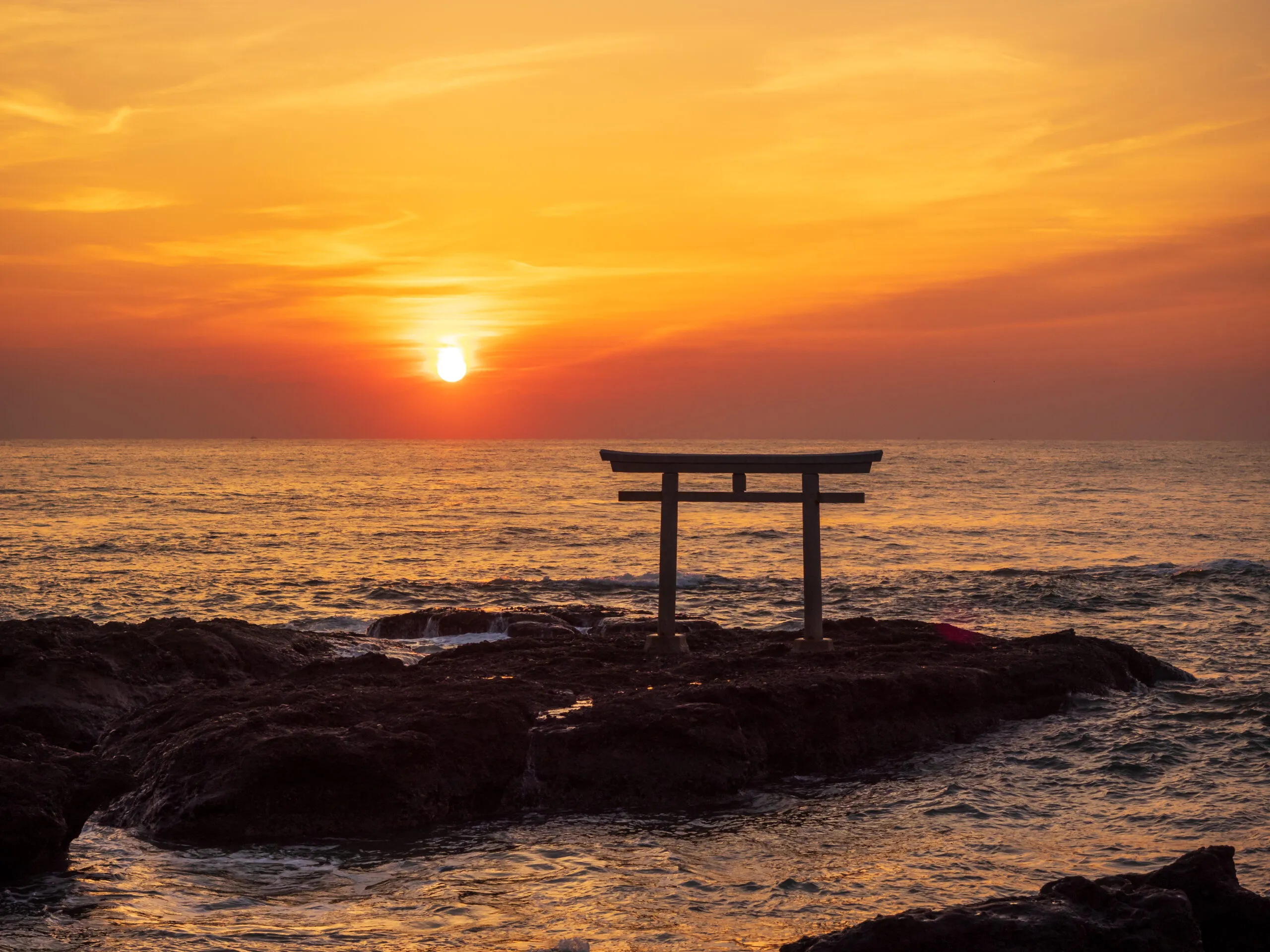
One standout attraction along the coast is the Kamiiso no Torii, a dramatic torii gate standing on the rocky shore near Ōarai Isosaki Shrine. Recognized as one of Japan’s most scenic spots, it is especially gorgeous at sunrise, making it a must-visit for cyclists on an overnight trip.
Another highlight of the route is the popular Hitachi Seaside Park, famous for its stunning seasonal flower displays, such as nemophila in spring and kochia in autumn. Bicycles are allowed in the park, so why not make a stop there during your ride?
- Distance: 95 km
- Difficulty: Easy
- Best for: a flat, relaxed weekend from Tokyo
How to Choose Your Route
Before the deep dives, here’s the quick comparison. Distances are for the full, most-cycled version of each route; nearly all of them can be shortened using trains, ferries, or buses along the way.
| Route | Region | Distance | Difficulty | Days | Best for |
| Shimanami Kaido | Seto Inland Sea | ~70 km | Easy–moderate | 1–2 | First-timers, the “bucket-list” ride |
| Biwa-ichi | Shiga (near Kyoto) | ~200 km | Moderate | 2–3 | Long-distance riders wanting one big loop |
| Yamanami Highway | Kyushu (Aso–Kuju) | ~100 km | Hard | 1–2 | Climbers chasing volcanic high country |
| Kyoto-Tamba loop | Kyoto (rural) | ~90–100 km | Moderate | 1–2 | Thatched villages and quiet countryside |
| Tsukuba-Kasumigaura Ring-Ring Road | Ibaraki (near Tokyo) | ~90–180 km | Easy | 1–2 | A flat, low-stress weekend from Tokyo |
| Mount Fuji & Five Lakes | Yamanashi | ~110 km | Moderate | 1-2 | Iconic Fuji views without huge distance |
| Toyama Bay Coastal Cycling Course | Toyama/Ishikawa | ~100 km | Easy–moderate | 1–2 | Sea-of-Japan coastline and seafood |
| Tokapuchi 400 | Hokkaido | ~400 km | Hard | 4–5 | Big-nature, long-haul touring |
| Oarai-Hitachi Seaside Route | Ibaraki | ~95km | Easy | 1-2 | Relaxed weekend from Tokyo |
A simple way to narrow it down: if it’s your first ride in Japan, start with Shimanami Kaido. If you want one big loop to train for and conquer, it’s Biwa-ichi. If you’re short on time or riding with mixed abilities, the flat Ring-Ring Road near Tokyo is the safe bet. And if you’re a strong climber who wants scenery nobody back home will recognize, point yourself at Yamanami Highway or Hokkaido.
When to cycle in Japan
Timing makes or breaks a Japanese cycling trip.
- Spring (late March–May): arguably the best window — mild temperatures, clear air, and cherry blossoms along many routes. Popular and busy around the blossom peak.
- Autumn (September–November): the other prime season, with comfortable riding weather and vivid fall foliage.
- Summer (June–August): hot and humid across most of the country, and the rainy season hits early summer — but Hokkaido and high-altitude routes stay pleasant, which is exactly when to ride them.
- Winter: off-season for most routes; mountain and northern roads may be closed or icy.
One local habit worth borrowing: avoid national holiday weeks — Golden Week (early May), Obon (mid-August), Silver Week (mid-September) and New Year — when roads, trains, and accommodation are at their busiest and most expensive.
Before you go: Rules, Rentals & Logistics
Rules of the Road
- Ride on the left. Japan drives on the left, so cyclists do too. If you’re used to riding on the right, this takes real concentration for the first day.
- Lights are mandatory after dark, and riding without them can get you stopped by police. Fit reliable front and rear lights — you’ll want them for the mountain tunnels on many routes.
- Helmets: since April 2023, all cyclists are legally asked to make an effort to wear a helmet. It’s strongly encouraged rather than fined, but wear one.Don’t park your bike where it isn’t meant to go; illegally parked bikes can be tagged or removed.
For detailed information, refer to the bicycle traffic rules provided by the Tokyo Metropolitan Police.
Renting or Shipping a Bike
You do not need to bring your own bike. Rental hubs sit at the start of most major routes — including proper road bikes and, increasingly, e-bikes that make the climbs approachable for almost anyone. Many routes (Shimanami Kaido especially) let you rent at one end and return at the other.
If you do bring your own bike, Japan’s takkyubin courier services (the “Black Cat,” Yamato) will ship a boxed bike between airports, hotels, and stations cheaply and reliably, usually within a couple of days — the easiest way to move a bike across the country without wrestling it onto trains.
Getting to the Start
Japan’s train network gets you to nearly every trailhead. If you’re carrying your own bike on trains, it must be bagged in a rinko bag — a packed bike is welcome on most services, an unbagged one is not. For point-to-point routes, plan your return train early: rural stations can be sparse, and a missed last connection turns into an expensive taxi.
Riding these Routes as a Supported Trip
Every route above can be ridden independently — the infrastructure is genuinely good. But if you’d rather spend your days riding and none of them sorting logistics, a supported or curated trip handles the parts that eat a self-planned tour: luggage transfers between hotels, bike rental and mechanical backup, routing that keeps you off the busy roads, and accommodation booked around the ride. For a first visit — or a trip where you want the scenery without the spreadsheet — it’s often the difference between a good week and an unforgettable one.
The Takeaway
Japan rewards cyclists with a range few countries can match: a world-famous island crossing, a lake loop worth training for, volcanic high roads, thatched-roof villages, and empty Hokkaido horizons — often within a few hours’ train ride of each other. Pick the route that matches your level and your time, sort the rentals and the season, and the rest is just pedaling. Wherever you start, you’ll see a side of the country most visitors never do.
Beyond the Classics: 6 More Cycling Routes in Japan Worth the Detour
The nine routes above cover the icons — but “cycling in Japan” is a bigger world than Shimanami Kaido and Lake Biwa. If you’ve already got one of the classics on your list, or you’re simply looking for roads with fewer tourists and more room to breathe, these six regional routes are where experienced Japan cyclists go next.
| Route | Region | Distance | Difficulty | What Makes It Different |
| Noto Peninsula Coastal Route | Ishikawa | ~150–250 km | Moderate–Hard | Dramatic cliffside roads, traditional fishing villages, and terraced rice paddies that meet the sea |
| Nichinan Coast | Miyazaki, Kyushu | ~100 km | Moderate | Palm-lined coastal road with a laid-back, almost tropical feel rare in Japan |
| Kumano Kodo to Shionomisaki Cape | Wakayama, Kansai | ~100–150 km | Moderate | Pilgrimage trails, coastal shrines, and the cape marking Honshu’s southernmost point |
| Shiretoko Coastal Route | Hokkaido | ~100 km | Moderate | A UNESCO World Heritage peninsula with wild coastline and genuine chances of spotting deer and foxes |
| Sado Island Golden Trail (known locally as Sadoichi) | Niigata | ~130 km | Moderate | A former gold-mining island, largely untouched by mass tourism, reached by ferry |
| Aso–Takachiho Swing | Kyushu | ~120 km | Hard | Volcanic caldera roads linking Mt. Aso to the mythological gorge of Takachiho |
Why these matter for trip planning: several of these routes pair naturally with the ones already covered above. Riders doing the Yamanami Highway, for example, are only a couple of hours from extending into the Aso–Takachiho Swing. Anyone drawn to Biwa-ichi’s castle towns will find a similar (but far quieter) rhythm on the Kumano Kodo coastal route. Building a multi-region itinerary — rather than picking a single route in isolation — is usually where the best Japan cycling trips come from, and it’s the kind of connecting logic that’s easy to miss when you’re reading route guides one at a time.
How to Plan a Cycling Route in Japan Like a Local
Even with world-class infrastructure, one mistake trips up more visiting cyclists than any hill or headwind: following Google Maps’ driving directions on a bike.
Japan’s national highways are built for cars, and Google’s default routing puts cyclists on exactly those roads — narrow shoulders, heavy truck traffic, and long tunnels included. Locals ride differently. A few habits worth borrowing:
- Look for the road parallel to the main one. Japan’s dense road network almost always has a quieter secondary route running alongside the highway, especially near rivers and in valley towns.
- Follow the rivers. Japan has an extensive network of riverside cycling paths (saikuringu rōdo) that are flat, car-free, and often connect small towns for dozens of kilometers at a stretch.
- Check Google Street View before you commit. A 30-second look at a stretch of road tells you more about real traffic conditions than any route-planning algorithm.
- Use a cycling-specific app, not a driving app. Ride with GPS, Komoot, and Strava‘s heatmap (which shows where other cyclists have actually ridden) are the three most useful tools for building a route in Japan, and all three have route data contributed by the country’s active cycling community.
- Look into the Japan Eco Track network — a growing set of officially certified, cyclist-vetted regional routes (including several covered above) designed specifically to keep riders off dangerous roads.
None of this is complicated, but it does take local knowledge or time — which is exactly why so many visiting cyclists end up either sticking to the two or three most famous routes, or booking a supported tour where the routing is already solved.
What Does It Cost to Cycle in Japan?
Budgeting is one of the most common questions we hear, and it’s rarely addressed in route guides. Here’s a realistic range for planning purposes:
| Item | Typical Cost (per day, per person) | Notes |
| Standard rental bike | ¥1,100–3,000 | Public terminal networks (e.g., Shimanami Kaido’s official rental system) sit at the low end; specialized shops in more remote regions run higher |
| E-bike rental | ¥1,600–9,000 | Public terminals charge close to the low end; dedicated e-bike/eMTB rentals in mountain or remote areas (e.g., Shiretoko) run considerably higher for higher-spec models |
| Road bike rental (higher-end) | ¥4,000–10,000 | Availability tightens fast around spring and autumn foliage weekends, so reserve as soon as your dates are fixed |
| Bike shipping via courier (one-way, boxed) | ¥5,000–20,000+ | Japan’s discounted cycling-specific courier service was discontinued in 2021, so standard parcel rates now apply — cost depends heavily on distance and box size |
| Guided or supported day tour | ¥15,000–30,000+ | Varies widely by region, group size, and inclusions |
| Fully custom multi-day supported trip | Varies | Depends on region, accommodation level, and number of riding days |
Costs shift with season, region, and how far in advance you book — rental bikes and guided slots on Shimanami Kaido and Lake Biwa in particular tend to sell out during Golden Week and peak autumn foliage weekends. If a specific route or budget range is on your mind, that’s exactly the kind of detail worth working through before you land in Japan rather than after.
Guided, Self-Guided, or Fully Custom — Which Style of Cycling Trip Fits You?
Not every rider wants the same level of support, and it’s worth deciding this before you book anything rather than after. Here’s how the three common approaches to cycling in Japan actually compare:
| Self-Guided (DIY) | Fixed Group Tour | Fully Custom / Tailor-Made | |
| Route | You research and plan everything | Fixed itinerary, set by the operator | Built around your fitness level, dates, and interests |
| Pace | Entirely your own | Set by the group | Your own |
| Language support | None built in | Usually included | Included, and matched to how much support you actually want |
| Luggage transfers | You handle it (or ship ahead yourself) | Usually included | Included, timed to your route |
| Best for | Confident, independent riders on well-marked routes like Shimanami Kaido | Riders who want company and zero logistics decisions | Riders with a specific vision — multi-region trips, mixed abilities in one group, or routes off the standard tourist path |
| Main trade-off | Time spent researching; no backup if something goes wrong mid-route | Fixed dates and pace, less flexibility | Requires more upfront conversation to plan well |
For a single, well-marked route like Shimanami Kaido, going self-guided is genuinely fine — the infrastructure does most of the work for you. But the moment a trip spans more than one region, mixes riders of different abilities, or heads toward routes like the Kyoto-Tamba loop or Hokkaido’s Tokapuchi 400 — where signage, language, and rural logistics get harder — a custom-planned trip tends to save far more time (and stress) than it costs.
Frequently Asked Questions About Cycling in Japan
Do I need to be an experienced cyclist to ride in Japan?
No. Routes like Shimanami Kaido, the Ring-Ring Road, and the Fuji Five Lakes loop are specifically designed to be beginner-friendly, with gentle gradients, clear signage, and e-bike rentals available at nearly every major hub. Routes like Yamanami Highway or the Kyoto-Tamba loop are a different story and are best suited to riders with real climbing experience.
Can I bring my own bike from home?
Yes. Japan’s trains widely accept bikes as long as they’re packed in a rinko bag — a soft travel case that covers the frame and wheels. An unbagged bike is not permitted on most trains. If you’d rather not deal with disassembly, courier services can ship a boxed bike between airports, hotels, and stations for a modest fee.
Is cycling in Japan safe for solo travelers and families?
Generally, yes. Japan has low crime rates, disciplined drivers by international standards, and route infrastructure — rest stops, restrooms, signage — that’s genuinely built with visitors in mind. That said, road conditions vary a lot by region, and some mountain routes have real exposure to weather and traffic that isn’t appropriate for young children or first-time riders without support.
Do I need travel or cycling insurance?
It’s strongly recommended, particularly for mountain or long-distance routes where a mechanical issue or minor injury could otherwise mean an expensive taxi or missed connection in a rural area. Standard travel insurance with activity coverage is usually sufficient for road cycling; check the policy specifically covers cycling if you’re planning anything beyond a flat, short ride.
What’s the best way to combine multiple routes into one trip?
This is where most independently-planned trips lose time — logistics between regions (train schedules, bike shipping, accommodation near the next day’s starting point) add up fast. It’s also exactly the kind of planning a tailor-made itinerary is built to solve.
What should I pack, and what happens if it rains?
Layer for sudden temperature swings, especially on mountain routes where descents can be 10°C colder than the climb. A packable rain shell is worth carrying even in the dry season, since Japan’s weather — particularly near coastlines and in the mountains — can shift faster than the forecast suggests. Most rental hubs can also supply panniers or a day bag if you’re not carrying your own gear.
Ready to Cycle Japan Your Way? Let ENJYU JAPAN Build Your Route
Reading about these routes is one thing. Turning them into a trip that fits your fitness level, your timeline, and the version of Japan you actually want to see is another.
At ENJYU JAPAN, we design fully tailor-made cycling itineraries for inbound travelers — whether that means:
- A gentle two-day Shimanami Kaido trip with e-bikes, island accommodation, and no logistics to think about
- A custom multi-region route connecting Biwa-ichi’s castle towns with the volcanic highlands of the Yamanami Highway
- A fully supported Hokkaido tour covering the Tokapuchi 400 or the quieter coastline of Shiretoko, with luggage transfers and mechanical backup handled for you
- A family-friendly or mixed-ability itinerary that mixes easy rail-trail sections with optional climbs for stronger riders in the group
We handle the parts that are hard to get right from abroad — route selection, bike and e-bike arrangements, accommodation timed to each day’s ride, and backup plans for weather or fatigue — so your trip is built around the riding, not the spreadsheet.
Tell us your riding level, your dates, and the regions you’re curious about, and we’ll put together a route that’s genuinely yours.
Contact ENJYU JAPAN to start planning your custom cycling trip in Japan!