The timing of autumn foliage mainly depends on latitude, elevation, and annual weather conditions.Higher and more northern areas usually reach peak colour earlier, while cities and lowland areas in central and western Japan often reach their best colour later. Therefore, travellers can find autumn leaves from late September into early December by choosing the right region.
This guide helps travellers match their travel dates with the most suitable areas for autumn foliage. It explains regional timing, useful seasonal vocabulary, major viewing spots, and lesser-known places in central Japan. It also covers evening illuminations, onsen stays, and practical alternatives when foliage conditions differ from the usual pattern.
7-Day Autumn Leaves Japan Tour
When Is the Best Time to See Autumn Leaves in Japan?
The timing of autumn foliage mainly depends on latitude, elevation, and annual weather conditions. Higher and more northern areas usually colour first, while cities and lower ground in central and western Japan often reach their best colour later. Therefore, travellers can find autumn leaves from late September into early December by choosing the right region.
These periods are broad planning guides rather than fixed peak dates. Temperature, rainfall, wind, and local elevation can change the timing from year to year.
| Region | Typical viewing period | Example | Planning point |
| Hokkaido mountains | Mid-September–early October | Daisetsuzan National Park | High-elevation scenery; prepare for cold and changing mountain weather |
| Tohoku and higher-elevation areas | October–early November | Nikko and mountain valleys | Useful for October itineraries |
| Mt Fuji, Hakone, and the Japanese Alps | Late October–mid-November | Lake Kawaguchi, Hakone | Often earlier than Tokyo and Kyoto |
| Tokyo, Kyoto, and Kansai lowlands | Mid-November–early December | Rikugien, Kyoto temple grounds | Peak weeks can be busy; plan around opening times |
| Western Japan and parts of Kyushu | Late November–December | Gardens, temple grounds, valleys | A practical option for late-autumn travel |
These periods are broad planning guides rather than fixed peak dates. Temperature, rainfall, wind, and local elevation can change the timing from year to year.
If your travel dates are set for October, higher mountain areas and northern Tohoku offer optimal viewing. However, lowland destinations like Kyoto reach their peak during the second half of November.
Read more:Japan in October: Weather, Seasonal Food, and Autumn Leaves
Koyo, Momiji, and Momijigari: The Cultural Side of Autumn Leaves
A few words you’ll see on signs and hear in conversation. Three Japanese words help visitors understand how autumn leaves are described and enjoyed in Japan.
Koyo describes the seasonal colouring of leaves in autumn. Momiji usually refers to Japanese maple, and is often associated with the colourful foliage of autumn.Momijigari literally means “autumn-leaf hunting”.
It refers to going out specifically to seek out and appreciate autumn foliage.Together, these words show that autumn foliage in Japan is both a natural seasonal change and a cultural tradition.
Like hanami, the spring custom of enjoying cherry blossoms, momijigari involves going out specifically to observe a seasonal change in nature. During the Heian period, court aristocrats in Kyoto travelled to nearby mountains to view coloured leaves and compose waka, classical Japanese poems. Over time, the custom spread beyond the court and became a widely enjoyed seasonal activity. Momijigari therefore connects a journey through autumn scenery with a long-standing custom of observing the changing season.
Famous Places for Autumn Leaves, and Why Timing Changes by Region
Japan’s best-known autumn destinations reach their best colour at different times and offer distinct landscapes. Mountain trails in Hokkaido, temple grounds in Kyoto, and lakeside paths near Mt Fuji do not follow one uniform schedule. Therefore, travellers should choose destinations according to their travel dates, rather than follow a single list of famous places.
Hokkaido: Early Mountain Colors
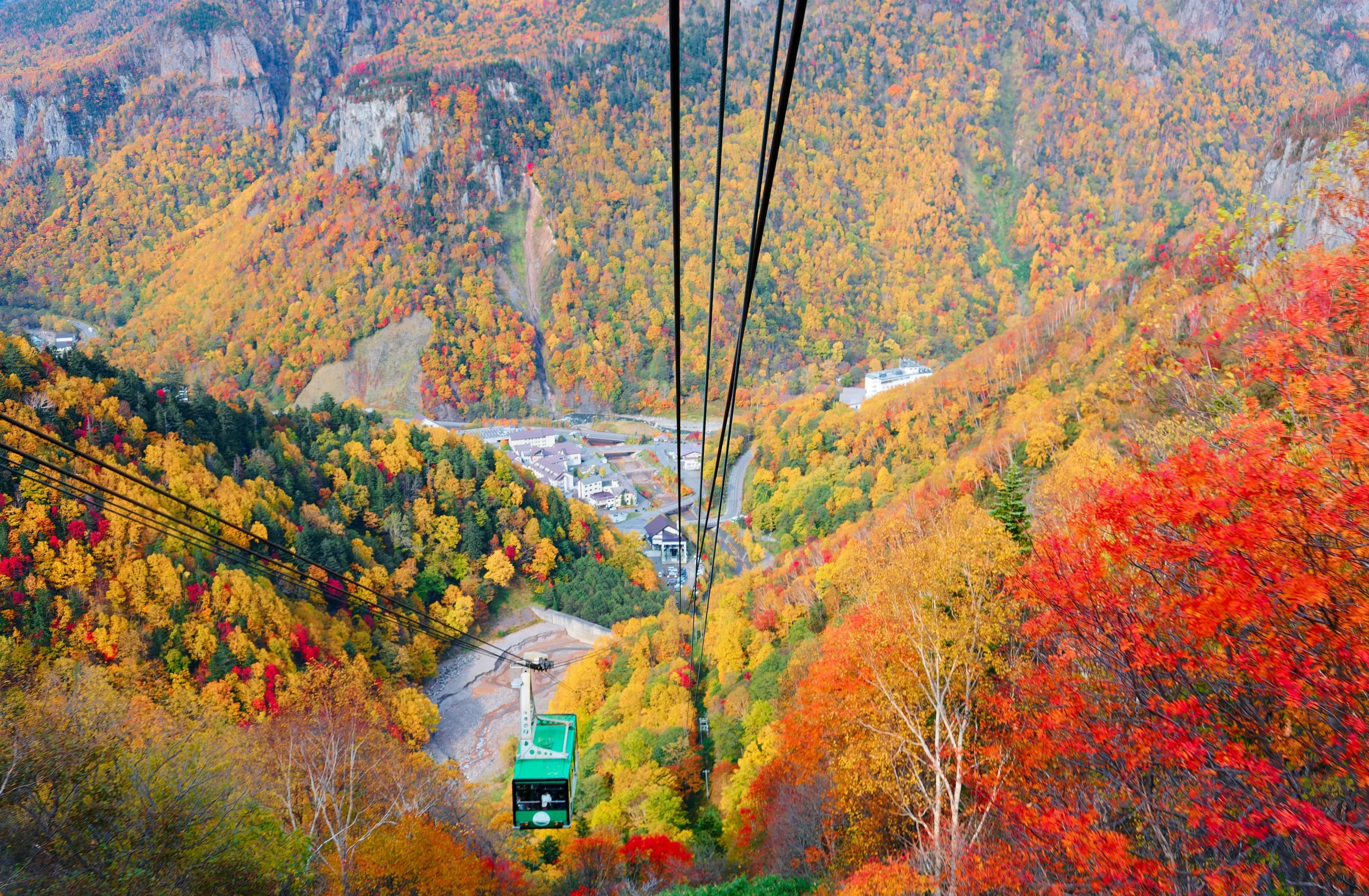
Hokkaido offers some of Japan’s earliest autumn foliage because of its northern latitude and high mountain terrain. In Daisetsuzan National Park, alpine plants and broad-leaved trees can begin changing colour from early to mid-September. Weather can change quickly at high elevation, and snow is possible in some areas during the autumn season. Daisetsuzan is therefore best suited to travellers visiting Japan from mid-September to early October who are prepared for mountain conditions.
Reference: Daisetsuzan National Park – Ministry of the Environment
Tokyo: Gardens, Parks, and Easy Day Trips
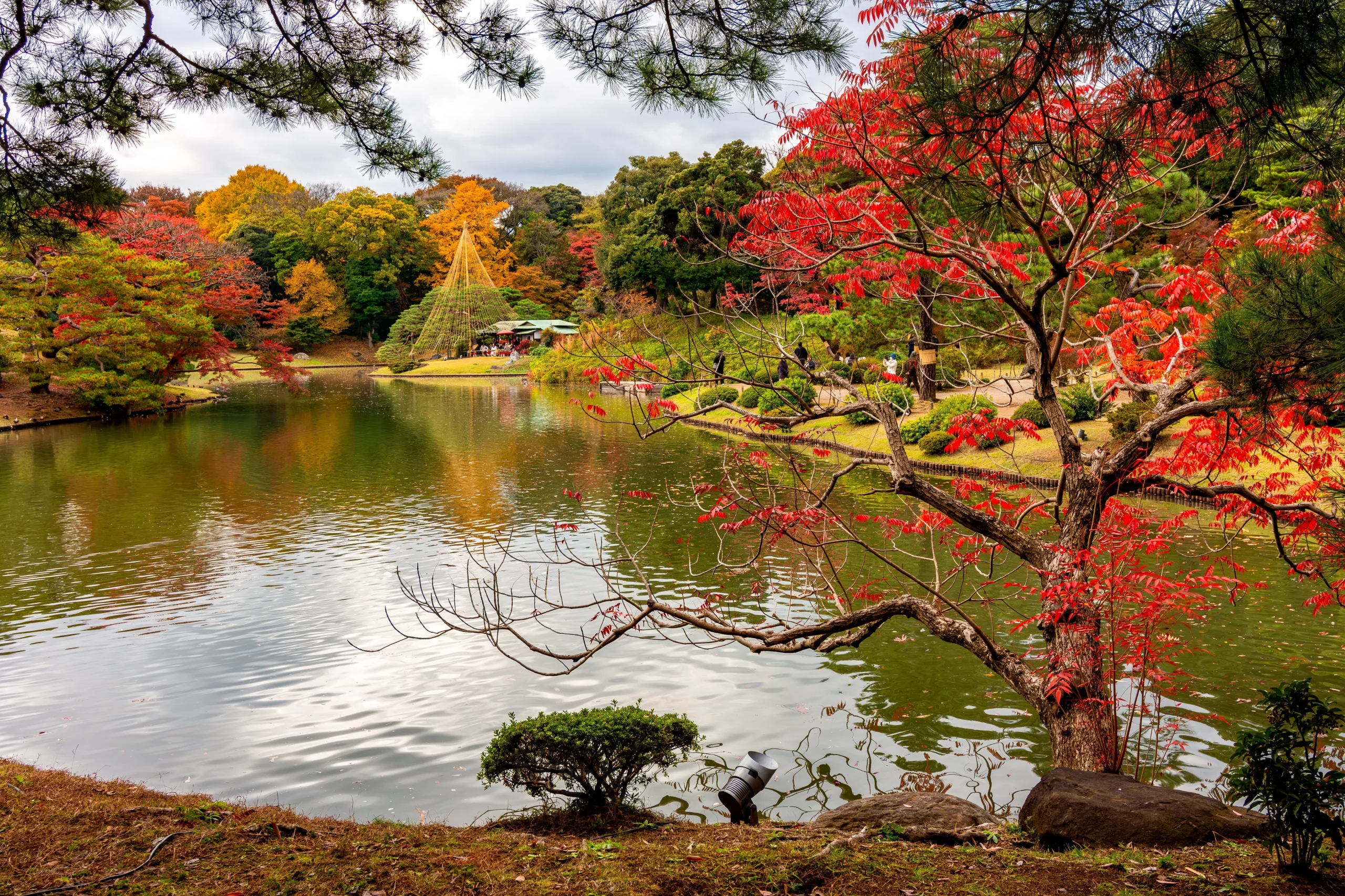
Tokyo’s main autumn foliage period usually runs from mid-November to early December. Rikugien, Koishikawa Korakuen, and Shinjuku Gyoen offer traditional garden landscapes with maple and ginkgo trees inside the city. Mt Takao, on Tokyo’s western edge, provides a more active option with forest paths and higher viewpoints. At popular gardens, arriving at opening time can help reduce time spent in queues during the busiest periods.
Kyoto: Temples, Gardens, and Night Views
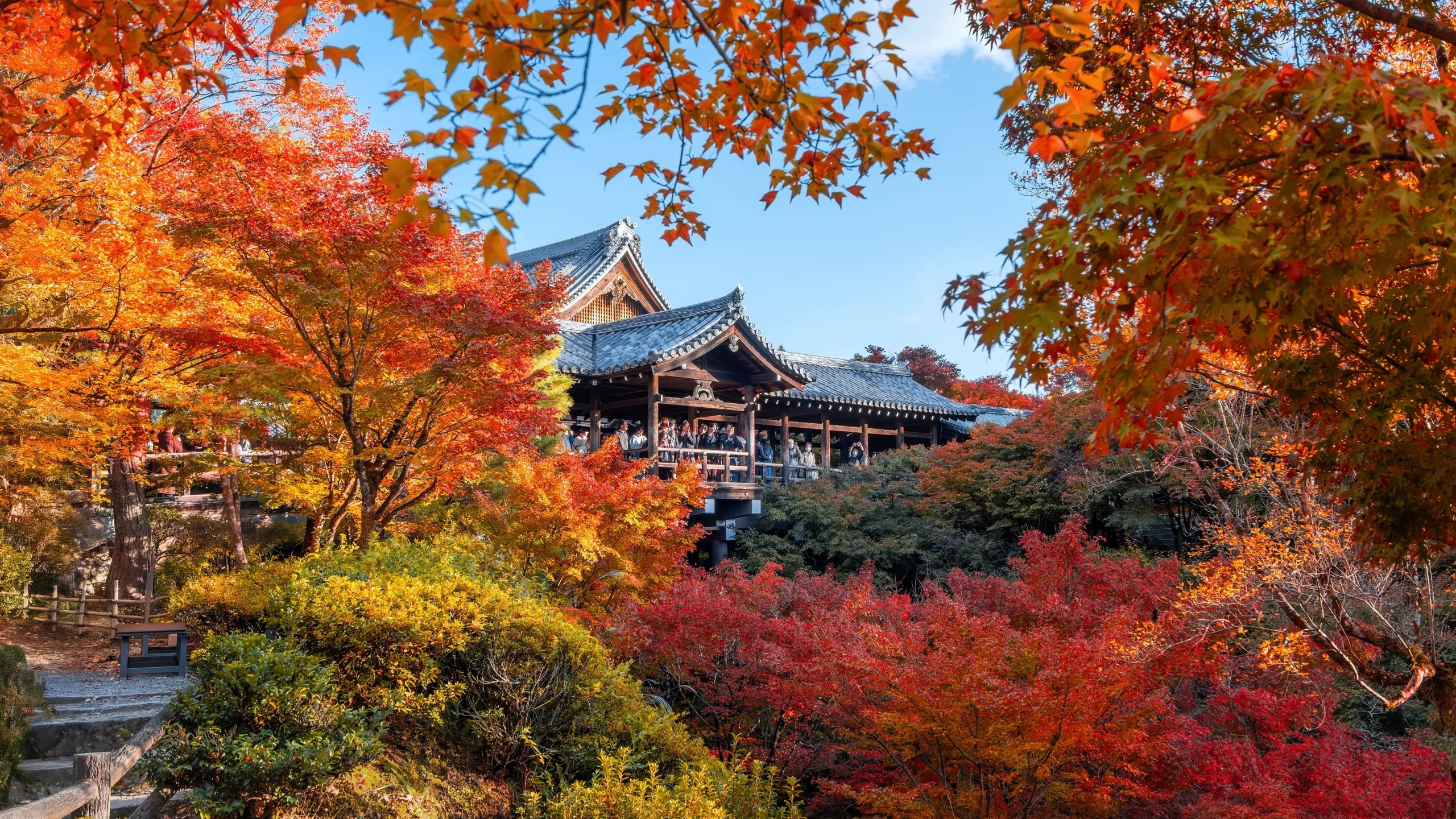
Kyoto is one of Japan’s best-known autumn destinations because maple trees can be viewed alongside temple buildings, stone paths, and garden landscapes. Eikando, Tofuku-ji, Kiyomizu-dera, and Arashiyama are widely known examples, although their foliage does not reach the same stage on the same day. In many years, leaves begin changing colour from late October, and many sites reach their main viewing period around mid-November. Visitors should check the current autumn-leaf calendar and allow extra time at major temple sites during peak weeks.
Lake Kawaguchi: Maples, Water, and Mt Fuji
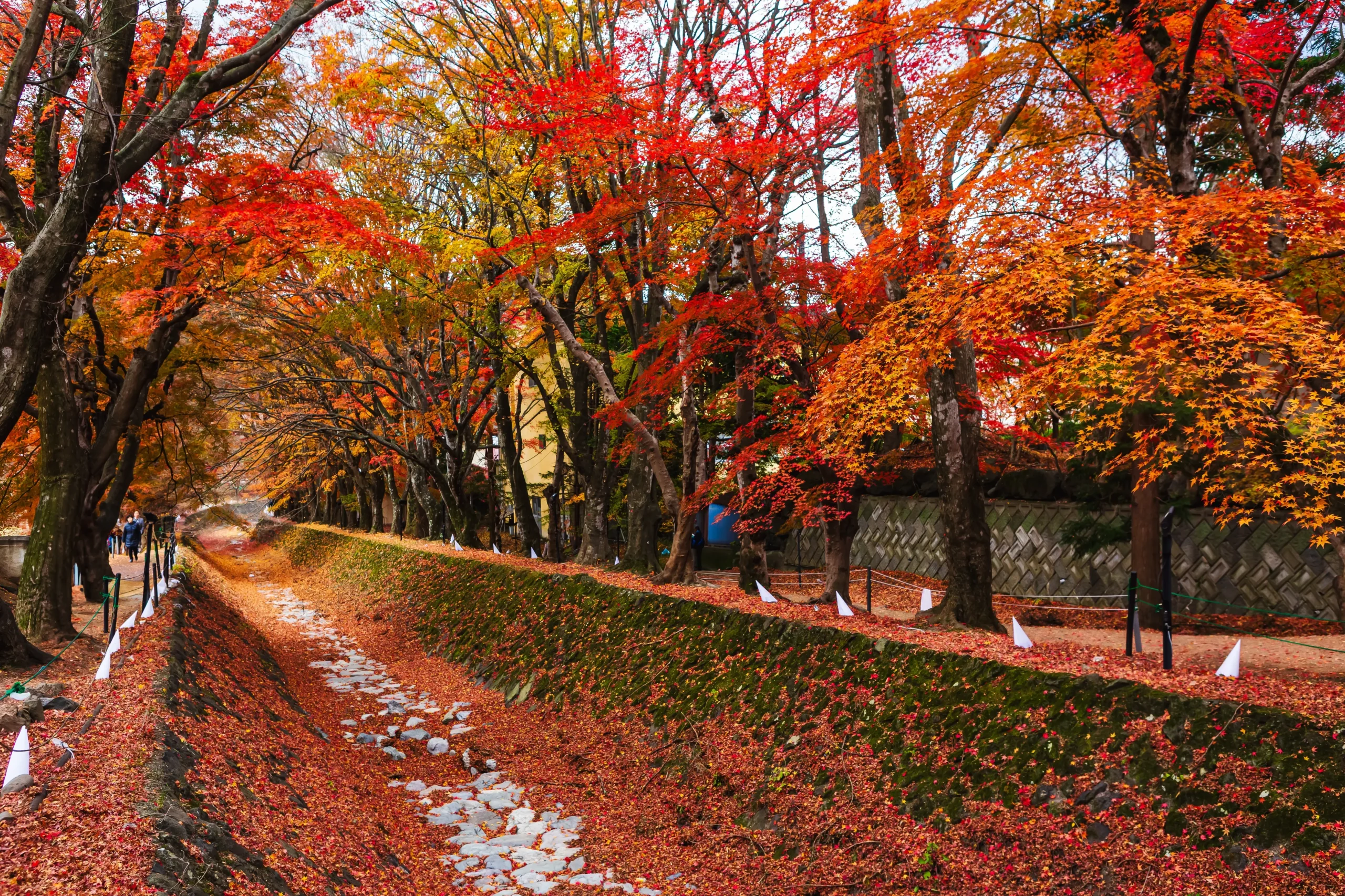
Lake Kawaguchi often reaches its autumn foliage period earlier than central Tokyo because of its higher elevation. The Momiji Corridor is a well-known viewing area, where maple trees line paths near the lake and river. On clear days, Mt Fuji may appear beyond the water, creating a view that combines maples, the lake, and Japan’s highest mountain. As cloud cover can hide the summit, an overnight stay or a flexible itinerary gives visitors more than one opportunity to see Mt Fuji.
Read more:Things to Do in Kawaguchiko: Best Time to Visit and How to Get There
Beyond Kyoto: Autumn Routes in Central Japan
Central Japan offers autumn destinations that are well known locally but receive less international attention than Kyoto or Tokyo. These places are not “hidden” versions of famous sites. They offer different landscapes, including river valleys, temple approaches, and ginkgo groves.
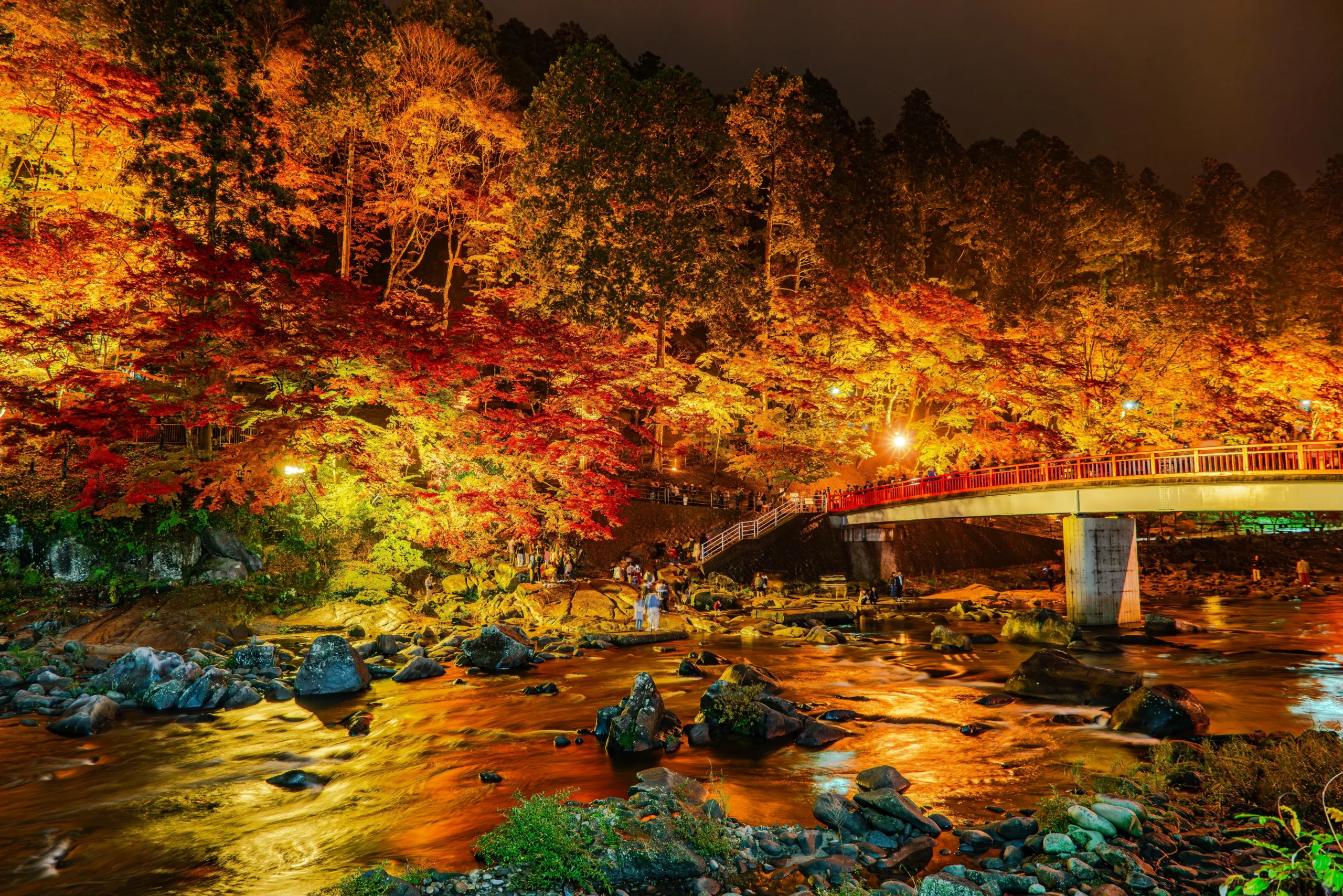
Korankei Gorge in Asuke, Toyota City, is a major autumn destination in central Japan. Maple trees grow on the slopes around Mt Iimori and along parts of the Tomoe River. The area can also be combined with a walk through Asuke’s historic townscape. Evening illumination is also held during the autumn foliage season, although dates vary by year.
Reference: Korankei Autumn Foliage – Asuke Tourism Association
Korankei can also be busy during peak periods, particularly at weekends. Its maple-covered slopes, the Tomoe River, and Asuke’s historic townscape create an autumn route that differs from Kyoto’s temple-centred itinerary.
Read more:Rural Japan: 5 Places Where Tradition Still Shapes Everyday Life
Night Illuminations and Onsen: Two Slower Ways to Enjoy the Season
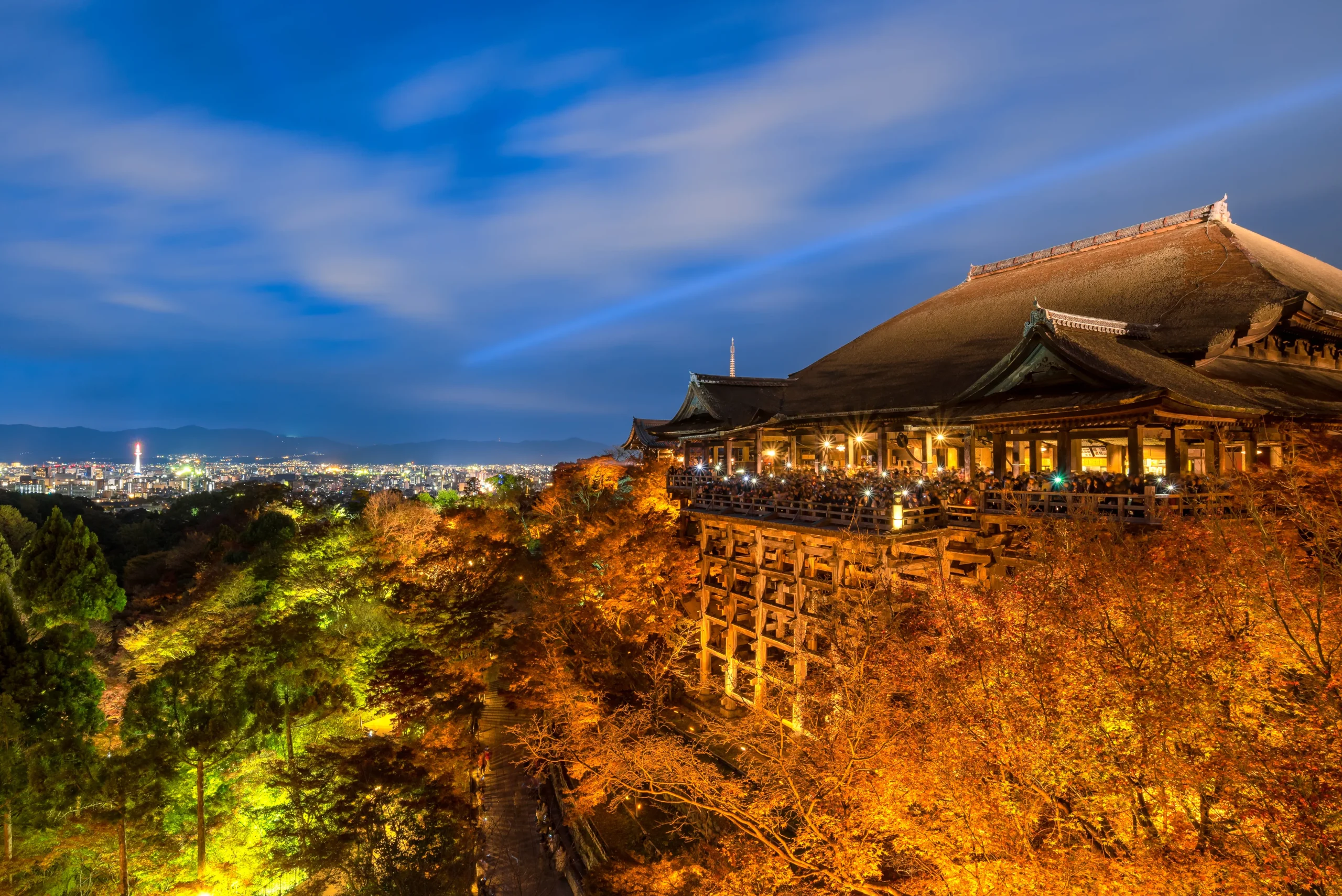
Night illuminations and onsen stays offer two distinct ways to experience Japan’s autumn foliage beyond daytime sightseeing. Evening openings allow visitors to see temple grounds and gardens after dark, while an overnight stay creates time away from a tightly planned daytime route. Together, they add flexibility and a different perspective to an autumn itinerary.
Night Illuminations: Temple Grounds and Gardens After Dark
During the autumn foliage season, some temples and gardens extend their opening hours for special evening viewings. Artificial lighting can bring out the shape of maple branches, stone paths, temple roofs, and reflections on water. Kiyomizu-dera and Eikando in Kyoto, as well as Rikugien in Tokyo, are among the places known for autumn evening programmes. Dates, admission fees, ticket types, and reservation rules can change each year, so travellers should check official information before making plans. Evening viewing therefore offers a second way to experience a garden or temple after daylight hours.
Reference: Special Night Viewing – Kiyomizu-dera Temple
Onsen Stays: Autumn Foliage in Hakone
Hakone is well suited to travellers who want to combine autumn foliage with an overnight stay. Colour usually appears first in the higher parts of the area before moving towards lower locations, including Hakone-Yumoto. The region combines Lake Ashi, mountain transport, museums, and ryokan, traditional Japanese inns. An onsen is a natural hot spring, and some ryokan offer a private rotenburo, an outdoor bath. Room facilities and views differ between properties, so travellers should check these details before booking. An overnight stay can add an evening bath and an early-morning walk to a route otherwise centred on daytime sightseeing.
Read more:10 Best Ryokan and Hotel with Private Onsen in Hakone
7-Day Autumn Leaves Japan Tour
How to Plan Around Weather, Crowds, and Changing Foliage
Autumn foliage does not follow fixed dates because temperature, elevation, and local weather affect when leaves change colour. The most reliable itinerary leaves room to respond if colour arrives earlier or later than expected. Current local reports can help travellers decide whether to choose a higher-elevation area, a lowland garden, or a different region. A flexible plan is therefore more useful than selecting a single peak date months in advance.
A few practical habits help:
– When foliage has not reached the lowlands yet, travellers can consider a higher-elevation or more northern destination. Mountain areas often change colour before nearby cities and coastal areas. Around Tokyo, for example, autumn arrives earlier on Mt Mitake than in central Tokyo.
– When foliage has already passed its peak in mountain areas, travellers can consider lower-elevation gardens or destinations farther south or west. City gardens may still offer colour after leaves have fallen at higher elevations.
– When crowds are a concern, travellers can visit major sites at opening time where possible. Staying nearby can also make an early visit easier, before moving to a second site in a different area later in the day.
– Before departure, travellers should consult annual foliage forecasts. During the final week of a trip, local updates from temples, gardens, and tourism offices can provide current colour conditions, opening hours, and event information. After periods of strong wind or heavy rain, these local reports are particularly useful.
Where booking conditions permit, keeping one flexible day can make an autumn itinerary more resilient. It allows travellers to respond to the actual colour conditions instead of following a fixed plan that no longer matches the season.
A Tailor-Made Autumn Foliage Trip with ENJYU JAPAN
An autumn foliage itinerary works best when travel dates and destinations reflect the changing season. A route may begin in higher mountain areas, continue through temple gardens later in November, and include an evening illumination or an onsen stay. Matching timing, elevation, and travel pace allows each day to reflect the conditions of the season.
ENJYU JAPAN creates Tailor-Made Tours around individual interests, travel dates, and preferred pace. For an autumn journey, this can include balancing seasonal information with accommodation, transport, cultural sites, and time to adjust the route when conditions change. If autumn foliage is one reason for visiting Japan, consider the dates, landscapes, and experiences that matter most to you. ENJYU JAPAN can help shape these priorities into a journey that follows the season across Japan.