When a cherished ceramic bowl slips from your hands and shatters, what then? Throw it away? Hide the cracks with clear glue? In Japan, a centuries-old practice takes a different path: it highlights the breaks with gold. This is kintsugi (which literally means “golden joinery”). More than a repair method, it is a way of seeing imperfection, damage, and time itself. In this article, you will find what kintsugi is, the ideas that shape it, how it moved from tea rooms to modern life, and how its wisdom can guide everyday choices.
What is Kintsugi? The Art That Celebrates Scars
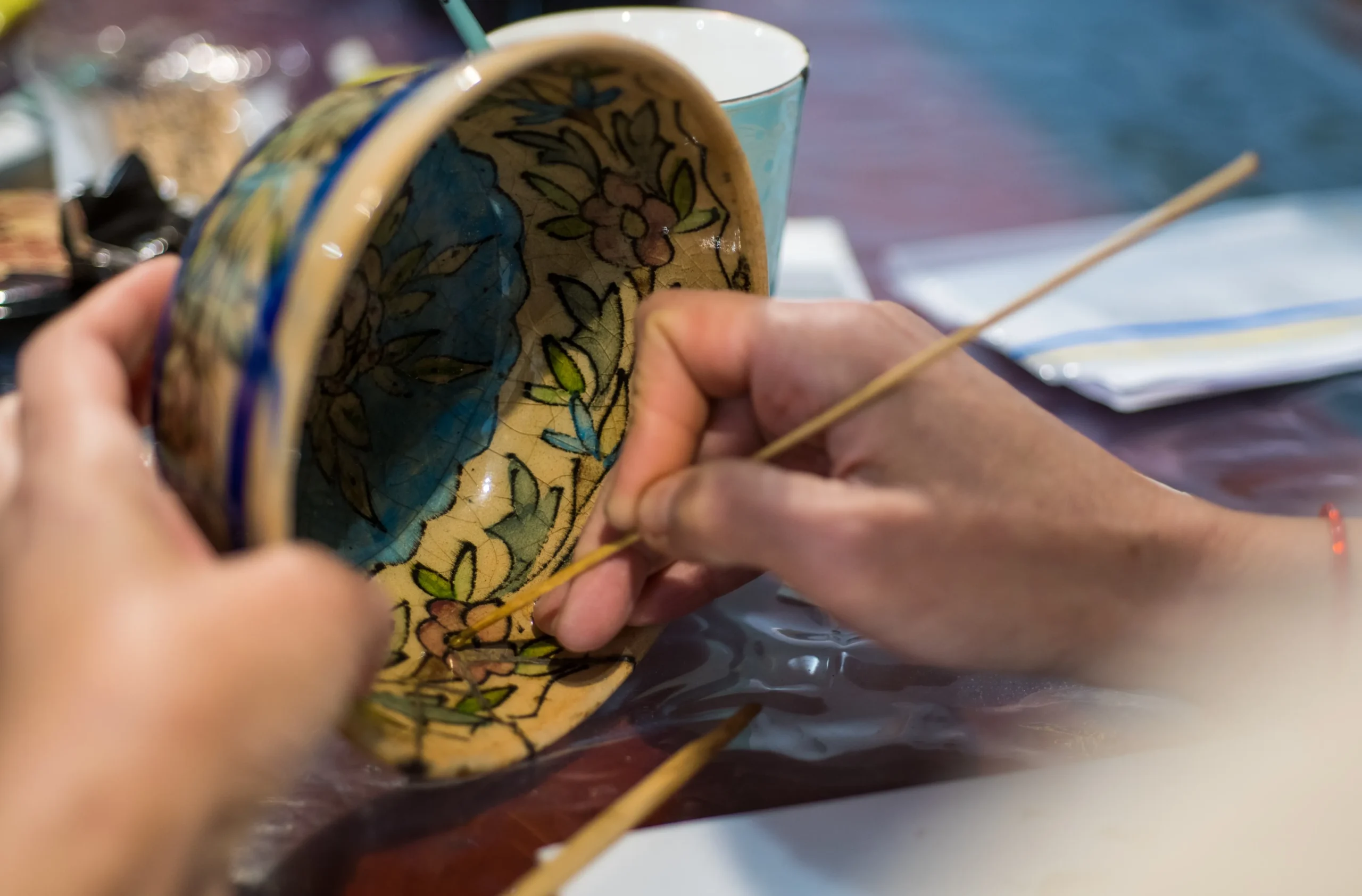
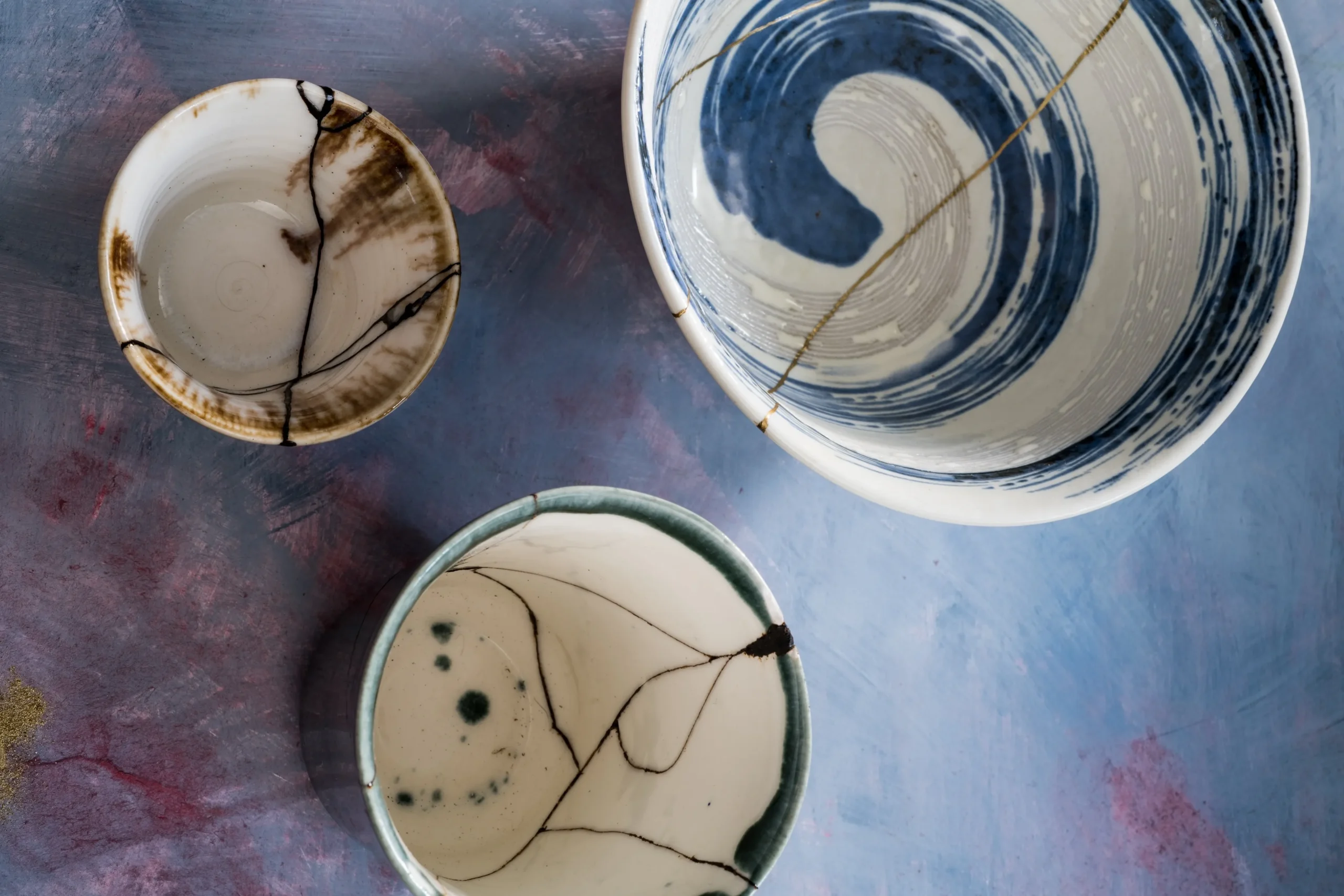
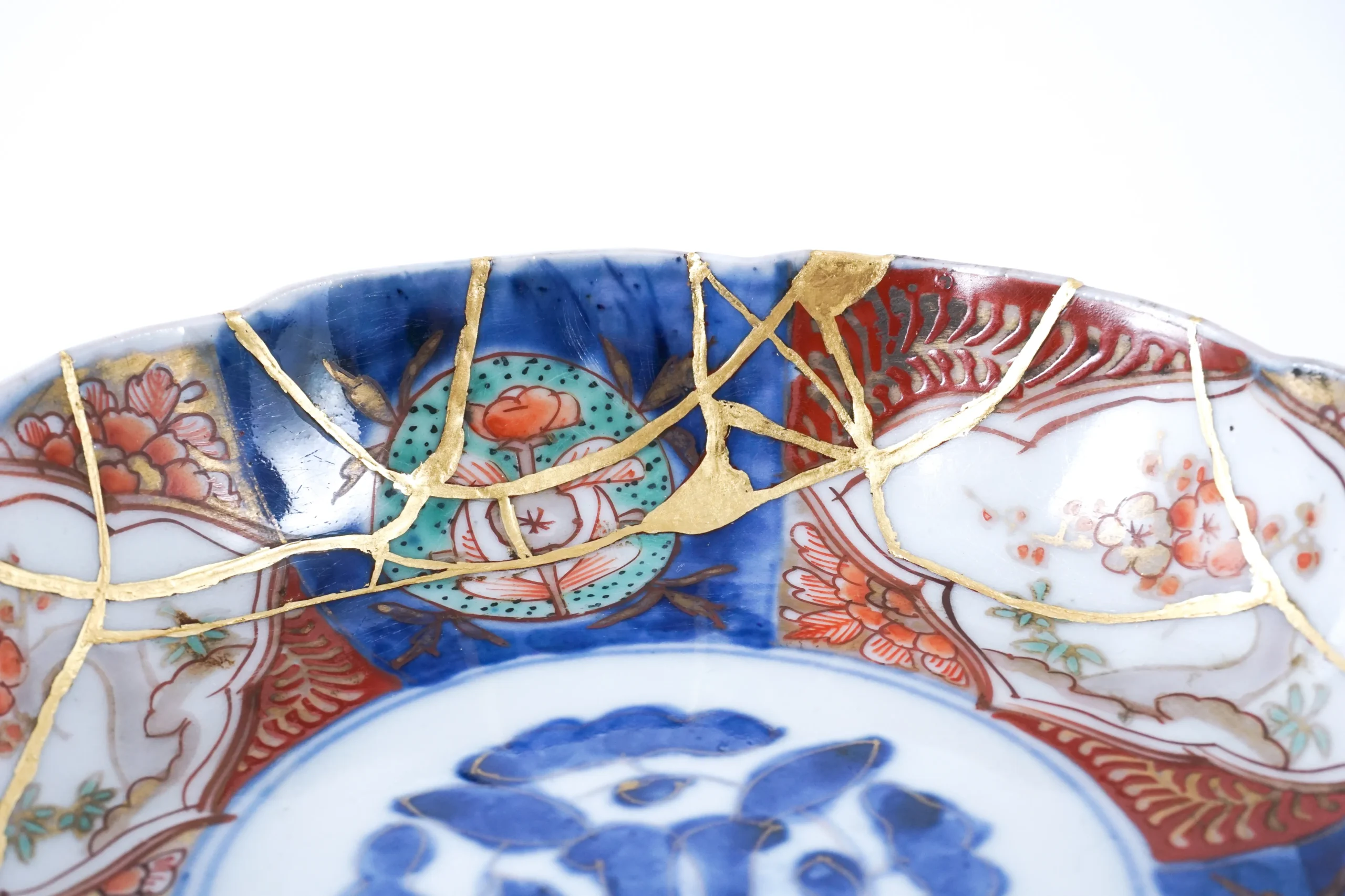
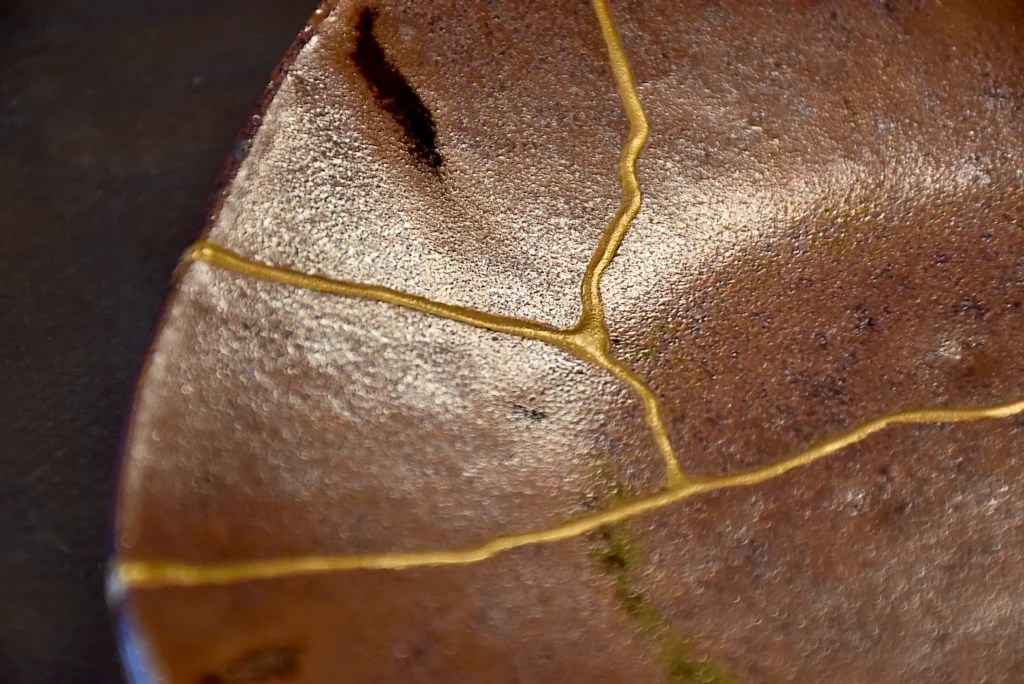
Kintsugi repairs broken pottery with urushi (natural lacquer from the Japanese lacquer tree) mixed with powdered gold, silver, or platinum. Rather than concealing damage, it turns cracks into luminous seams that often become the most striking feature of a piece. Breakage is not an ending but the start of a more meaningful chapter.
Practitioners use several core approaches. Hibi, seals hairline cracks with gold-dusted lacquer. Wareme, rejoins separated fragments, leaving bold gilded lines where pieces meet. Yobitsugi, replaces missing sections with fragments from another vessel, creating a new aesthetic whole.
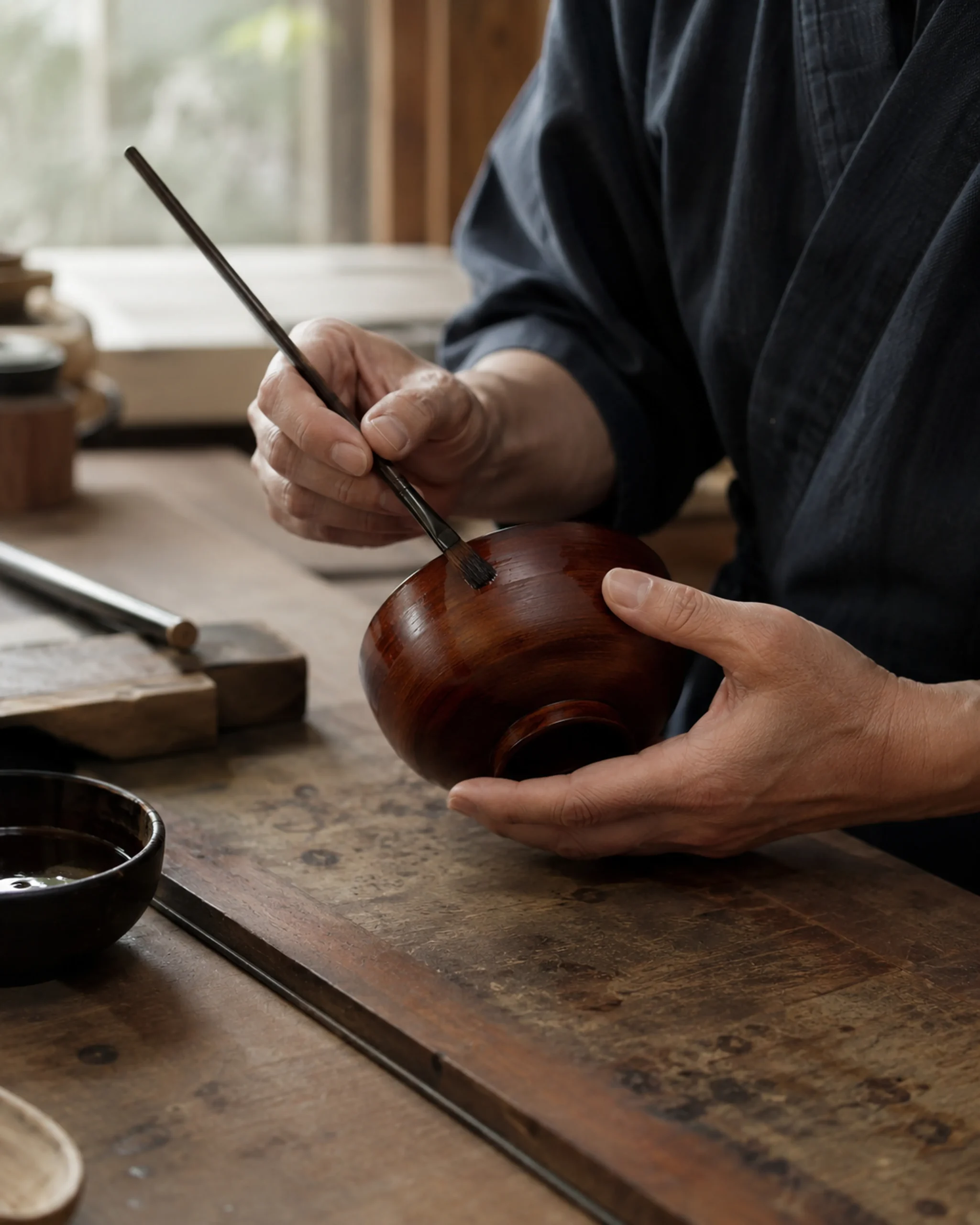
The process demands patience. Adhesion begins with ki-urushi (raw lacquer), then careful refinement layers such as suki-urushi (clear) and roiro (blackened) are applied, each curing for days or weeks in a humid environment. Artisans choose gold powders of different particle sizes to vary shine and line quality before the final polish.
Within chanoyu (the tea ceremony), a kintsugi bowl may become more valuable than it was unbroken. Its seams signal memory: a dropped bowl during a gathering, survival through an earthquake, or an owner’s devotion to careful restoration. Each golden line marks time and relationship that a flawless surface cannot show. Kintsugi overturns the reflex that “broken equals worthless” and proposes that honored damage adds depth, character, and beauty.
The Philosophy Behind the Gold: Wabi-Sabi, Mottainai, and Mushin

Kintsugi is the physical expression of wabi-sabi and mottainai. Understanding them shows why kintsugi resonates beyond craft.
1. Wabi-Sabi: Finding Beauty in Impermanence
Wabi-sabi, influenced by Zen, finds beauty in imperfection, impermanence, and incompleteness. “Wabi” evolved toward simple, austere beauty; “sabi” points to the grace of age and use. Kintsugi accepts the break as part of the object’s true story rather than trying to erase it. The lines are like wrinkles on a face or moss on an old lantern: signs of life that deserve regard.
2. Mottainai: The Ethics of Respect and Gratitude
Mottainai expresses regret over waste and respect for the inherent value of things. It grew in a resource-limited island context where reuse and repair were essential, especially during the Edo period (1603–1868). Under mottainai, kintsugi is an act of gratitude. Time, skill, and precious material invested in a damaged bowl acknowledge the clay, the potter, the kiln, and the moments shared with the object. The repair enriches the relationship and transforms a possession into a vessel of memory.
3. Mushin: The Mind of Non-Attachment and Acceptance
At the heart of kintsugi philosophy lies another profound Zen concept: mushin (無心, meaning “no mind” or “mind of no-mind”). When a vessel shatters, a practitioner of mushin does not panic, blame, or waste energy in frustration. They observe the breakage without harsh judgment. This state of non-attachment allows us to accept reality as it is. By applying mushin to our personal lives, we learn to face unexpected failures or emotional fractures without self-pity, transforming accidents into opportunities for mindful restoration.This stands against disposable habits common in modern consumer culture. Kintsugi suggests a broader calculation of value that includes history and meaning alongside cost and function.
Unpacking the Core Concepts: Kintsugi Meaning and Material Choices
To deepen our understanding, it helps to explore the deeper kintsugi meaning and address common technical curiosities.
The True Kintsugi Meaning
The meaning behind kintsugi goes far beyond surface-level aesthetics. It serves as a philosophical framework for human resilience. While Western repair methods often strive for invisible mending—making it look as though the break never happened—kintsugi does the exact opposite. The meaning behind kintsugi teaches us that our wounds and repairs are part of our history, making us more resilient and uniquely valuable precisely because we have survived breakage.
Common Practical Queries: What Glue to Use?
Many beginners often wonder what glue to use for kintsugi when attempting modern DIY projects. Traditional authentic kintsugi strictly uses urushi lacquer, a natural sap that hardens through a chemical curing process involving humidity rather than mere drying. However, because traditional urushi can cause skin irritation and takes weeks to cure, modern beginner kits often substitute it with synthetic epoxy or resin for structural bonding, followed by a lacquer-and-gold finish. When asking what glue to use for kintsugi, purists emphasize natural urushi for true traditional integrity, while modern workshops sometimes utilize food-safe epoxy for faster, accessible crafting.
From Tea Ceremony to Modern Life: The Evolution of Kintsugi
Kintsugi arose during the Muromachi period (between 1336 – 1573), when the tea ceremony blossomed. A familiar legend tells that shogun Ashikaga Yoshimasa sent a favorite Chinese bowl to China for repair; it returned stapled with crude metal. Japanese artisans pursued a more elegant solution, developing lacquer-and-gold mending. The tea ideal of ichi-go ichi-e (An idiom that means “Every encounter is a once-in-a-lifetime encounter”) aligned with a bowl whose visible scars record unrepeatable moments.
Today, kintsugi speaks to new challenges.
In therapy and psychology, kintsugi serves as a metaphor for healing and resilience. Clinicians help people reframe trauma or failure as integrated experiences that become sources of wisdom. Research on post-traumatic growth shows potential gains in appreciation of life, relationships, personal strength, new possibilities, and spiritual or philosophical depth.
In sustainability, kintsugi aligns with repair culture. As awareness grows about the costs of constant replacement, the Right to Repair movement argues for products that can be maintained and fixed. Designers and menders turn visible stitching and patches into features, not flaws.
Contemporary artists also experiment with kintsugi-inspired methods, merging the aesthetics of fracture and renewal in public art, textiles, and sculpture.
Comparison Table: Traditional Object Repair vs. Kintsugi Philosophy
| Feature | Standard Repair (Glue/Replacement) | Kintsugi Philosophy |
| Objective | To hide damage and restore original perfection | To highlight the break and honor the history |
| View of Flaws | Considered a defect to be concealed or discarded | Considered a unique asset adding character and beauty |
| Psychological Impact | Reinforces the fear of failure and disposability | Fosters resilience, self-acceptance, and post-traumatic growth |
| Environmental Value | Often temporary; encourages a throwaway mindset | Promotes sustainability, longevity, and deep gratitude (mottainai) |
Kintsugi in Global Design and Architecture: Translating Philosophy into Modern Living Spaces
Beyond personal mindfulness and traditional pottery, the influence of kintsugi has expanded rapidly into global interior design, architecture, and contemporary product branding. Modern designers are increasingly rejecting sterile, mass-produced perfection in favor of spaces that tell an authentic story.
In contemporary architecture, the kintsugi ethos appears in structural restoration projects where old, weathered brickwork or earthquake-damaged concrete foundations are not demolished, but instead reinforced with striking brass, copper, or contrasting mortar joints. This architectural approach honors the building’s historical timeline rather than erasing its scars behind uniform drywall. Similarly, in high-end interior styling, furniture makers craft wooden tables with exposed resin and metallic inlays, celebrating natural wood knots and splits instead of discarding flawed timber.
By integrating these tactile, history-honoring elements into modern living spaces, designers help individuals cultivate environments that foster emotional grounding, sustainability, and calm. This physical translation of kintsugi philosophy reminds us that our living spaces, much like our personal lives, gain profound character through endurance, care, and thoughtful transformation.
How to Apply Kintsugi Philosophy to Your Life
You do not need a broken bowl to put kintsugi into practice.
1) Recognize your golden seams.
Career setbacks, relationship endings, health challenges, and mistakes shape identity. The kintsugi view invites you to tell your story in a way that honors both the breaking and the mending, noting how difficulties led to growth.
2) Choose repair over replacement when you can.
Before discarding a worn item, consider repair. If you mend visibly, you keep history alive. The mottainai mindset turns you from passive consumer to active curator of your belongings.
3) Release perfectionism.
Wabi-sabi suggests that flawlessness is neither attainable nor especially interesting. Aim for excellence without demanding the impossible. When you or others fall short, respond with curiosity and learning. Imperfection can shape character.
4) Seek authentic encounters with the craft.
English-friendly workshops in Tokyo and Kyoto teach both technique and cultural context, and museums provide historical examples. Pair a class with a tea ceremony for a fuller view of the aesthetic.
5) Practice Daily Mindfulness through “Golden Acceptance”
Bring the spirit of mushin into your daily routine. When an unexpected obstacle arises today, pause before reacting. Acknowledge the crack in your plans without frustration. Reflect on this question: ‘How might I transform this setback into a golden seam of growth?’
What to Expect: Inside a Hands-on Kintsugi Workshop Experience
For travelers and craft enthusiasts eager to try the art firsthand, participating in a kintsugi workshop offers a deeply meditative and creative escape. While exact curriculums vary by studio, a typical hands-on session is carefully structured to guide you through both the technical and philosophical layers of mending:
- Introduction to History and Philosophy: Most workshops begin with a brief orientation explaining the origins of kintsugi, the cultural significance of wabi-sabi, and how natural materials like urushi lacquer are harvested and handled.
- Fragment Assembly and Bonding: Instructors teach you how to align broken ceramic shards or handle a pre-broken piece. Using specialized adhesives or natural lacquer pastes, participants meticulously join the fragments together, ensuring a strong structural foundation.
- Applying the Golden Seam: The highlight of the workshop involves dusting or painting fine gold, silver, or platinum powder over the cured adhesive lines. Under expert guidance, participants learn how to control line thickness and create luminous, striking seams.
- Take-Home Crafting: Depending on whether the studio uses traditional curing methods (which require humidity chambers and weeks of drying) or modern accessible techniques (utilizing fast-curing food-safe resins), participants either complete their piece to take home on the same day or arrange for international shipping once fully hardened.
Experiencing Kintsugi Firsthand: 7 Authentic Workshops Across Japan
To truly absorb the depth of kintsugi philosophy, stepping into a traditional studio and experiencing the craft with your own hands is an unforgettable journey. Here are exceptional workshops located across Tokyo, Kyoto, and beyond where you can learn directly from skilled practitioners:
1.Tugutugu (Tokyo)
Located in Tokyo (such as their popular Ebisu studio), this workshop specializes in welcoming international visitors and absolute beginners into the fascinating world of golden repair. Following comprehensive, carefully structured instruction modeled after their signature programs, these hands-on sessions allow participants to either bring their own cherished broken ceramic pieces from home or utilize the studio’s provided pottery to master step-by-step mending. Under expert guidance, guests systematically learn essential techniques including adhesive bonding, structural gap filling, and the delicate art of applying gleaming gold powder. By the end of the session, you transform everyday fractures into visible, elegant works of art that capture personal history and can be safely taken home as a meaningful souvenir.
2.Ceramic Studio Circolo (Tokyo)
Offering a specially curated one-day kintsugi workshop meticulously tailored for English-speaking travelers, this creative Tokyo studio brilliantly bridges traditional Japanese aesthetics with modern accessibility. Participants are welcomed into an inspiring, hands-on environment specifically designed to demystify the technical steps of mending ceramic fractures. Alongside learning the core craft under patient, professional instructors, attendees are encouraged to reflect deeply on the mindful, philosophical layers behind the art, discovering how embracing imperfections can translate into personal resilience while crafting a stunning piece to cherish.
3.Kuge Crafts (Tokyo)
Nestled in Suginami City, Tokyo, this esteemed, family-run workshop boasts over 40 years of rich teaching history and artisanal expertise. Headed by seasoned master craftsmen who have dedicated their lives to preserving traditional Japanese handcrafts, it offers a harmonious, enriching blend of heritage techniques and clear, accessible English-supported instruction. The immersive layout enables participants of all skill levels to navigate the intricate mending process smoothly, ensuring that every guest completes a structurally sound, visually striking repaired ceramic item within a single rewarding session.
4.Kulukulu (Kyoto)
Situated conveniently near the historic Nijo Castle, this warm and intimate artisan workshop in Kyoto is dedicated to teaching the gentle, therapeutic art of ceramic repair. Their specialized sessions provide a tranquil environment designed to help visitors slow down from the fast pace of travel, practice deep patience, and experience the profound, meditative joy of turning broken fragments into luminous golden seams. Surrounded by a supportive and welcoming atmosphere with expert English support options, participants learn how minor accidents can be reframed into beautiful opportunities for renewal and creative expression.
5.Shikata Urushi (Kyoto)
Hosted by a long-standing, venerable lacquerware specialist in Kyoto with deep historical roots tracing all the way back to 1867, this authentic trial experience invites you directly into the living cultural heart of Japan. Working within an atmospheric, historic setting infused with generations of craftsmanship, you will gain rare insights into sustainable lacquer harvesting, master the application of genuine metal powders under professional tutelage, and enjoy a peaceful moment reflecting on the philosophy of mending over a quiet cup of tea, connecting deeply with centuries of regional heritage.
6.Urujyu (Kyoto)
Nestled deep within the serene, historic rural landscape of Miyama in Kyoto Prefecture, Urujyu offers an exceptionally authentic kintsugi experience deeply rooted in environmental sustainability and traditional natural craftsmanship. Founded by a master lacquer artist, this retreat-style workshop focuses exclusively on authentic urushi techniques, guiding participants step-by-step through the slow, mindful process of repairing broken ceramics using entirely natural tree sap and precious metal powders. It provides a peaceful, nature-infused sanctuary away from the city crowds, allowing you to establish a profound, lasting connection with Japan’s living heritage of sustainable repair and mindful creation.
7.Kanazawa Kintsugi House (Kanazawa)
Located in Kanazawa—a historic, culturally rich city globally celebrated for its centuries-old heritage in gold leaf production and exquisite traditional crafts—this exclusive studio purposefully limits its sessions to just one group per day to ensure an intimate, high-quality experience. Surrounded by beautifully preserved samurai townscapes and classical gardens, participants work hands-on with genuine natural urushi lacquer and brilliant gold powder to restore a damaged ceramic vessel. This private, unhurried environment creates a deeply reflective, unforgettable memory of your artistic journey along Japan’s scenic Hokuriku coast.
The Deeper Cultural Landscape: Regional Craft Heritage and Preservation
The practice of kintsugi is inherently tied to Japan’s broader regional craft ecosystems. While major metropolitan centers like Tokyo offer accessible introductory workshops, historic craft hubs like Kyoto and Kanazawa provide a window into the raw materials that make authentic kintsugi possible.
For instance, the sap of the urushi tree—harvested meticulously over years—connects modern practitioners to ancient forestry traditions in rural regions. Understanding where these materials originate elevates kintsugi from a simple DIY hobby into an appreciation of generational craftsmanship. When regional artisans pass down the knowledge of mixing raw lacquer with precious metal powders, they are preserving a sustainable ecosystem of repair that resists the disposable nature of modern manufacturing. Engaging with the craft outside major hubs allows travelers to witness firsthand how local geography, climate, and historical patronage shaped an art form designed to celebrate survival, endurance, and quiet elegance.
Embracing the Beauty of Imperfection
Kintsugi is technique, aesthetic, philosophy, and practice. From its roots in tea culture to its relevance in therapy, sustainability, and art, it offers a clear idea: breaks and repairs do not diminish things or people. They can add history, character, and beauty.
The lesson is simple and brave. Perfection is neither possible nor required. Time adds value. Scars deserve acknowledgment, and sometimes celebration. In a fractured world, this old Japanese wisdom suggests that careful mending can make us more whole.
If you are traveling to Japan, consider a workshop to experience the process firsthand. If you are at home, begin by noticing the “breaks” in your life and asking how to treat them like golden seams. Either way, kintsugi provides a memorable way to understand Japanese culture and a practical guide for living with more care.
Ready to Live Kintsugi Philosophy? Plan Your Authentic Experience Today
Understanding the wisdom of kintsugi is only the beginning—experiencing it hands-on or bringing its mindful practices into your travels and daily life transforms that philosophy into lasting personal growth.
Whether you want to book an exclusive English-friendly workshop in Tokyo, Kyoto, or Kanazawa, inquire about custom private cultural tours, or learn more about embracing the art of repair:
Our team is ready to help you connect with master craftsmen, arrange seamless bookings, and tailor your Japanese cultural journey.