Best Luxury Hotels in Tokyo: How to Choose the Right Stay
Tokyo is exciting, but it can also be tiring. A normal sightseeing day can involve long stretches on foot, busy stations, crowded streets, and a steady stream of small decisions about where to go next.
That is one reason a luxury hotel can be worth paying for here. Not because you need an expensive room to enjoy Tokyo. You do not. The value is in what the hotel gives you at the end of the day: more space, a quiet place to rest, a good bath or spa, easier transport, or simply fewer things to think about.
The ten hotels below are not ranked from best to worst. They suit different trips. Start with the comparison, narrow the list to two or three that fit you, then read those sections in more detail.
Which Tokyo Luxury Hotel Suits You?
| Hotel | Area | A good choice when… | Main trade-off |
|---|---|---|---|
| Aman Tokyo | Otemachi | Rest and privacy matter most | The area is quiet at night |
| HOSHINOYA Tokyo | Otemachi | You want a ryokan-style experience in Tokyo | This is not a skyline-focused hotel |
| Palace Hotel Tokyo | Marunouchi | You want the easiest balance of comfort, greenery and transport | Choose your room carefully if you want a balcony |
| Park Hyatt Tokyo | Shinjuku | You like quiet high-rise luxury and western Tokyo | It is not directly connected to Shinjuku Station |
| Four Seasons Hotel Tokyo at Otemachi | Otemachi | You want strong wellness facilities and an easy family stay | The immediate area feels business-like |
| The Okura Tokyo | Toranomon | Japanese design and established hospitality matter to you | The surrounding streets are fairly quiet |
| Mandarin Oriental, Tokyo | Nihonbashi | You want a central location with more historical character | It does not have a conventional lap pool |
| Janu Tokyo | Azabudai Hills | Exercise and active wellness are part of your trip | It feels more social than secluded |
| TRUNK(HOTEL) YOYOGI PARK | Tomigaya | You want a smaller hotel close to Shibuya and Yoyogi Park | It has fewer large-hotel facilities |
| Bvlgari Hotel Tokyo | Yaesu | The hotel itself is meant to be a major part of the trip | Its character is intentionally international |
When Is a Luxury Hotel in Tokyo Worth It?
Tokyo has excellent hotels at much lower prices, so it is worth being realistic about how you travel.
If you normally leave after breakfast and return late at night, paying for an elaborate spa and large room may not add much to your trip. A comfortable hotel beside a useful station could make more sense.
Luxury becomes easier to justify when you will actually use what comes with it.
Space is part of the difference. Aman Tokyo, for example, has suites starting at 71 square meters (764 square feet). That gives two people room to unpack, sit down properly and spend time in the room without feeling that the bed occupies most of it.
Wellness can be more than an extra amenity. Aman has a 30-meter indoor pool and Japanese-style bathing facilities, Four Seasons Otemachi has a 20-meter pool, Park Hyatt has a large spa and fitness area, and Janu has a 4,000-square-meter wellness center with a 25-meter pool. If swimming, bathing or exercise is something you genuinely use to recover, these facilities can change the value of the stay.
Location can save energy too. Palace Hotel connects underground to Otemachi Station, Mandarin Oriental connects directly to Mitsukoshimae and Shin-Nihombashi stations, and Bvlgari Hotel has direct access from Tokyo Station’s Yaesu side. That can matter after a long flight or on a rainy day with luggage.
Then there is the experience itself. HOSHINOYA and The Okura offer a much stronger Japanese character than some of the international brands, while TRUNK Yoyogi Park gives you a smaller, more neighborhood-based stay. Paying more only makes sense if one of those differences is something you actually want.
Aman Tokyo
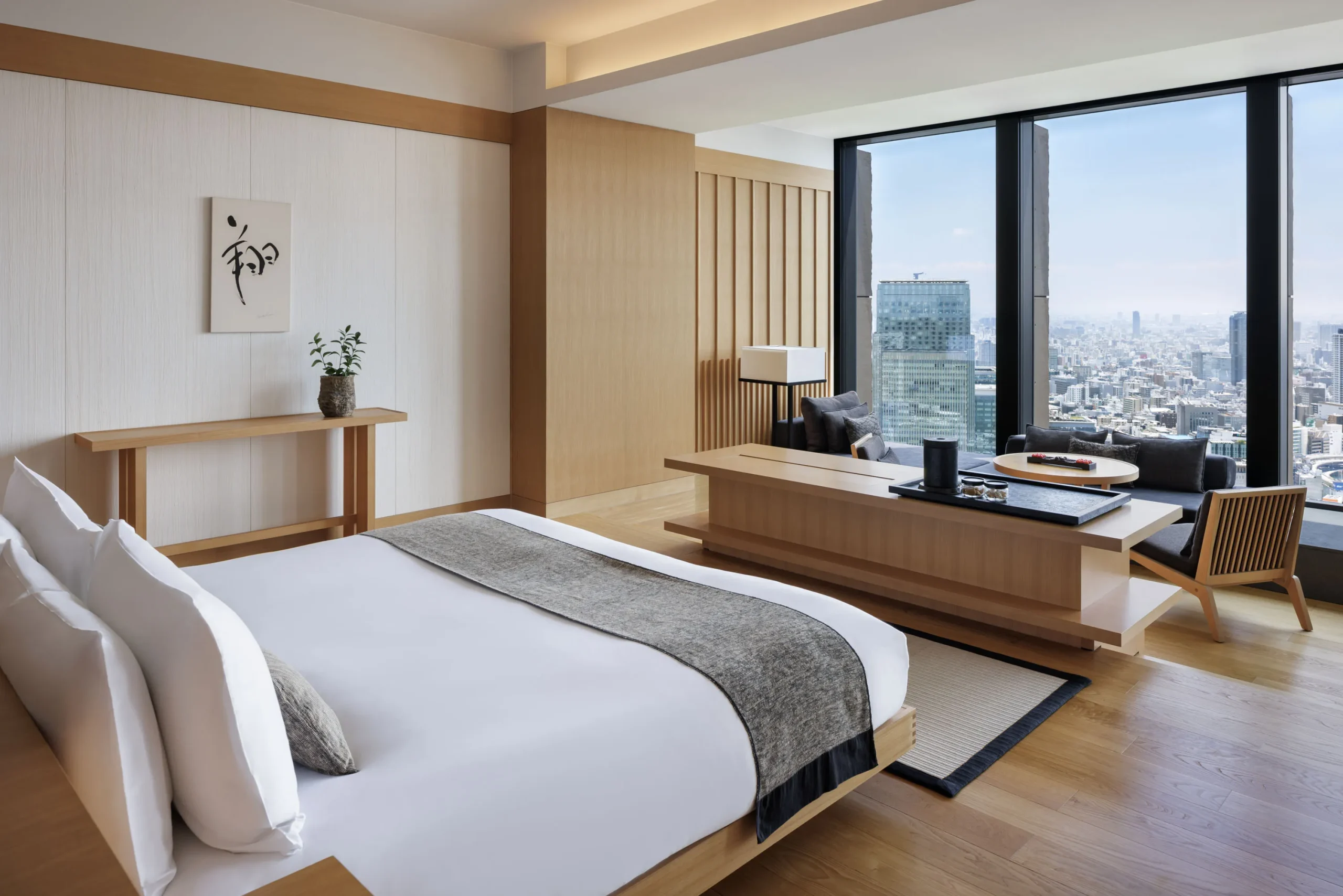
Aman Tokyo works particularly well when the hotel is where you want to slow down.
Its rooms sit high in Otemachi Tower, using wood, stone and washi paper in a restrained Japanese-inspired interior. Even the starting suites are 71 square meters, and the spa covers about 2,500 square meters with Japanese-style baths, steam rooms, movement studios and a 30-meter pool overlooking Tokyo.
That makes Aman an easy hotel to understand. You are paying for space, quiet and somewhere you may genuinely want to return to before the day is over.
Otemachi itself is a business district, though. It is extremely convenient for transport and close to the Imperial Palace, but the streets around the hotel become much quieter after office hours. If you want restaurants, bars and nightlife immediately outside, another area may suit you better.
HOSHINOYA Tokyo
HOSHINOYA Tokyo is only a short distance from Aman, but it is a very different kind of stay.
The property describes itself as a luxury ryokan. Each floor has six guest rooms arranged around a shared lounge, with tatami continuing through the guest areas. On the top floor, the guest-only Otemachi Onsen uses natural hot spring water drawn from about 1,500 meters underground. Tokyo Station is around a ten-minute walk away.
For a traveler who wants some of the atmosphere of a ryokan without leaving central Tokyo, that is a meaningful difference. You are not simply choosing a more expensive bedroom.
It is still a high-rise property in Otemachi, however. If what you picture is a wooden countryside inn surrounded by mountains, this will not replace that experience. A Tokyo stay at HOSHINOYA and a night at an onsen town elsewhere in Japan can serve different purposes.
Palace Hotel Tokyo

Palace Hotel Tokyo is one of the easiest choices to recommend when several priorities matter at once.
It sits beside the Imperial Palace area in Marunouchi, with direct underground access to Otemachi Station and Tokyo Station nearby. That puts five subway lines and the Shinkansen within easy reach while giving the hotel a greener outlook than most properties in Tokyo’s central business districts.
Its balconies are also worth mentioning because private outdoor space is not common at this level in central Tokyo. But not every room has one. The hotel sells specific balcony room categories, including Deluxe with Balcony rooms facing Wadakura Fountain Park and the Imperial Palace Plaza.
For a first Tokyo visit, Palace Hotel has few obvious weak points. The main question is whether you want the calm of Marunouchi or would rather stay somewhere with more street life at night.
Park Hyatt Tokyo
Park Hyatt Tokyo returned on December 9, 2025 after a 19-month restoration, the most extensive renovation in its history. It still occupies the upper floors of Shinjuku Park Tower, but the rooms and public spaces have been renewed for the reopened hotel.
The appeal remains the sense of being above Shinjuku rather than in the middle of it. Its Club On The Park spa and fitness center covers about 2,100 square meters, with a 20-meter indoor pool and wide views over Tokyo.
There is a practical compromise. Park Hyatt is not directly attached to Shinjuku Station. The hotel currently operates a complimentary shuttle to the station, but that is still less effortless than stepping straight into an underground passage at some of the Otemachi hotels.
If Shinjuku and western Tokyo fit your plans, that may not matter much. If you expect frequent Shinkansen trips from Tokyo Station, it probably does.
Four Seasons Hotel Tokyo at Otemachi
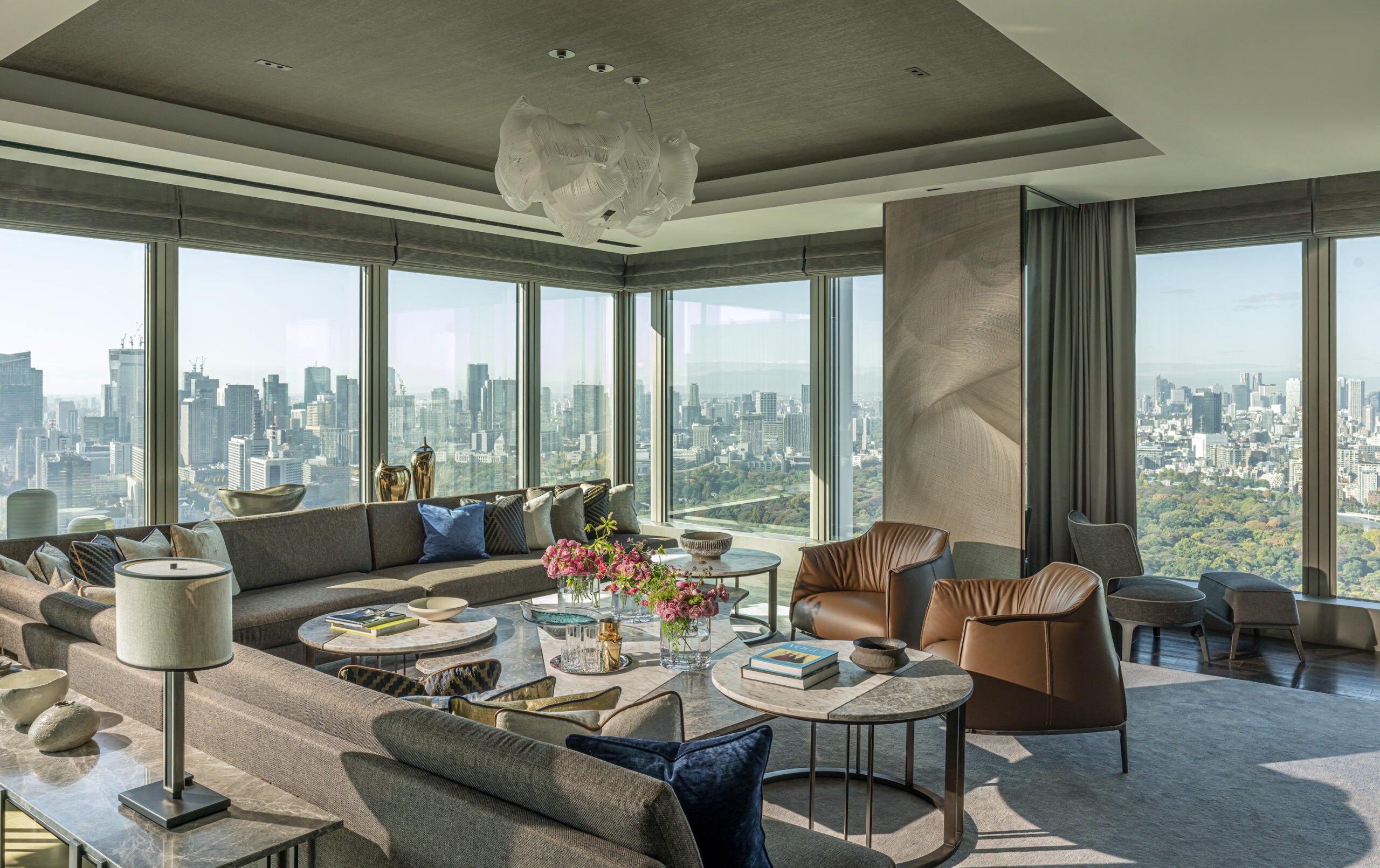
Tokyo has two Four Seasons hotels, so it is worth checking which one you are booking.
The property in this guide is Four Seasons Hotel Tokyo at Otemachi. It sits close to the Imperial Palace, steps from Otemachi Station and a short walk from Tokyo Station.
Its 39th-floor wellness area is one of the main reasons to choose it, with a 20-meter heated indoor pool, vitality pool and gym overlooking the city. The hotel also puts noticeable effort into families, including a separate check-in experience and amenities for younger guests.
The other property, Four Seasons Hotel Tokyo at Marunouchi, is much smaller, with just 57 rooms and a location immediately beside Tokyo Station. That one can be the better choice if intimacy and railway convenience matter more than a large pool and spa.
Otemachi is very convenient, but it is a business district. If you want to wander out of your hotel into small bars and neighborhood restaurants, this is not the strongest part of Tokyo for that.
The Okura Tokyo
The Okura is a good example of why “Japanese luxury” does not have to mean a ryokan.
The hotel has two distinct parts. The Prestige Tower is the more contemporary high-rise option, while the Heritage Wing is deliberately more intimate and Japanese in its design. The Heritage rooms include features such as private steam saunas and jetted baths, and the wing carries design references from the earlier Hotel Okura.
If the hotel’s Japanese character is the reason you are considering it, pay attention to which wing you book. Choosing between Prestige and Heritage changes the feel of the stay more than the hotel name alone suggests.
The Toranomon location is useful for central Tokyo and the areas around Tokyo Tower, Roppongi and Azabudai, but it is a quieter place to step outside in the evening than Ginza or Shibuya.
Mandarin Oriental, Tokyo
Mandarin Oriental, Tokyo is in Nihonbashi, which gives it a different setting from Otemachi even though Tokyo Station is still only an eight-minute walk away.
The hotel has direct access to Mitsukoshimae and Shin-Nihombashi stations. Nihonbashi has been one of Tokyo’s commercial centers for centuries, and the area still has long-established shops alongside modern department stores and offices.
The hotel’s spa occupies the 37th floor, with a fitness center above it. Its water facilities include a vitality pool rather than a conventional swimming pool, an important distinction if regular lap swimming is part of your hotel routine.
This is a good fit if you want a major international hotel but would rather stay somewhere with a little more historical context outside the front door.
Janu Tokyo
Janu Tokyo takes a noticeably different approach to rest.
Its wellness center at Azabudai Hills covers about 4,000 square meters. Alongside a 25-meter indoor pool, it includes a large gym, movement spaces, treatment rooms, martial arts facilities and private spa houses. The overall concept puts more emphasis on activity and social wellness than on complete retreat.
That distinction is useful. A traveler who relaxes by swimming, training or joining a class may get more from Janu than from a hotel built around quiet seclusion.
Azabudai Hills also puts you near Tokyo Tower, Roppongi and central Minato. This is contemporary Tokyo rather than an old neighborhood, so travelers looking primarily for traditional atmosphere may prefer HOSHINOYA or The Okura.
TRUNK(HOTEL) YOYOGI PARK
TRUNK Yoyogi Park is the smallest hotel in this group, with 25 rooms.
It sits in Tomigaya, directly in front of Yoyogi Park, and its own concept is called “Urban Recharge”: enjoying both the stimulation of the city and enough calm to recover for the next day. That happens to fit the logic of this guide unusually well.
Rooms combine Japanese and Scandinavian design influences, while the guest-only rooftop has a heated infinity pool and jacuzzi overlooking Yoyogi Park. Some room categories include balconies, although not all of them do.
This is not a grand hotel with a huge spa, several restaurants and hundreds of rooms. That is part of the appeal. Tomigaya gives you a calmer base close to Shibuya without putting you directly in its busiest streets.
Bvlgari Hotel Tokyo
Bvlgari Hotel Tokyo sits in Tokyo Midtown Yaesu, with direct access from Tokyo Station’s Yaesu side and Ginza within walking distance.
The hotel has 98 rooms and suites. Its 1,800-square-meter spa occupies the 40th floor and includes a 25-meter indoor pool surrounded by floor-to-ceiling windows.
The style is intentionally different from HOSHINOYA or The Okura. Bvlgari brings its Italian design identity into Tokyo and combines it with Japanese materials and details. If you are planning a honeymoon, anniversary or another trip where the hotel itself is meant to feel like an occasion, that may be exactly the point.
If your priority is a distinctly Japanese hotel experience, there are stronger choices elsewhere on this list.
Where Should You Stay in Tokyo?
Once you have narrowed down the hotels, look at the map again. A slightly less exciting hotel in the right part of Tokyo can be a better choice than your favorite property in the wrong area.
Otemachi, Marunouchi and Yaesu
Aman, HOSHINOYA, Palace Hotel, Four Seasons Otemachi and Bvlgari all sit around the Tokyo Station and Imperial Palace side of central Tokyo.
This is particularly useful if you are continuing by Shinkansen to Kyoto, Osaka or another region. It also makes sense for a first visit when you want straightforward transport.
The trade-off is atmosphere. Much of Otemachi is built around offices, so some streets become quiet in the evening.
Nihonbashi
Mandarin Oriental keeps you close to Tokyo Station while giving you a neighborhood with more historical commercial character.
Shinjuku
Park Hyatt makes sense if a large part of your trip is focused on Shinjuku, Shibuya or western Tokyo. Shinjuku Station is extremely useful, but also enormous, so factor the actual hotel-to-platform journey into your plans.
Tomigaya and Shibuya
TRUNK Yoyogi Park is for someone who wants Shibuya nearby without sleeping in its busiest center. Yoyogi Park and Tomigaya change the feel of the stay considerably.
Toranomon and Azabudai
The Okura and Janu are well placed for Tokyo Tower, Roppongi and the newer developments around Azabudai Hills. Both areas are central but calmer at street level than Shibuya or Ginza.
If you are planning Tokyo as the first part of a larger first-time itinerary, it may also help to see how the city fits into Japan’s Golden Route.
What About English and Other Languages?
Luxury hotels in Tokyo are used to welcoming international guests, but it is still better not to assume that every language is available at all times.
If you need help in a specific language, especially for detailed arrangements or medical, dietary or accessibility requests, contact the hotel before booking. Staffing can change, and “multilingual support” does not necessarily mean the same languages will always be available.
For most travelers, the more useful question is what you want the concierge to help with. Restaurant reservations, transport arrangements and communicating detailed requests can be valuable when your schedule is complicated.
Should You Spend All Your Luxury-Hotel Budget in Tokyo?
It depends on where you plan to go.
Tokyo’s best luxury hotels are very good at making a city trip easier. They can give you more space, better rest, a useful location and facilities you may actually use.
A countryside or onsen-town ryokan offers something else entirely: natural hot springs, slower surroundings, and often a stay built around bathing and meals rather than sightseeing.
Hakone is one of the easiest places to add that contrast to a Tokyo trip. ENJYU’s guide to ryokan and hotels with private onsen in Hakone can help if that sounds closer to the kind of break you want.
For a broader comparison beyond Tokyo, see Luxury Hotels in Japan.
This is also where hotel choice becomes part of itinerary planning. A hotel beside Tokyo Station may be ideal before traveling west by Shinkansen, while a stay in Shinjuku or Tomigaya can be more convenient when most of your Tokyo plans are on the western side of the city.
If you would rather plan the accommodation and route together, ENJYU JAPAN’s Tailor-Made Tour service builds itineraries around your interests and pace and can handle reservations, transport and coordination as part of the wider trip.
So, Which Hotel Should You Choose?
There is no useful answer to “What is the best luxury hotel in Tokyo?” without knowing what you want from it.
For deep rest and space, Aman is difficult to ignore. HOSHINOYA makes more sense when the Japanese style of the stay matters as much as the level of comfort. Palace Hotel is an especially balanced choice for a first visit. Park Hyatt suits travelers drawn to high-rise Shinjuku, while Four Seasons Otemachi works well when wellness facilities and easy transport need to coexist.
The Okura gives you a more understated Japanese hotel experience. Mandarin Oriental combines a major international hotel with the character of Nihonbashi. Janu is for travelers who prefer active wellness. TRUNK offers a smaller base near Shibuya and Yoyogi Park. Bvlgari makes sense when the hotel itself is meant to be one of the main events of the trip.
The useful question is not how much luxury you can buy. It is which parts of the hotel you will actually use, and whether they will make the rest of Tokyo easier to enjoy.