Tokyo’s autumn colour does not arrive everywhere at once. Japan Meteorological Corporation’s first 2026 forecast places Tokyo’s benchmark date for ginkgo yellowing around 26 November, followed by a benchmark date for maple colouring around 29 November.
Those dates are useful, but they do not mean that every avenue, garden and mountain will peak together. Higher ground may change first, followed by golden ginkgo avenues and then many central maple gardens. The most reliable plan is not to search for one perfect date. It is to choose a suitable travel window, then keep two or three well-matched landscapes in mind.
What the 2026 Forecast Really Means
JMC’s late-November forecast gives you a sound starting point for Tokyo. It describes the city’s broader seasonal direction, while individual gardens, avenues and mountain areas follow their own slightly different calendars.
The forecast places Tokyo’s benchmark date for ginkgo yellowing around 26 November and its benchmark date for maple colouring around 29 November. Use these dates to shape your travel period, then use local condition reports to select each day’s landscape.
Three sources are useful at different stages of planning.
|
Source |
What it provides |
When to use it |
|
JMA |
Historical observation dates and actual records | To understand past seasons and official observations |
|
JMC |
Broad 2026 forecast dates | To choose the travel window and shortlist |
|
JWA / tenki.jp |
Spot conditions and weather | To choose where to go shortly before or during your trip |
The Japan Meteorological Agency, or JMA, observes designated sample trees. A sample tree is a tree selected as an official observation standard. Its recorded date is the first day when most of its leaves have changed colour. This is valuable scientific information. It records one carefully chosen reference point, while the trees around it follow their own slightly different schedules.
Recent observations show why flexibility matters. Tokyo’s recorded ginkgo yellowing date was 3 December in 2024 and 22 November in 2025. The maple observation moved from 3 December in 2024 to 23 November in 2025. These figures do not predict the same change every year. They do show why a flexible plan is more useful than one fixed foliage day.
JMC updates its foliage forecast through the season. Use the latest forecast before committing to weather-sensitive day trips or ticketed evening events. Then use JWA’s spot reports, local weather and each venue’s official notice to make the final decision.
Choose Tokyo Autumn Foliage by Your Travel Dates
Your travel dates may be fixed, but the foliage destination does not need to be. Each part of November offers a different combination of altitude, tree species and seasonal experience.
Early November: Higher Ground and Seasonal Tokyo
In early November, check higher ground first, but let Tokyo’s seasonal culture provide an equally worthwhile alternative. Central Tokyo’s ginkgo and maple displays may still be at an early stage, so treat any early colour as a welcome addition rather than the foundation of the day.
Mount Takao’s official typical viewing period begins in mid-November, making it a stronger choice from mid-month onward. In early November, Mount Mitake and Okutama are also worth checking through current official condition reports.
If you remain in the city, Shinjuku Gyoen’s Chrysanthemum Exhibition is a strong seasonal choice. Held each year from 1 to 15 November in the Japanese Traditional Garden, it presents chrysanthemums trained into formal display styles beneath open pavilions.
Tori-no-Ichi is another November experience. This fair is associated with good fortune, and visitors buy decorated bamboo rakes called kumade. In 2026, the market falls on 7 and 19 November.
If conditions shift, check the mountains first. If rain or wind makes that impractical, keep the day in the city with chrysanthemums, a market or an indoor cultural visit.
Mid-November: Mountains, Ginkgo and an Earlier Night Garden
By mid-November, mountain colour and stronger ginkgo displays begin to shape the season. This period suits travellers who want a mountain outing or golden street trees, while central maple gardens continue towards their deeper late-November colour.
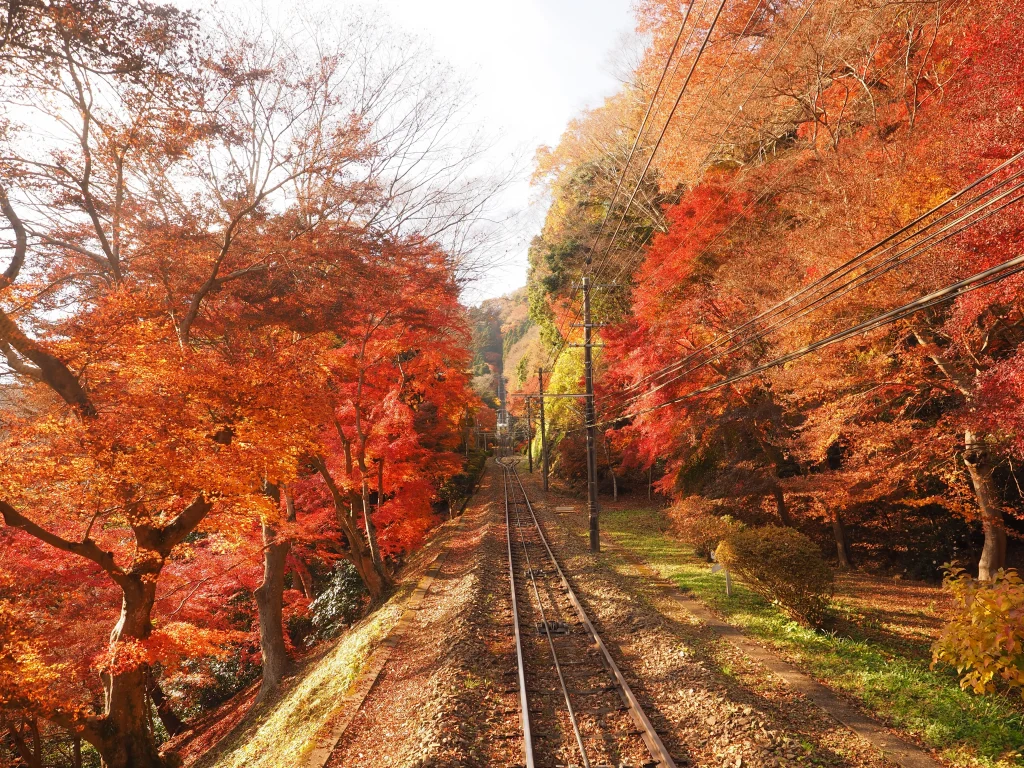
Mount Takao is a practical choice for a mountain day and one of Tokyo’s most popular autumn outings. An early start gives you more time before the busiest part of the day. Taking the cable car can save energy for exploring the temple grounds, viewpoints and wooded paths higher on the mountain.
Hachioji offers a long walk beneath ginkgo trees along the old Koshu Kaido. Its 2026 festival takes place on 21 and 22 November, during the avenue’s centenary year. Local performances, food and neighbourhood character add several reasons to make the journey west.
Showa Kinen Park provides open space and an adjustable walking distance, while Meiji Jingu Gaien offers Tokyo’s best-known central ginkgo avenue.
Koishikawa Korakuen offers a confirmed evening option from 13 to 24 November 2026, from 18:00 to 21:00, with final admission at 20:00. A dedicated night-viewing ticket is required. As the trees begin their seasonal change, lighting and autumn-themed projections reveal a different side of this Edo-period garden.
The event offers a date-specific evening experience, while the latest foliage report remains the best guide to the condition of individual trees.
If mountain weather is poor, choose a garden or cultural activity in the city rather than spending several hours travelling to test uncertain conditions.
Late November to Early December: Central Gardens and Red Maples
Late November to early December is the strongest period for a garden-centred Tokyo foliage trip. JMC’s current benchmark dates place ginkgo around 26 November and maples around 29 November. Each garden develops at a slightly different pace, giving travellers several strong possibilities across this two-week period.
For red maples, consider Rikugien, Koishikawa Korakuen and Kyu-Furukawa Gardens. For golden ginkgo, compare the latest conditions at Meiji Jingu Gaien and Showa Kinen Park. This allows you to give the day to whichever landscape is showing its richest colour.
Rikugien’s 2026 Autumn Night Viewing is confirmed from 25 November to 6 December. The garden closes at 17:00, then reopens from 18:00 to 20:30, with final admission at 19:30. Evening entry requires a separate ticket. Online advance tickets cost ¥1,000, compared with ¥1,200 for same-day tickets, and include access to a priority entry lane. Booking ahead therefore makes arrival simpler as well as cheaper.
The Imperial Palace’s Inui Street is another autumn option to keep in view for 2026. Its 2025 route offers a helpful planning sketch: visitors entered through Sakashita-mon Gate, followed a route of about 750 metres and needed to arrive by 15:00. The new announcement will provide the final dates and access details for 2026.
Give one well-chosen garden the time it deserves rather than rushing between several. Early December remains a strong garden period in central Tokyo, often still within the maple season’s best window.
Choose the Right Place for the Experience You Want
Once you know what your dates are likely to offer, choose the setting as well as the colour. A central avenue suits an iconic city view, Hachioji suits a local festival route, and Showa Kinen Park suits a more spacious half-day.
|
Experience |
Main options |
Practical consideration |
| Golden ginkgo avenues | Meiji Jingu Gaien, Hachioji, Showa Kinen Park | Crowd flow, walking distance and fallen leaves after wind |
| Red maples and historic gardens | Rikugien, Koishikawa Korakuen, Kyu-Furukawa Gardens | Entry times, slopes, gravel and possible evening tickets |
| Mountain colour | Mount Takao, Mount Mitake, Okutama | Weather, queues, colder conditions and longer walking |
| A more adjustable central day | Shinjuku Gyoen and selected metropolitan gardens | Gates, paths, benches and official accessibility guidance |
Golden Ginkgo Avenues
Meiji Jingu Gaien is Tokyo’s best-known ginkgo corridor, with the Meiji Memorial Picture Gallery as its formal backdrop. A weekday morning gives you more room to notice the symmetry of the trees as well as their colour. Any event or illumination announced for your dates can add a second way to experience the avenue.
Hachioji offers a longer roadside walk along the old Koshu Kaido, framed by a community festival. It suits travellers who want local events to form part of the day. The avenue’s centenary gives the 2026 festival particular significance, while the weekend programme brings the surrounding neighbourhood into the autumn experience.
Showa Kinen Park is the stronger choice when you want breadth rather than one concentrated avenue. Its open grounds allow you to set your own pace, take breaks and move between several autumn landscapes. The park offers enough variety for a rewarding half-day in daylight, with any confirmed 2026 evening programme providing an additional option.
Red Maples in Historic Gardens
A daimyō garden is a landscape garden created for a feudal lord. Tokyo’s historic gardens turn autumn viewing into a journey through the grounds. Their paths arrange ponds, bridges, hills, stones and seasonal trees into a succession of changing views.
Rikugien is the natural choice for a late-November evening programme. Its large pond and landscaped hills form the setting for the confirmed 2026 night viewing. The garden is about seven minutes’ walk from Komagome Station. Daytime hours are 09:00 to 17:00, with final admission at 16:30.
Koishikawa Korakuen works well as a measured daytime visit and offers an earlier night opening from 13 to 24 November 2026. This Edo-period garden, associated with the Mito Tokugawa family, reveals a series of landscapes around its central pond.
Kyu-Furukawa Gardens presents a different composition. A Western-style house, rose garden and Japanese garden occupy separate levels of the grounds. The house follows a separate opening schedule, so compare both timetables if you would like to include its interior.
On a weekday morning, footsteps on gravel and clear air beside the water can make a garden walk feel far removed from the city outside. That change of pace is part of the appeal.
Mountain Colour and a Longer Day Out
Set aside a full day for a mountain outing, allowing time for both the journey and the landscape. Mount Takao is the most straightforward option for many visitors, while Mount Mitake and Okutama suit those seeking a broader mountain setting.
Plan the complete route from your hotel, including the station approach, cable-car timetable, walking paths, sunset and return journey. An early start creates more time for viewpoints, temples and woodland paths. An extra layer and a planned turnaround time will help you stay comfortable as temperatures fall later in the day.
Autumn foliage brings a lively atmosphere to these popular routes. Arriving early gives you greater choice over walking pace and distance, leaving the rest of the day free to unfold without an over-filled schedule.
A More Adjustable Central Day
For travellers who prefer fewer transfers and greater control over walking distance, Shinjuku Gyoen is a practical central choice. It has three entrances, varied trees and official English information on access, maps and universal-design facilities. Choose the gate that best serves the part of the garden you want to explore, then shape the route around your group’s pace.
Plan Shinjuku Gyoen for daylight and note its current hours, final admission and closure days. It combines easily with lunch, shopping or an indoor cultural visit, giving the day variety without requiring another long journey.
Official route maps provide the clearest basis for choosing a comfortable course. Compare entrances, path surfaces, gradients, rest facilities and supported routes, then select the approach that suits your group best.
If Conditions Change
Flexibility keeps an autumn day rewarding when colour, weather or ticket availability shifts. Tokyo’s season moves at different speeds across mountains, avenues and gardens. The city rarely leaves you without an autumn option; it usually asks you to change scale.
If central gardens are still green, compare current reports for Mount Takao, Mount Mitake and Okutama, where higher elevations may be further advanced. When mountain conditions are less inviting, remain in Tokyo and turn to Shinjuku Gyoen’s Chrysanthemum Exhibition, Tori-no-Ichi or an indoor cultural visit.
After strong wind, compare a ginkgo avenue with maple gardens such as Rikugien, Koishikawa Korakuen and Kyu-Furukawa Gardens, where the season follows a different rhythm. Fallen ginkgo leaves also offer their own autumn scene, replacing the golden canopy with colour beneath your feet.
If evening tickets are unavailable, visit a garden close to its daytime opening. Morning light reveals the natural colour of leaves, water and stone. Koishikawa Korakuen’s confirmed evening programme runs from 13 to 24 November 2026, followed by Rikugien from 25 November to 6 December, giving travellers two possibilities across the second half of the month.
When crowds build, change the setting rather than simply the hour. A broad park, daytime garden or central cultural visit can preserve the pace and quality of the day.
A well-chosen alternative earns its place in the itinerary on its own merits. Flexibility simply helps you find the version of Tokyo’s autumn that suits the day.
Tokyo, a Day Trip, or Kyoto?
Tokyo, nearby mountains and Kyoto answer different travel priorities. Your ideal choice depends on travel dates, energy levels, desired scenery and the amount of time you wish to spend in transit.
|
Choice |
Best for |
Main consideration |
|
Central Tokyo |
Gardens, ginkgo avenues and short travel distances | Individual locations may colour at different speeds |
|
Western Tokyo |
Earlier dates and mountain scenery | Colder conditions, queues and more walking |
|
Hakone or Kawaguchiko |
Foliage with hot springs, lakes or Mount Fuji | Weather, transport and longer travel |
|
Nikko |
A full day of temples, lakes and elevation changes | A larger time commitment |
|
Kyoto |
Temples and maple gardens as a main purpose | Intercity travel, accommodation and crowds |
Tokyo is strongest when you want gardens, ginkgo avenues, museums and possibly an evening event without changing hotels. Western Tokyo is useful when your dates are earlier or when mountain scenery matters as much as foliage.
Hakone and Kawaguchiko combine autumn scenery with hot springs, lakes and possible Mount Fuji views. Their appeal is strongest when you can allow extra time for weather and transport, or include an overnight stay rather than relying on a tightly timed return journey.
JMC’s first 2026 forecast places Tokyo’s maple benchmark around 29 November and Kyoto’s around 11 December. These are city benchmarks, not a direct comparison between a Tokyo garden and a Kyoto temple. If you visit both cities, use the latest forecast and official venue conditions to decide the order.
The right route is the one that matches the week you are in Japan and the pace at which you want to travel.
Before You Go: Tickets, Queues, Weather and Walking Comfort
A successful foliage day depends on more than leaf colour. Tickets, entry times, walking surfaces and evening temperatures often determine whether a beautiful place remains enjoyable.
What to Book—and When
|
Timing |
Confirm or book |
Keep flexible |
|
Now to September |
Flights, main hotels and major intercity travel | Individual foliage locations |
|
October |
Updated forecast, confirmed events and evening ticket rules | A shortlist of garden, ginkgo and mountain options |
|
Two to three weeks before travel |
Evening tickets and major day trips | Weather-dependent days |
|
During the trip |
Daily weather, colour reports and opening notices | Final choice between gardens, avenues and mountains |
Book the framework of your trip first. Keep one or two days free from a fixed foliage destination. These are the days that can move between higher ground, a ginkgo avenue and a central garden as conditions become clearer.
Queues, Last Entry and Walking Distances
Rikugien normally opens from 09:00 to 17:00, with final daytime entry at 16:30. During the 2026 night event, the garden closes at 17:00 and reopens at 18:00 for evening visitors. Daytime and evening sessions use separate tickets, allowing you to choose the experience that best suits your schedule.
For advance planning, the 2025 Imperial Palace Inui Street route provides a helpful picture of the time and walking involved. Visitors entered through Sakashita-mon Gate, followed a route of about 750 metres and exited through Inui-mon Gate.
Entry closed at 15:00, and the Imperial Household Agency advised allowing up to 30 minutes to reach the entrance from nearby stations. Visitors then passed through bag and security checks. When the 2026 programme is released, its dates and entry arrangements can be added to this planning outline.
What to Wear and Accessibility Checks
Tokyo’s November climate normals give an average temperature of 12.5°C, with an average high of 16.7°C and an average low of 8.8°C. Use these figures as a packing baseline, then compare them with the short-range forecast for your travel dates.
Late-November evenings reward an extra layer; a windproof jacket, scarf and shoes with reliable grip will help you stay comfortable from garden paths to mountain trails.
Historic garden routes combine surfaces such as gravel, gentle slopes and stone steps. For a mountain day, choose footwear with wet-weather grip and carry suitable rain protection.
Official route maps help you match each venue with your group’s needs. Shinjuku Gyoen provides English access guidance and information on universal-design facilities, while Rikugien and Koishikawa Korakuen publish barrier-free route information. Use these resources to compare entrances, supported routes and available facilities before choosing your course.
Autumn in Tokyo is at its best when you arrive prepared for the temperature, terrain and pace of the day.
A Flexible Way to See Autumn in Tokyo
The best autumn days leave room for the season itself. A well-planned Tokyo foliage journey begins with several strong possibilities, shaped around your interests, walking pace and travel dates. Changes in colour or weather can then become part of how the day takes shape.
ENJYU JAPAN designs tailor-made journeys around that freedom of choice, bringing mountain paths, golden avenues and historic gardens into a route that suits your wider time in Japan. With several rewarding directions already considered, you can follow the landscape that best suits the season and your pace. That freedom gives an autumn journey its quiet sense of ease.
References
- Japan Meteorological Corporation – 2026 Autumn Foliage Forecast, First Release (2026)
- Japan Meteorological Agency – Phenological Observation Information
- Tokyo Metropolitan Park Association – Koishikawa Korakuen Special Night Opening (2026)
- Tokyo Metropolitan Park Association – Rikugien Autumn Night Viewing (2026)
- Hachioji Ginkgo Festival Executive Committee – Hachioji Ginkgo Festival (2026)
- Ministry of the Environment – Chrysanthemums and the Chrysanthemum Exhibition at Shinjuku Gyoen
- Japan Meteorological Agency – Climate Normals for Tokyo