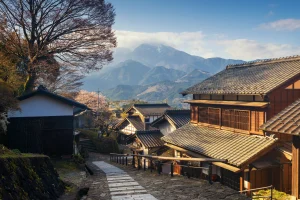
Rural Japan does not always require a rental car, several extra days, or a journey far from the route you already have planned.
The five places in this guide show quite different sides of the Japanese countryside: tea-growing country in Shizuoka, rice terraces in Nagano, old post towns in the Kiso Valley, regional history in Iga, and farmland beneath the Northern Alps in Azumino.
More importantly, they fit into a trip in different ways. Some work as a short stop. Others deserve most of a day or an overnight stay. If you are wondering where rural Japan belongs in your itinerary, start with the comparison below.
Which Rural Japan Destination Fits Your Trip?
| Place | Choose it for | Time to allow | Getting around | Fits naturally with |
|---|---|---|---|---|
| Kakegawa, Shizuoka | Tea culture and castle-town history | Half day or stopover | Easy around the station; extra transport for larger tea fields | Tokyo–Kyoto route |
| Obasute, Nagano | Terraced rice fields and wide countryside views | Short stop or partial day | Walk from the station | Nagano–Matsumoto |
| Kiso Valley | Walking, old post towns and mountain scenery | Full day; overnight if possible | Train, local bus and walking | Central Japan / Nagoya |
| Iga, Mie | Regional history and ninja culture | Full day | Rail works, but expect transfers | Kyoto, Osaka or Nagoya |
| Azumino, Nagano | Cycling, farmland and mountain views | Half day to full day | Train plus bicycle works well | Matsumoto / Nagano |
Why These Five?
“Rural Japan” covers an enormous area. It can mean a farming town outside a regional city, a mountain village several buses from the nearest railway, or an entire island far from the routes most international visitors use.
The five places here are deliberately concentrated in central Honshu. They are not supposed to represent every rural region in Japan. Their advantage is that they can be combined reasonably well with travel through Tokyo, Nagoya, Kyoto, Osaka, Matsumoto or Nagano.
That makes them particularly useful for travelers who want some countryside in their trip without turning transport into the main event.
1. Kakegawa: Tea Country Without a Major Detour
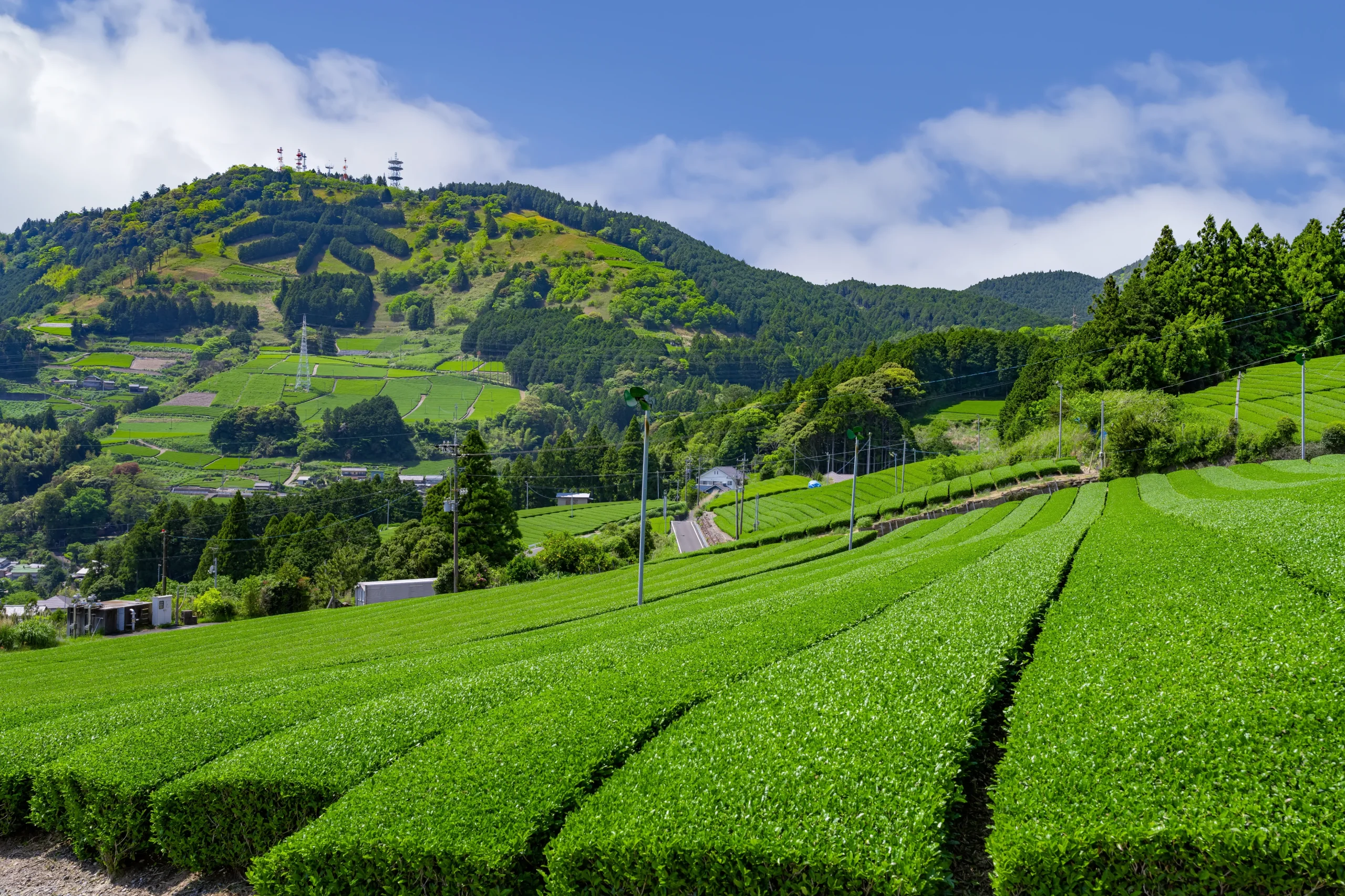
Shizuoka is one of Japan’s major tea-producing regions, and Kakegawa gives you an accessible introduction to that landscape.
Around Kakegawa Station, tea culture and castle-town history are easy to combine. Kakegawa Castle and the nearby Ninomaru Tea Room are within walking distance, so you can drink local tea, explore the historic center and continue your journey without needing a car.
The important distinction is what kind of tea experience you want.
If you mainly want to try local tea and understand the region it comes from, central Kakegawa works well by train. If your image of the day involves large green tea plantations stretching across the hills, you will need to travel farther from the station. A taxi, bicycle or car becomes much more useful there.
The surrounding agricultural landscape also has an interesting story. Shizuoka’s traditional tea-grass farming system maintains grasslands beside tea plantations. The cut grass is used around the tea plants as mulch, linking tea cultivation with the surrounding ecosystem.
Kakegawa is therefore a good choice when you want a taste of rural Japan without giving up a full day to reach it. It fits especially well into travel along the Tokyo–Nagoya–Kyoto corridor.
If you want the countryside itself to become one of the main experiences of your trip, Kiso or Azumino gives you more room to slow down.
2. Obasute: Rice Terraces That Fit Into the Journey
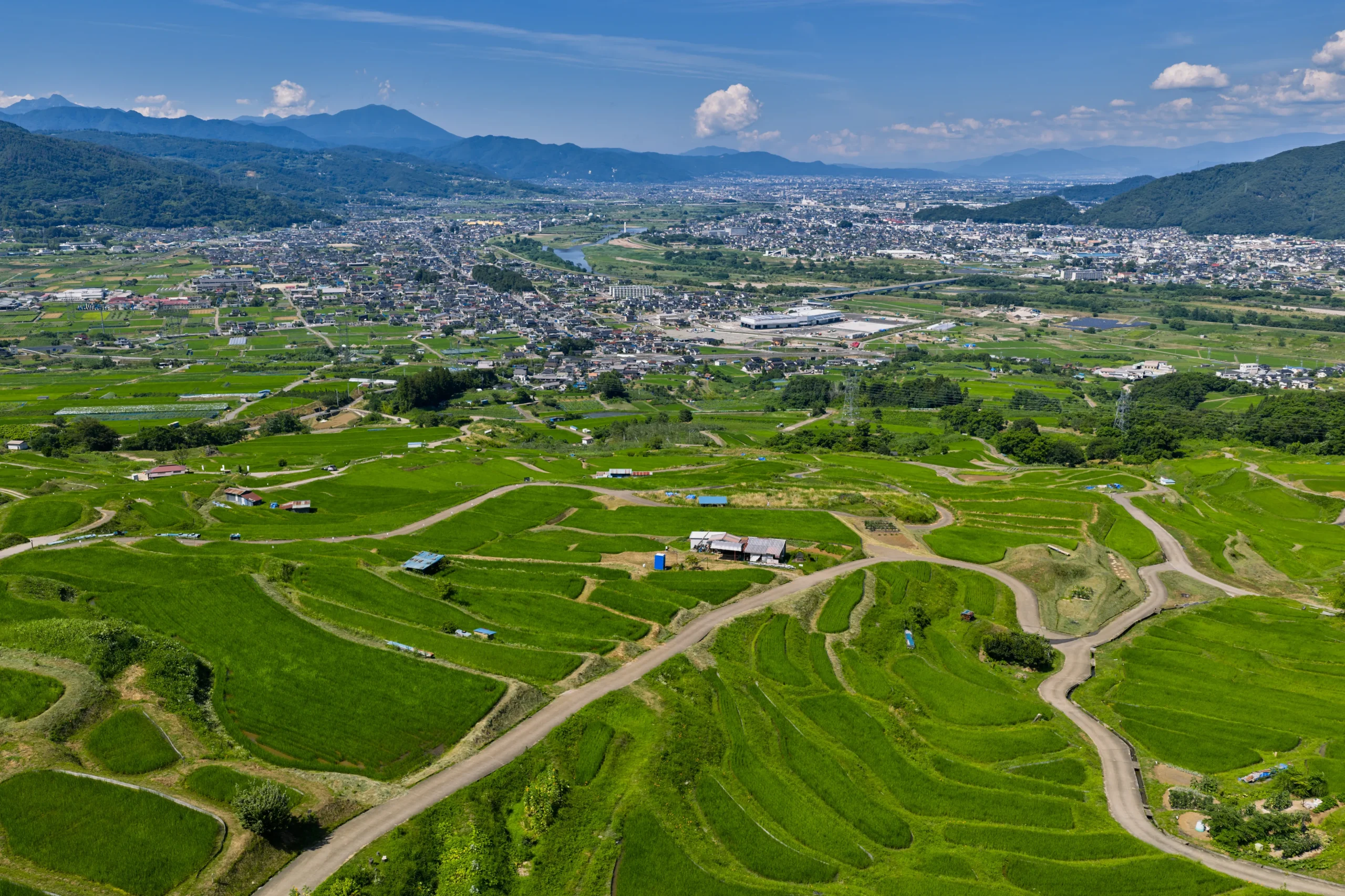
Terraced rice fields are one of the classic images of rural Japan, but many famous examples are difficult to reach without a car.
Obasute is unusually convenient.
Walking paths from JR Obasute Station lead toward the surrounding rice terraces, which spread across the hillside above the Chikuma area. From here, the view opens across the valley and mountains beyond.
The landscape changes considerably with the agricultural season. In spring, water in the paddies catches the light and reflects the sky. Later, the terraces turn green, followed by the colors of harvest and autumn in the surrounding hills.
Obasute’s biggest advantage, however, may be its location. The railway runs between Nagano and Matsumoto, so the terraces can become a countryside stop within a journey you are already making rather than a destination that requires another hotel or a long detour.
That makes it the lowest-commitment choice in this article.
If you want a few quiet hours around fields and mountain views before continuing to Matsumoto or Nagano, Obasute makes a lot of sense. If you want an entire day of walking and old-town exploration, Kiso is the stronger choice.
Read more: Terraced Rice Fields in Japan
3. Kiso Valley: Give This One More Time
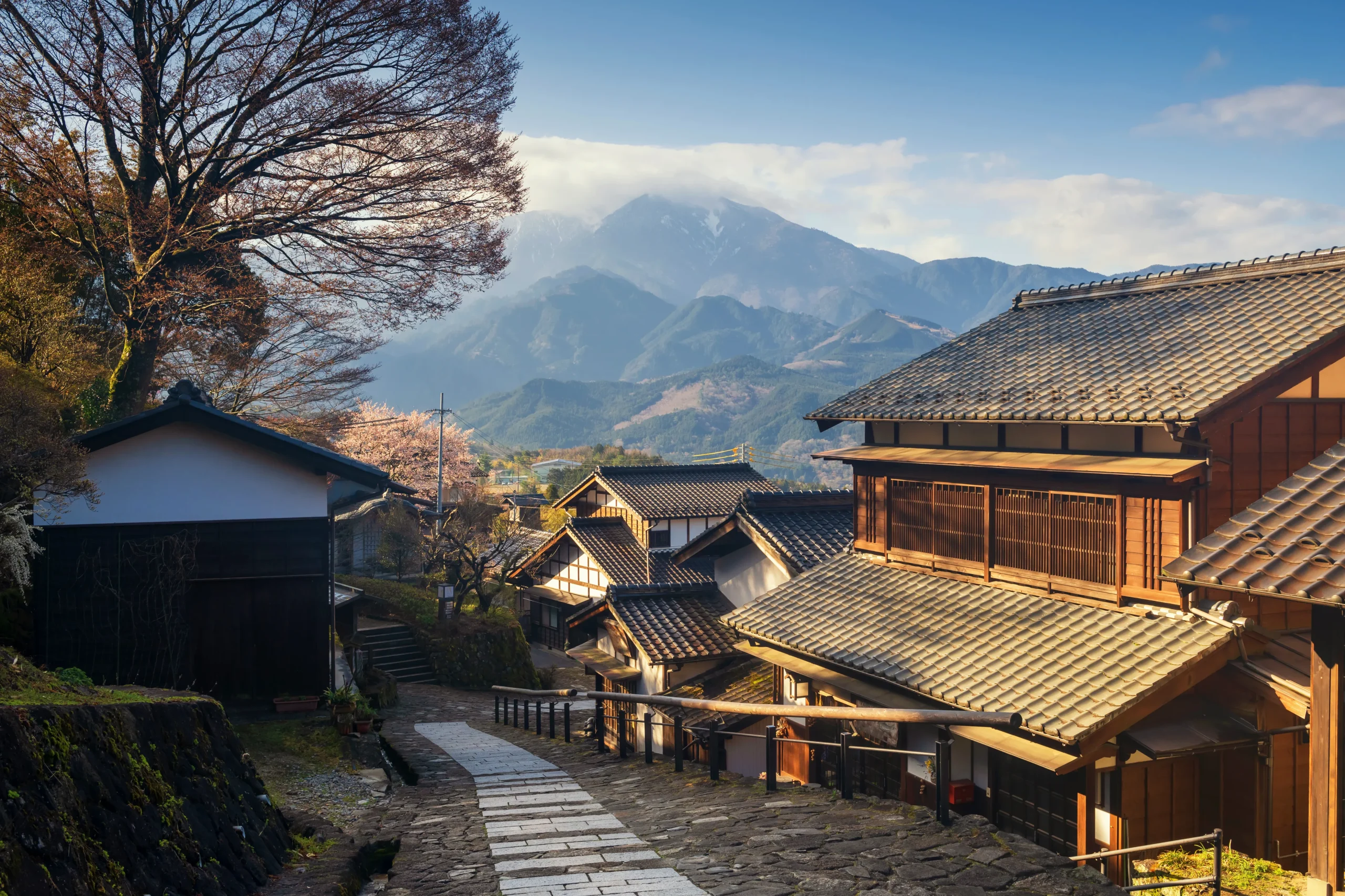
If you want rural Japan to be one of the main experiences of the trip rather than a short stop, the Kiso Valley is the strongest choice among these five.
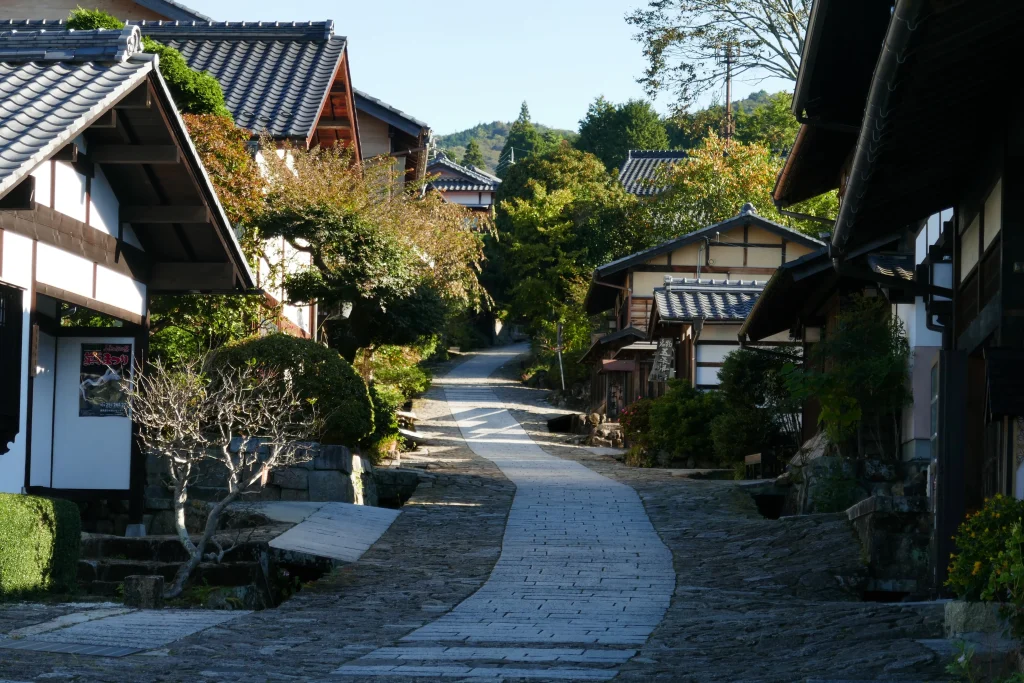
For centuries, the Nakasendo connected Kyoto and Edo, present-day Tokyo, through Japan’s mountainous interior. Parts of the route remain walkable today, passing through forests, smaller settlements and former post towns.
The best-known section runs between Magome and Tsumago. The walk is roughly nine kilometers and takes around three hours at a comfortable sightseeing pace.
This is what makes Kiso different from simply visiting a scenic viewpoint. You spend several hours moving through the landscape on foot before arriving in another town.
Luggage-forwarding services between Magome and Tsumago also make the walk much easier to incorporate into a longer Japan trip. Rather than carrying your suitcase or large backpack over the trail, you can arrange for it to meet you at the other end.
Public transport makes the valley possible without renting a car, but it takes more planning than Obasute or central Kakegawa. Magome is normally reached by bus from Nakatsugawa, while trains and local connections serve other parts of the valley. Check onward connections before setting out rather than assuming trains and buses will run as frequently as they do in the cities.
A long day is possible. Still, Kiso is the place on this list where I would most seriously consider staying overnight.
Once you have made the journey into the valley, spending a night gives you more time to walk, explore another post town and enjoy the area without planning every hour around the return train.
Read more: Traditional Old Towns in Japan
4. Iga: Choose It for Regional History
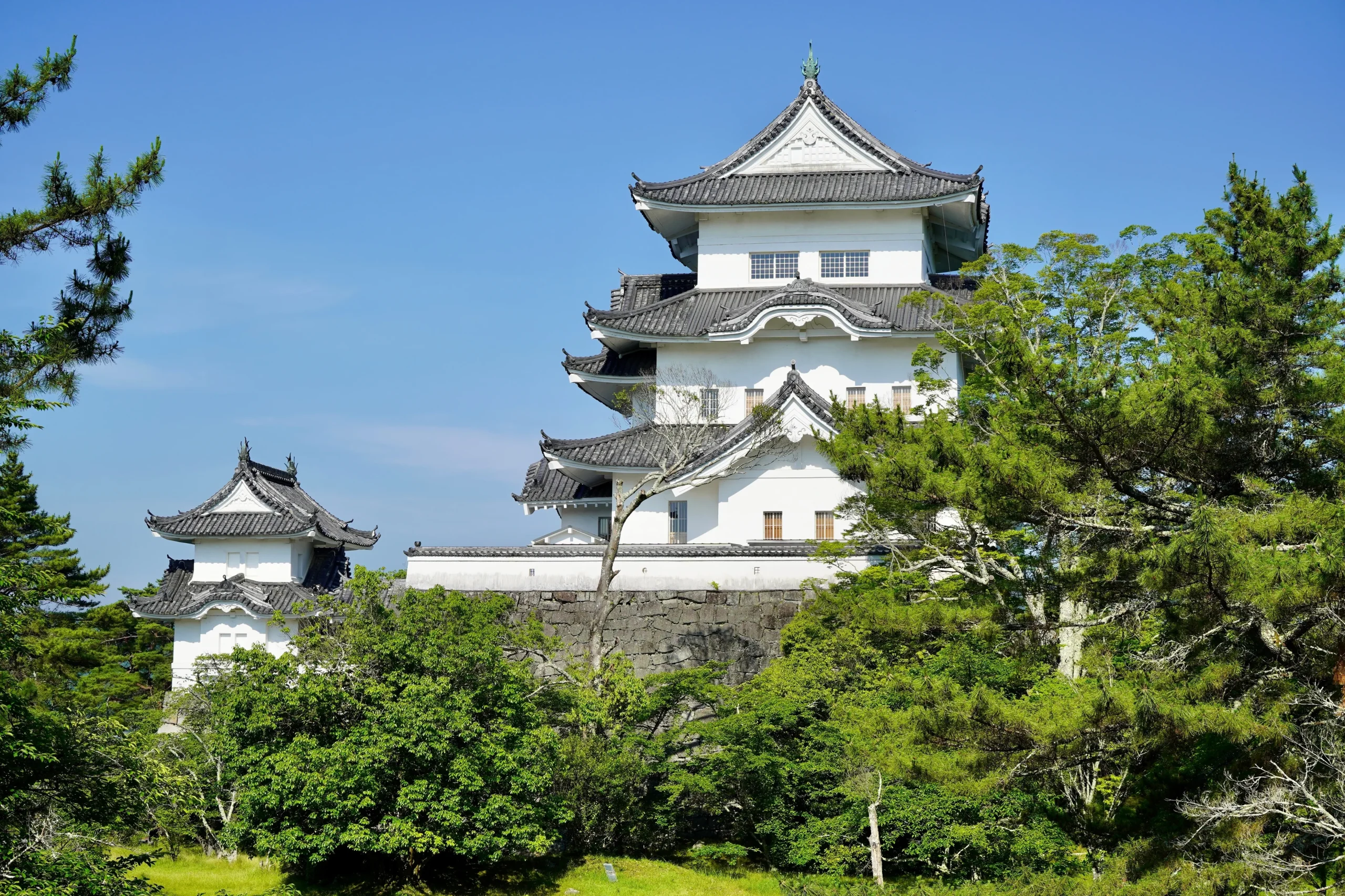
Iga belongs in this list for a different reason.
If your main goal is rice fields, mountain views or a long countryside walk, this would not be my first choice. Iga is more interesting for the combination of a smaller inland city, castle-town history and the region’s connection with ninja culture.
The Iga-ryu Ninja Museum and Iga Ueno Castle sit near each other, and the museum is about a ten-minute walk from Uenoshi Station. Once you reach the center, the main historical attractions are relatively easy to explore.
Getting there takes longer than the compact town center might suggest. From Osaka, Kyoto or Nagoya, the journey typically takes around 90 minutes to two hours and involves regional connections.
So while Iga works as a day trip, it is not a quick suburban excursion.
The history is also more interesting than the familiar pop-culture image of ninja suggests. Espionage, information gathering, local knowledge and survival skills were important parts of the world associated with shinobi. Iga gives visitors a place to connect that history with the region in which it developed.
Choose Iga if regional history is what draws you away from the major cities. For scenery alone, one of the other four is likely to suit you better.
5. Azumino: Move Through the Countryside by Bicycle
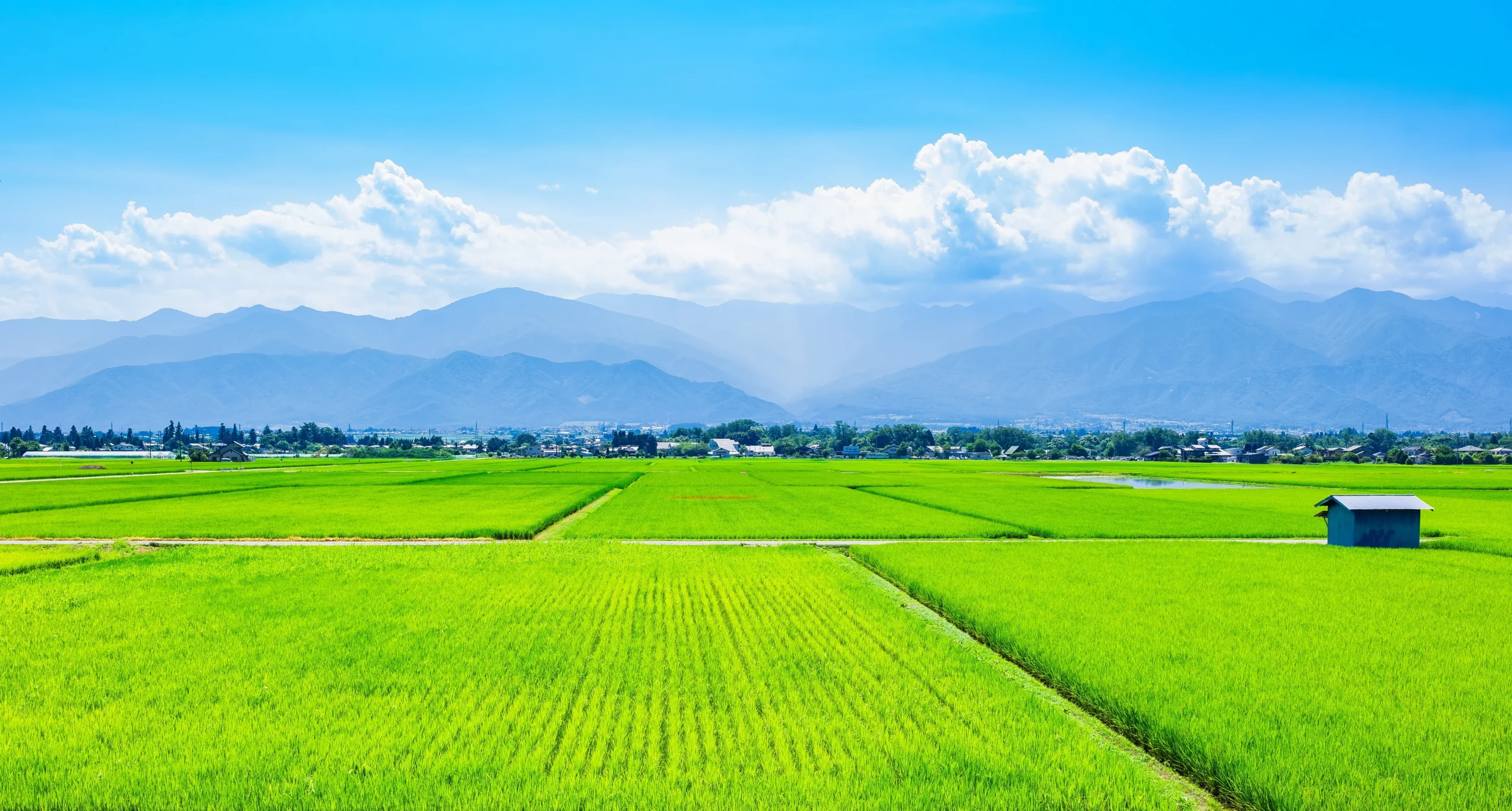
Azumino lies close to Matsumoto, but the landscape opens quickly into farmland with views toward the Northern Alps.
The area is spread out, which makes cycling particularly useful. Bicycle rentals are available around Hotaka, including electric-assist bikes, and local tourism routes encourage visitors to explore the area on two wheels.
That changes how you experience the countryside.
Obasute works well because you can walk from the station, see the terraces and continue your journey. Azumino rewards giving yourself several hours to move between fields, streams, rural roads and local sights.
It can work as a day trip from Matsumoto, especially if you are comfortable cycling. But travelers deliberately looking for a slower break from Tokyo, Kyoto or Osaka may also enjoy staying in the area overnight.
There is no need to follow one exact cycling route. The appeal is having enough time to move through the landscape rather than trying to reach a single famous viewpoint.
Read more: Things to Do in Nagano
When Is a Good Time to Visit Rural Japan?
There is no single best season for all five places.
Spring works particularly well for travelers interested in green tea country, walking and cycling. In Obasute, the water-filled rice paddies create a very different landscape from later in the year.
Summer brings deep green agricultural scenery, although Shizuoka and Mie can be hot and humid. Mountain areas such as Nagano can offer a useful change of pace from Japan’s major cities.
Autumn is another strong period, especially for walking in mountain regions and seeing agricultural landscapes around harvest time.
Winter changes the character of this particular selection considerably. If snow, skiing or winter onsen are your priorities, other rural regions may fit the trip better.
The season should therefore influence which destination you choose, rather than being an afterthought once the itinerary is finished.
Three Easy Ways to Add Rural Japan to a Larger Trip
You usually do not need to redesign your entire Japan itinerary to include the countryside.
A stop between major cities
If you are traveling between Tokyo and Kyoto, Kakegawa creates one of the simplest possibilities. Spend part of the day around the castle and tea culture, then continue along the same broad travel corridor.
A countryside addition to Nagano or Matsumoto
Obasute works well when you want a short rural stop between Nagano and Matsumoto.
Azumino makes more sense when you have several hours and want the countryside itself to become the activity, especially if cycling appeals to you.
A dedicated rural night
For a more substantial break from the cities, give the Kiso Valley a full day and consider staying overnight. Walking between Magome and Tsumago gives the trip a clear purpose, while an extra night reduces the need to rush back toward the main railway network.
Iga works differently again. Treat it as a dedicated regional day trip from Kansai or Nagoya when its history is the reason you want to go.
Do You Need a Car?
Not for the main experiences described here.
But “possible without a car” and “everything is beside the station” are not the same thing.
Obasute is particularly straightforward on foot. Kiso works through a combination of trains, buses and walking. Iga’s central attractions are compact once you arrive. Azumino becomes much easier to enjoy by bicycle.
Kakegawa has the clearest dividing line. The castle-town and tea-room experience is easy from the station, while exploring the larger tea-growing landscape requires additional transport.
If you do rent a car for deeper countryside travel, check Japan’s current driving-license requirements before your trip.
For public transport, one simple habit prevents a lot of trouble: check your return connection before you start exploring. Rural trains and buses can become infrequent much earlier in the day than travelers used to Tokyo or Osaka expect.
One Good Rural Stop Is Usually Enough
It is easy to turn “I want to see rural Japan” into another list of places that need to be squeezed into the itinerary.
That misses much of the point.
Kakegawa is useful because it makes tea country easy to add to a larger journey. Obasute lets you see an agricultural landscape without committing an entire day. Kiso rewards walking and staying longer. Iga gives you regional history rather than simply scenery. Azumino is for travelers who would rather cycle through the countryside than look at it from one viewpoint.
You probably do not need all five.
Choose the one that adds something your city itinerary does not already give you, and allow enough time to enjoy it without constantly watching the clock.
Rural travel becomes more complicated when local transport, overnight stays and route planning all need to fit around the rest of the journey. If you would like to include this kind of countryside experience without building the logistics yourself, ENJYU JAPAN can help work it into a tailor-made itinerary around your interests, pace and preferred way of traveling.