The Takayama Autumn Festival, also known as Hachiman Matsuri, is held every October in the old mountain town of Hida-Takayama. Its yatai floats, karakuri puppet performance, and the lantern-lit evening are famous, but the festival also has a simpler kind of appeal: walking through town, following the sound of the crowd, and sharing the same seasonal moment with the people who live there. This guide explains what happens over the two days, which day to choose, and how to include the festival naturally in an autumn trip to Japan.
7-Day Takayama Autumn Festival Tour
What the Takayama Autumn Festival Is
The Takayama Autumn Festival is one half of the larger Takayama Festival tradition. Takayama also has a spring festival, but this guide focuses on the Hachiman Matsuri, held every autumn on October 9 and 10 around Sakurayama Hachimangu Shrine, on the northern side of Takayama’s historic center.
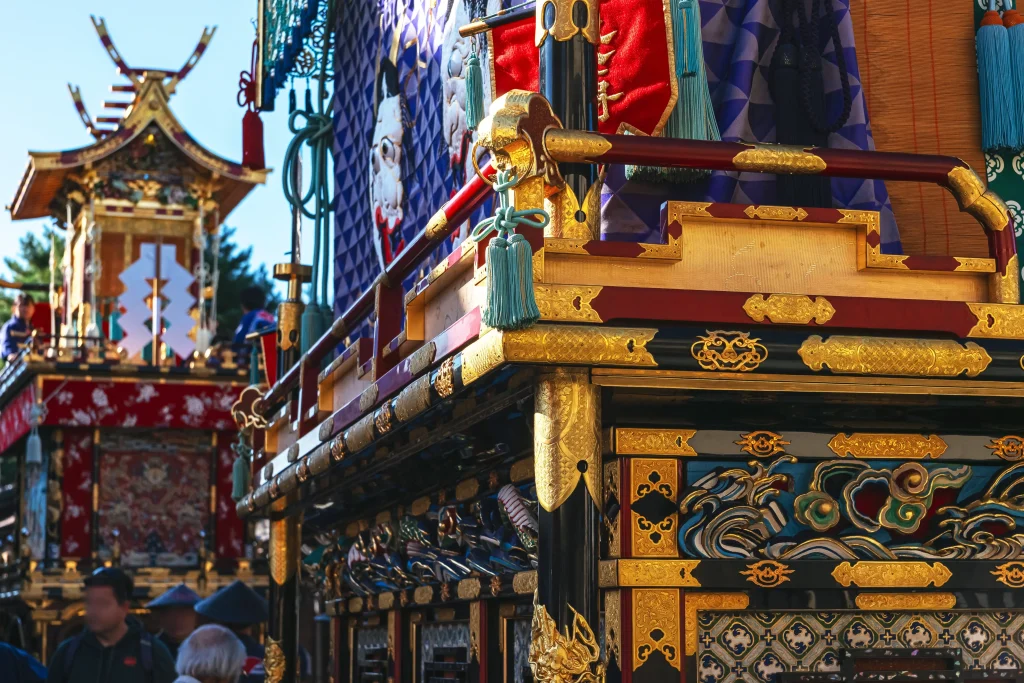
At the heart of the festival are the yatai, ornate festival floats that belong to different local communities. The autumn festival is associated with 11 of these floats, each with its own decoration, craftsmanship, and place in the town’s festival life. They are called “floats” in English, but it does not quite capture how much care sits behind them. They are stored, maintained, brought out, and watched over by the people connected to them, which is part of why the festival feels rooted in the town rather than staged for visitors.
Reference: Takayama Festival – HIDA TAKAYAMA
That local pride is also why the festival rewards slow attention. You can admire the carved details, metal fittings, embroidered curtains, and balance of the yatai floats even without knowing every symbol. They are impressive at first glance, and become more interesting the longer you stay with them.
Read more:Must Visit :10 Traditional Old Towns in Japan
How to Enjoy the Festival in the Moment
A festival like this can sound intimidating from the outside. There are shrine rituals, local names, procession routes, float histories, and Japanese announcements that may not be easy to follow in real time. But the good thing about the Takayama Autumn Festival is that you do not have to understand everything before you can enjoy it.
A lot of the experience is physical and immediate. You hear the movement of the crowd before you see what everyone is gathering for. You notice people slowing down near the floats. You see families, older residents, visitors with cameras, children trying to look between adults, and festival staff guiding the flow of people through narrow streets. Even without a detailed explanation, the town’s attention tells you where to look.
The yatai are the main visual focus, but the day around them matters too. Getting ready to go out, walking through the old streets, stopping for something warm or simple to eat, and passing food stalls or temporary festival stands can become part of the memory. The exact street-stall setup can change from year to year, so it is better not to plan around one specific food or spot. Still, the casual eating and walking between festival moments is often what makes the day feel alive rather than like a formal performance.
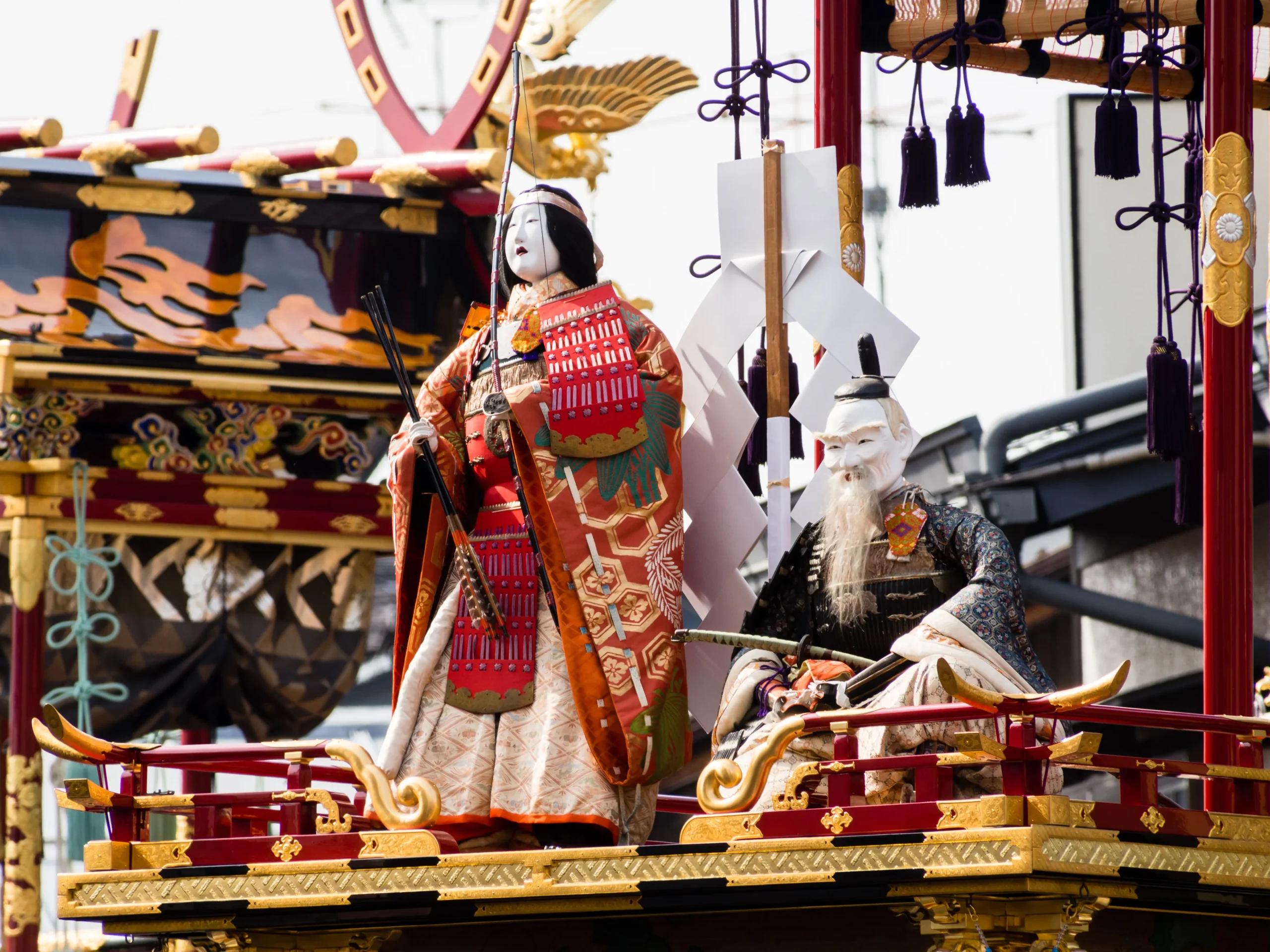
The karakuri puppet performance adds another layer. These mechanical puppet performances are connected with the Hotei-tai float, and they are easy to appreciate even if you do not catch every detail. The small movements, timing, and concentration of the crowd make the scene understandable in a direct way. It is craft, performance, and local patience all at once.
Reference: Hotei-tai – Takayama Yatai Preservation Association (Official Website, Japanese)
This is where the festival feels different from simply visiting a museum or watching a video. You are standing in the same weather, on the same street, waiting for the same moment as everyone else. That shared waiting is part of the pleasure.
What Happens on October 9 and October 10
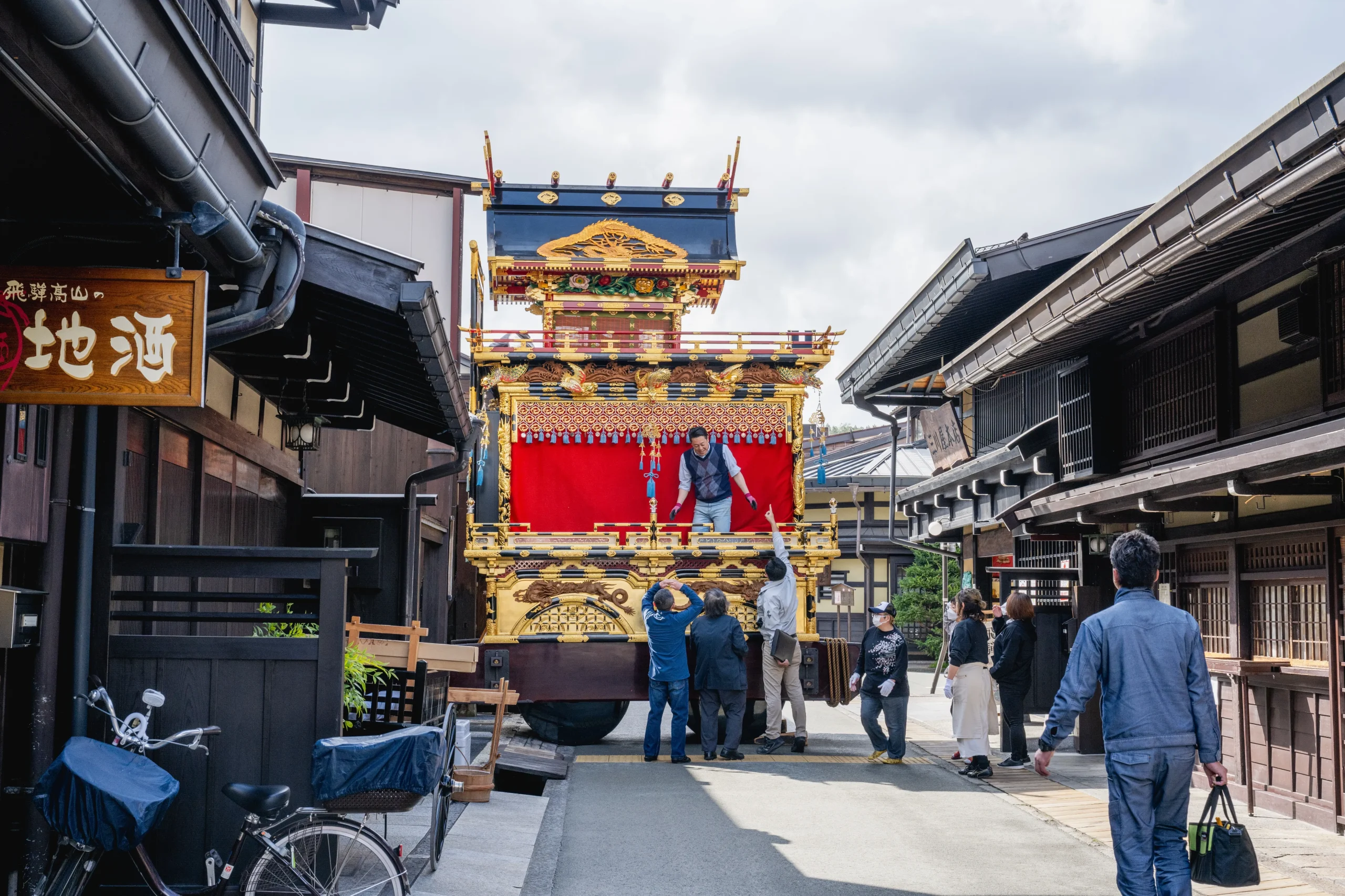
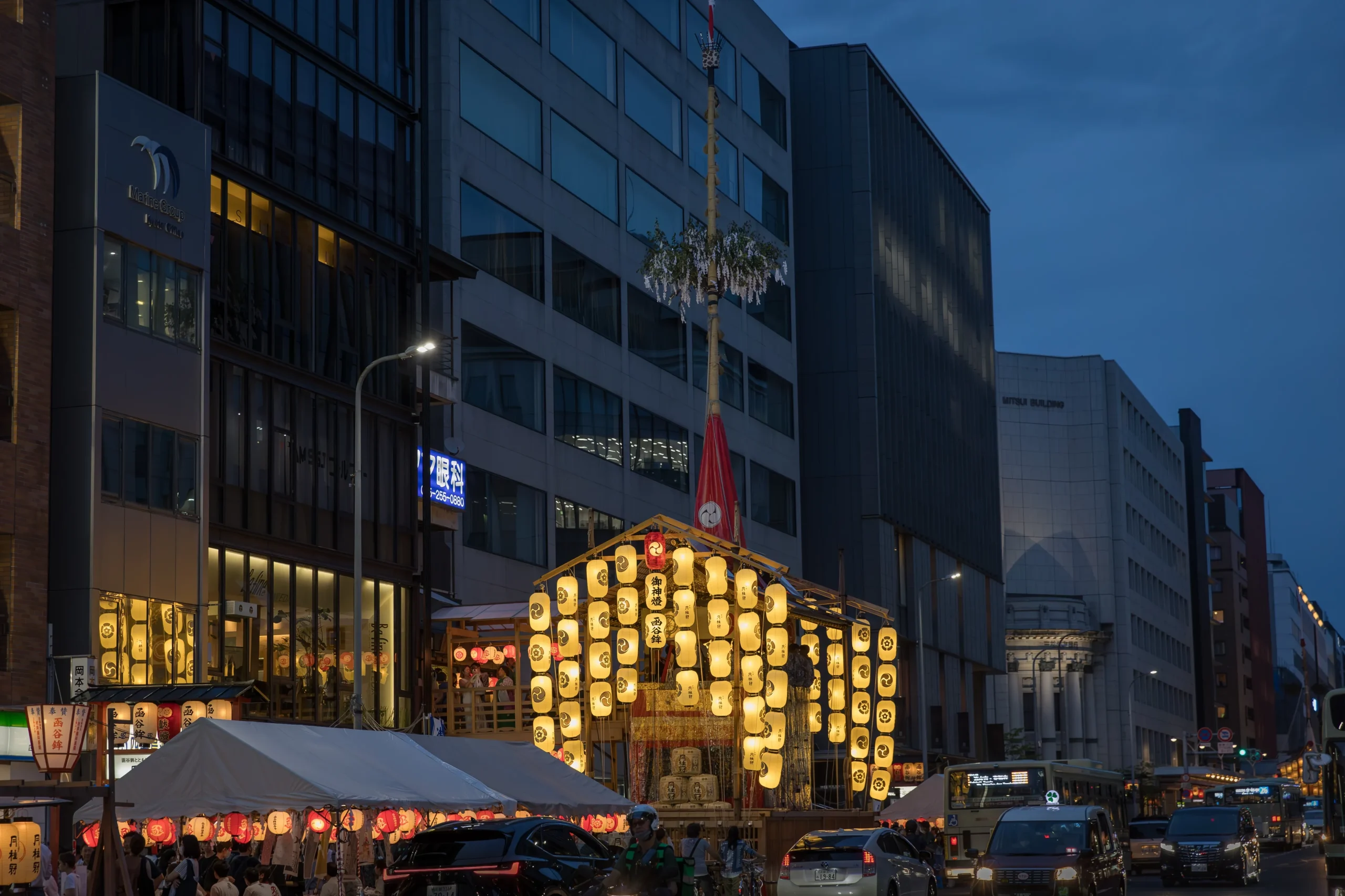
The festival runs for two days, but the two days do not feel exactly the same. If your schedule allows only one, October 9 is usually the better choice for a first visit because it includes the evening Yoimatsuri. During Yoimatsuri, the yatai are lit with lanterns and move through the town after dark, giving the festival a different mood from the daytime display.
Reference: Autumn Takayama Festival – HIDA TAKAYAMA
During the day on October 9, the town gradually gathers around the festival area. There are daytime float displays, procession elements, and scheduled performances. The goshinko procession, connected with the shrine’s festival rites, brings people in traditional dress through the streets. It is worth seeing how the street opens, how people make space, and how the pace of the town changes around the procession.
The evening is the part many travelers remember most clearly. Lantern light softens the details of the floats, and the old streets of Takayama feel closer and more enclosed after dark. It can also be crowded, so it helps to arrive early, move patiently, and avoid trying to see everything from the perfect angle. Sometimes the better memory comes from giving up on the “best view” and simply staying with the atmosphere.
October 10 is still worthwhile, especially if you prefer daytime viewing or cannot stay overnight on the 9th. It is a good day to see the floats more clearly, watch karakuri performances when scheduled, and enjoy the festival with slightly less emphasis on the night scene. For photography, craft details, and a calmer look at the yatai, the second day can work very well.
Exact event times can change by year, so check the latest official schedule before fixing your day around a specific performance. Weather matters too. The official information notes that outdoor events such as marionette performances, parades, and Yoimatsuri may be cancelled in rain, and there is no postponement. That is not meant to discourage you; it simply means the festival is best planned with a little flexibility.
7-Day Takayama Autumn Festival Tour
A Brief Note on Autumn Leaves
Because the name includes “Autumn Festival,” it is easy to imagine the whole town glowing with red and gold leaves. Some years, early October is still a little early for peak foliage in central Takayama. Higher areas around the Hida region can color earlier, and some autumn illuminations begin just after the festival period, so it is better to think of the festival and autumn leaves as related but not identical travel experiences.
Reference: October Events – HIDA TAKAYAMA
Read more:Japan in October: Weather, Seasonal Food, and Autumn Leaves
A Few Things That Make the Visit Easier
Takayama is not difficult to reach, but the festival dates are fixed and the town is compact, so a little planning makes the visit much more comfortable. From Nagoya, the official access guide lists both the JR Limited Express Hida and highway bus routes to Takayama, with travel times of about 140 minutes by train and about 165 minutes by bus. Travelers also come through Toyama, Kanazawa, Matsumoto, Tokyo, Osaka, and Kyoto depending on the wider route.
Reference: How to Get to Takayama – HIDA TAKAYAMA
If you are visiting for the festival, try not to arrive at the last possible minute. Takayama Station and the streets around the old town can feel busy during major event periods, and it is easier to enjoy the day if you have time to check into your accommodation, leave luggage, and walk toward the festival area without rushing.
Accommodation is also worth looking at early. The article does not need a long list of fallback towns, but the basic idea is simple: if staying in central Takayama is important to you, book as soon as your dates are firm. If rooms are limited, think about the whole route rather than forcing one night into an awkward plan. A festival with fixed dates works best when the days before and after have enough space.
A few small habits also help everyone enjoy the festival. Do not touch the floats, even if you are close enough to see the details. Be careful not to block narrow streets while taking photos. Follow local staff instructions when routes are controlled, and carry your trash until you find a proper place for it. None of this is complicated. It is just the kind of consideration that makes a crowded local event feel easier for everyone sharing the street.
Is the Takayama Autumn Festival Worth Planning Around?
The Takayama Autumn Festival is worth planning around if you want an October trip that includes more than major cities and famous temples. It gives you historic streets, regional craft, shrine tradition, night lanterns, and the feeling of a town gathering around something that belongs to its own calendar.
It may not be the best fit if your itinerary is already too tight, if you dislike crowds, or if rain cancellations would ruin the whole purpose of your visit. But if you can give Takayama enough time, the festival can become one of those travel memories that stays clear because it was not only about seeing something famous. It was about being there at the right time.
For many travelers, the best approach is to make the festival part of a wider autumn route. Takayama can connect naturally with places such as Okuhida, Shirakawa-go, Kanazawa, Nagoya, or other parts of central Japan, depending on your interests and pace. ENJYU JAPAN’s Tailor-Made Tour can help shape that kind of trip around the festival dates, with room for weather, local rhythm, and the kind of experiences that feel better when they are not rushed.